Antennarius commerson
Spot Giant Frogfish across the Visayas, Indonesia and the Great Barrier Reef in water between 24-29 °C. Tips on ID, best sites and what to look for.
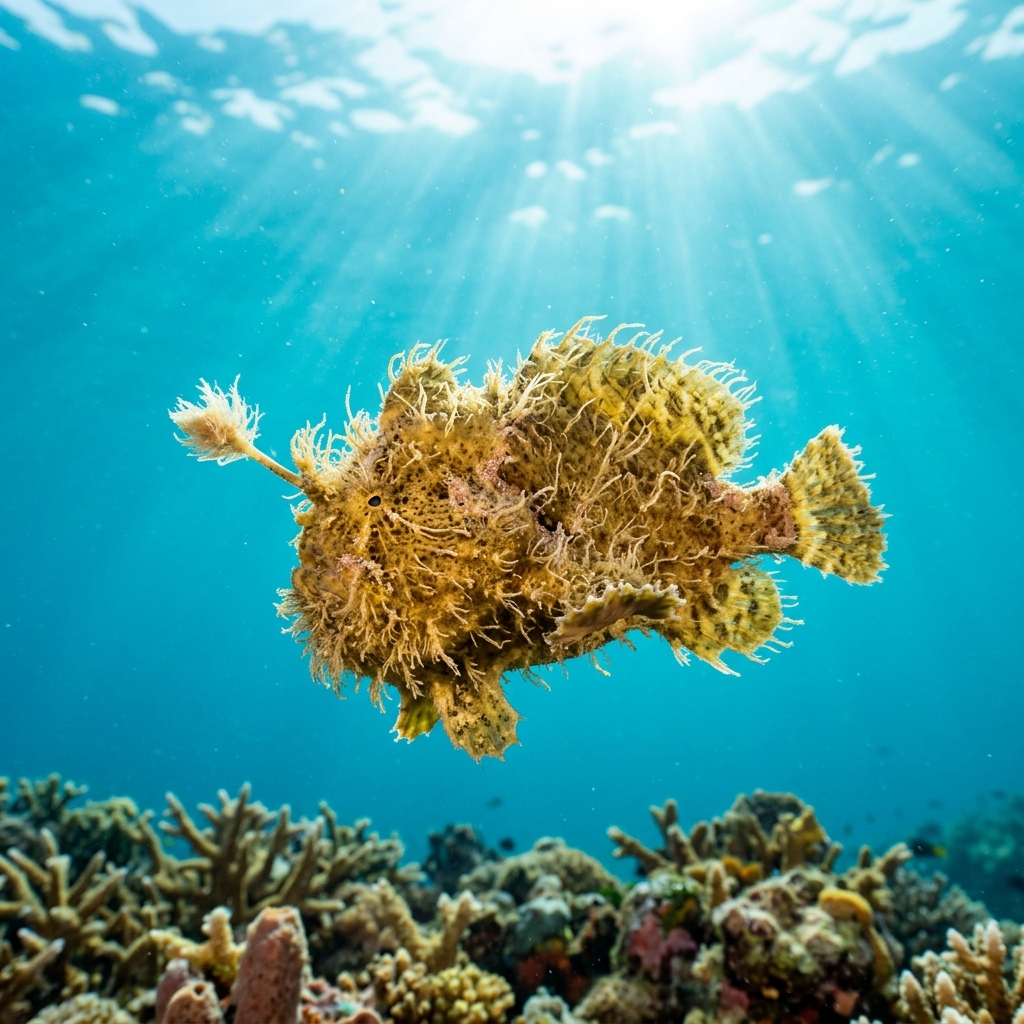
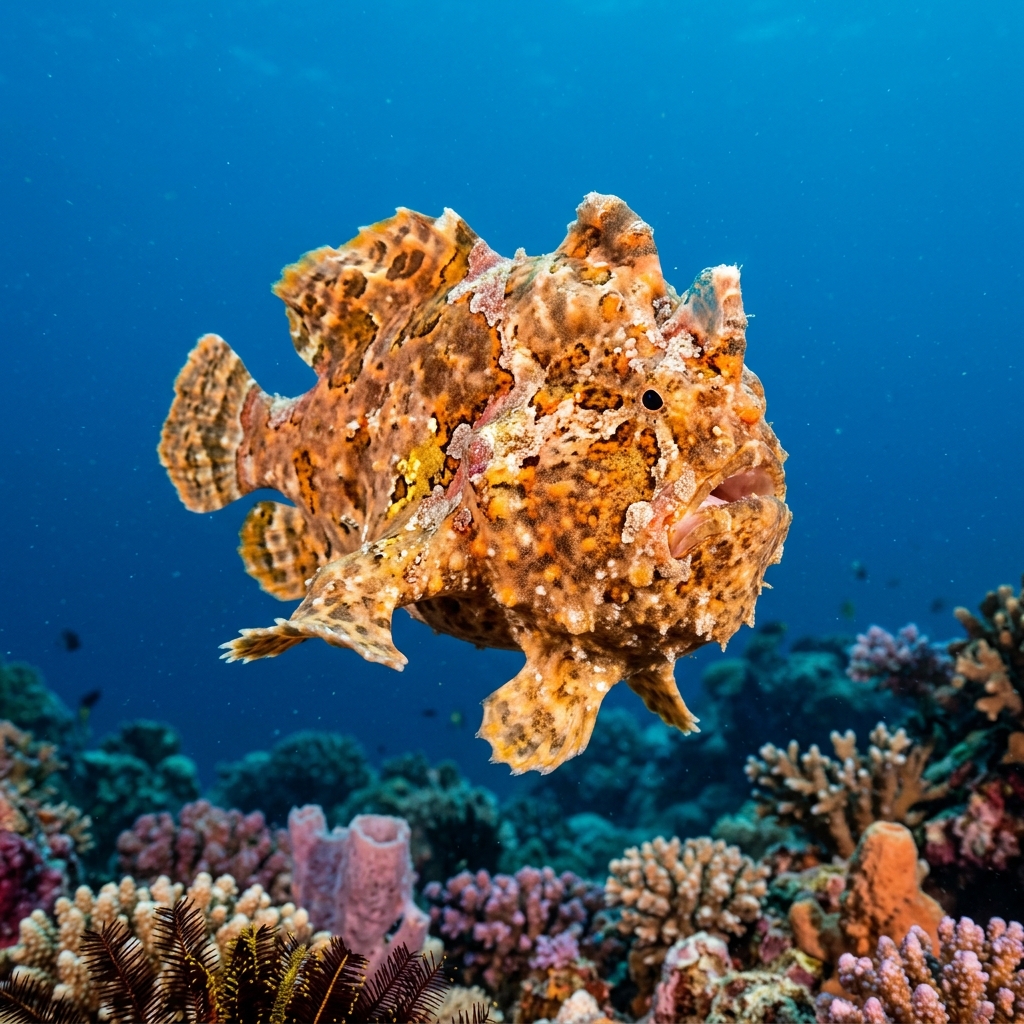
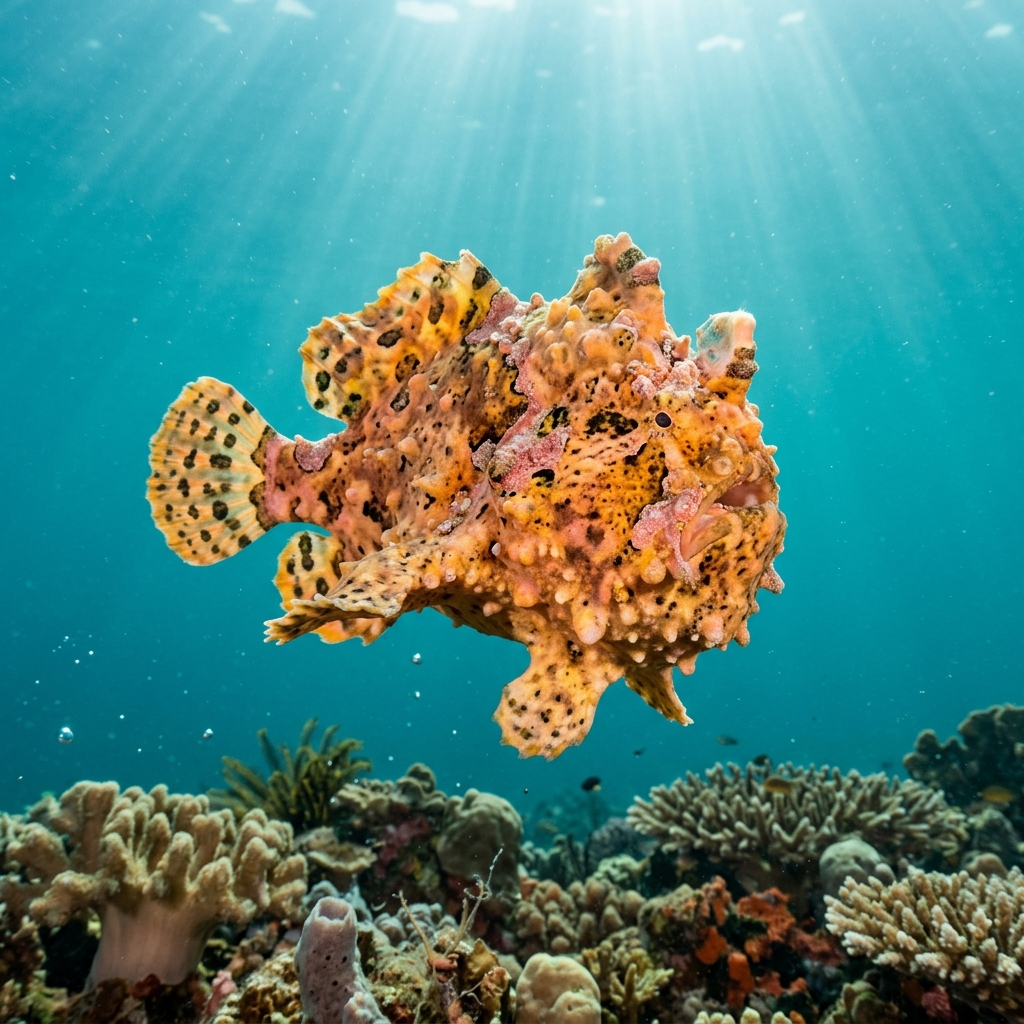
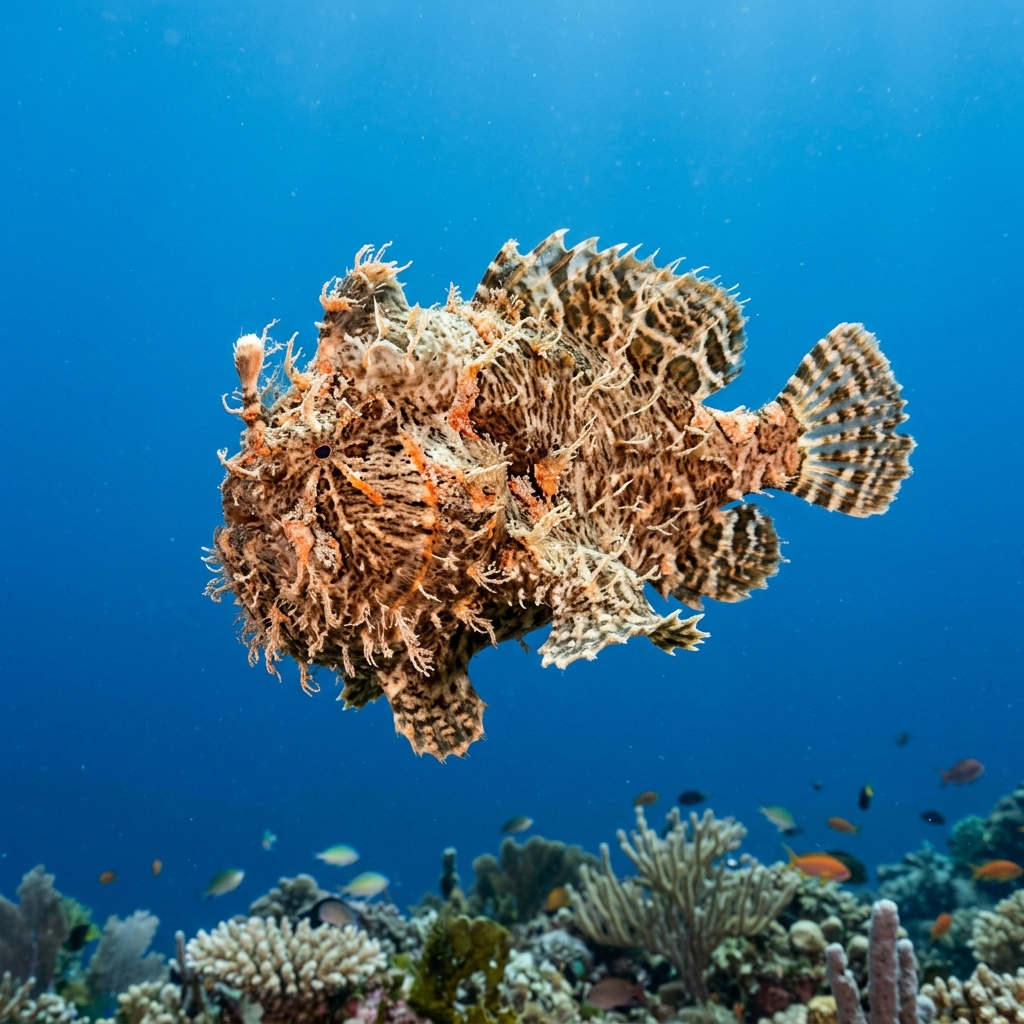
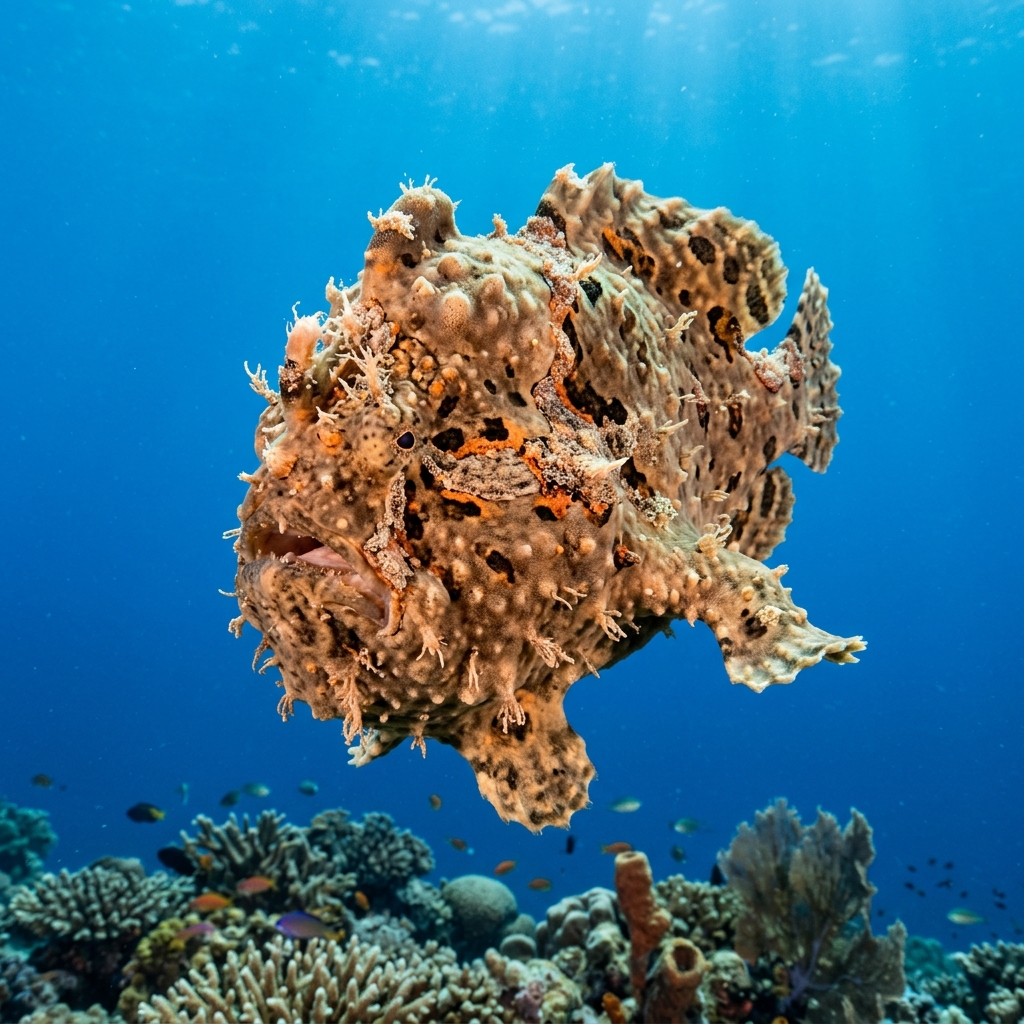
At up to around 30 cm, this is the largest frogfish you are likely to encounter on a reef, roughly the size of a grapefruit, with a lumpy, compressed body built to vanish against sponges and encrusting coral. Colour is extremely variable, running from bright yellow and orange to dark brown, white, or mottled combinations, but the body texture is consistently warty and the mouth is disproportionately enormous even by frogfish standards. Look for the modified first dorsal spine (the illicium) held above the snout like a tiny fishing rod with a fleshy lure at the tip. Pectoral fins that function like stubby arms, used to shuffle along the reef, are the clinching detail at close range.
When you find one, it will almost certainly be sitting perfectly still, pressed against a sponge or coral head that matches its colour, waiting for something edible to wander within striking range. It is largely indifferent to divers and will not bolt; if anything it may shuffle a few centimetres using its arm-like pectoral fins. Patience pays off enormously here because, on rare occasions, you will see the strike: the mouth opens and the prey is engulfed in a fraction of a second, one of the fastest predatory attacks in the animal kingdom.
The fleshy lure at the tip of the illicium, called the esca, mimics a small shrimp or fish. The giant frogfish actively waves it above its head to draw prey close enough to inhale whole, sometimes targeting prey almost as large as itself.
In the Northern Hemisphere, sightings are recorded from November through to September, effectively most of the year. The species sits comfortably in 24 to 29 °C water, so on tropical reefs in the Philippines, Indonesia and Malaysia it is present year-round with only a brief lull around October.
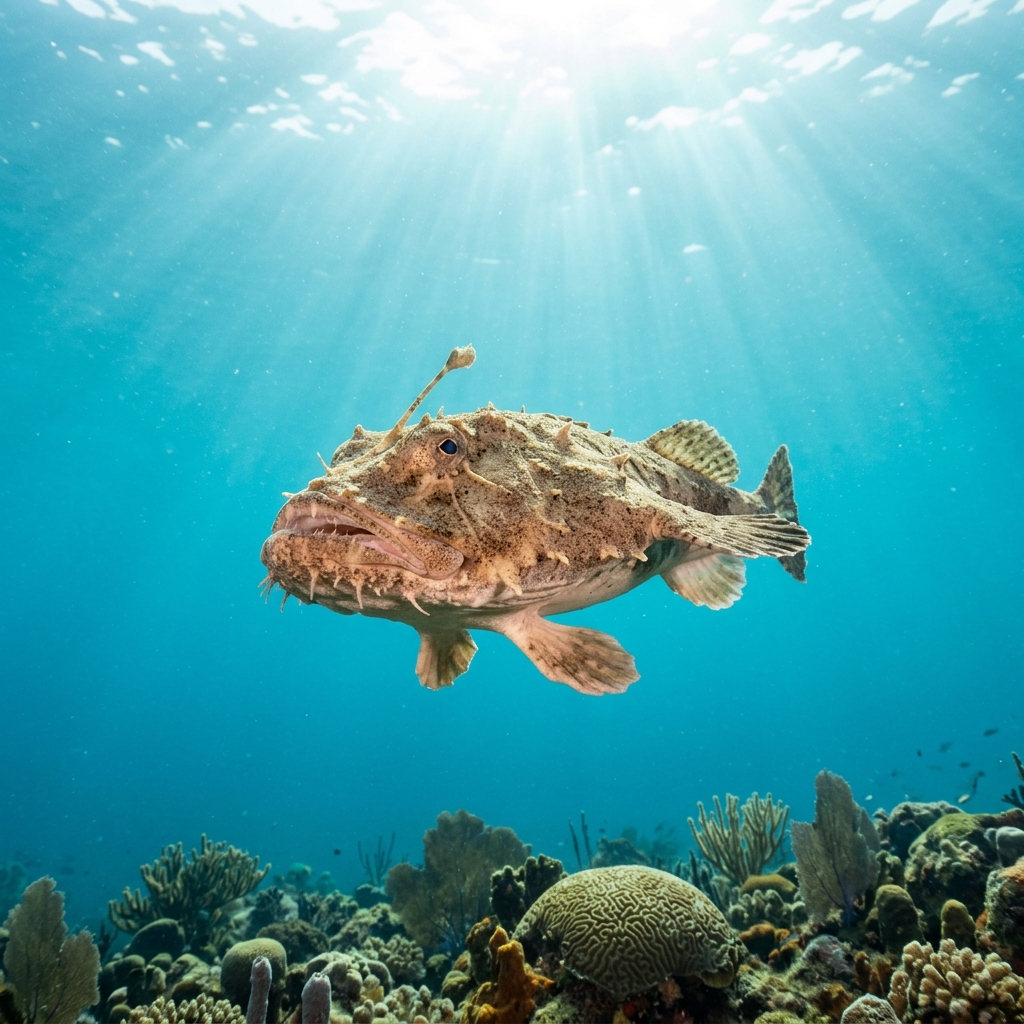
Reef neighbours a diver could mistake it for. Use the identification notes above to tell them apart.
The strongest concentration of logged sightings sits firmly in the Philippines, particularly the Central Visayas, East and North Visayas, and Luzon regions, making the Philippine archipelago the single best destination worldwide. Indonesia, especially Maluku and Papua, and Australia's Queensland coast also return reliable records, with additional populations documented in Malaysia's Sipadan and East Sabah area and across Hawaii.
Mapping where Giant Frogfish is logged…
The Philippines holds the most logged sightings by a considerable margin, especially the Central Visayas, Luzon, and the East and North Visayas. Strong populations are also recorded in Indonesia (particularly Maluku and Papua), on Queensland's Great Barrier Reef, in Sipadan and East Sabah in Malaysia, and in Hawaii.
On most tropical reefs it can be found throughout the year because it lives comfortably in 24 to 29 °C water. Northern Hemisphere data shows sightings concentrated from November through September. There is no single peak month; the priority is finding a site where local guides know their location.
Size is the first clue: at up to around 30 cm it is the largest frogfish on the reef. Look for an extremely large mouth relative to body size, a warty textured body that may be yellow, orange, brown, white, or mottled, and the small fishing-rod spine with a fleshy lure held above the snout. The pectoral fins look and function like stubby arms.
Adults typically reach around 30 cm, making them noticeably larger than other frogfish species you might encounter on the same reef. Despite that bulk they remain easy to miss because they sit motionless and are coloured to blend perfectly with sponges and coral.
It uses a modified dorsal spine called the illicium, tipped with a fleshy lure (the esca) that mimics a small fish or shrimp, to draw prey within range. When something comes close enough, it opens its enormous mouth and expands its body cavity so rapidly that it creates suction, engulfing the prey in milliseconds. This is one of the quickest strikes recorded in any vertebrate.
Site and sighting data is aggregated from diver logs, iNaturalist and GBIF. For taxonomy and conservation status:
Hairy Frogfish
987 sites