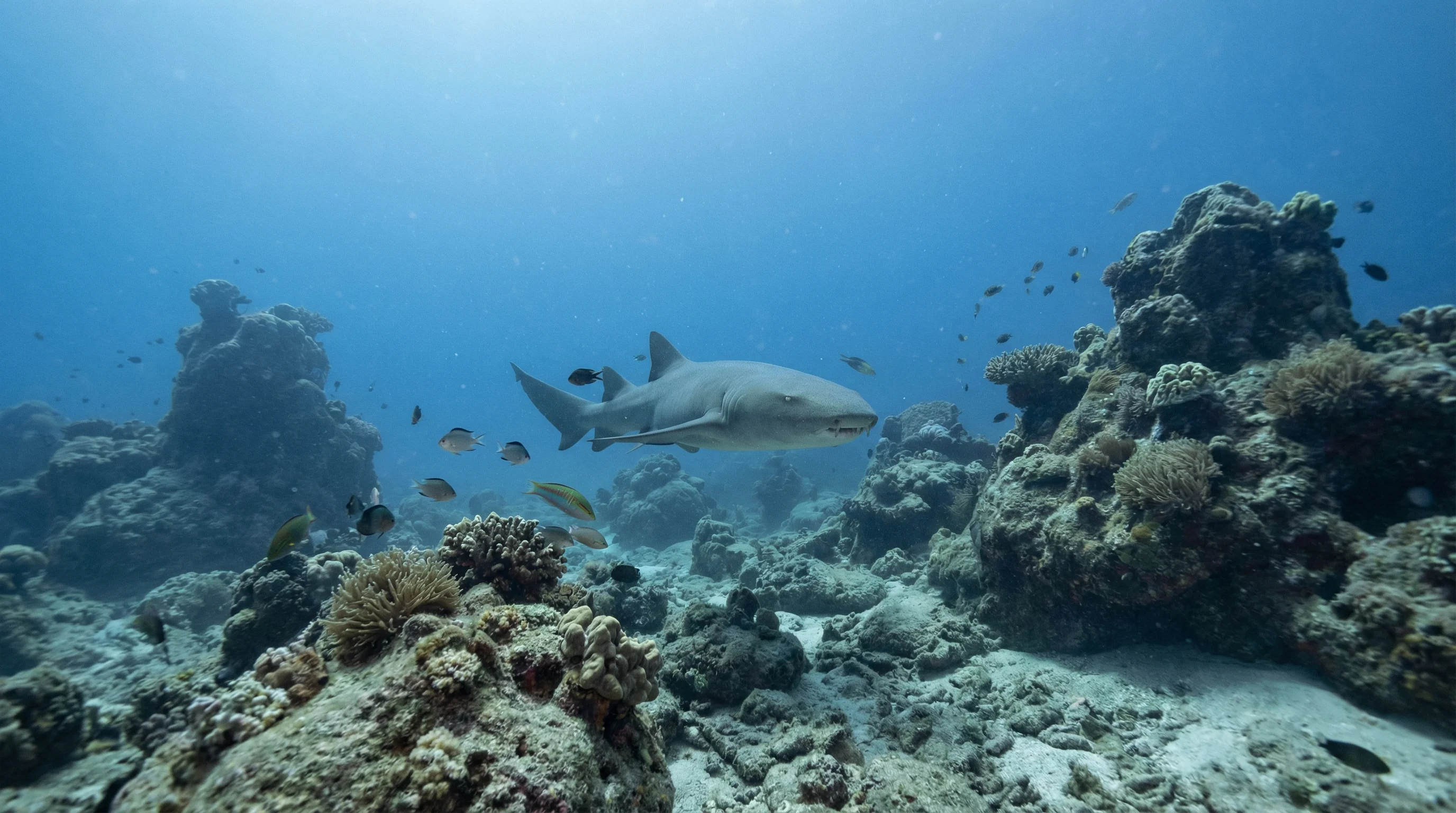
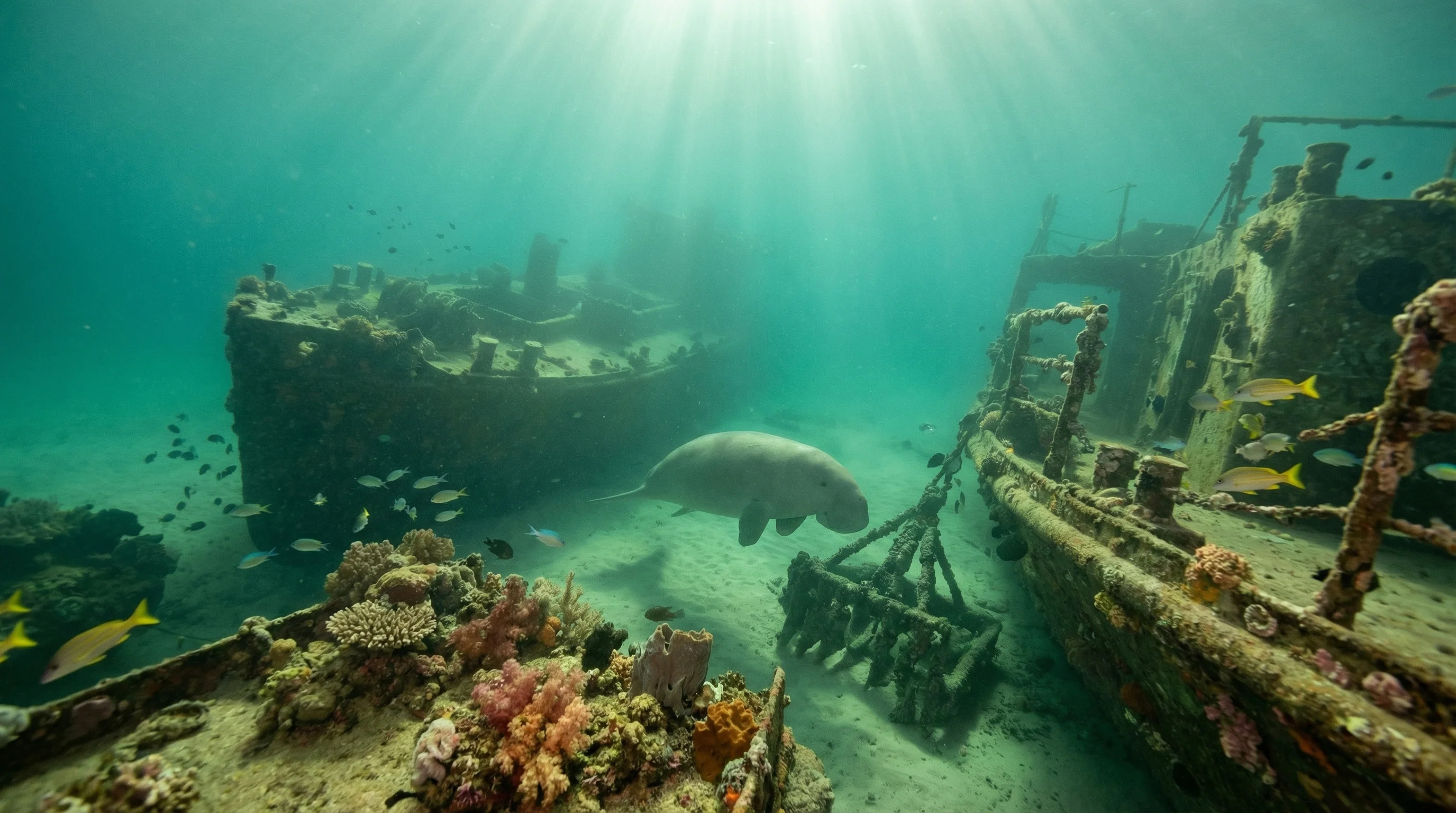
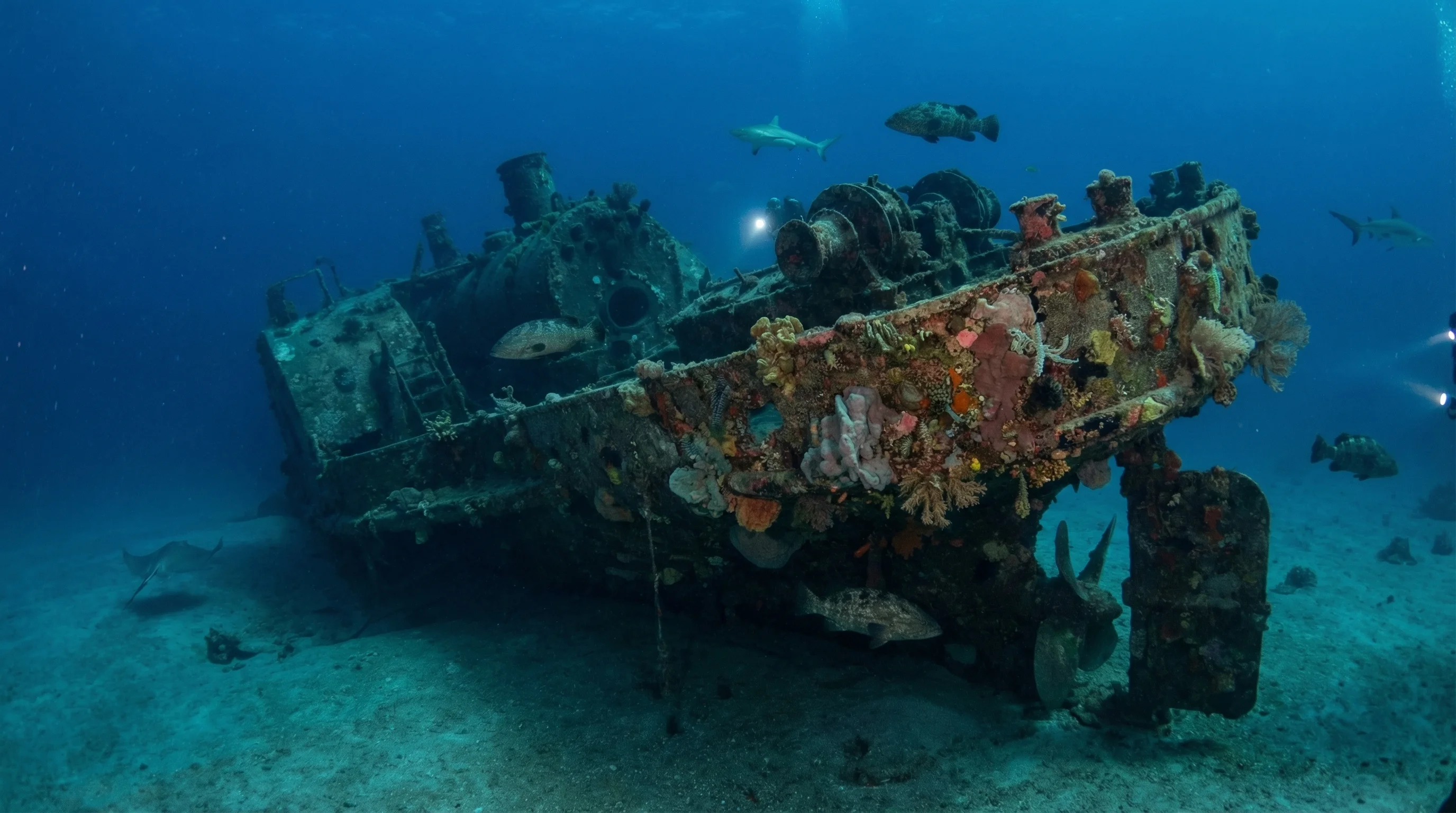
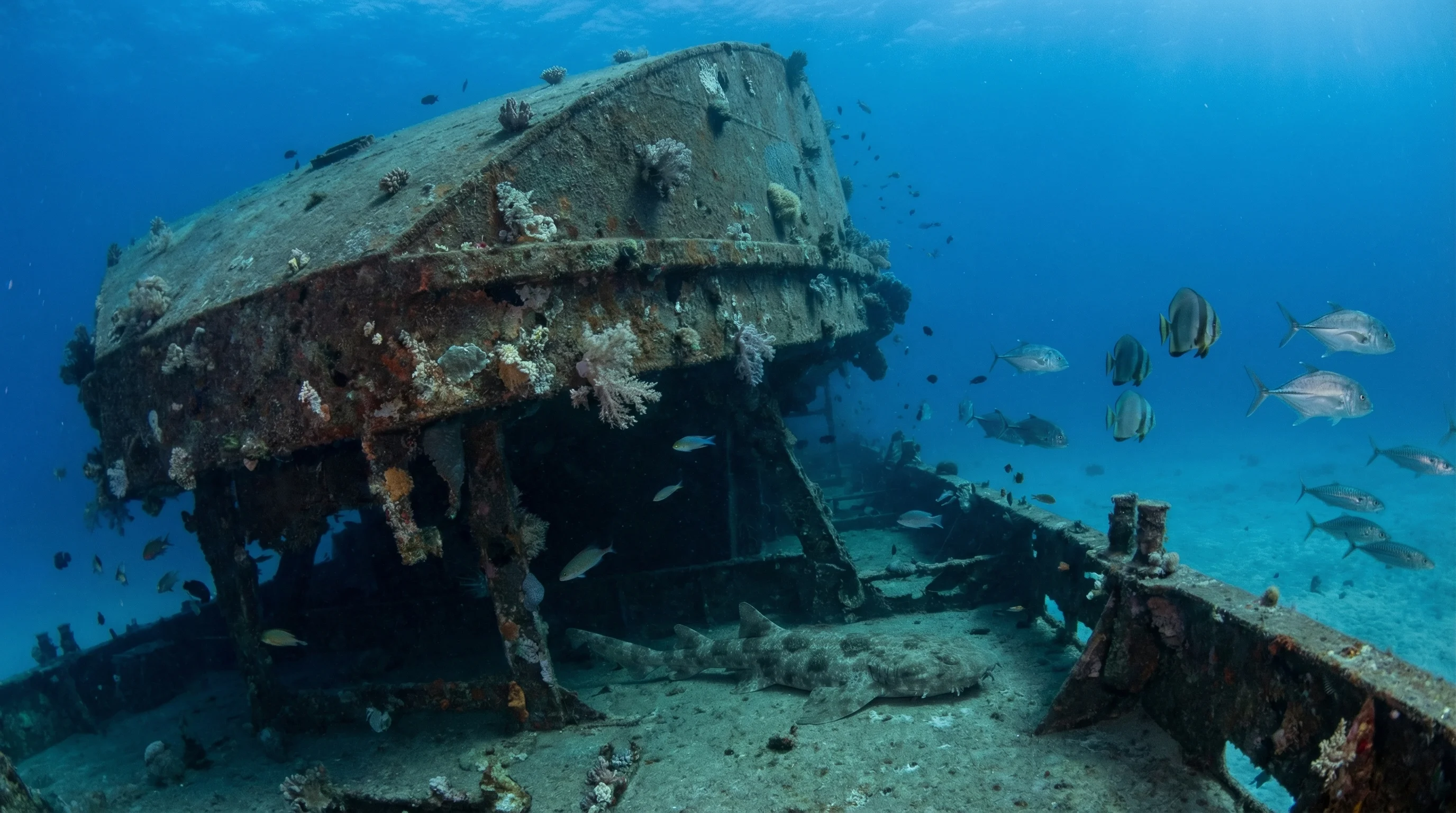
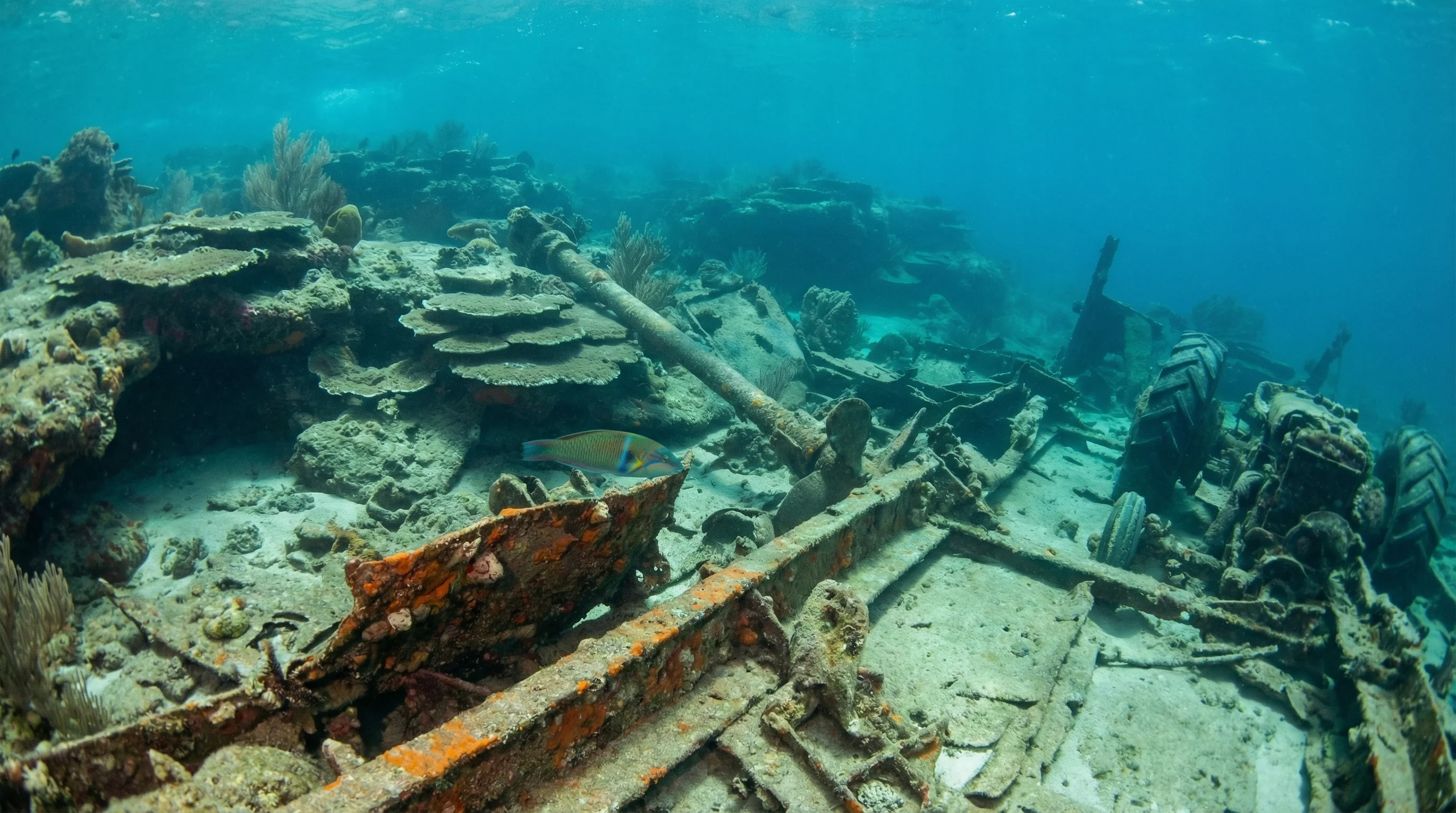
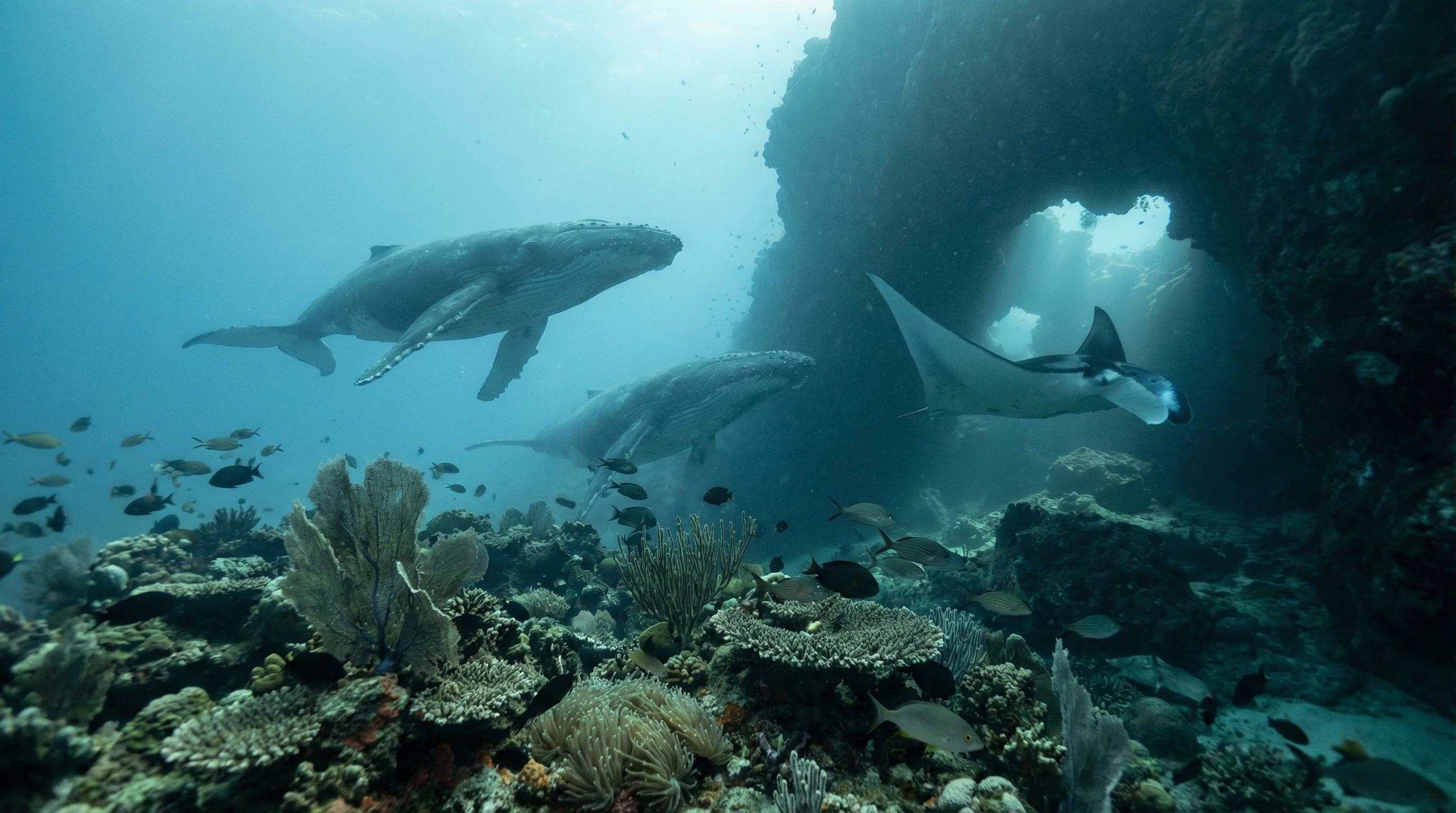
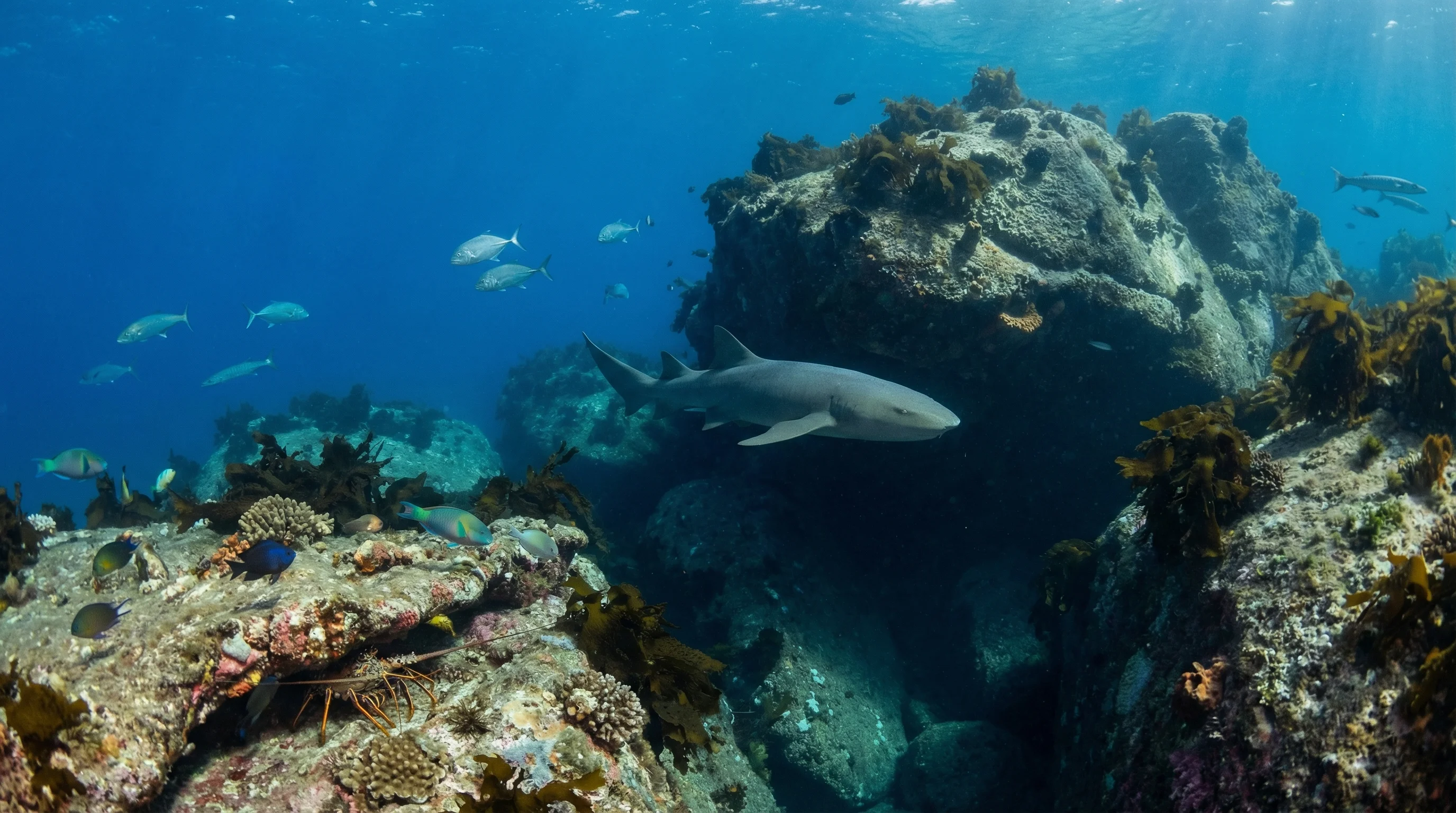
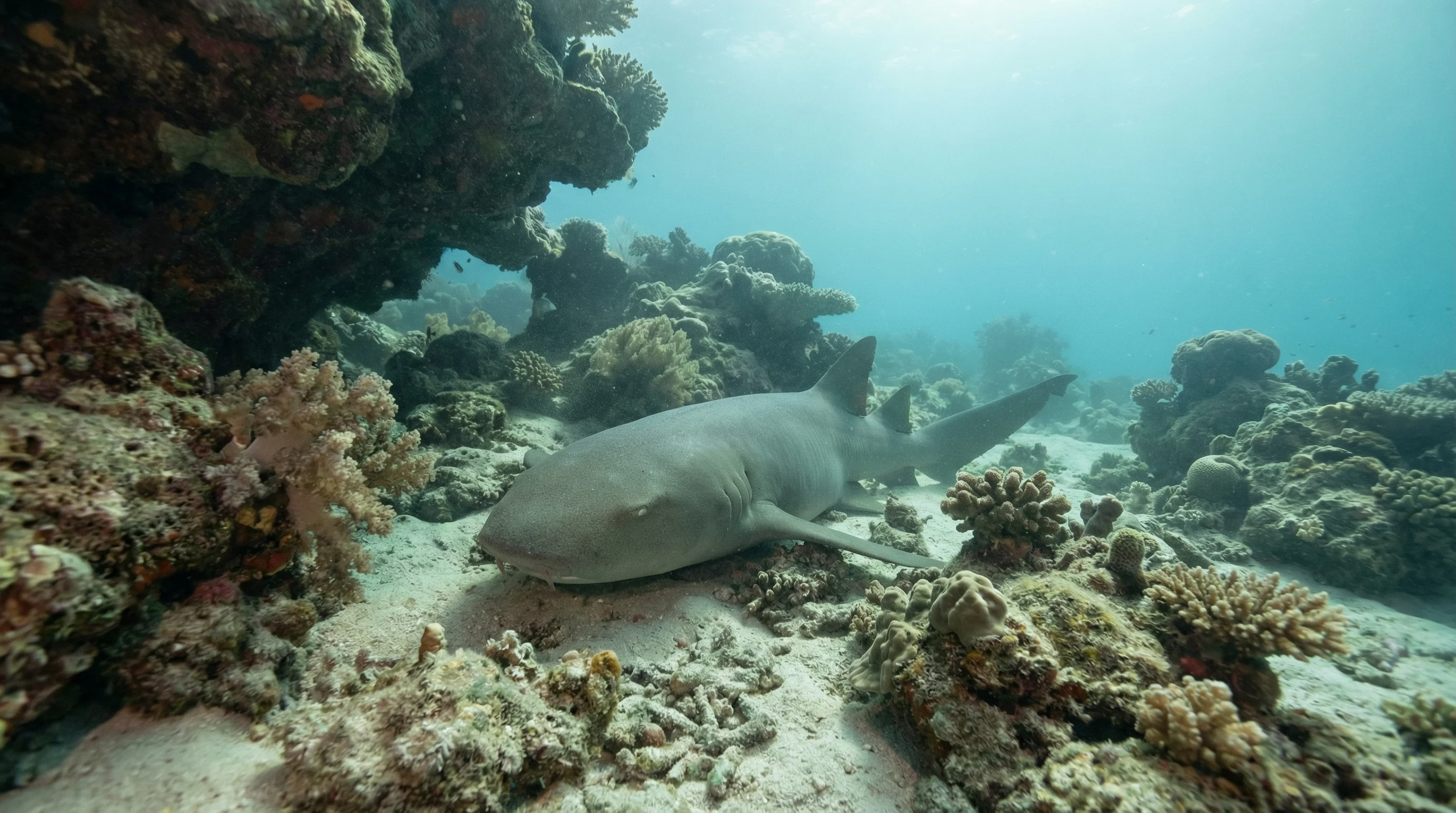
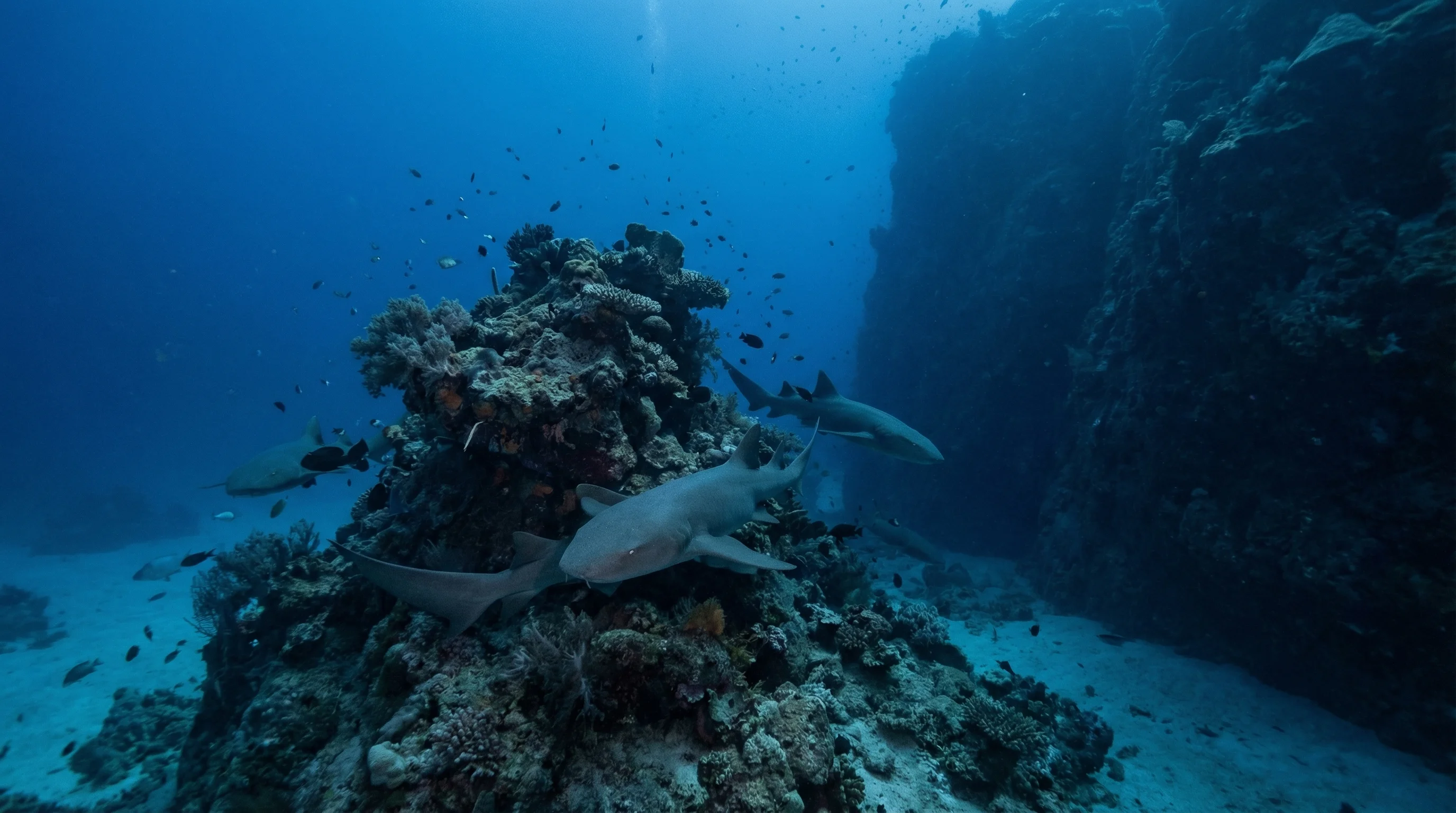
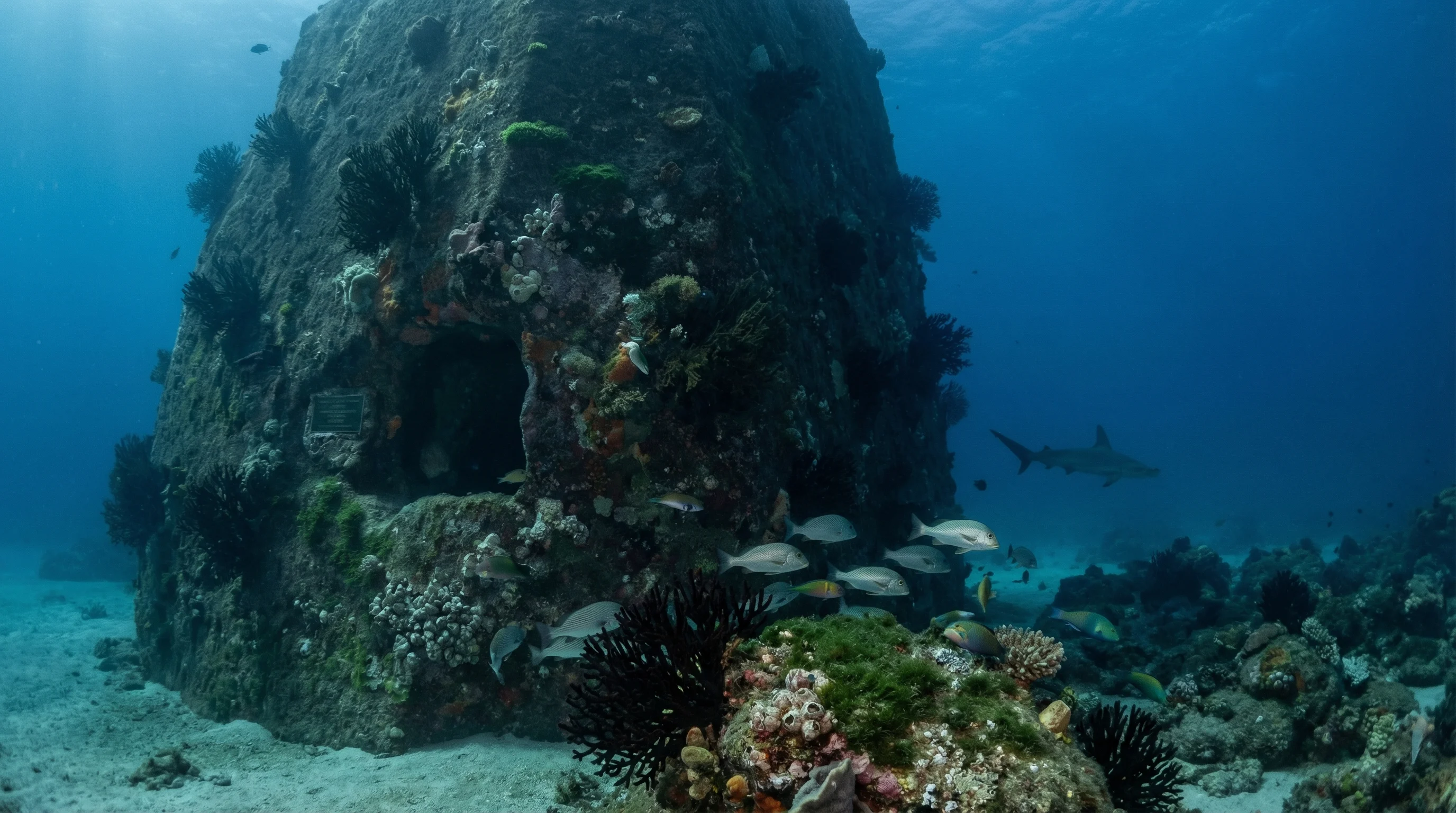
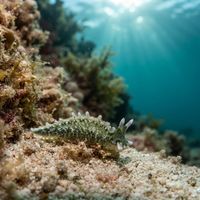
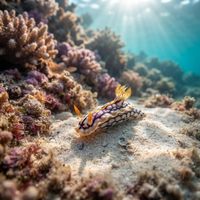
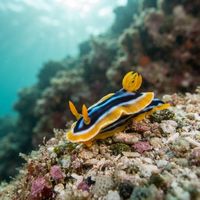
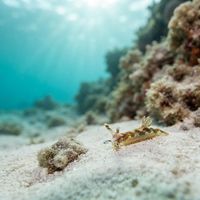
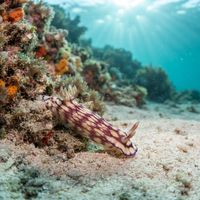
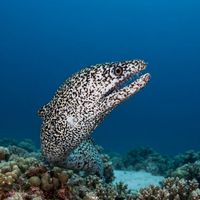
Flinders Reef sits in the Coral Sea off Moreton Island and is the primary coral reef diving destination accessible from Brisbane. It is a fully protected marine sanctuary with nine sites in our database, ranging from beginner-friendly caverns to advanced deep wrecks, covering depths from a few metres down to over forty. The topography is varied: pinnacles, walls, caverns, and multiple wrecks including the Cementco Wreck, SS Saint Paul, and Marietta Dal. Visibility is most reliable from mid-year through spring, and water temperatures run from around twenty degrees in winter to the high twenties in summer. Species recorded here include green sea turtle, spotted wobbegong, nudibranchs, bluefin trevally, and batfish.
Monthly water temperature across Flinders Reef's sites, from satellite sea-surface data corrected for depth. The band shows the site-to-site spread.
Water is warmest from late spring through summer, reaching the high twenties, and coolest in the middle of the year at around twenty degrees. Visibility is most reliable from mid-year through to spring, which also coincides with calmer open-ocean conditions, making that period the preferred time for the deeper and more exposed sites.
Water temperature around Flinders Reef ranges from about 20°C in July to 27°C in January, based on satellite sea-temperature data for its dive sites.
In the warm season (about 27°C) a rash guard or 3mm shorty is comfortable in Flinders Reef; in the coldest months (about 20°C) step up to a 5mm suit.
Fin maps 9 sites in Flinders Reef (9 scuba diving sites and 1 snorkelling spots, with some suited to both).
2 more sites to explore