Hypselodoris jacksoni
Rare nudibranch find, most reliably logged on Queensland reefs, spotted year-round in 20-26°C water.
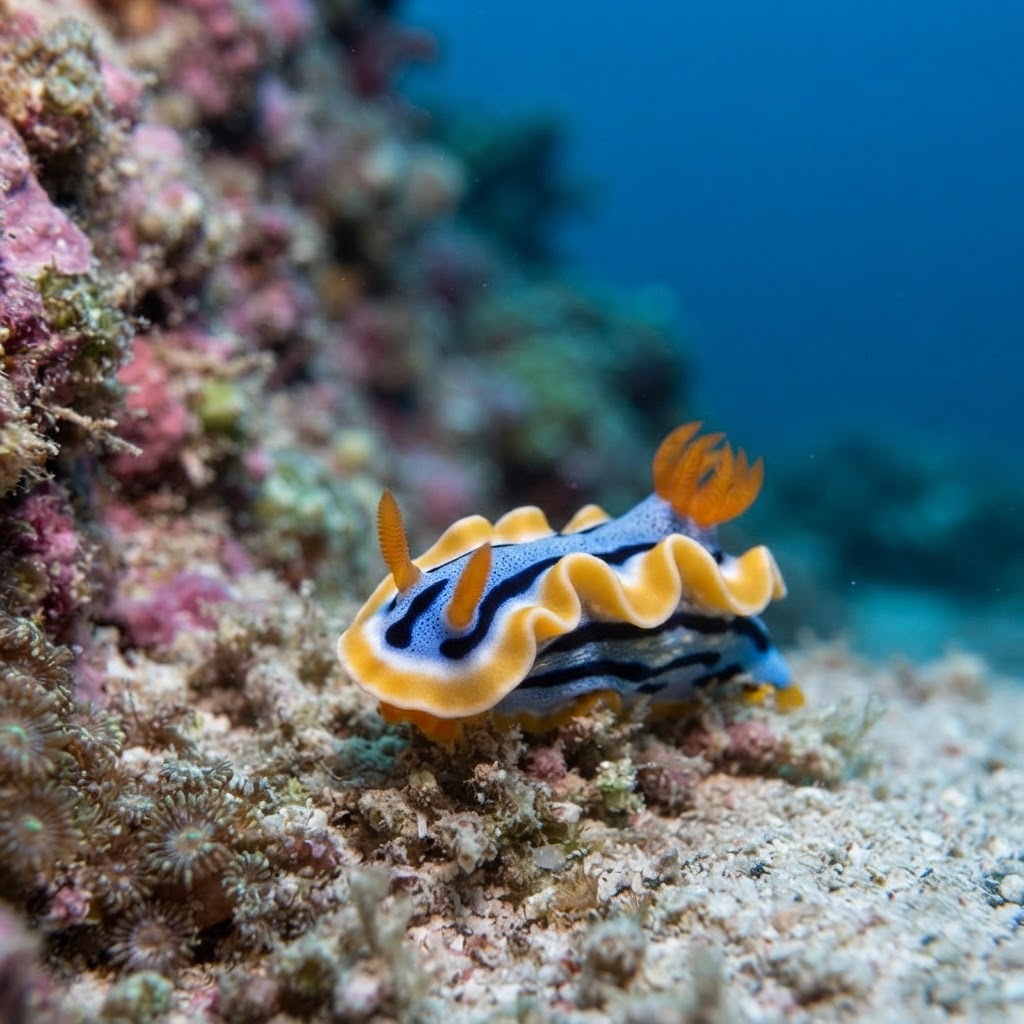
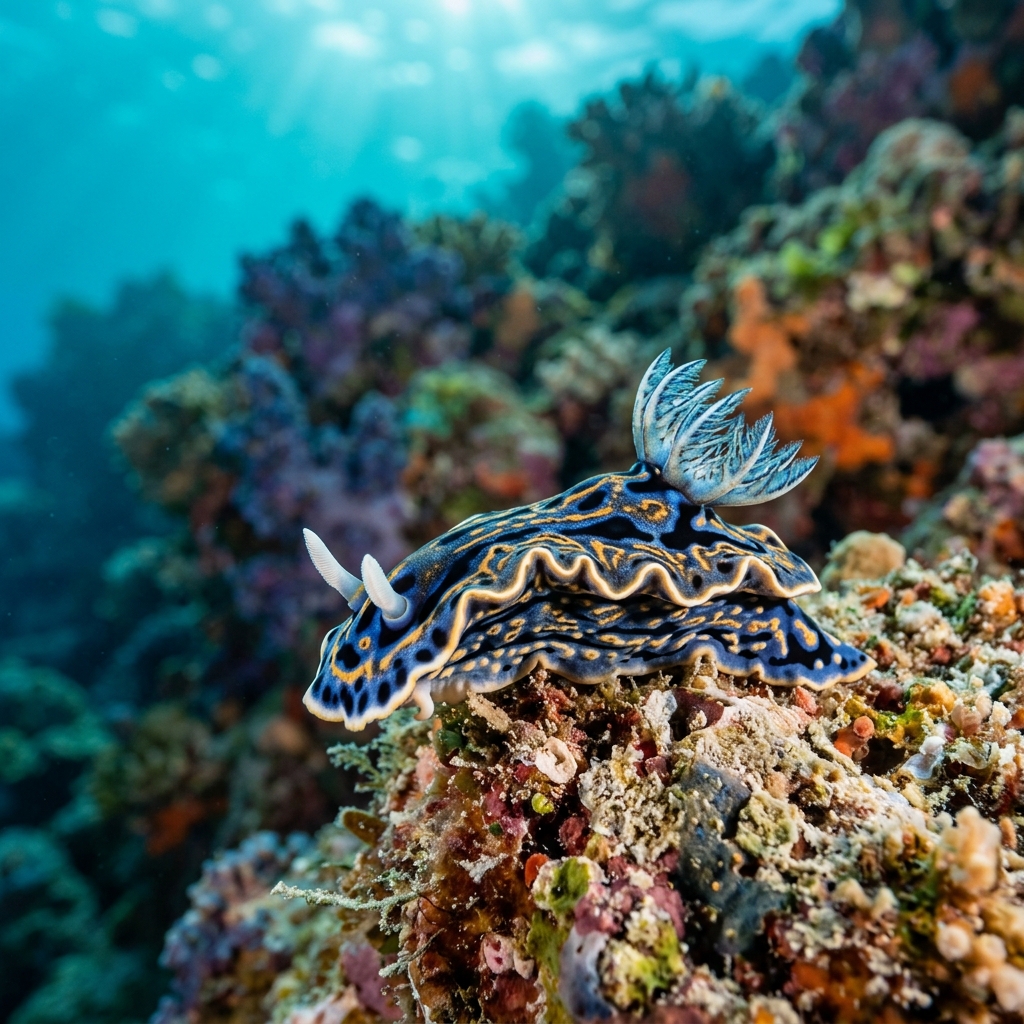
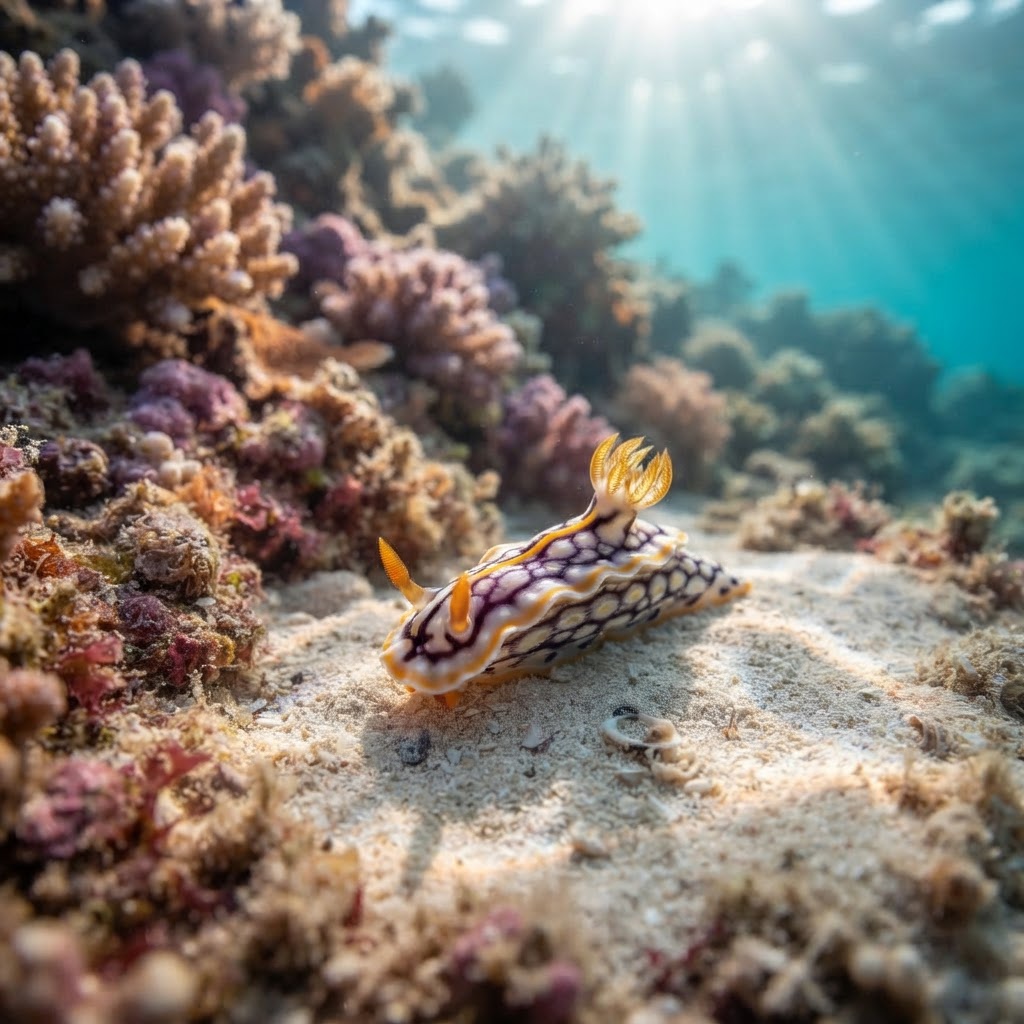
A small, slender nudibranch (sea slug) with a translucent blue to violet mantle marked with fine orange or yellow longitudinal lines running its length. The exposed gills (feathery structure on the back) and rhinophores (paired sensory stalks on the head) are typically tipped orange, giving a clean contrast against the pale body. Size in the water is modest, easy to swim past unless you are already scanning sponge-covered rock and rubble at close range.
Found crawling slowly over rock, rubble and sponge-encrusted reef where it grazes, generally in the same uncommon-to-rare numbers wherever divers log it, so most sightings are a single animal rather than a cluster. It shows no reaction to divers beyond the usual slow retreat, making it an easy macro subject once spotted. Look for it during the day on the reef surface rather than tucked into crevices, since nudibranchs of this genus tend to be out and visible when foraging.
Like other Hypselodoris species, its bright colouring is thought to advertise a build-up of distasteful or toxic compounds absorbed from the sponges it feeds on, a defence called chemical camouflage that warns predators off rather than hiding from them.
No clear seasonal pattern shows up in the sightings, and the observed water temperature range of 20.3 to 26.3°C spans most of the year on these subtropical to tropical reefs, so it is effectively a year-round find rather than a seasonal target.
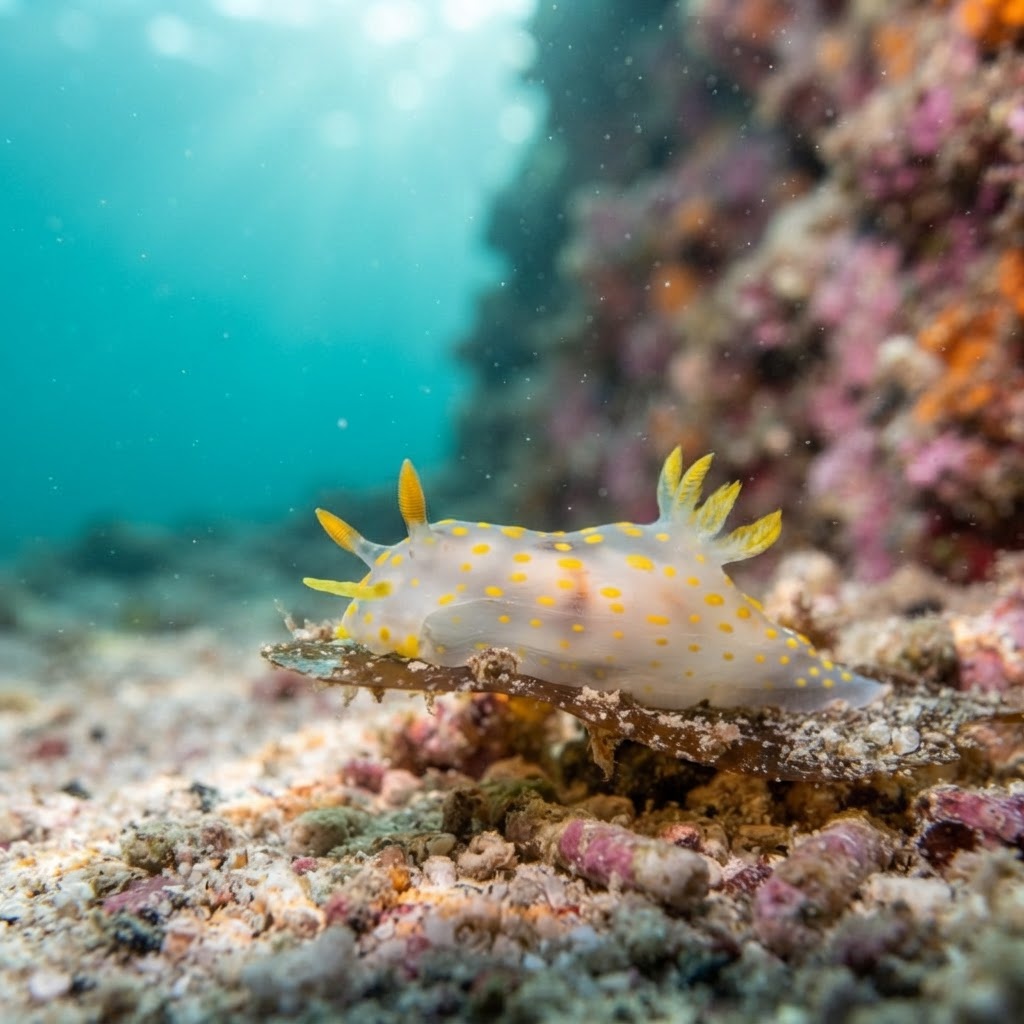
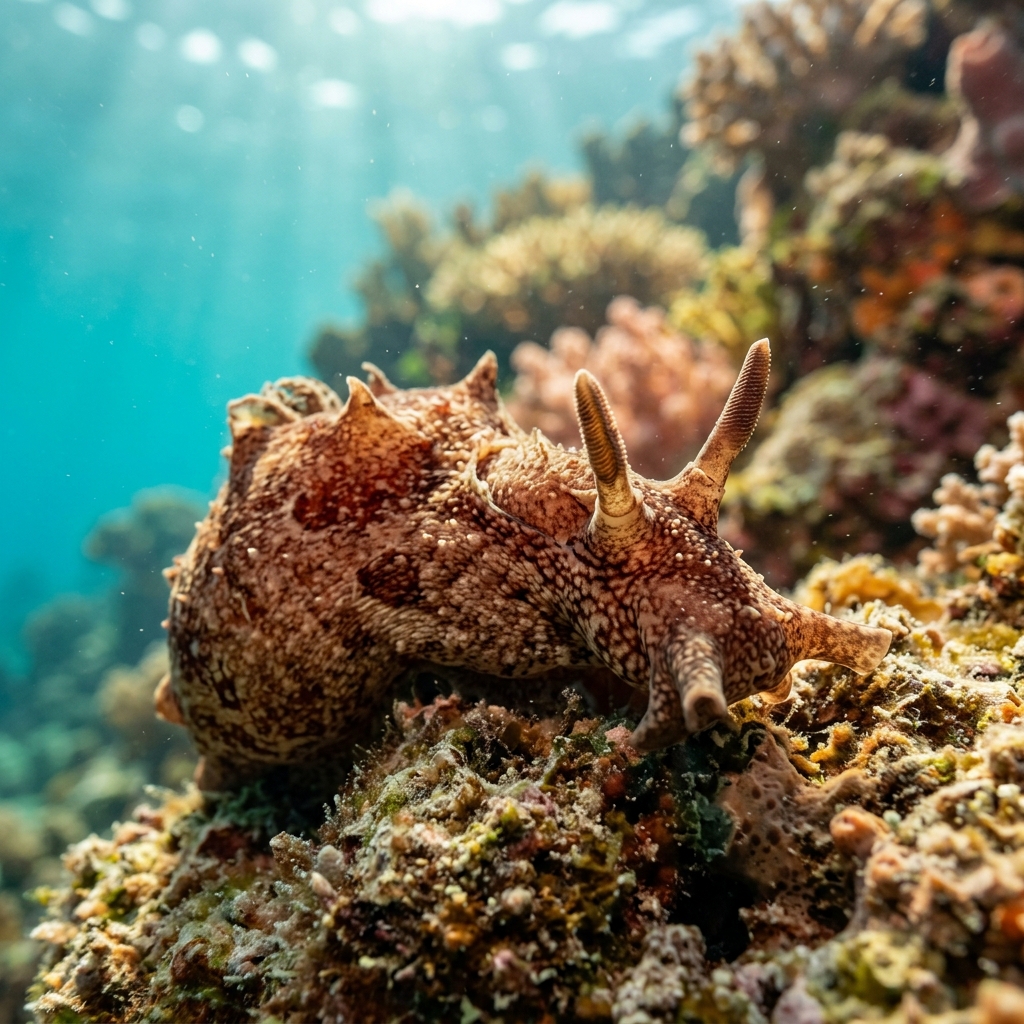
Reef neighbours a diver could mistake it for. Use the identification notes above to tell them apart.
Most consistently logged in Australia, with Queensland the strongest region by far and New South Wales a reliable second, both well ahead of any other location in the data. Île des Pins in New Caledonia is the only spot outside Australia where divers regularly find it, making it the pick if you want a non-Australian sighting.
Mapping where Jackson's Hypselodoris is logged…
Queensland and New South Wales in Australia are the strongest regions for sightings, with Île des Pins in New Caledonia the only reliable spot outside Australia.
There is no strong season in the sighting data, and it turns up across a wide water-temperature range, so it is best treated as a year-round possibility rather than a seasonal target.
Look for a slender, translucent blue to violet nudibranch with fine orange or yellow lines along the mantle and orange-tipped gills and rhinophores. It is small and easy to miss unless you are scanning rock and sponge closely.
No. It poses no threat to divers and can be safely observed and photographed at close range without disturbing it.
Like related Hypselodoris nudibranchs, it likely stores defensive chemicals from the sponges it eats, using its bright colouring to warn predators rather than to blend in.
Site and sighting data is aggregated from diver logs, iNaturalist and GBIF. For taxonomy and conservation status:
Light-spotted Aegires
3,168 sites