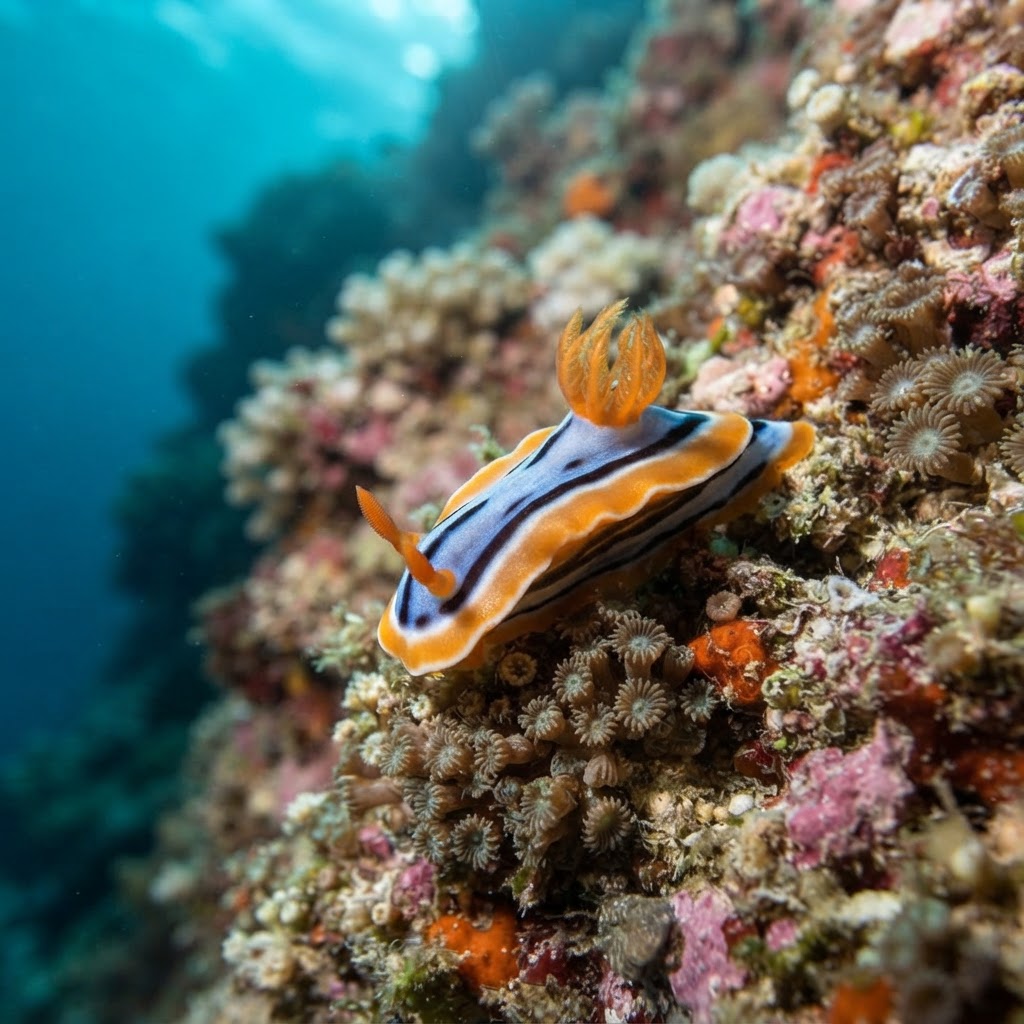
Chromodoris elisabethina
Blue and yellow-lined nudibranch logged across Queensland's reefs, Sumatra and Efate, Vanuatu, thriving in 21.8 to 28C water year-round.
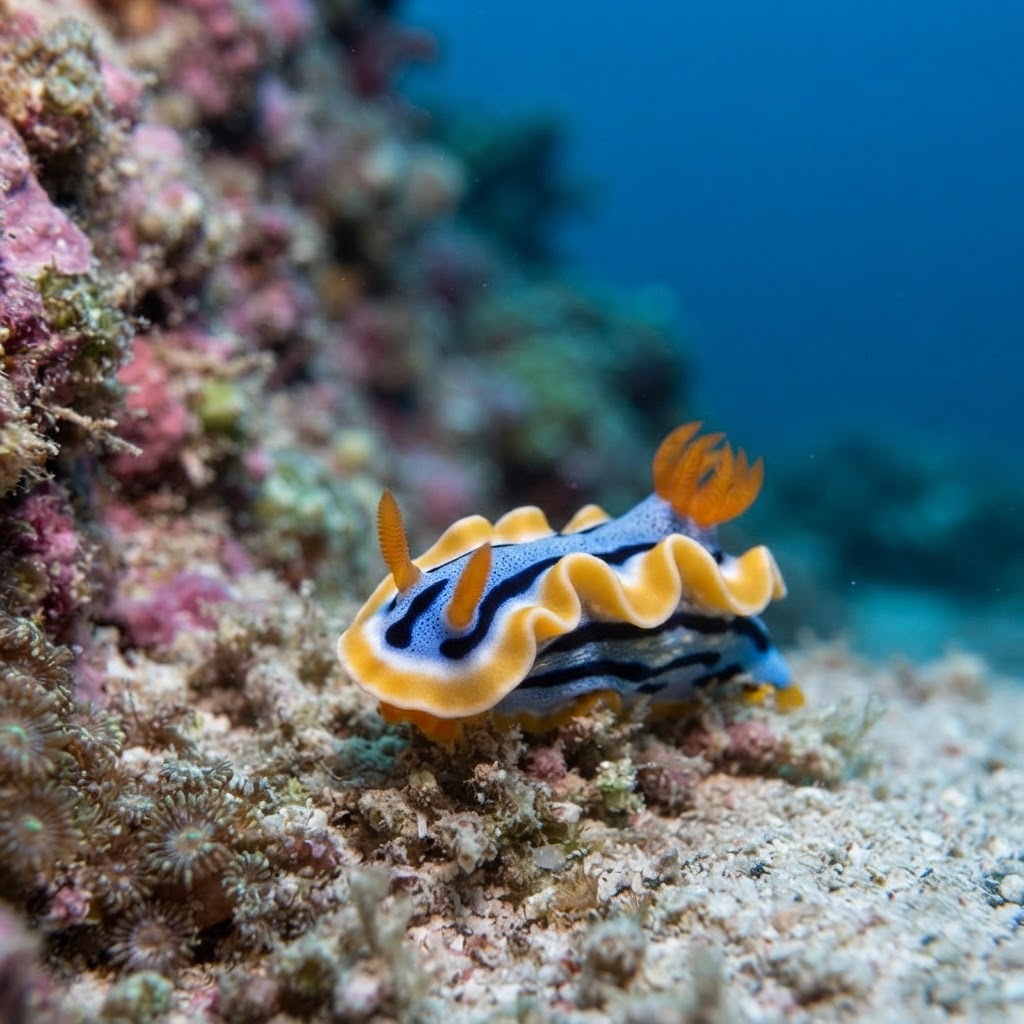
A small, oval-bodied nudibranch usually only a few centimetres long, with a pale blue to violet back marked by two or three broken yellow-edged lines running lengthwise. The rhinophores (the paired sensory horns on the head) and the gill cluster near the tail are typically tipped in orange or yellow, giving a clean two-tone contrast against the blue body. It moves slowly and stays low on the reef, so the linear yellow striping is the detail to check against similar blue chromodorids.
Divers find it grazing slowly across coral rubble, sponge crusts and hard substrate, usually in daylight hours on shallow to mid-depth reef sections rather than open sand. It pays no attention to divers and will not flee or hide, so it is an easy, patient macro subject once spotted. Most logs describe it as uncommon to common at a site, meaning a careful look along ledges and rubble patches is usually needed rather than a chance encounter mid-water.
Like other Chromodoris species, its bright colouring is not camouflage but a warning: it stores or synthesises unpalatable chemical compounds from its sponge diet, which most reef predators learn to avoid.
Sightings show no detected seasonal pattern, and with a comfortable range of 21.8 to 28C it turns up on tropical and subtropical reefs throughout the year. Plan the dive around the destination's general conditions rather than a particular month for this species.
Reef neighbours a diver could mistake it for. Use the identification notes above to tell them apart.
Most commonly logged on reefs in Queensland, Australia, with strong numbers also coming from Sumatra in Indonesia and Efate in Vanuatu. Smaller but reliable counts come from Kwajalein Atoll in the Marshall Islands and Nouméa in New Caledonia, making this a Indo-Pacific-wide find rather than a regional specialty.
Mapping where Elisabeth's Chromodoris is logged…
It is most often logged on reefs in Queensland, Australia, with solid numbers also reported from Sumatra in Indonesia and Efate in Vanuatu. Smaller populations turn up at Kwajalein Atoll in the Marshall Islands and around Nouméa in New Caledonia.
There is no strong seasonal pattern in the sightings, and it tolerates water from about 21.8 to 28C, so it is found on reefs year-round. Time your trip around general diving conditions at the destination rather than a specific season.
Look for a small blue to violet nudibranch with two or three broken yellow-edged lines running along its back and orange or yellow tips on the rhinophores and gill cluster. It moves slowly over rubble and hard coral rather than swimming, making the lengthwise striping the easiest feature to check.
Exact size data is not recorded for this species, but like most Chromodoris nudibranchs it stays small, typically only a few centimetres in length when seen on the reef.
Its vivid blue and yellow pattern advertises chemical defences picked up from its sponge diet, warning reef predators that it is unpalatable rather than hiding it from them.
Site and sighting data is aggregated from diver logs, iNaturalist and GBIF. For taxonomy and conservation status:
Light-spotted Aegires
3,168 sites