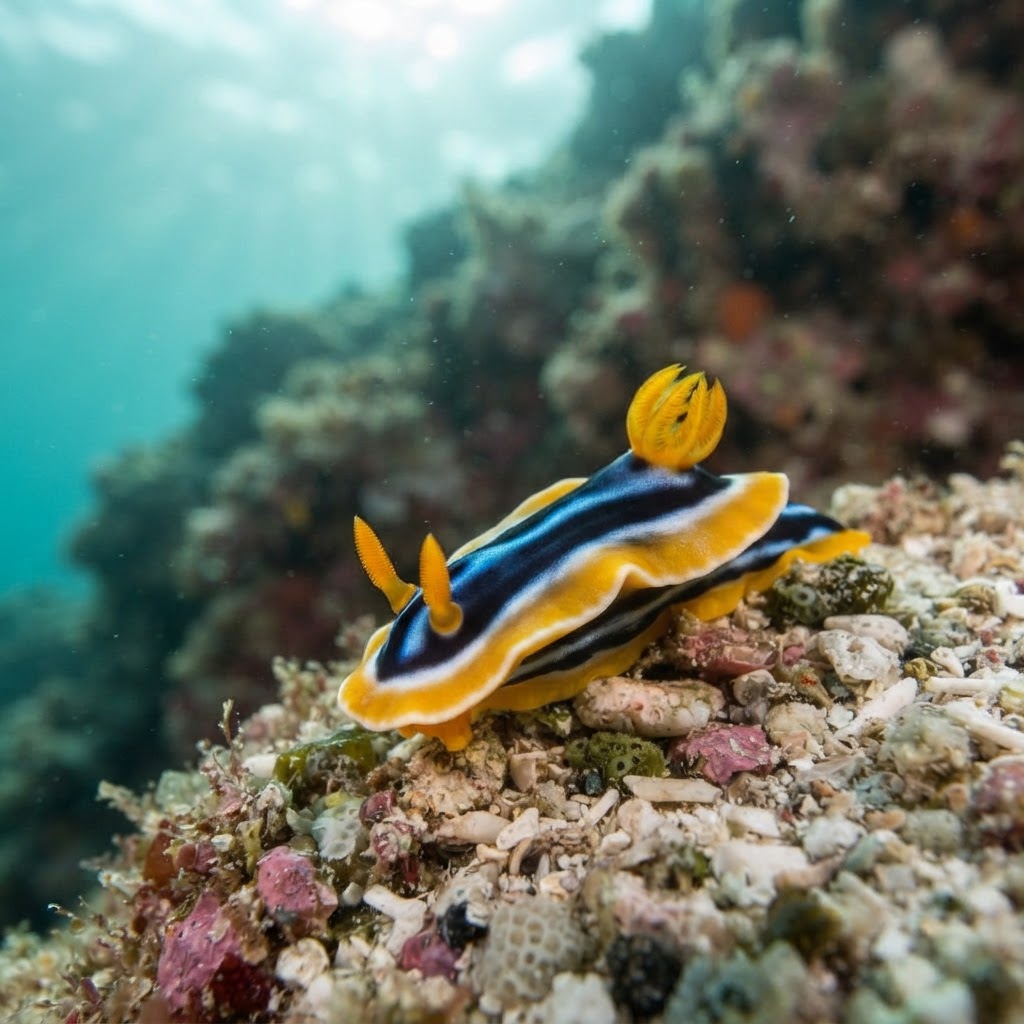
Chromodoris kuiteri
A small purple-and-white nudibranch logged at reef sites across Queensland and New South Wales, year-round in waters around 20 to 26C.
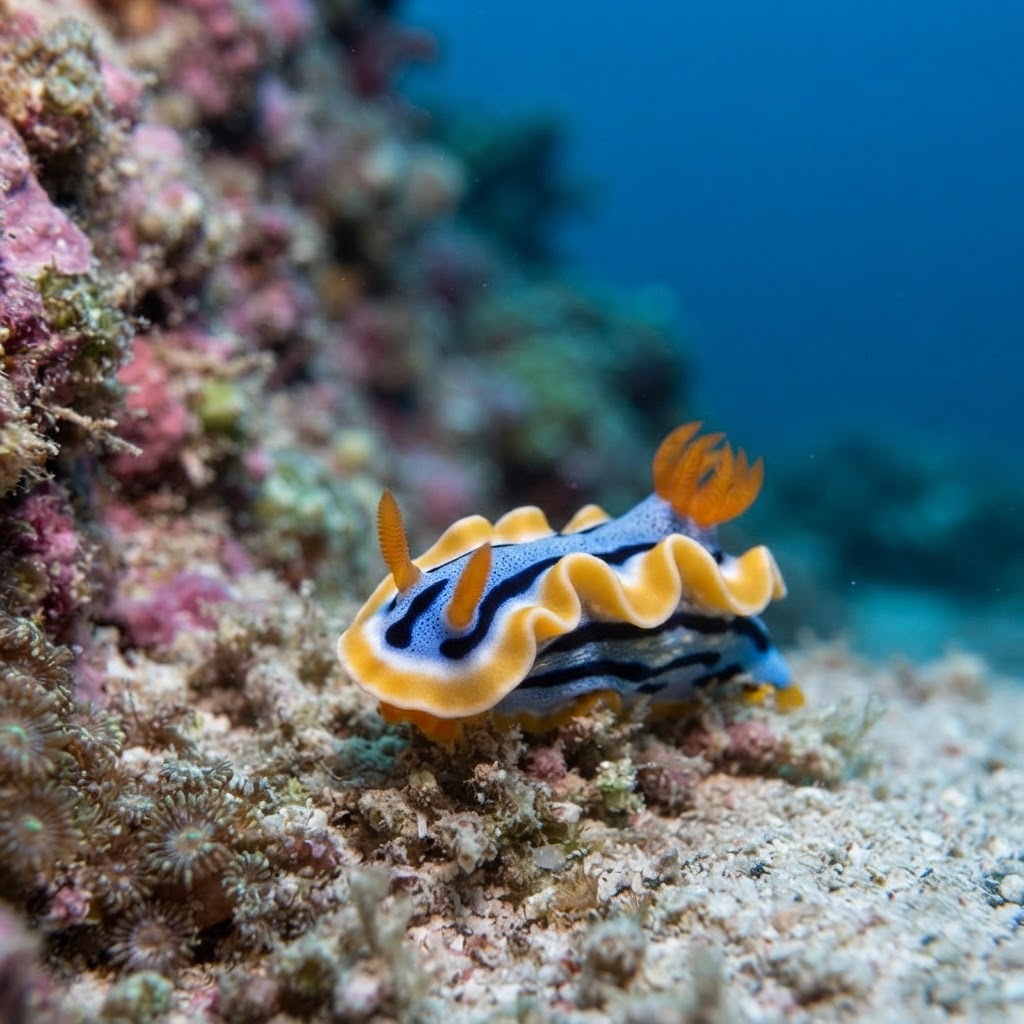
A small, slug-shaped nudibranch reaching about 5 cm, with a white to cream body edged in a band of purple or lilac running the length of the mantle. Look for a raised ridge of orange-tipped gills (the feathery cluster near the tail) and a pair of upright sensory tentacles (rhinophores) near the head, often tipped in a darker shade. It moves slowly over reef rock and rubble, so once spotted it is easy to get a steady look at the mantle pattern for a positive ID.
Divers typically find it moving slowly across bare rock, rubble, or the base of sponges and algae, grazing rather than hiding, which makes it one of the easier nudibranchs to photograph once located. It shows no reaction to divers beyond its usual unhurried pace, and most logs describe it as an uncommon find rather than something you stumble on every dive. Look low on the reef structure during a slow, methodical scan rather than mid-water.
Like other Chromodoris species, its bright mantle colouring is a warning display rather than decoration, likely signalling to predators that its tissues carry sponge-derived chemical defences picked up from its diet.
Sightings are spread across the year with no clear seasonal peak in the data, and the observed temperature range of 20.3 to 26.3C covers both the cooler NSW months and warmer Queensland conditions, so it is worth watching for on any dive in these regions.
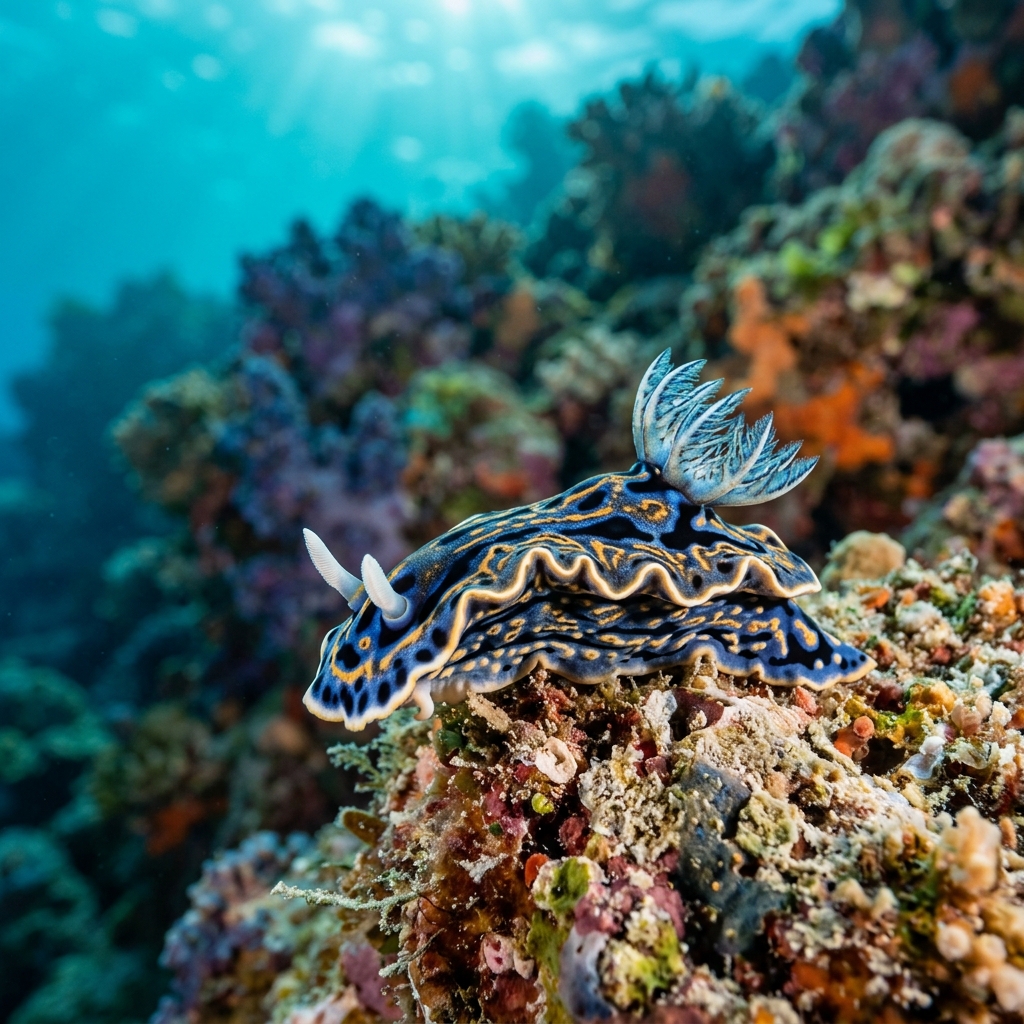
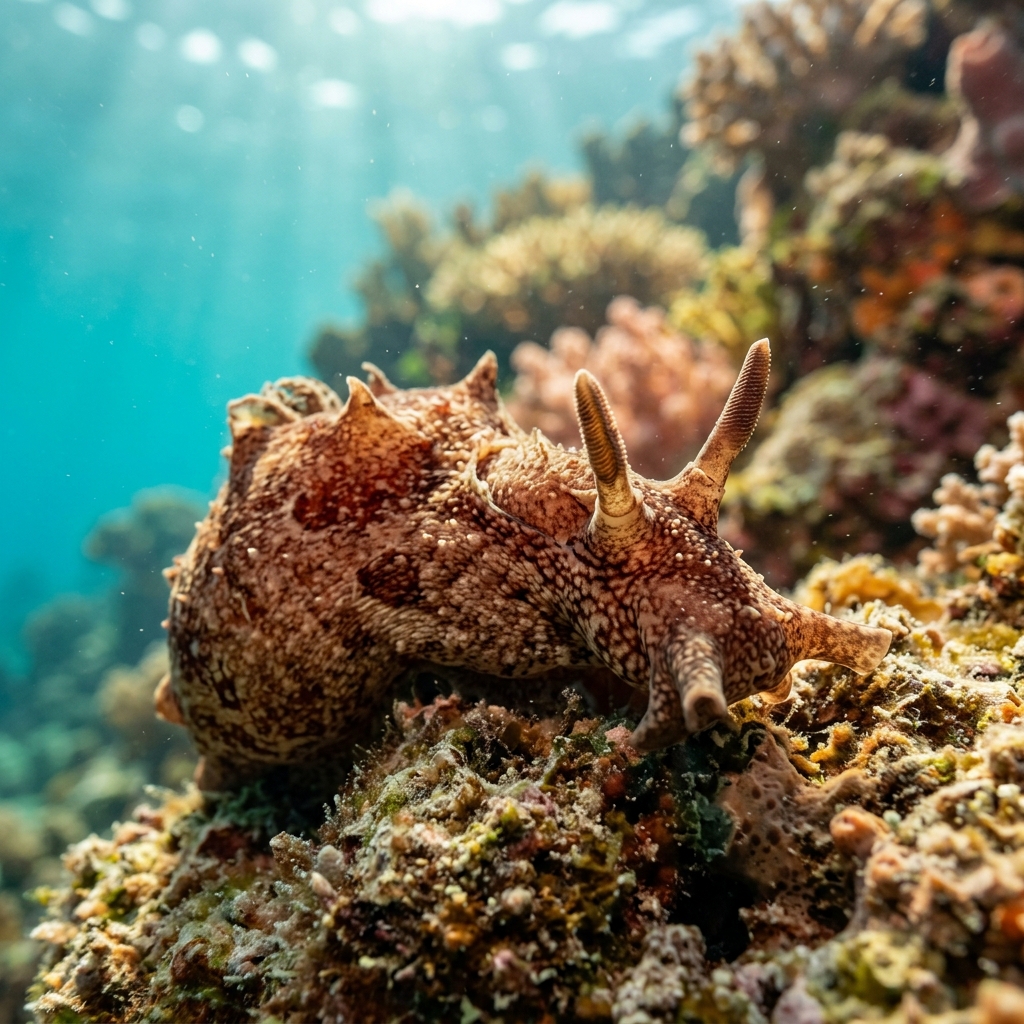
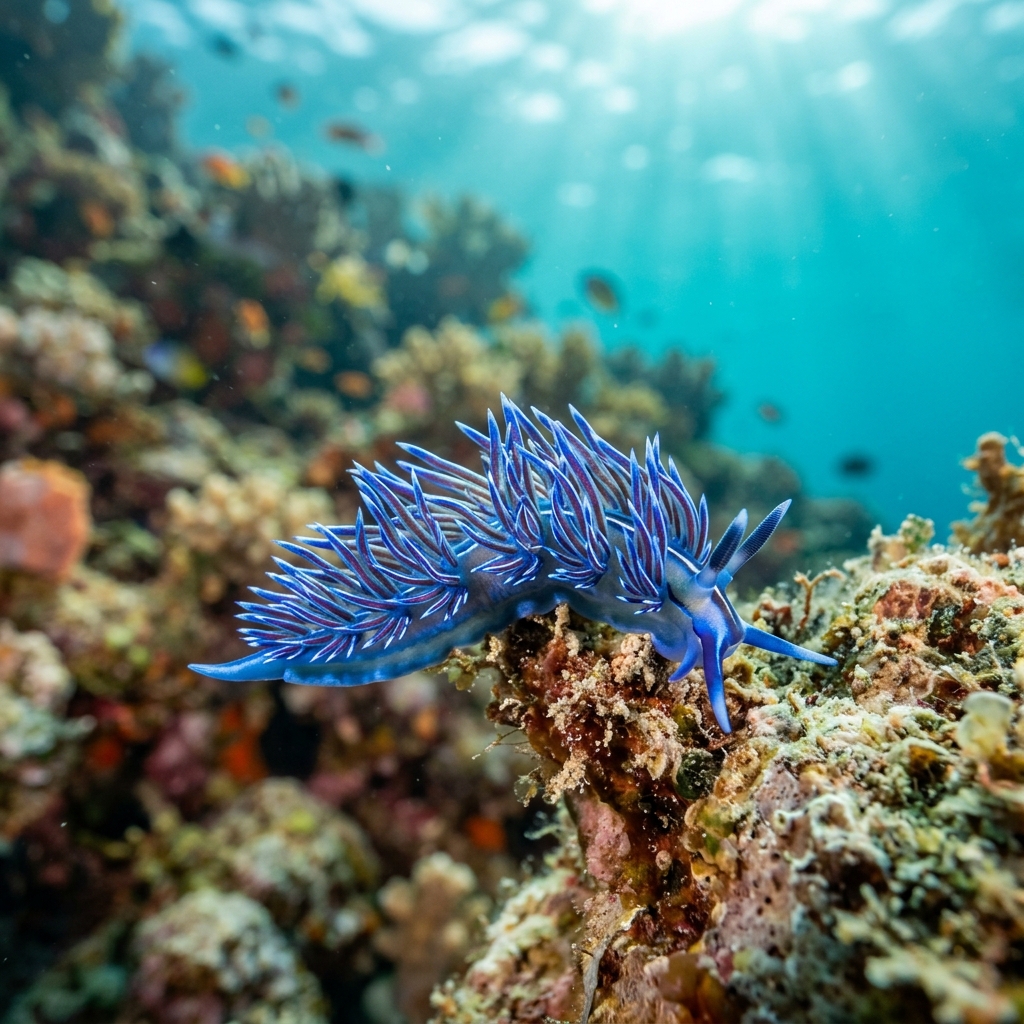
Reef neighbours a diver could mistake it for. Use the identification notes above to tell them apart.
This one is most reliably logged in Australia, with the strongest run of sightings along Queensland reef sites and a solid secondary showing in New South Wales. Most records come from temperate and subtropical reef sites rather than the far-north tropical stretch, so divers working the southern Great Barrier Reef fringe and the NSW coast have the best shot.
Mapping where Kuiter's Chromodoris is logged…
It is most consistently logged in Australia, with the heaviest concentration of sightings in Queensland and a good number also reported from New South Wales.
There is no strong seasonal pattern in the sighting data, so it turns up year-round on reefs where water temperatures sit between roughly 20 and 26C.
Look for a small white-bodied nudibranch, around 5 cm, with a purple-edged mantle and orange-tipped gills near the tail. It moves slowly over rubble and rock, giving divers time to check the mantle band for confirmation.
They reach about 5 cm in length, a typical size for a Chromodoris nudibranch, making them a small but photogenic macro subject.
No. It poses no threat to divers and can be observed and photographed up close without any risk.
Site and sighting data is aggregated from diver logs, iNaturalist and GBIF. For taxonomy and conservation status:
Light-spotted Aegires
3,168 sites