Hypselodoris whitei
A small, colourful nudibranch most often logged on shallow Bali reefs, hiding in the top few metres of warm water year-round.
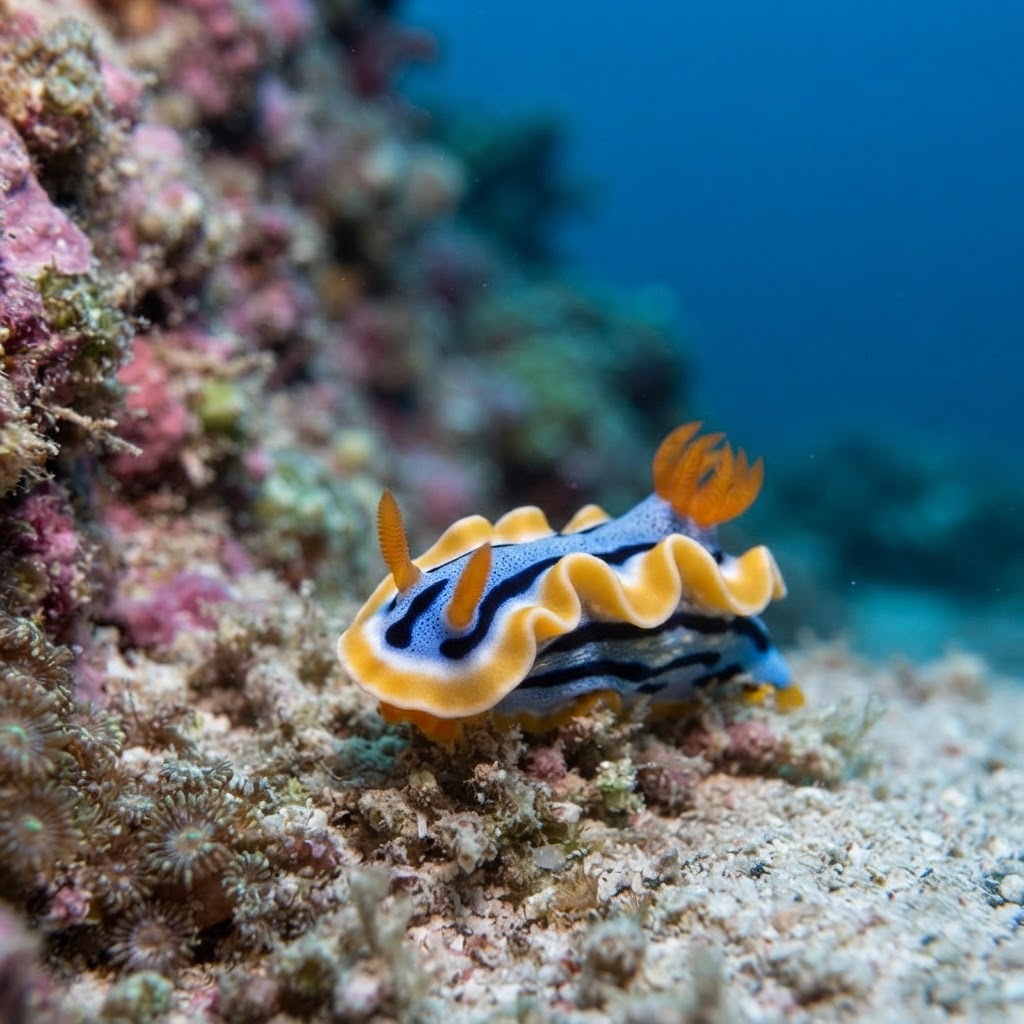
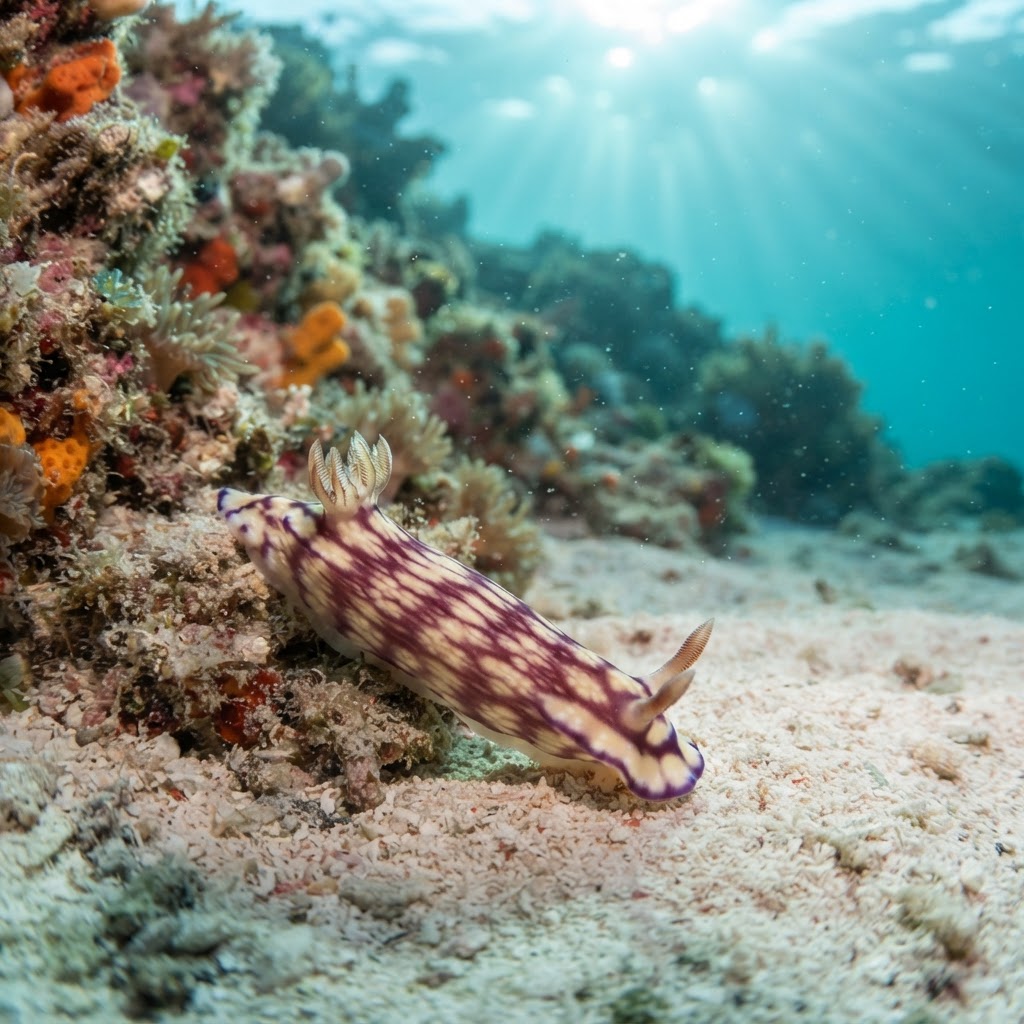
A small, elongated nudibranch with a smooth purple-to-blue mantle marked by fine lines running along its length, tipped with an orange or yellow border. Look for the contrasting orange rhinophores (the paired sensory horns on the head) and gill cluster at the rear, which stand out against the body colour. It sits low on the substrate and rarely moves fast enough to lose in a scan of the reef floor.
Found grazing slowly across shallow reef substrate in only a few metres of water, usually tucked among rubble or low coral growth rather than out in the open. It pays no attention to divers and simply keeps feeding, making it an easy, unhurried subject once spotted. Most sightings come from casual daytime reef scans rather than dedicated night dives.
Like other Hypselodoris nudibranchs, it likely feeds on sponges and stores chemical compounds from that diet in its own tissue as a defence against predators, which is part of why its colours stay so bold and exposed rather than camouflaged.
No strong seasonal pattern shows up in the data, so treat it as a year-round find on tropical reefs. It's logged in water from about 24 to 30C, which covers most of the diving calendar at its known sites.
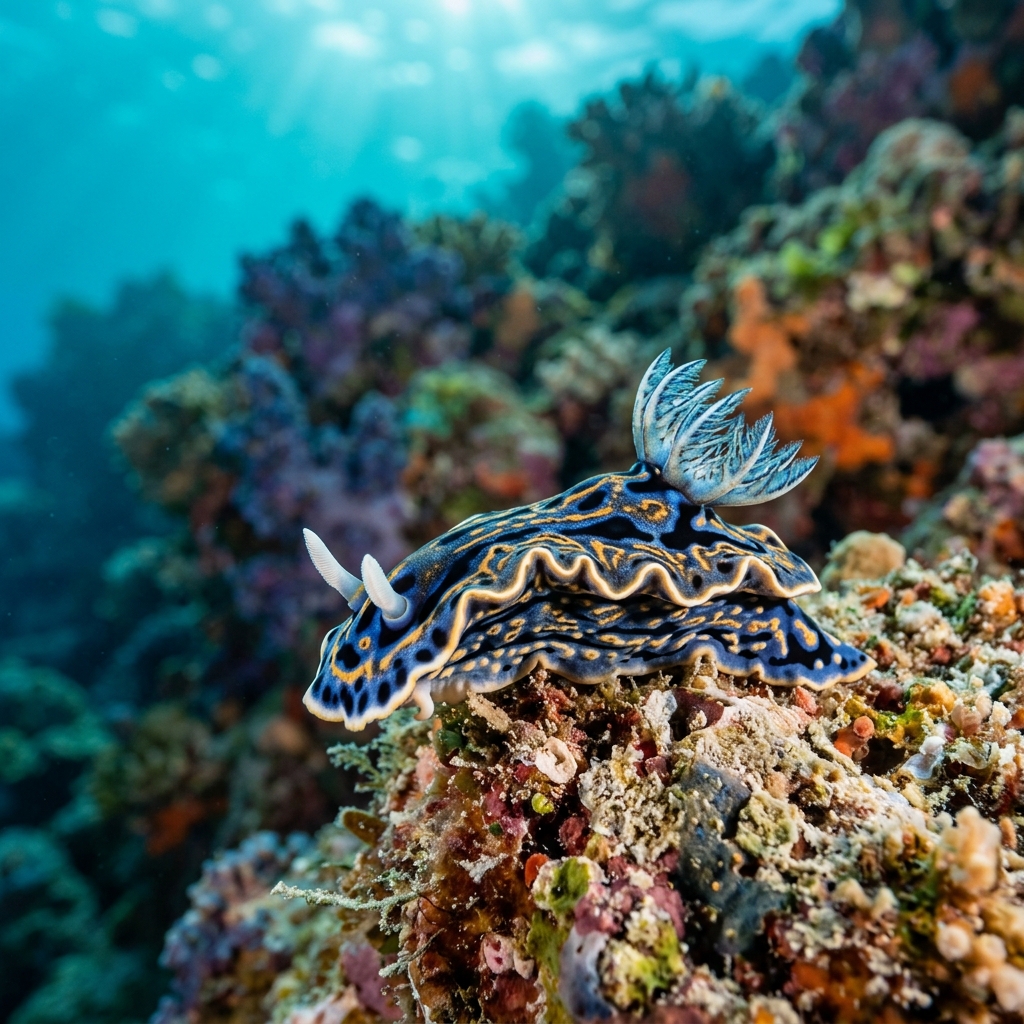
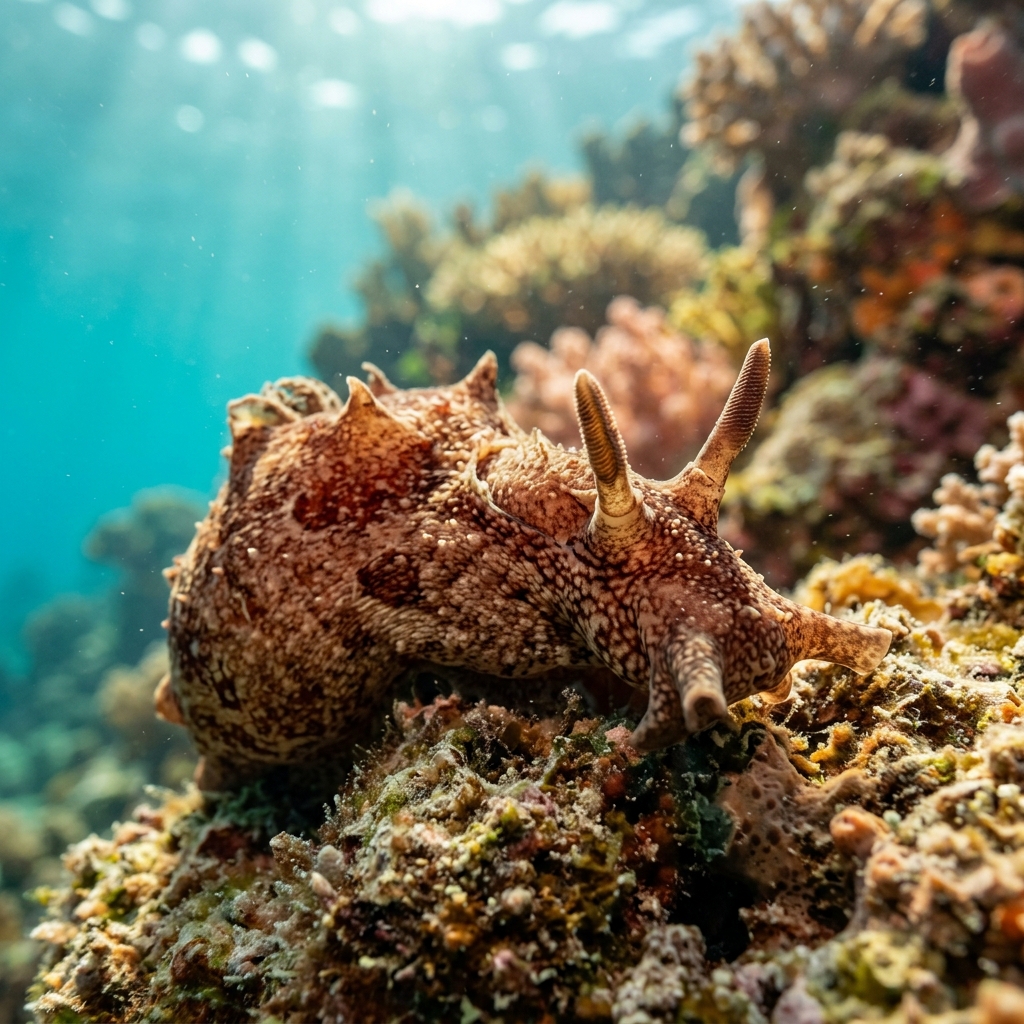
Reef neighbours a diver could mistake it for. Use the identification notes above to tell them apart.
Most reliably found on the shallow reefs of Bali, Indonesia, which accounts for the bulk of logged sightings, with further records from Sulawesi. Outside Indonesia, it turns up on reefs in Queensland, Australia, around Apra Harbor in Guam, and off Luzon in the Philippines, with occasional reports from Western Australia, the Marshall Islands, and Mozambique.
Mapping where White's Hypselodoris is logged…
Bali, Indonesia is by far the strongest spot, with additional sightings in Sulawesi, Queensland in Australia, Apra Harbor in Guam, and Luzon in the Philippines.
There's no clear seasonal pattern in the sighting data, so it's considered a year-round species on the warm reefs it inhabits, typically in water between 24 and 30C.
Look for a small, smooth-bodied nudibranch with a purple-blue mantle, fine longitudinal lines, and an orange border, plus orange rhinophores and gills at the rear. It stays low and slow on shallow reef substrate.
Exact size data isn't well documented for this species, but like most Hypselodoris nudibranchs it's a small reef animal, typically only a few centimetres long.
No. It has no known risk to divers and simply grazes on the reef surface, ignoring anyone nearby.
It's a carnivore, most likely feeding on sponges like related Hypselodoris species, which it grazes from the reef substrate at shallow depths.
Site and sighting data is aggregated from diver logs, iNaturalist and GBIF. For taxonomy and conservation status:
Light-spotted Aegires
3,168 sites