Chromodoris lochi
Electric-blue, orange-tipped and 2cm long, this nudibranch is a common find across Sulawesi, Luzon and Zanzibar's reefs.
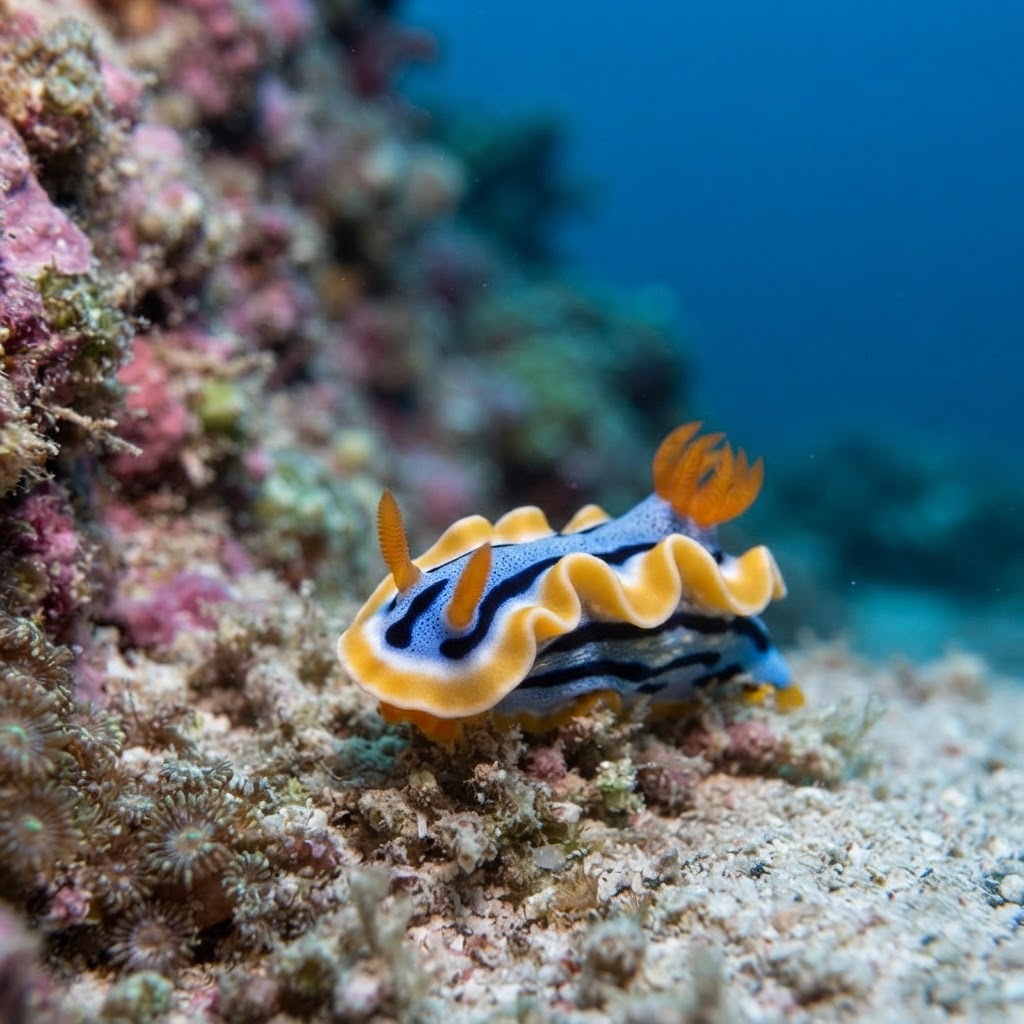
A slender, 2cm nudibranch with a smooth blue body crossed by fine white or pale blue lines running lengthwise. The gills and rhinophores (the paired sensory horns on its head) are tipped with vivid orange, giving it a small but sharp splash of colour against the blue. It moves slowly across the reef surface, so once you spot the colour pattern it's easy to hold in view for a photo.
Look for it grazing slowly across coral rubble, sponge-covered rock and open reef flats, usually in full view rather than tucked into crevices. It pays no attention to divers and won't react to a close approach, which makes it a favourite subject for macro photographers working reef walls and rubble patches by day.
Like other Chromodoris species, its bright colouring isn't camouflage but a warning: it feeds on sponges and stores their chemical defences in its own tissue, making it distasteful to predators.
Sightings show no clear seasonal pattern, and with a comfortable range of roughly 25 to 31C it's present on tropical reefs year-round. Any month works at its core sites in Indonesia and the Philippines.
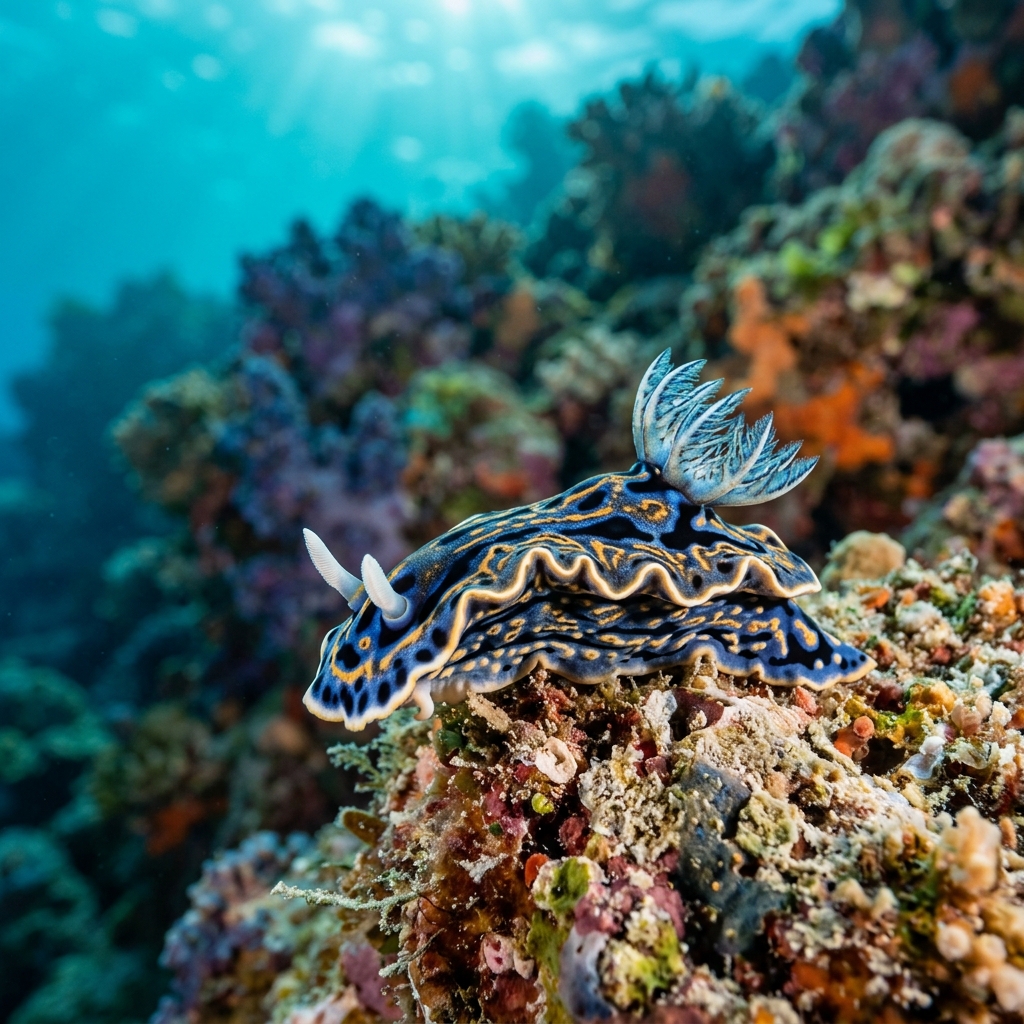
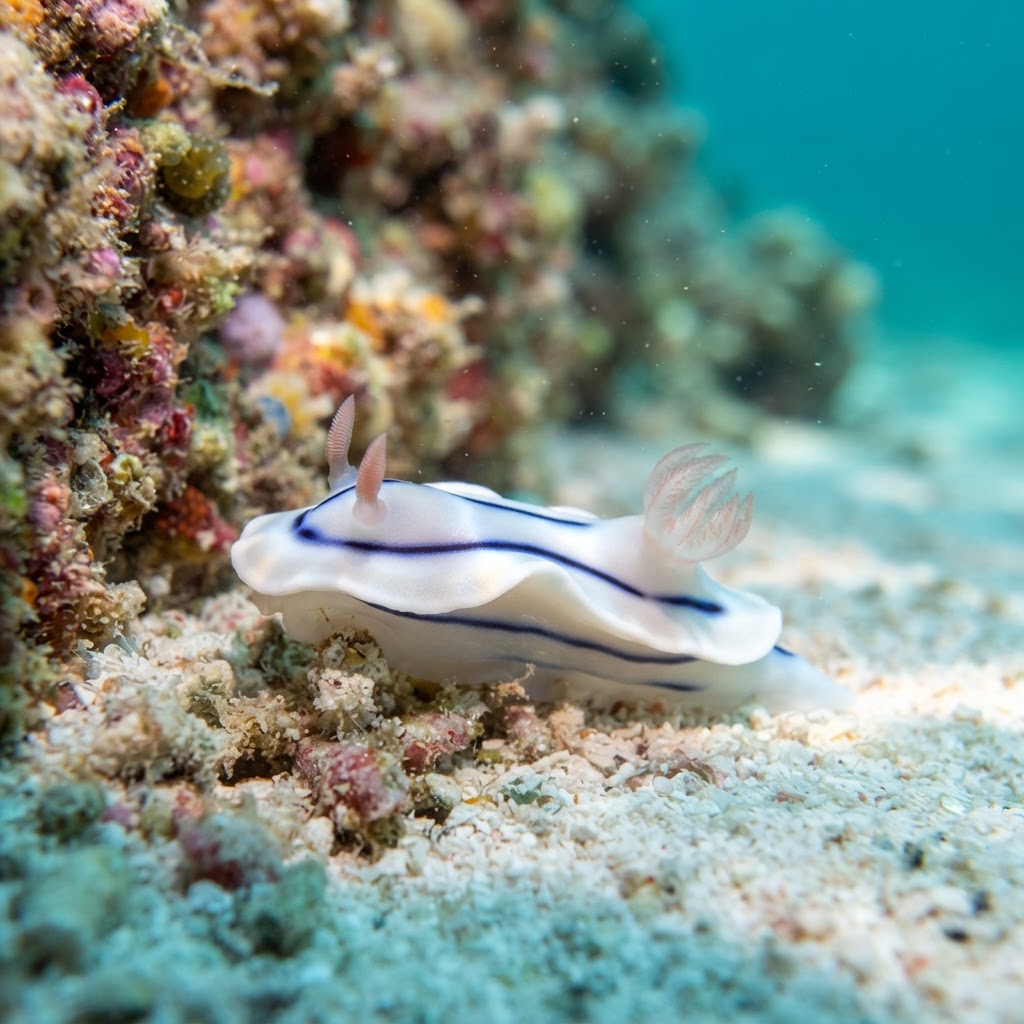
Reef neighbours a diver could mistake it for. Use the identification notes above to tell them apart.
This is one of the most reliably logged nudibranchs across the Coral Triangle, with strong numbers in Sulawesi and Raja Ampat in Indonesia, and across Luzon, Visayas and Palawan in the Philippines. It also turns up consistently off Zanzibar in Tanzania, and divers regularly find it in Fiji and the Society Islands of French Polynesia, with smaller but steady populations in Queensland, Vanuatu and Malaysia.
Mapping where Loch's Chromodoris is logged…
It's most commonly logged in Sulawesi and Raja Ampat in Indonesia, and across Luzon, Visayas and Palawan in the Philippines. Zanzibar in Tanzania, Fiji and French Polynesia's Society Islands are also reliable spots.
There's no strong seasonal pattern, so it can be found year-round on reefs within its 25 to 31C comfort range. Plan around your destination's general dive season rather than this species' calendar.
Look for a small, roughly 2cm blue nudibranch with fine pale lines along its body and orange-tipped gills and rhinophores. It moves slowly over rubble and sponge-covered reef, staying exposed rather than hiding.
They typically reach about 2cm in length, making them a classic macro subject rather than something you'd notice from a distance.
No. They have no means of harming divers and simply continue grazing if you get close, making them a safe and easy macro photography subject.
Its bright blue and orange pattern is a warning signal, not camouflage. It feeds on sponges and absorbs their chemical toxins into its own tissue, which makes it unpalatable to would-be predators.
Site and sighting data is aggregated from diver logs, iNaturalist and GBIF. For taxonomy and conservation status:
Light-spotted Aegires
3,168 sites