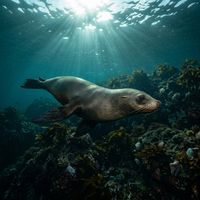
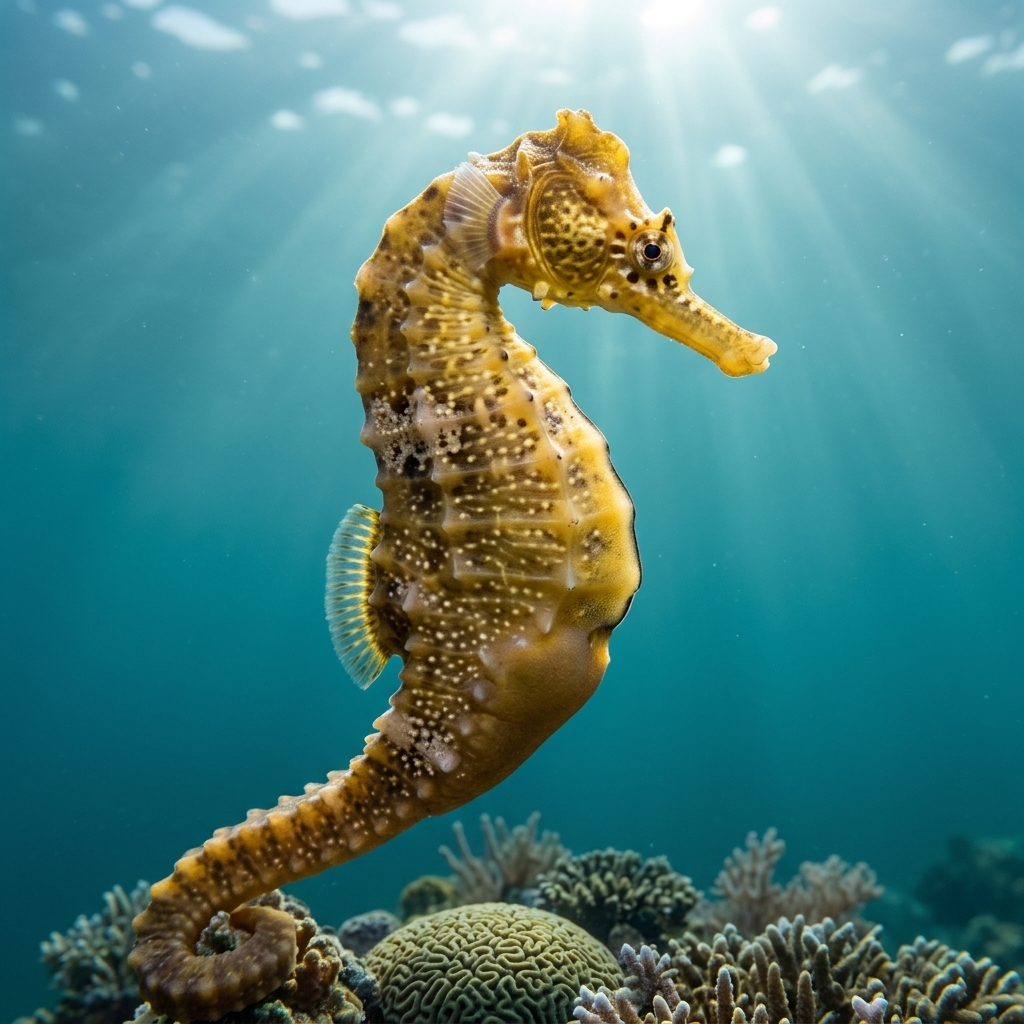
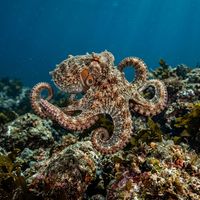
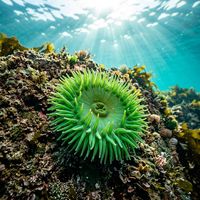
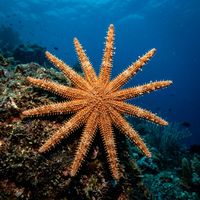
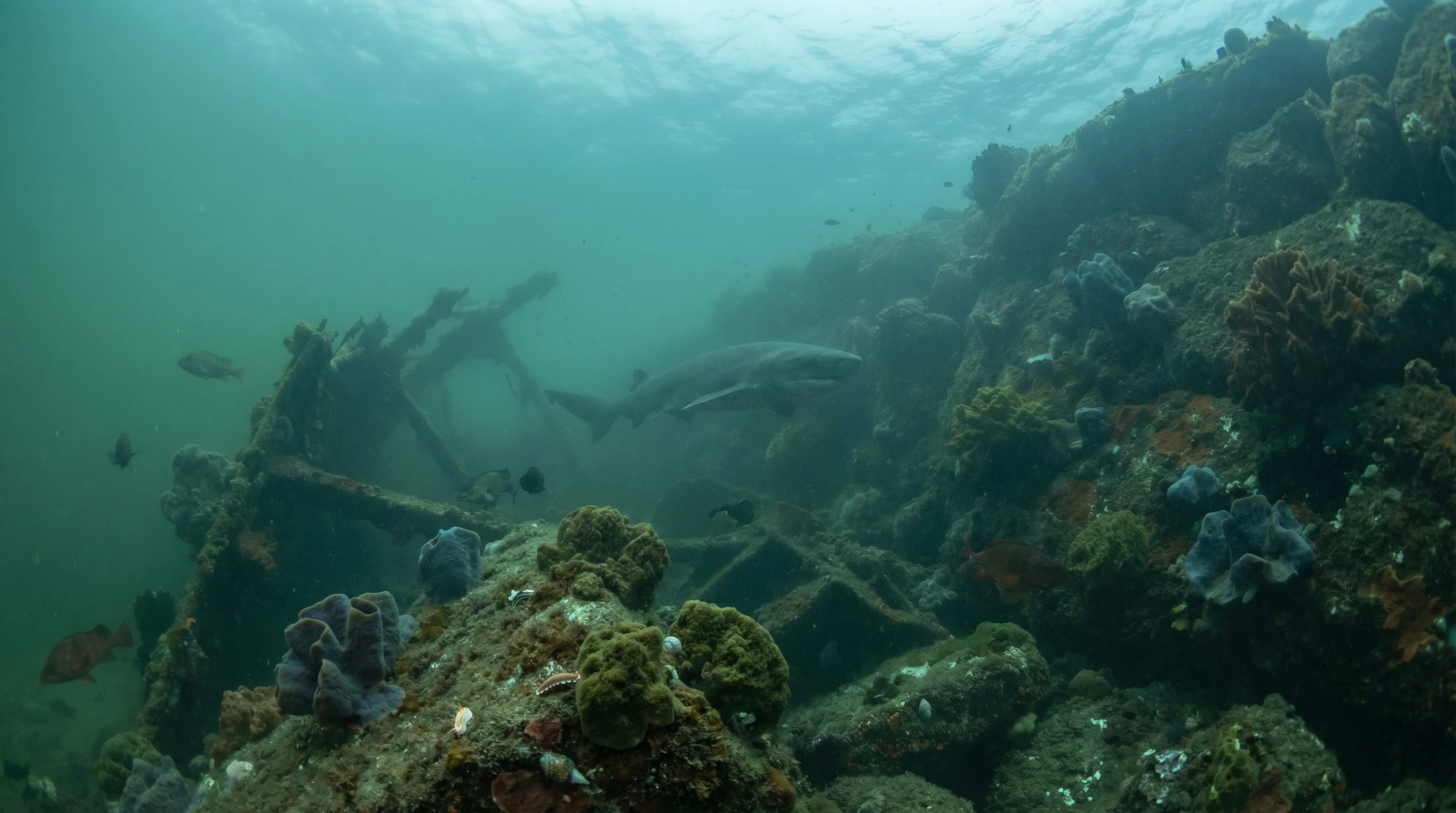
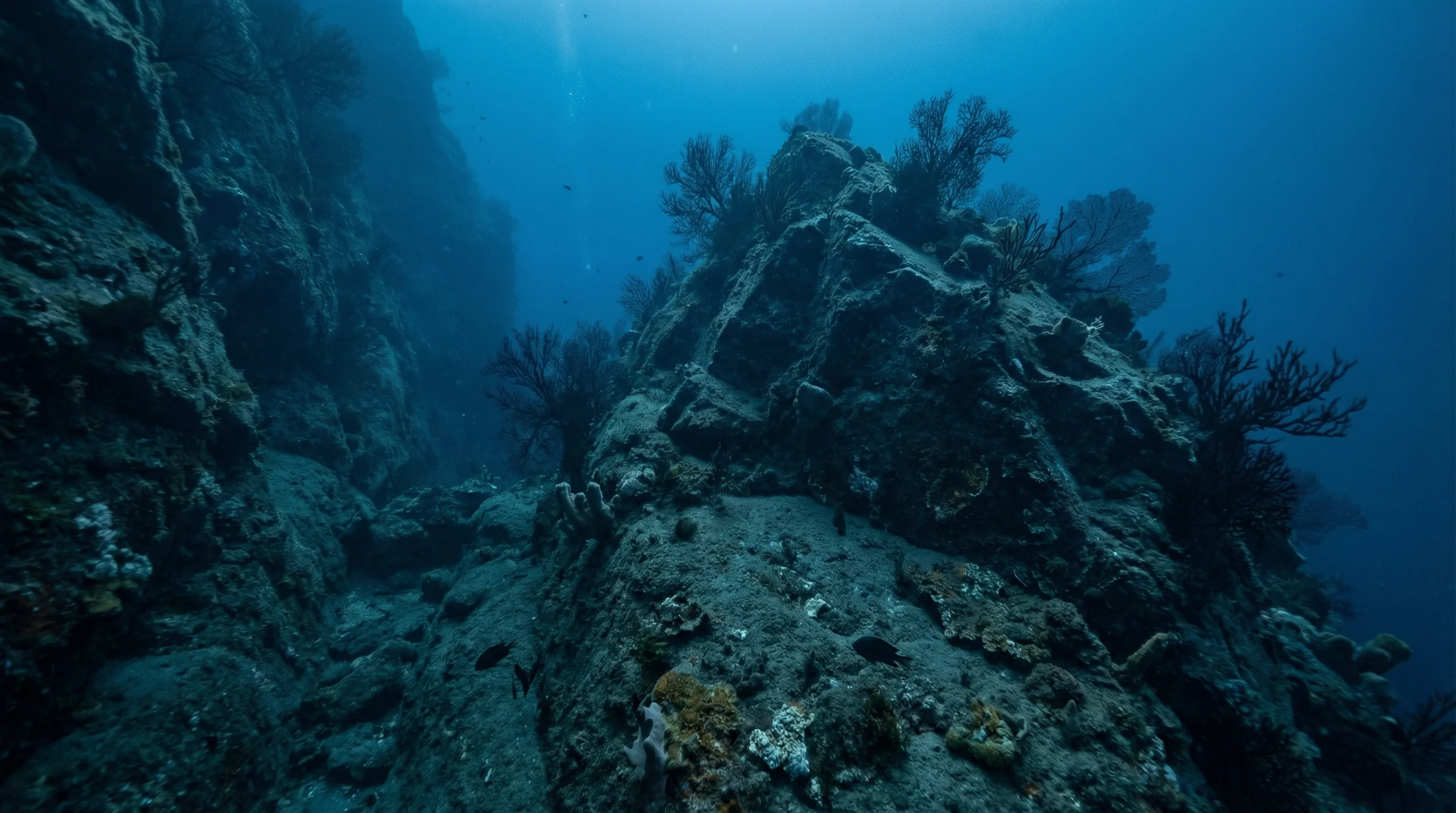
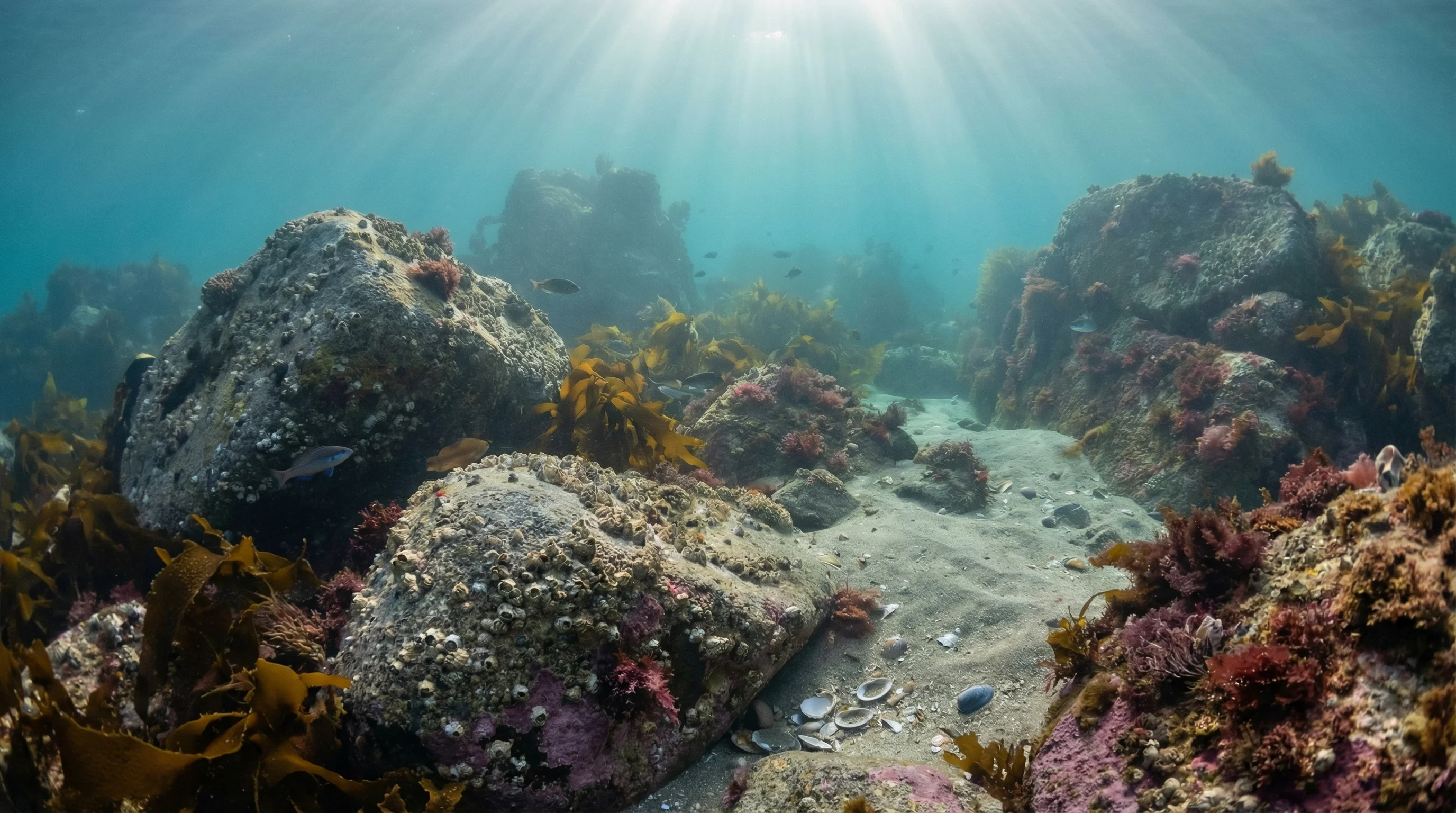
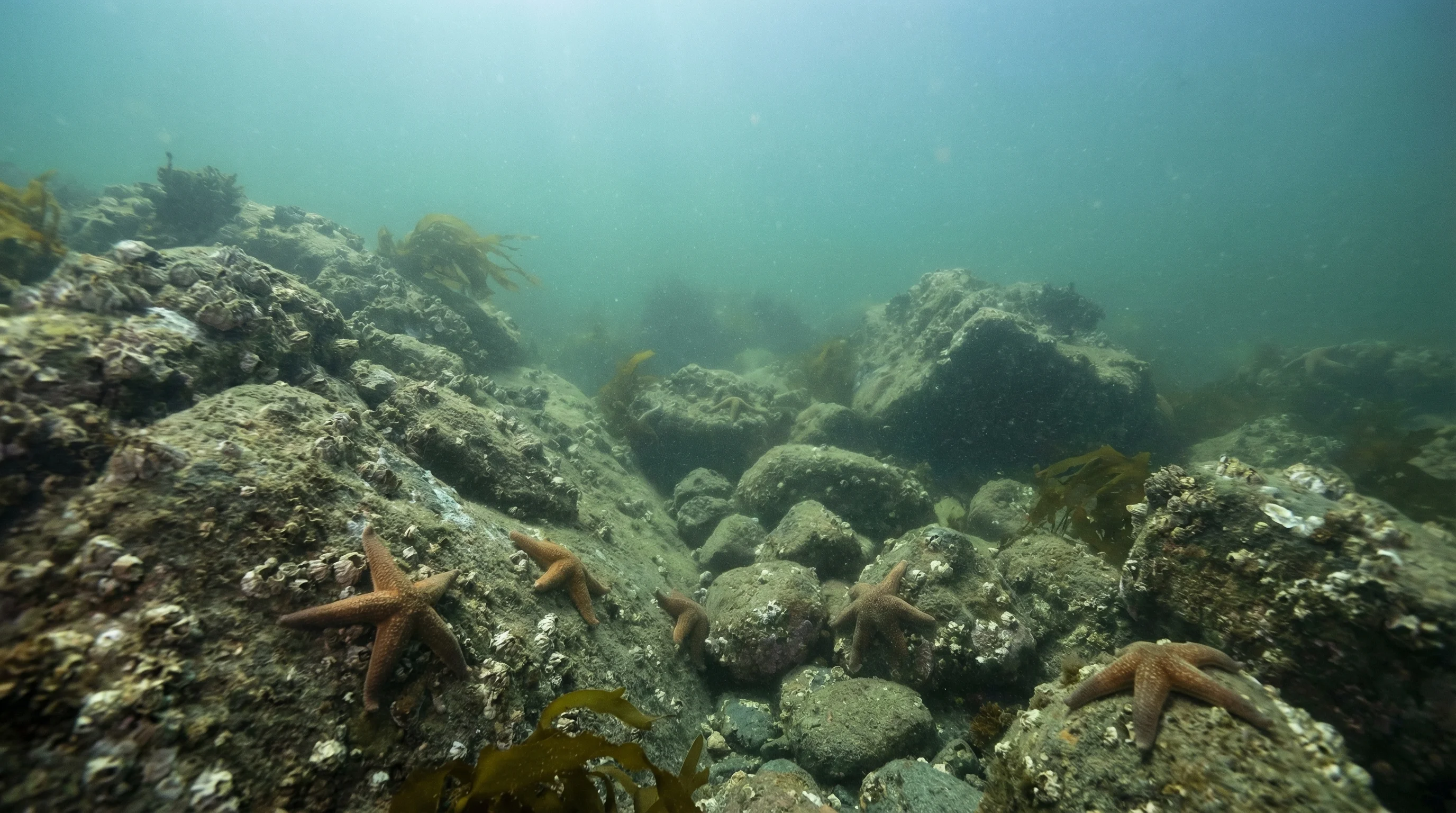
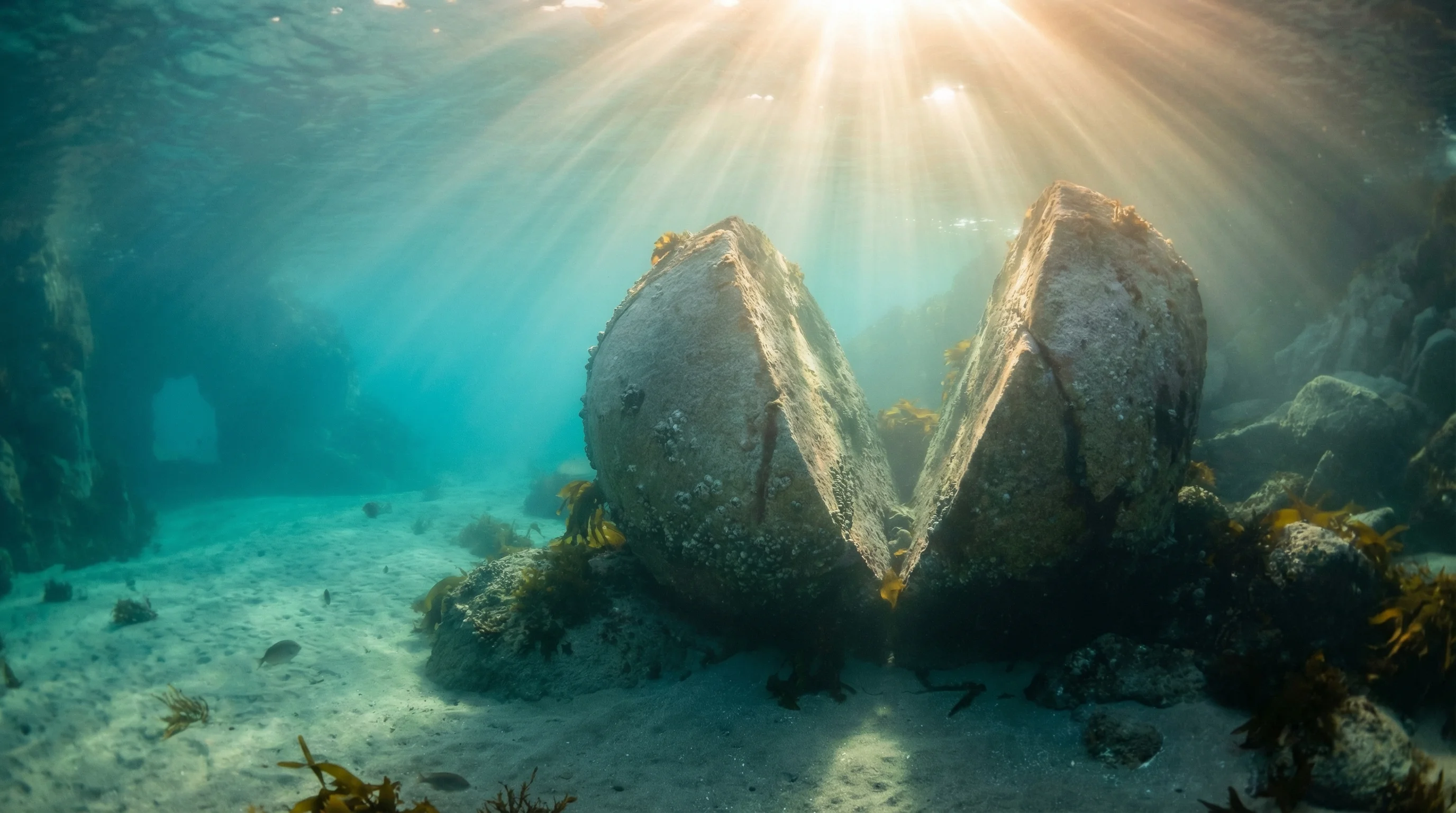
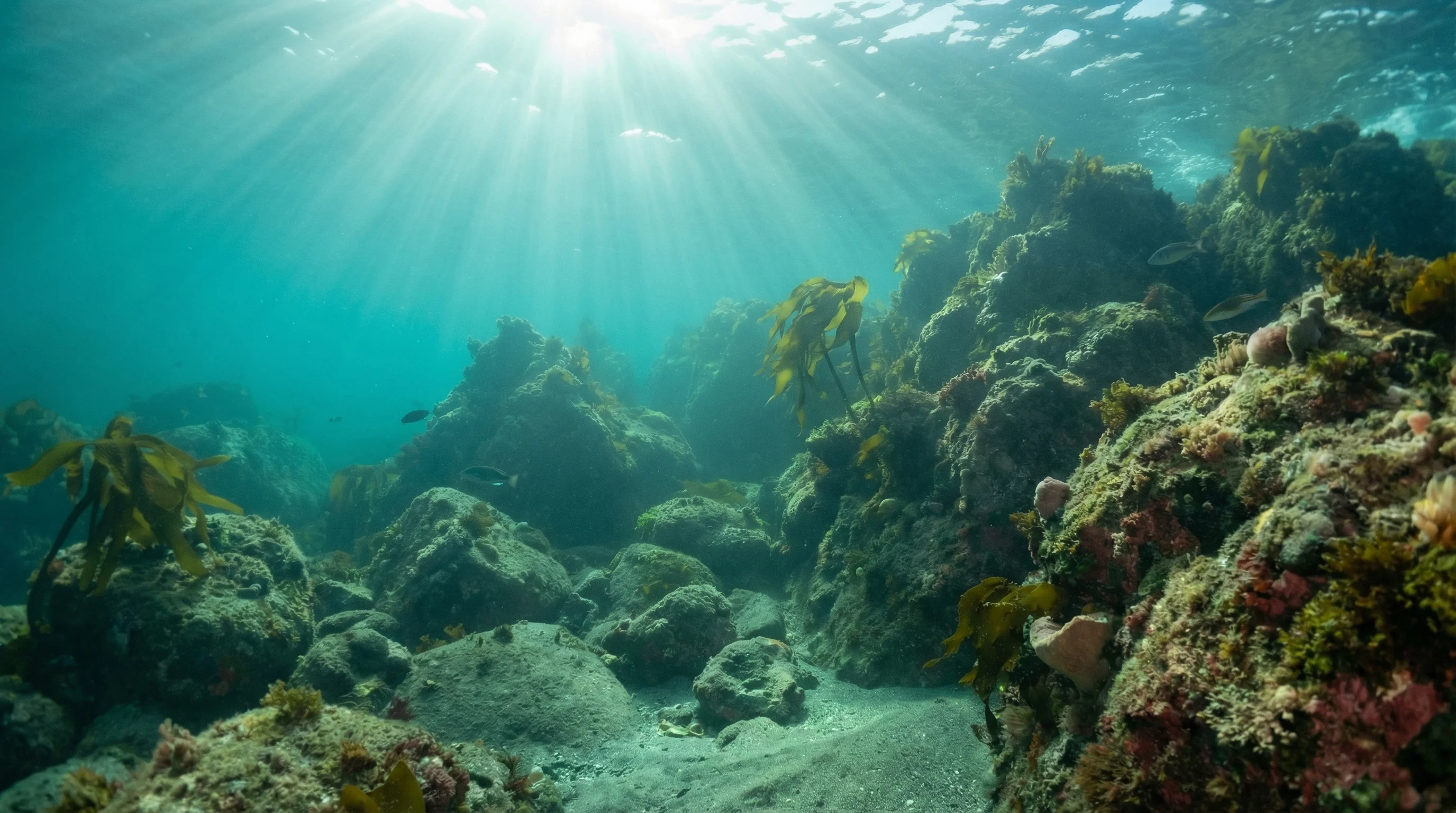
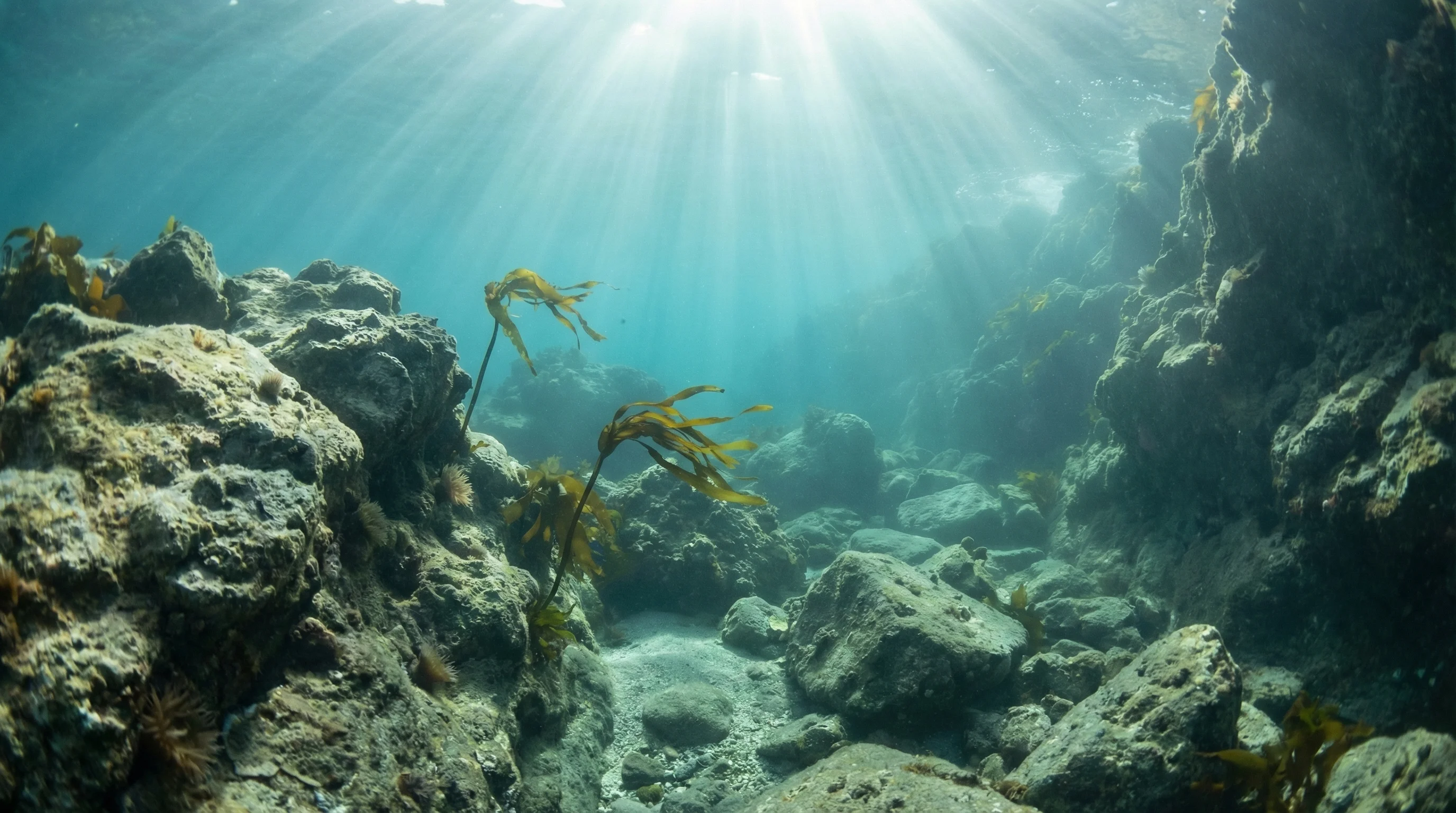
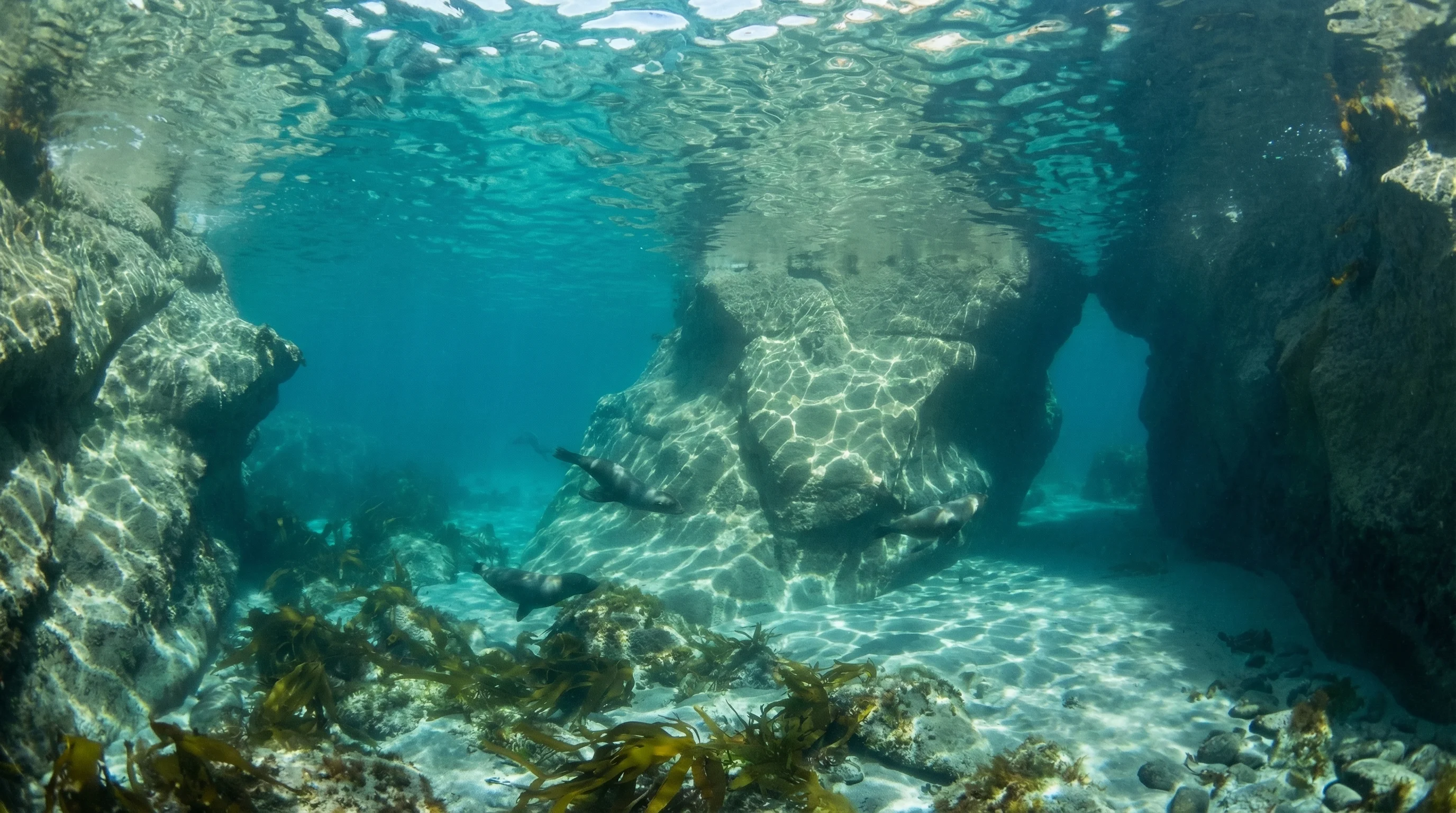
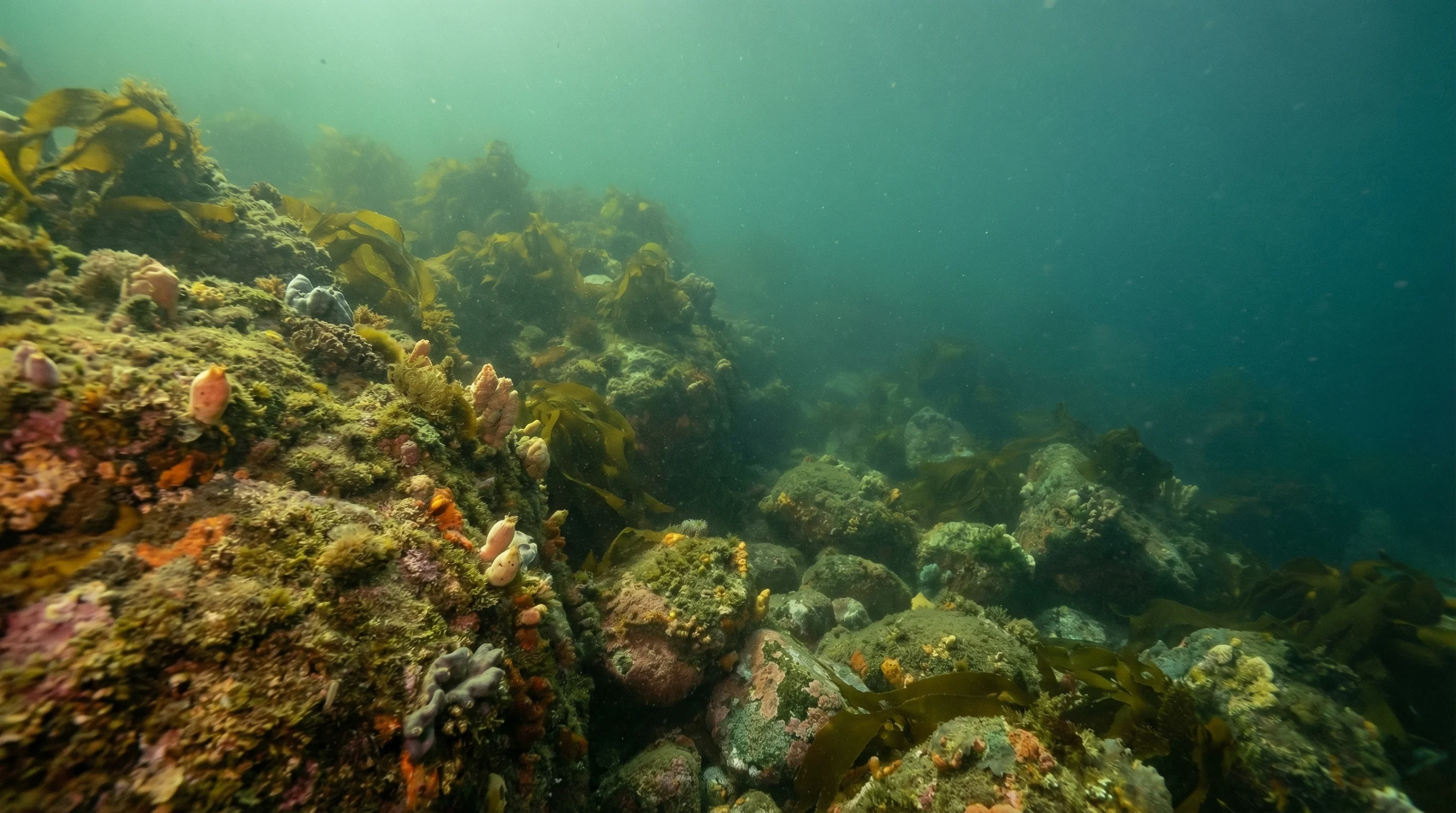
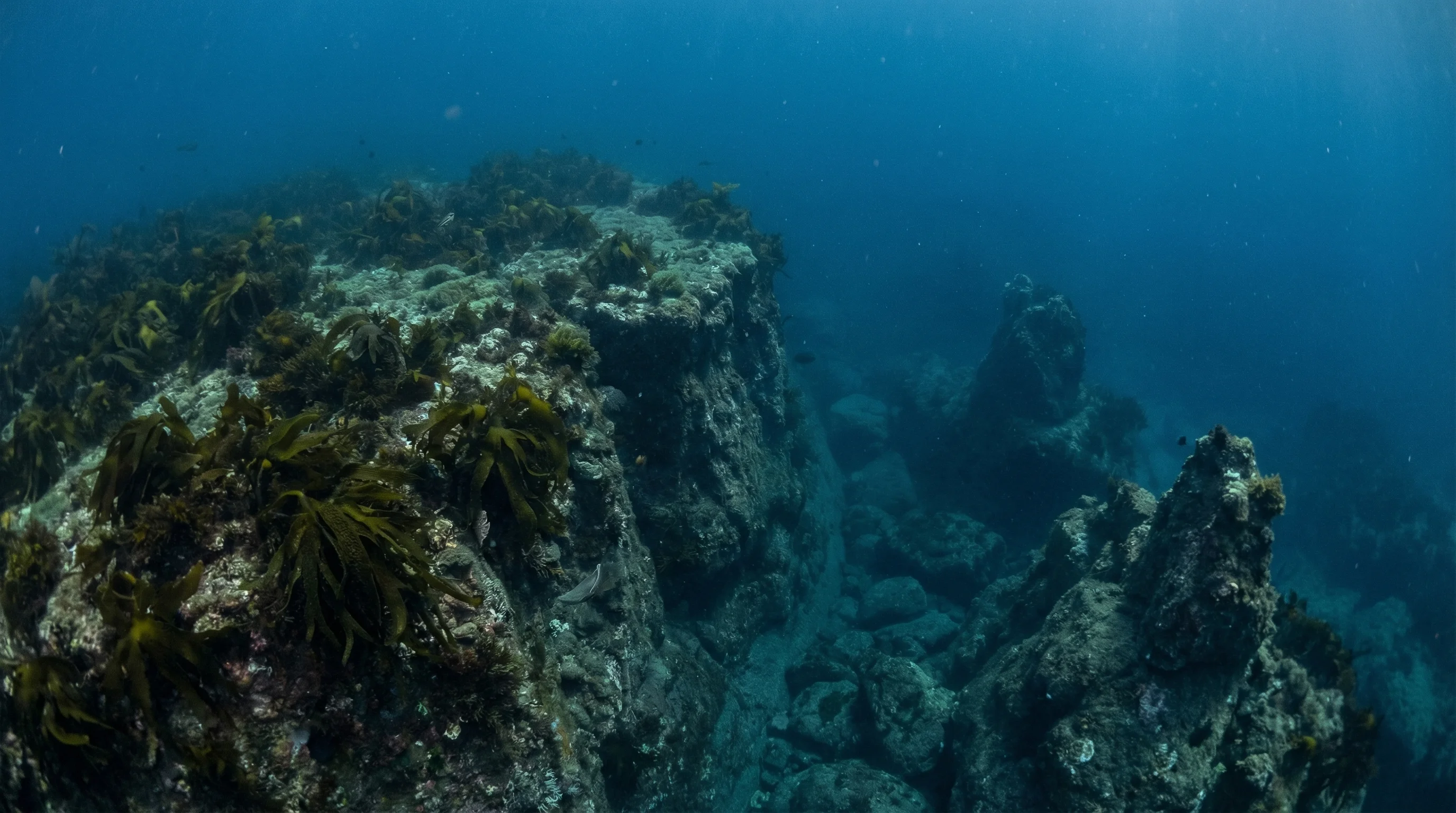
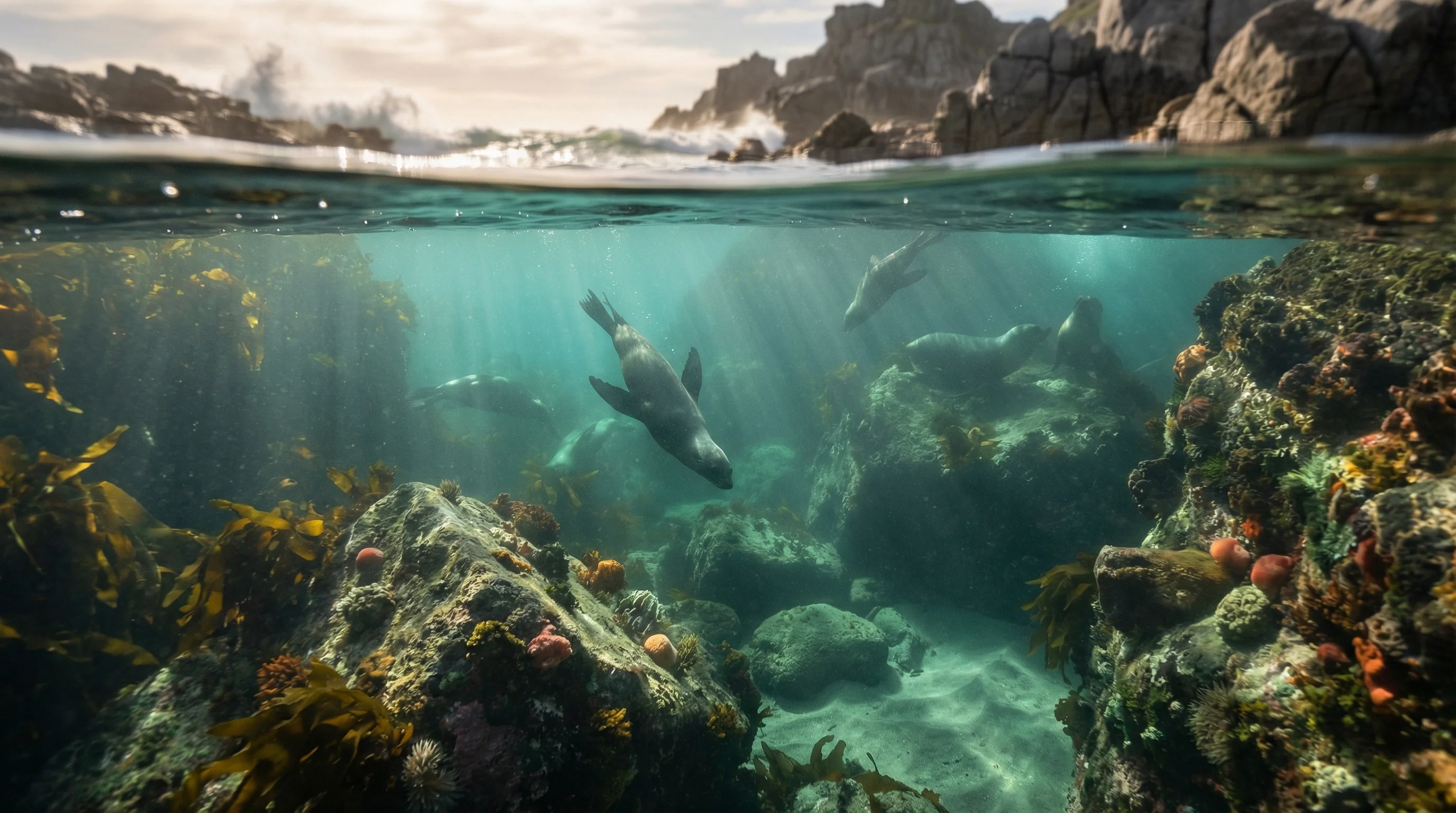
Abel Tasman combines rocky reefs, sheltered coves and exposed granite boulders to create a varied underwater landscape along the South Island's northern coast. The Long-nosed Fur Seal is a regular presence across many sites, and the Eleven-armed Sea Star and Sea Star carpet the reef floor. More patient searches reward divers and snorkellers with the Pot-bellied Seahorse and New Zealand Octopus. Water is warmest through summer, when visibility tends to be at its best.
Monthly water temperature across Abel Tasman's sites, from satellite sea-surface data corrected for depth. The band shows the site-to-site spread.
Water temperatures follow a clear seasonal arc, peaking through midsummer and dropping to their coolest between mid-winter and early spring. Summer months bring the warmest conditions and the most favourable visibility, making them the preferred window for most divers. A thicker wetsuit is advisable through the cooler months, when conditions can be more challenging but the reefs remain active.
7 operators
16 more sites to explore
Water temperature around Abel Tasman ranges from about 13°C in July to 20°C in January, based on satellite sea-temperature data for its dive sites.
In the warm season (about 20°C) a 5mm suit is comfortable in Abel Tasman; in the coldest months (about 13°C) step up to a 7mm or semi-dry suit.
Fin maps 16 sites in Abel Tasman (9 scuba diving sites and 11 snorkelling spots, with some suited to both).
Across Abel Tasman's dive sites, January and March are most often reported as the best months to visit.
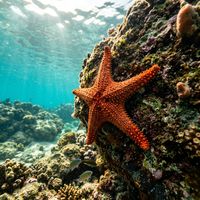
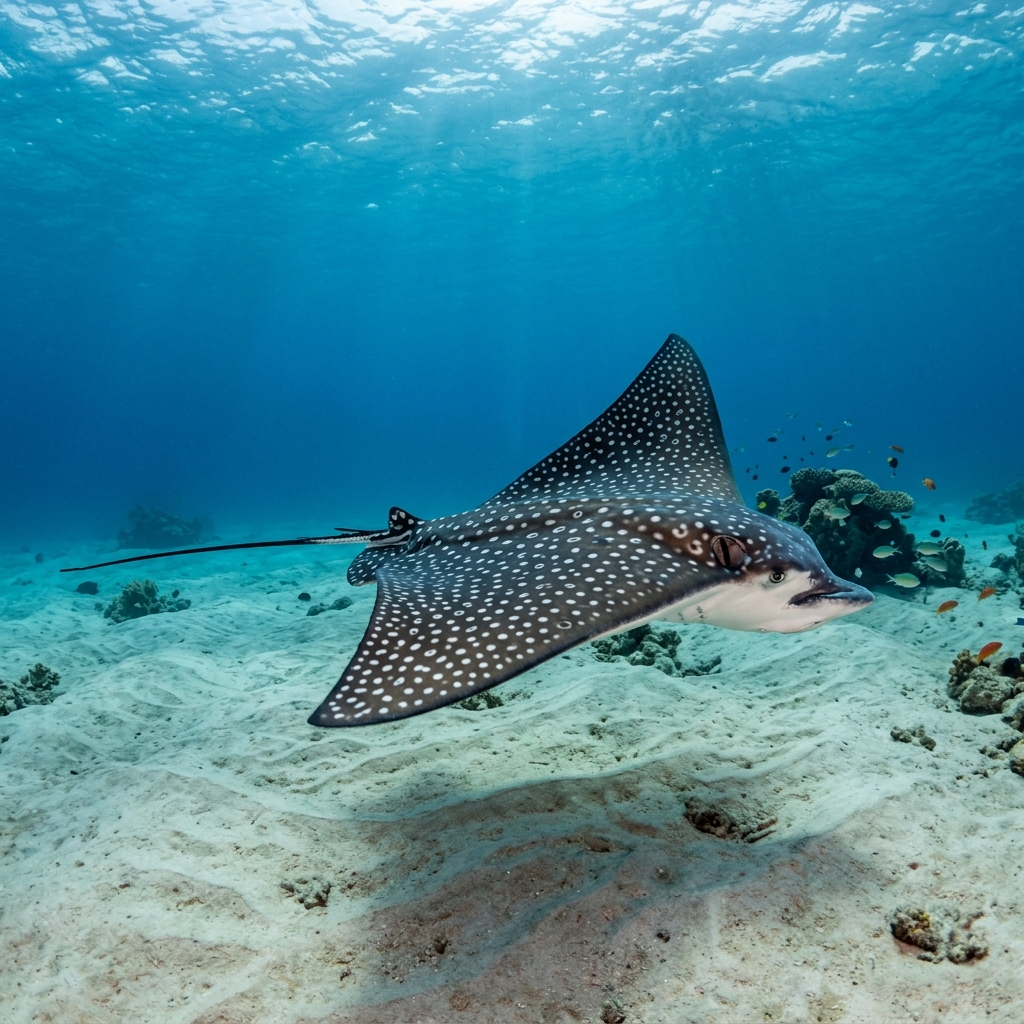
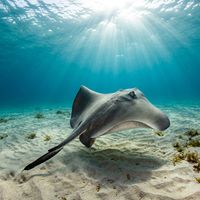
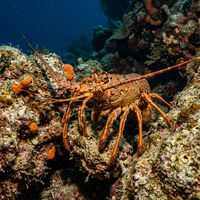
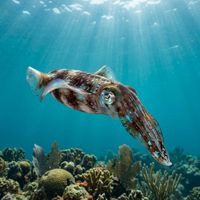
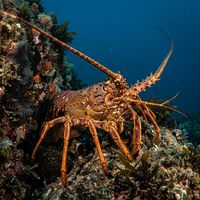
The Long-nosed Fur Seal is commonly encountered across a wide range of sites, and the Eleven-armed Sea Star and Sea Star are found almost everywhere on the reef. With some patience you may spot the Pot-bellied Seahorse, New Zealand Octopus, Crayfish, Southern Rock Lobster and Reef Squid. Eagle Ray and Smooth Ray have also been observed at a number of sites.
The site mix includes sheltered coves and shallow rocky reef, which tend to suit divers who are still building confidence. Some sites are exposed and may present stronger conditions, so it is worth checking individual site notes. The local operator, Big Blue Dive and Fish, can advise on which sites best match your experience level.
Many sites are accessible directly from shore, particularly the sheltered coves along the coastline. Boat access opens up a wider range of reef and exposed sites that are harder to reach on foot. Big Blue Dive and Fish is the operator listed for the region and can arrange guided boat trips.
The combination of fur seal colonies, a resident Pot-bellied Seahorse population and rich invertebrate life including New Zealand Octopus, Crab and Tube Worm gives Abel Tasman a character that sets it apart. The granite boulder and rocky reef structure provides varied terrain across a compact area. Both divers and snorkellers can explore much of the same habitat, making it a flexible destination.