Jasus spp.
Spot southern rock lobsters in Western Cape, South Australia and New Zealand. Coolwater crustaceans most active at night, here's where and when to find them.
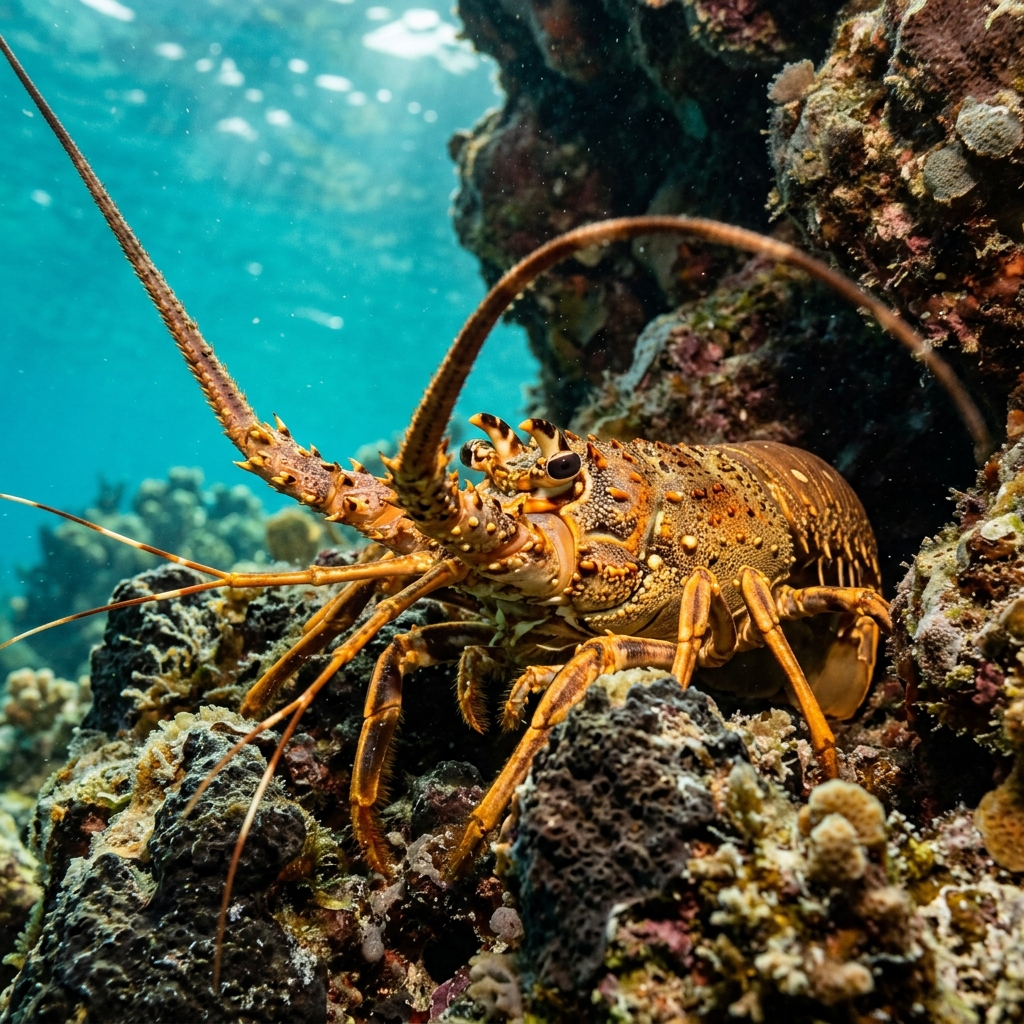
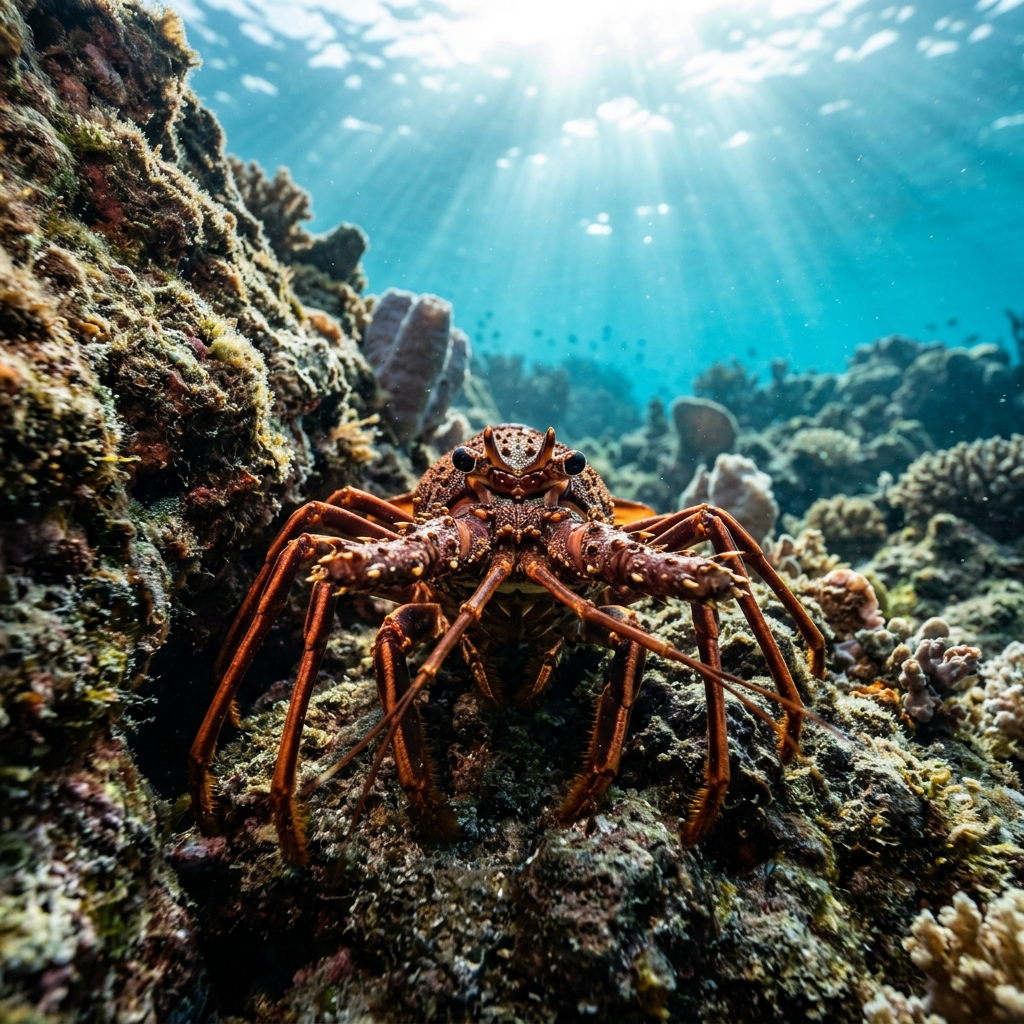
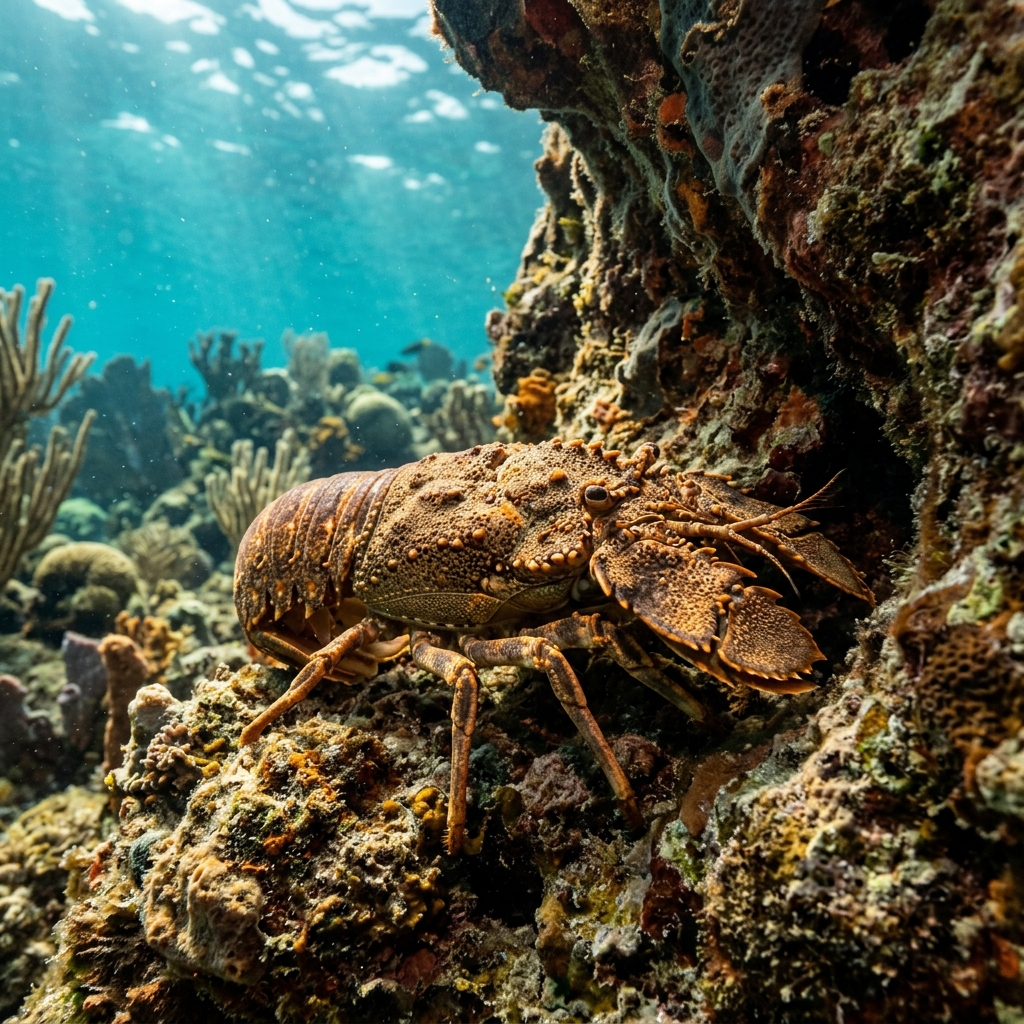
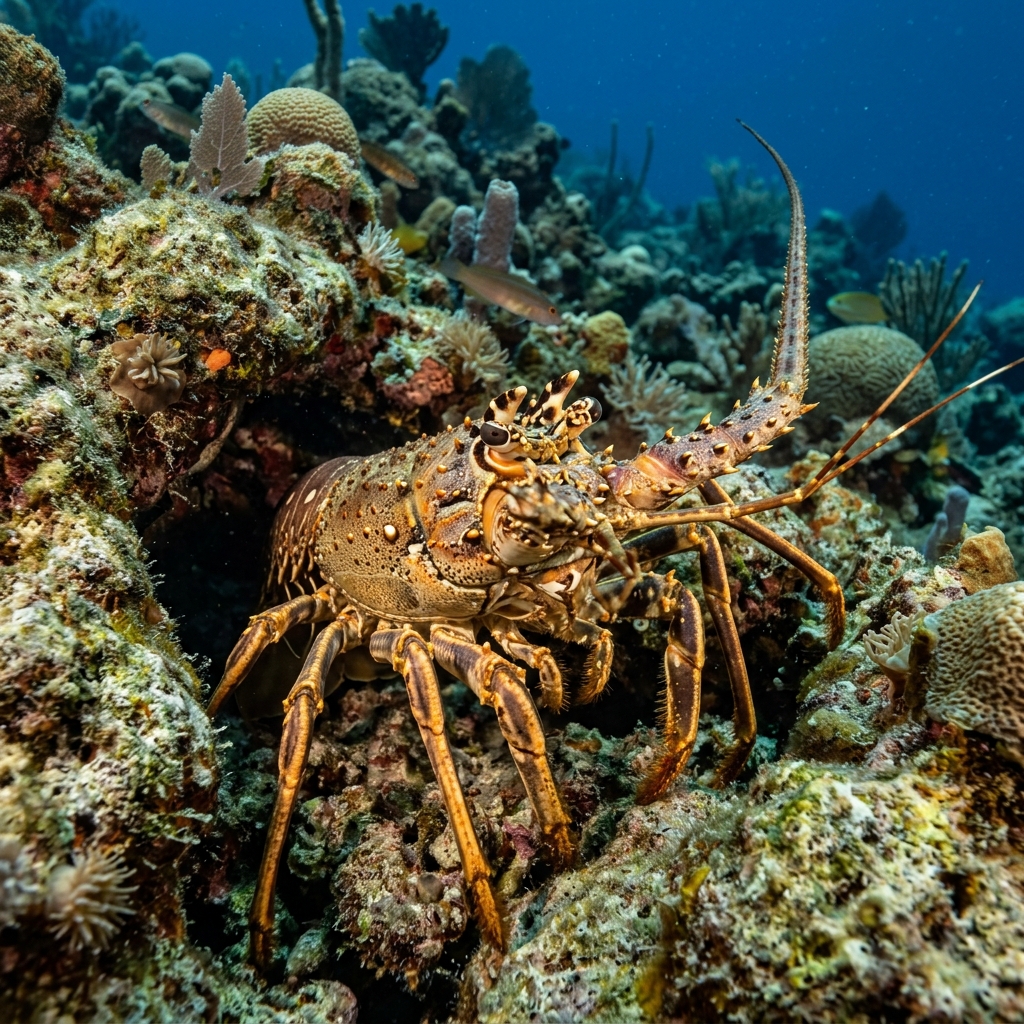
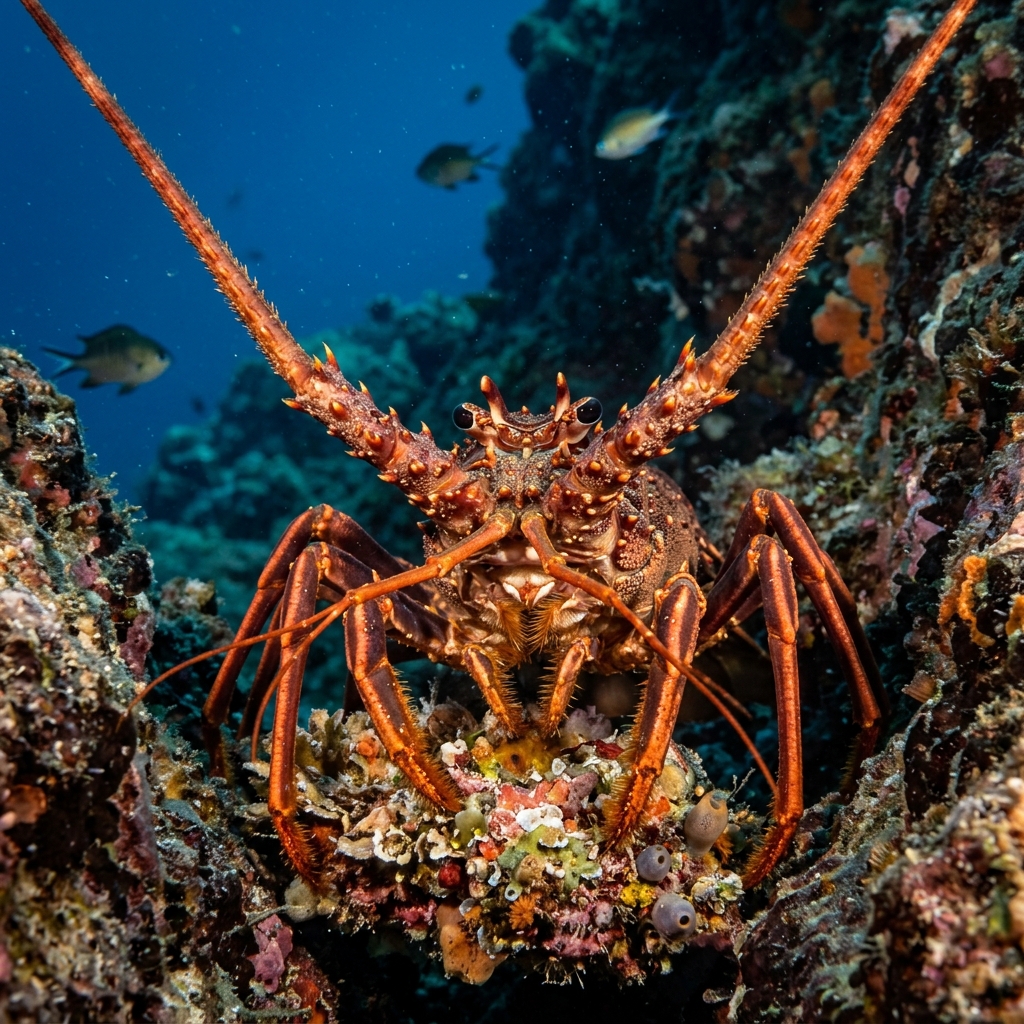
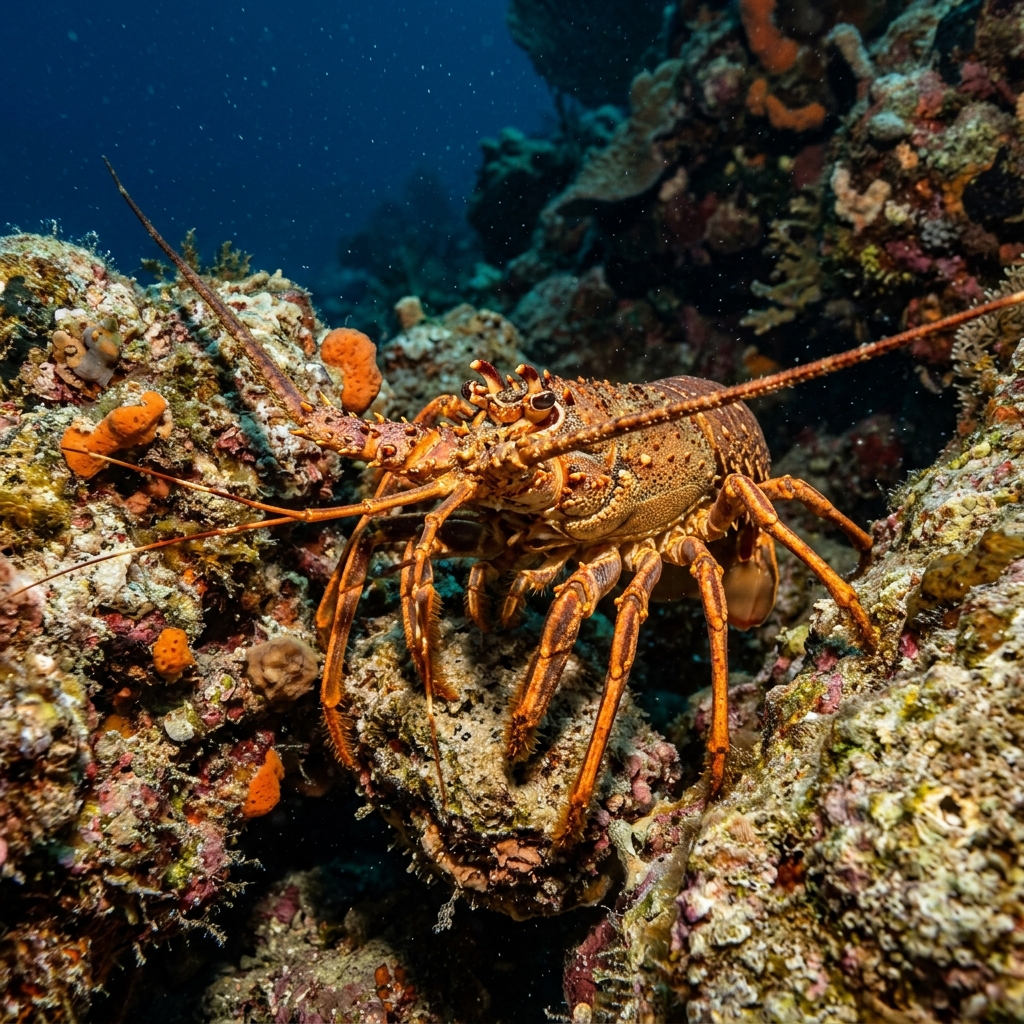
A large, heavily armoured crustacean reaching around 40 cm, with a spiny carapace (hard outer shell) in shades of orange, red or brick-brown and two very long, whip-like antennae that often stick out from rock crevices well before the body is visible. Unlike true clawed lobsters, Jasus species have no large front claws, the legs taper evenly and the head is studded with forward-pointing spines. Underwater, look for the antennae waving from a crack in the reef; the body usually stays tucked in shadow.
By day they wedge themselves into rock crevices and overhangs with only their antennae protruding, bolting backward into cover if you approach too quickly. Move slowly, stay low and avoid shining your torch directly at them and you can often hold a closer view. After dark they leave their lairs to forage across the reef, night dives are far and away the most productive way to see them actively moving.
Jasus crayfish communicate alarm through a rasping sound made by rubbing the base of their antennae against ridges on the shell, a behaviour called stridulation, which you can sometimes hear underwater if one is startled.
In the Southern Hemisphere, sightings concentrate in the autumn months of March through May, which likely reflects increased foraging activity as water cools after summer. Night dives during this window give the best chance of catching them fully out in the open.
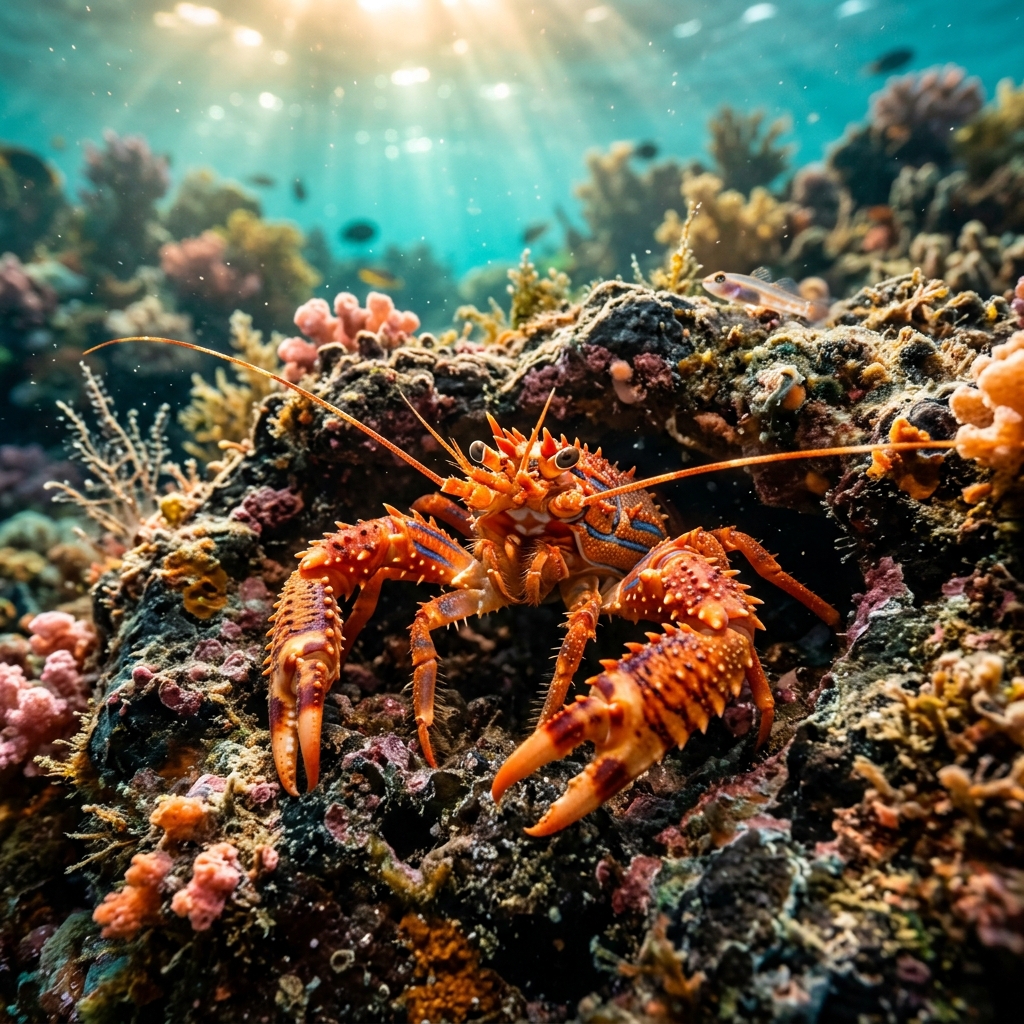
Reef neighbours a diver could mistake it for. Use the identification notes above to tell them apart.
Most sightings are logged in Australia, New Zealand and South Africa, with Western Cape in South Africa and South Australia together accounting for the largest share of known sites. Tasmania, the Coromandel and Bay of Plenty coast and Fiordland in New Zealand round out the reliable locations, all in cool, temperate waters between roughly 11 and 19 °C.
Mapping where Crayfish is logged…
Strong populations are logged across South Africa's Western Cape, South Australia, Tasmania and several parts of New Zealand including the Coromandel coast and Fiordland. All these regions share the cool, rocky reef habitat that Jasus crayfish prefer.
Autumn in the Southern Hemisphere, March through May, is when sightings peak. For any season, night dives give the best odds because crayfish leave their shelters to forage after dark and are far more visible than during daylight hours.
Look for the two very long antennae extending from a rock crack, they often give away a hidden animal. The body is spiny, reddish-orange and clawless, and large individuals can be around 40 cm long. The absence of big front claws instantly separates Jasus from Northern Hemisphere clawed lobsters.
Jasus rock lobsters typically reach around 40 cm in body length. Older individuals in less-fished areas can be considerably bulkier, though encounters with very large animals are increasingly uncommon at popular dive sites.
No. They are not aggressive and will almost always retreat rather than confront a diver. The spines on the carapace can scratch if you handle one carelessly, but a hands-off approach makes any encounter completely safe.
Site and sighting data is aggregated from diver logs, iNaturalist and GBIF. For taxonomy and conservation status:
Caribbean Spiny Lobster
2,209 sites