Sepioteuthis spp.
Reef squid cruise shallow reefs in the Yucatán, Roatán and the Seychelles, flashing colour signals at divers. Here's where and when to find them.
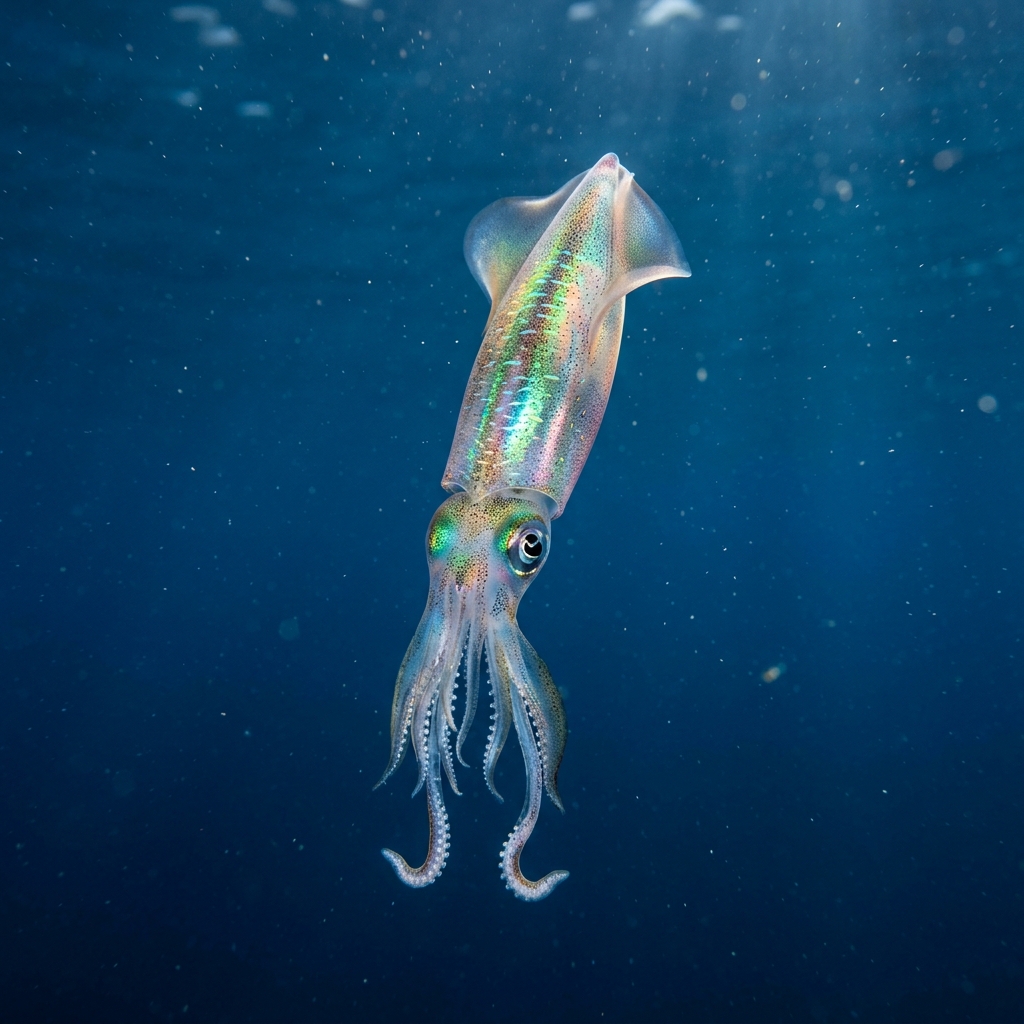
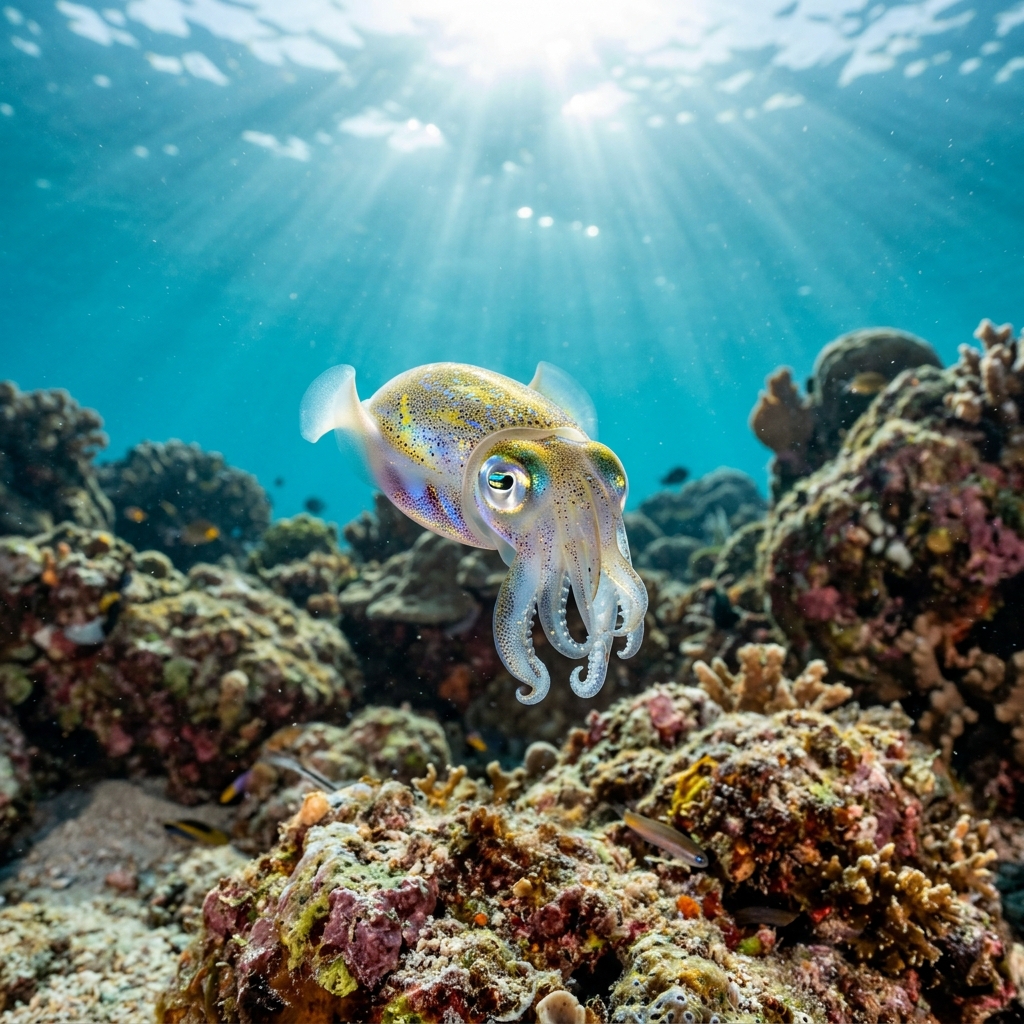
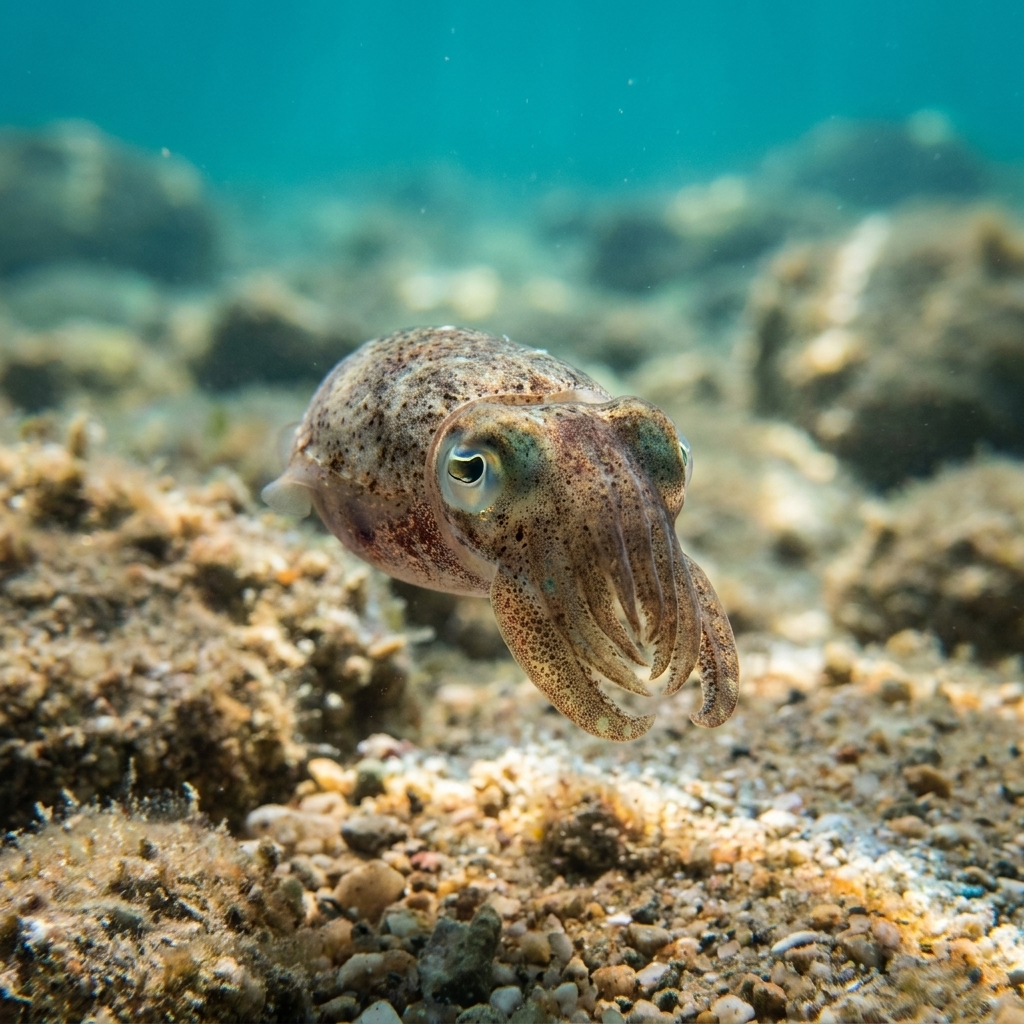
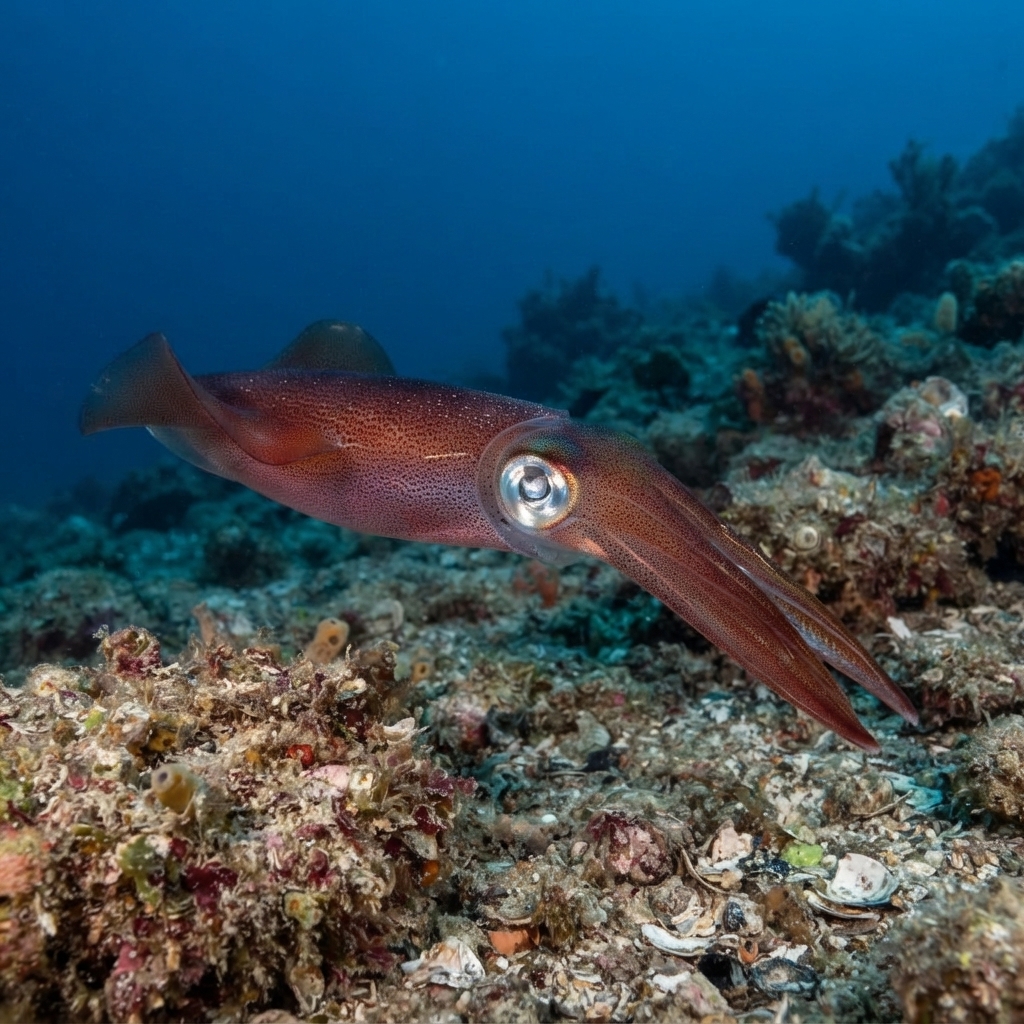
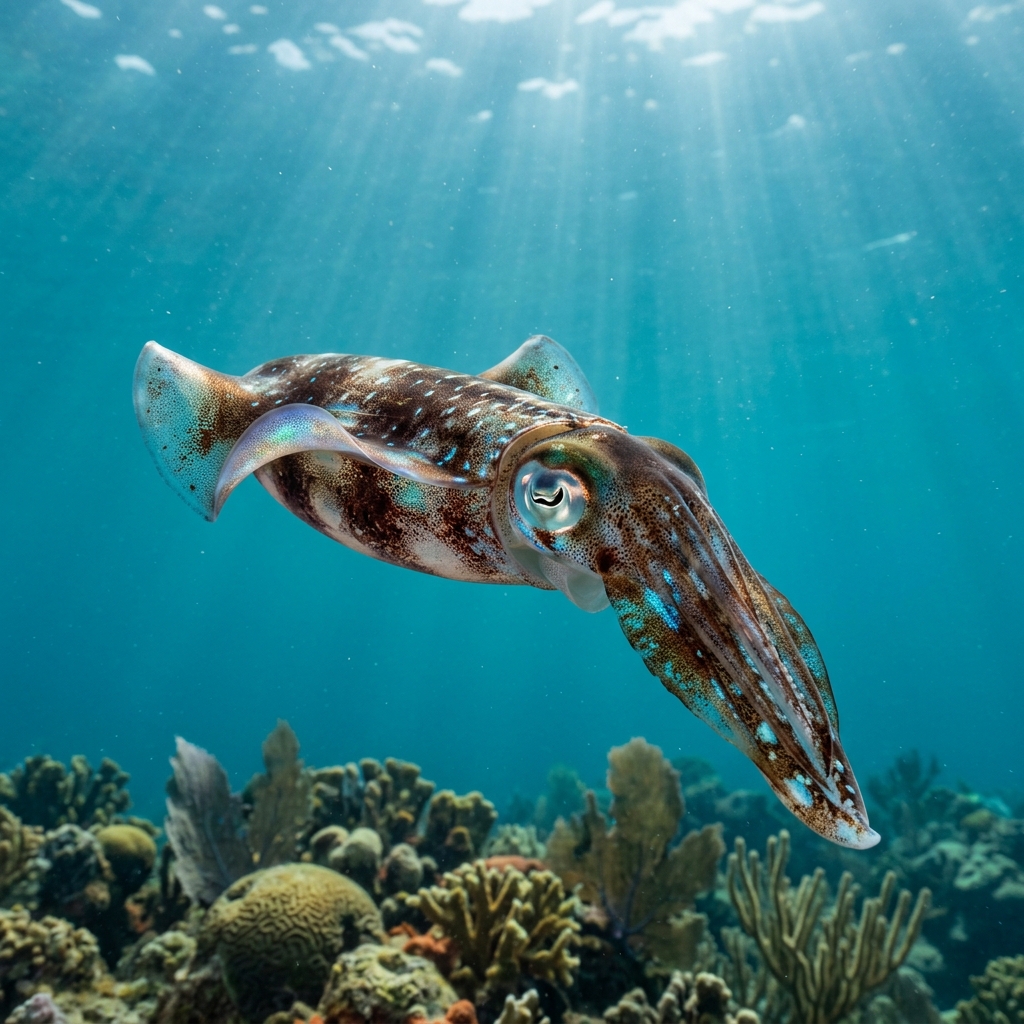
Torpedo-shaped and roughly forearm-length (around 14 cm), reef squid hover in open water just above the reef on a fringe of undulating lateral fins (the wide fins that run almost the full length of the mantle distinguish this group from many other squid). The skin shifts through browns, whites, greens, and electric iridescent pulses within seconds, so colour alone is not a fixed field mark. Look instead for that broad fin skirt, the horizontal posture, and the habit of staying in a loose group of two to ten animals at 0 to 20 m depth.
Reef squid are famously curious: a small group will often hold position and face an approaching diver, tilting to maintain eye contact rather than bolting. They communicate constantly with one another through rippling colour waves and rapid chromatophore (pigment-cell) flashes, and you may watch a full conversation play out across their mantles while they size you up. Move slowly and avoid sudden movements and they will often allow close observation; rush them and the whole group vanishes in a cloud of ink.
Each individual can run different colour patterns on its left and right sides simultaneously, allowing it to signal a rival on one side while displaying a courtship pattern to a mate on the other.
In the northern hemisphere reef squid are present year-round, which fits their preference for warm tropical water between 24 and 29 °C. In the southern hemisphere, sightings concentrate from October to April, tracking the warmer austral summer months.
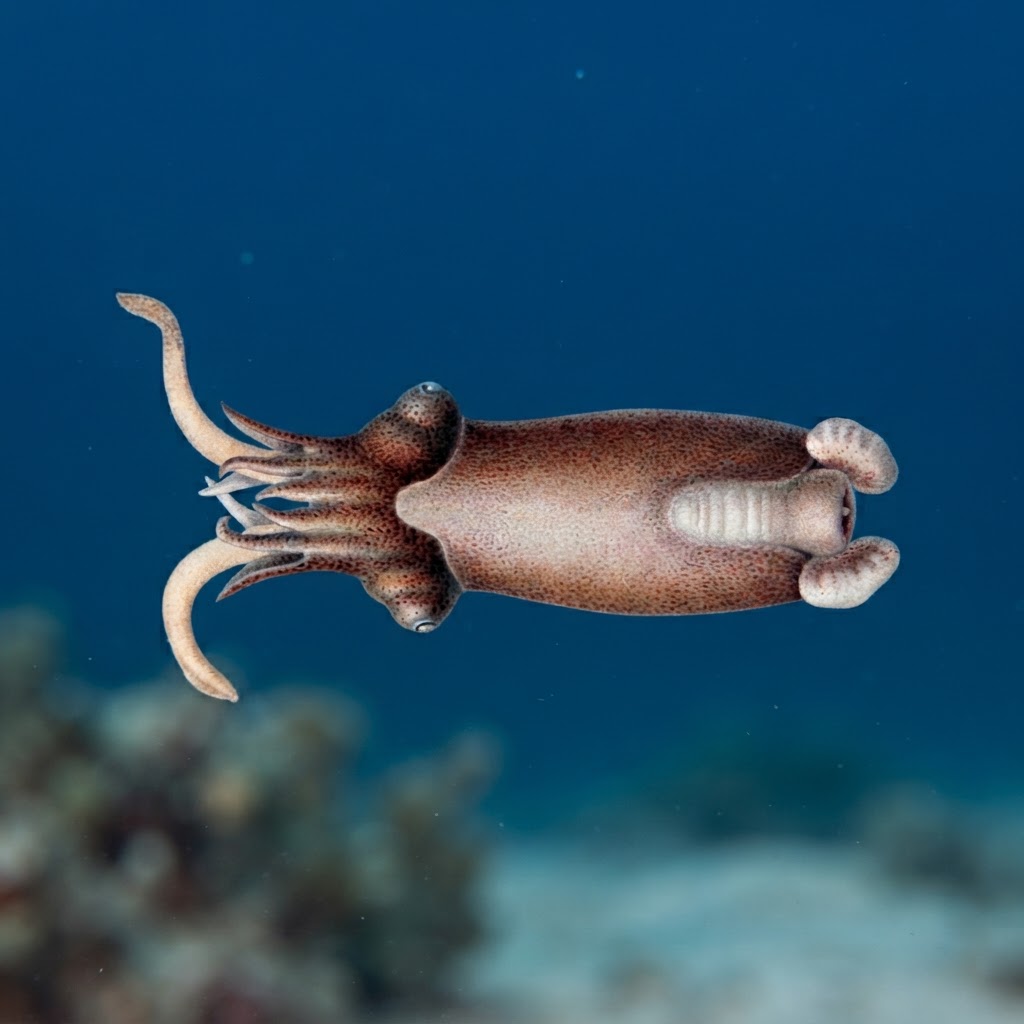
Reef neighbours a diver could mistake it for. Use the identification notes above to tell them apart.
Most widely logged in the tropical Americas, with the Yucatán Peninsula and Florida leading in sighting volume, followed by Roatán (Honduras) and the Caribbean Coast of Colombia. Strong records also come from Northeast Brazil and the Seychelles (particularly Praslin and La Digue), and Western Australia contributes a notable cluster of southern-hemisphere sites. Egypt's Red Sea and Bonaire round out the most consistent global hotspots.
Mapping where Reef Squid is logged…
The Yucatán Peninsula in Mexico and the Florida coast are the most consistently logged locations, with Roatán in Honduras and the Caribbean Coast of Colombia also rated highly. Solid sightings are recorded across the Seychelles, the Egyptian Red Sea, Bonaire, and parts of Western Australia and Brazil.
In tropical regions of the northern hemisphere they are present all year, as the water stays within their preferred 24 to 29 °C range. In the southern hemisphere, the best window is October through April, when sea temperatures peak.
Look for a broad fin that runs nearly the full length of the mantle, giving it a different silhouette from most other squid. They hover horizontally in open water just above the reef, usually in small groups, and produce rapid, rippling colour displays. Body length is roughly 14 cm.
Typical mantle length for the Sepioteuthis genus is around 14 cm, roughly the size of your hand. Their broad lateral fins make them look larger in the water than the mantle measurement alone suggests.
No. Reef squid pose no threat to divers. They are small, unarmed, and curious rather than defensive. The only thing you are likely to receive from them is a close inspection.
Their skin is packed with chromatophores, tiny pigment-filled cells controlled by muscles, which expand or contract in fractions of a second. The result is the rippling waves and flashing patterns you see during social displays. Remarkably, individuals can show different patterns on each side of their body at the same time.
Site and sighting data is aggregated from diver logs, iNaturalist and GBIF. For taxonomy and conservation status:
Ram's Horn Squid
184 sites