Echinoidea
Sea urchins appear on reefs from Brittany to the Izu Peninsula in waters as cool as 8°C. Find out where divers spot them most and how to tell species apart.
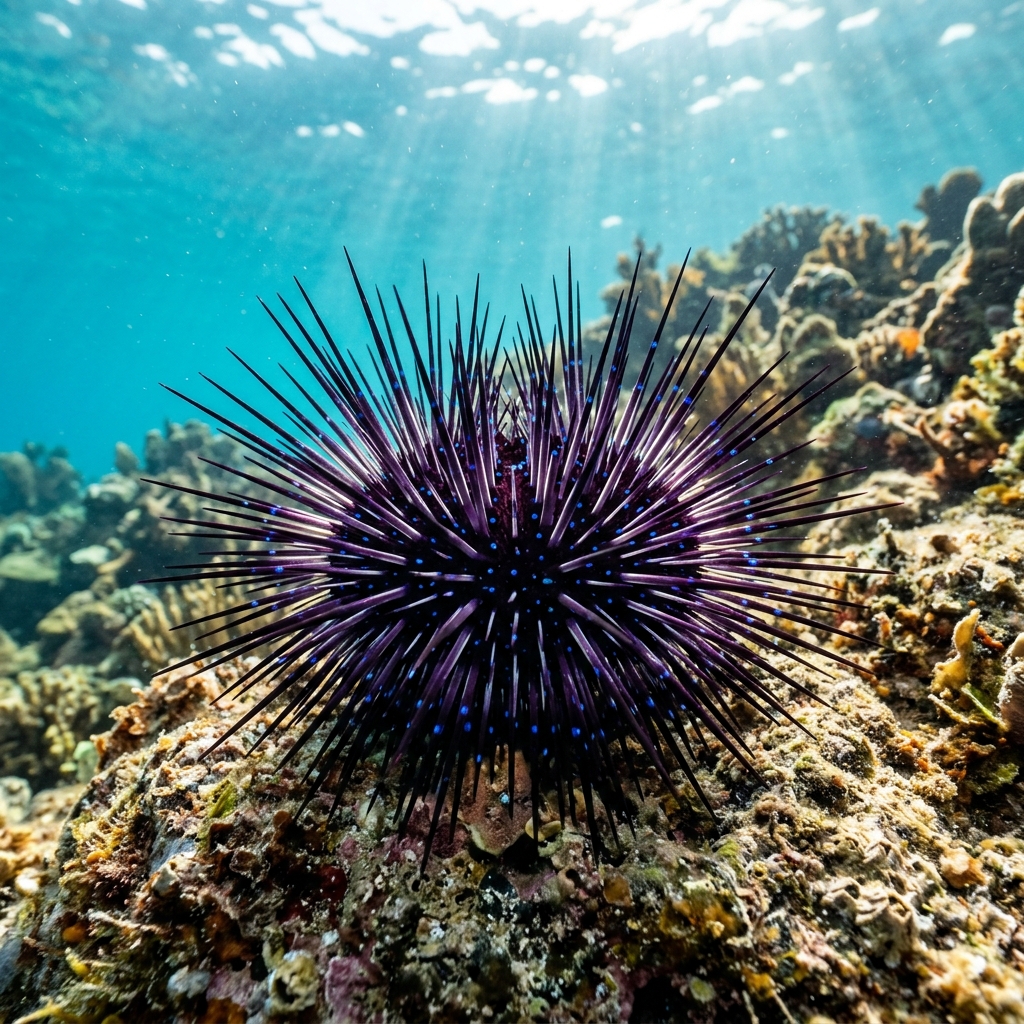
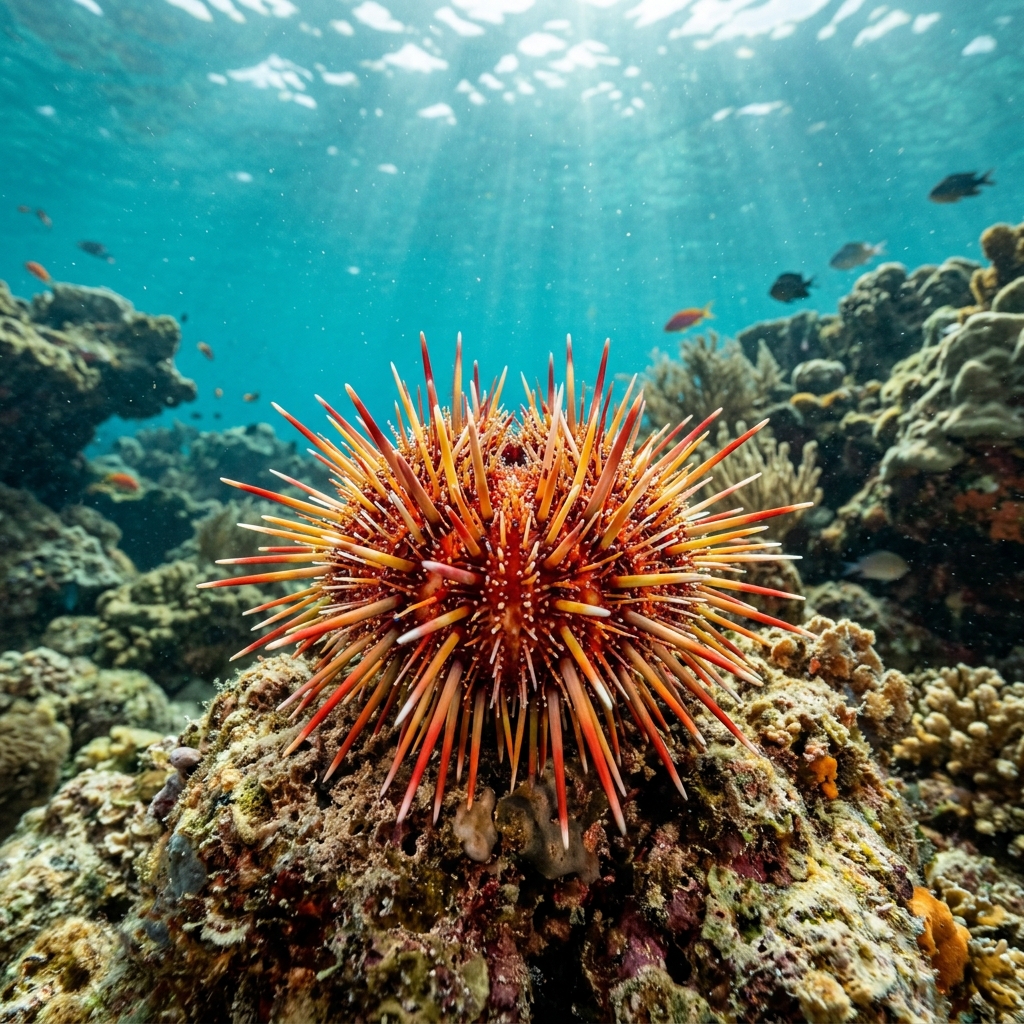
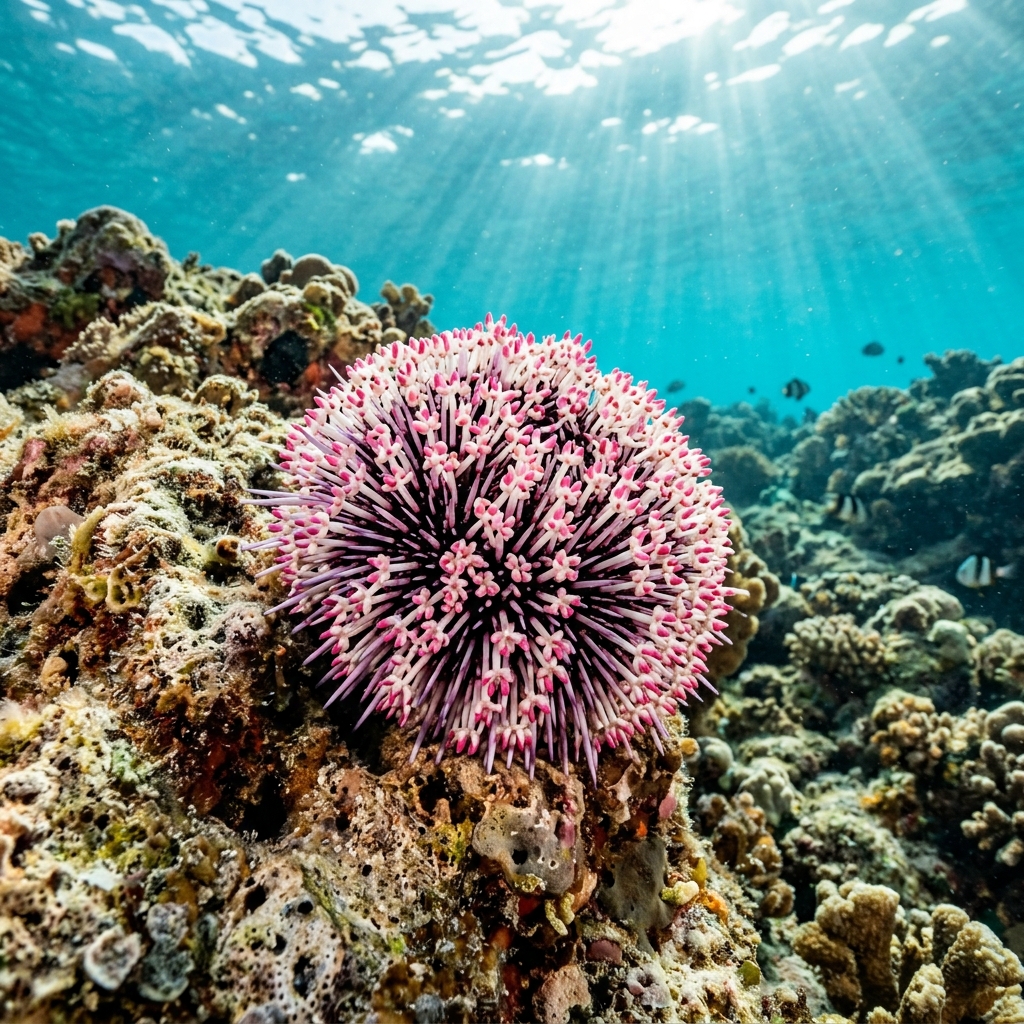
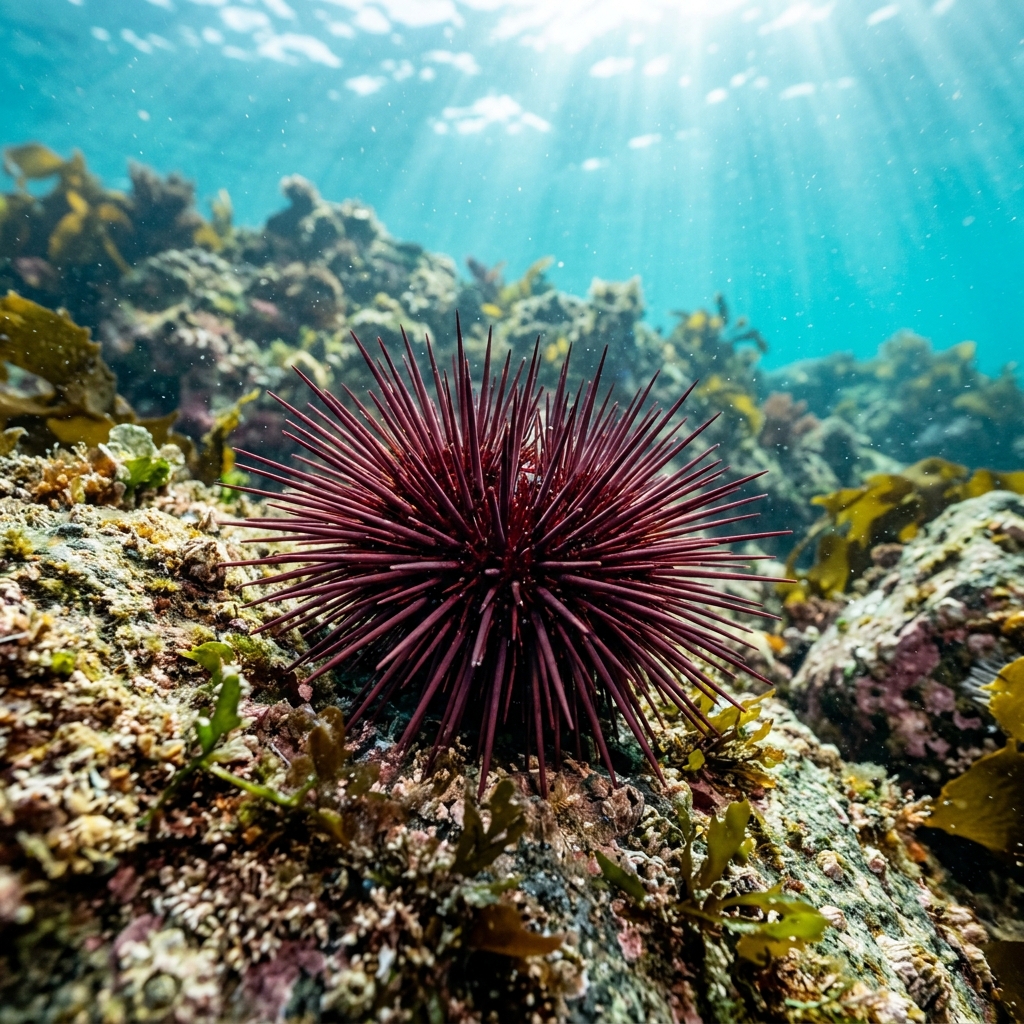
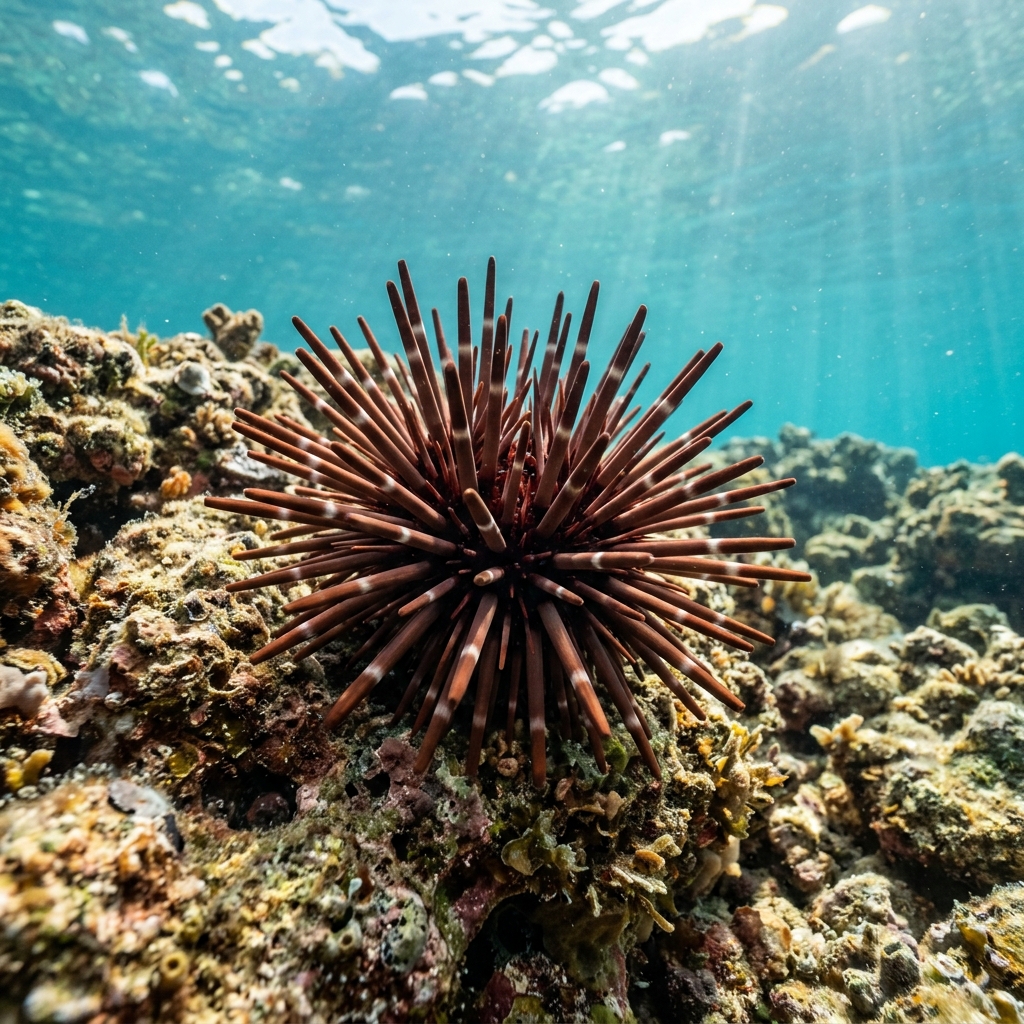
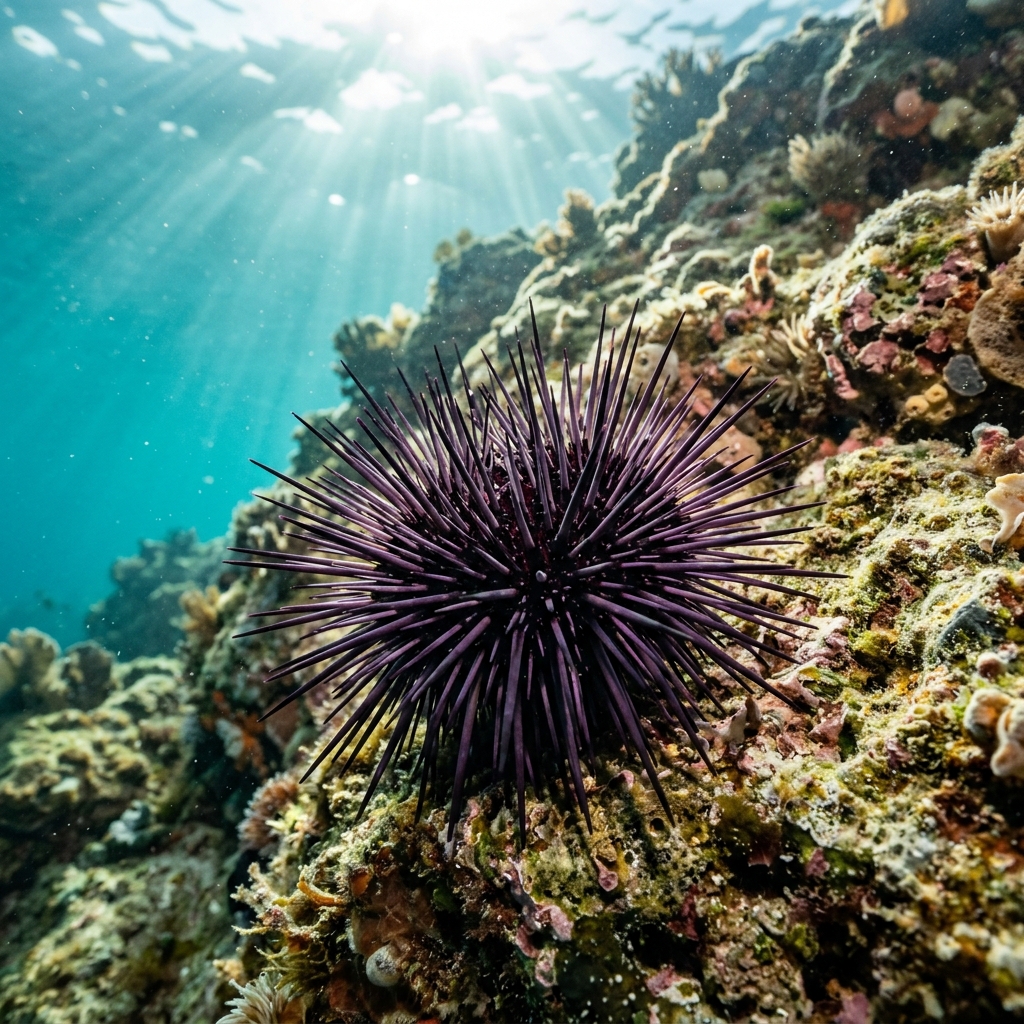
Round, spiny invertebrates (the rigid body is called a test) that sit directly on hard substrate or wedge into rocky crevices. Spine length and colour vary enormously across the group: some species carry short, blunt spines in purple, red, or green, while others have long, sharp black spines that can exceed the test diameter. Look at the bottom of the animal when it moves: dozens of tiny, sucker-tipped tube feet extend between the spines to grip the reef. Size ranges from a few centimetres across to over 30 cm in the largest species.
During the day, most sea urchins tuck into rock crevices or cluster beneath overhangs, using their tube feet and sometimes their spines to brace against surge. Many species become more active after dark, grazing algae and encrusting organisms across open rock faces, so night dives often reveal far more movement than daytime surveys. They generally ignore divers, but will slowly orient their spines towards a hand or torch held too close.
Sea urchins are key grazers on temperate and tropical reefs alike: by controlling algae growth, they allow corals and other invertebrates to settle and survive. When urchin populations crash due to disease or overgraeding by predators, algae can rapidly smother the reef.
Sightings data shows no clear seasonal peak, so sea urchins can be treated as year-round residents across their range. The observed temperature window of roughly 9 to 21°C points to temperate and cool-water reefs being the core habitat, meaning spring through autumn tends to offer the most comfortable diving conditions in northern destinations.
Reef neighbours a diver could mistake it for. Use the identification notes above to tell them apart.
Sea urchins are among the most widely distributed invertebrates divers encounter, logged across a huge range of countries with particularly strong representation in Italy, Greece, the United Kingdom, France, and Croatia. Regional hotspots include Brittany and Normandy in France, the Izu Peninsula in Japan, and the south coast of England, reflecting the group's comfort in cooler temperate water. The Great Lakes and Northeast United States, Southwest Ireland, and Attica in Greece are also reliably productive areas.
Mapping where Sea Urchin is logged…
Sea urchins are found at dive sites across dozens of countries. They are most commonly logged in Italy, Greece, the United Kingdom, France, and the United States, with standout regions including Brittany and Normandy in France, the Izu Peninsula in Japan, and the southwest coast of Ireland. Temperate rocky reefs are a particularly reliable habitat.
There is no defined season for sea urchin sightings based on available data, so they can be encountered year-round. In cooler northern destinations, the warmer months of spring through autumn generally make diving more comfortable without reducing the chance of a sighting.
Sea urchins are not considered dangerous to divers, but some species carry sharp, brittle spines that can pierce skin and break off if you accidentally kneel or place a hand on one. Avoid touching them and watch where you place your knees and hands on the reef. Spines of a few species, such as the Fire Urchin, can also cause a painful sting.
Look for a round, spiny animal sitting on hard substrate or wedged into a crevice. The key features are the rigid spherical test, the arrangement and length of spines, and the tiny tube feet visible between the spines. Colour, spine shape, and overall size vary by species: the Slate Pencil Urchin has thick, blunt spines, while the Long-spined Sea Urchin has extremely long, needle-like black spines.
Size varies considerably across species. Most common reef urchins measure 5 to 15 cm across the test, not counting the spines. Larger species such as the Red Sea Urchin can reach over 15 cm across the test alone, while the Long-spined Sea Urchin's spines can more than double its apparent size in the water.
Sea urchins are primarily grazers, rasping algae, encrusting organisms, and detritus from rock surfaces using a complex five-toothed jaw structure called Aristotle's lantern. On temperate reefs they are important in keeping algae in check, and in high densities they can graze rock completely bare, creating what ecologists call 'urchin barrens'.
Site and sighting data is aggregated from diver logs, iNaturalist and GBIF. For taxonomy and conservation status:
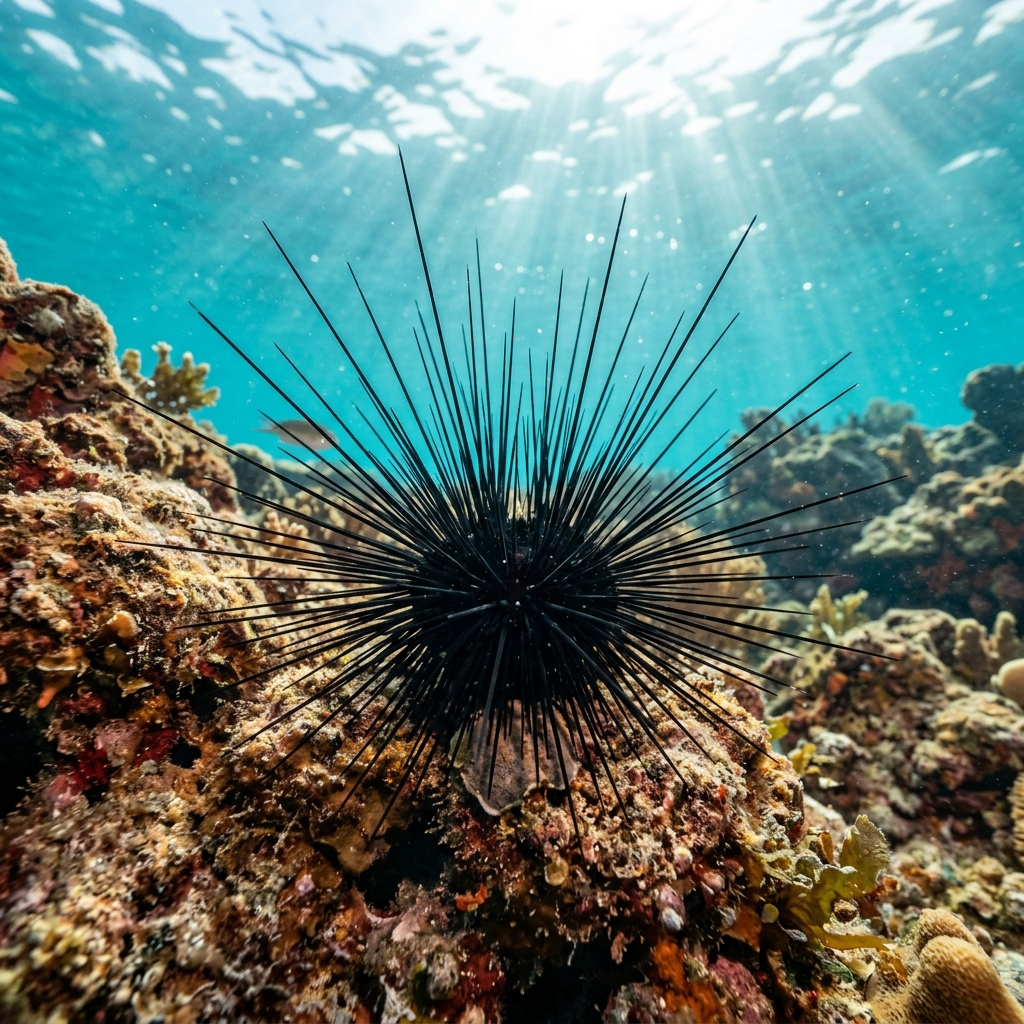
Diadema spp.
Red Sea Urchin
1,068 sites