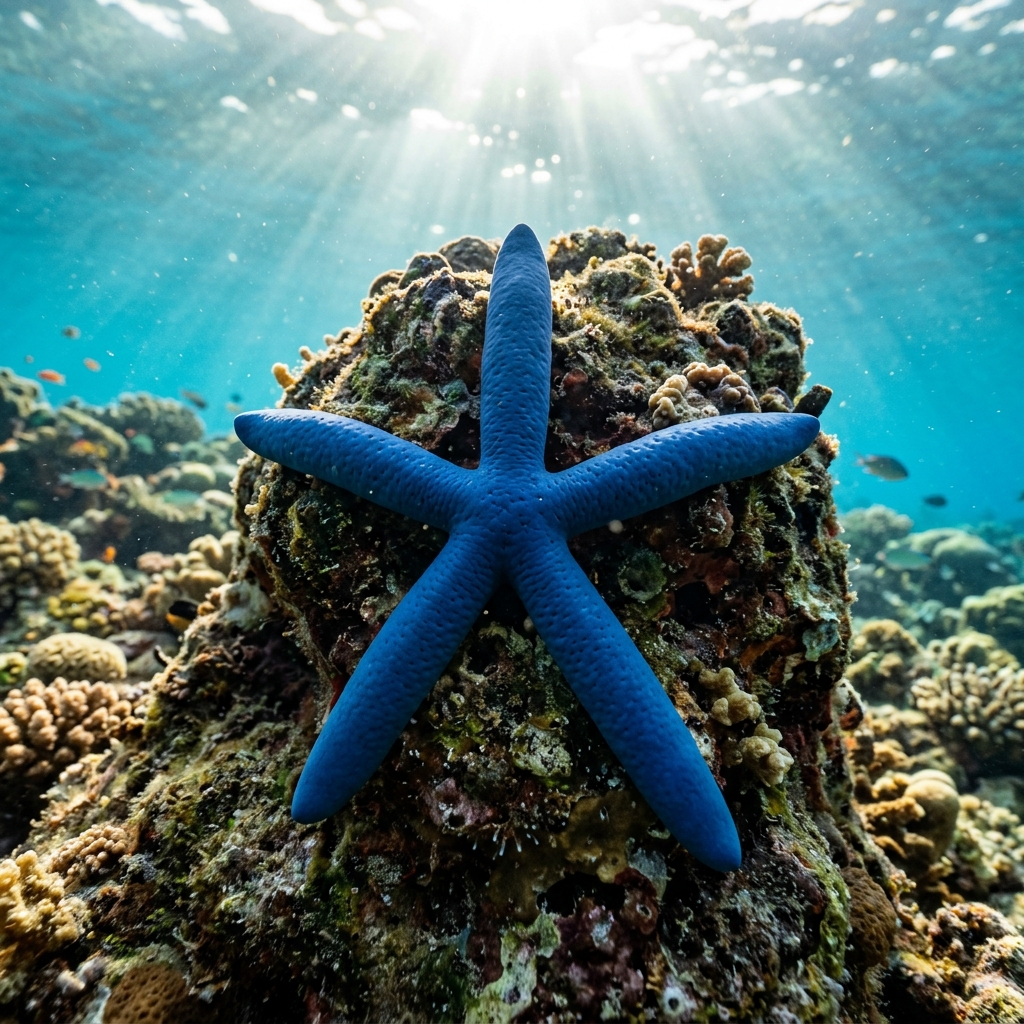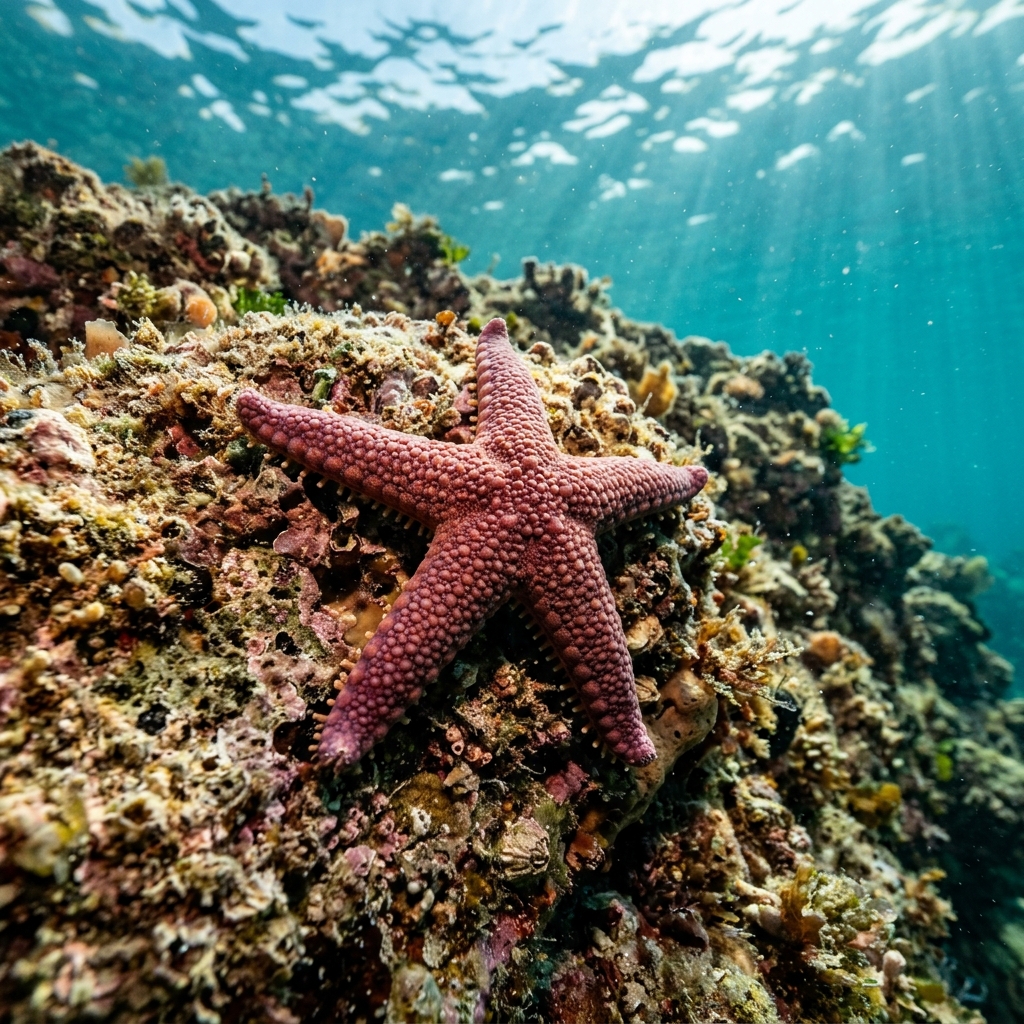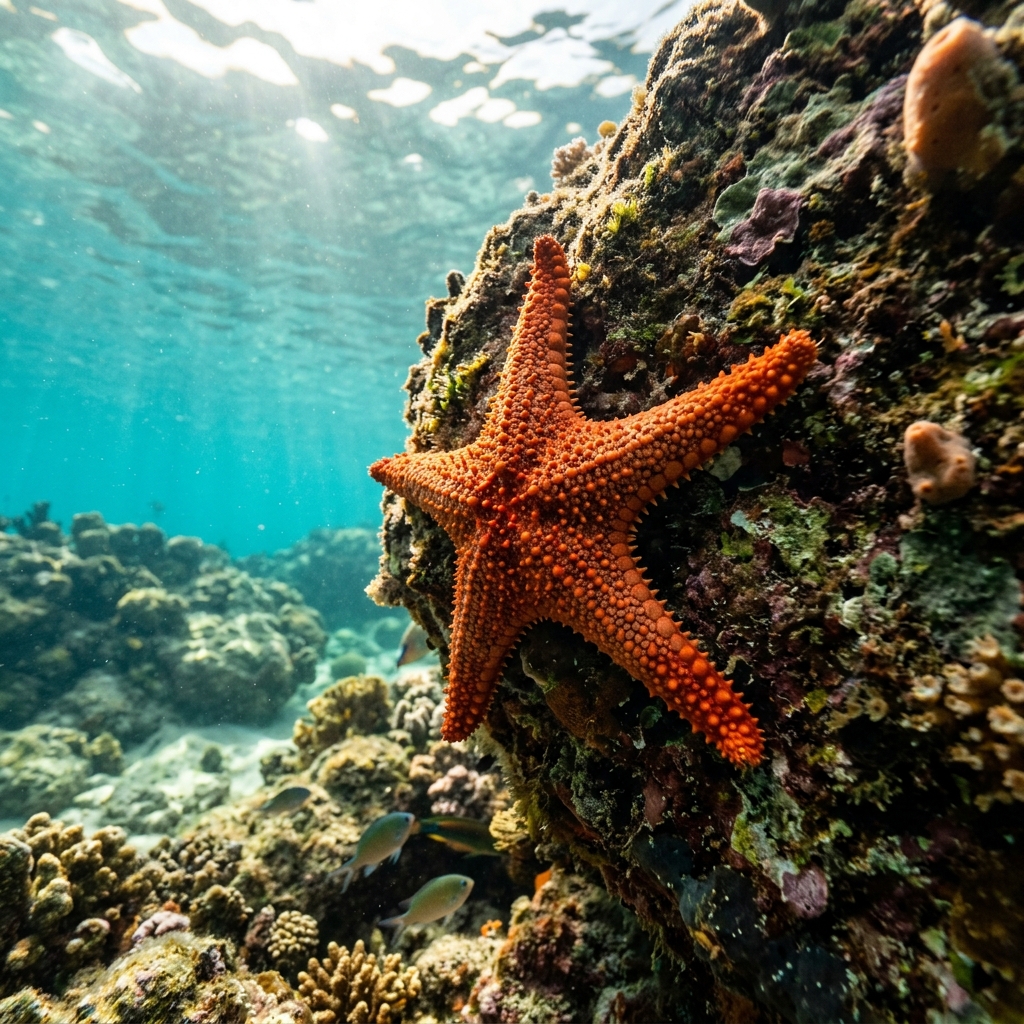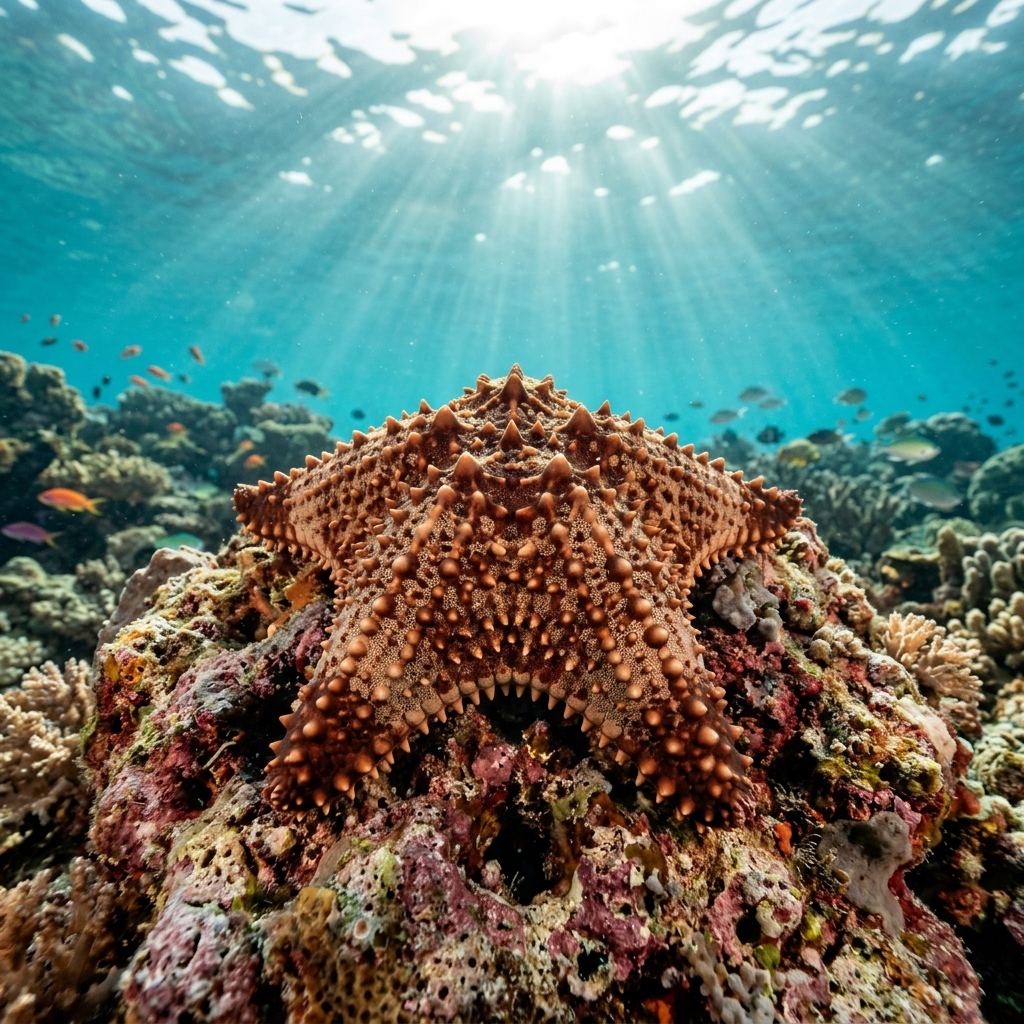
Coscinasterias muricata
Spot the eleven-armed sea star across the French Riviera, Canary Islands and New Zealand. Year-round in the north, Sep, Mar peak in the south.
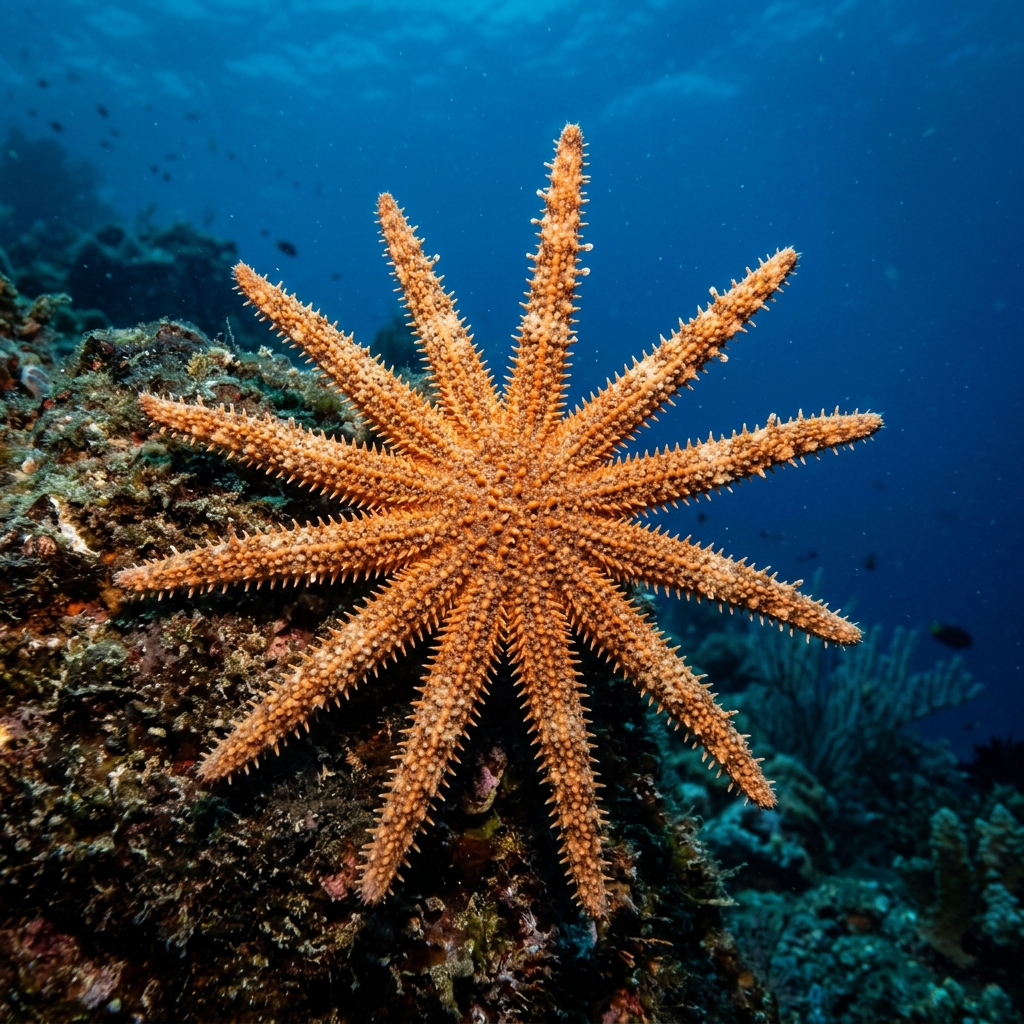
Count the arms and you have your best clue: most sea stars carry five, but this species typically sports nine to eleven arms radiating from a relatively small central disc. Colouration varies from orange and rust-brown to dull grey-purple, often with a rough, spiny texture along each arm. Look closely and you may spot asymmetry or a visible split between arms where fission (the animal dividing itself in two) is under way or has recently occurred.
Eleven-armed sea stars go about their business largely indifferent to divers, rarely moving away or reacting to your presence. You'll find them crawling slowly across rocky and mixed-substrate reefs at almost any depth from the shallows down to well beyond recreational limits, and they're active throughout the day rather than at any particular hour. Watch for the tell-tale groove running between two arm groups: that's fission in progress, the animal literally pulling itself apart to reproduce.
Reproduction by fission is this species' stand-out trait. An individual splits its body between arm groups, and each half then regenerates the missing arms over time. A sea star carrying an uneven or mismatched arm count is often mid-regeneration, and it's one of the clearest signs of recent fission you'll see in any echinoderm.
In the Northern Hemisphere this species appears year-round with no concentrated season, consistent with its cool-water preference of roughly 12 to 21 °C. Southern Hemisphere sightings concentrate between September and March, aligning with the austral spring and summer.
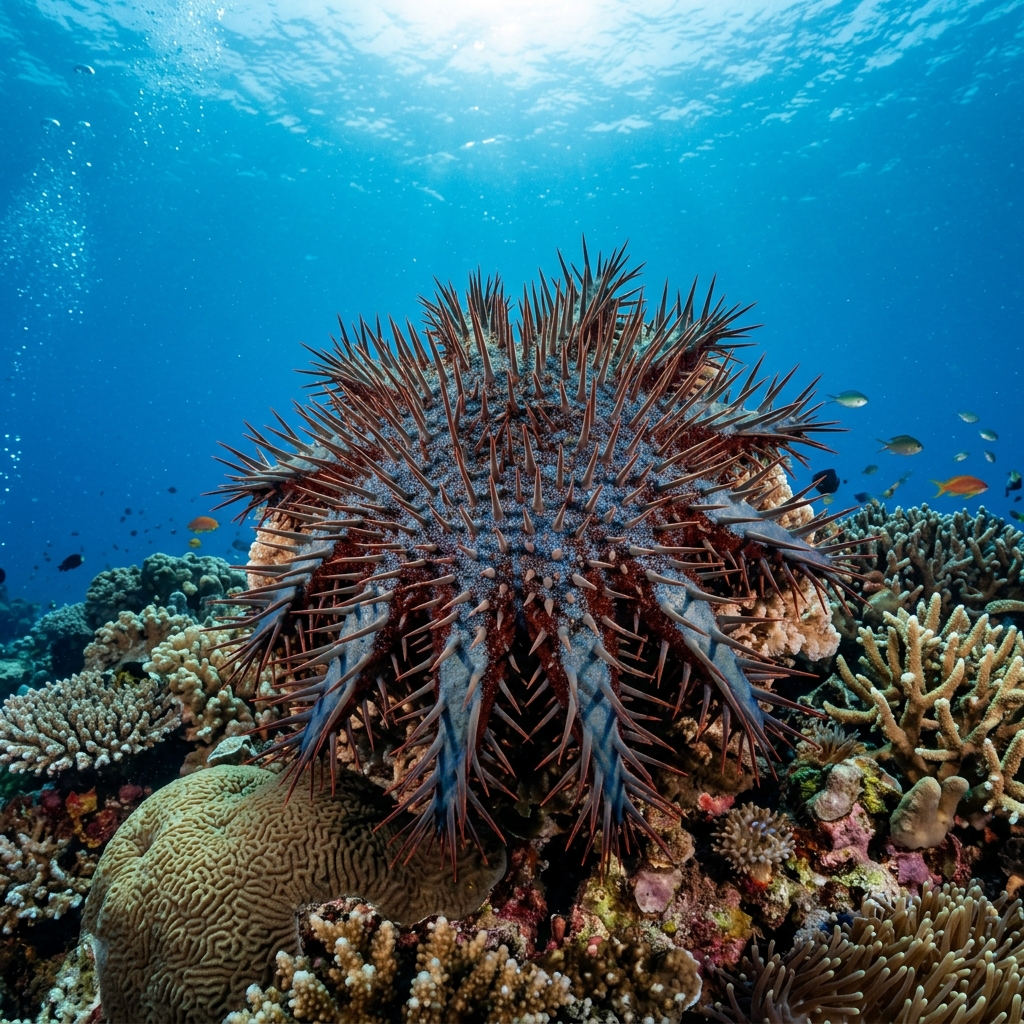
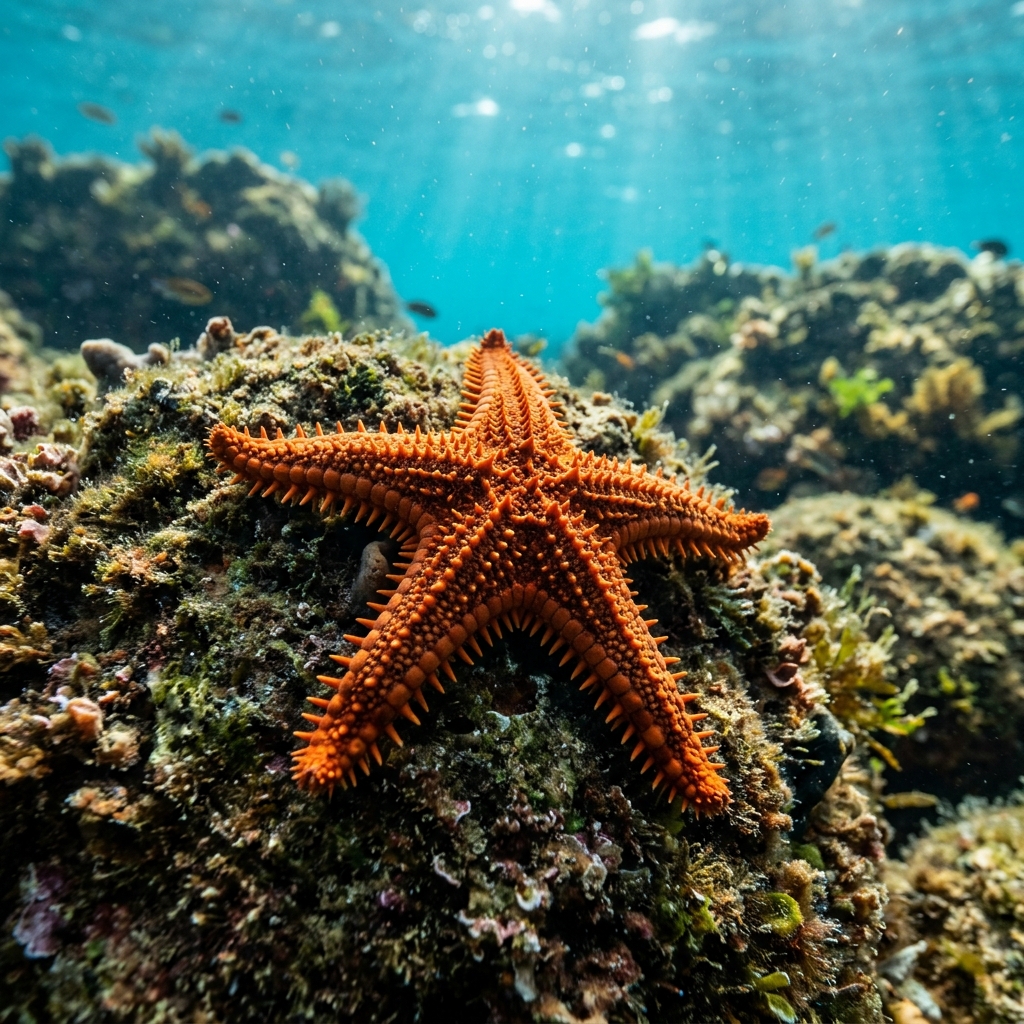
Reef neighbours a diver could mistake it for. Use the identification notes above to tell them apart.
Most commonly logged across the French Riviera and Provence, the Costa Brava, and around Gozo in Malta, with strong records also from the Canary Islands (particularly Tenerife and Gran Canaria) and the Kvarner Gulf in Croatia. In the Southern Hemisphere, New South Wales, Australia and the coastal waters of New Zealand are reliable areas. Australia as a whole produces the highest site count of any country in the data.
Mapping where Eleven-armed Sea Star is logged…
The species is most widely logged across the French Riviera, Costa Brava, Gozo in Malta, the Canary Islands, and the Kvarner Gulf in Croatia. In the Southern Hemisphere, New South Wales in Australia and New Zealand offer reliable sightings.
In the Mediterranean, Atlantic Europe and the Canary Islands they are present year-round. In Australia and New Zealand sightings concentrate between September and March, the austral spring and summer.
Count the arms. Most sea stars have five, but this species usually carries nine to eleven, radiating from a small central disc. Colour ranges from orange-brown to grey-purple with a distinctly spiny, rough surface. An obvious split or groove between arm groups is a strong indicator of fission.
A precise typical size isn't well established from diver observations, but individuals with nine to eleven fully grown arms can span a substantial portion of your hand to well beyond it. The arm count itself, rather than overall size, is the more reliable identification feature.
They reproduce by fission: the animal tears itself in two along a line between arm groups. Each half independently regenerates the missing arms over weeks to months. Divers encountering individuals with uneven arm counts or a visible body split are likely witnessing this process at some stage.
Site and sighting data is aggregated from diver logs, iNaturalist and GBIF. For taxonomy and conservation status:
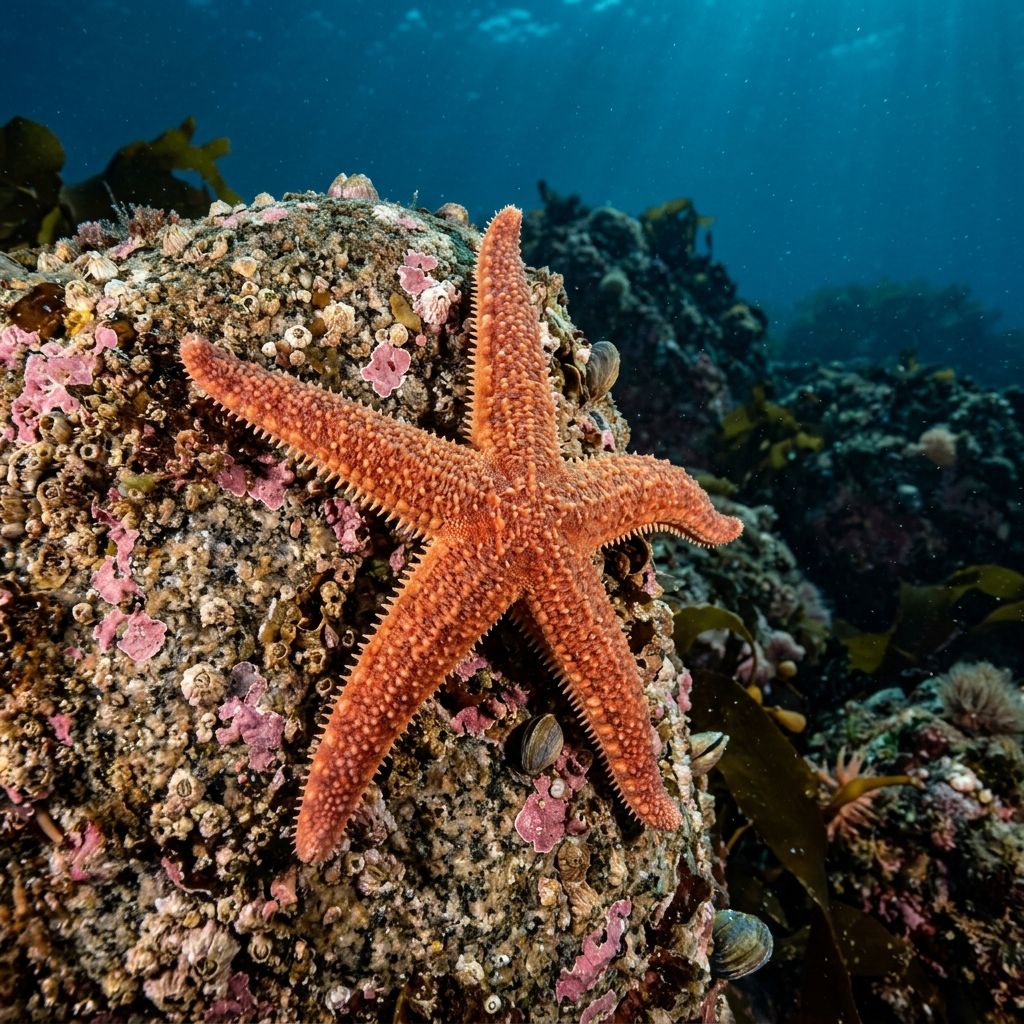
Common Sea Star
2,271 sites