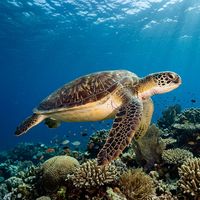
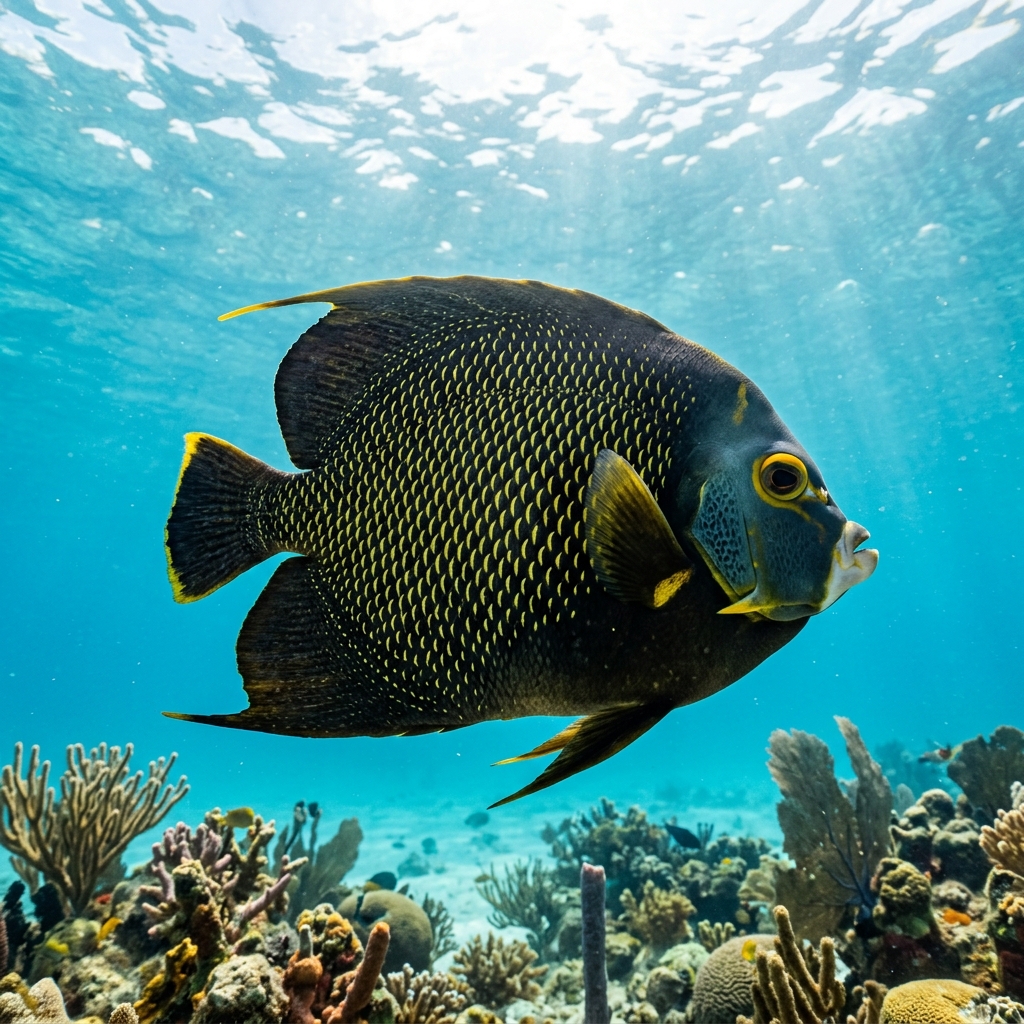
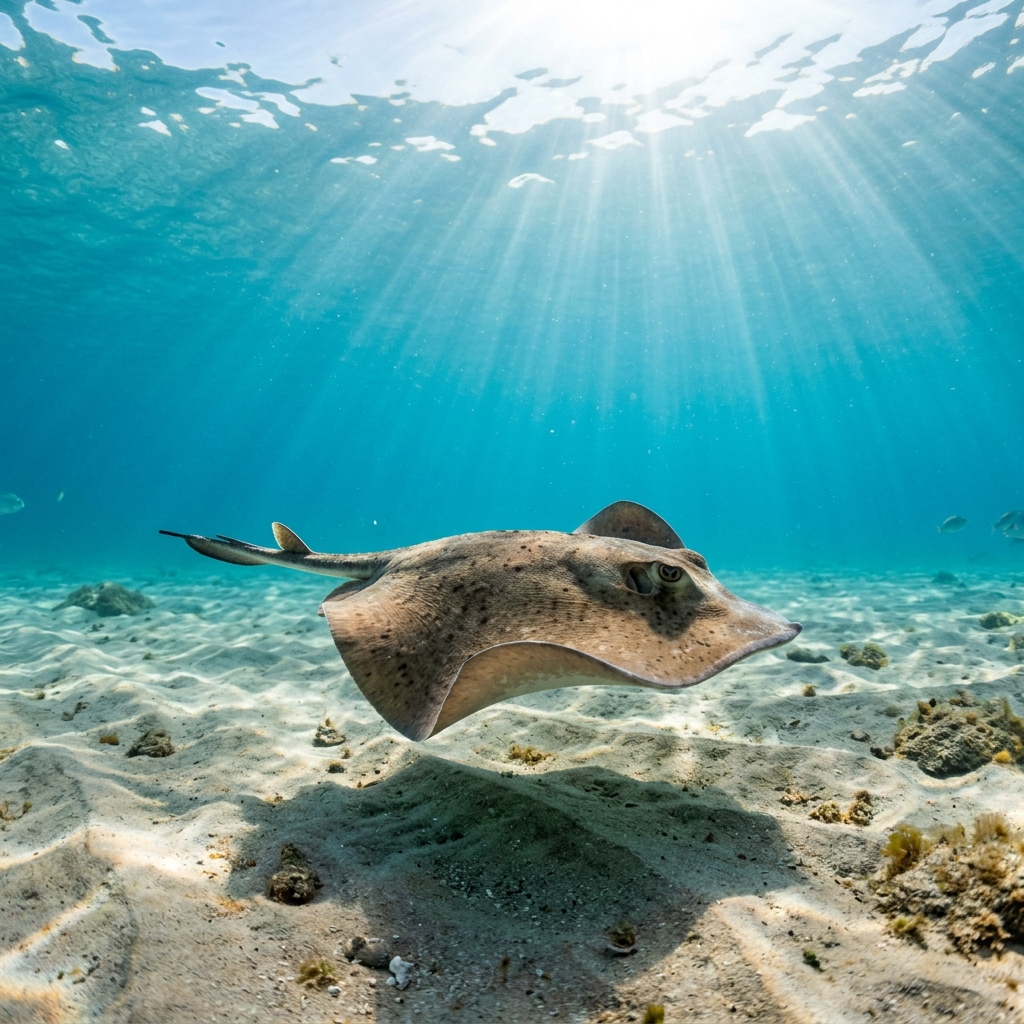
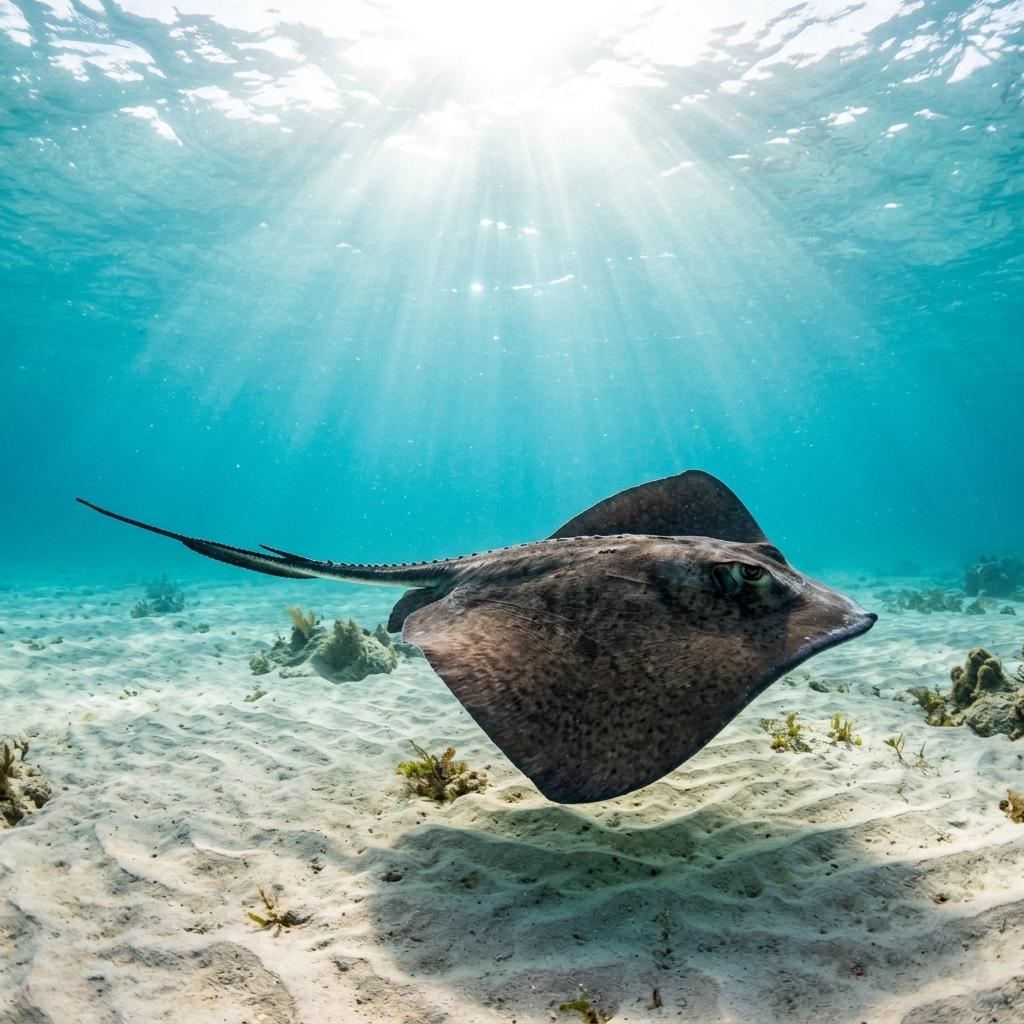
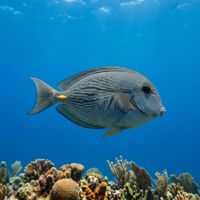
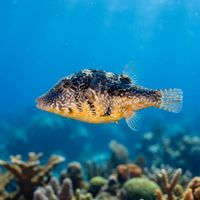
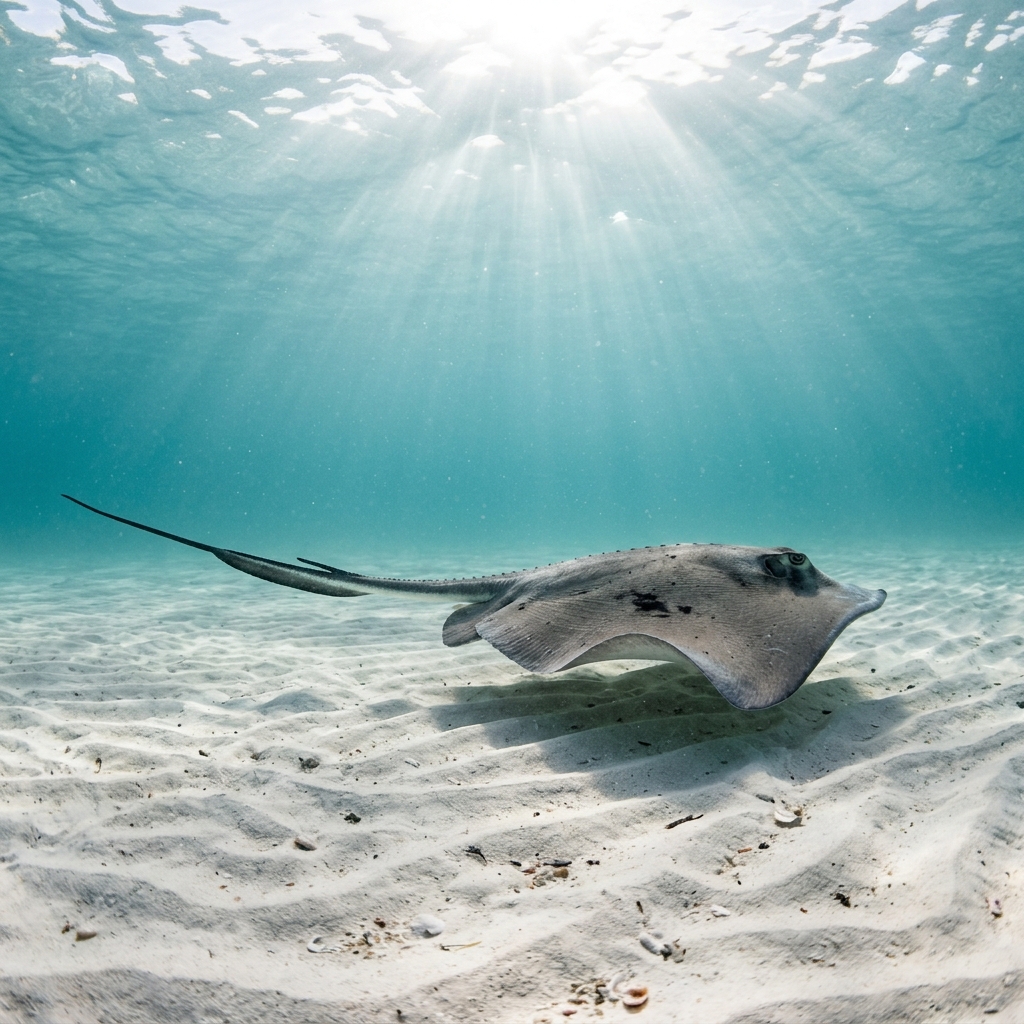
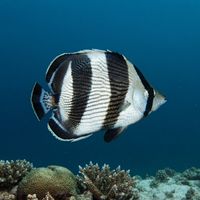
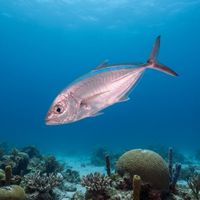
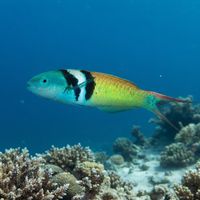
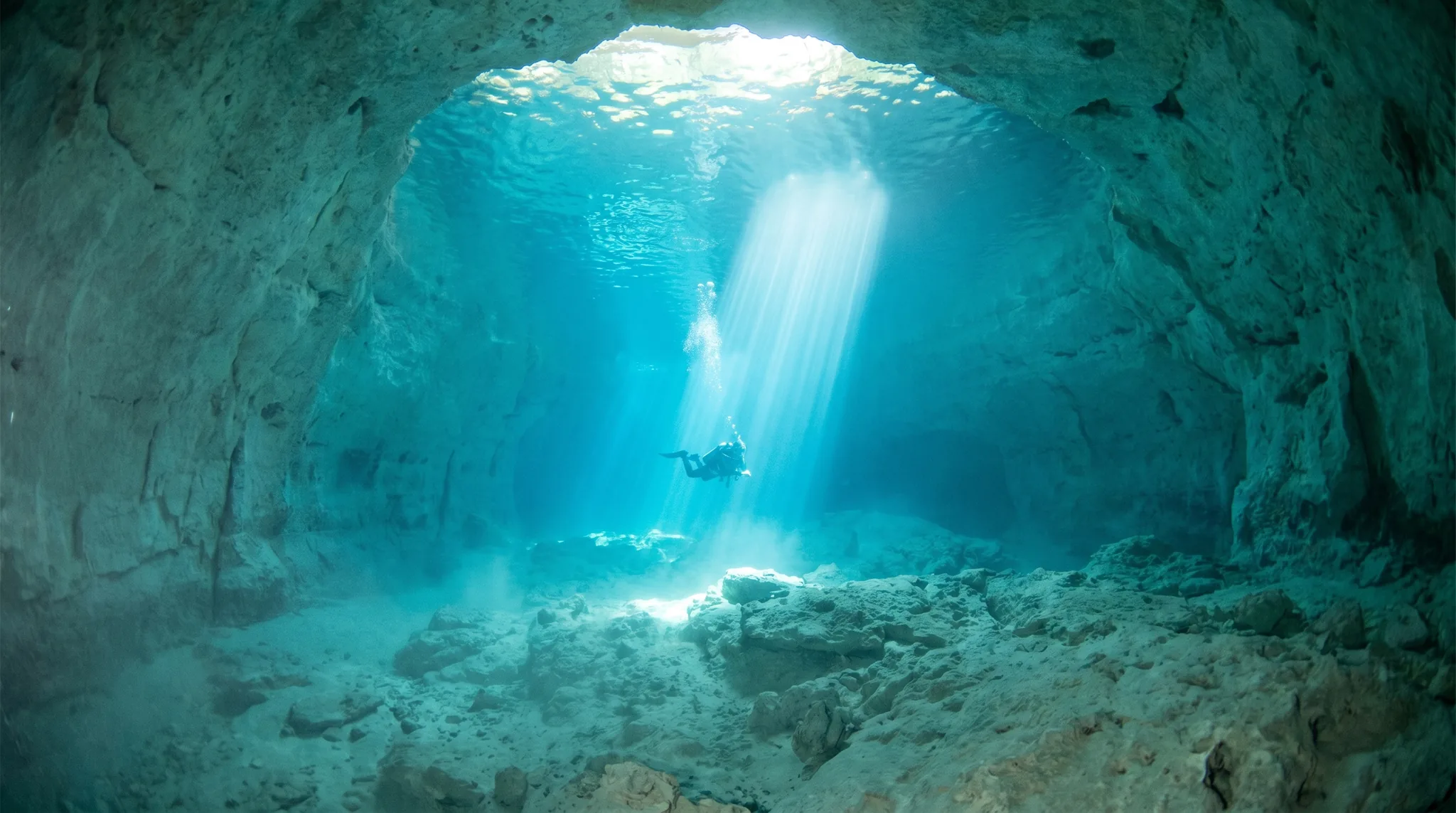
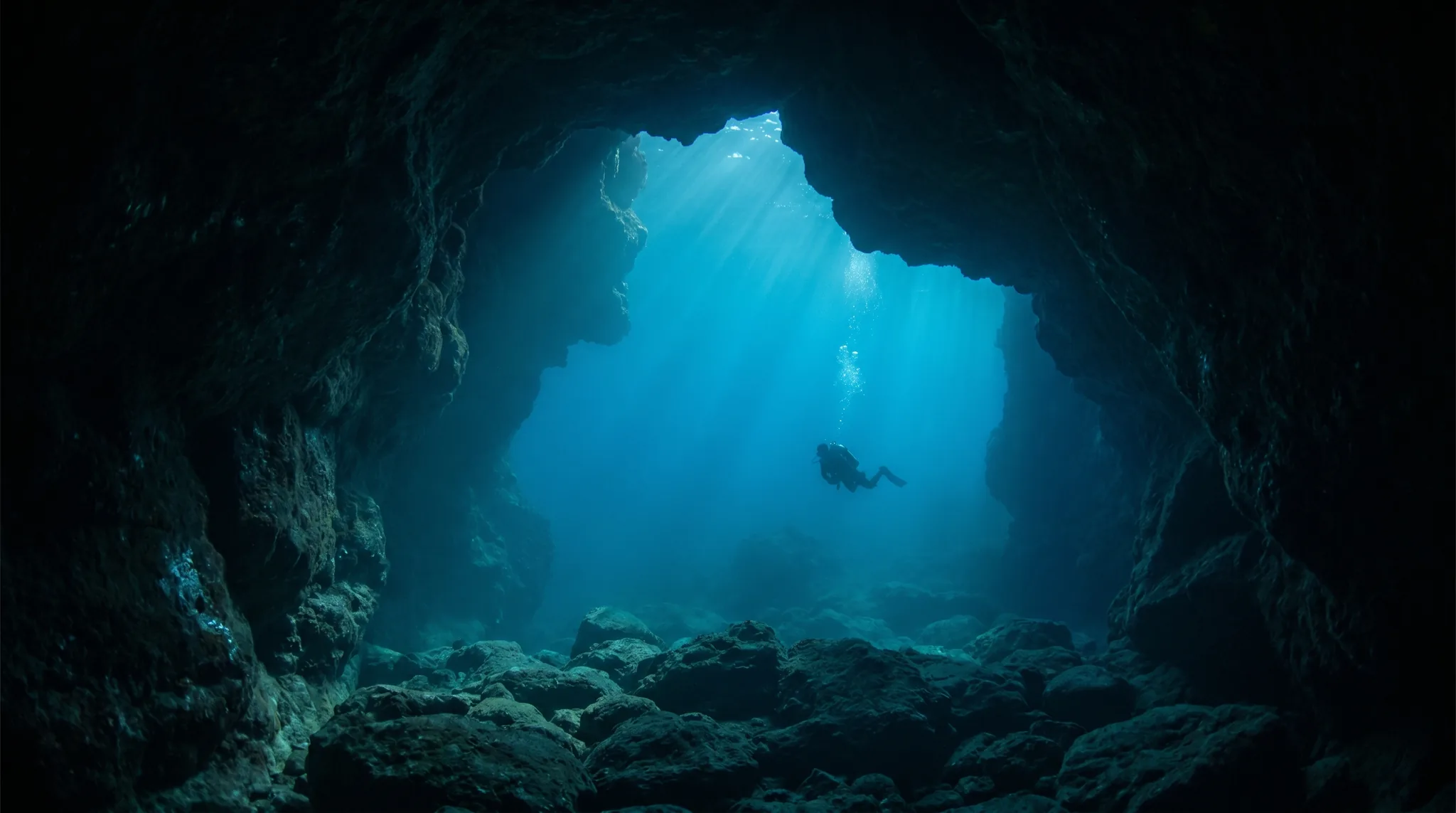
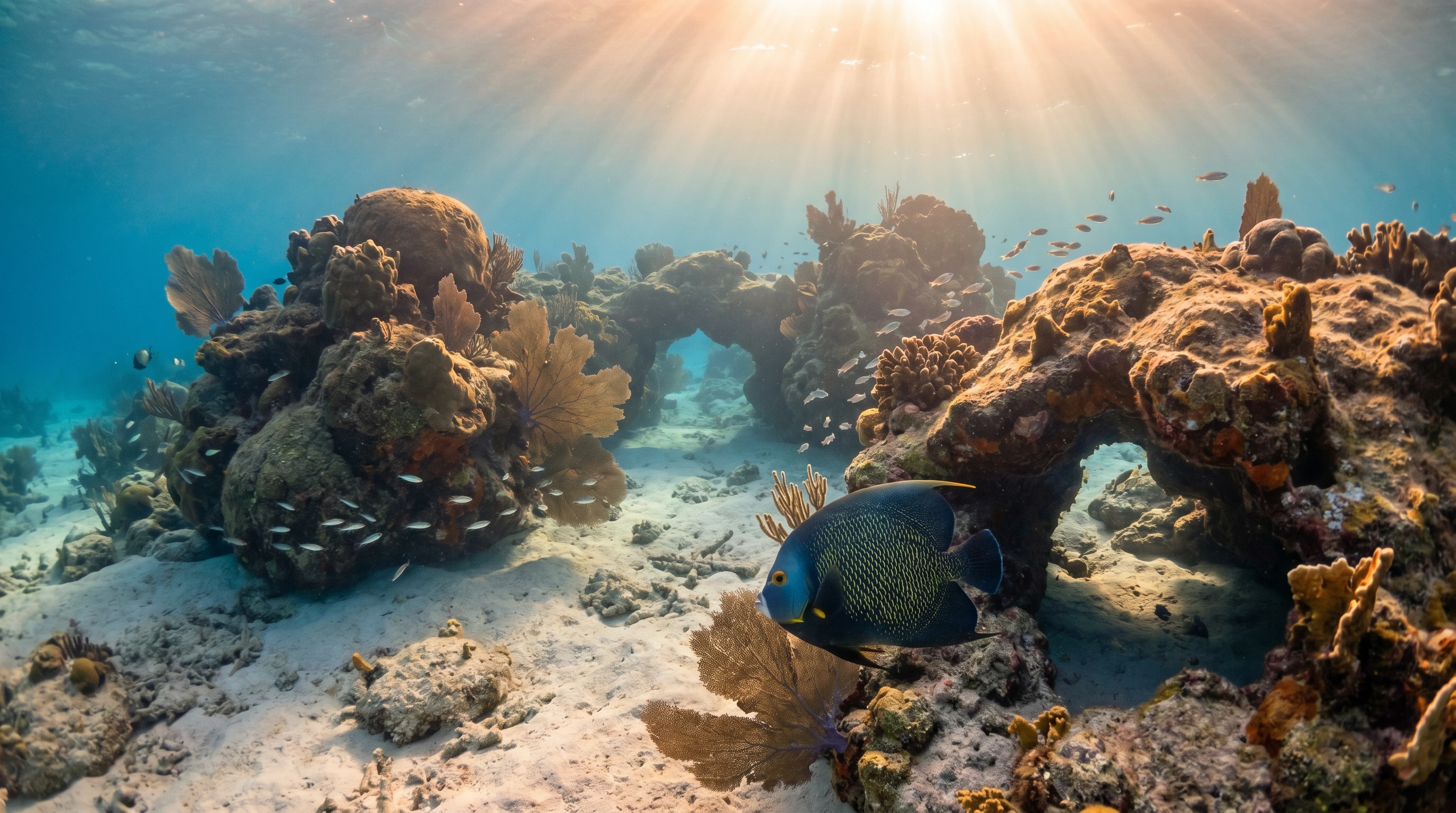
Tulum divides sharply between its reef sites offshore and a remarkable network of freshwater cenotes inland. The cenotes range from shallow, light-filled caverns accessible to beginners, such as Cenote Pet Cemetery and Gran Cenote, to deep vertical sinkholes like Cenote Angelita with its dramatic halocline layer. Reef sites including Tankah II, Dreams Reef and Ballena offer drift and wall diving for those who prefer saltwater. The Green Sea Turtle, Round Stingray and French Angelfish are among the most consistently observed species across both environments.

Monthly water temperature across Tulum's sites, from satellite sea-surface data corrected for depth. The band shows the site-to-site spread.
Water stays warm throughout the year, peaking in late summer and early autumn, with the coolest months still comfortable for most divers. Conditions are most favoured from late spring through to the end of the year, though diving is viable year-round. Cenote sites offer exceptional visibility and shelter from surface conditions, while offshore reef sites can carry gentle drift currents.
14 operators
Mexico
16 more sites to explore
Water temperature around Tulum ranges from about 27°C in January to 30°C in August, based on satellite sea-temperature data for its dive sites.
With water around 27–30°C, a rash guard or 3mm shorty works in Tulum year-round.
Fin maps 28 sites in Tulum (26 scuba diving sites and 9 snorkelling spots, with some suited to both).
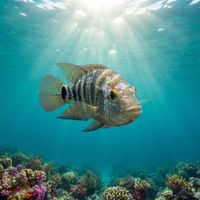
Tulum's reefs and cenotes host a wide range of observed species. The Green Sea Turtle, Round Stingray and Chupare Stingray are among the most reliably seen, alongside French Angelfish, Blue Tang and Caribbean Spiny Lobster. In the freshwater cenotes, the Mayan Cichlid is a distinctive freshwater resident rarely encountered on reef dives.
A good number of sites are rated for beginners, including Cenote Pet Cemetery, Cenote Calavera, Gran Cenote and the reef sites Tankah II and Dreams Reef. Intermediate and advanced divers are catered for by deeper cenotes such as Cenote Angelita and Cenote Chan Hol. Beginners should note that some cavern sites still require basic overhead-environment awareness.
The cenotes are freshwater systems accessed from shore, characterised by geological formations, light shafts and, in deeper sites, a halocline where fresh and salt water meet. Reef sites such as Ballena and Cuevitas are reached by boat and offer coral, drift channels and open-water species. The two experiences are quite different in character, and many divers choose to combine both on the same trip.
Tulum has a strong selection of dive operators, including Agua Clara Diving Tulum, Underworld Tulum, Tulum Scuba, SeaMonkey Business and Green Divers Tulum, among others. Most operators cover both the cenote network and the offshore reef sites. It is worth confirming in advance whether a specific operator runs both environments, as some specialise in one or the other.