Caranx ruber
Silvery jacks with a blue-black stripe, common on Caribbean reefs from Bonaire to the Yucatán in 23-28C water, year-round.
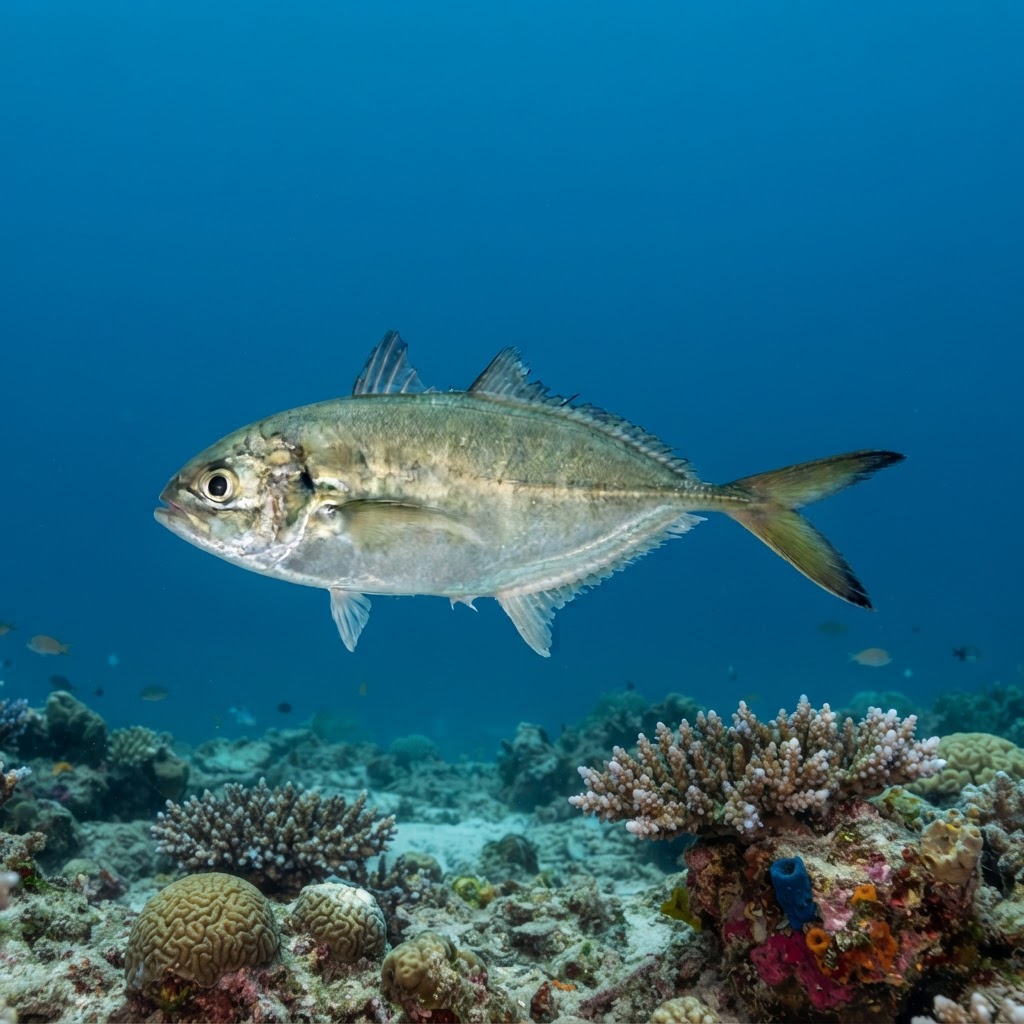
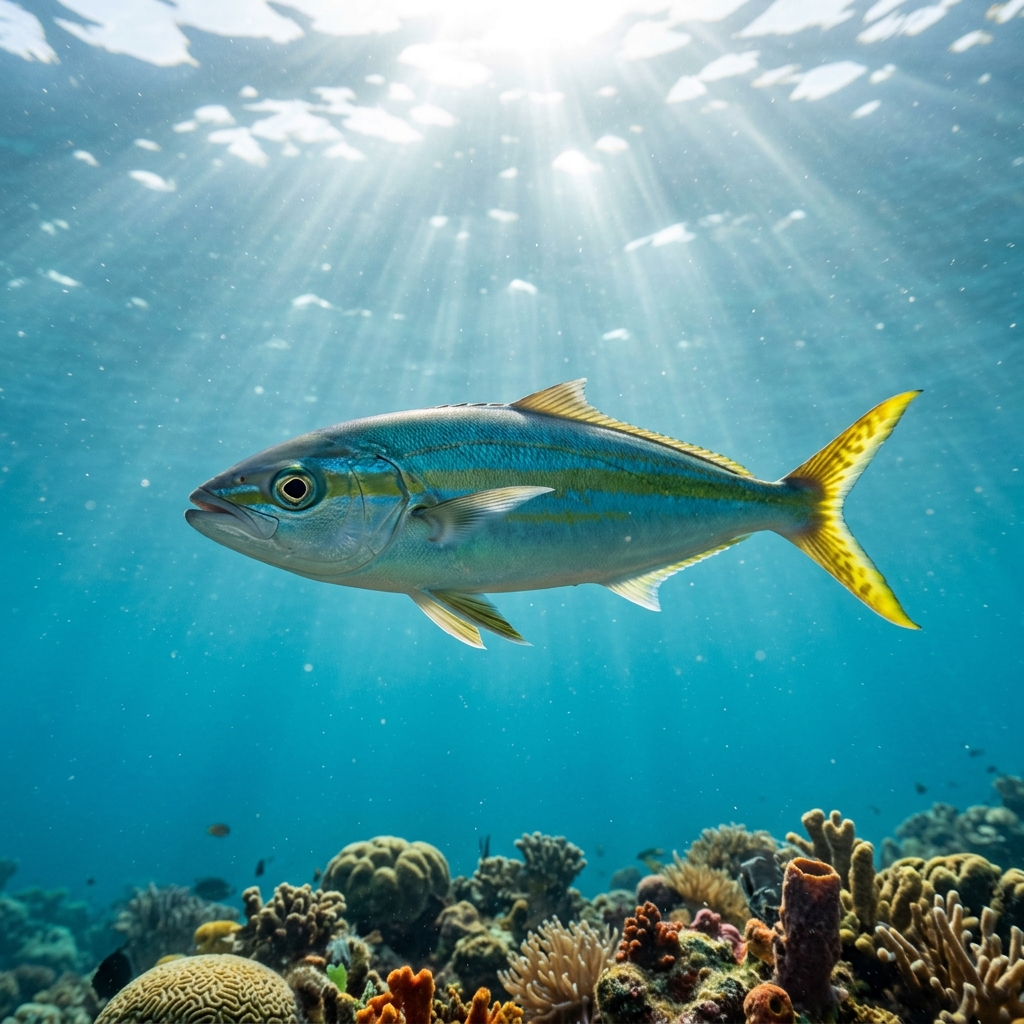
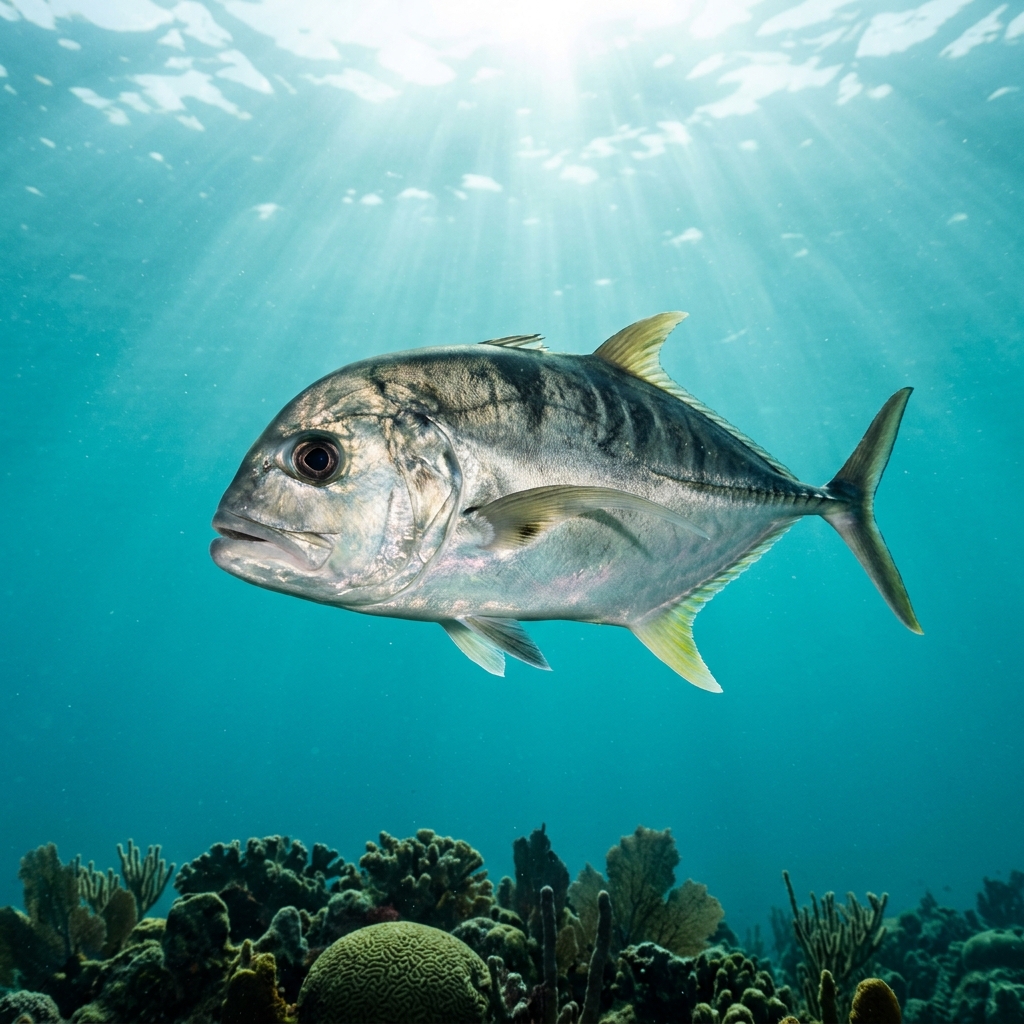
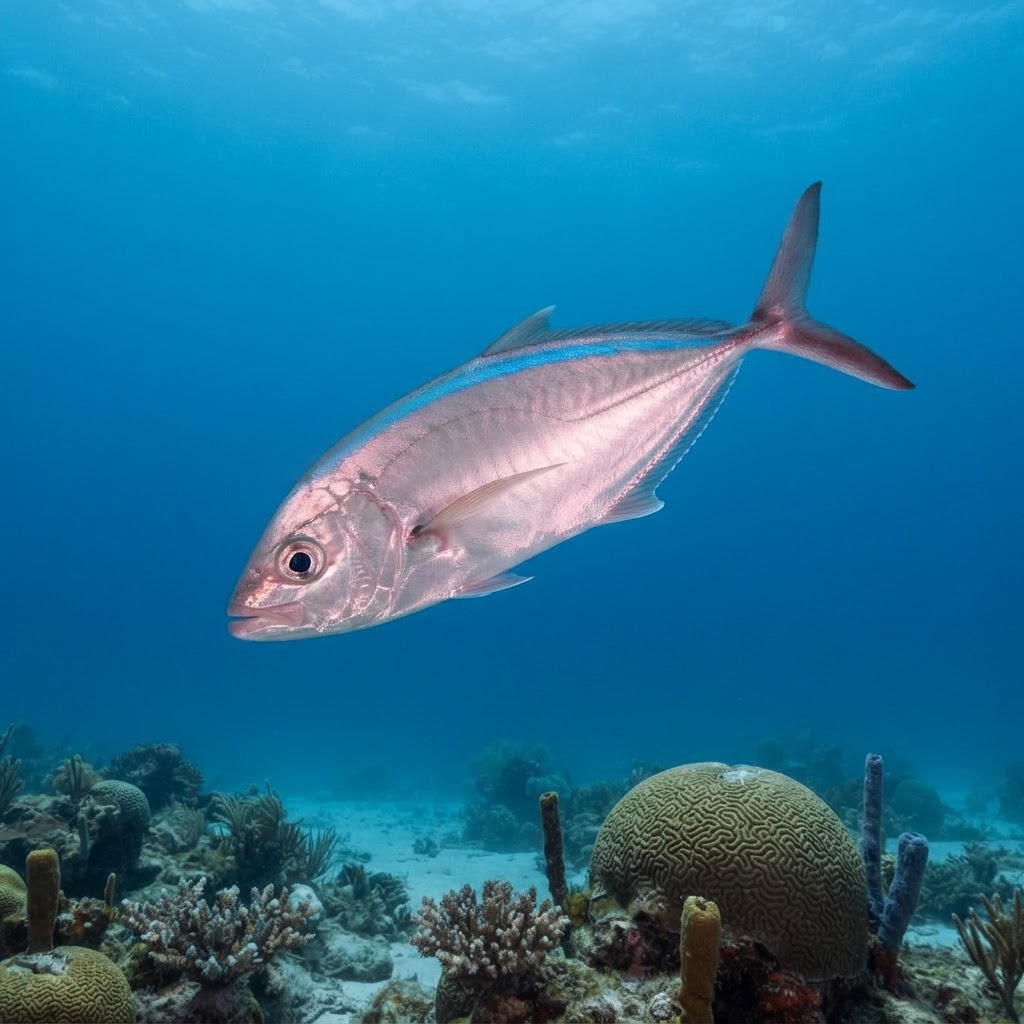
Slim, torpedo-shaped body with bright silvery-blue flanks and a dark blue-to-black stripe running from the snout through the eye and along the back to the tail. The stripe often intensifies to near-black when the fish is excited or hunting. Look for a deeply forked yellow-tinged tail and the way it swims in loose, fast-moving groups just off the reef rather than hugging structure.
Usually seen cruising in loose, fast-moving schools over reef flats and sand patches rather than tucked into coral, often shadowing larger predators or divers to snap up disturbed prey. They're bold and unbothered by divers, sometimes darting in close during a dive to check out bubbles or stirred-up sediment. Most sightings are a handful of fish rather than a single individual, and they're active through the day rather than a strictly dawn or dusk hunter.
Bar jack are known to tag along with foraging stingrays and eagle rays, snatching up small prey the rays kick up from the sand, a handy trick to watch for if you spot a ray working a sandy patch.
No strong seasonal pattern shows up in the sightings data, and with a comfortable range of 23.2 to 28C, they're on the reef year-round across their Caribbean range.
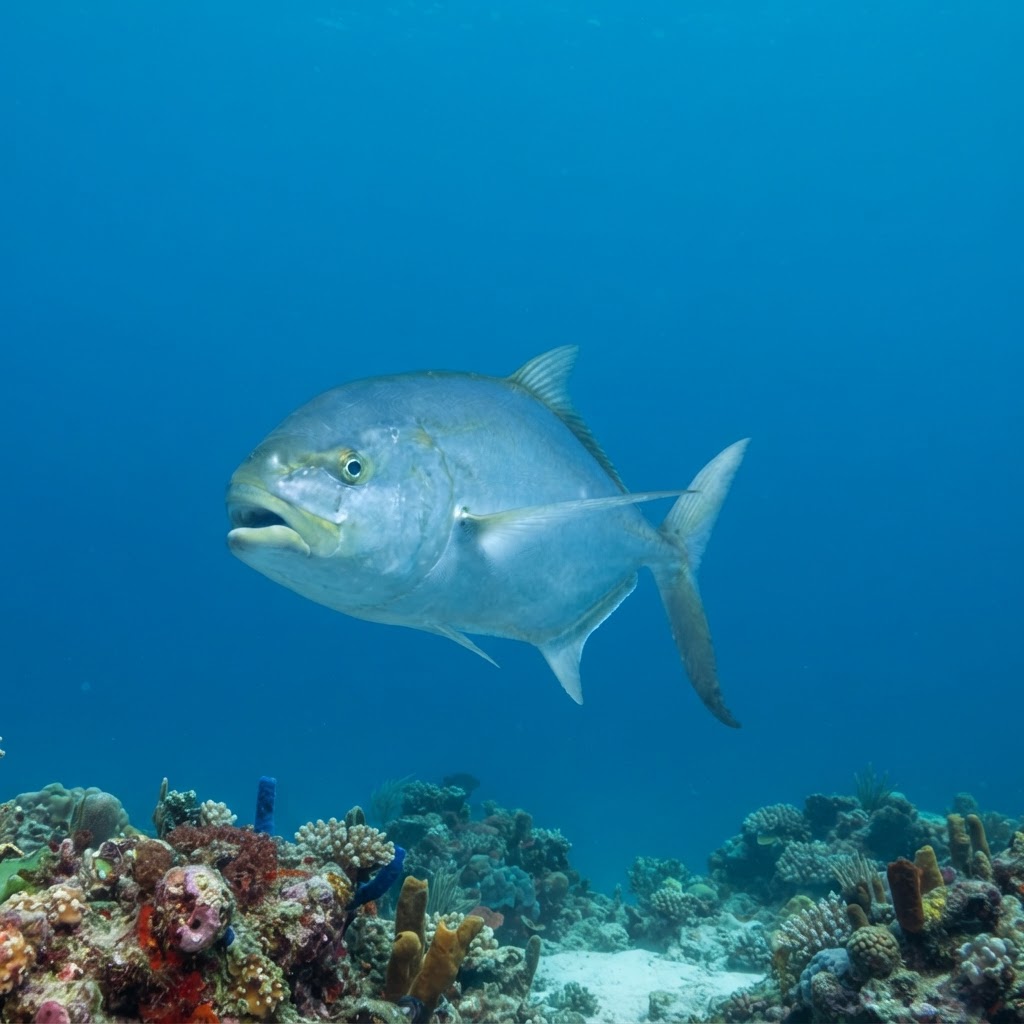
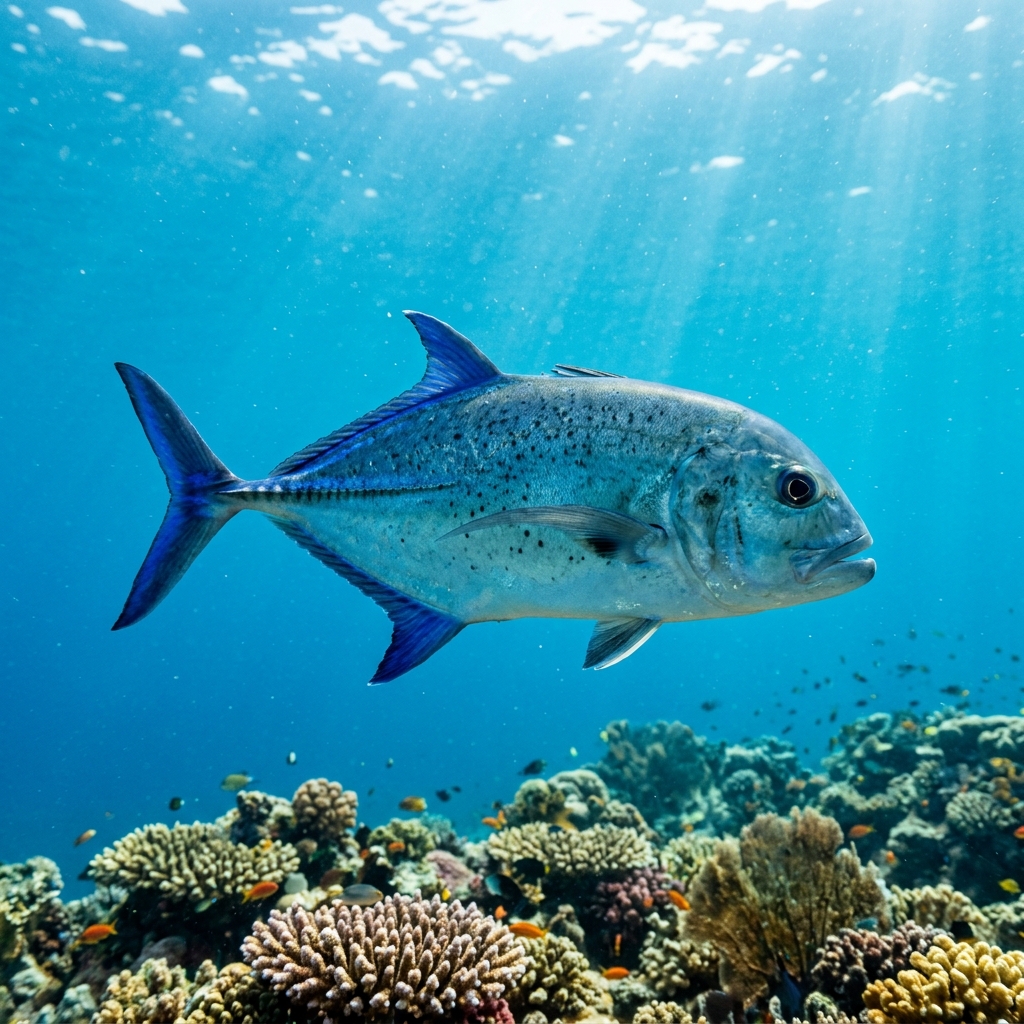
Reef neighbours a diver could mistake it for. Use the identification notes above to tell them apart.
Bar jack turn up on reefs right across the wider Caribbean, with the strongest and most consistent sightings in Mexico's Yucatán Peninsula, Florida, the Bay Islands of Honduras, Grand Cayman, and along Bonaire's Leeward Coast. They're also a regular find in the British Virgin Islands, US Virgin Islands, and the Dominican Republic, so most Caribbean reef dives have a decent shot at them.
Mapping where Bar Jack is logged…
They're a reliable sighting across the Caribbean, especially Mexico's Yucatán Peninsula, Florida, the Bay Islands of Honduras, Grand Cayman, and Bonaire's Leeward Coast.
Any time of year works. There's no detected seasonal pattern, and they stay on tropical reefs year-round in the 23 to 28C water they prefer.
Look for a slim silvery-blue jack with a dark stripe running from snout to tail and a forked yellow-tinged tail, usually seen in small, fast-moving groups over open reef and sand.
They typically reach around 51cm in length, a mid-sized jack you'll usually see in schools rather than as lone giants.
No, they pose no danger to divers. They're curious and will often approach to investigate bubbles or disturbed sand, but they're not aggressive.
They often shadow stingrays and eagle rays as they forage, picking off small prey stirred up from the sand, so a foraging ray is a good place to spot them in action.
Site and sighting data is aggregated from diver logs, iNaturalist and GBIF. For taxonomy and conservation status:
Bigeye Trevally
2,591 sites