Urobatis spp.
Round stingrays are most reliably logged across the Yucatán Peninsula and Florida. Find out where, when, and how to spot them underwater.
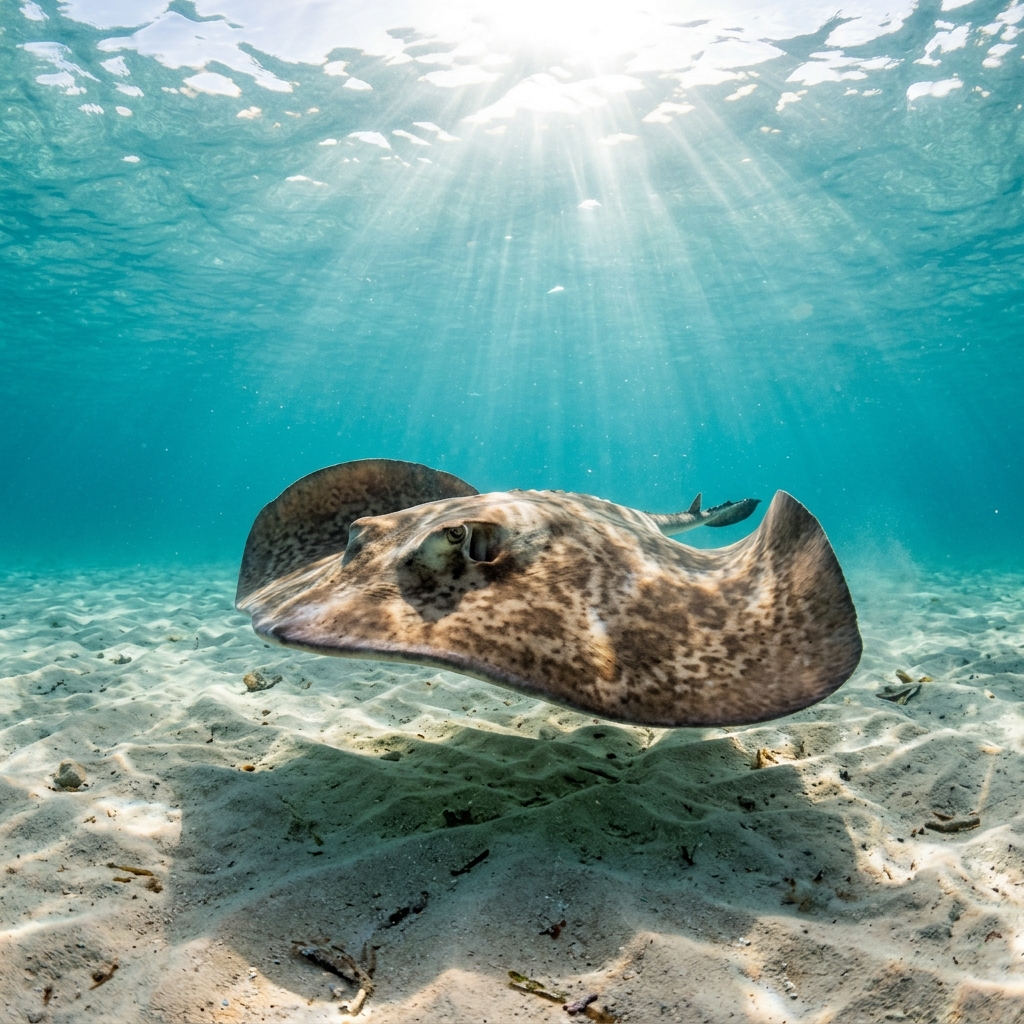
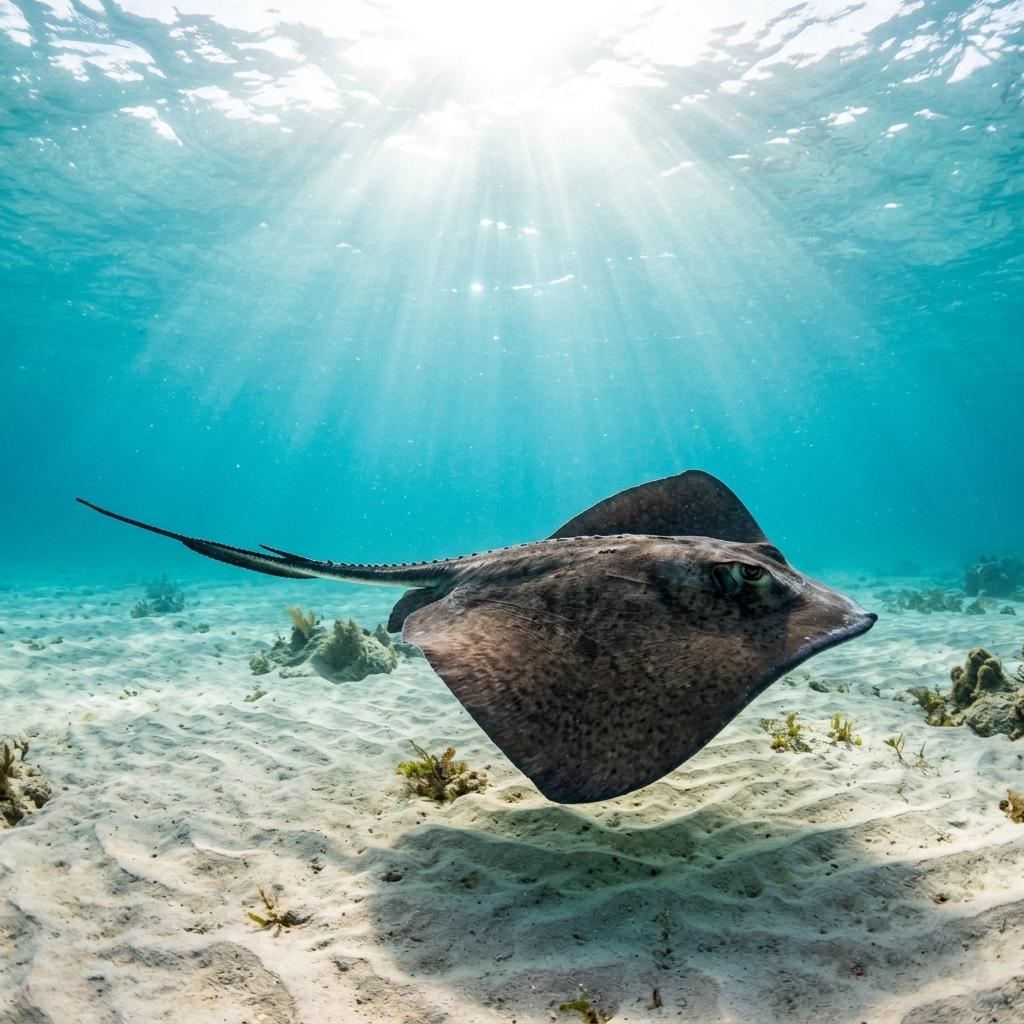
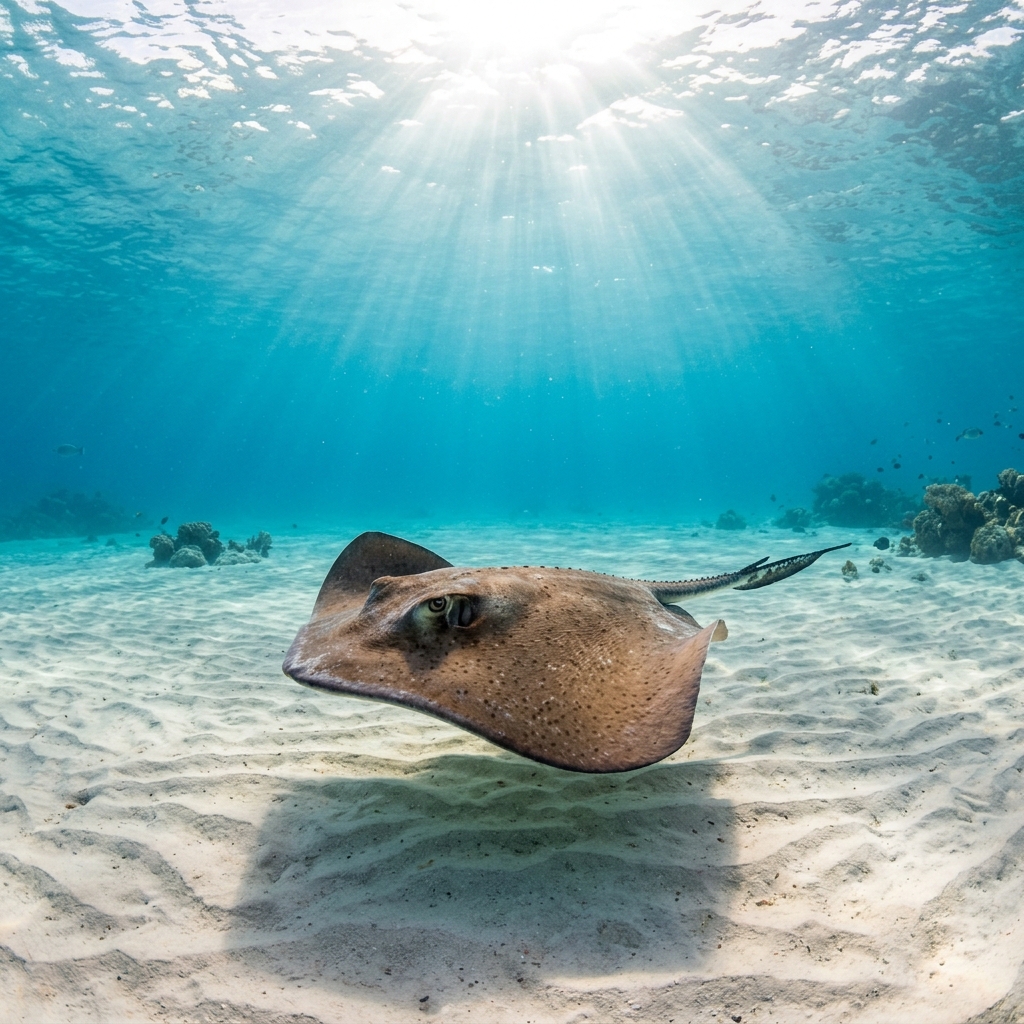
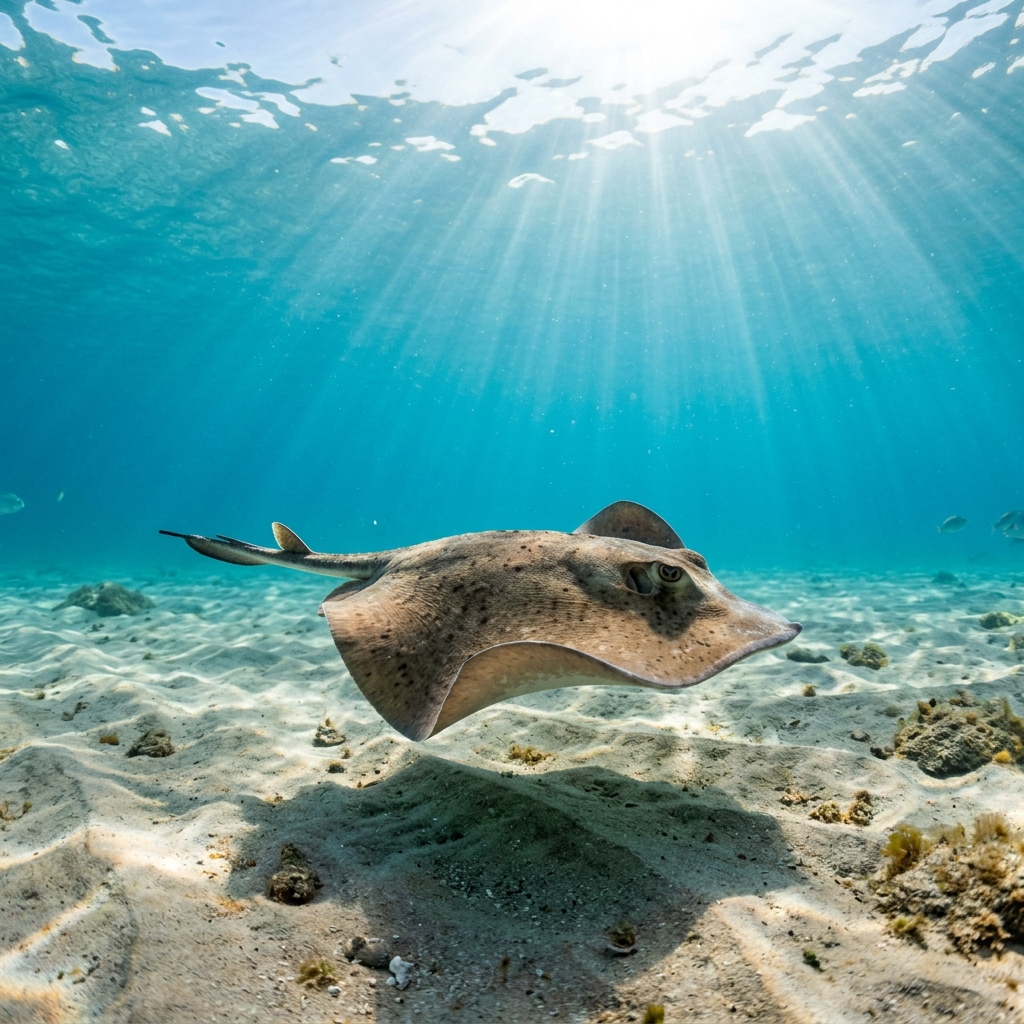
A flattened, nearly circular disc is the giveaway for this group of small to medium rays - far rounder in outline than a typical stingray. Colouration varies across the genus from plain sandy-brown to yellowish or spotted, often blending almost perfectly with sand or rubble. The tail is relatively short and whip-like, with one or more venomous spines near the base. You will most often spot them as a subtle hump on the seabed rather than an animal clearly in view.
Most sightings are of rays lying motionless and partially buried in sand or rubble, relying on camouflage rather than flight. When approached by a diver they tend to hold position until quite close, then lift off with a smooth, unhurried glide before resettling nearby. They are typically encountered on sandy flats, reef margins, or shallow lagoon floors rather than on the reef structure itself.
This entry covers the genus Urobatis, which includes several distinct species across the Eastern Pacific and Western Atlantic - among them the true Round Stingray (U. halleri), the Yellow Stingray (U. jamaicensis), and the Cortez Stingray (U. maculatus). Each region you dive may be home to a different member of the group, so the ID challenge shifts depending on where you are.
Sightings are recorded broadly from September through July across Northern Hemisphere sites, suggesting a long active season with only a mid-summer dip. The genus tolerates water temperatures from around 15.5 to 29 °C, so it turns up in both subtropical and tropical conditions.
Reef neighbours a diver could mistake it for. Use the identification notes above to tell them apart.
Round stingrays are most commonly logged in Mexico, with the Yucatán Peninsula and Baja California both producing strong records, and the Dominican Republic's La Romana coast and Grand Cayman close behind. The United States (particularly Florida) and Central American destinations including Costa Rica's Papagayo Gulf, Roatán in Honduras, and Belize also feature solid sightings across a wide range of dive sites.
Mapping where Round Stingray is logged…
The strongest sighting records come from the Yucatán Peninsula and Baja California in Mexico, Florida in the United States, and La Romana in the Dominican Republic. Grand Cayman, Roatán, Costa Rica's Papagayo Gulf, and Belize all feature them regularly too. These rays are distributed widely across the Caribbean and Eastern Pacific, so you can expect possible encounters at sandy or mixed-bottom sites throughout the region.
Based on logged diver sightings, encounters concentrate from September through July in Northern Hemisphere locations, pointing to a long active season. The group is comfortable across a wide temperature range - roughly 15.5 to 29 °C - so both subtropical and tropical dive seasons fall within their comfort zone.
Round stingrays are not considered dangerous to divers in normal circumstances. They do carry a venomous tail spine, as all stingrays do, but they are passive and non-aggressive underwater. The real risk is accidental contact on exit or in very shallow water, so watch where you put your hands and feet on sandy bottoms.
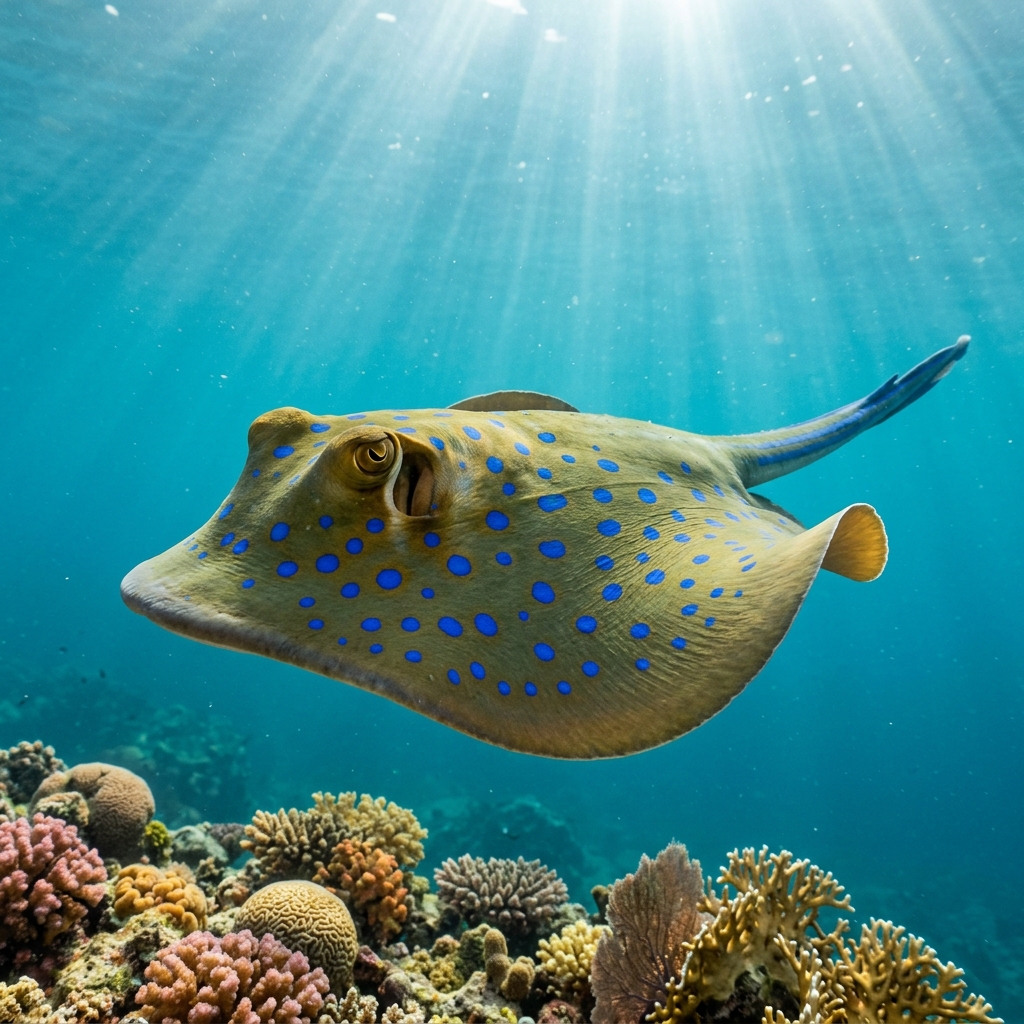
Look for the disc shape first - it is notably rounder and wider relative to length than most stingrays, almost like a flattened oval or circle. Colouration across the genus runs from plain brownish-grey to spotted or yellowish depending on the species and location. The short tail and the tendency to sit flat and still on sand help narrow it down. A butterfly ray is superficially similar but has distinctly wing-like, pointed disc tips and is usually larger.
Disc width varies across the genus. The true Round Stingray (U. halleri) typically reaches around 30 to 35 cm across the disc, making it one of the smaller rays a diver is likely to see. The Yellow Stingray (U. jamaicensis) is similar in scale. None of the Urobatis species are large rays, which adds to the challenge of spotting them on the seabed.
Site and sighting data is aggregated from diver logs, iNaturalist and GBIF. For taxonomy and conservation status:
Whiptail Stingray
1,747 sites