Styracura schmardae
Spot the Chupare Stingray in the Yucatán Peninsula and Roatán in warm 27-29 °C Caribbean waters. Best sightings run Nov, Apr.
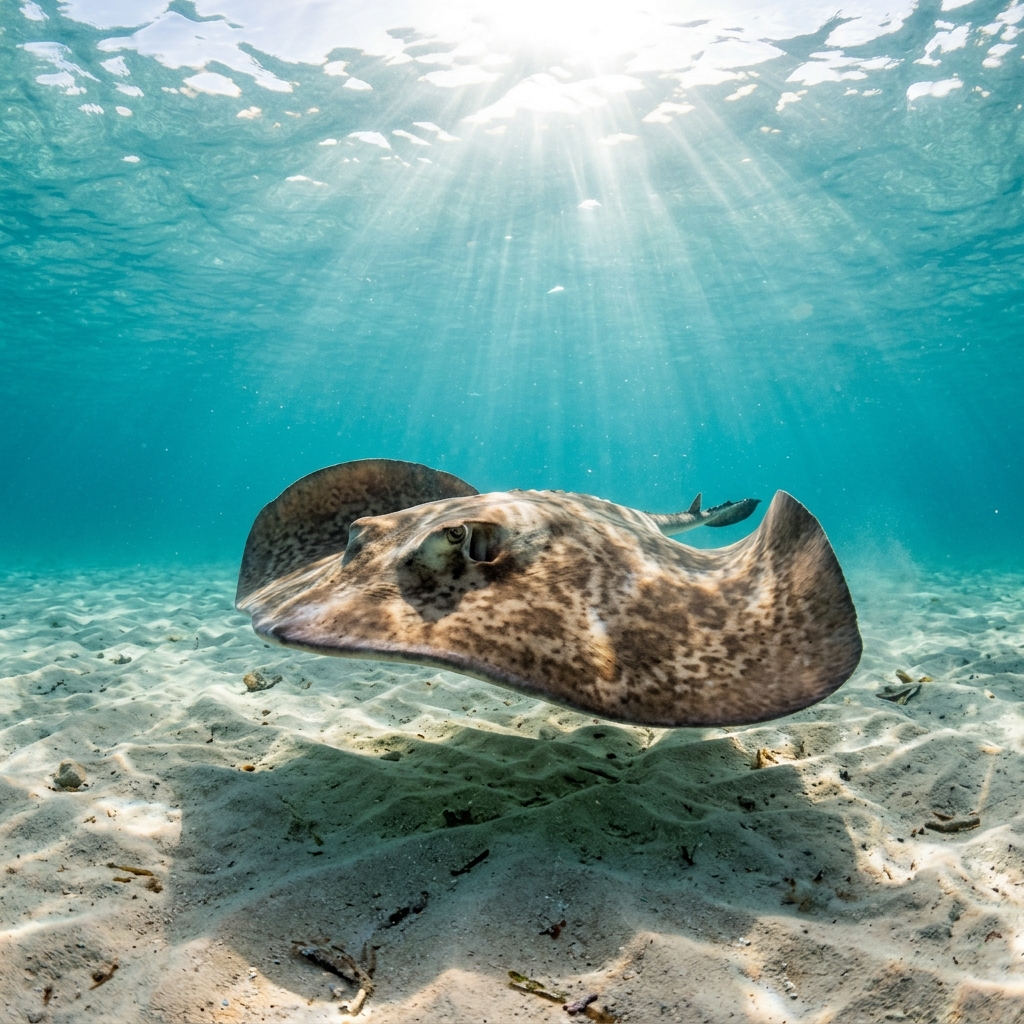
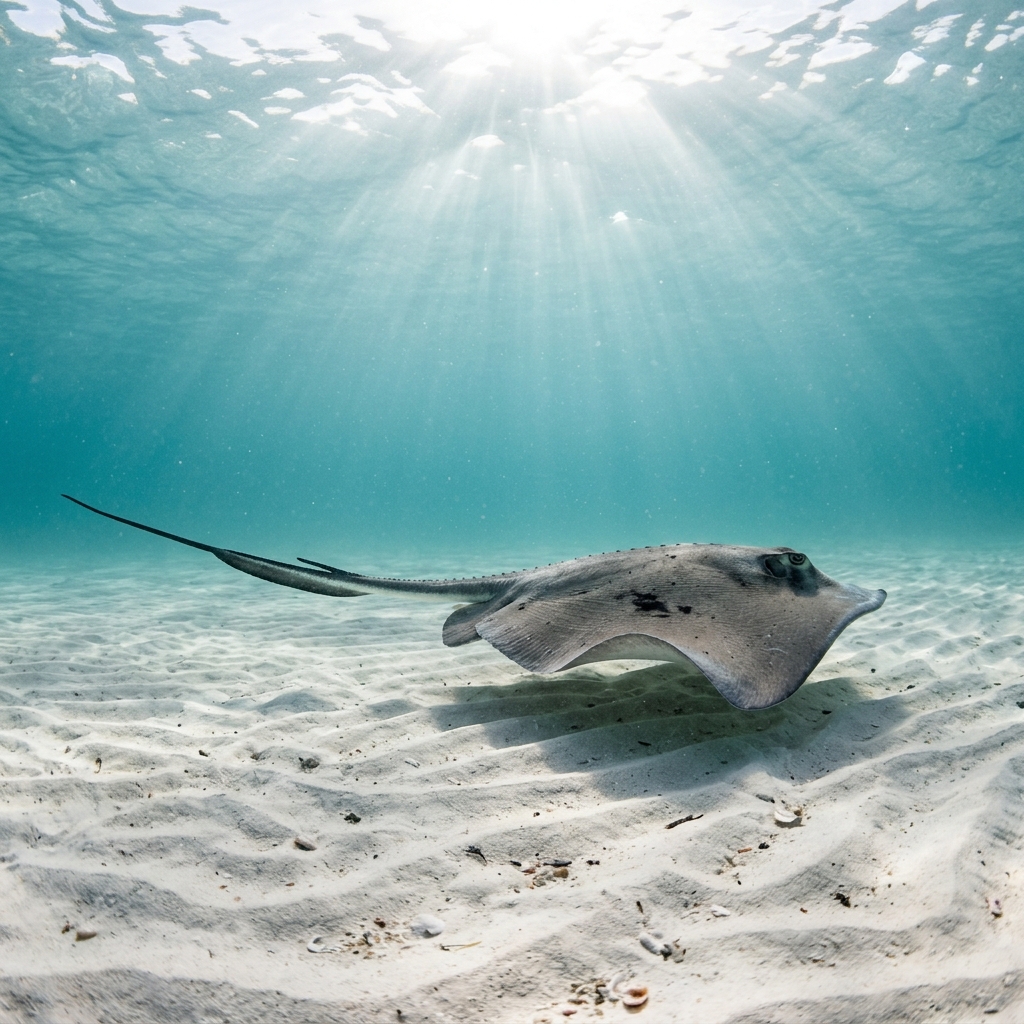
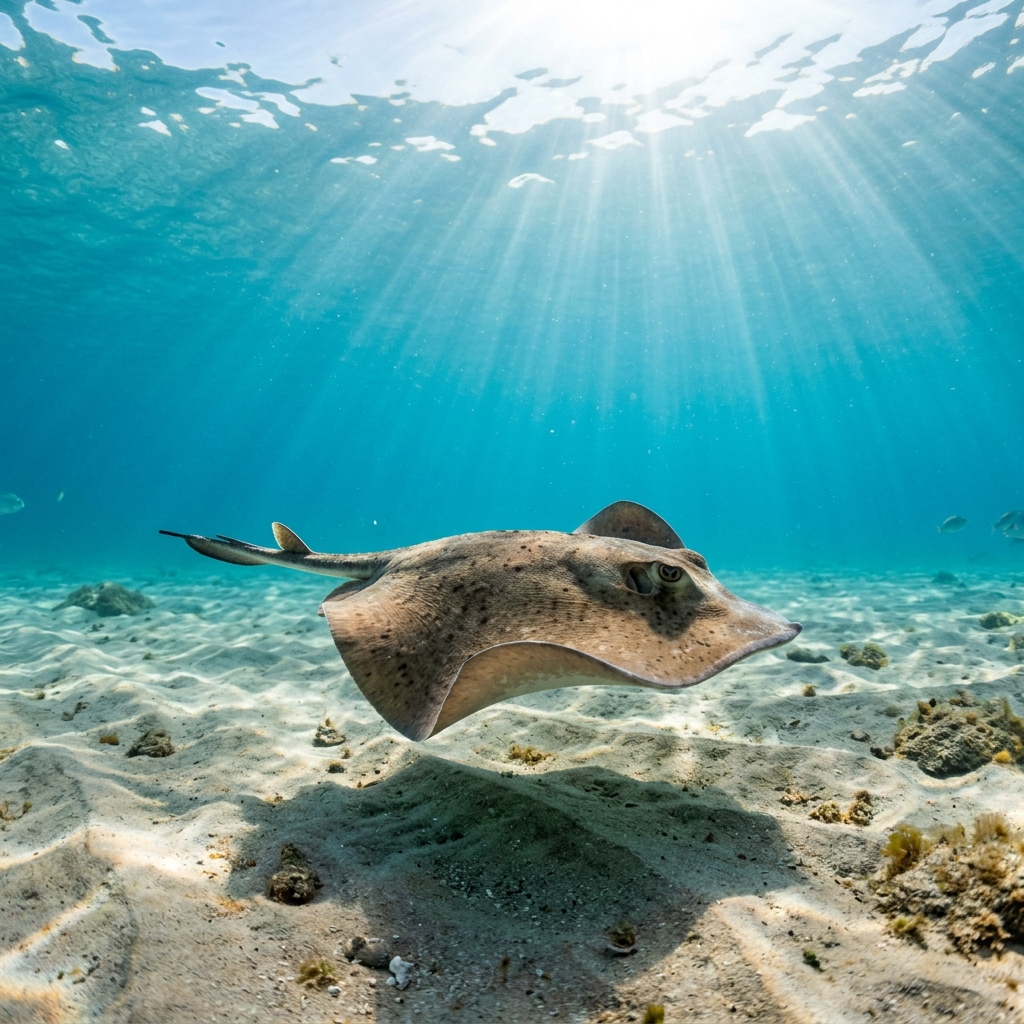
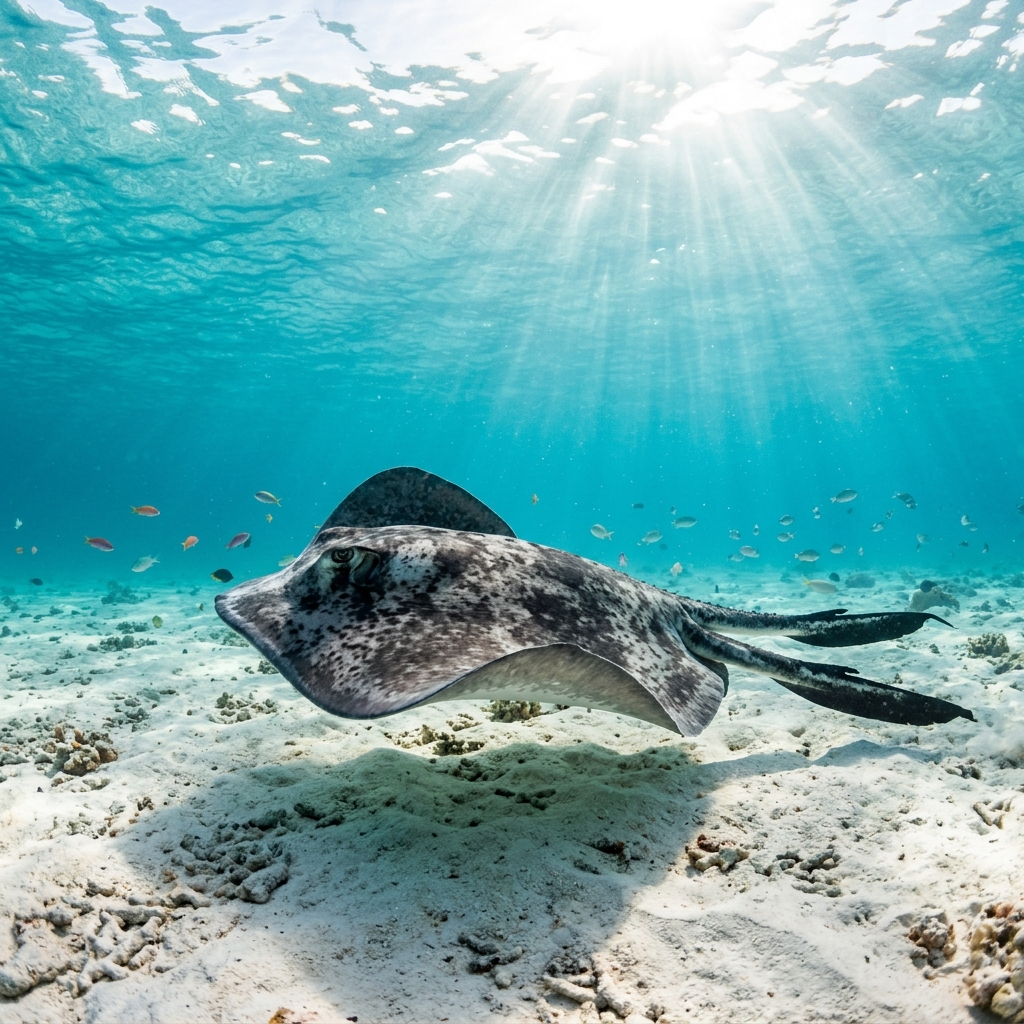
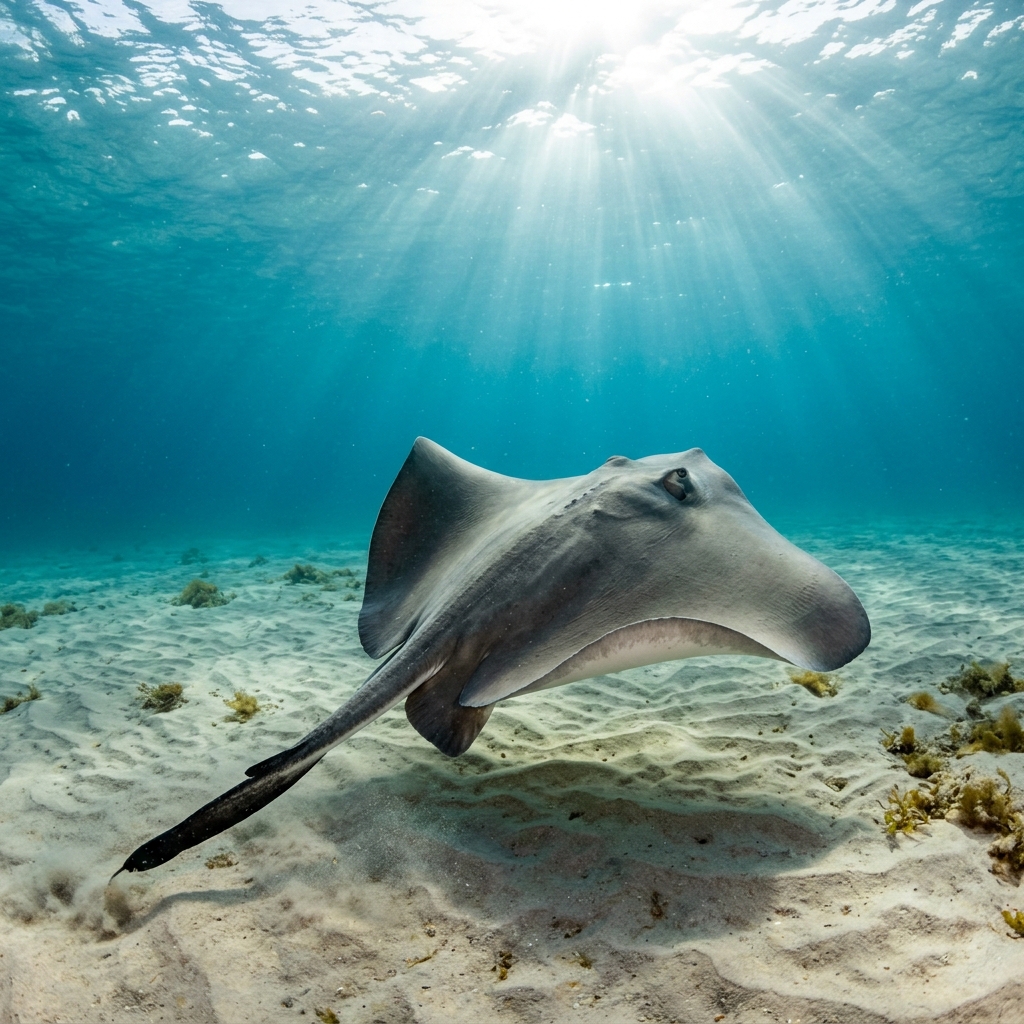
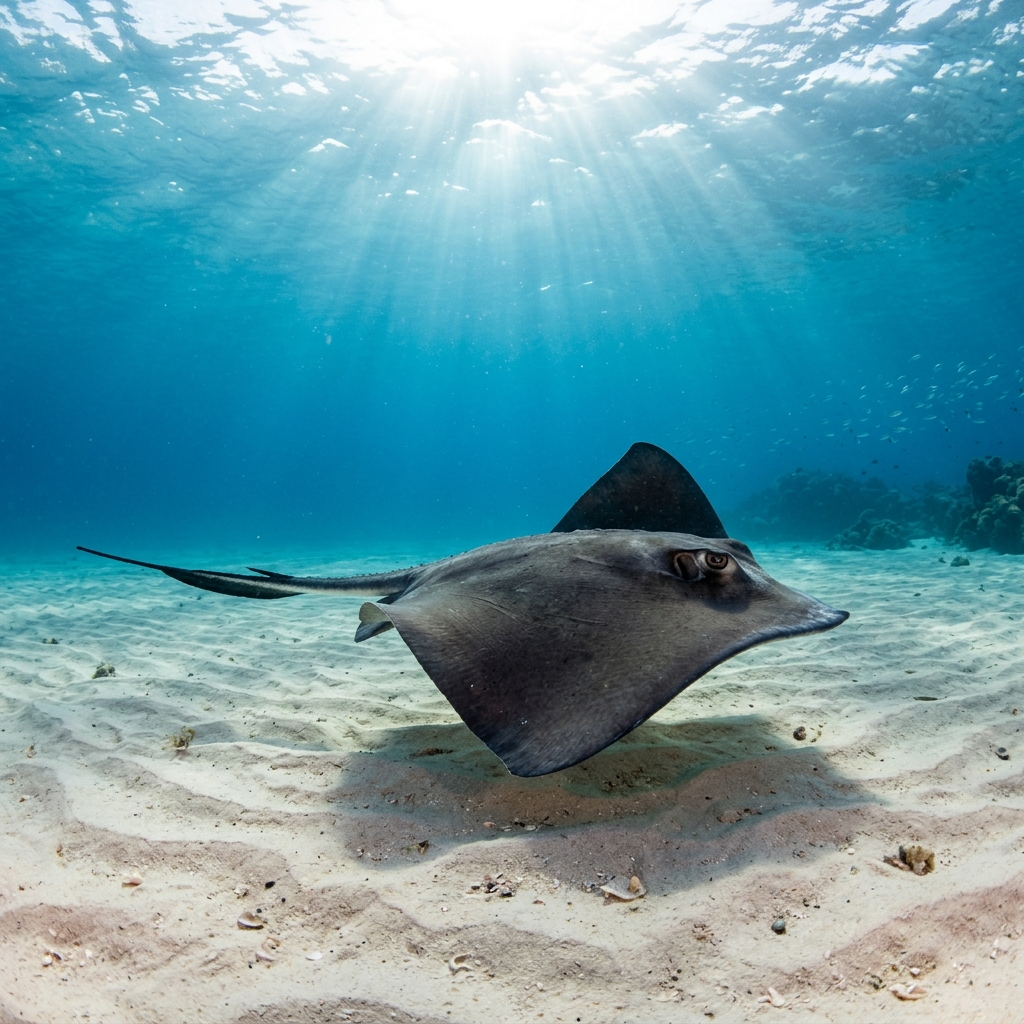
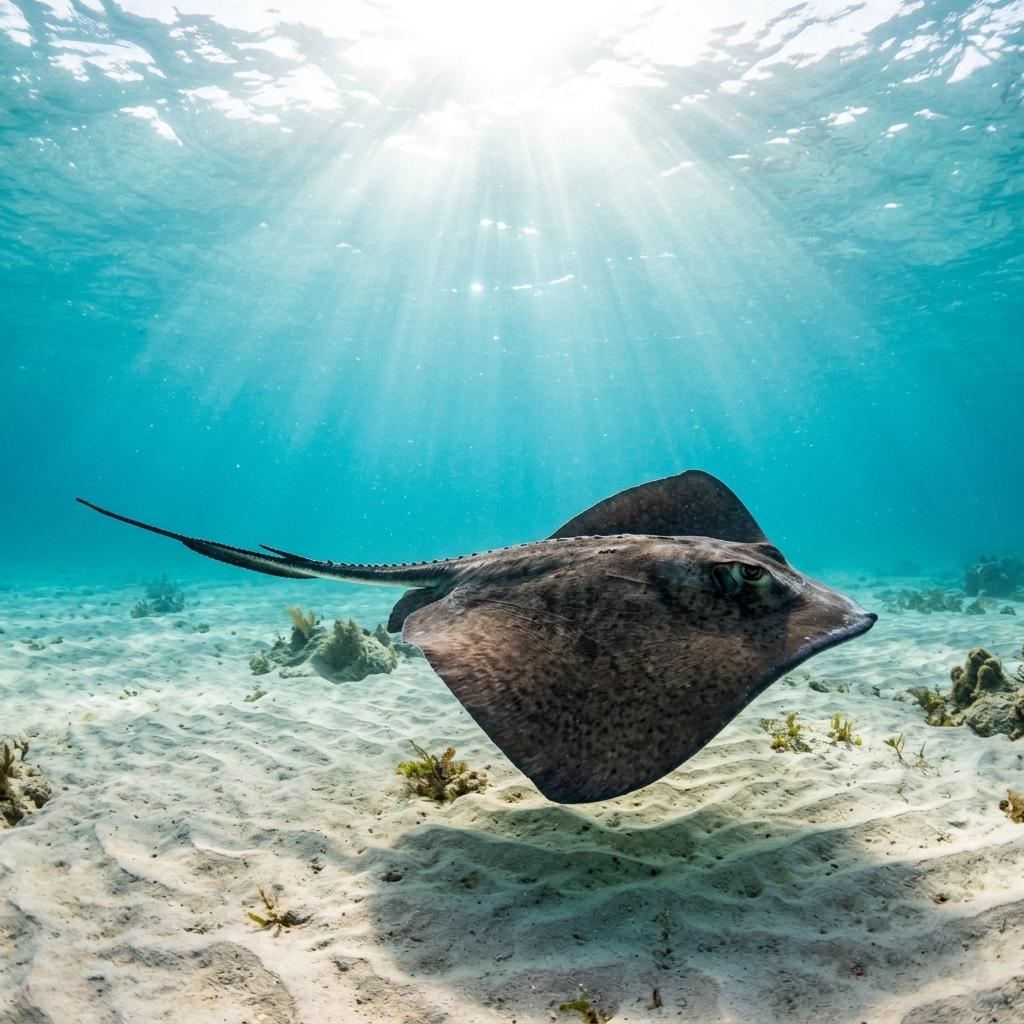
A large, almost circular disc with a dark grey-brown to olive upper surface and a pale white underside gives this ray a classic stingray silhouette. The disc is notably round and broad, and the long, whip-like tail is a reliable field mark. Unlike spotted or eagle rays, there is no bold patterning on the back, making it appear as a plain, dark oval from above. The tail carries a venomous spine (barb), though the ray is not considered a threat to divers.
Divers most often encounter this ray resting or cruising slowly over sandy patches and rubble near reefs, where it forages for buried invertebrates. It is generally unhurried around divers and tends to continue moving or remain settled rather than fleeing quickly. Approach calmly and from the side rather than overhead to avoid startling it.
The Chupare Stingray belongs to the family Potamotrygonidae, a group historically associated with freshwater rivers in South America, yet this species lives in marine and brackish coastal environments in the Caribbean, an unusual evolutionary position within its family.
Sightings concentrate between November and April across the Caribbean, coinciding with the cooler dry season when water temperatures sit in the 27-29 °C range where this ray is most reliably observed.
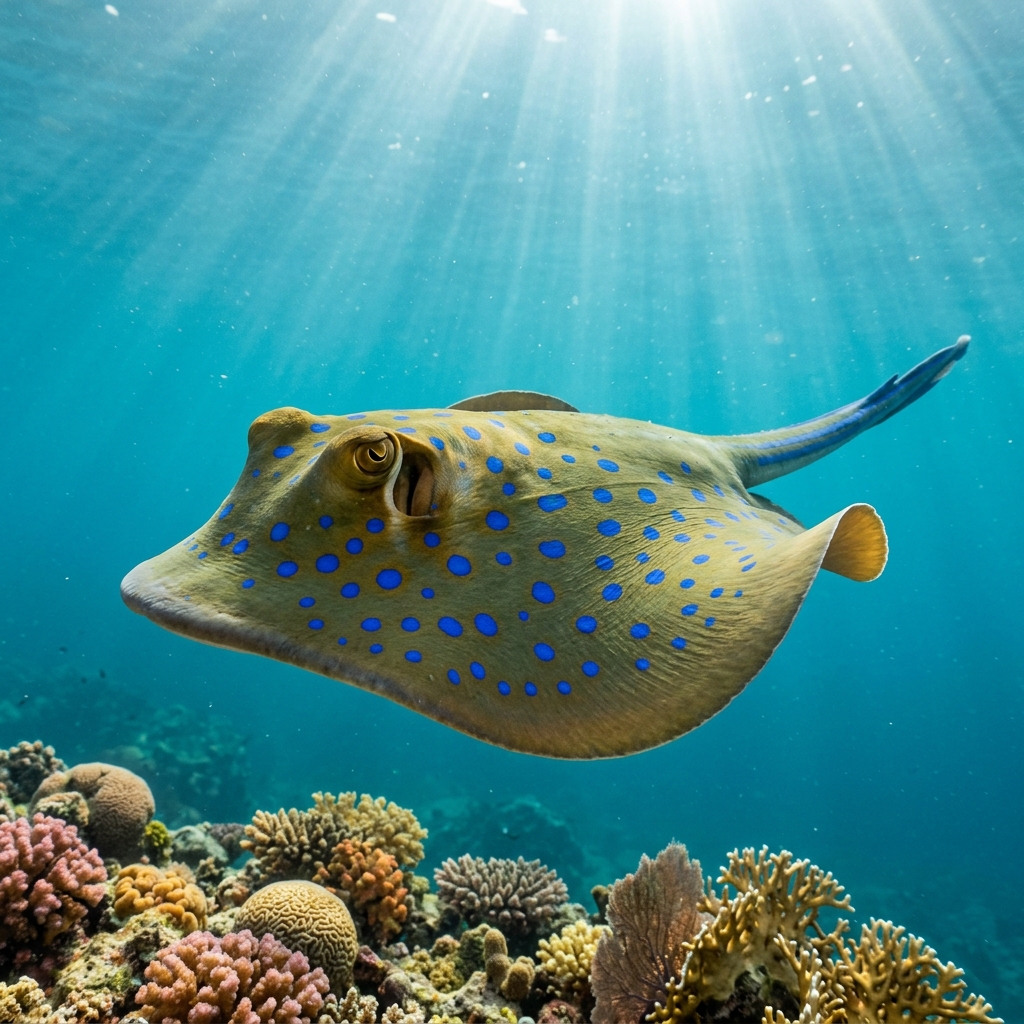
Reef neighbours a diver could mistake it for. Use the identification notes above to tell them apart.
The Chupare Stingray is most commonly logged across the western Caribbean, with the Yucatán Peninsula in Mexico dominating sightings by a wide margin. Strong populations are also recorded around Roatán in Honduras, Ambergris Caye and Caye Caulker in Belize, and in the waters off La Romana in the Dominican Republic. Smaller but consistent records come from Bocas del Toro in Panama and the Caribbean Coast of Colombia.
Mapping where Chupare Stingray is logged…
The Yucatán Peninsula in Mexico is by far the top region for sightings. Roatán in Honduras, Ambergris Caye and Caye Caulker in Belize, and La Romana in the Dominican Republic are also reliable. Smaller numbers are logged in Bocas del Toro, Panama and along Colombia's Caribbean Coast.
Sightings across the Caribbean peak between November and April. This aligns with the dry season in the region, when water temperatures are comfortably in the 27-29 °C range most commonly associated with this ray.
No, Chupare Stingrays are not considered dangerous to divers. Like all stingrays they carry a venomous tail spine, but they are non-aggressive and will typically ignore or slowly move away from a calm diver. Never stand on or grab any ray.
Look for a large, nearly circular disc that is uniformly dark grey-brown on top and white underneath, with no spots or bold markings. The very long whip tail is a useful clue. The similar Butterfly Ray has a much wider disc relative to its length and a shorter tail, which helps separate the two.
Yes, the Chupare Stingray is classified as Endangered by the IUCN. Its restricted Caribbean coastal range and vulnerability to habitat degradation and incidental capture make it one of the more at-risk ray species in the region. Logging sightings on citizen-science platforms helps researchers track the population.
It belongs to Potamotrygonidae, a family almost entirely made up of freshwater river rays from South America. The Chupare is one of the very few members that lives in marine and brackish coastal waters, making it an evolutionary outlier within its own family.
The Chupare Stingray is listed as endangered by the IUCN. Observe from a distance, avoid touching or feeding it, and report sightings to local marine research organisations.
The Chupare Stingray is listed as Endangered on the IUCN Red List, reflecting pressure from habitat loss and bycatch across its Caribbean range. Divers should avoid touching or disturbing individuals and report sightings to citizen-science platforms to support population monitoring.
Site and sighting data is aggregated from diver logs, iNaturalist and GBIF. For taxonomy and conservation status:
Marble Ray
915 sites