Chaetodon striatus
Two black bars on a white-and-black body, spotted on reefs from Bonaire to the Yucatán at 25-28°C, year-round, usually alone or in pairs.
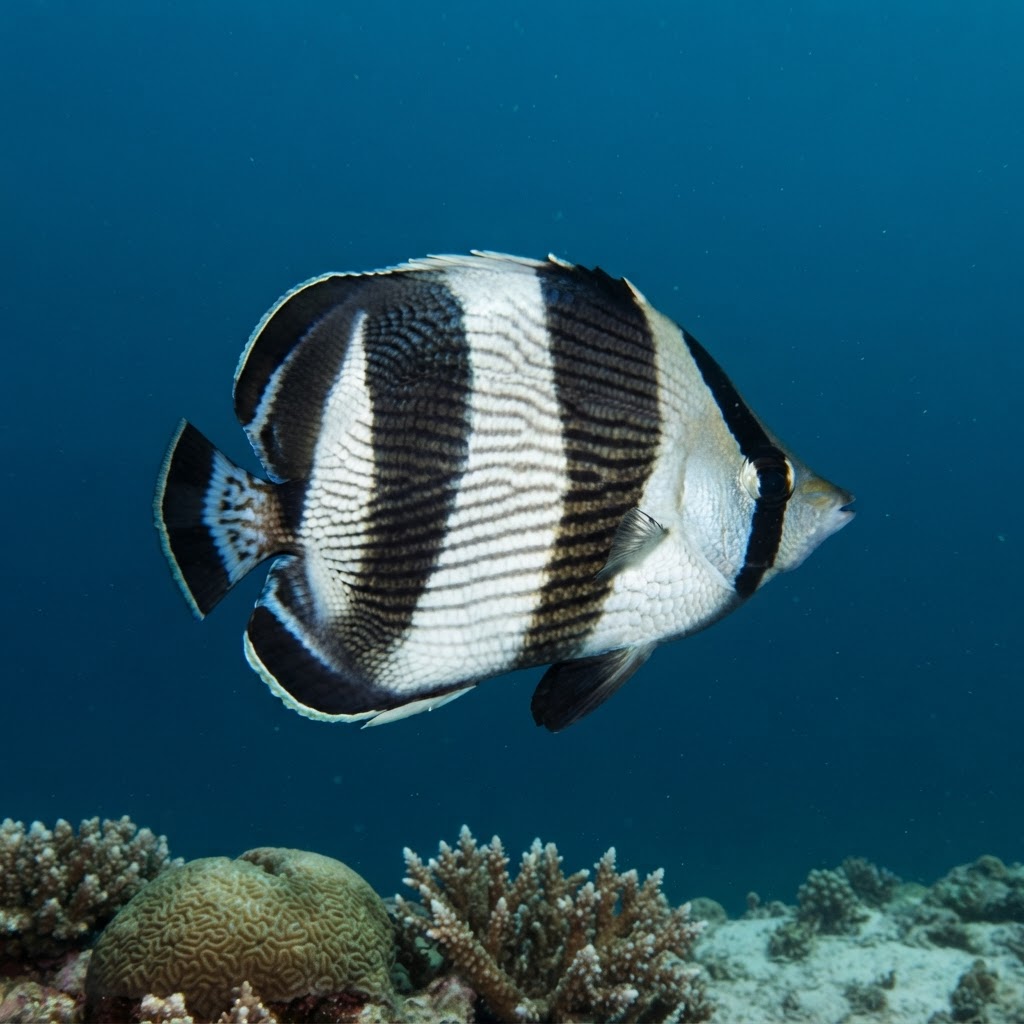
Compressed, disc-shaped body about the size of your palm, white with two broad black vertical bands: one through the eye, one across the body just behind the pectoral fin. A black bar also crosses the base of the tail, and a small dark spot sits on the rear dorsal fin that can be mistaken for a false eye. At 11 cm and slow-moving, it is easy to get a close, steady look at those markings.
Look for it picking at coral polyps and small invertebrates on the reef face, often solo or in a loyal pair that seems to patrol the same patch of reef dive after dive. It keeps a wary but not skittish distance from divers, drifting off a few body-lengths rather than bolting, and tends to stay close to structure like ledges and coral heads rather than open water. Most sightings are during the day, tucked among the reef rather than out on sand.
The eye-through band is a disguise trick common to butterflyfish: it breaks up the real eye against the body outline, while the dark spot near the tail can act as a decoy 'head' to confuse a predator about which way the fish will dart.
No clear seasonal pattern shows up in the sighting data, and with a comfortable range of 25 to 28°C it sits happily on Caribbean reefs year-round, so any month is a fair bet.
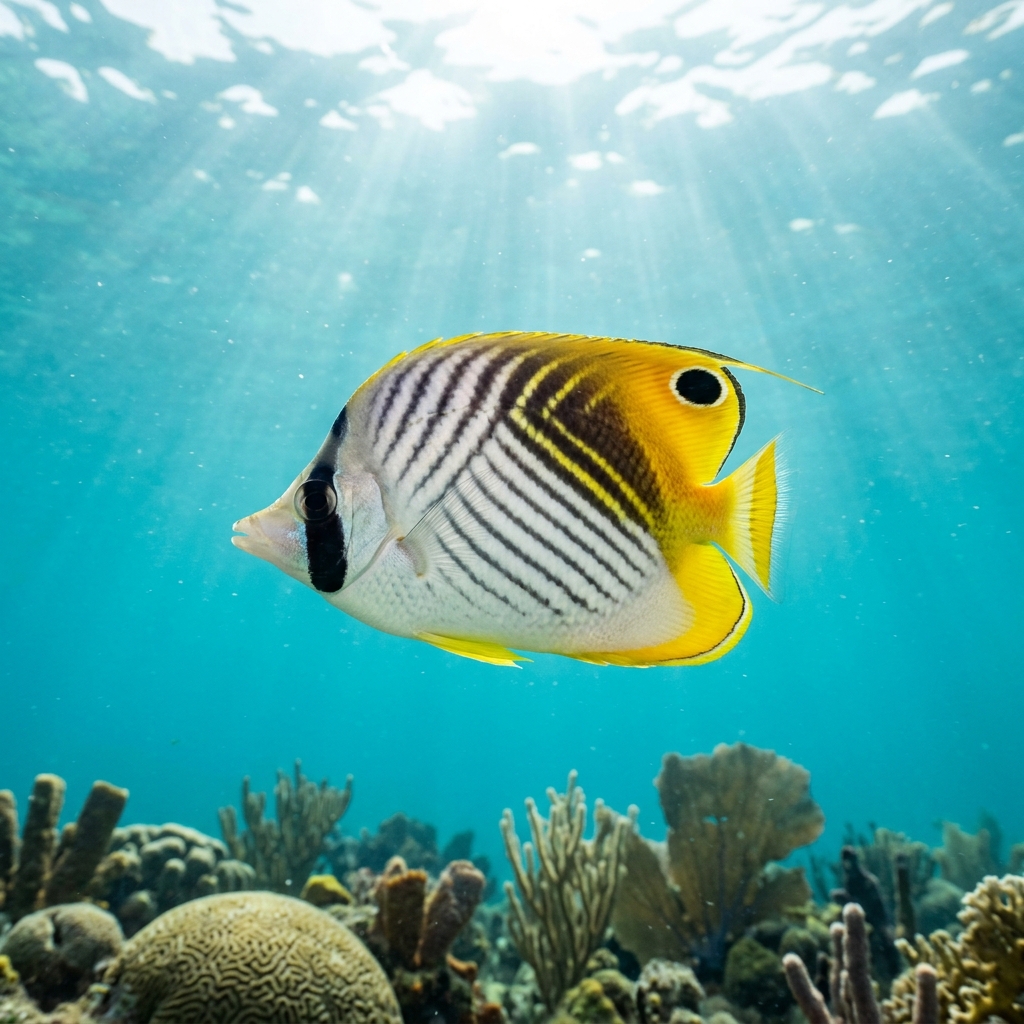
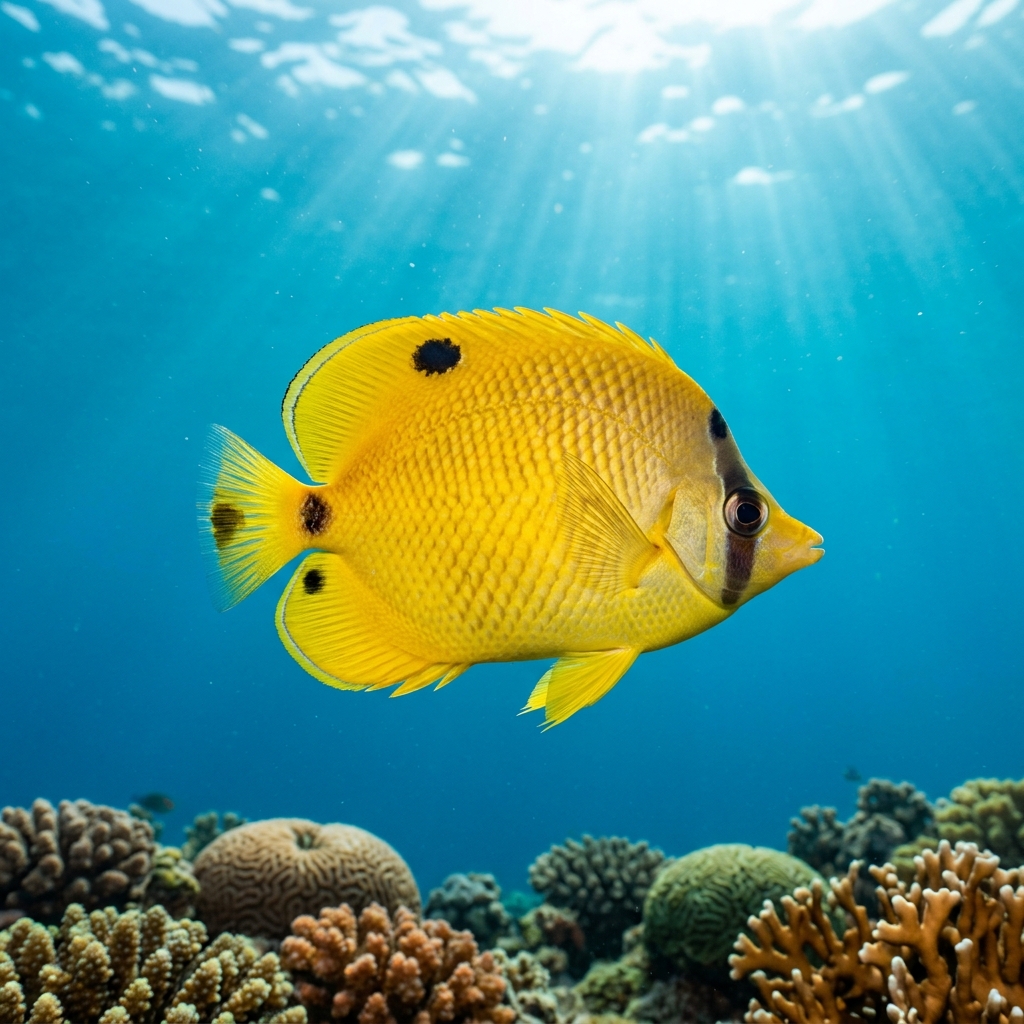
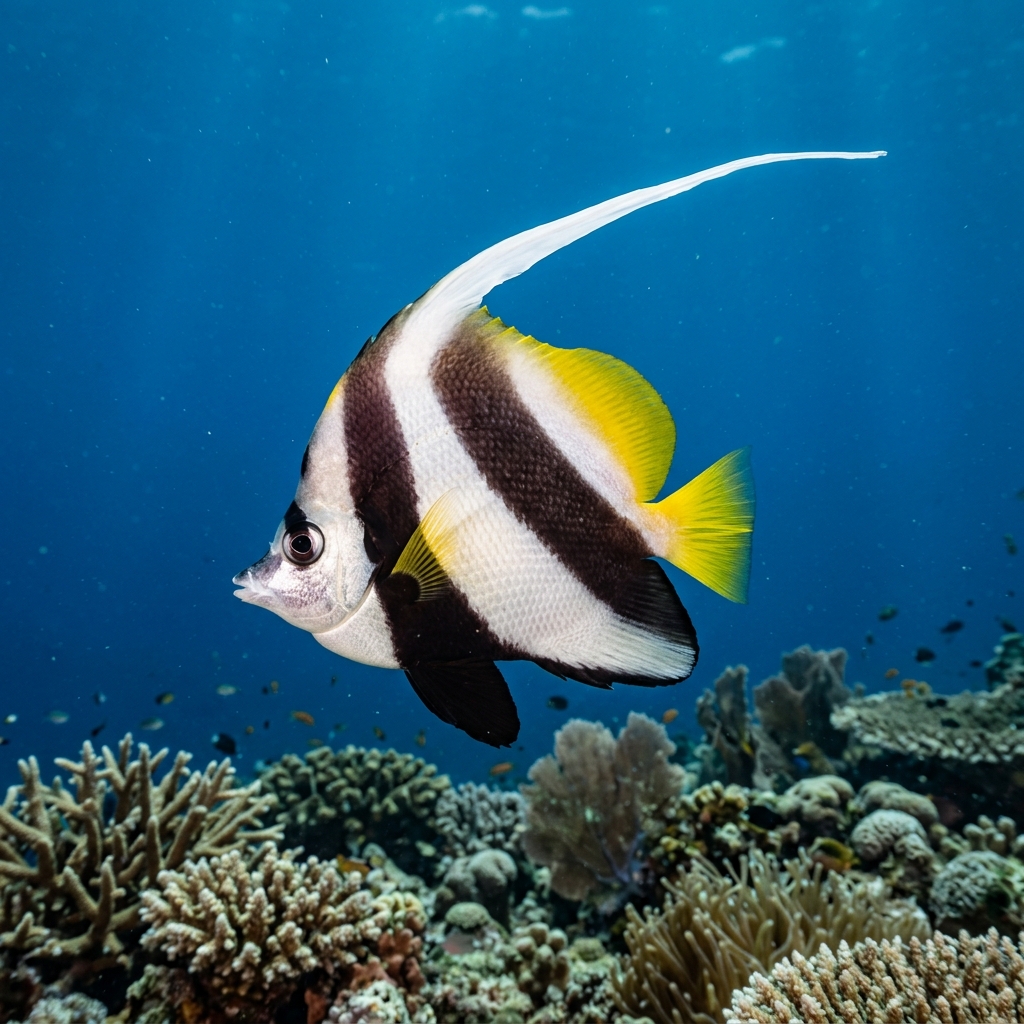
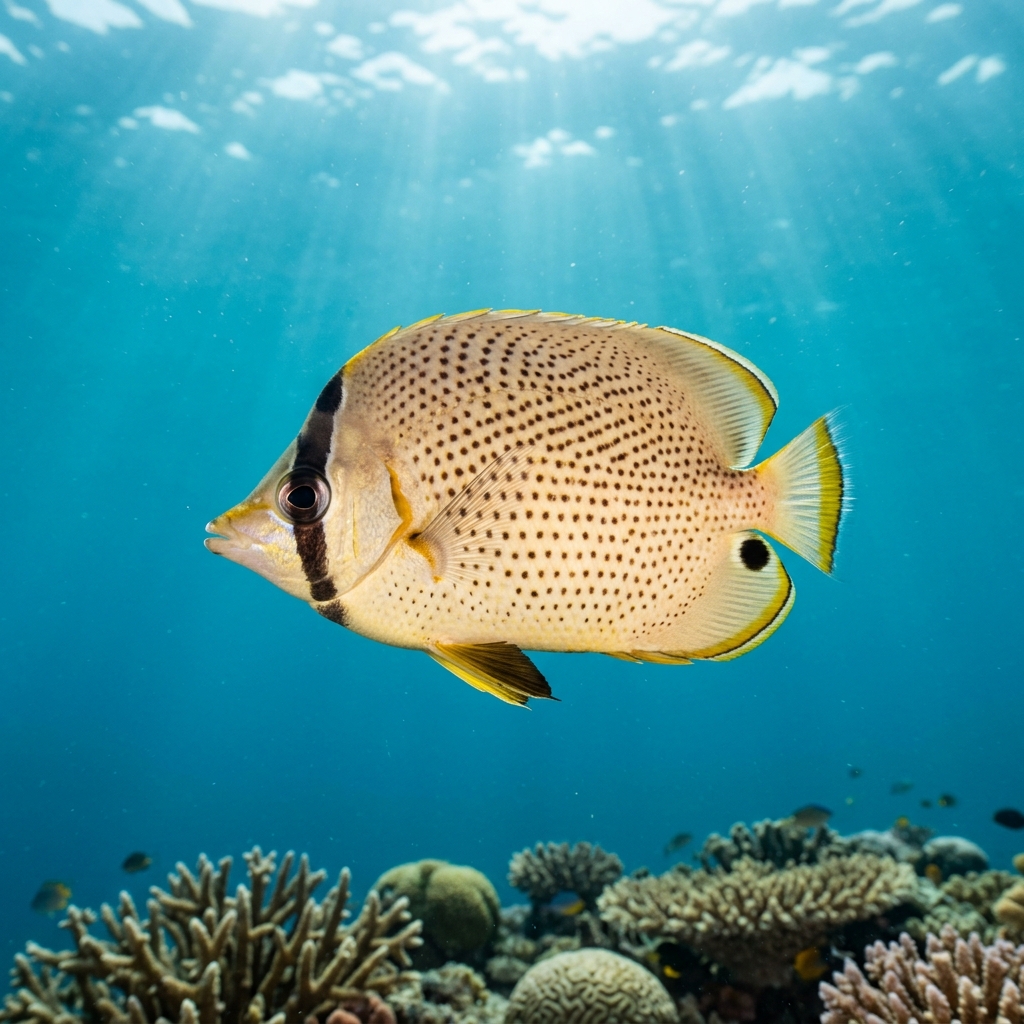
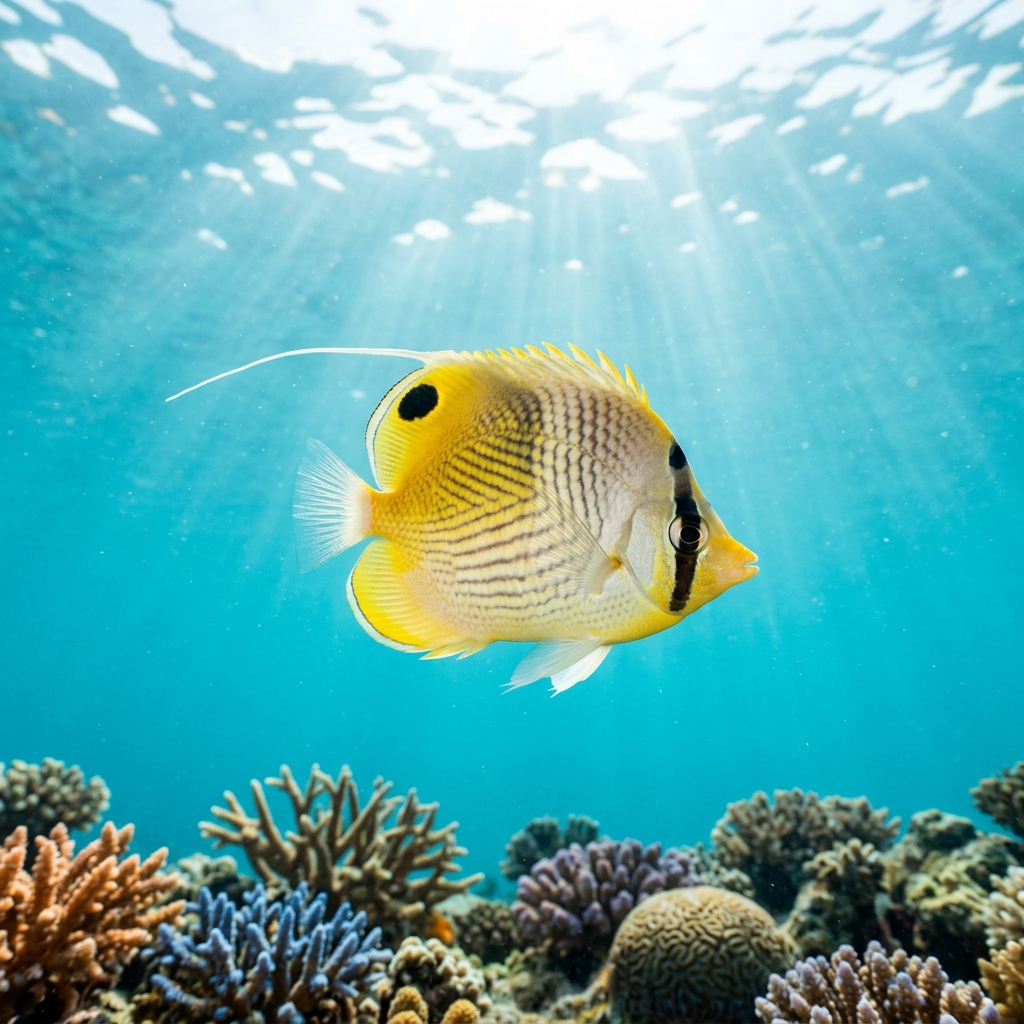
Reef neighbours a diver could mistake it for. Use the identification notes above to tell them apart.
This is a steady find across the Caribbean and western Atlantic, with the densest logging in the Yucatán Peninsula in Mexico and the Bay Islands of Honduras, plus strong numbers around Bonaire's Leeward Coast, Grenada Island, and Curacao near Willemstad. It also turns up reliably in Florida, the US Virgin Islands including Saint Croix, and San Andrés & Providencia in Colombia.
Mapping where Banded Butterflyfish is logged…
They are a common reef sighting through the Caribbean and western Atlantic, most reliably around the Yucatán Peninsula in Mexico, the Bay Islands in Honduras, Bonaire's Leeward Coast, Grenada, and Curacao. Florida and the US Virgin Islands also produce regular sightings.
There is no strong season in the sighting record, and warm reef water in the 25 to 28°C range holds steady year-round in their range, so divers spot them on any month's trip.
Look for a small, disc-shaped white fish with two bold black bands, one running through the eye and one just behind the head, plus a dark bar at the tail base. A small black spot near the rear dorsal fin can look like a second eye at a glance.
They grow to around 11 cm, small enough that a diver can usually get a full, close look at the body pattern in one pass along the reef.
No, they pose no threat to divers. They are small, reef-grazing fish that keep a cautious distance but show no aggressive or defensive behaviour toward people.
Site and sighting data is aggregated from diver logs, iNaturalist and GBIF. For taxonomy and conservation status: