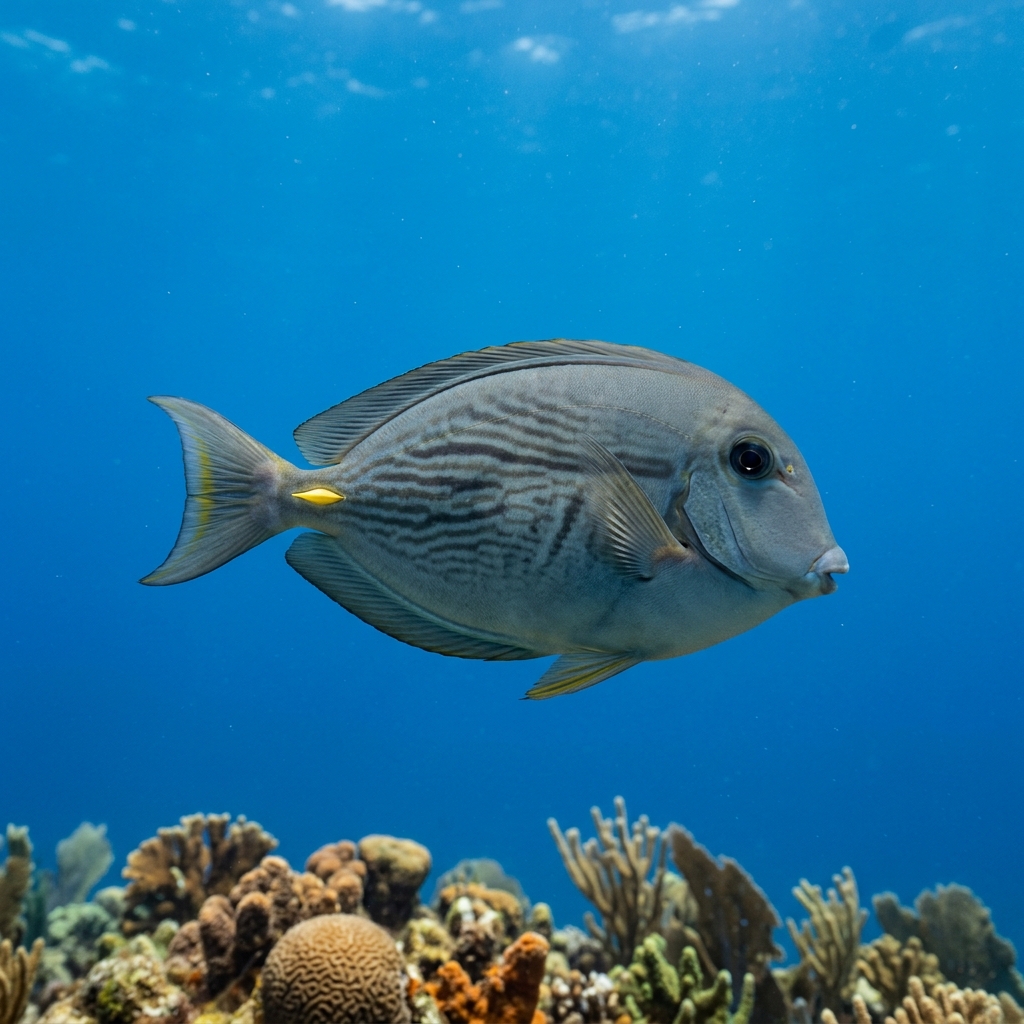
Acanthurus tractus
Spot Caribbean Ocean Surgeonfish year-round across the Yucatán Peninsula, Bonaire, and the Cayman Islands. Here's how to find and identify them.
Safety warning
The retractable caudal spine (the sharp blade-like scale at the base of the tail) can inflict a painful laceration if the fish is cornered, handled, or startled into a defensive tail-swipe. Keep a comfortable distance, never attempt to touch or chase it, and be especially mindful of where your hands are if you are photographing it close to the reef.
If you're cut
Tail scalpelGeneral first-aid guidance, not a substitute for professional medical care. In an emergency, call your local emergency number.
A medium-sized surgeonfish sitting around 26 cm, with an oval, laterally compressed body and an overall dark grey-brown to slate colouration that can shift subtly depending on mood. The most reliable field mark is the white or pale patch at the base of the tail, which contrasts clearly against the darker body. Like all surgeonfish, it carries a sharp, scalpel-like spine (a modified scale called a caudal spine) at each side of the tail base, treat it as a small folded blade when the fish is calm. Juveniles tend to display a more yellowish colouration before transitioning to the duller adult tones.
Most commonly encountered while actively grazing algae off reef surfaces during daylight hours, often in small loose groups and occasionally in larger feeding schools. Around divers it tends to be relaxed, it will usually carry on grazing even as you approach, but it can become visibly aggressive towards other surgeonfish competing over the same patch of reef. Move slowly and avoid sudden movements to watch it go about its business undisturbed.
Surgeonfish play a critical role as reef herbivores: by constantly cropping algae, they prevent fast-growing algal mats from smothering coral, effectively helping keep reef structures healthy and open for coral recruitment.
In the Northern Hemisphere, where the overwhelming majority of records come from, it is present year-round with no concentrated season, the species is comfortable across the 22-28 °C water temperatures that characterise Caribbean reefs throughout the year, so there is no bad month to look for it.
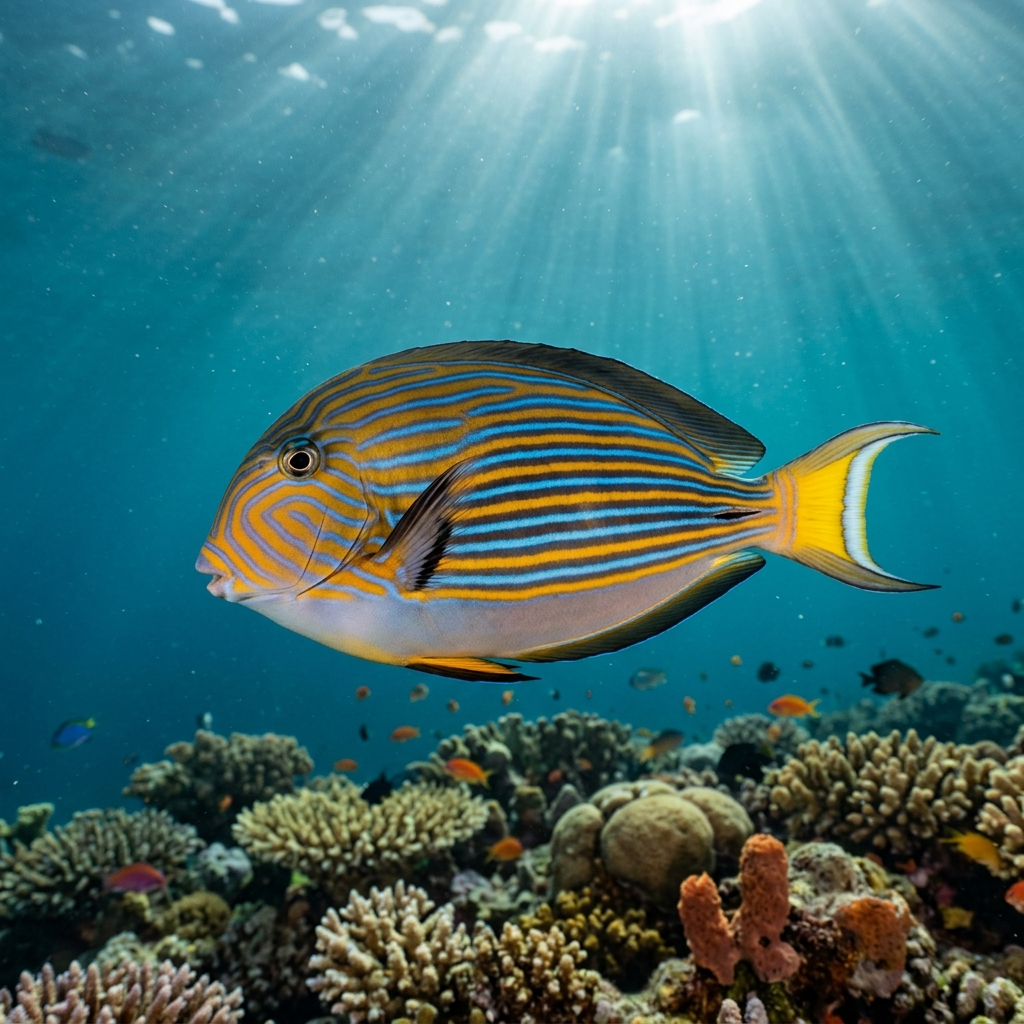
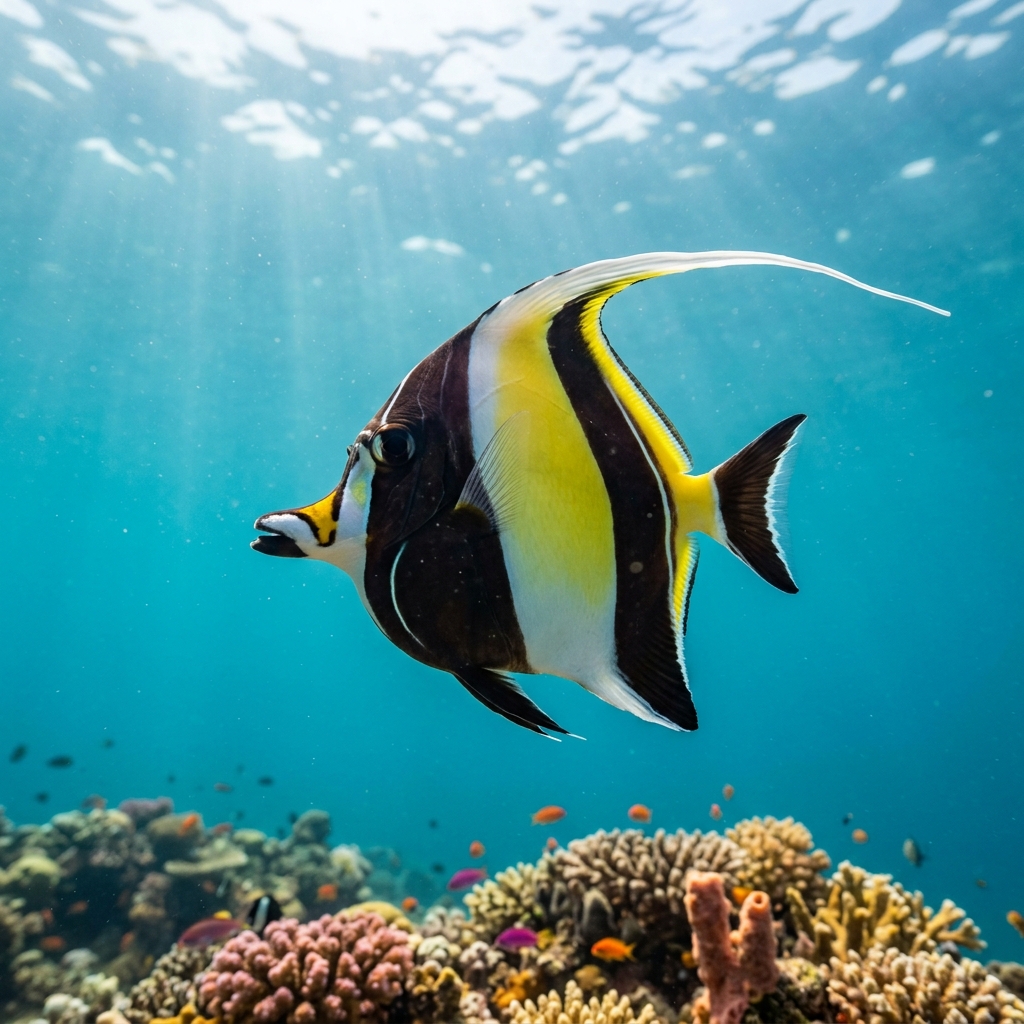
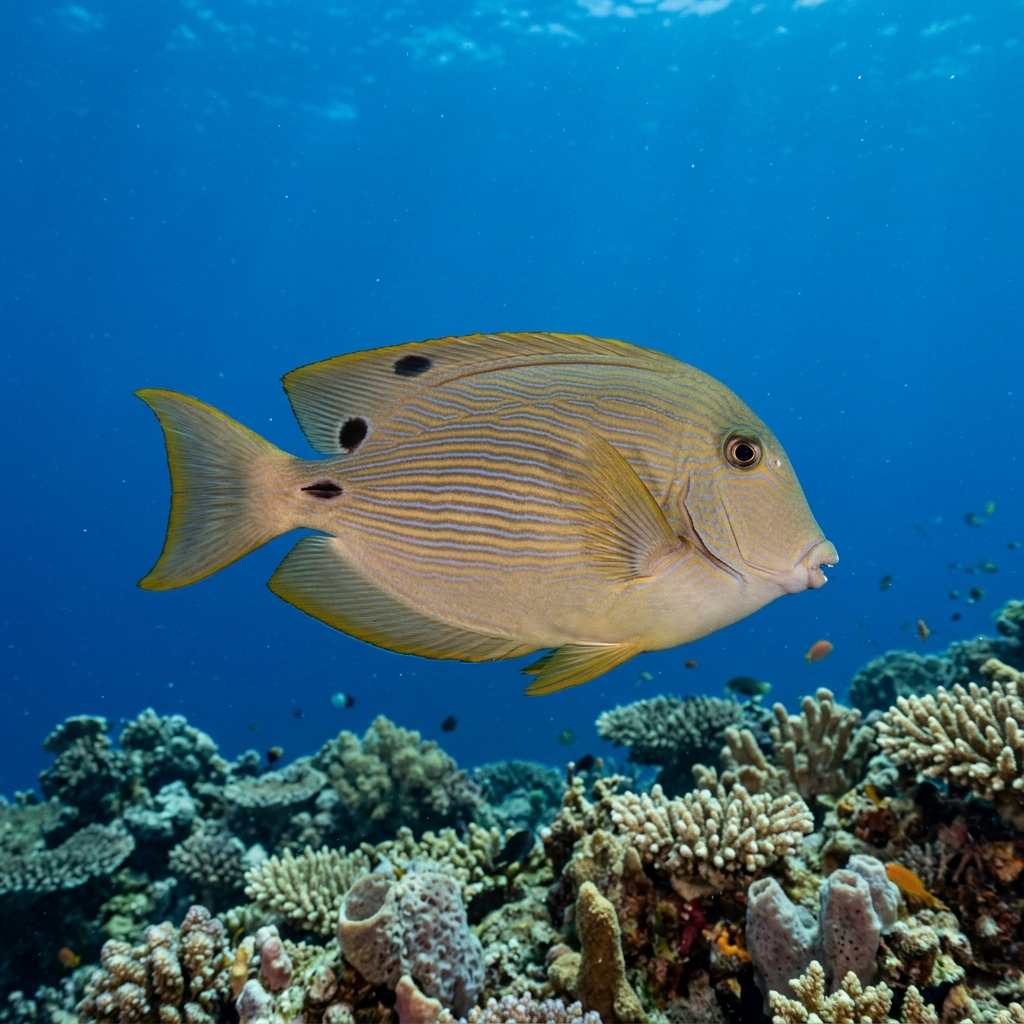
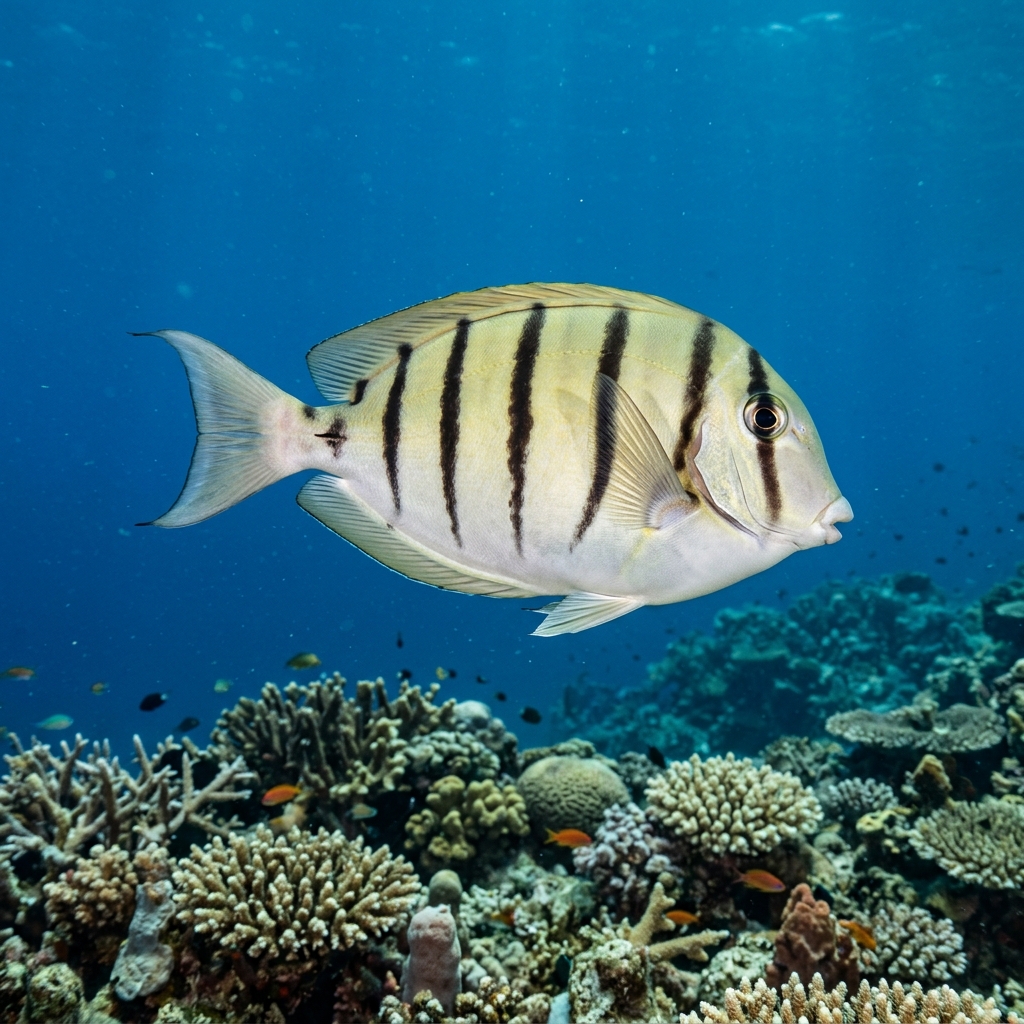
Reef neighbours a diver could mistake it for. Use the identification notes above to tell them apart.
This is a Caribbean and western Atlantic specialist, logged most frequently in Mexico's Yucatán Peninsula, Florida and the Southeast United States, and across the island nations of the Caribbean including Bonaire, the Cayman Islands, the Bahamas, and Honduras's Roatán. Grenada Island, the British Virgin Islands, and Curaçao all show strong sighting records too. If you're diving the Caribbean reef system almost anywhere, there's a good chance it's on the site list.
Mapping where Caribbean Ocean Surgeonfish is logged…
They are most reliably found across the broader Caribbean reef system. Top spots include the Yucatán Peninsula in Mexico, Florida, Bonaire, Grand Cayman, Roatán in Honduras, the Bahamas, and Grenada Island. The species has been logged at dive sites across dozens of countries within the Caribbean and western Atlantic.
Year-round, at least in the Northern Hemisphere where most dive records exist. These fish are comfortable in the warm, stable water temperatures that Caribbean reefs maintain throughout all seasons, so there is no particular month that produces significantly better sightings.
They are not aggressive towards divers, but they do carry a sharp caudal spine at the base of the tail. A startled or cornered fish can slash with its tail, causing a painful cut. Keep a respectful distance, avoid touching them, and watch where your hands are near the reef.
Look for an oval, dark grey-brown body around 26 cm long with a distinctive pale or white patch at the tail base. That pale tail base, combined with the typical surgeonfish body shape and the visible caudal spine, is the clearest combination of field marks in the water.
They typically reach around 26 cm in length, roughly the length of a large hand from fingertip to wrist. They are mid-sized surgeonfish, not particularly large or small compared with others in the family.
Site and sighting data is aggregated from diver logs, iNaturalist and GBIF. For taxonomy and conservation status:
Striped Surgeonfish
3,289 sites