Mayaheros urophthalmus
Spot this dark-barred cichlid in the Yucatán Peninsula's cenotes and lagoons, warm water year-round at 25-31C, no set season.
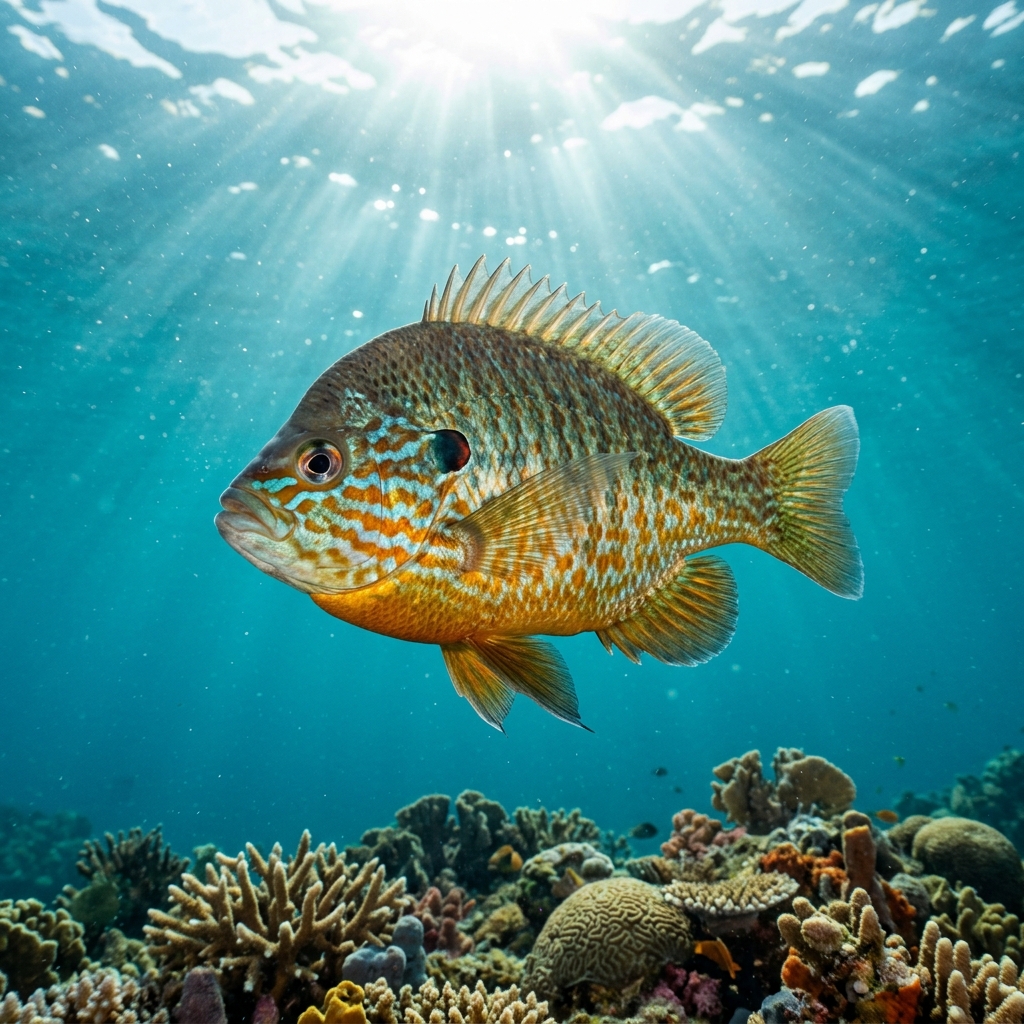
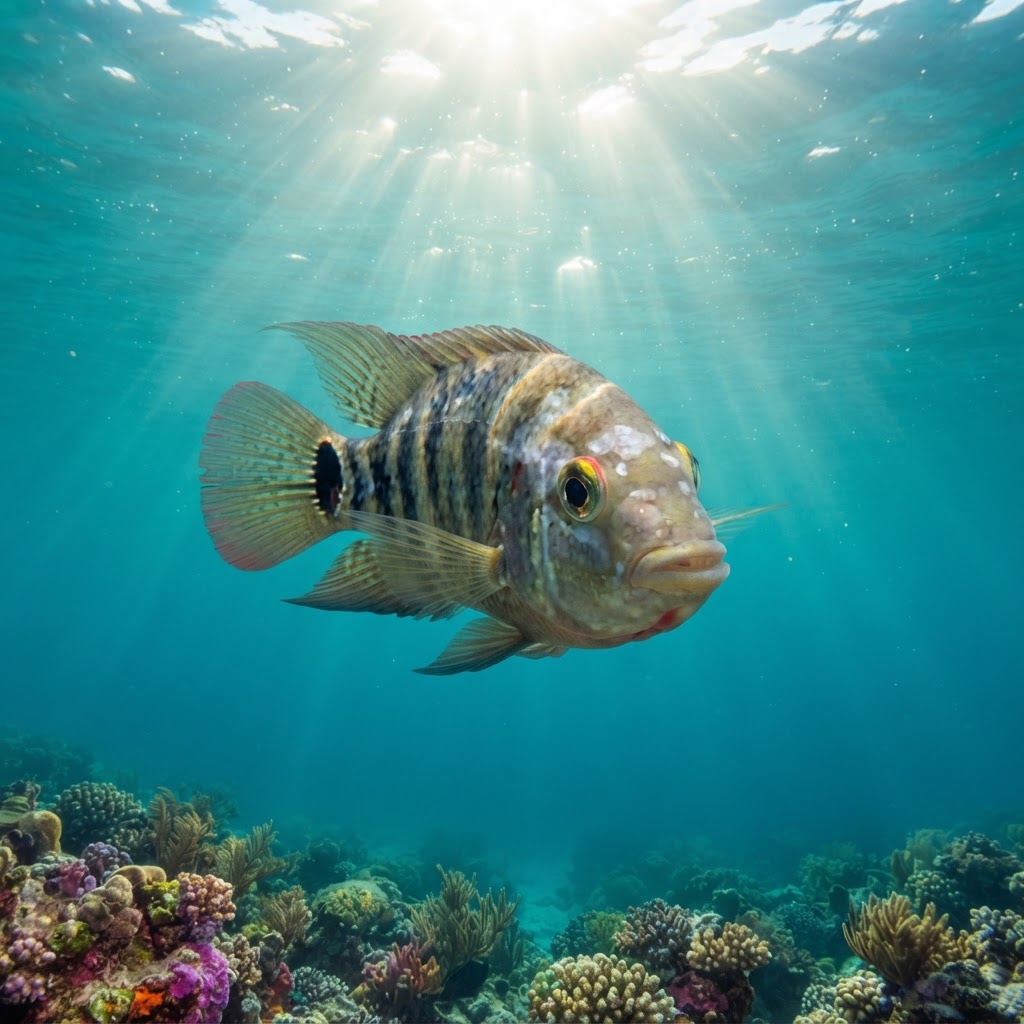
Look for a deep, laterally flattened body up to about 27cm with a row of dusky vertical bars down an olive-grey flank. The giveaway mark is a bold black spot ringed in blue or gold sitting just before the tail, a false eye that draws attention away from the real one. Breeding adults darken considerably, with the throat and belly flushing red to almost black.
Expect to find it hovering low over sand or leaf litter in cenotes, lagoons and mangrove-lined channels, often in pairs or small groups that hold loose territory rather than schooling tightly. It is generally unbothered by divers and snorkellers, continuing to forage or patrol a patch of bottom rather than bolting, though breeding pairs guarding a nest site can get noticeably bolder and will approach or flare at anything that lingers too close.
Breeding pairs are substrate guarders that fan out a patch of sand or rock for their eggs and then shepherd the fry as a tight, defended cloud, a classic cichlid parenting style well worth watching if you find a pair in nesting mode.
No clear seasonal pattern shows up in the sighting data, and with a comfortable range of roughly 25 to 31C, this cichlid is present in Yucatán fresh and brackish water year-round. Plan around cenote conditions rather than a calendar.
This one is very much a Yucatán Peninsula species, logged across cenotes, lagoons and coastal channels throughout that region of Mexico, with a single confirmed site on Caye Caulker in Belize. Most encounters are uncommon to common rather than a sure thing, though a handful of Yucatán sites report it as very common.
Mapping where Mayan Cichlid is logged…
The Yucatán Peninsula in Mexico is by far the strongest area, turning up in cenotes, lagoons and coastal waterways across the region. There's also a confirmed sighting on Caye Caulker in Belize.
There's no strong seasonal pattern in the data, and the species tolerates a wide warm-water range of about 25 to 31C, so it's a year-round find in Yucatán cenotes and lagoons.
Look for a deep-bodied, olive-grey fish with dark vertical bars and a distinctive black eyespot ringed in blue near the base of the tail. Breeding adults turn much darker, with red to blackish colouring on the throat and belly.
They reach around 27cm in length, making them one of the larger cichlids you'll come across in Yucatán fresh and brackish waters.
That bold black-and-blue spot near the tail works as a false eye, a decoy that can confuse predators about which end of the fish is which and which way it will dart.
Site and sighting data is aggregated from diver logs, iNaturalist and GBIF. For taxonomy and conservation status:
Sun Perch
2,182 sites