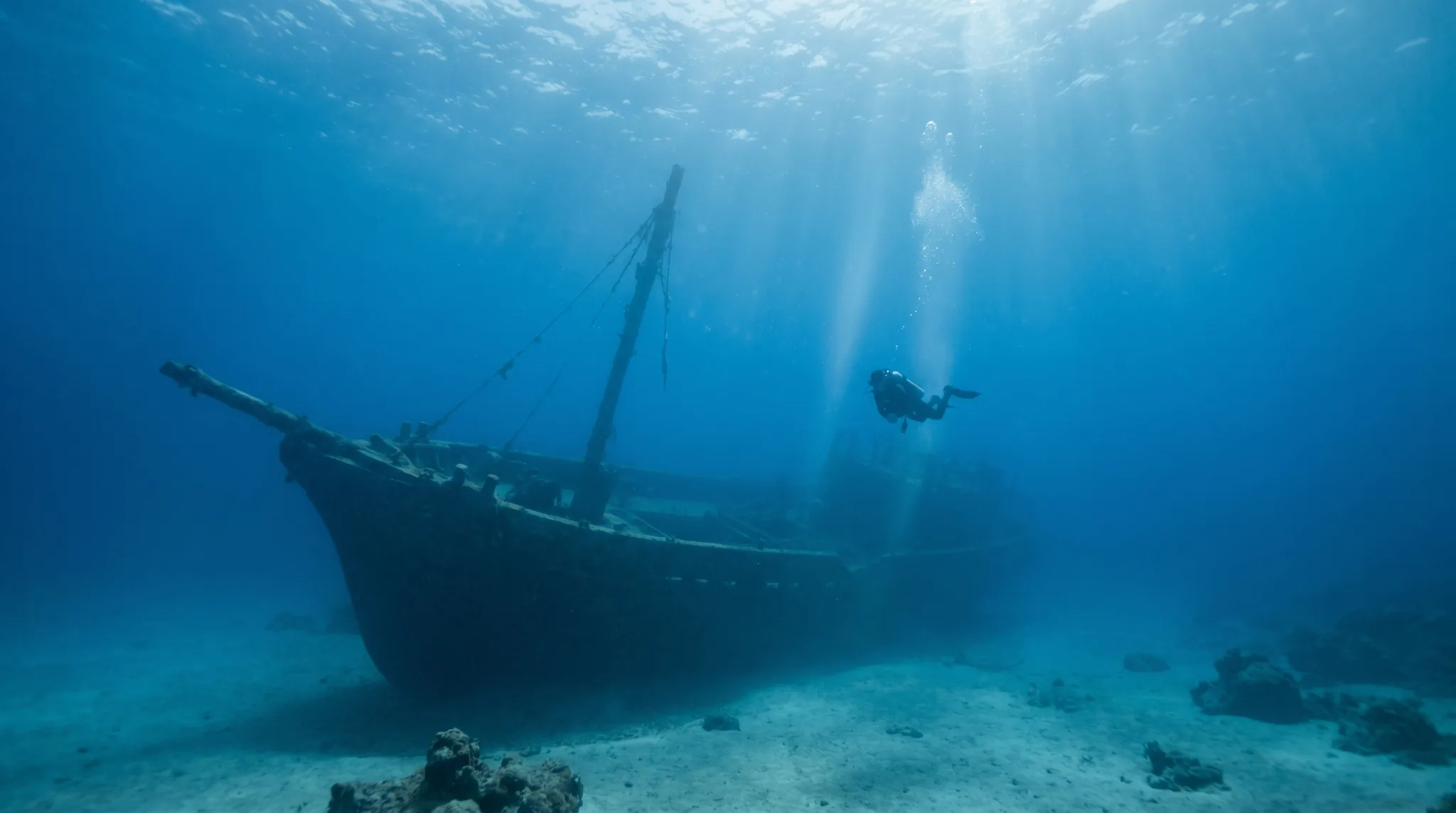
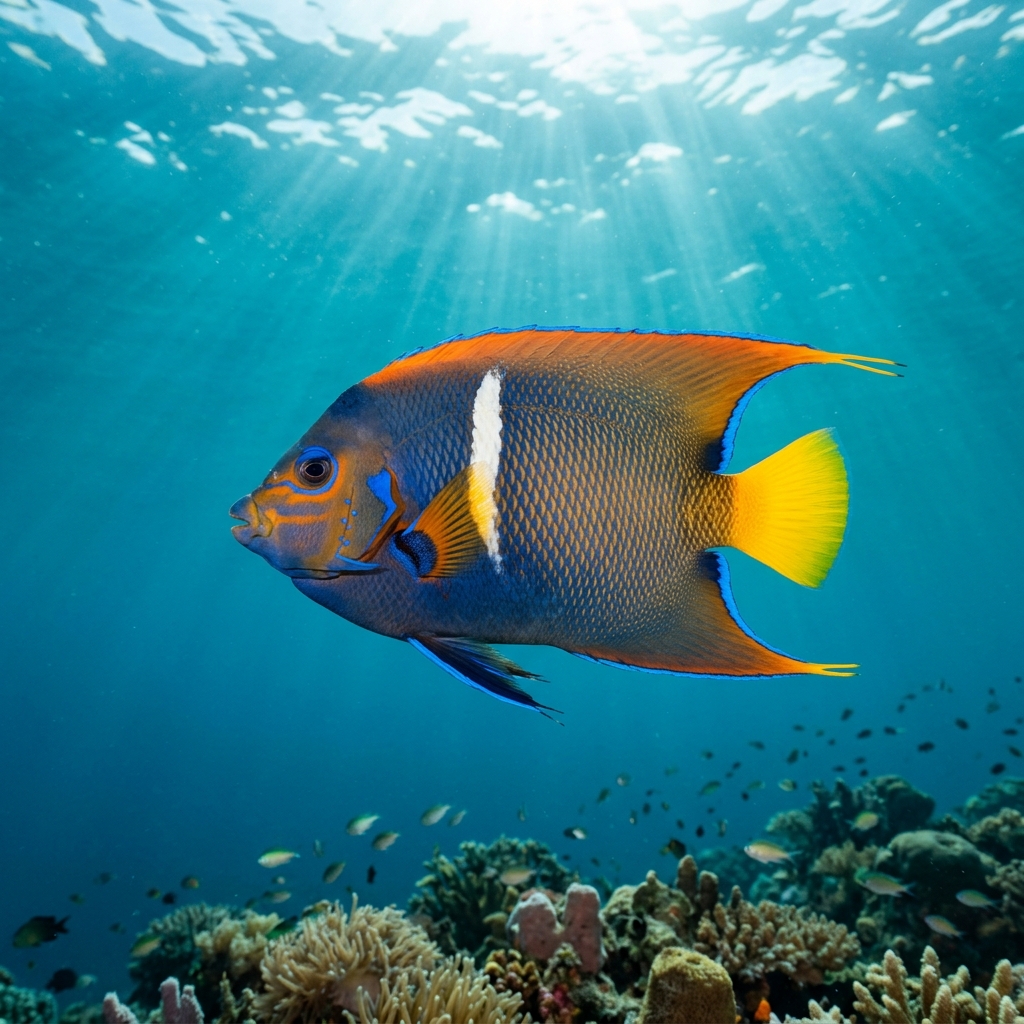
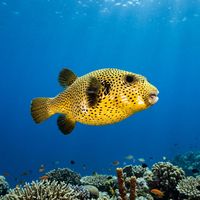
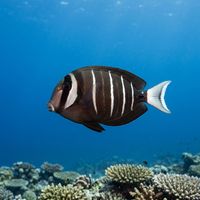
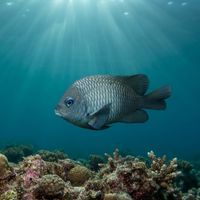
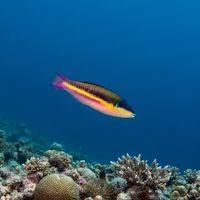
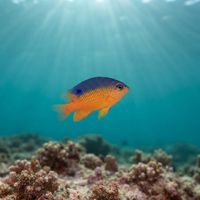
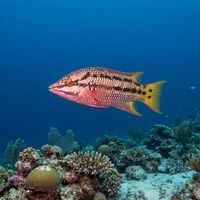
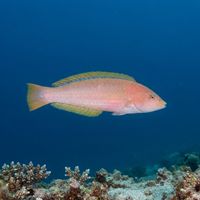
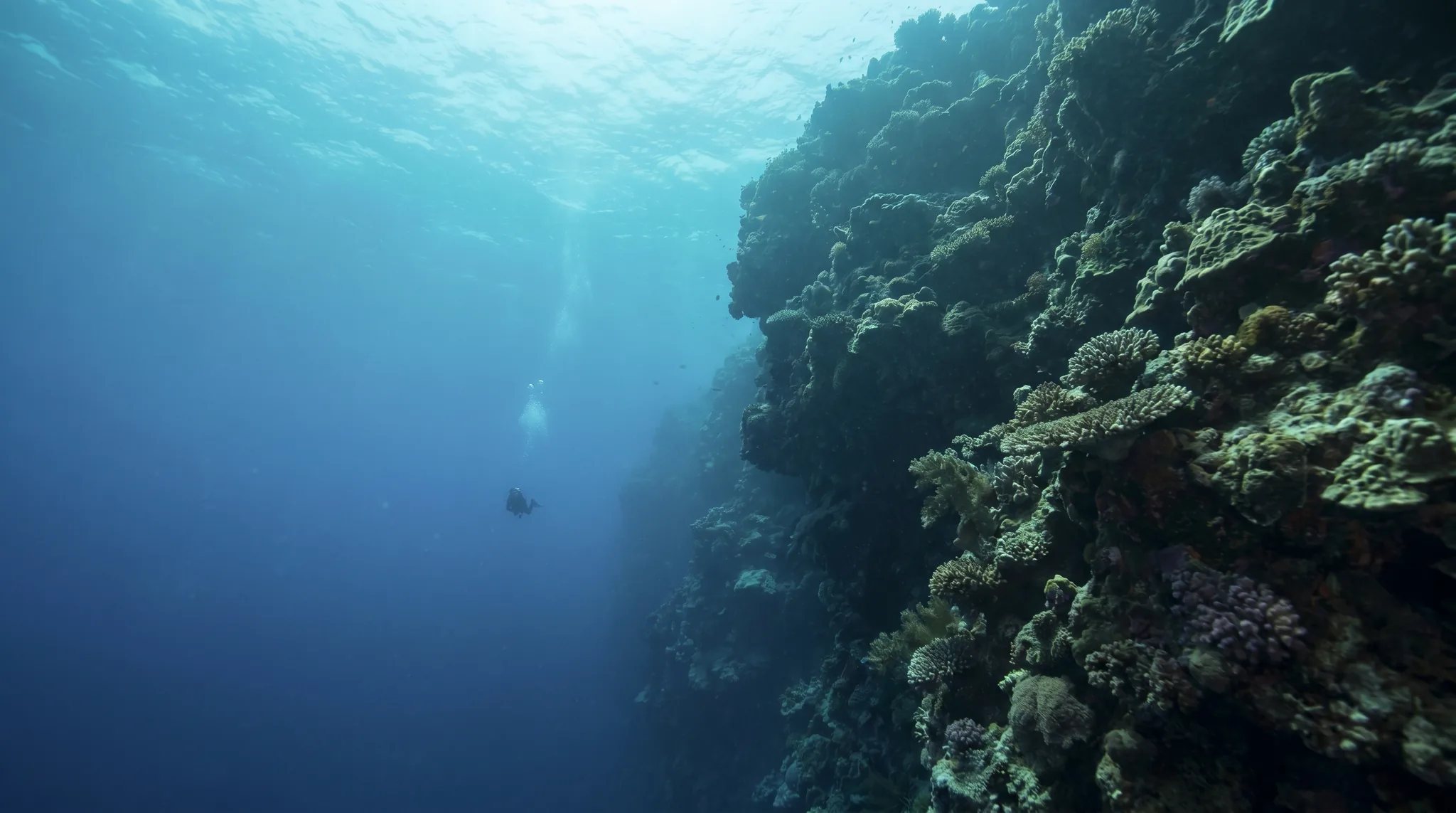
Huatulco's diving spreads across three bays: Bahia San Agustin, Bahia Cacaluta, and Bahia Chachacual. The site mix is dominated by reef diving, with walls, canyons, pinnacles, and even a cavern system adding variety. Most sites are beginner-friendly, accessed by boat. The fish life is reef-rich, with Barberfish, King Angelfish, Guineafowl Puffer, and Panamic Sergeant Major observed consistently, while Spotted Eagle Ray and Seahorse appear at a good number of sites.
3 areas
Monthly water temperature across Huatulco's sites, from satellite sea-surface data corrected for depth. The band shows the site-to-site spread.
Water temperatures stay warm throughout the year, dipping only slightly in February and March before rising through summer. The peak months favoured by divers cluster in late autumn and spring, when conditions tend to be most settled. Currents vary by site: sheltered reef dives suit beginners year-round, while exposed walls and drift sites call for more experience when current runs.
10 operators
Mexico
25 more sites to explore

Water temperature around Huatulco ranges from about 27°C in February to 30°C in July, based on satellite sea-temperature data for its dive sites.
With water around 27–30°C, a rash guard or 3mm shorty works in Huatulco year-round.
Fin maps 37 sites in Huatulco (37 scuba diving sites and 5 snorkelling spots, with some suited to both), organised into 3 areas.
Across Huatulco's dive sites, March, May, November and December are most often reported as the best months to visit.
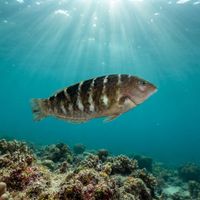
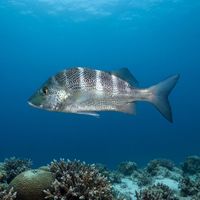
The reefs are home to Barberfish, King Angelfish, Guineafowl Puffer, Razor Surgeonfish, Threebanded Butterflyfish, and Yellow Snapper on almost every dive. Jewel Moray and Seahorse are spotted with some regularity, and Spotted Eagle Ray and Eagle Ray are observed across a broad range of sites. Grey Reef Shark also appears on the signature species list for the region.
The majority of Huatulco's sites are rated beginner level, including coral plate dives, shallow reef gardens, and wall sites with moderate depth. Sites such as Cacaluta coral garden, La India, and St. Agustine offer gentle conditions and varied topography well suited to those earlier in their diving experience. A handful of sites, including La Blanca and La Rajada, are rated intermediate or advanced due to stronger currents and greater depth.
Bahia San Agustin holds the largest concentration of sites and includes a mix of reef, wall, canyon, and drift dives, with some of the most varied topography in the region. Bahia Cacaluta offers diverse structures including pinnacles, caves, and cavern systems at sites like El Violin and La Montosa Island. Bahia Chachacual is the smallest of the three in terms of site count and features reef and canyon diving, including the shallow coral garden at Cacaluta coral garden.
Virtually all dive sites in Huatulco require boat access, with only one site offering the option of shore entry as well. The local operator Hurricane Divers provides guided boat diving across the bays. Booking in advance is advisable, as the bays span a wide area and individual sites can be offshore by several hundred metres.