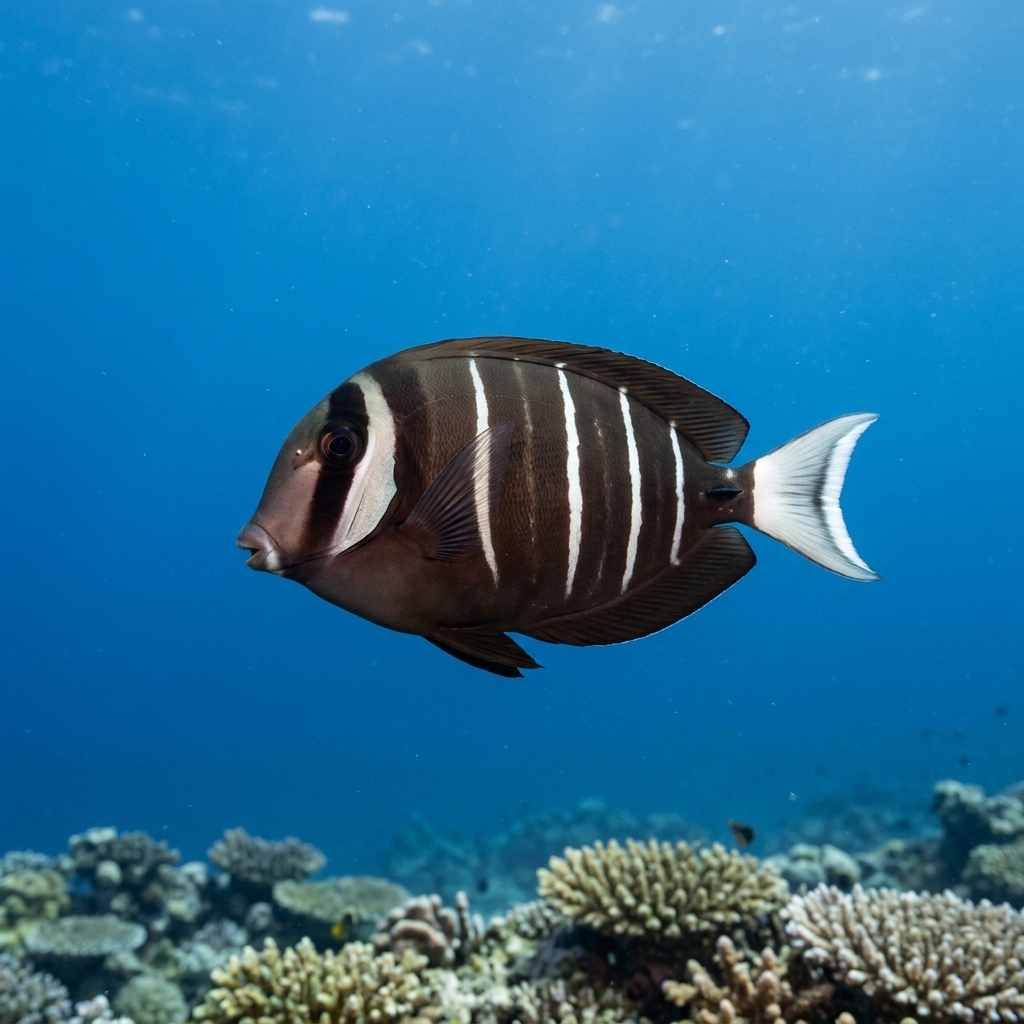
Prionurus laticlavius
Spot razor surgeonfish in the Galápagos, Baja California, and Costa Rica's Gulf of Papagayo. Best sightings run Sep, May in 16-29°C Pacific waters.
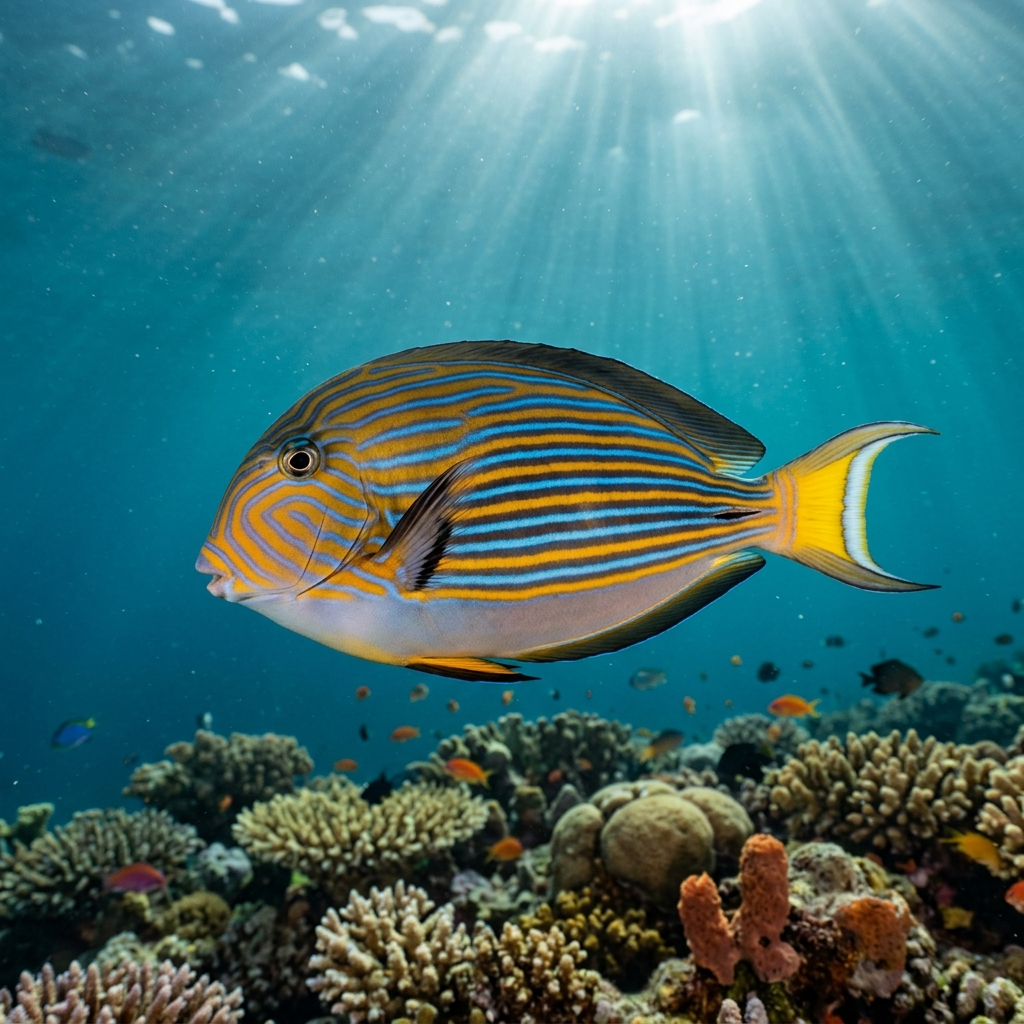
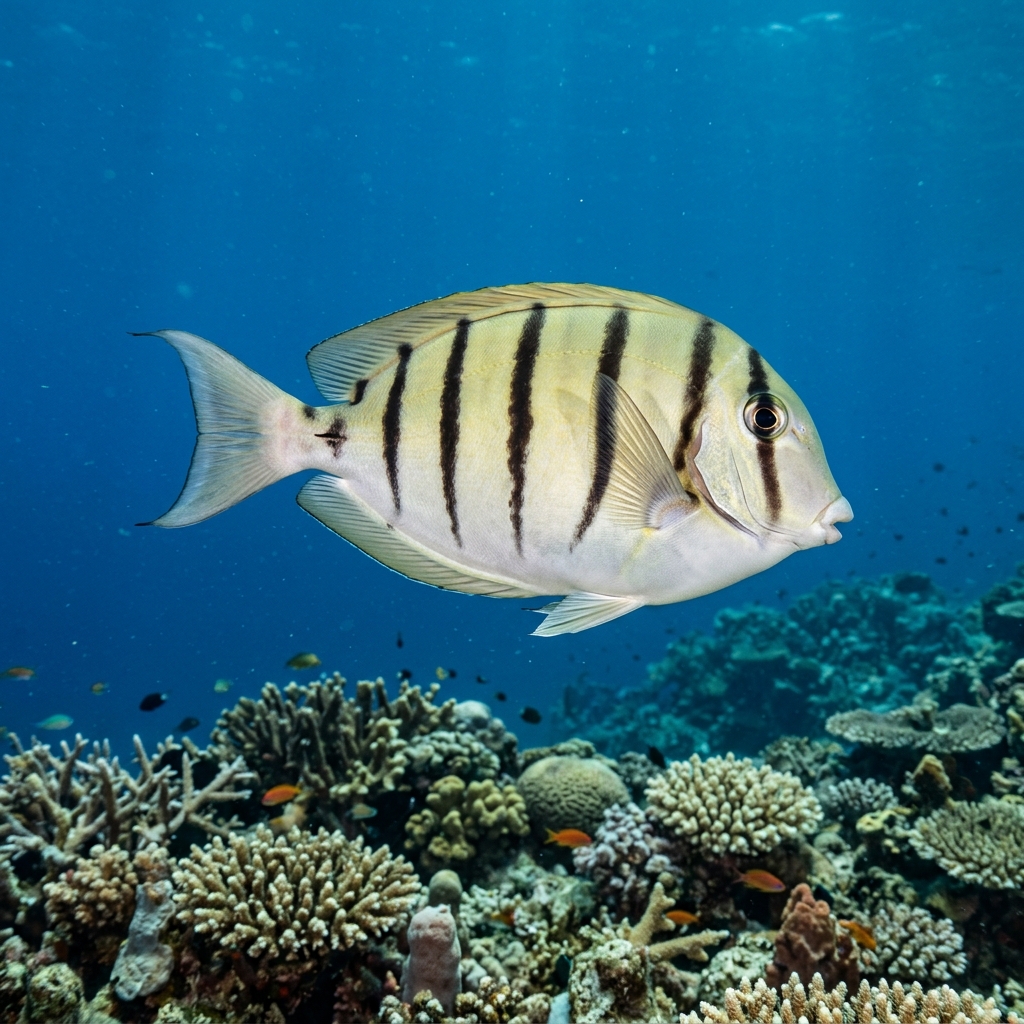
At around 40 cm, razor surgeonfish are oval-bodied and grey-brown overall, brightened by a yellow patch around the eye and snout that stands out immediately underwater. The feature that clinches the ID is the row of three or more bony plate-like 'scalpels' (keeled ossicles) running along each side of the tail, more than the single spine seen on most other surgeonfish. The body can show faint vertical banding depending on mood and light. Juveniles are paler and often more yellowish overall, gradually developing the adult colouration.
You'll most often come across razor surgeonfish grazing algae from rocky or coral reef surfaces, usually in small groups or pairs rather than alone. They tend to be cautious around divers and will keep a comfortable distance rather than approach, slow, deliberate movement gives you the best chance of watching them feed naturally without flushing them off the reef. Early morning and late afternoon, when feeding activity picks up, are the most rewarding times to look.
The multiple keeled ossicles (bony plates) along the tail base that give the razor surgeonfish its name are a defensive trait unique to the genus Prionurus, unlike the single retractable spine of most surgeonfish, these fixed blades line up in a row and can inflict cuts if the fish is handled or cornered.
Northern Hemisphere sightings concentrate from September through May, suggesting summer upwelling or thermal shifts affect encounter rates. Water temperatures in the logged observations range widely from around 16°C to 29°C, reflecting the species' tolerance of the cooler, nutrient-rich Pacific currents common across its range.
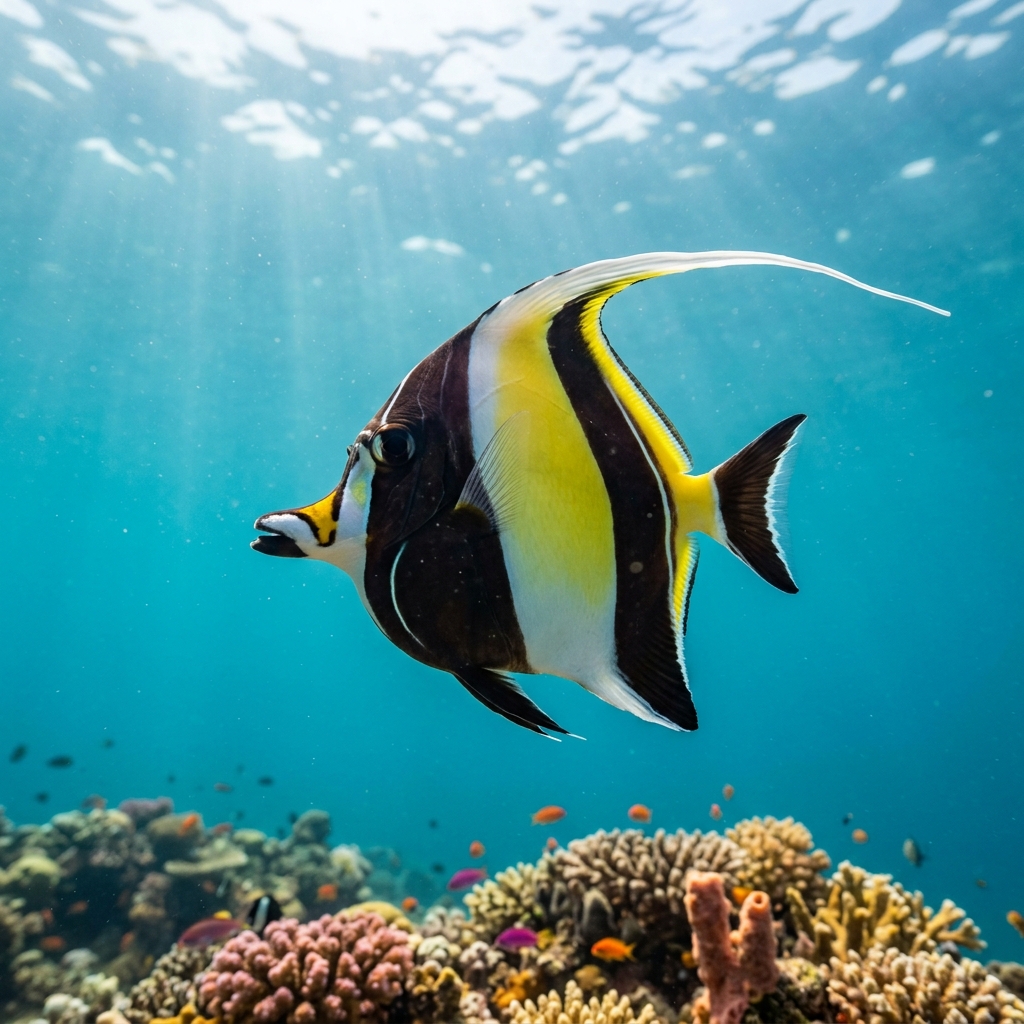
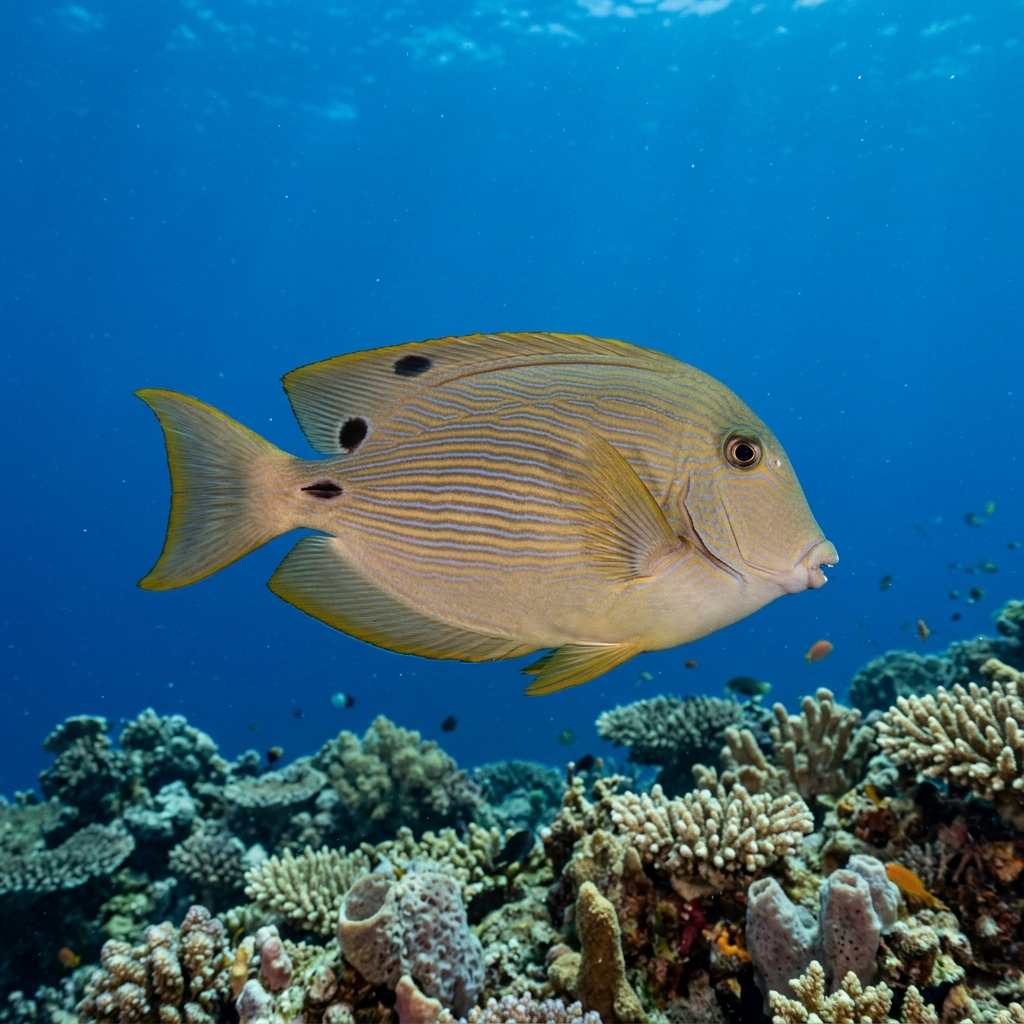
Reef neighbours a diver could mistake it for. Use the identification notes above to tell them apart.
The razor surgeonfish is an eastern Pacific endemic, and the data makes that clear: the strongest populations are logged across the Galápagos Islands, Baja California, and the Pacific Coast of Mexico. Costa Rica's Gulf of Papagayo and Coiba National Park in Panama are also reliable spots, with additional sightings running down to Peru and Colombia.
Mapping where Razor Surgeonfish is logged…
Razor surgeonfish are an eastern Pacific species. The best-represented dive destinations in sighting records are the Galápagos Islands, Baja California, the Pacific Coast of Mexico, and Costa Rica's Gulf of Papagayo. Panama's Coiba National Park and sites along Ecuador's mainland coast also log reliable sightings.
Based on logged Northern Hemisphere sightings, encounters are most frequent between September and May. This roughly aligns with cooler, more productive water conditions across much of the eastern Pacific range. Outside this window sightings drop off, so planning around this period improves your odds.
Look for a grey-brown oval body with a yellow face patch and, most distinctively, a row of three or more bony plates along each side of the tail base. That multi-plate tail is unique among surgeonfish in the region and separates razor surgeonfish from every look-alike at a glance.
Adults typically reach around 42 cm in length, making them a medium-sized reef fish, roughly the length of a large ruler. They have a deep, laterally flattened body that can make them look bigger in the water than their length suggests.
Most surgeonfish carry a single, blade-like spine near the tail that folds flat when not in use. The razor surgeonfish belongs to the genus Prionurus, which instead has a fixed row of multiple bony plates along the tail, more like a serrated edge than a single scalpel. This multi-plate arrangement is the feature the whole genus is known for.
No, razor surgeonfish are not considered dangerous. They are shy animals that tend to move away from divers. As with any surgeonfish, the tail plates can cause a superficial cut if the fish is cornered or handled, but under normal diving conditions there is no risk.
Site and sighting data is aggregated from diver logs, iNaturalist and GBIF. For taxonomy and conservation status:
Striped Surgeonfish
3,289 sites