Arothron meleagris
Spot the white-spotted Guineafowl Puffer across the Maldives, Philippines & Hawaii. Most sightings Oct, May in the north. Here's where and when to find one.
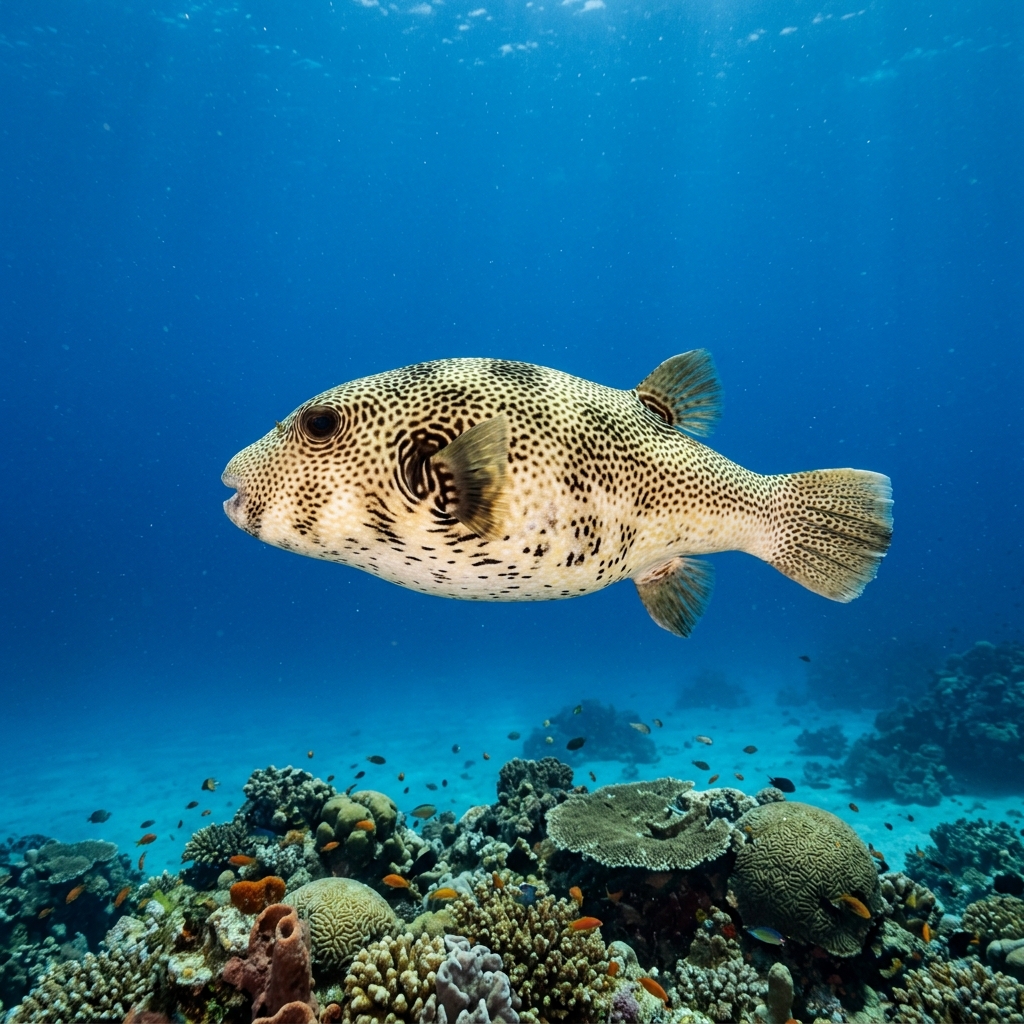
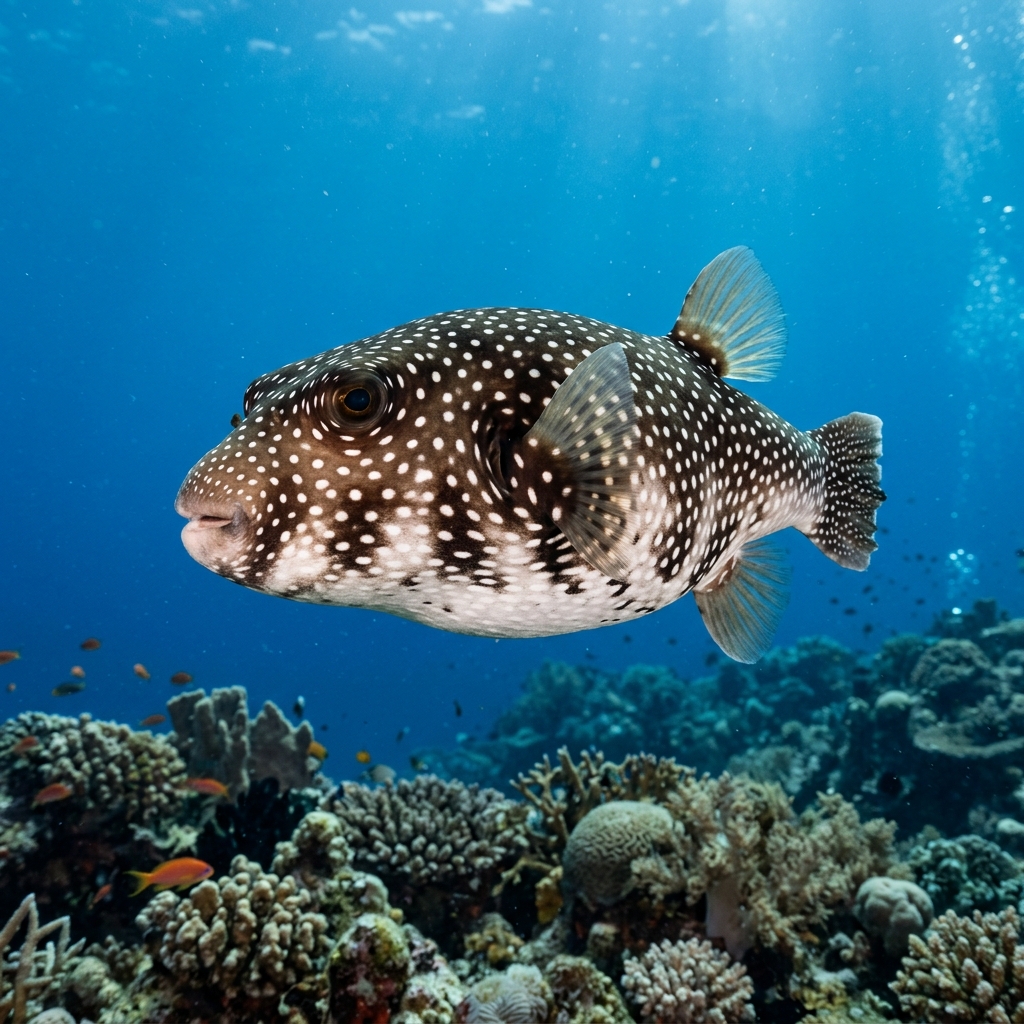
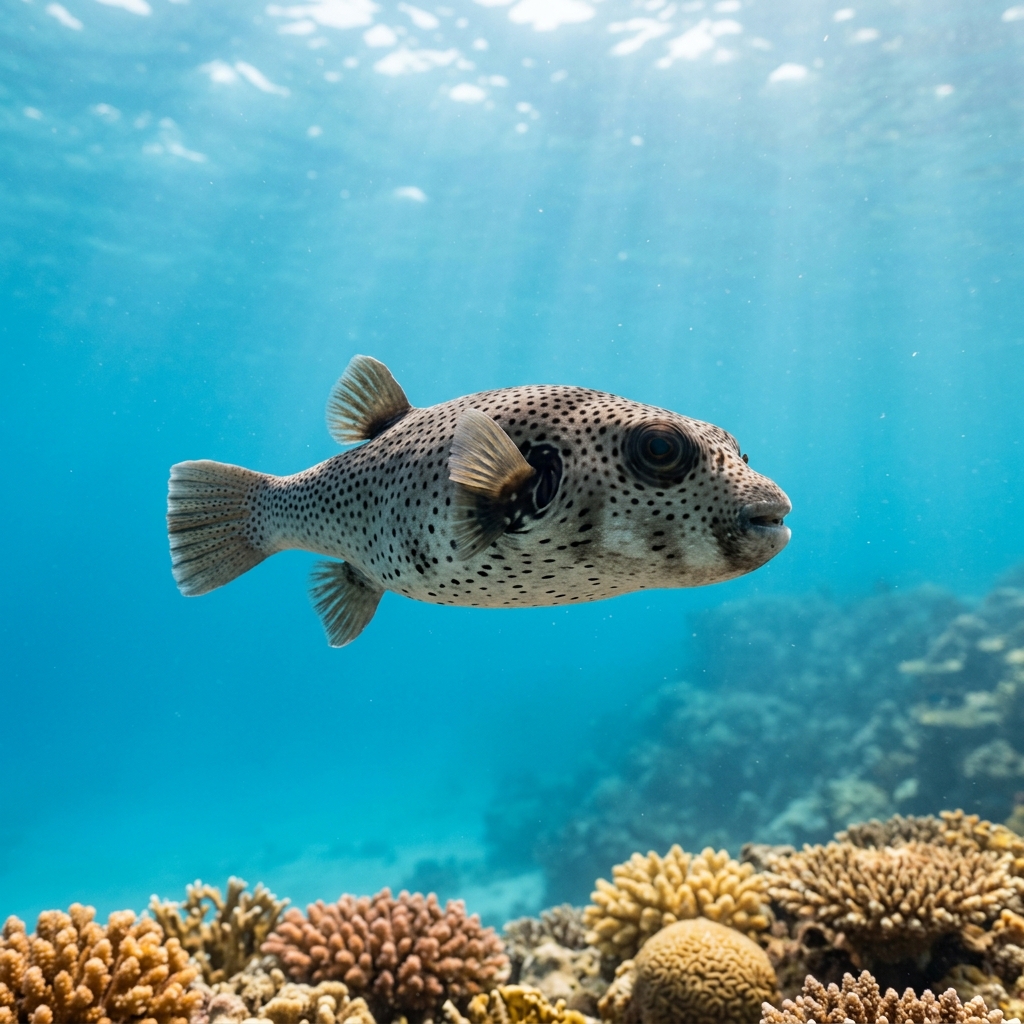
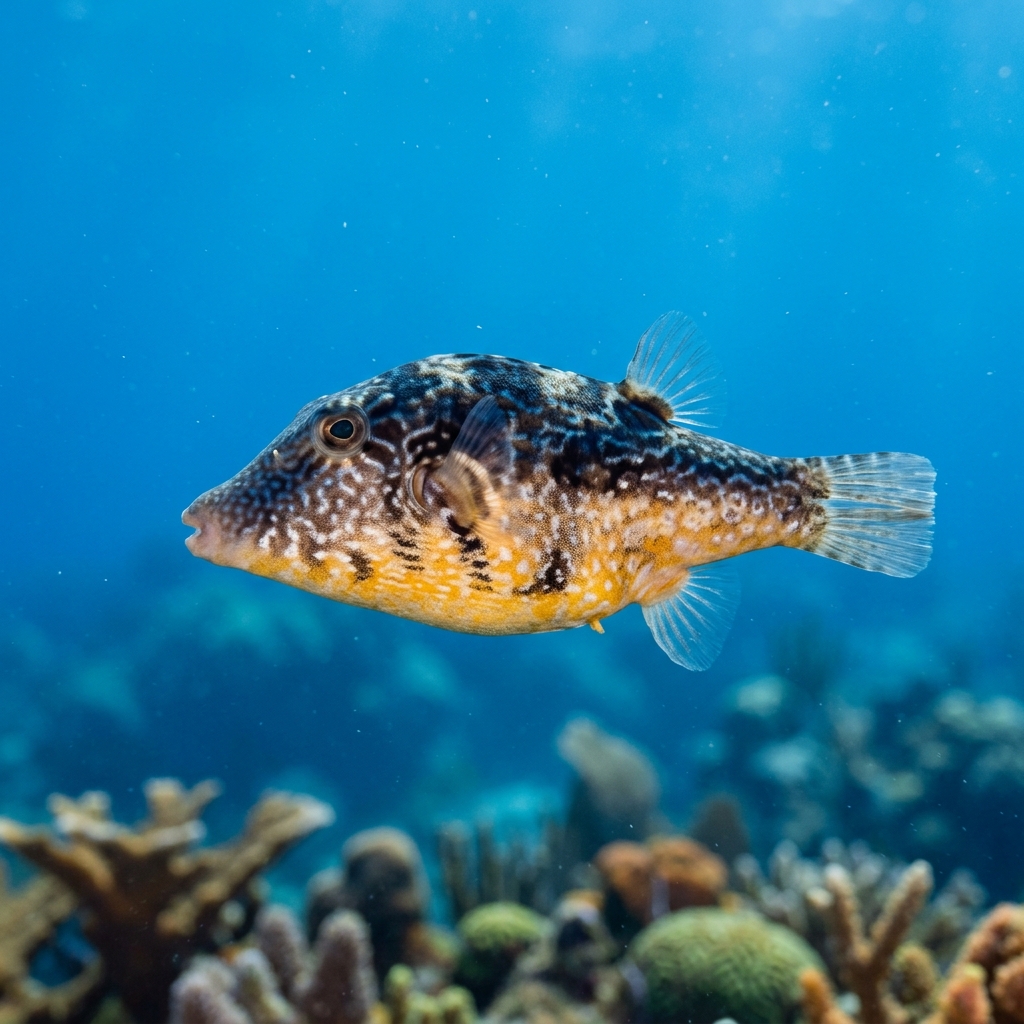
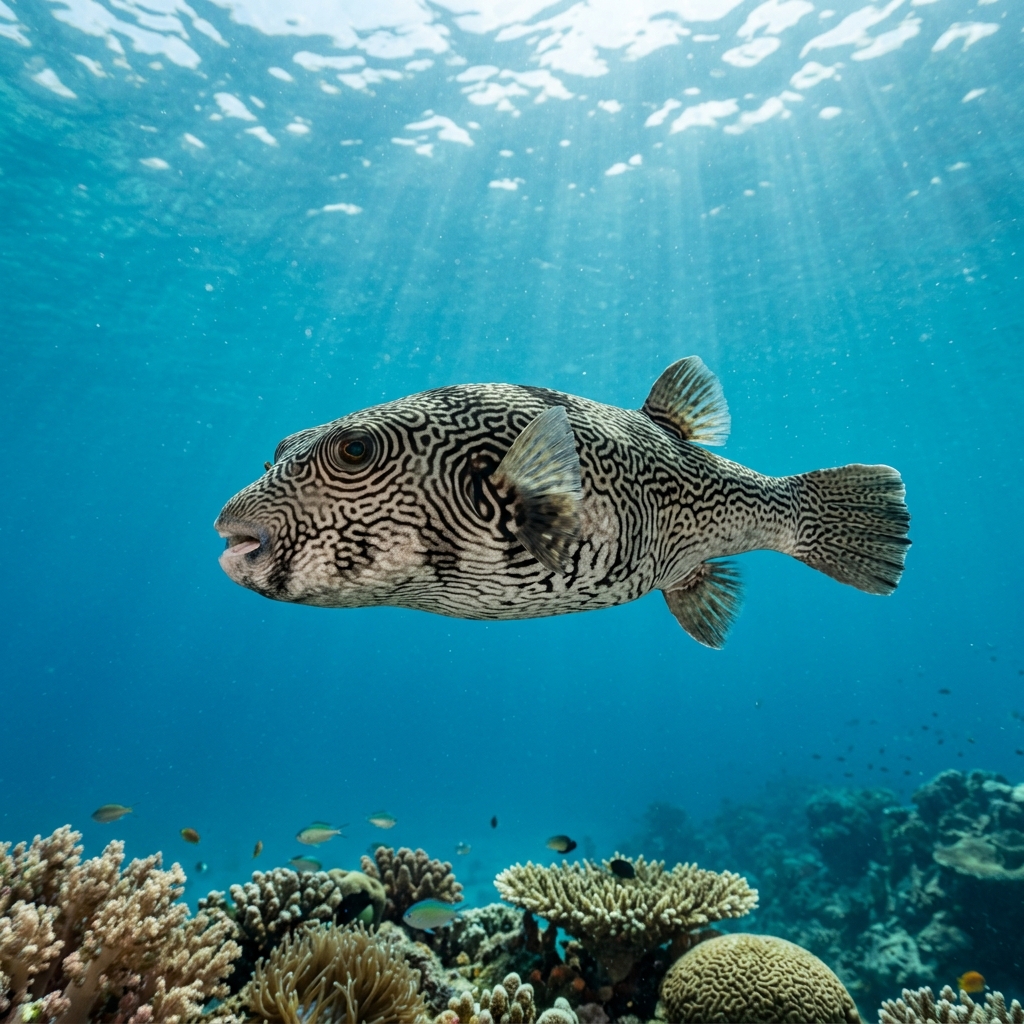
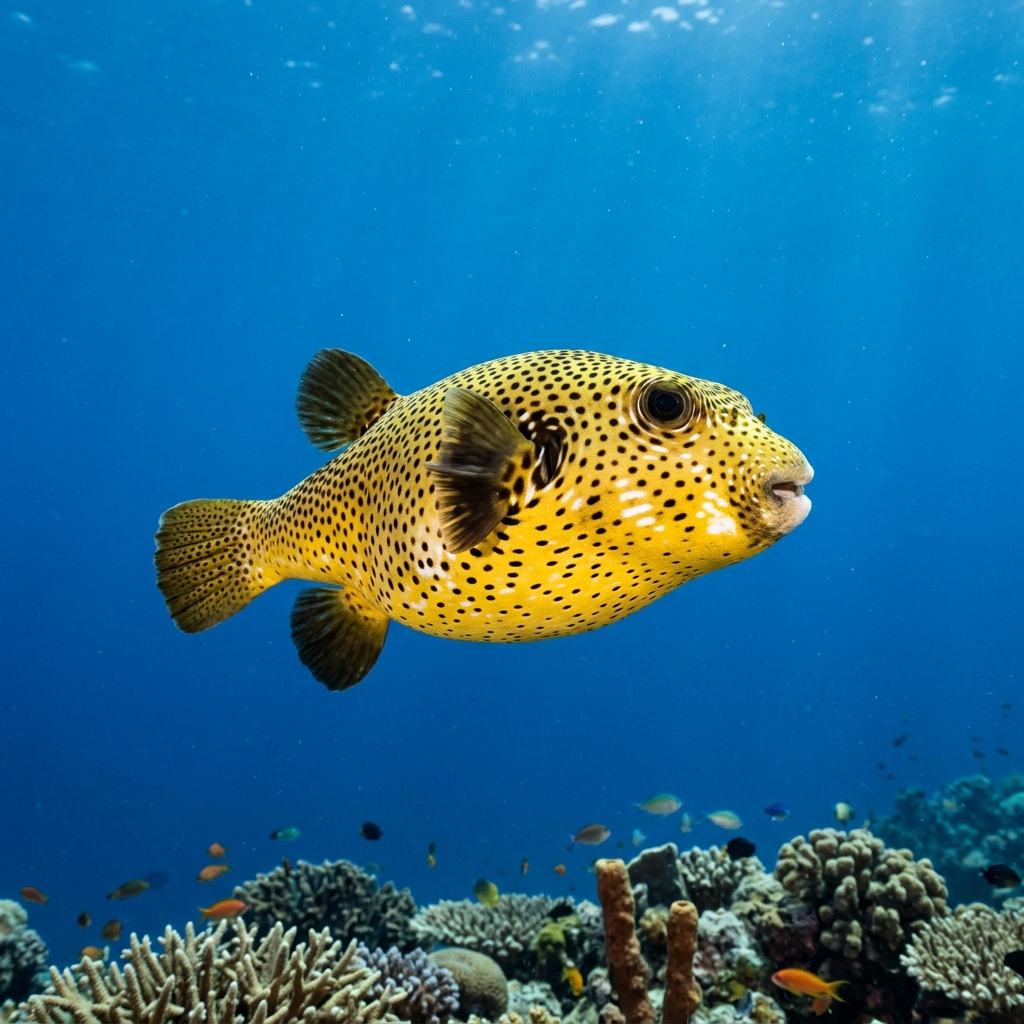
A rotund, roughly football-shaped fish reaching about 35 cm, covered head-to-tail in small white or pale yellow spots against a dark brown to black base colour, the pattern that gives it its name. The fused beak-like teeth are clearly visible at the front of the face, and the skin has a rough, slightly velvety texture rather than scales. Juveniles can show a more golden-yellow base with a denser spot pattern, making them look quite different from adults at a glance.
You will usually encounter a guineafowl puffer cruising slowly over the reef on its own, it is a solitary animal with little interest in the company of its own kind. It is notably unfazed by divers and will often turn to investigate you rather than flee. Watch it work the reef during daylight hours, using its hard beak to chip at coral and rubble in search of small crustaceans and other invertebrates; if you crowd it, it may inflate its body as a warning but will rarely hold that posture for long.
The guineafowl puffer's skin and organs contain tetrodotoxin, one of the most potent biological toxins known, which the fish accumulates from bacteria in its diet. This chemical defence is what allows it to move so calmly around the reef with little apparent concern for predators.
In Northern Hemisphere destinations such as Hawaii, the Maldives, and the Philippines, sightings concentrate between October and May. In Southern Hemisphere locations, the season runs from May through February; the species' preference for water temperatures between 24 and 29 °C means it is present on tropical reefs for much of the year across its range.
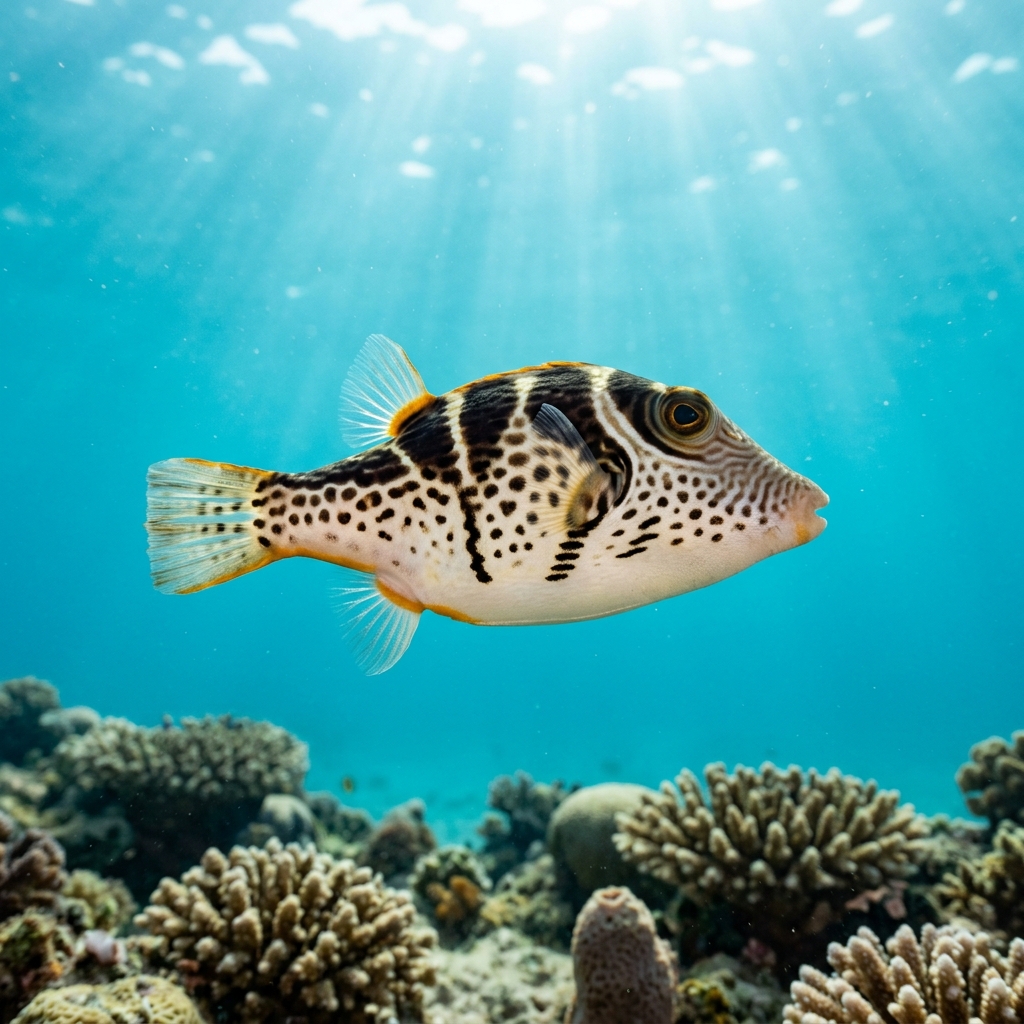
Reef neighbours a diver could mistake it for. Use the identification notes above to tell them apart.
Most commonly logged across the Maldives, Philippines, and French Polynesia, with strong populations also recorded in Mexico (particularly Baja California and the Pacific Coast), Indonesia, and Hawaii. The Seychelles, particularly around Praslin and La Digue, and the eastern Pacific waters of Costa Rica round out the strongest regional hotspots.
Mapping where Guineafowl Puffer is logged…
The guineafowl puffer is most reliably logged in the Maldives, Philippines, and French Polynesia. Other strong areas include Hawaii, Baja California in Mexico, Indonesia, Costa Rica, and the Seychelles. It is a wide-ranging Indo-Pacific and eastern Pacific species found on shallow to moderately deep coral reefs.
In northern hemisphere destinations like Hawaii, the Maldives, and the Philippines, October through May sees the most sightings. In southern hemisphere locations, May to February is the peak window. Because it favours warm tropical water between 24 and 29 °C, it is present in some part of its range throughout the year.
Look for a round, dark brown to black body covered in evenly distributed small white spots, a visible beak-like mouth, and a rough skin texture. It reaches about 35 cm and moves with a slow, rolling swim style. The spot-on-dark pattern is distinctive; juveniles show a golden-yellow base rather than dark brown.
Adults typically reach around 35 cm in length. In the water they look noticeably chunky and oval-shaped, which helps distinguish them from more elongated reef fish of similar size.
No, guineafowl puffers pose no direct danger to divers. They are calm around people and will not bite unless severely harassed. They do contain tetrodotoxin in their tissues, but that is only a concern if the fish is handled or consumed, neither of which you should do.
Site and sighting data is aggregated from diver logs, iNaturalist and GBIF. For taxonomy and conservation status:
Valentini Pufferfish
2,830 sites