Holacanthus passer
Bold white vertical stripe, orange tail: spot King Angelfish in Baja California, the Galápagos, and Coiba from November to June.
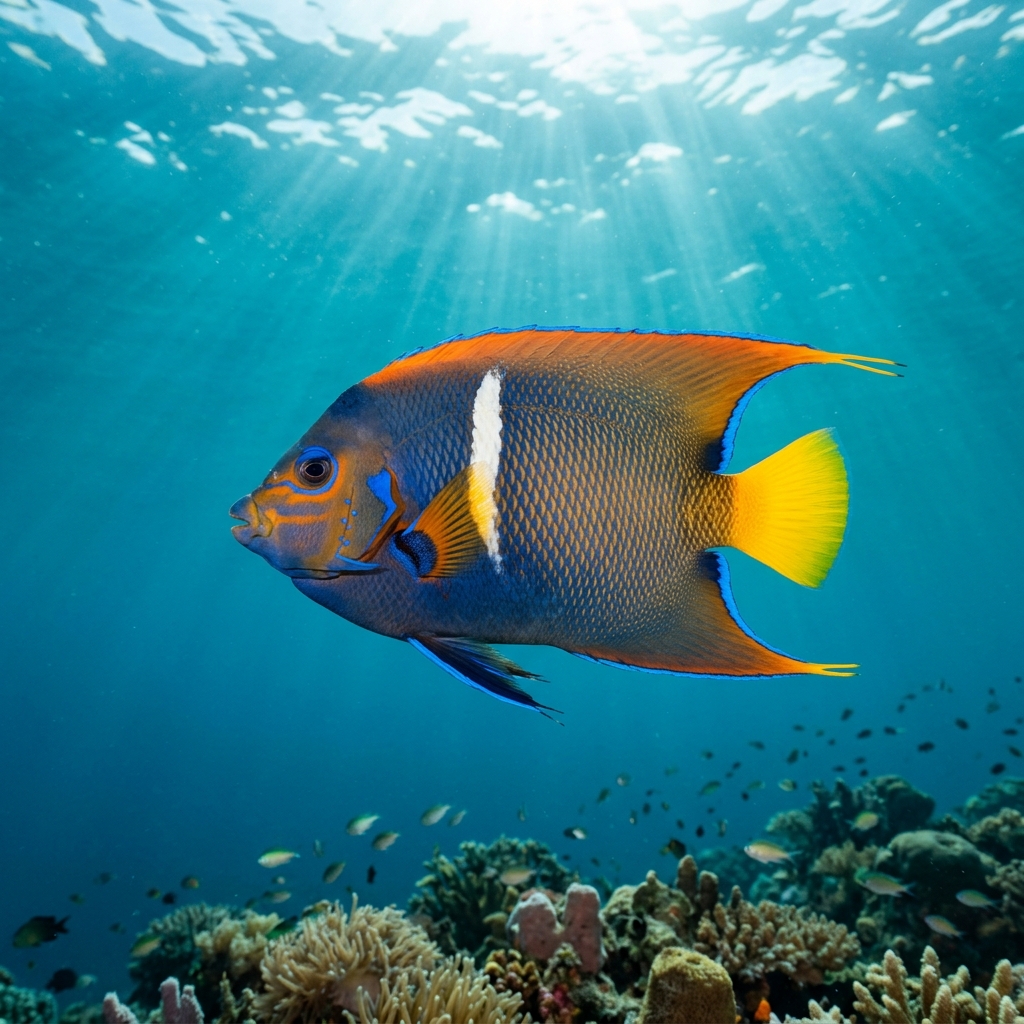
One mark does all the work underwater: a broad white vertical stripe cutting across the dark blue-black body roughly one-third of the way back from the head. The tail and rear flanks glow orange-yellow, making the fish unmistakable even at distance. Adults are a substantial disc-shaped fish, noticeably large for an angelfish. Juveniles are strikingly different, showing an orange body with vertical blue-edged white bars and a yellow tail.
King Angelfish are usually spotted moving purposefully along rocky reefs and walls, picking at sponges and algae with their small, hard mouths. They are not particularly shy, but they keep a comfortable distance and will circle behind a coral head if a diver approaches too directly. You are most likely to find them in pairs or small groups rather than large aggregations, often in the mid-water column above the reef rather than hugging the bottom.
King Angelfish are protogynous hermaphrodites (females can transition into males), and dominant males typically maintain a harem of females across a defined territory on the reef.
Sightings in the northern part of the range concentrate from November through June, so that window is the most reliable time to plan a trip to Mexico or Costa Rica. In equatorial sites like the Galápagos, conditions driven by the cooler Humboldt Current keep water temperatures within the observed 22 to 29 °C niche, and encounters are possible across more of the year.
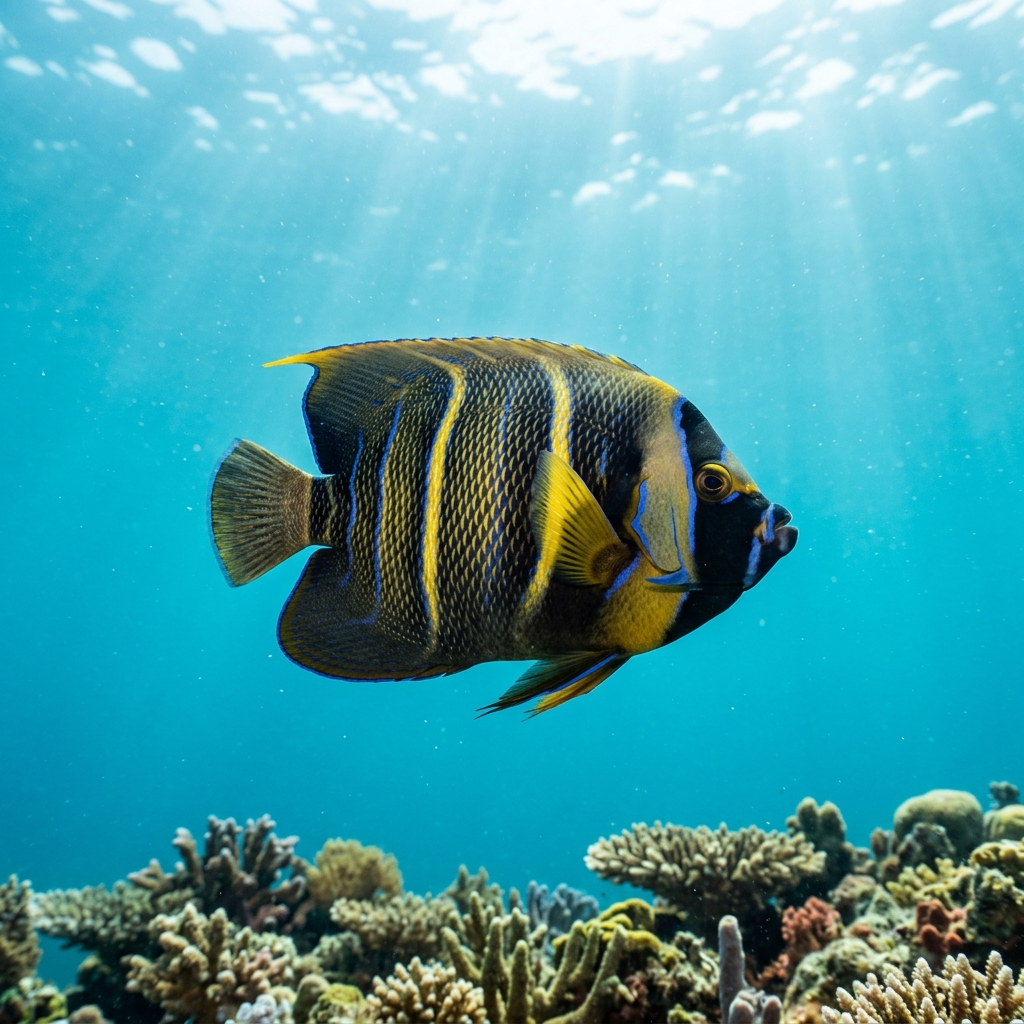
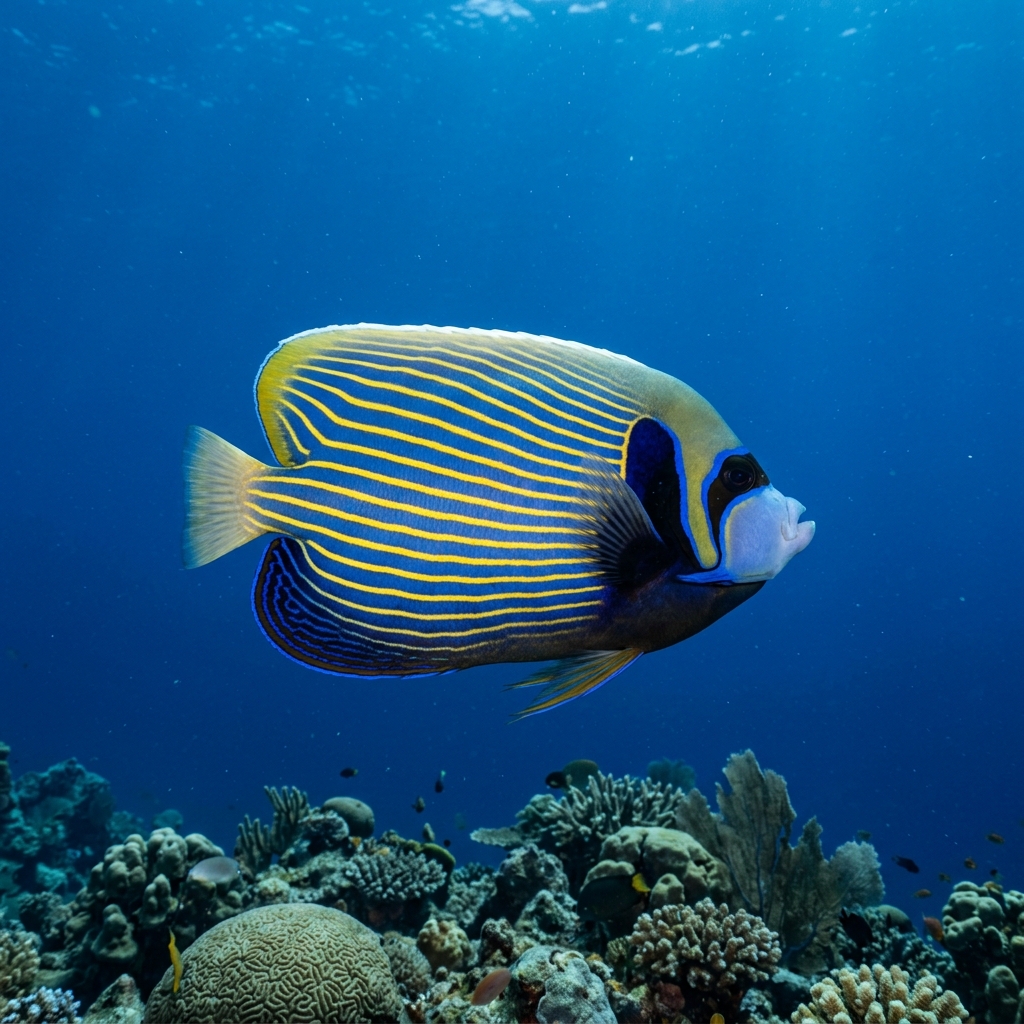
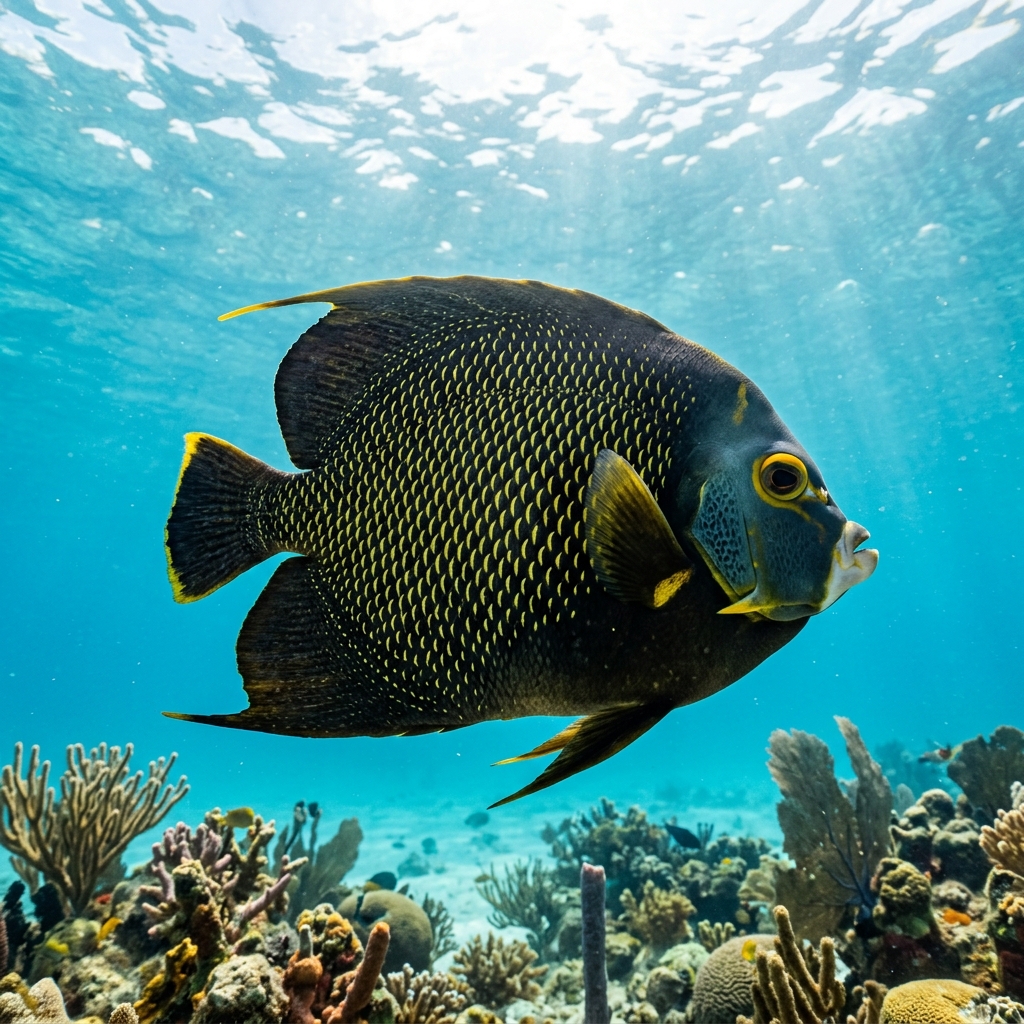
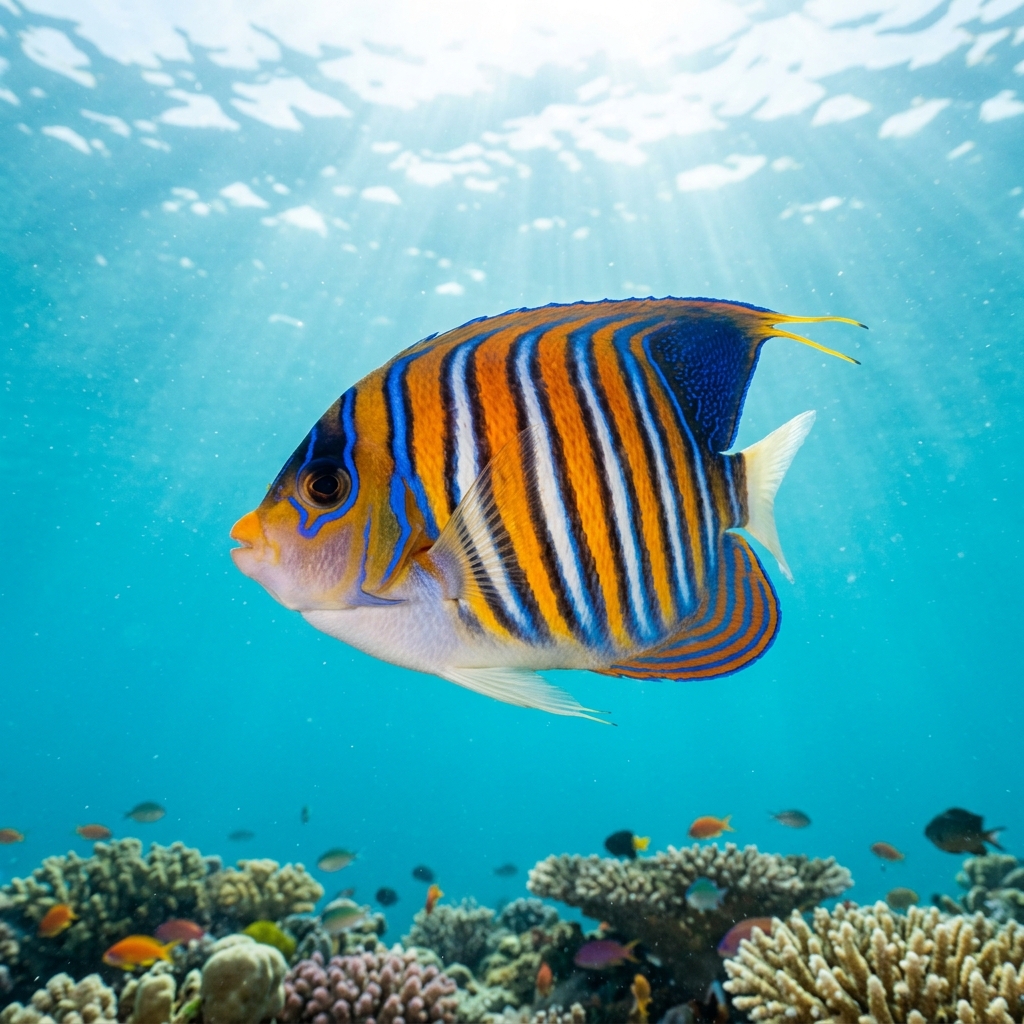
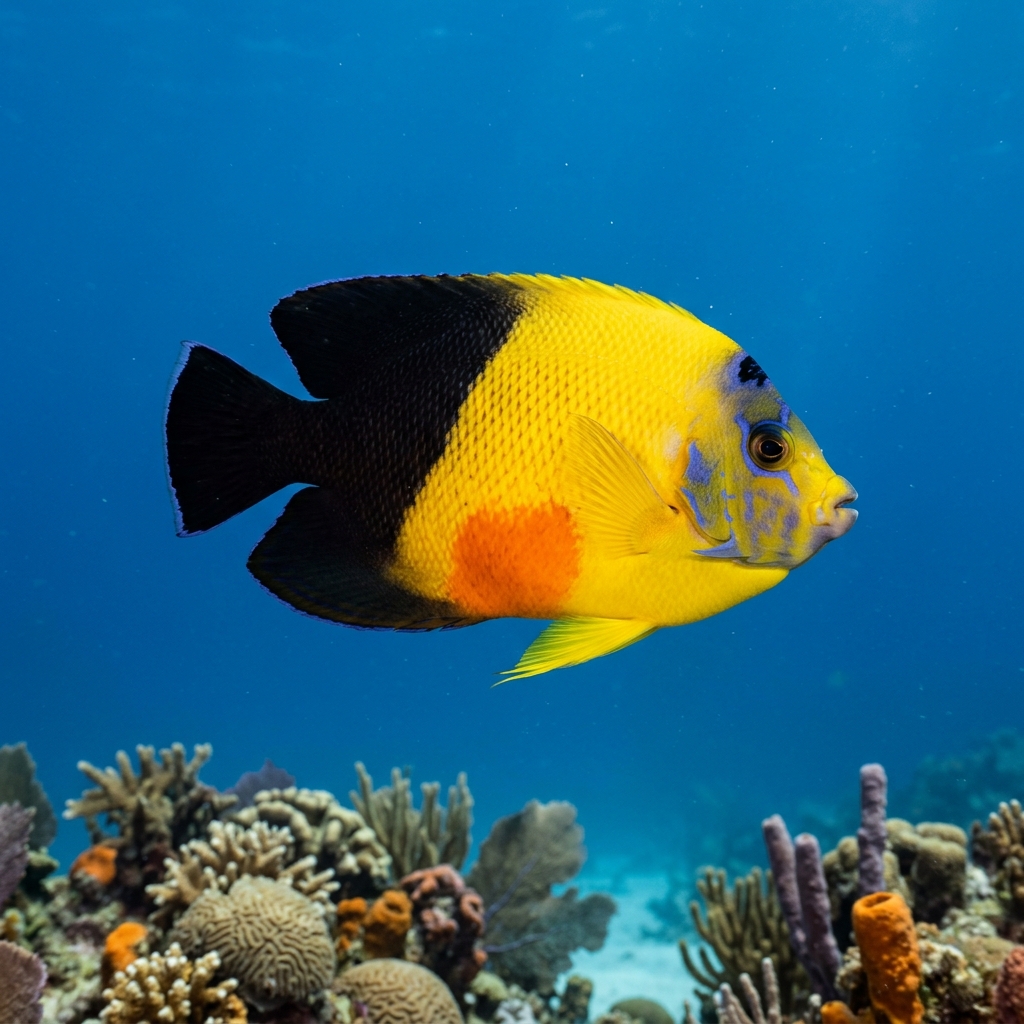
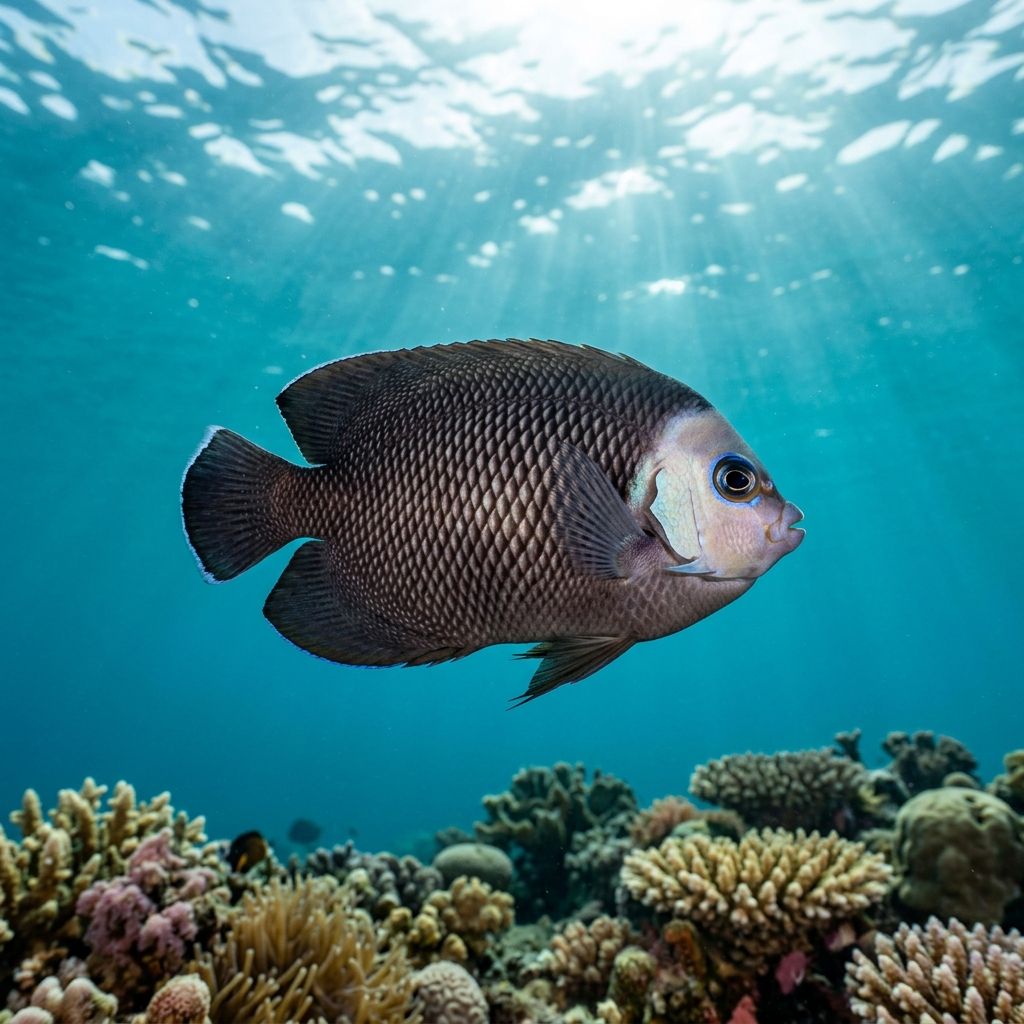
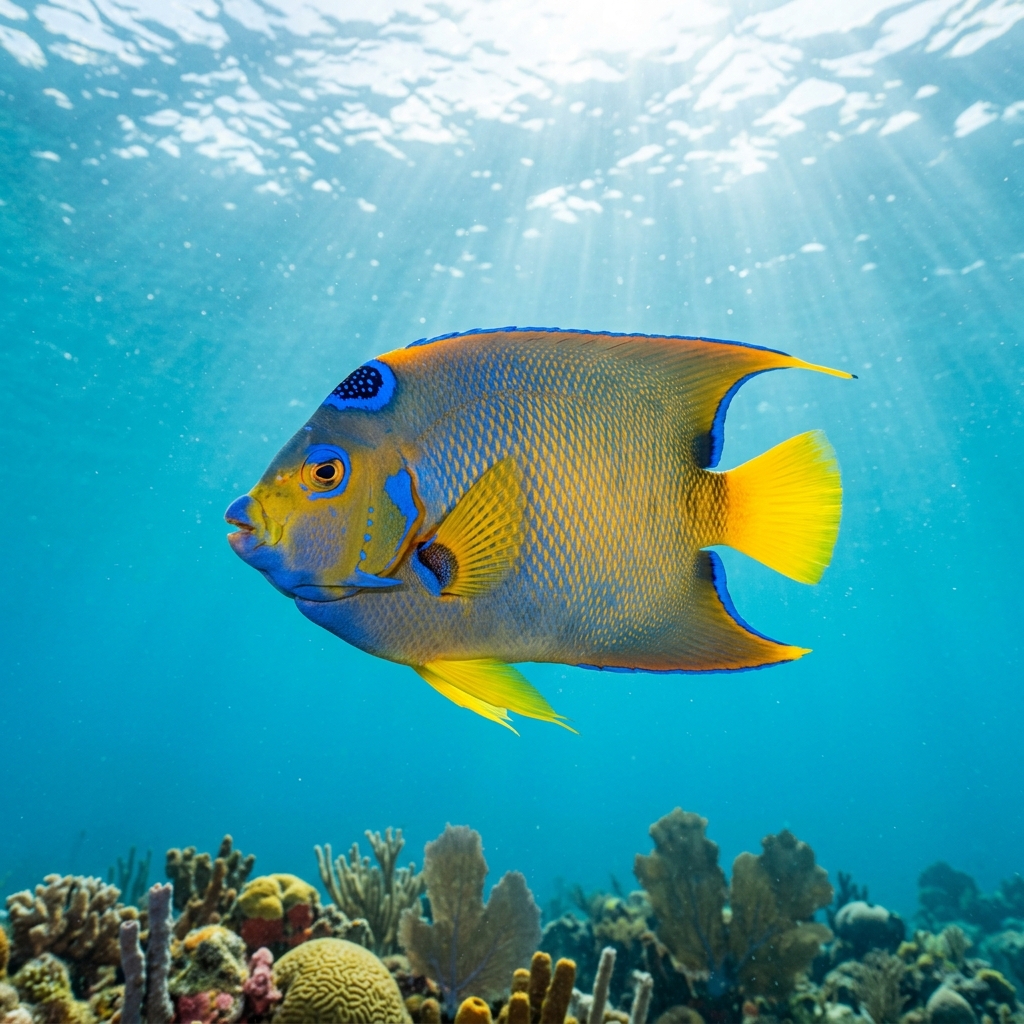
Reef neighbours a diver could mistake it for. Use the identification notes above to tell them apart.
King Angelfish are almost exclusively an eastern Pacific species. The largest concentration of logged sightings comes from Baja California and the broader Pacific coast of Mexico, with strong populations also recorded across the Galápagos Islands in Ecuador and the Papagayo Gulf in Costa Rica. Coiba National Park in Panama and Malpelo in Colombia round out the core range, and the species appears very commonly at a meaningful portion of the sites where it is recorded.
Mapping where King Angelfish is logged…
King Angelfish are an eastern Pacific species, most reliably encountered along the Pacific coast of Mexico (especially Baja California), in the Galápagos Islands of Ecuador, and around Costa Rica's Papagayo Gulf and Isla del Caño. Coiba National Park in Panama and Malpelo in Colombia are also strong destinations.
In Mexico and Costa Rica, sightings peak between November and June. In equatorial sites like the Galápagos, the species is present across a broader part of the year, kept in range by cooler upwelling waters that sit comfortably within its observed temperature niche of around 22 to 29 °C.
Look for the broad white vertical stripe across a dark blue-black body, combined with a vivid orange-yellow tail. No other angelfish in the eastern Pacific shares that combination. Juveniles look completely different, orange with white bars, so take a second look before moving on.
King Angelfish are one of the larger angelfish species in the eastern Pacific, typically reaching around 35 to 40 cm in length as adults. In the water they have a noticeably deep, disc-shaped profile that makes them look even bigger than their length suggests.
Yes. King Angelfish are protogynous hermaphrodites, meaning females can transition into males. Dominant males hold territories and mate with a group of females. If the male disappears, the dominant female in the group can change sex to take over that role.
Site and sighting data is aggregated from diver logs, iNaturalist and GBIF. For taxonomy and conservation status:
Rock Beauty
1,573 sites