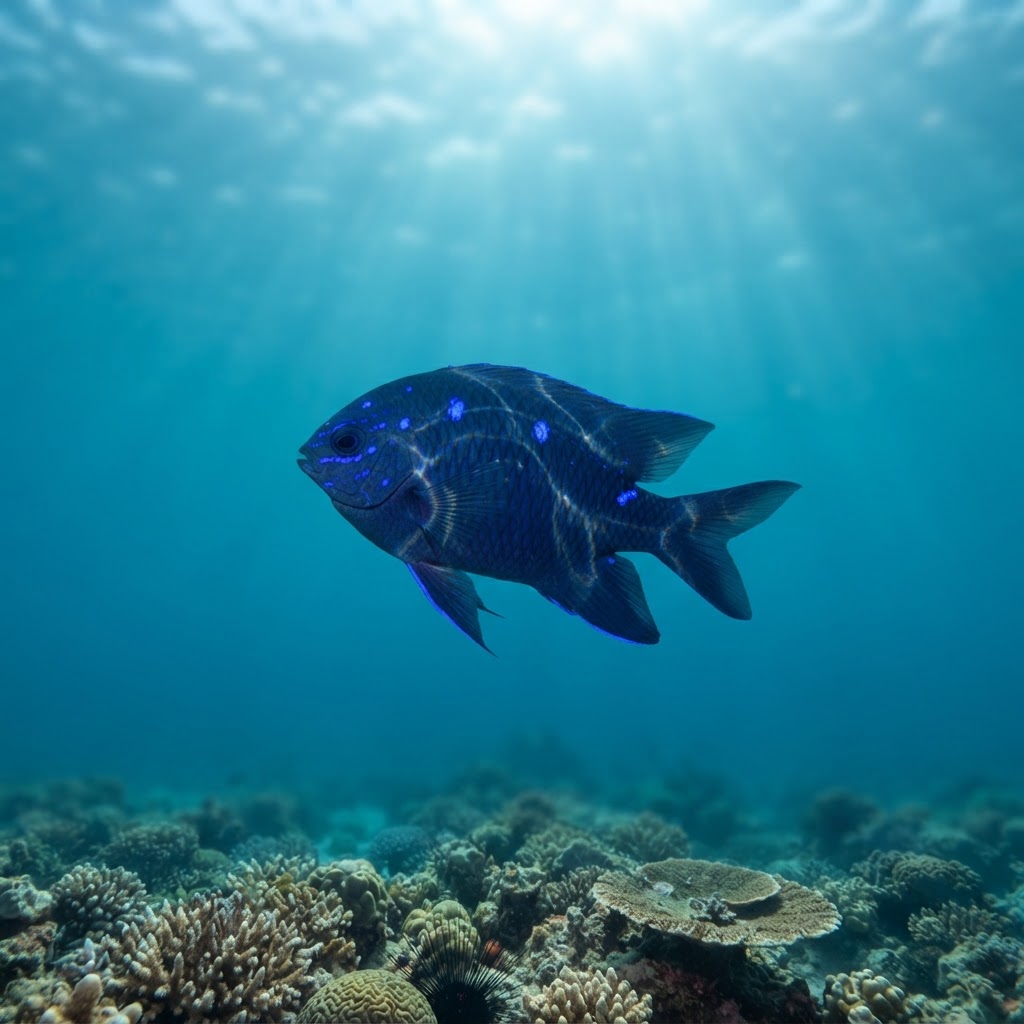
Microspathodon dorsalis
Chalky-blue juveniles to deep grey adults on shallow Pacific reefs, most reliably found around Baja California and Guanacaste year-round.
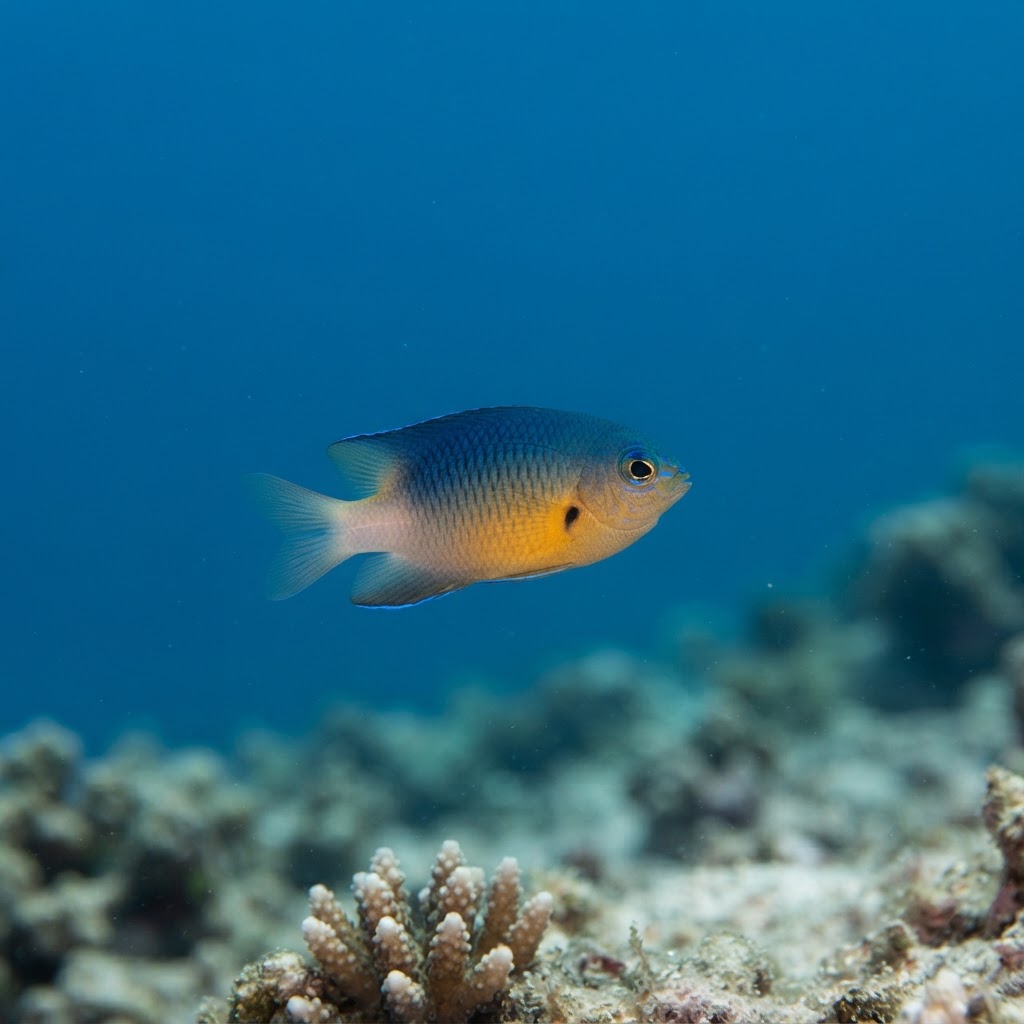
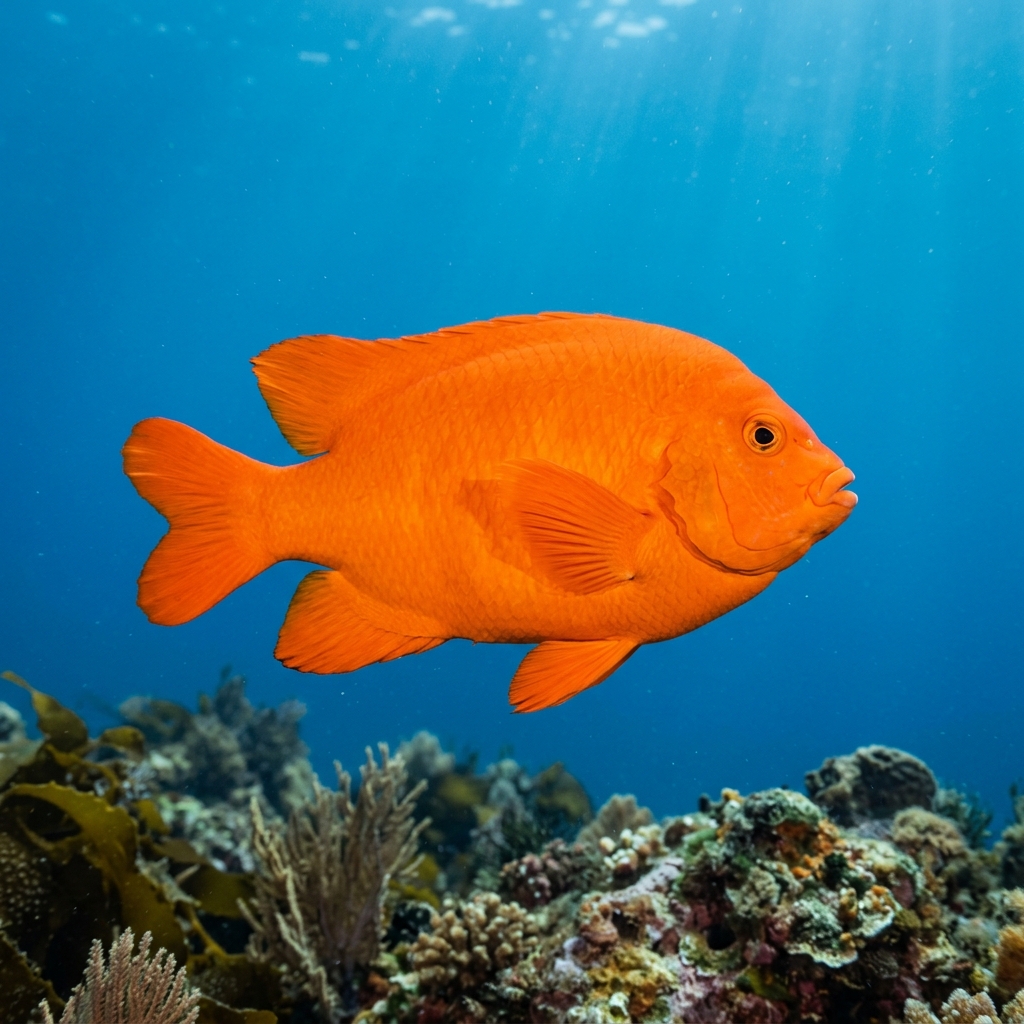
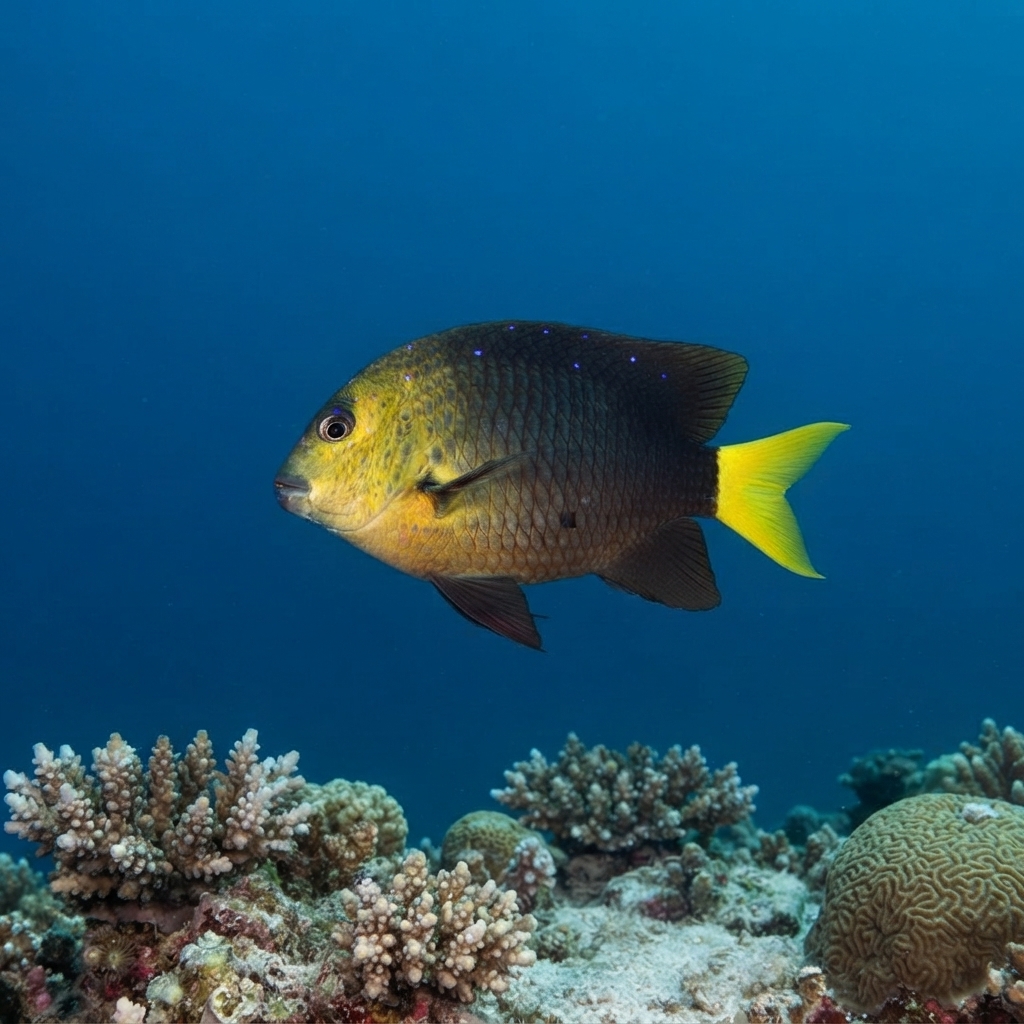
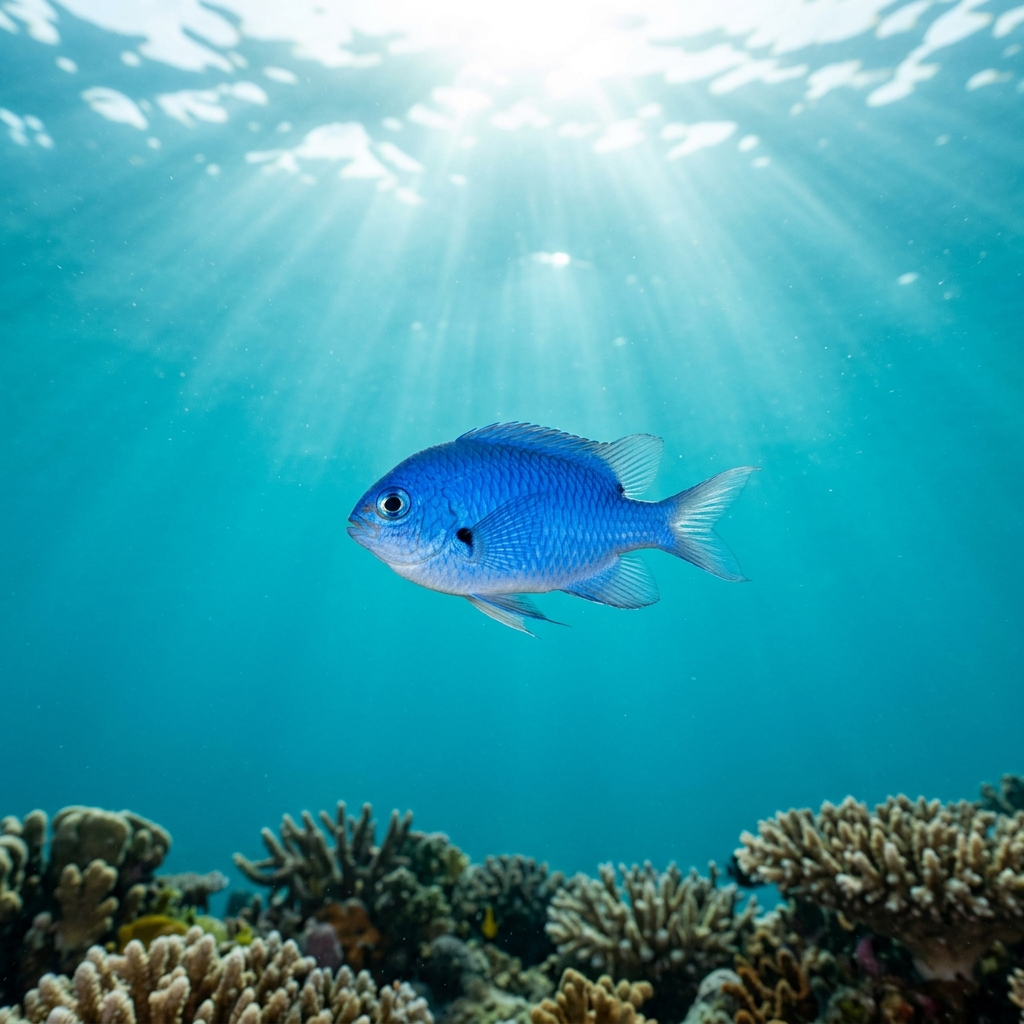
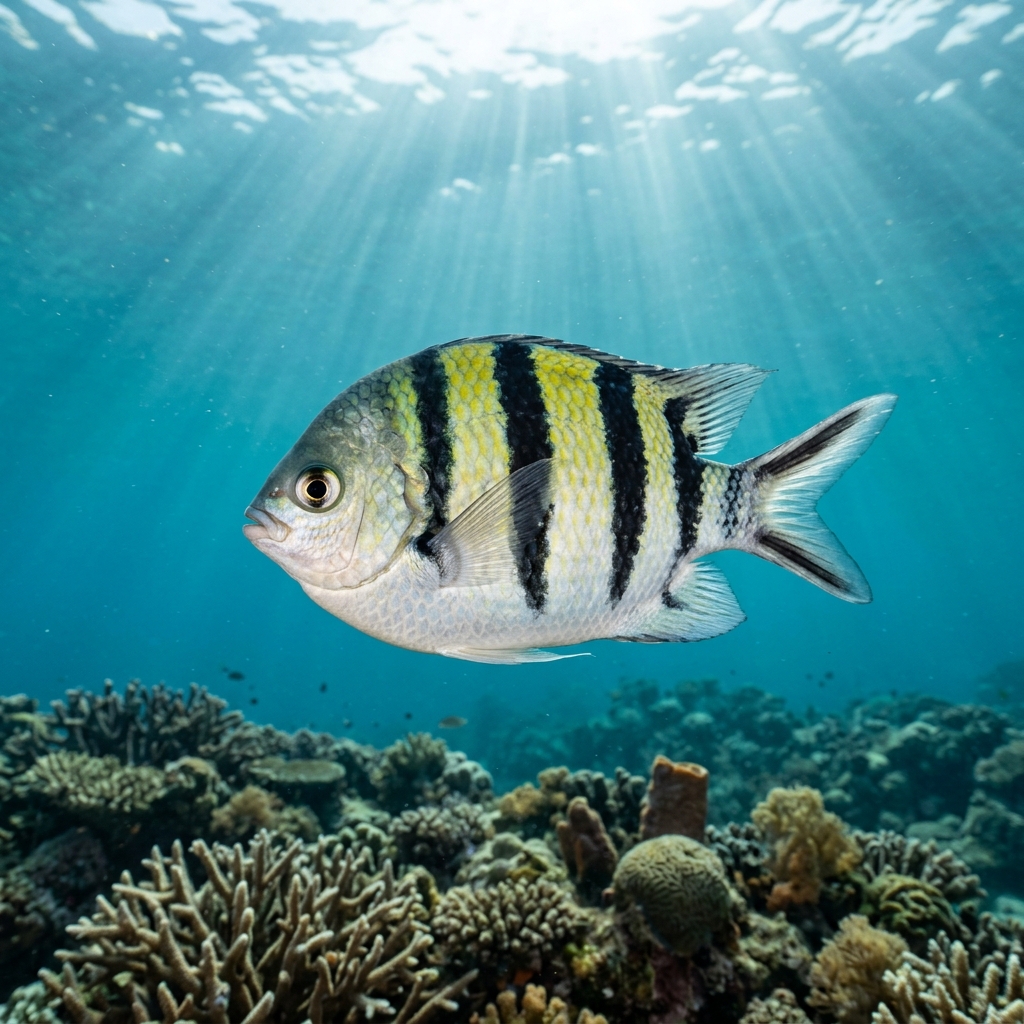
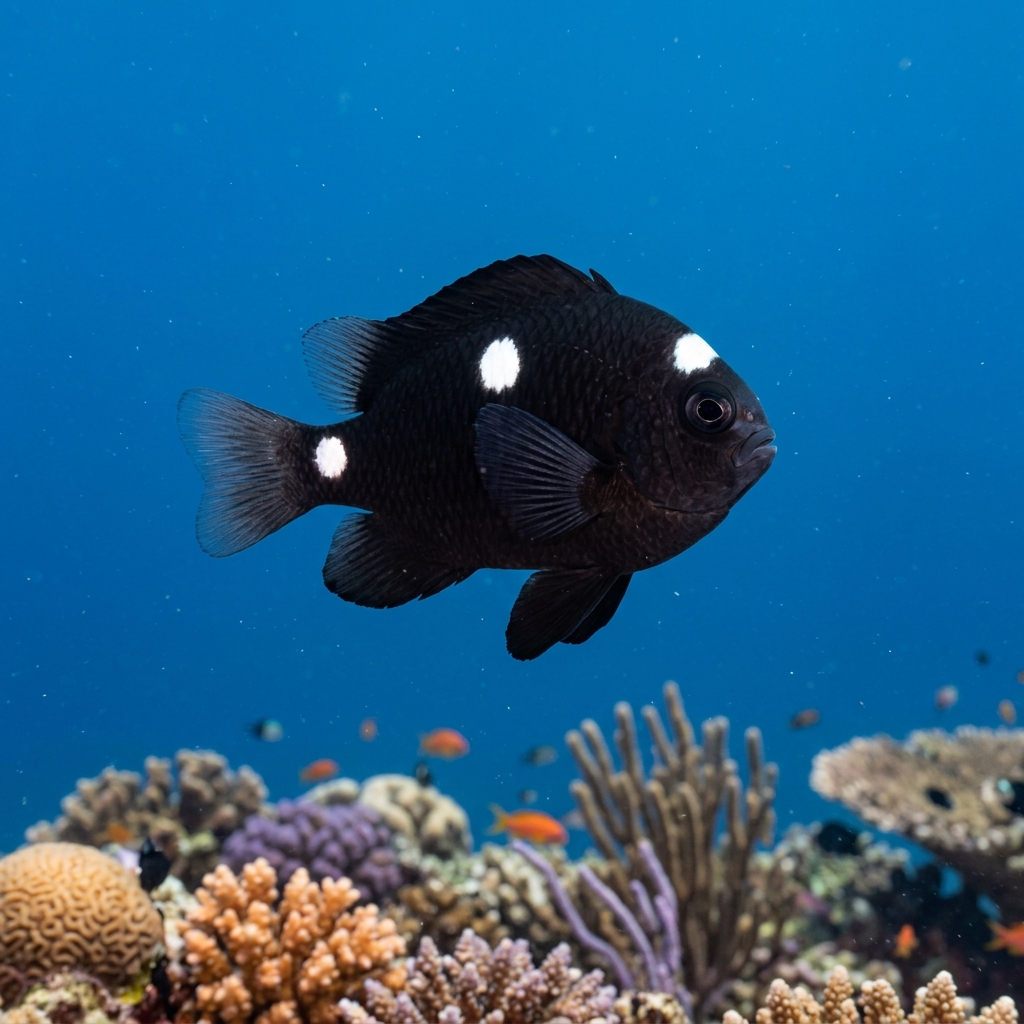
Adults run dark grey to blue-black with faint pale speckling across the flanks, growing to around 21 cm, a chunky body and blunt head that reads as a heavyweight among damselfish. Juveniles look nothing like the adults: they're a bright electric blue with dark spots, a common source of confusion until they mature. Look for it hovering close to rock or reef structure in very shallow water, rarely below 5 metres.
Expect to find it patrolling a patch of shallow reef or rock, often close to the substrate where it grazes algae and defends a territory against intruders. It's not shy: divers who linger near its patch may get nipped at or bumped as it chases off perceived threats, a classic damselfish trait. Most sightings happen in the top few metres of water, so it's an easy one to spot on a safety stop or shallow snorkel.
Adults are fiercely territorial algae farmers, cultivating and defending a patch of turf algae on the reef and chasing off almost anything that strays too close, including much larger fish and the occasional diver.
No strong seasonal pattern shows up in the data, and with a comfortable range of 24 to 29 C it's a year-round sighting on the reefs it inhabits. Plan around water temperature and visibility for your chosen region rather than chasing a season for this fish specifically.
Reef neighbours a diver could mistake it for. Use the identification notes above to tell them apart.
Most commonly logged along Mexico's Pacific Coast and Baja California, with strong numbers also out of Guanacaste and other Pacific regions of Costa Rica. It also turns up reliably in the Galápagos Islands of Ecuador and along Panama's Pacific Coast, making it a fixture of the Eastern Pacific's rocky and coral reefs.
Mapping where Giant Damselfish is logged…
Best chances are along Mexico's Pacific Coast and Baja California, plus Guanacaste and other Pacific regions of Costa Rica. It's also a regular sighting in the Galápagos Islands and along Panama's Pacific Coast.
There's no clear season in the sighting data, and it favours water between 24 and 29 C, so it's present on Eastern Pacific reefs throughout the year.
Adults are dark grey-blue with faint pale speckling and a stocky, blunt-headed body around 21 cm long, usually seen hugging shallow rock or reef. Juveniles look completely different, bright blue with dark spots, so size and setting help confirm the ID.
They reach about 21 cm, which is large for a damselfish, hence the name. That size, combined with their bold territorial attitude, makes them stand out from smaller reef damsels.
They're not dangerous, but they are aggressively territorial and will charge or nip at divers who get too close to their algae patch. It's a startling but harmless bit of reef drama rather than a real threat.
They actively farm algae, clearing and maintaining a patch of turf on the reef and defending it against anything that tries to graze there, fish and divers included.
Site and sighting data is aggregated from diver logs, iNaturalist and GBIF. For taxonomy and conservation status:
Dascyllus
3,697 sites