Thalassoma lucasanum
Small, streaky-coloured wrasse logged at reef sites from Baja California to the Galápagos, common year-round in 21 to 29C water.
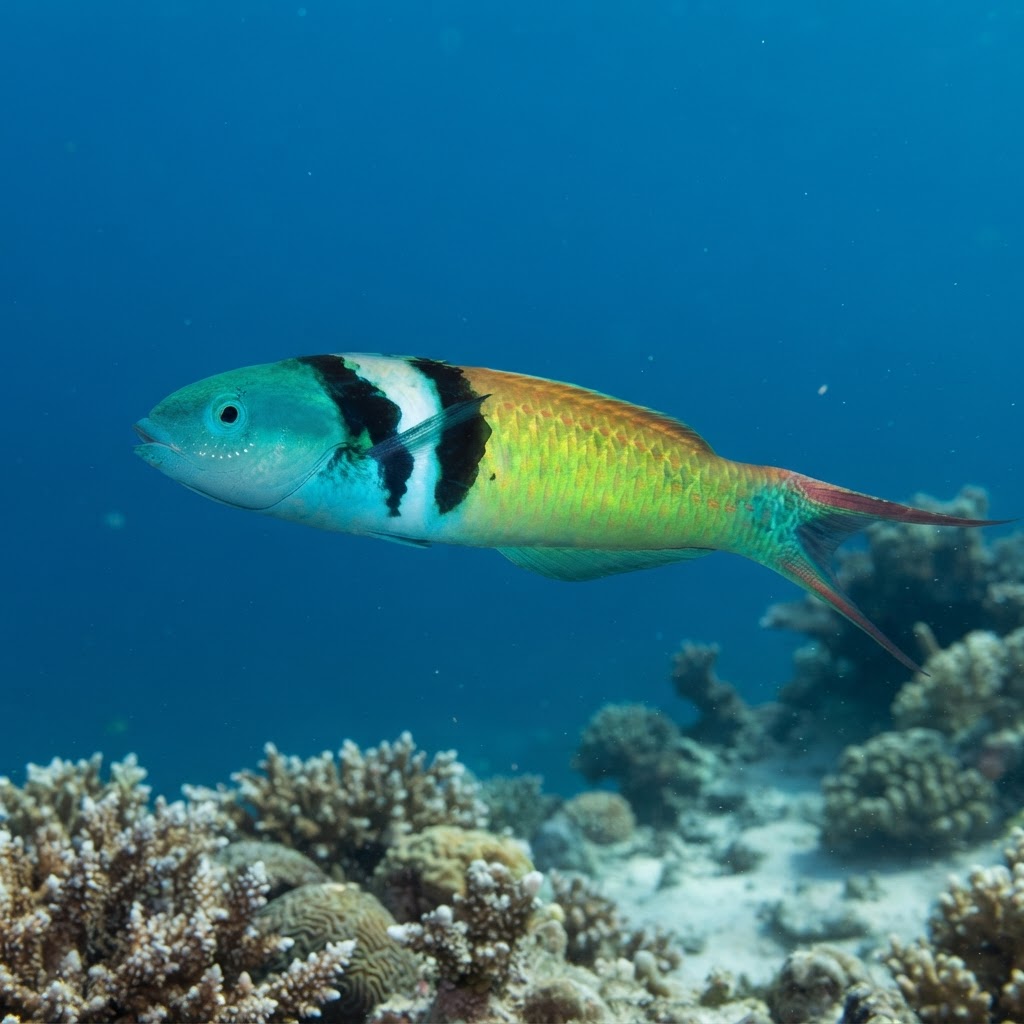
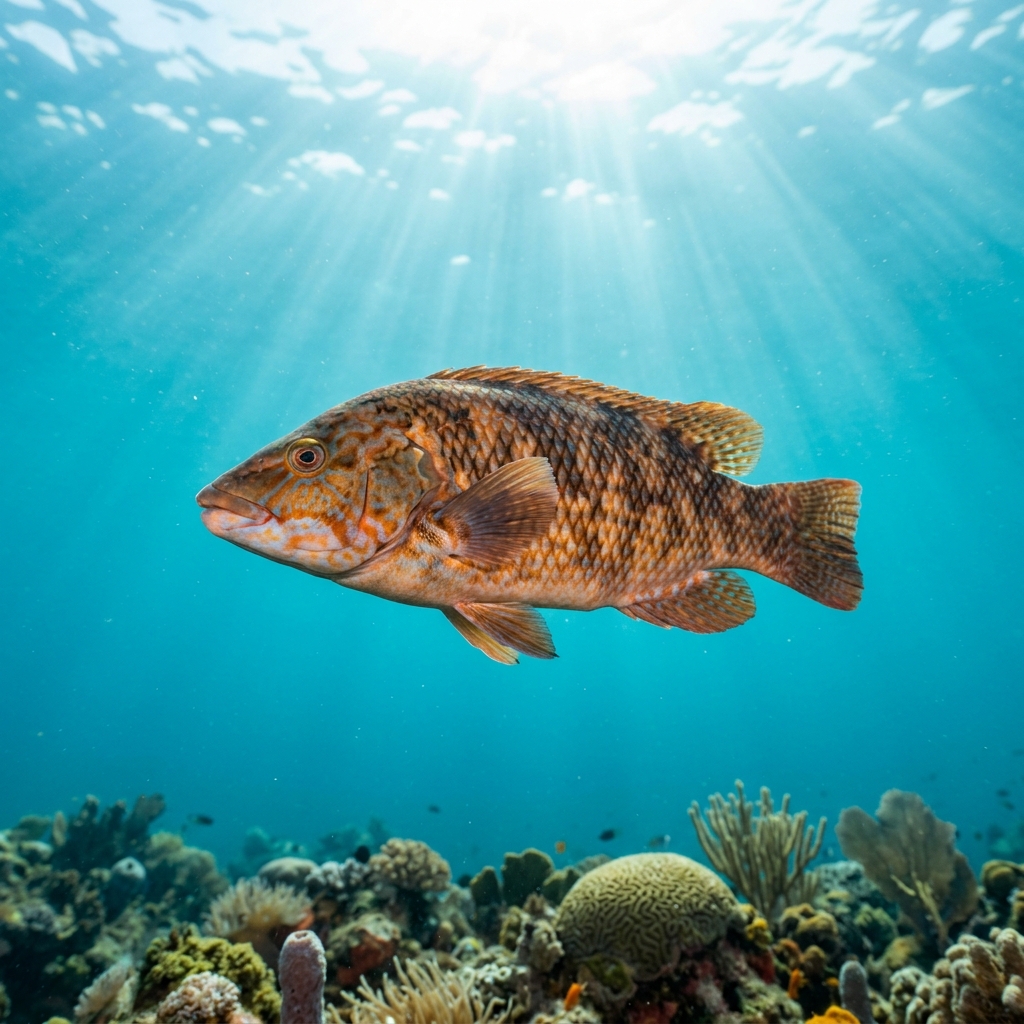
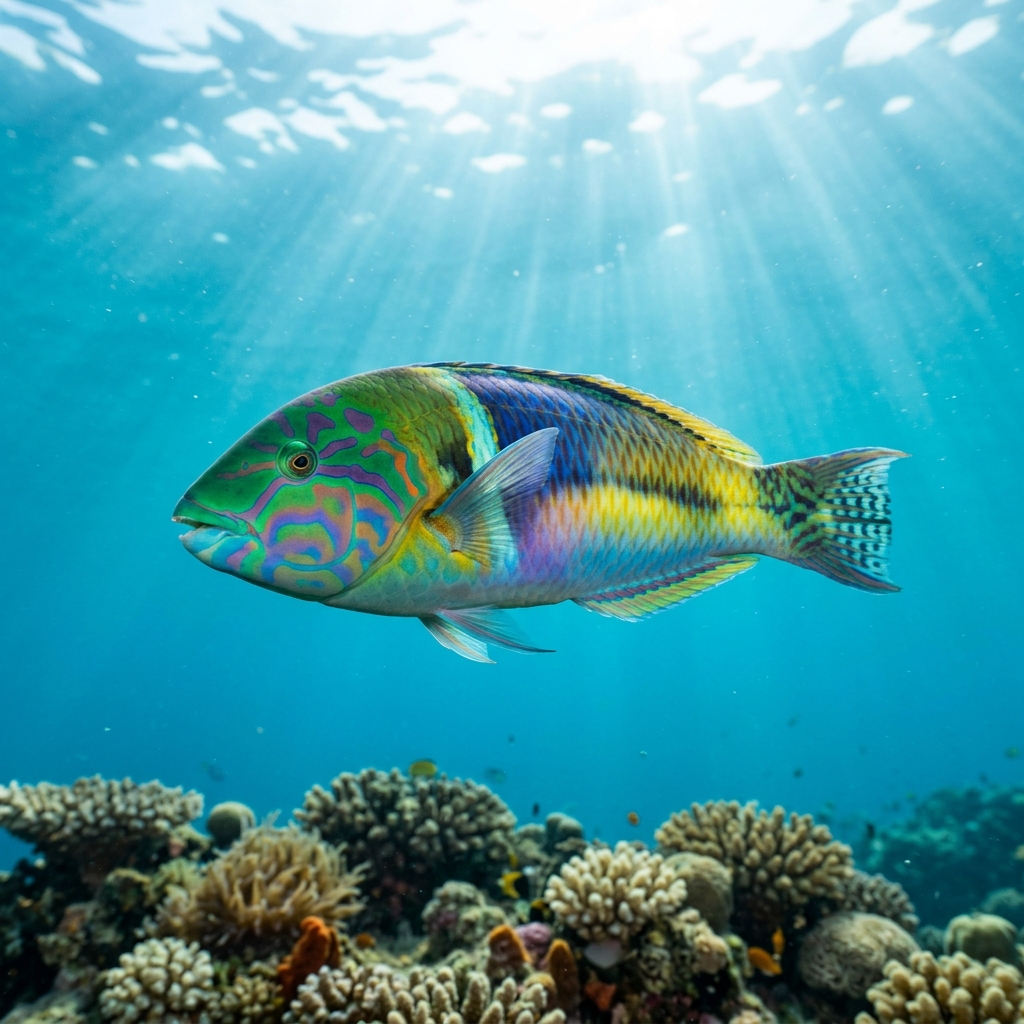
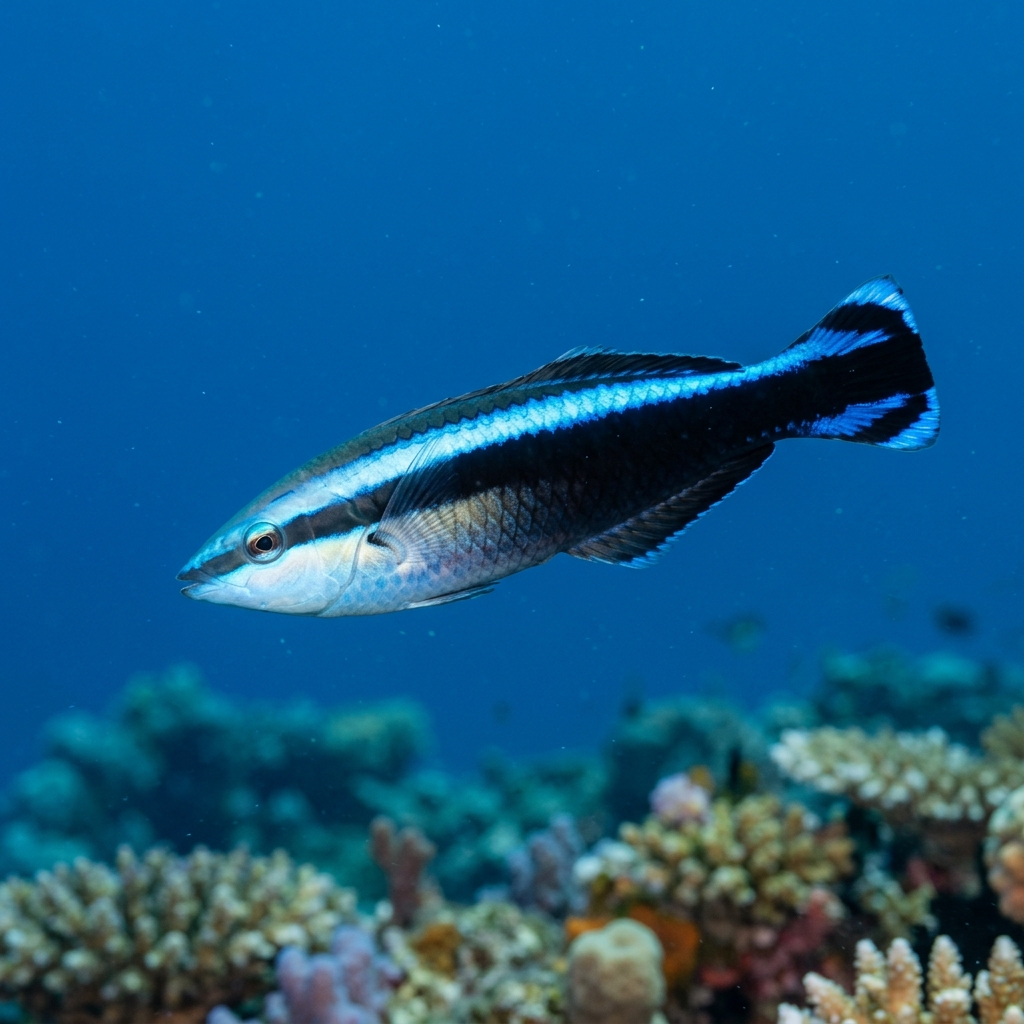
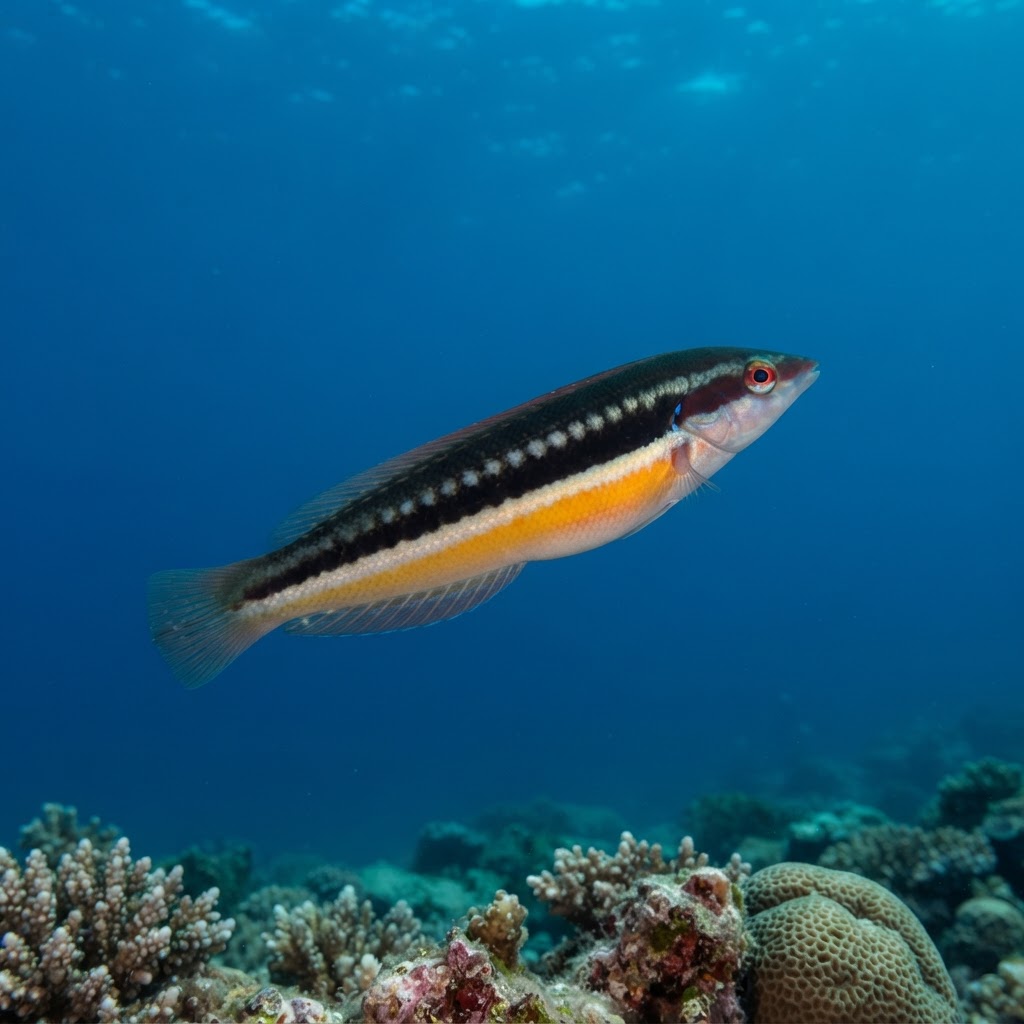
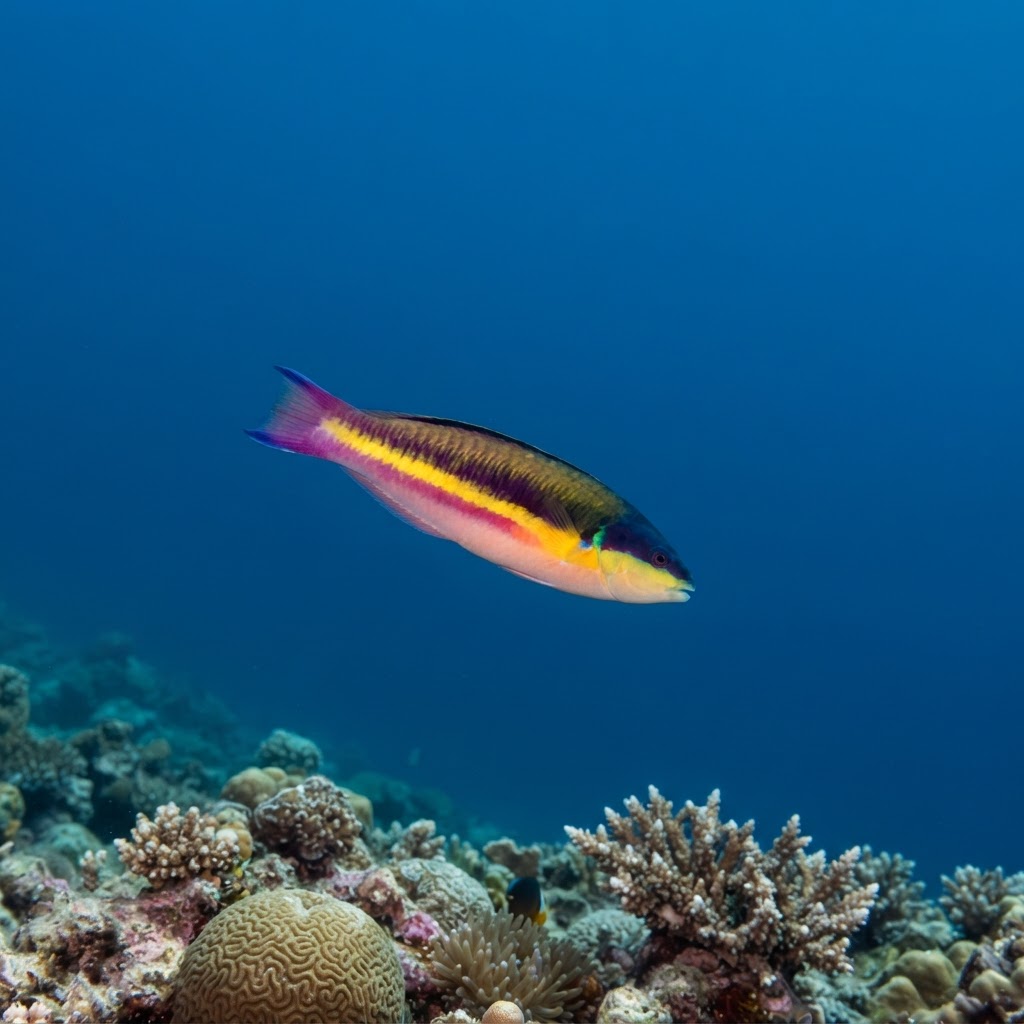
Small wrasse, around 10 cm, with a slim torpedo-shaped body built for darting between rocks. Terminal-phase adults show a bold pattern of a yellow head and tail separated by a blue-green midsection with a vivid pink or magenta band, making them one of the easier small wrasses to call on sight. Colours vary with life phase, so on any given dive you may see plainer olive or striped individuals mixed in with the fully coloured-up adults.
Expect to see them working the reef in loose groups, picking at algae and small invertebrates over rock and coral rubble rather than schooling in open water. They are quick, constantly on the move, and pay divers little attention, darting off if you get too close rather than approaching. Most sightings are on shallower daytime dives, though the species ranges down to 64 metres.
Like other Thalassoma wrasses, individuals can change sex and colour pattern over their lifetime, so the plain-coloured fish you photograph on one dive may be a different life stage of the same species you saw looking completely different a year earlier.
No clear seasonal pattern shows up in the sightings data, and with a comfortable range of 21.4 to 28.7C it holds reef territory year-round rather than showing up on a migration window.
Reef neighbours a diver could mistake it for. Use the identification notes above to tell them apart.
This is a reef fixture across the Eastern Pacific, most heavily logged in Mexico along the Pacific Coast and Baja California, and it turns up reliably in Costa Rica's Guanacaste and Central Pacific regions, the Galápagos Islands in Ecuador, and Panama's Pacific Coast. At most of these sites divers rate it uncommon to common, with a number of spots in Baja and the Galápagos reporting it as very common.
Mapping where Cortez Rainbow Wrasse is logged…
It is most consistently logged along Mexico's Pacific Coast and Baja California, and also shows up well in Costa Rica's Guanacaste region, Ecuador's Galápagos Islands, and Panama's Pacific Coast.
There is no strong season in the sightings data. It tolerates a wide temperature range of roughly 21 to 29C, so it is present on reefs throughout the year.
Look for a small, slim wrasse around 10 cm long with a yellow head and tail bracketing a blue-green body and a pink or magenta stripe through the middle. Colour intensity varies by life phase, so not every individual shows the full pattern.
They stay small, topping out around 10 cm, which along with their constant darting movement helps separate them from larger reef wrasses.
No. They are harmless, small reef fish that keep their distance from divers and pose no risk.
Site and sighting data is aggregated from diver logs, iNaturalist and GBIF. For taxonomy and conservation status:
Bird Wrasses
3,632 sites