Halichoeres dispilus
A small, colour-shifting wrasse turning up on reefs from Baja California to the Galápagos, most often as an uncommon but steady sighting.
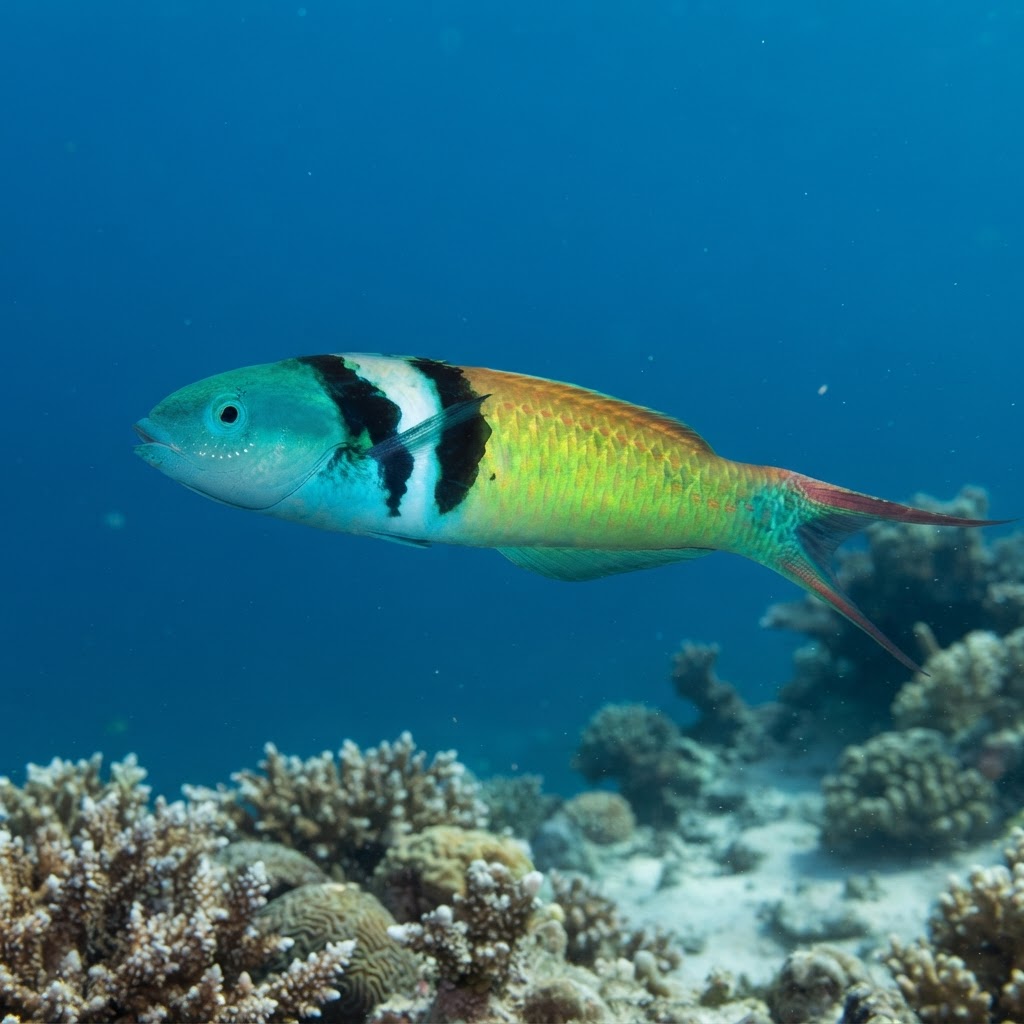
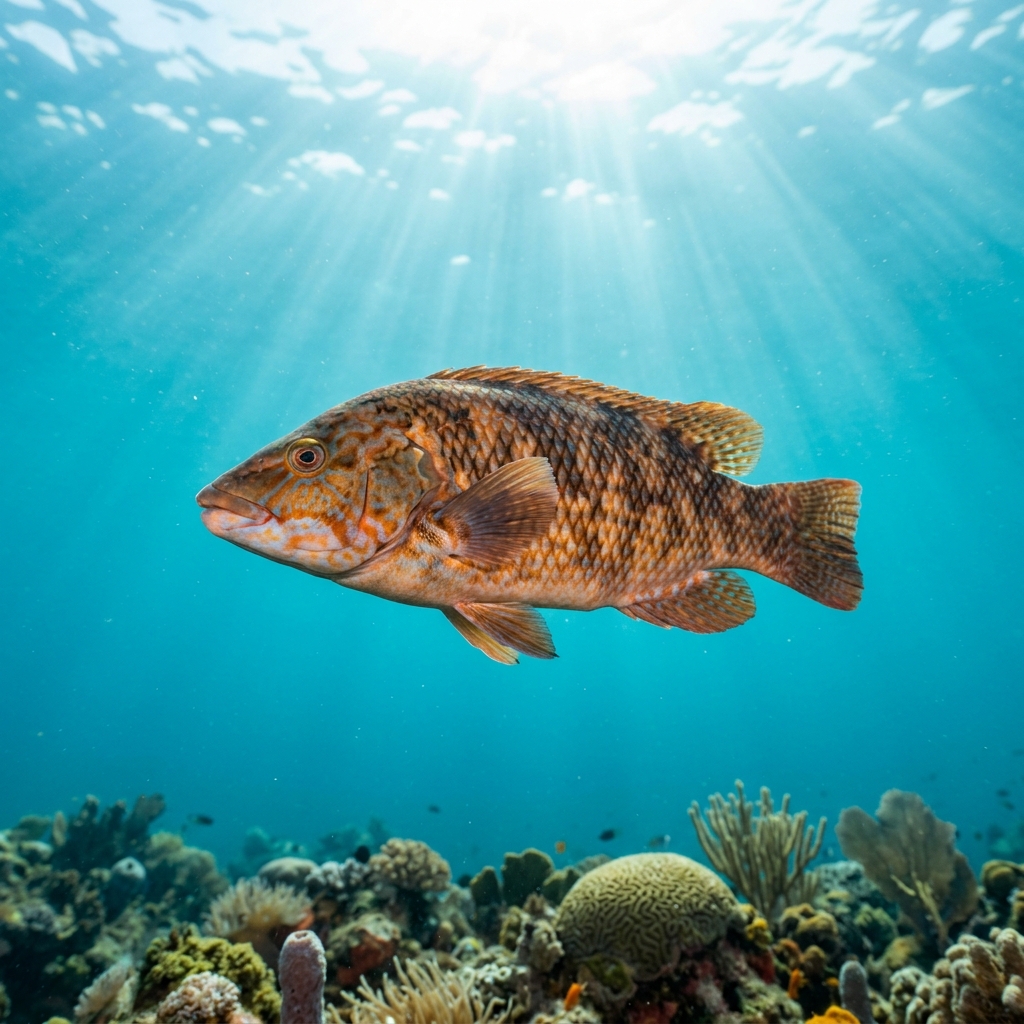
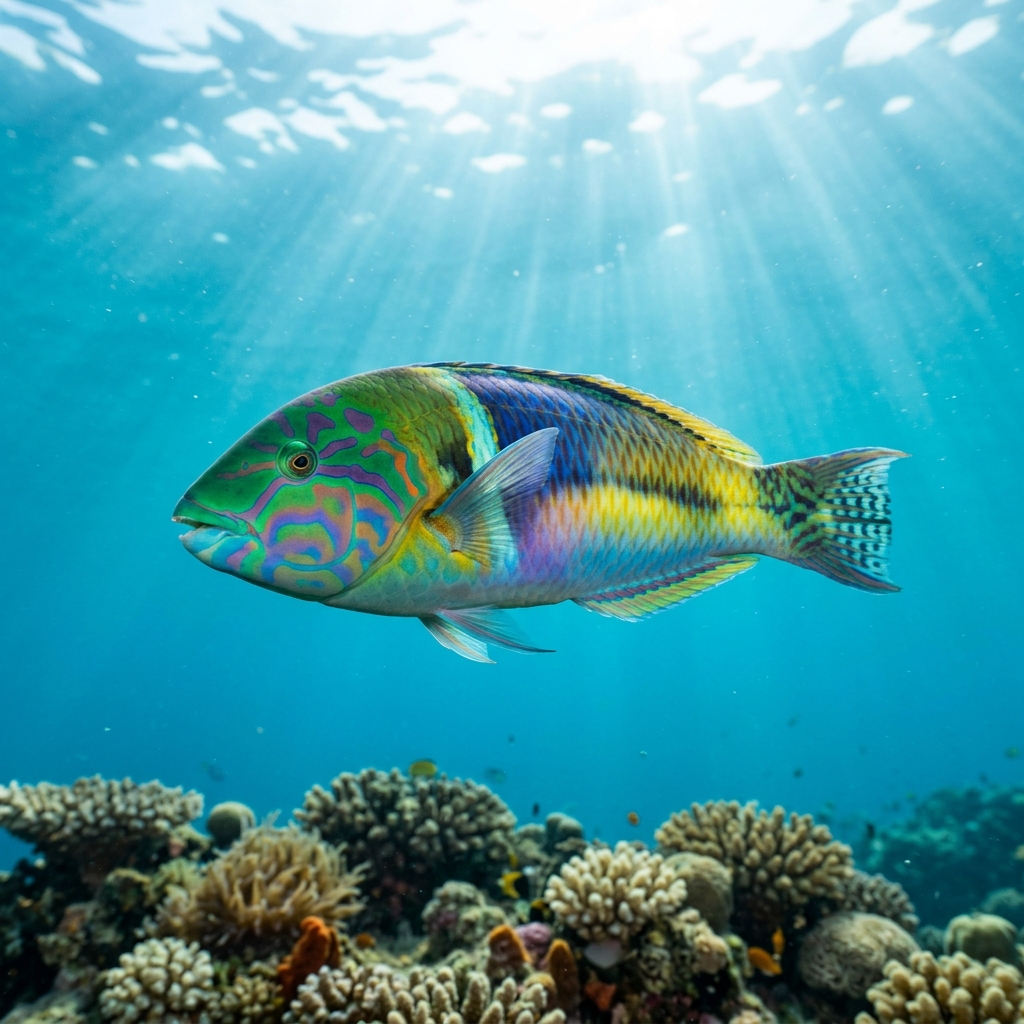
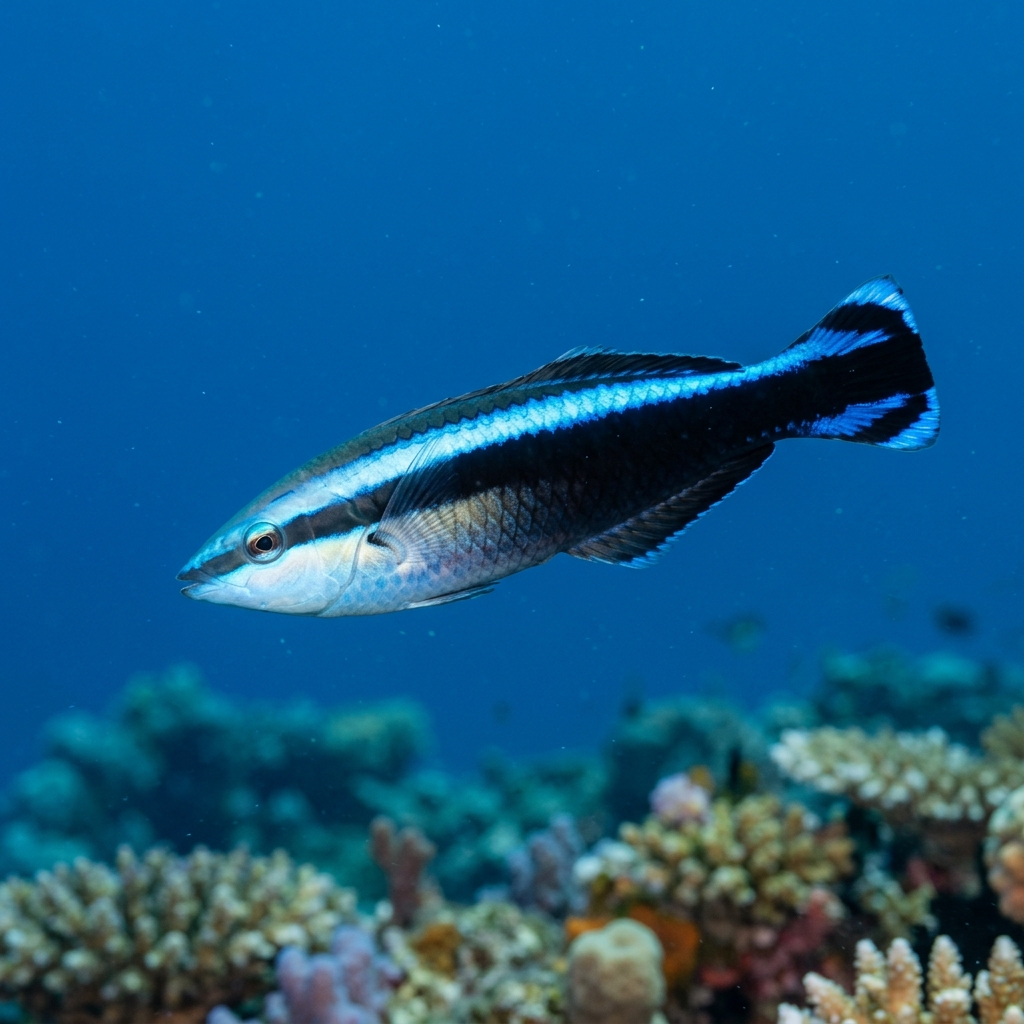
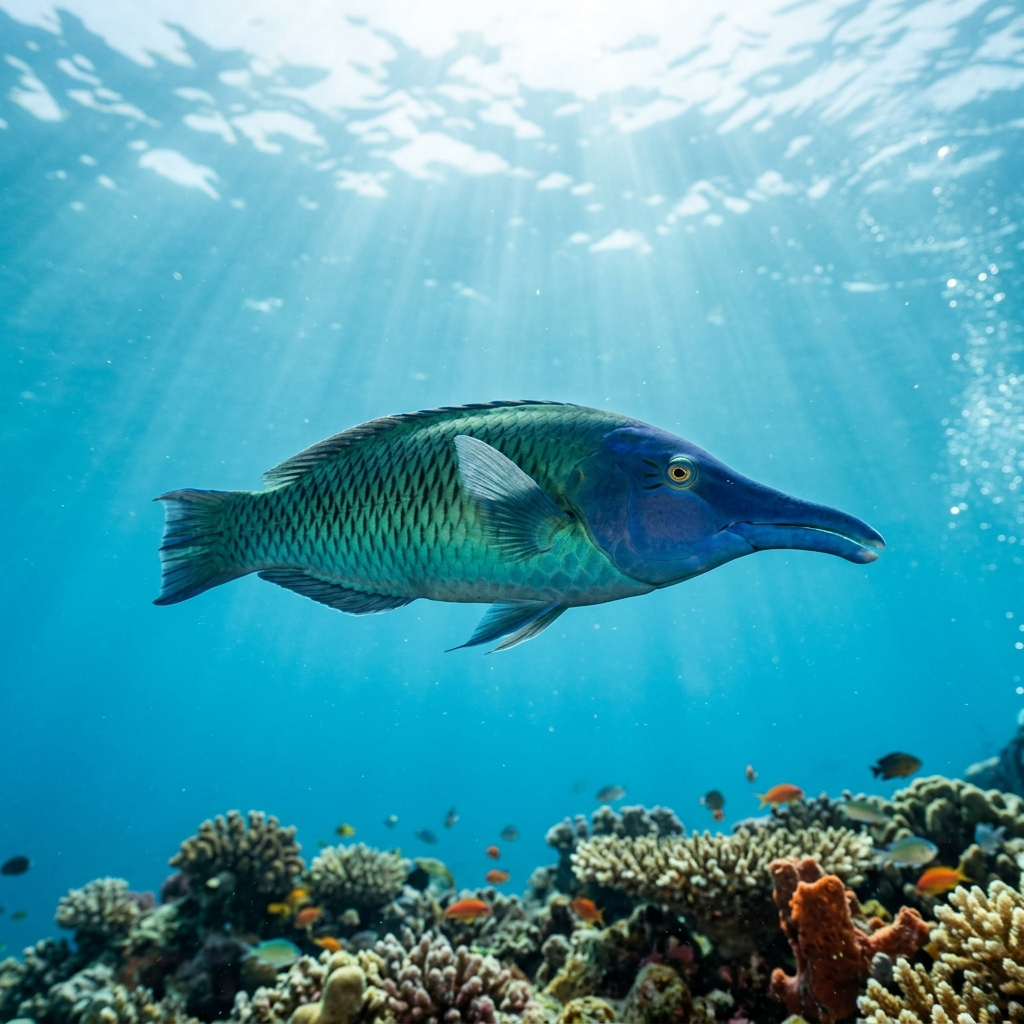
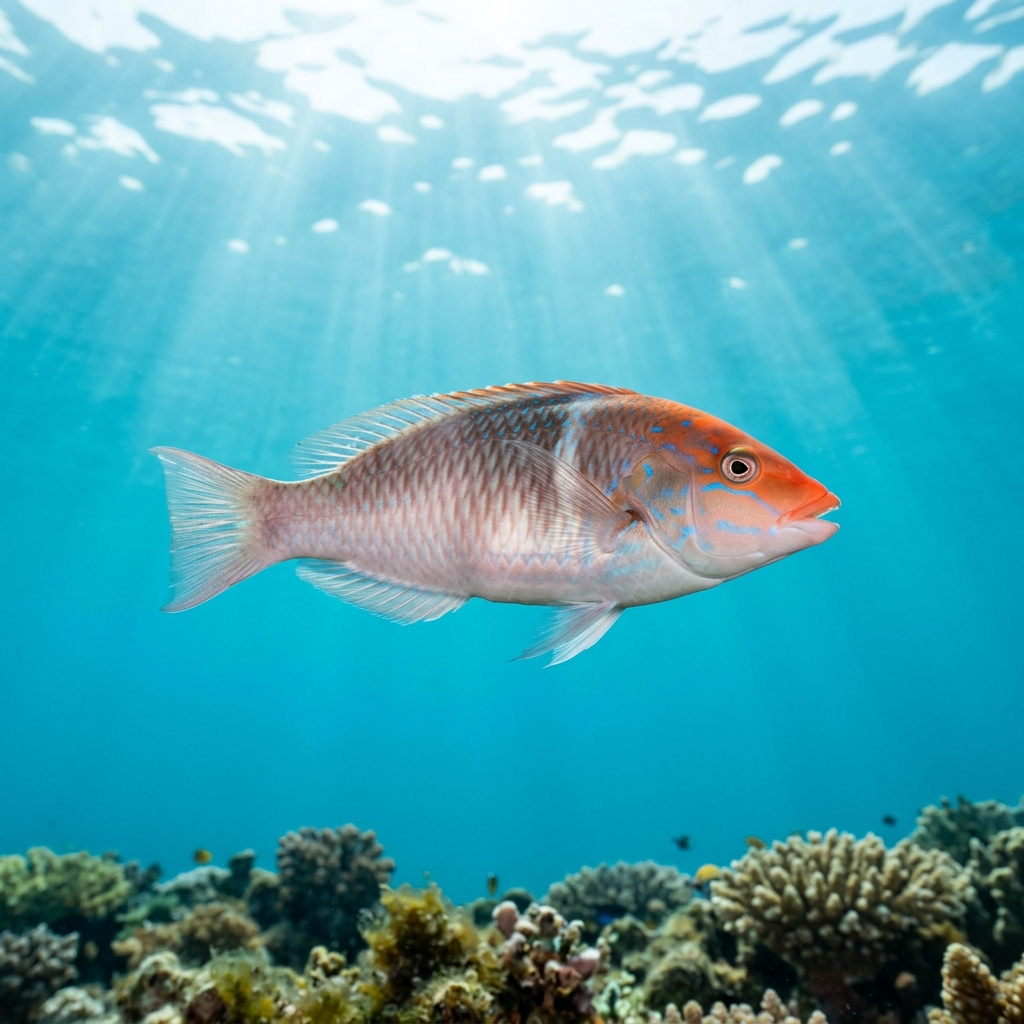
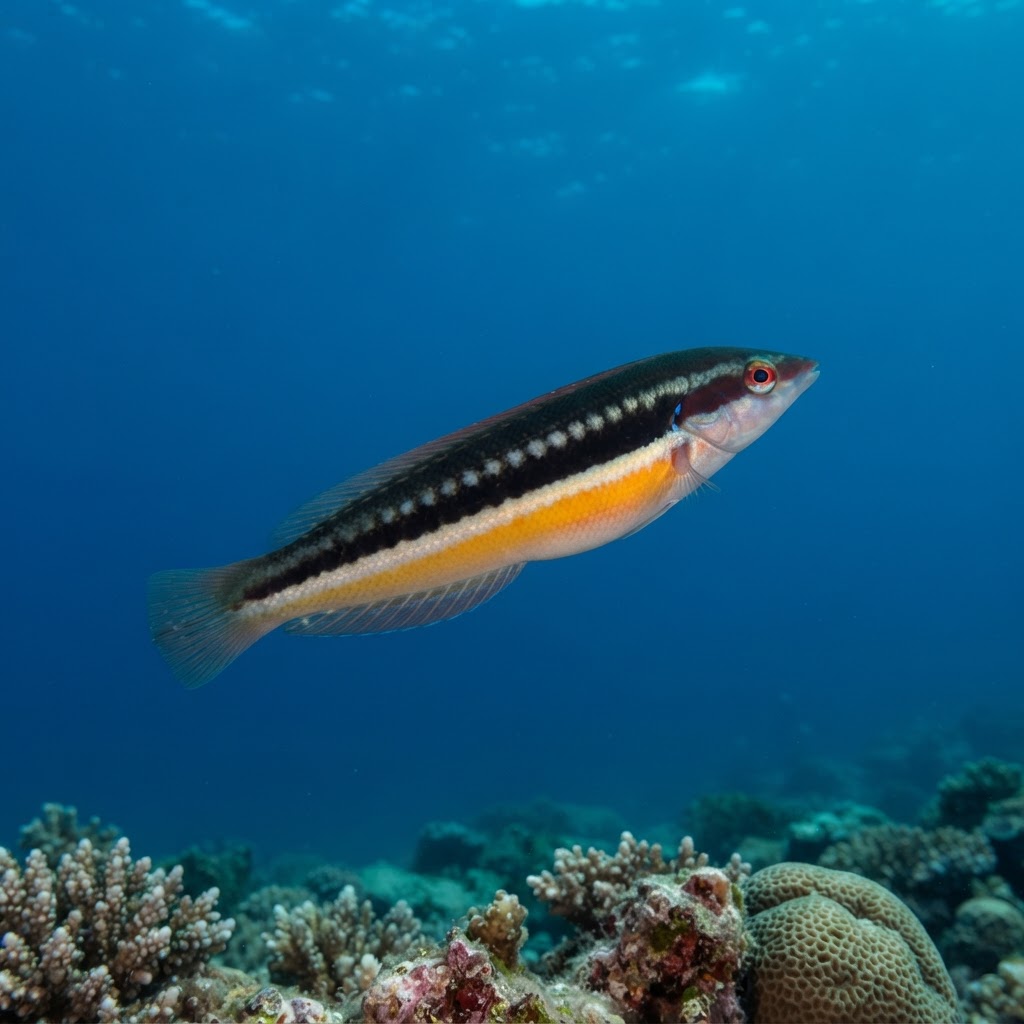
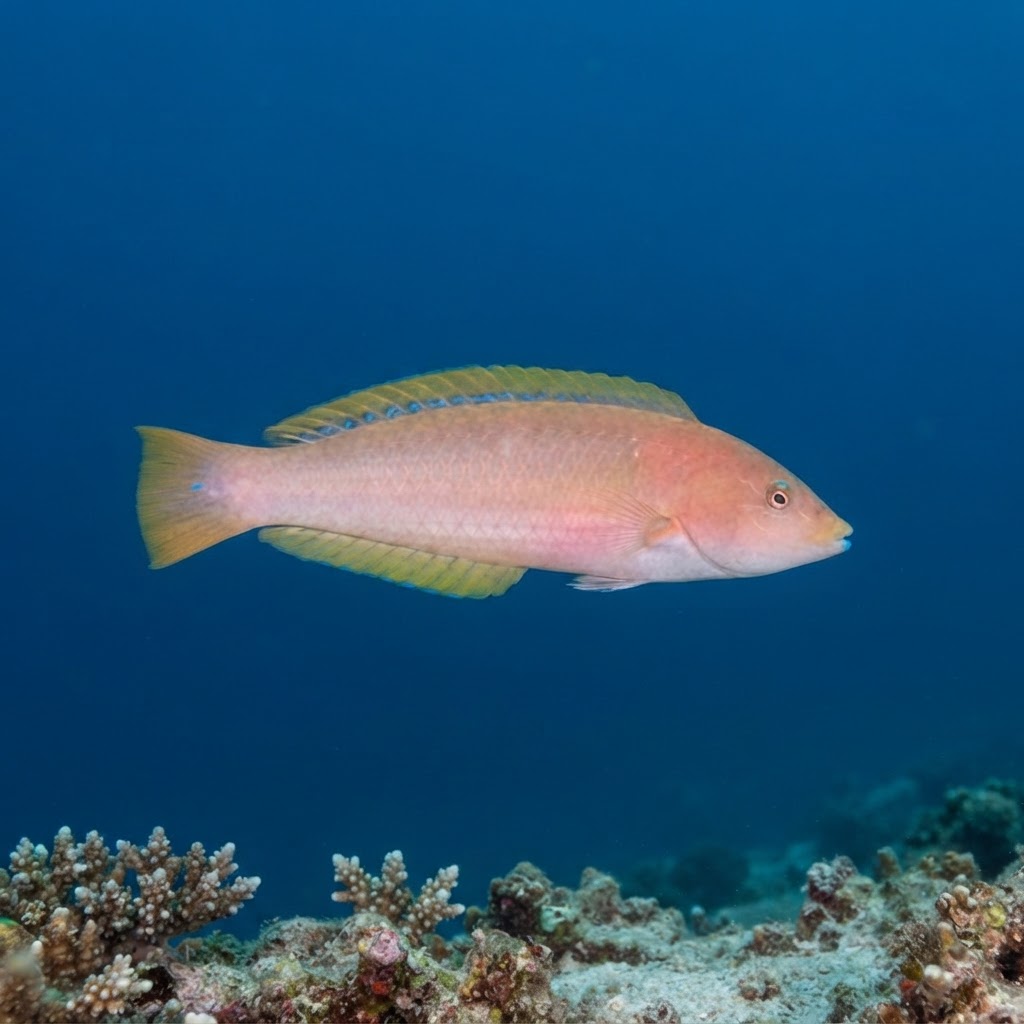
A slim, torpedo-shaped wrasse that tops out around 17 cm, small enough that it often gets overlooked against the reef. Colouring varies with individual and light, ranging through greens, yellows and browns, usually with a darker stripe or blotch running along the flank that gives the fish its common name. It swims in quick, darting bursts low over rock and rubble rather than cruising in open water, which is often the giveaway before the colour pattern is.
Divers typically find this wrasse picking around low reef structure and rubble patches, darting between crevices rather than holding still for a portrait. It tends to keep its distance from divers without bolting outright, more interested in foraging over rock and sand than in checking out bubbles. Most sightings come from shallower reef sections, consistent with a fish that spends its time close to structure rather than in open water.
Like many wrasses in the Halichoeres genus, this species is a protogynous hermaphrodite, meaning individuals can start life as female and later change sex to male as they grow, which helps explain the variation in colour and pattern divers notice between individuals.
There is no clear seasonal spike in the sightings data, so treat this as a year-round fish on the sites where it occurs. It has been recorded in water from about 20 to 29 C, a range that holds through most of the year across its Pacific coast range, so timing your trip around the destination's general dive season matters more than chasing a wrasse season.
Reef neighbours a diver could mistake it for. Use the identification notes above to tell them apart.
Most commonly logged along the Pacific Coast of Mexico and around the Galápagos Islands in Ecuador, with a solid presence in Guanacaste, Costa Rica and a smaller but real showing at Pucusana in Peru. Baja California and Cocos Island add further sightings, making this a fish tied firmly to the tropical eastern Pacific rather than the Caribbean or Indo-Pacific.
Mapping where Chameleon Wrasse is logged…
It is most reliably seen along the Pacific coast of Mexico and around the Galápagos Islands in Ecuador, with further sightings in Guanacaste, Costa Rica, and at Pucusana in Peru. It is tied to the tropical eastern Pacific rather than Caribbean or Indo-Pacific reefs.
There is no strong seasonal pattern in sightings, so it can be seen year-round wherever it occurs. It has been logged in water from about 20 to 29 C, a range that suits most of the year on its home reefs.
Look for a small, slender wrasse under about 17 cm, darting low over rock and rubble rather than swimming in open water. Its body colour shifts between greenish, yellow and brown tones with a darker stripe along the flank, which is the easiest fixed feature to key on.
They reach around 17 cm in length, making them one of the smaller reef wrasses divers encounter in the eastern Pacific.
Yes. Like several other Halichoeres wrasses, it is a protogynous hermaphrodite, so an individual can start out as female and later transition to male as it matures.
No. It poses no threat to divers and simply forages over the reef, keeping a modest distance from anyone nearby.
Site and sighting data is aggregated from diver logs, iNaturalist and GBIF. For taxonomy and conservation status:
Bird Wrasses
3,632 sites