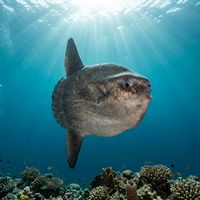
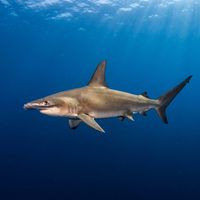
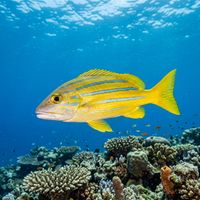
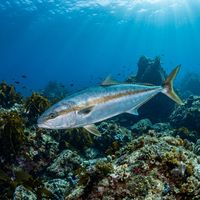
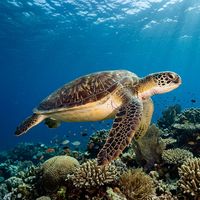
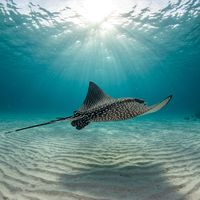
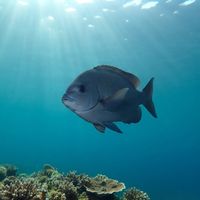
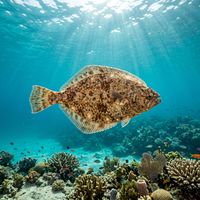
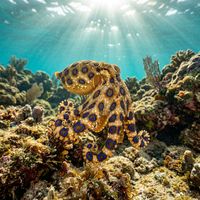
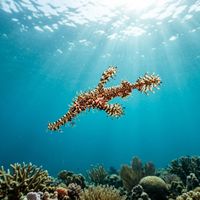
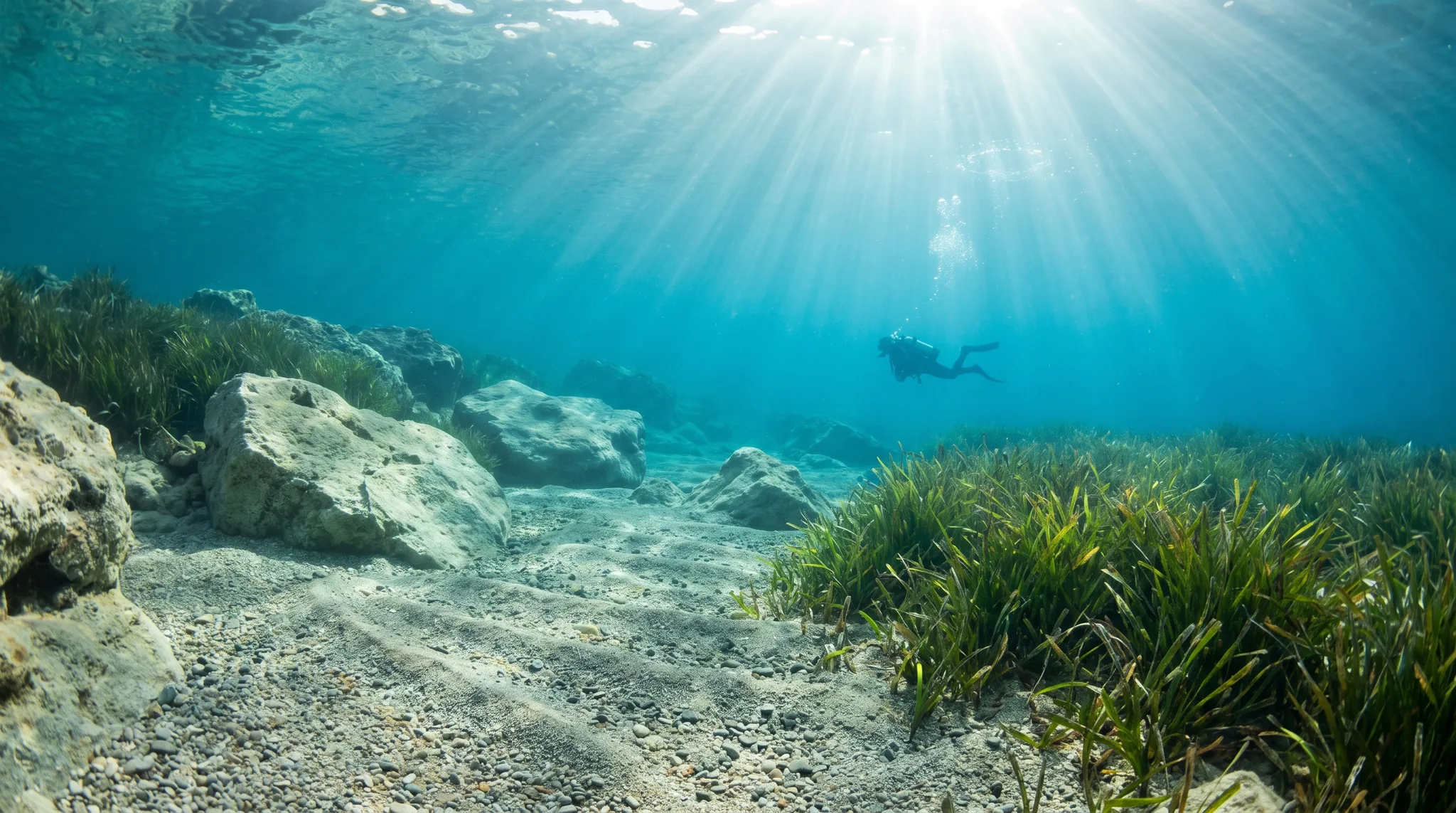
Minami-Izu is defined by strong currents and open-water reef diving, with the majority of sites demanding advanced skills and boat access. Drift diving dominates, from the exposed offshore pinnacle of Mikomoto Island to wall-and-drift combinations like Kadone. Intermediate divers have options at A Point and Toujima. The signature draw is pelagic: Ocean Sunfish and Scalloped Hammerhead are regularly sighted, alongside Kingfish, Bluestriped Snapper, Green Sea Turtle, and Spotted Eagle Ray. Snorkelling sites offer a calmer counterpoint to the dive roster.
Monthly water temperature across Minami-Izu's sites, from satellite sea-surface data corrected for depth. The band shows the site-to-site spread.
Water temperatures follow a clear seasonal curve, rising through summer to peak warmth in September before cooling steadily through winter to their coldest around February and March. The warmer months from July through November coincide with the best diving conditions and the highest likelihood of pelagic encounters. Winter diving is possible but conditions are more demanding, and the current-exposed sites require respect year-round.
9 operators
4 more sites to explore
Water temperature around Minami-Izu ranges from about 18°C in February to 27°C in September, based on satellite sea-temperature data for its dive sites.
In the warm season (about 27°C) a rash guard or 3mm shorty is comfortable in Minami-Izu; in the coldest months (about 18°C) step up to a 5mm suit.
Fin maps 13 sites in Minami-Izu (9 scuba diving sites and 4 snorkelling spots).
Across Minami-Izu's dive sites, July, August, September and October are most often reported as the best months to visit.
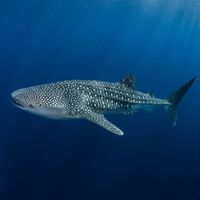
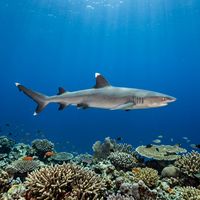
Ocean Sunfish and Scalloped Hammerhead are the signature species, both observation-backed and regularly reported across multiple sites. Kingfish and Bluestriped Snapper are common throughout the area. Divers have also recorded Whale Shark, Spotted Eagle Ray, Green Sea Turtle, and Whitetip Reef Shark, though these appear at fewer sites.
The majority of dive sites in Minami-Izu are rated advanced, owing to strong and often relentless currents at sites like Mikomoto Island, Kamene, and Budaine. Intermediate divers are catered for at A Point and Toujima, both reef sites with moderate rather than extreme conditions. Beginners are better suited to the snorkelling options in the area.
Every dive site in Minami-Izu requires boat access. Several sites, including Mitsune, have hazardous shore breaks that make shore entry unsafe. Multiple dive operators are based in the area, including Mikomoto Hammers, Mikomoto Divers, Aqua Mate Diving Club, and Marine Soft Shimoda, all of whom run boat trips to the offshore sites.
Drift diving is the dominant style in Minami-Izu, with most sites defined by significant current flow rather than calm reef exploration. Kadone adds a vertical wall to its drift profile. Mikomoto Island combines drift and reef diving in an exposed offshore setting. A Point and Toujima are the more straightforward reef dives for those less comfortable in strong currents.