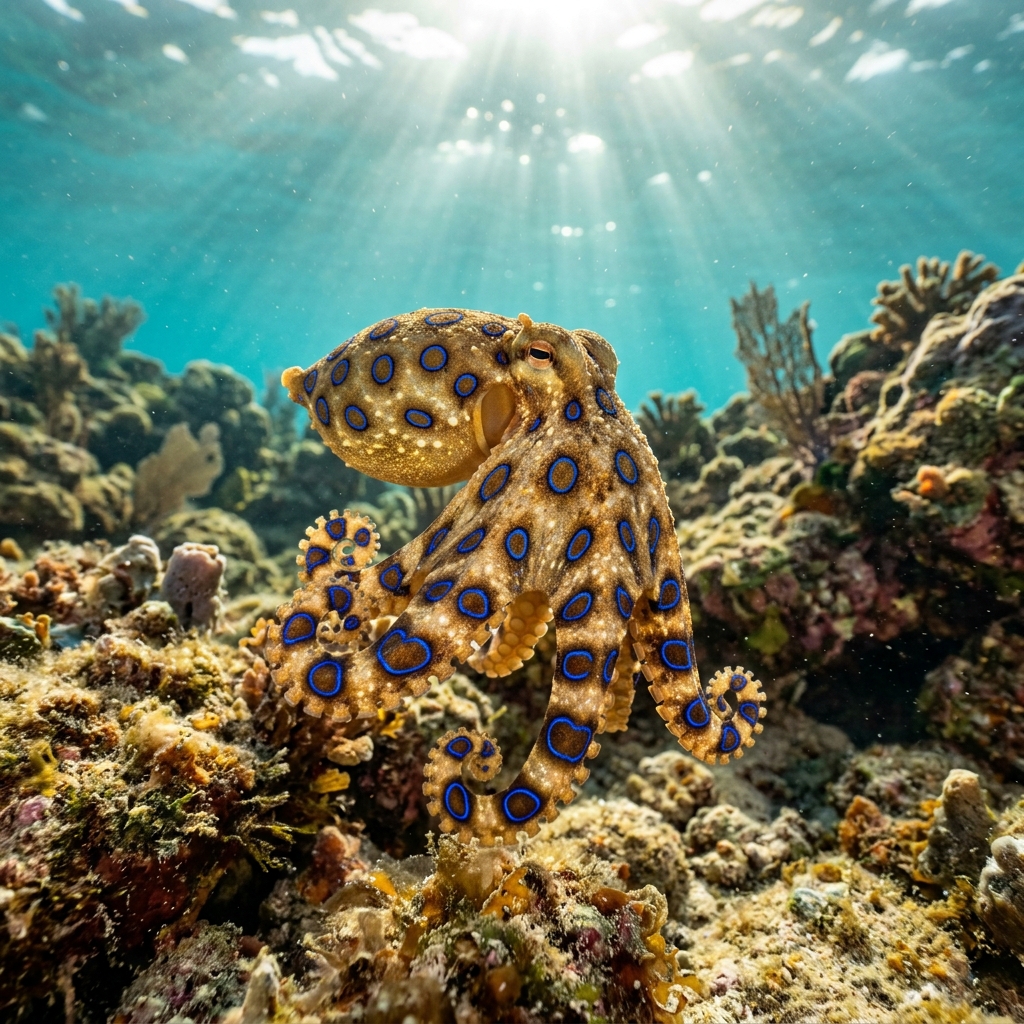
Hapalochlaena spp.
Small but unmistakable: find blue-ringed octopuses across the Philippines, Indonesia and Japan. Tips on ID, rarity, and where to look.
Safety warning
This animal carries a powerful venom delivered by a bite or a harpoon-like sting, and it can be fatal. Never handle it or pick up its shell, even one that looks empty.
If you're bitten
Venomous biteGeneral first-aid guidance, not a substitute for professional medical care. In an emergency, call your local emergency number.
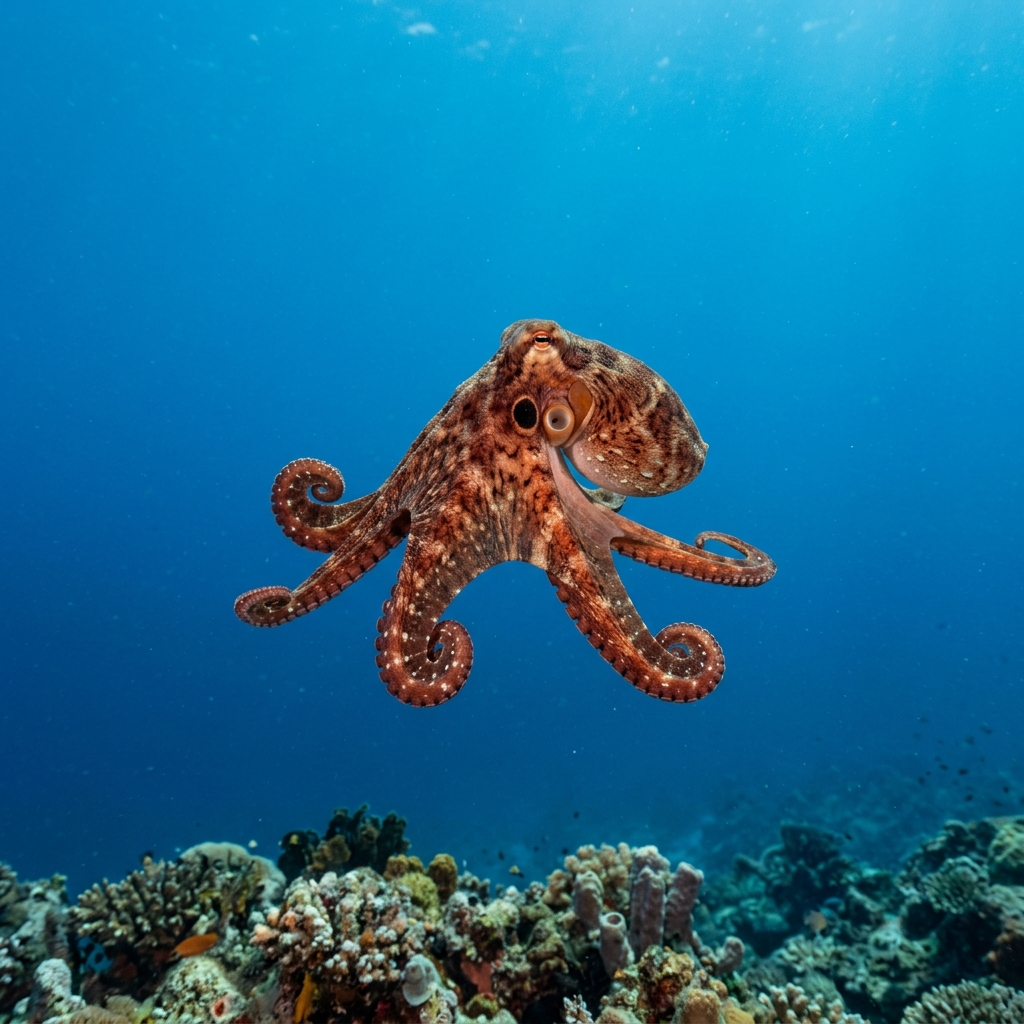
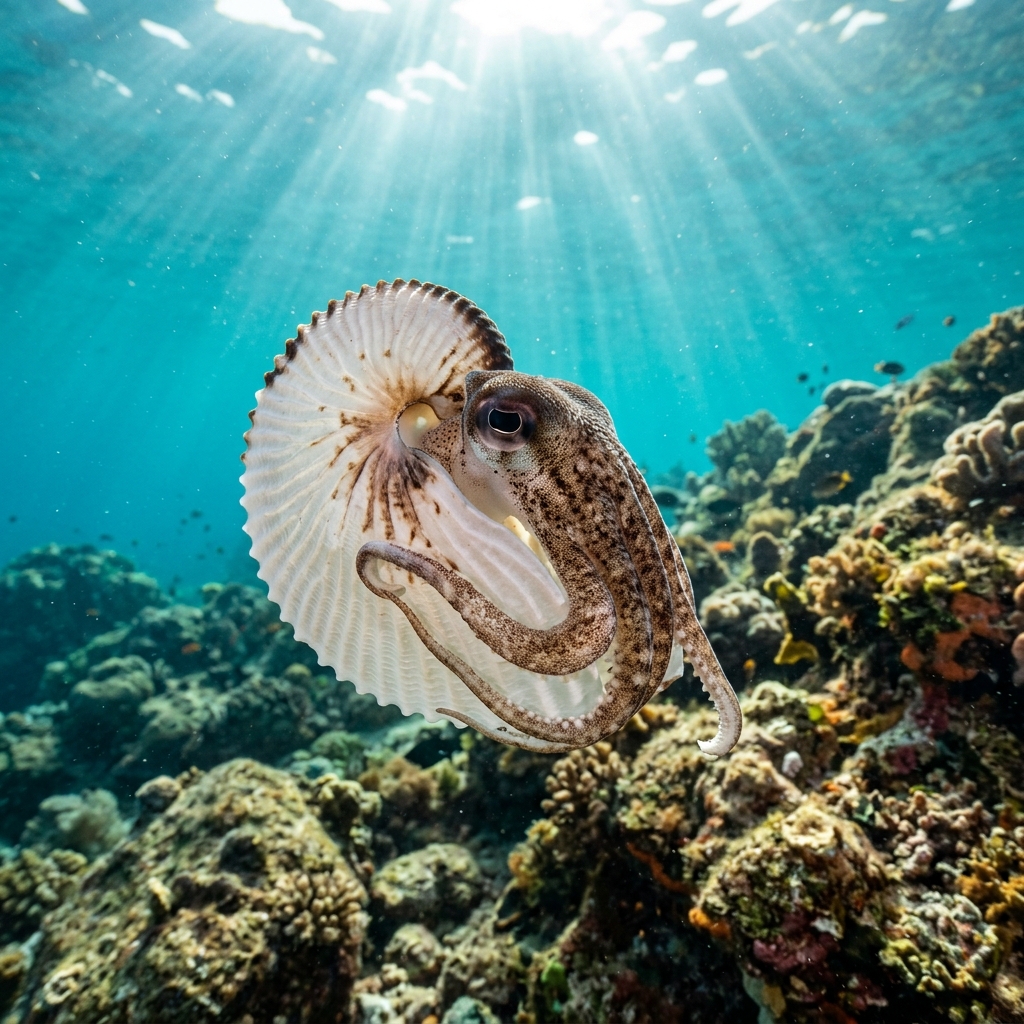
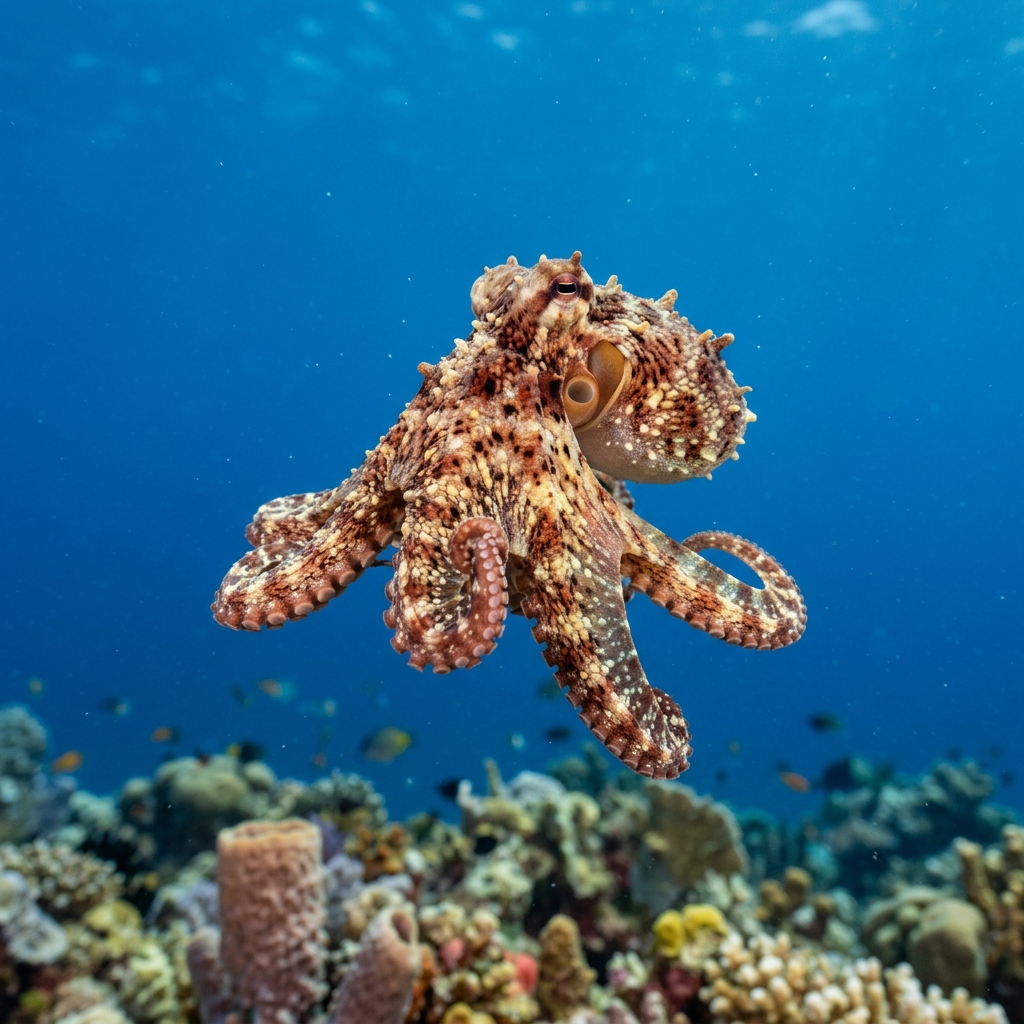
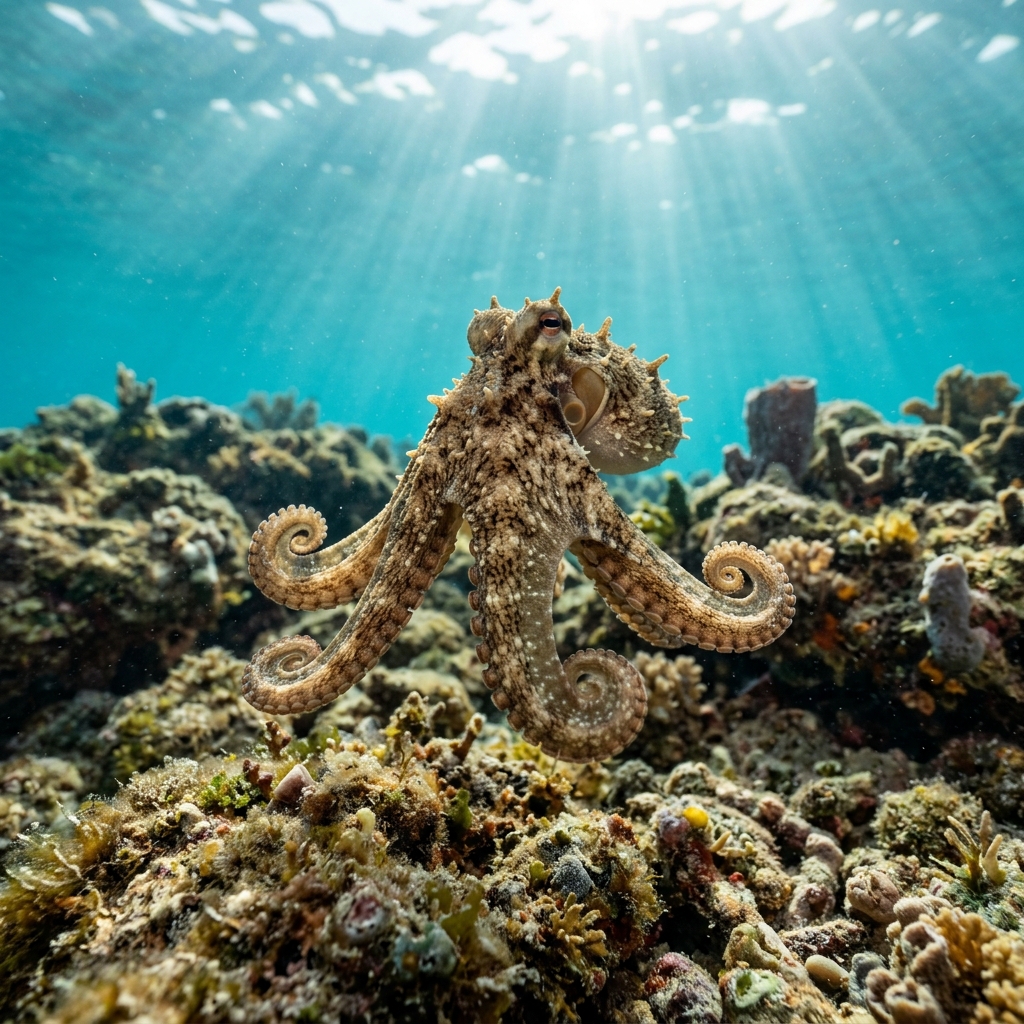
Small enough to sit in your palm, blue-ringed octopuses carry the one mark that makes them impossible to confuse: vivid, iridescent blue rings or lines that flash across a pale yellow-brown or grey body when the animal feels threatened. At rest the rings can be quite muted, so look carefully at any small octopus you spot on sandy or rubble substrate. The rings pulse and brighten as a warning display, which is when most divers get their best look. Several species fall under this genus and differ subtly in ring pattern, but the electric-blue iridescence is consistent across all of them.
Most sightings happen in shallow reef areas, rubble patches, or sandy bottoms where the octopus tucks itself into crevices, shells, or debris. When a diver approaches, it typically holds still or retreats slowly, flashing its blue rings as a warning rather than fleeing outright. Dawn and dusk dives may increase your chances, as blue-ringed octopuses are often more active in lower light.
Despite being among the smallest octopuses on the reef, members of this genus carry tetrodotoxin in their saliva, one of the most potent natural neurotoxins known, produced not by the octopus itself but by symbiotic bacteria. The rings are a direct advertisement of that toxicity.
Sighting data from the Southern Hemisphere concentrates in the warmer months of December to April. Across the broader tropical range, where water temperatures sit in the mid-to-upper 20s Celsius year-round, encounters are possible at any time of year, though always infrequent.
Blue-ringed octopuses are most commonly logged in the Philippines, particularly across the Visayas regions and Palawan, and in Indonesia, especially Sulawesi and the Maluku and Papua areas. Japan's Izu Peninsula and Hachijojima are a strong sighting area, as are East Sabah and Sipadan in Malaysia. Australia rounds out the core range, and scattered records extend to Papua New Guinea, Brunei, and the Solomon Islands.
Mapping where Blue-ringed Octopus is logged…
The Philippines hold the greatest number of logged sites, especially throughout the Visayas and Palawan. Indonesia, Japan's Izu Peninsula, Malaysia's East Sabah, and Australia all have strong populations. Papua New Guinea, Brunei, and the Solomon Islands have sightings too, though they are less frequent.
In the Southern Hemisphere, sightings cluster between December and April. Across the tropical Philippines, Indonesia, and Malaysia, water temperatures support the genus year-round, though encounters are rare at any time. Your best odds come from slow, careful searches of rubble and sandy shallows.
Unprovoked bites are extremely rare, but these animals carry a potent neurotoxin and should never be touched or handled. The blue rings are a warning, so if you see them flashing, give the animal space. A bite can cause paralysis with little or no initial pain, making it especially hazardous.
Look for a small, pale-bodied octopus with vivid iridescent blue rings or lines that flash when it is disturbed. At rest the rings can fade considerably. No other octopus in the Indo-Pacific shares that electric-blue iridescent ring pattern, making identification straightforward once the display is active.
Most species in this genus are very small, with a body roughly the size of a golf ball and a total arm span that fits comfortably in a human hand. Their small size is one reason they are so easy to overlook on the reef.
The flashing rings are a warning display, signalling that the animal carries tetrodotoxin in its saliva. This toxin is produced by symbiotic bacteria living in the octopus's salivary glands, not by the octopus itself. The iridescent blue colour comes from structural coloration in specialised skin cells called iridophores.
Site and sighting data is aggregated from diver logs, iNaturalist and GBIF. For taxonomy and conservation status:
Brazilian Reef Octopus
1,142 sites