Pleuronectidae spp.
Spot plaice in cold North Atlantic and Pacific waters from Zeeland to Nova Scotia. Present year-round in temps as low as 3.7°C. Here's where divers find them.
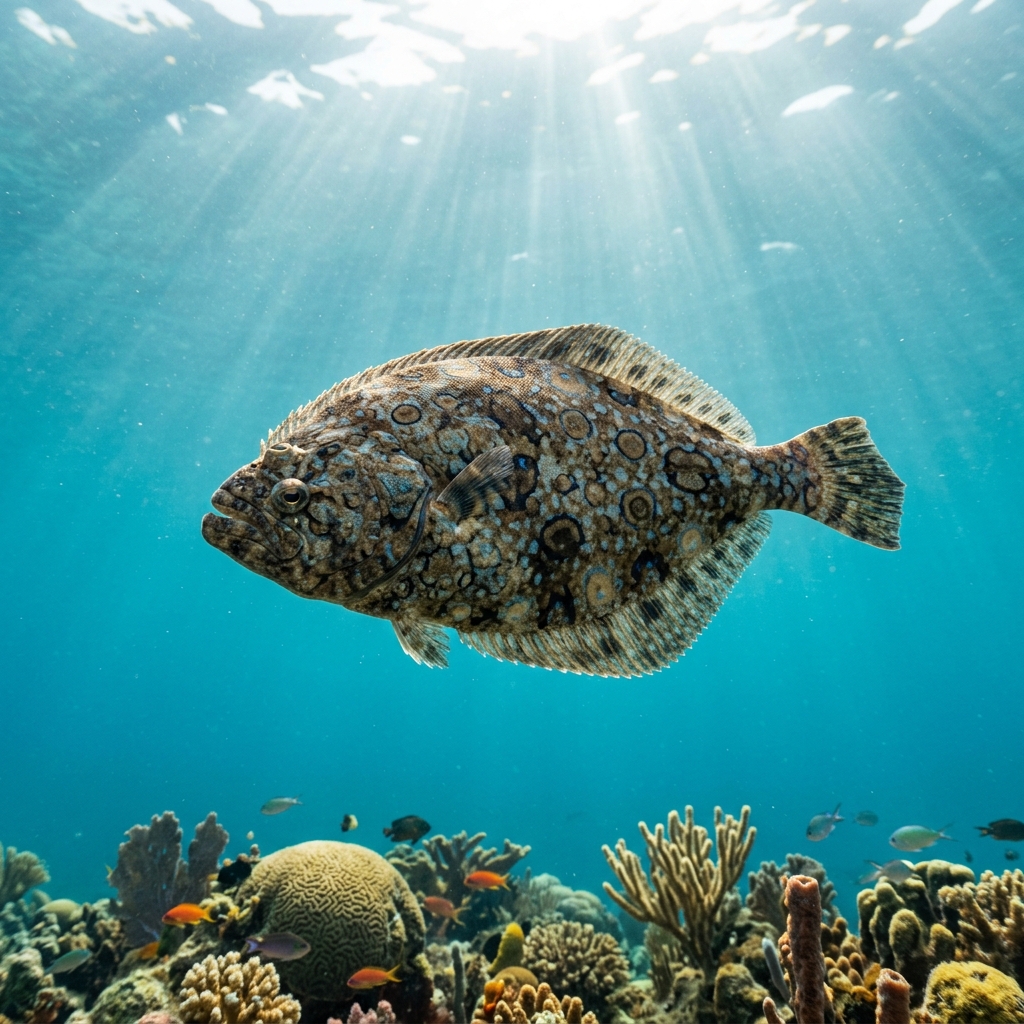
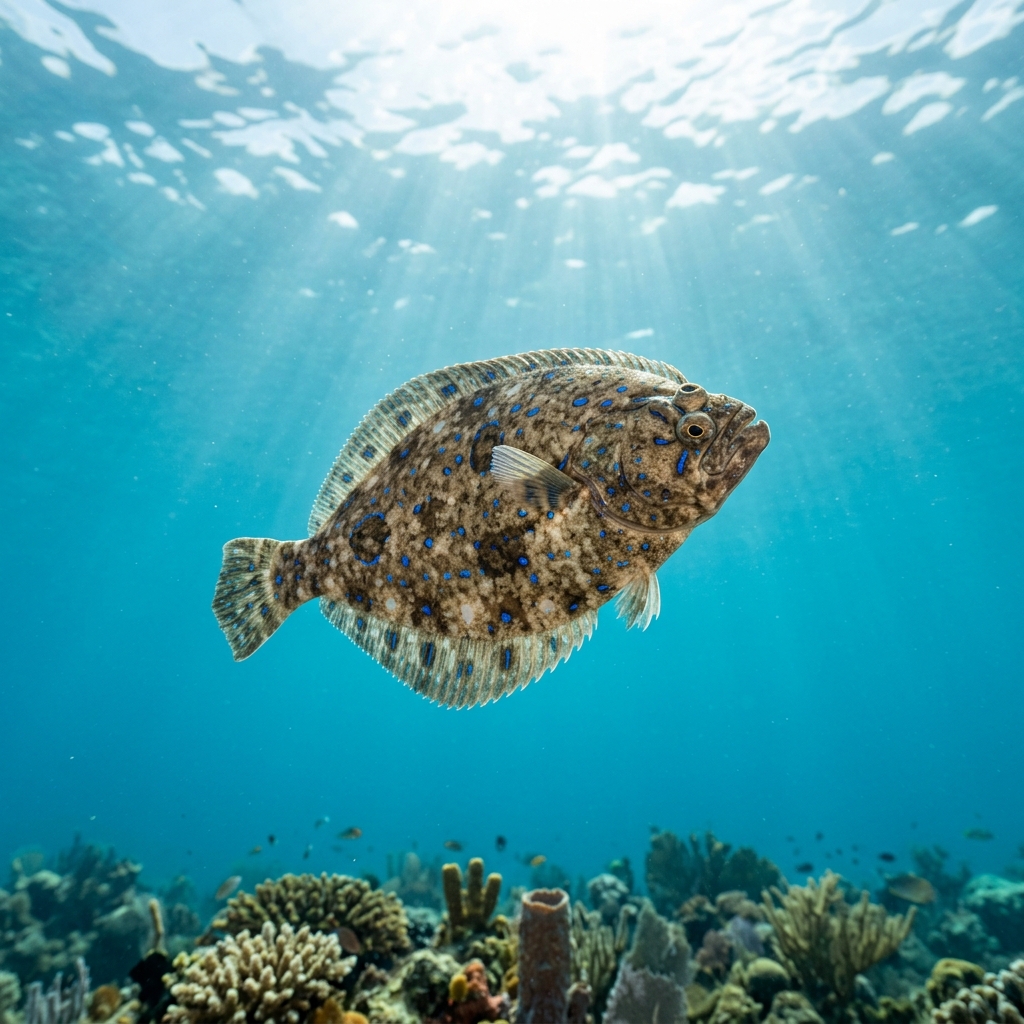
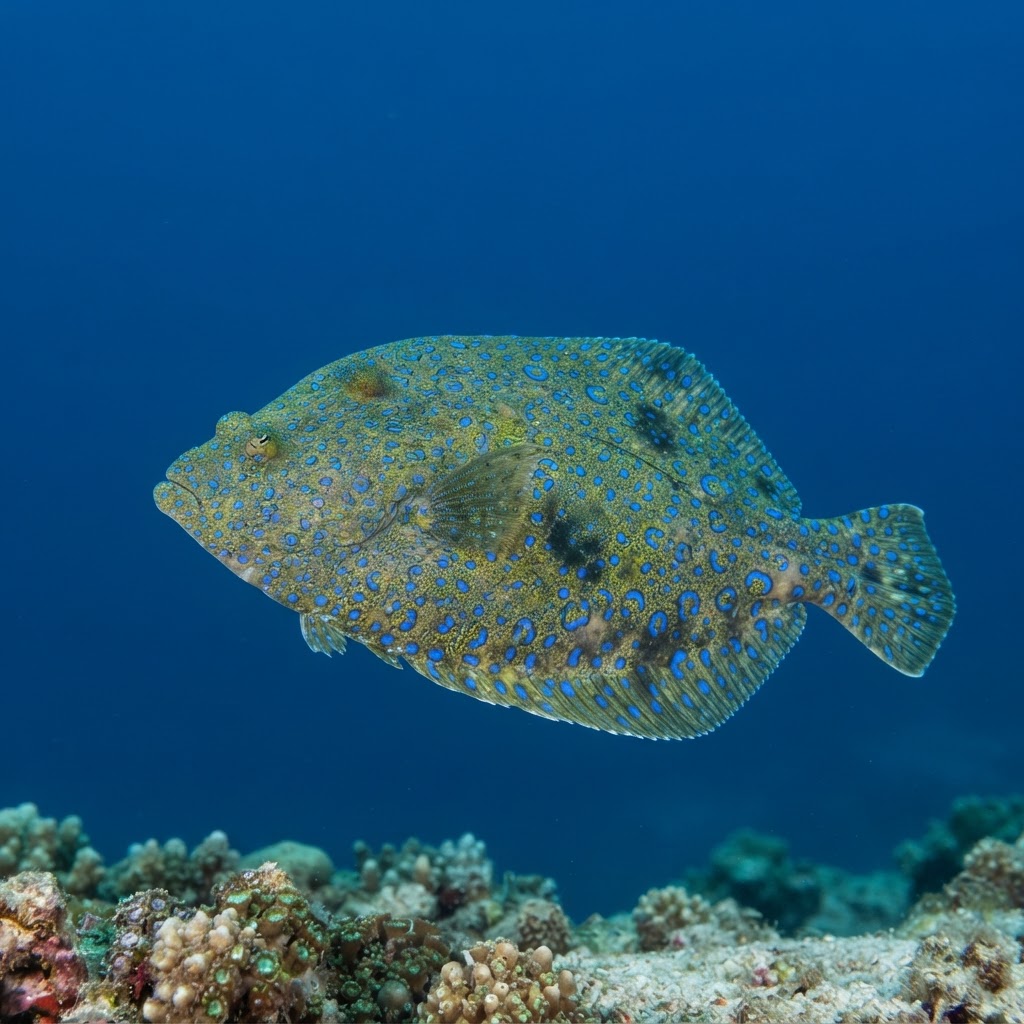
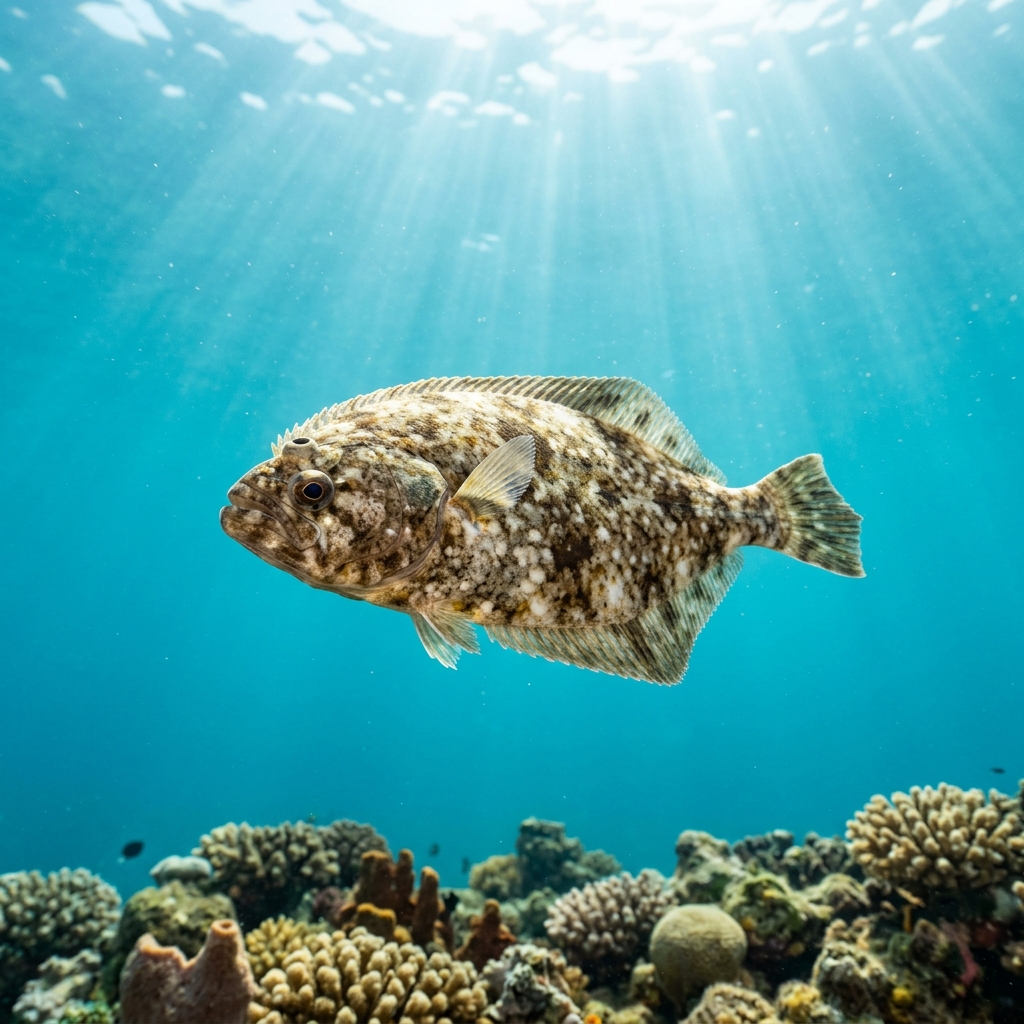
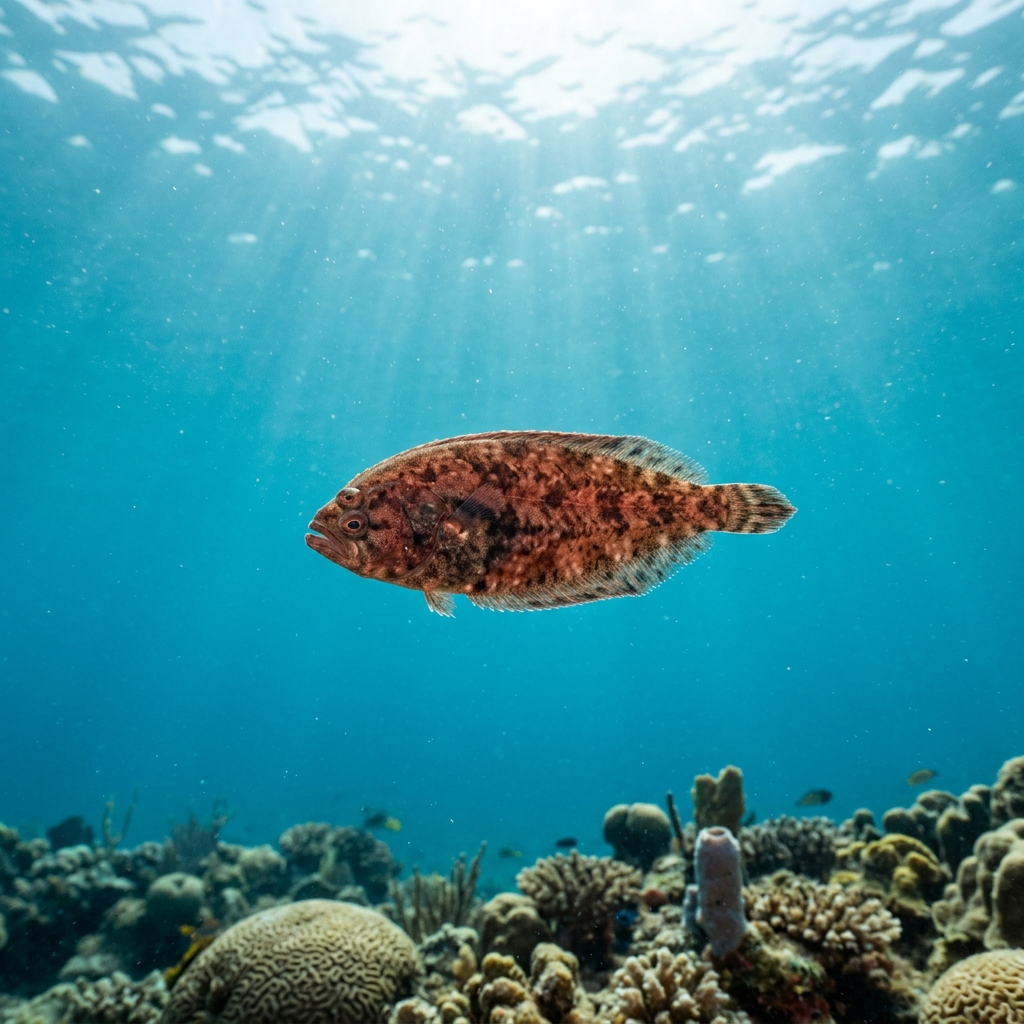
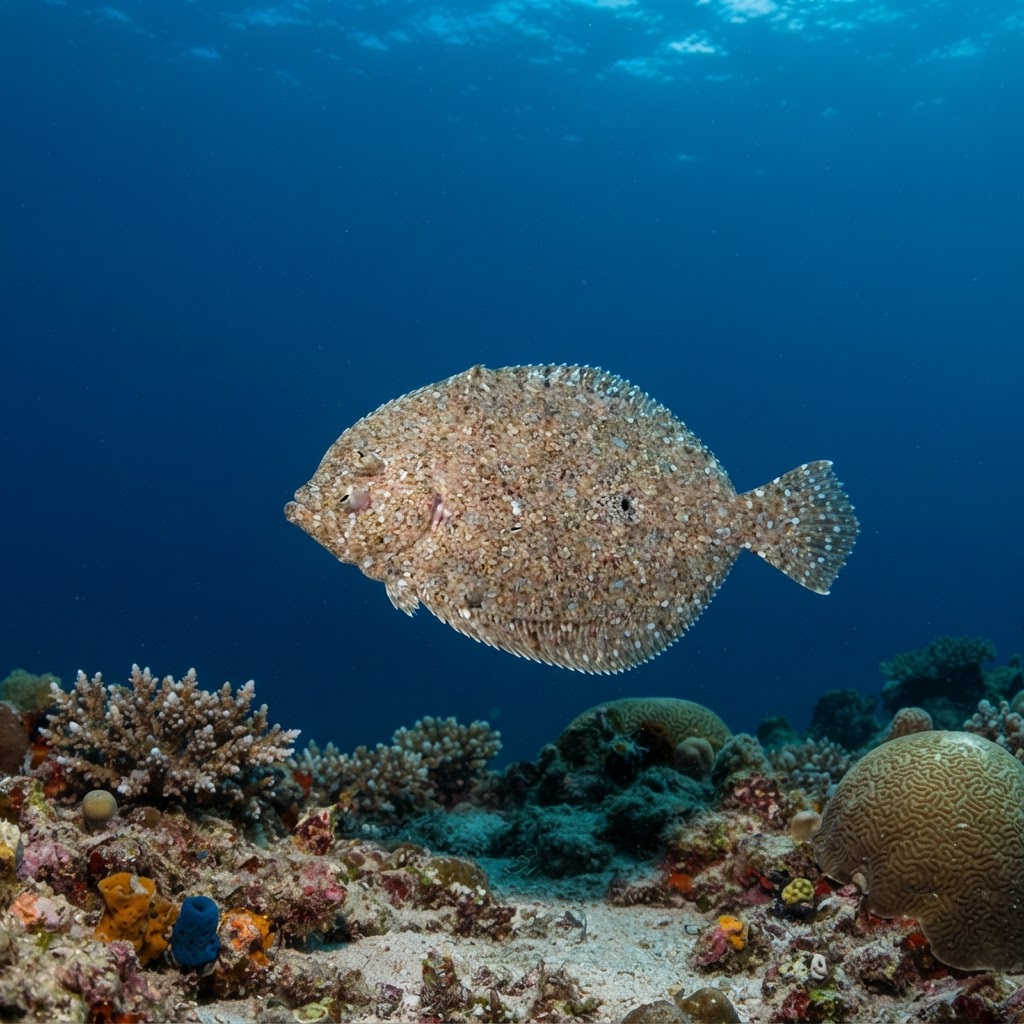
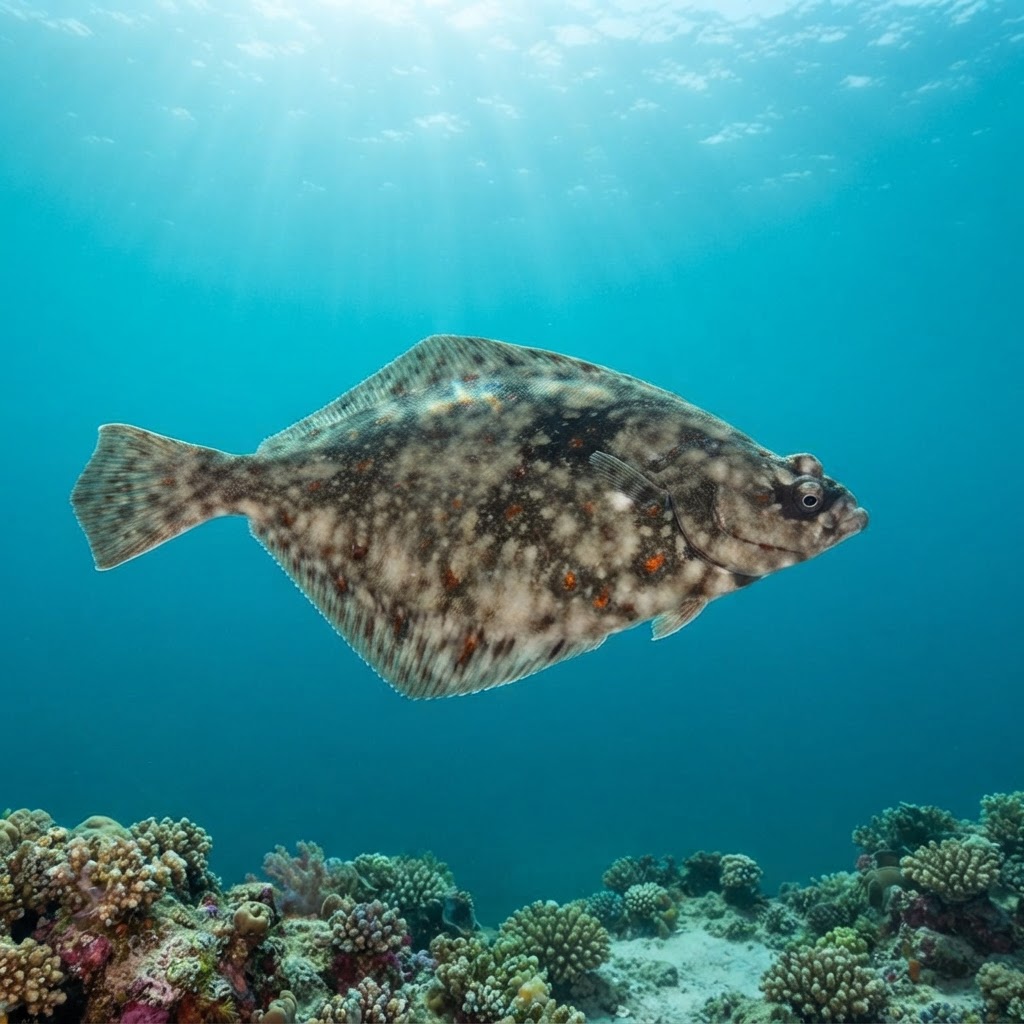
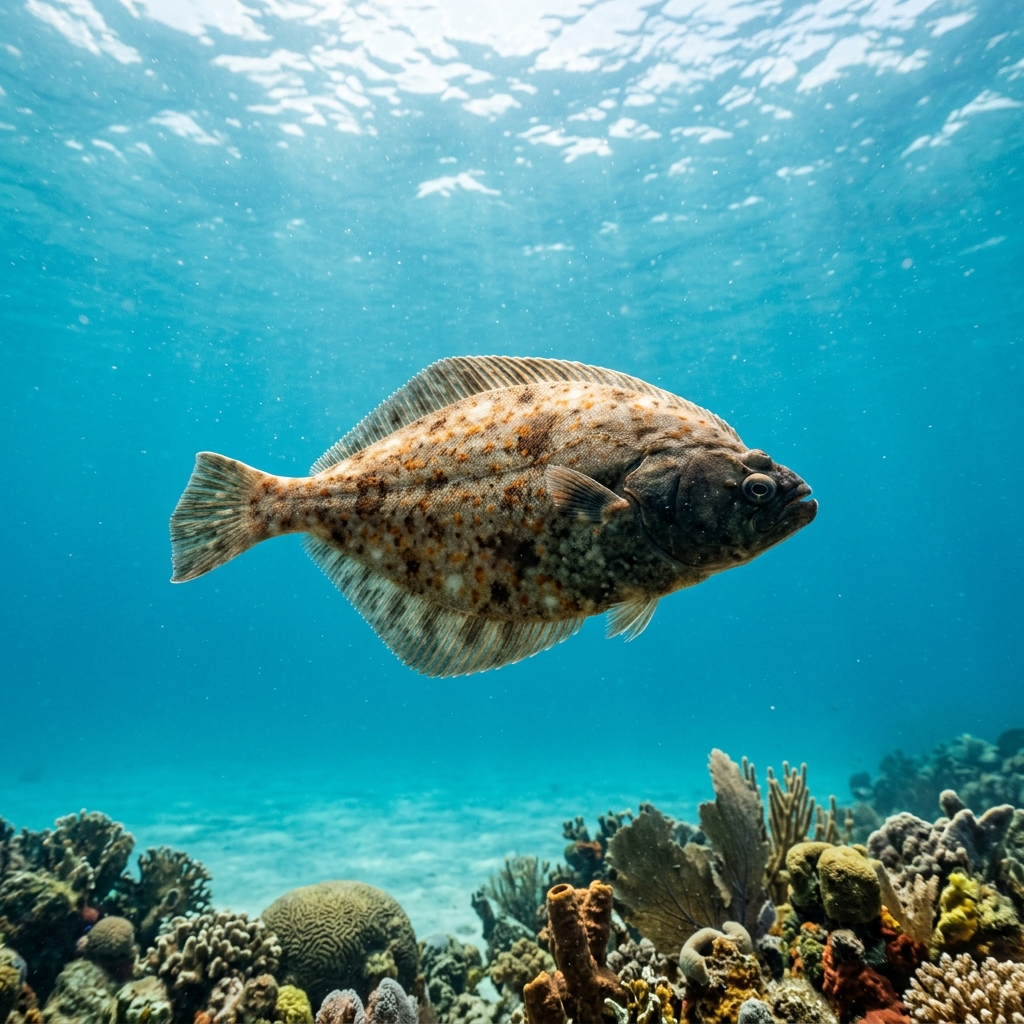
Pleuronectids are oval, strongly compressed fish that lie flat on the seabed with both eyes migrated to one side of the head. Colouration on the upper (eyed) side varies by species from sandy brown to grey-green, often with orange, red, or pale spots that break up the outline against a sandy or gravelly bottom. The underside is typically white and rarely visible unless the fish lifts slightly off the substrate. The most reliable underwater cue is that telltale asymmetric face: both eyes sitting on the same side, watching you as the fish holds perfectly still.
Most encounters happen on open sand, shell-gravel, or muddy bottoms where a flatfish sits perfectly still, relying on camouflage (the ability to match substrate colour and texture) rather than flight. When a diver approaches slowly, pleuronectids usually hold their position and are easy to observe at close range; approach too fast and they'll kick up a cloud of silt and relocate a short distance away. They are generally solitary bottom-dwellers and can turn up at any time of day.
Flatfish start life as conventionally shaped larvae with one eye on each side; as they mature, one eye migrates across the top of the skull so both eyes end up on the same side. This transformation, called metamorphosis, also sees the fish begin living and swimming on its side permanently.
Sightings are recorded year-round with no concentrated season, which fits the family's tolerance for cold water down to roughly 4°C. Divers in temperate Atlantic and Pacific regions can look for them on any dive, though calm, low-surge conditions give the best chance of spotting a motionless fish before it flushes.
Reef neighbours a diver could mistake it for. Use the identification notes above to tell them apart.
Plaice family members are most commonly logged in Canada, the United States, the United Kingdom, the Netherlands, and France, reflecting the group's preference for cold temperate seas. Top regional hotspots include Zeeland in the Netherlands, the Pacific Coast of the United States, Nova Scotia and the Bay of Fundy in Canada, and Brittany and Normandy in France. Northern Germany, Denmark, and Norway round out the strong European showing.
Mapping where Righteye Flounder is logged…
Pleuronectid flatfish are found across a wide stretch of cold-temperate waters. Strong sighting regions include Zeeland in the Netherlands, Nova Scotia and the Bay of Fundy in Canada, the Pacific Coast of the United States, and Brittany and Normandy in France. The UK, Norway, Denmark, and Germany are also reliable areas.
Sightings are reported throughout the year with no single peak season, which reflects the family's ability to thrive in water as cold as 3 or 4°C. In practice, any dive on a sandy or gravelly bottom in the right temperate region gives you a fair chance.
Look for an oval, flat fish lying motionless on a sandy or gravelly bottom with both eyes on the same upward-facing side of the head. The upper surface is typically brown or grey-green, often with orange or pale spots. The white underside is almost never seen unless the fish moves.
Size varies across the family, but most species a diver encounters range from about 20 cm up to 60 cm or more across the disc, depending on age and species. Large adults can look surprisingly substantial when they suddenly lift off the seabed.
Flatfish hatch with normal bilateral symmetry, one eye on each side. As the larvae develop, one eye physically migrates across the skull so both end up facing upward on the same side. This adaptation lets the fish lie flat on the seabed and watch for predators and prey without exposing itself.
Site and sighting data is aggregated from diver logs, iNaturalist and GBIF. For taxonomy and conservation status:
Bothus podas
Leopard Flounder
165 sites