Seriola lalandi
Spot kingfish on reefs in Spain, Australia and New Zealand. Peak sightings Jul, Nov in the Northern Hemisphere. Learn what to look for underwater.
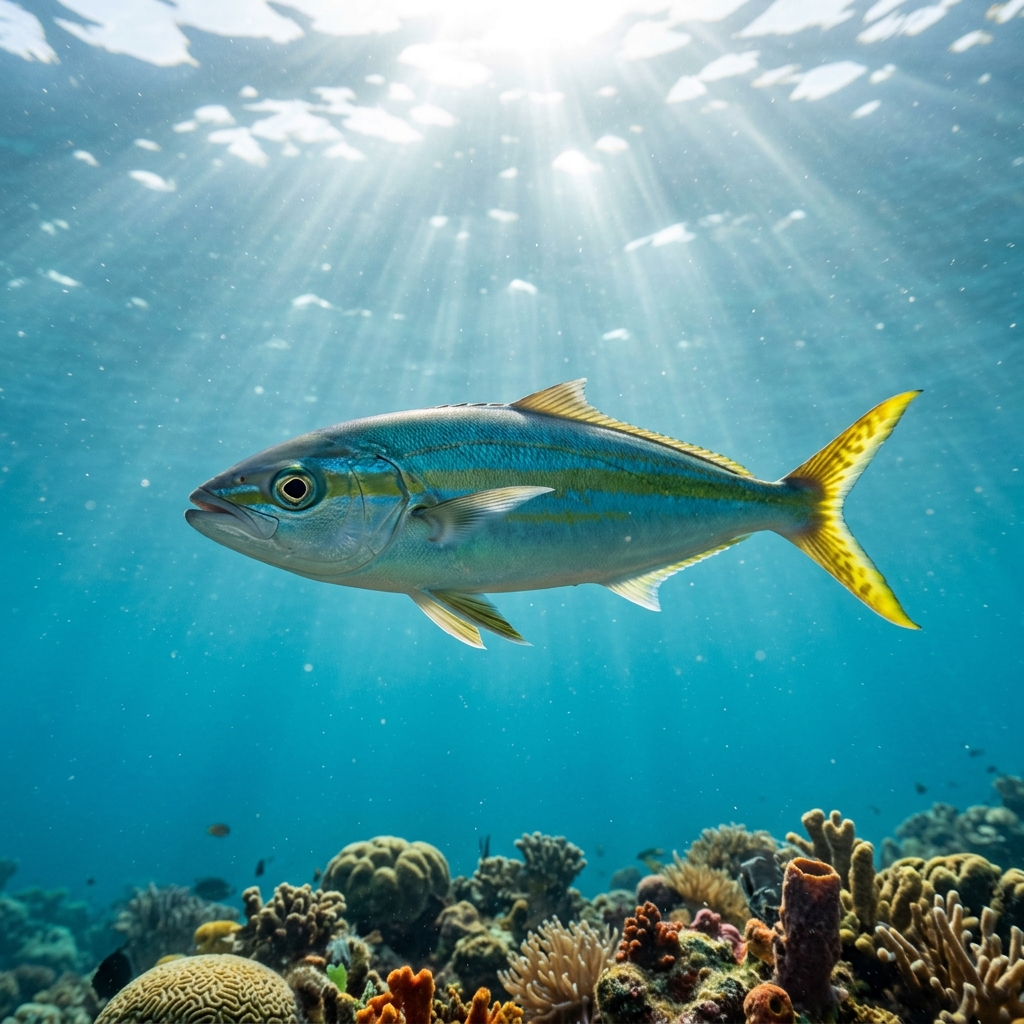
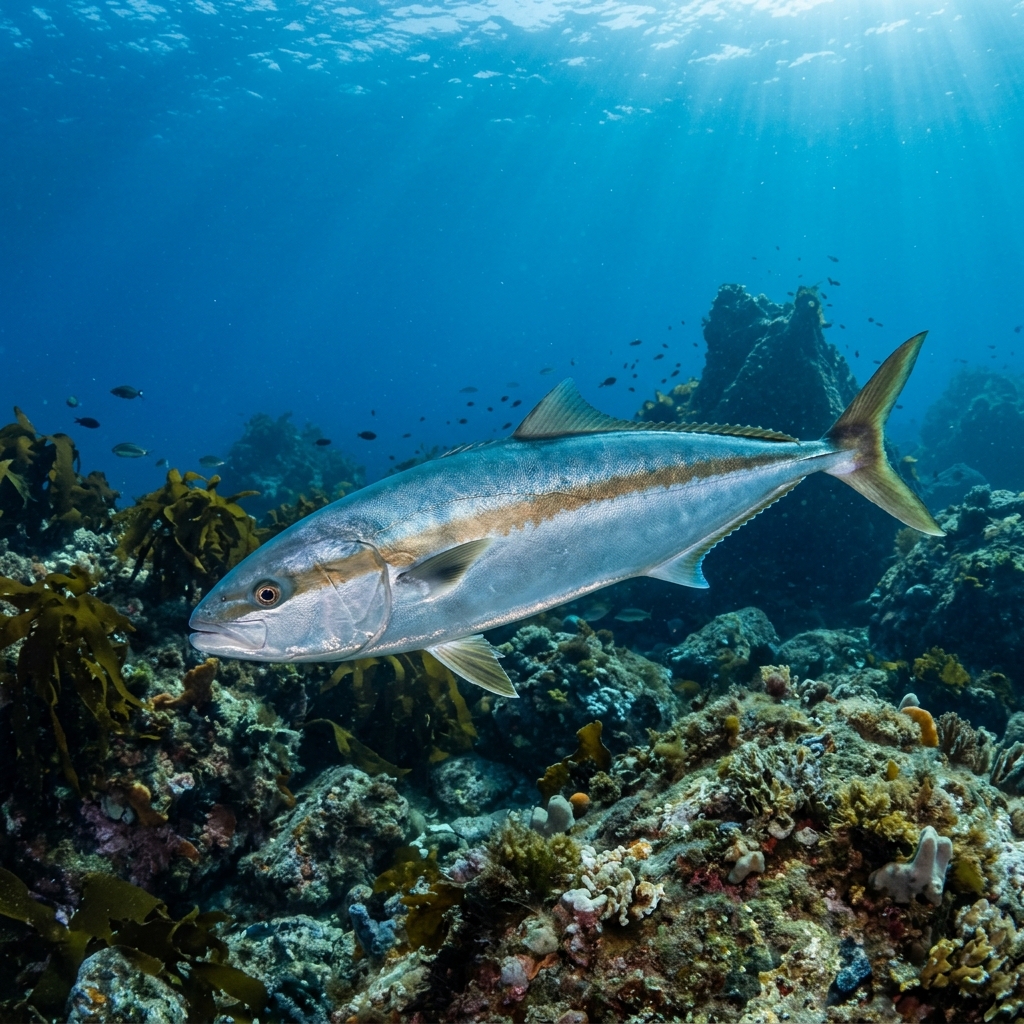
A large, fast-moving fish that immediately reads as 'big jack' underwater, reaching close to 175 cm and built like a torpedo. The body is silvery-blue on the back fading to white on the belly, with a pale yellow lateral stripe running from eye to tail, and that distinctively yellow caudal (tail) fin clinches the ID. The profile is slender compared to many other jacks, with a pointed snout and forked tail that give it a purposeful, speed-built silhouette. In the water, size alone is often the first clue, as smaller jacks look noticeably chunkier.
Kingfish tend to patrol reefs and rocky outcrops with an unhurried confidence, often cruising in small loose groups rather than tight schools. They are notably curious and will close the distance on divers, especially if there is any disturbance or activity suggesting food. Dawn and dusk are the most productive times to watch them, when they shift into active hunting mode and you may catch them cutting off prey fish against the reef.
Kingfish are benthopelagic (living and hunting across both the water column and near the bottom), which means a single dive can see them sweep from open-water ambushes down to working the seabed, giving divers a wider window of encounter than a purely reef-bound species.
In Northern Hemisphere locations such as Spain, Croatia, and Greece, sightings concentrate between July and November. In Southern Hemisphere sites including New South Wales and New Zealand, the season runs February through June.
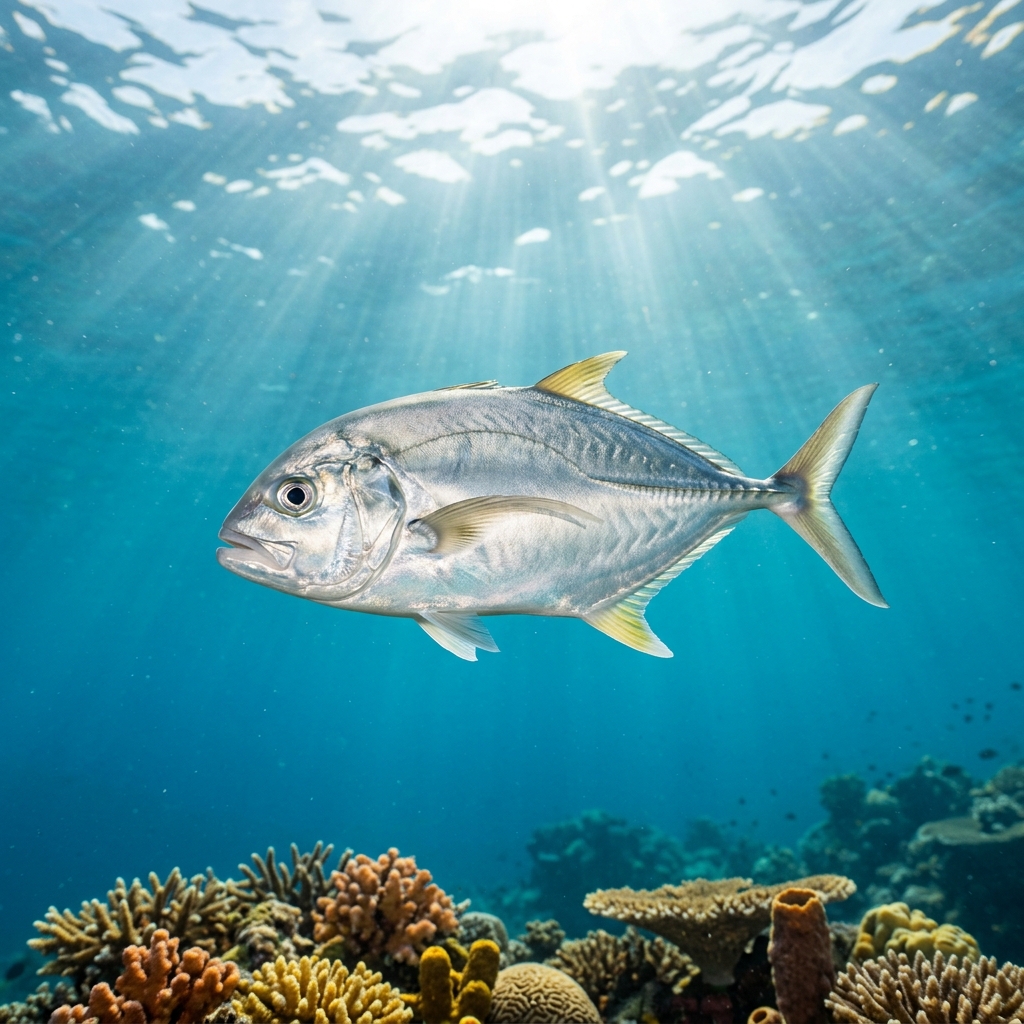
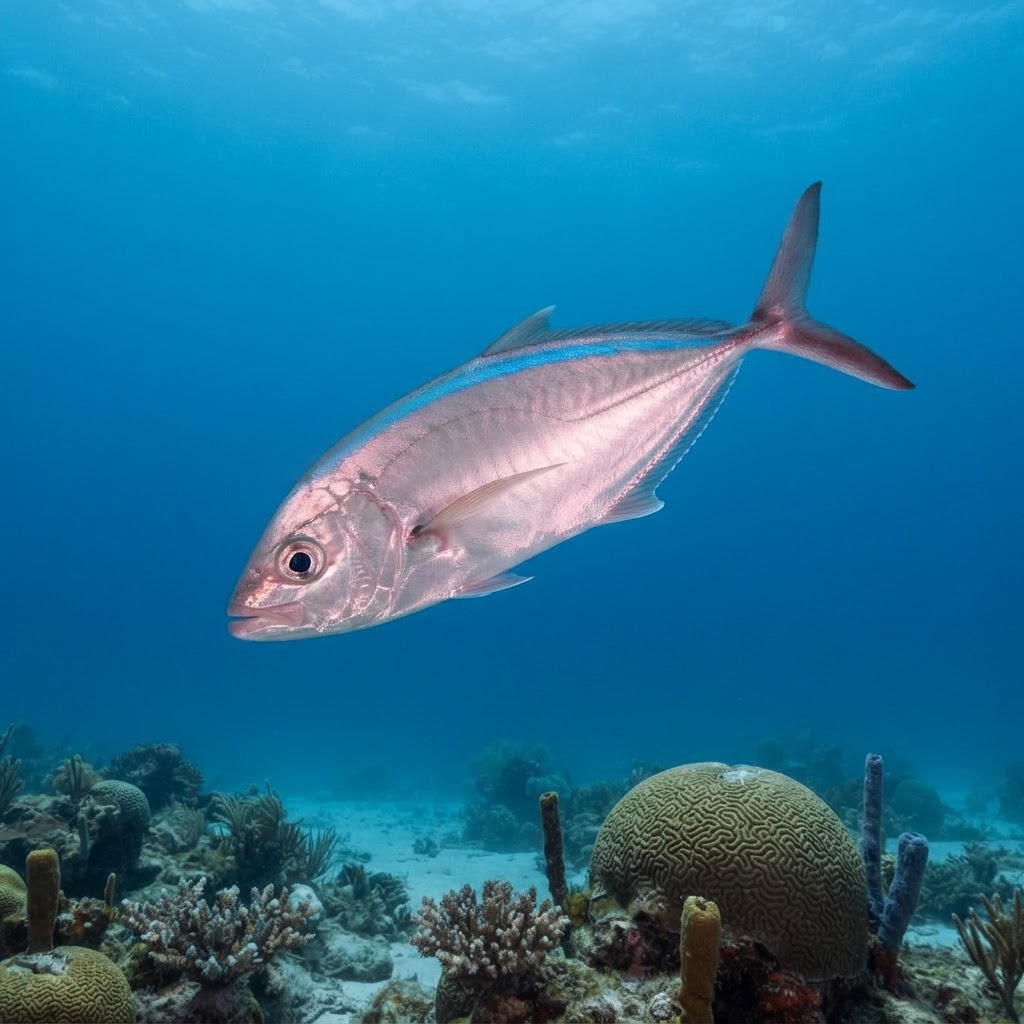
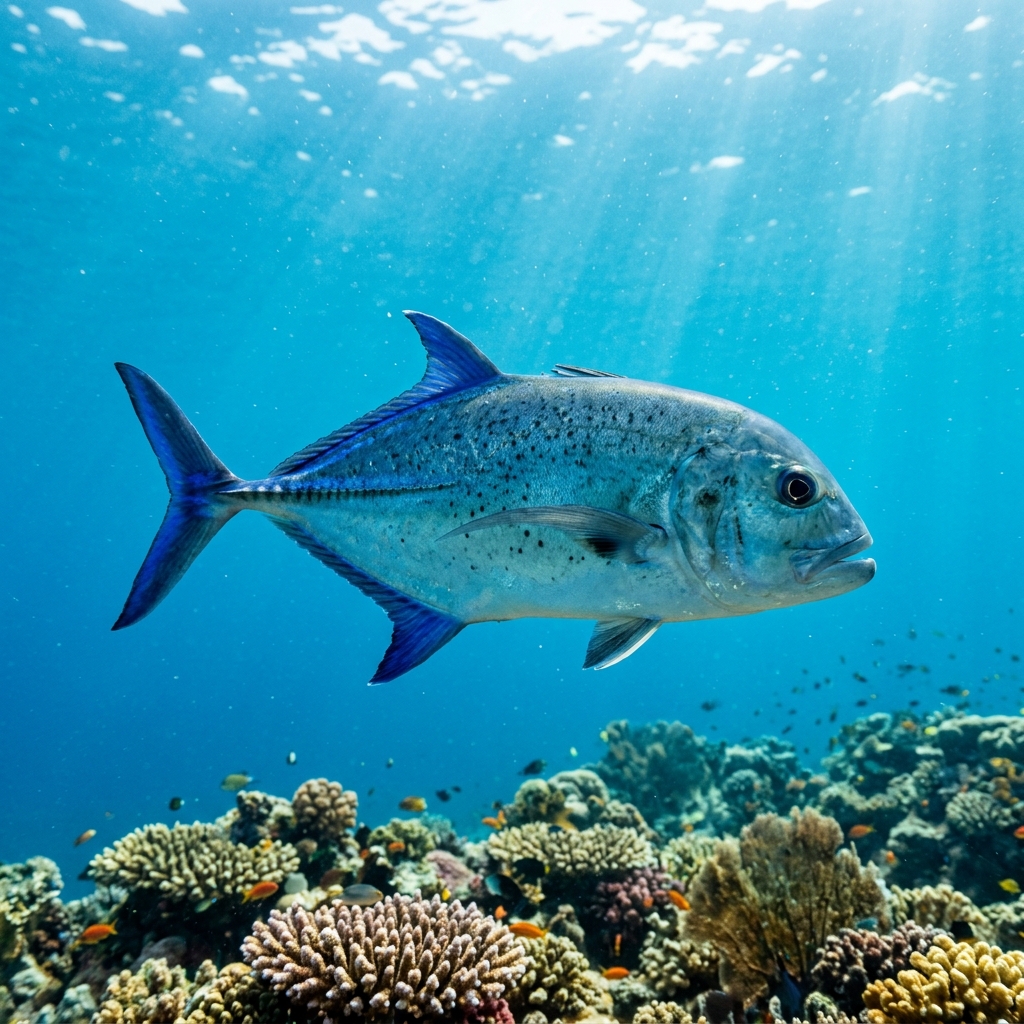
Reef neighbours a diver could mistake it for. Use the identification notes above to tell them apart.
Most commonly logged across Spain, Australia, Croatia, Greece, and New Zealand, with Spain accounting for a large share of records spread across the Costa Blanca, the Balearic Islands, and the Costa Brava. Strong populations are also reported along the New South Wales coast and in the Northland and Auckland region of New Zealand. The French Riviera, Ionian Islands, Madeira, and Crete round out the reliable sighting areas.
Mapping where Kingfish is logged…
Kingfish are most reliably encountered in Spain, particularly around the Costa Blanca, Balearic Islands, and Costa Brava. Australia's New South Wales coast and New Zealand's Northland and Auckland region are the main Southern Hemisphere hotspots. Solid sightings also come from Croatia, Greece, France's Riviera, and Madeira.
In the Mediterranean and other Northern Hemisphere sites, July through November is when sightings peak. If you're diving in Australia or New Zealand, aim for February to June for the best chance of an encounter.
Look for a large, slender, torpedo-shaped jack with a silvery-blue back, white belly, and a pale yellow lateral stripe running to a distinctly yellow tail. Size helps too, as fully grown fish approach 175 cm and dwarf most other jacks on the same reef.
Kingfish are among the larger members of the jack family, reaching up to around 175 cm in length. Even mid-sized individuals are impressively bulky in the water, which is often the first thing divers notice.
No, kingfish pose no real threat to divers. They may approach closely out of curiosity, particularly if food is present, but they are not aggressive towards people. Give them space and enjoy the encounter.
Site and sighting data is aggregated from diver logs, iNaturalist and GBIF. For taxonomy and conservation status:
Bigeye Trevally
2,591 sites