Sphyrna lewini
Spot scalloped hammerheads at seamounts and drop-offs across Florida, Indonesia, and the Philippines. Tips on ID, behaviour, and best dive conditions.
Safety warning
Scalloped hammerheads are listed as dangerous to divers, though unprovoked attacks are rare and the species typically retreats rather than approaches. Give them plenty of space, avoid erratic movements, and never corner or chase an individual. Night dives or spearfishing in their vicinity increases risk, and large aggregations should be observed from a respectful distance without disrupting the group.
If you're bitten
BiteGeneral first-aid guidance, not a substitute for professional medical care. In an emergency, call your local emergency number.
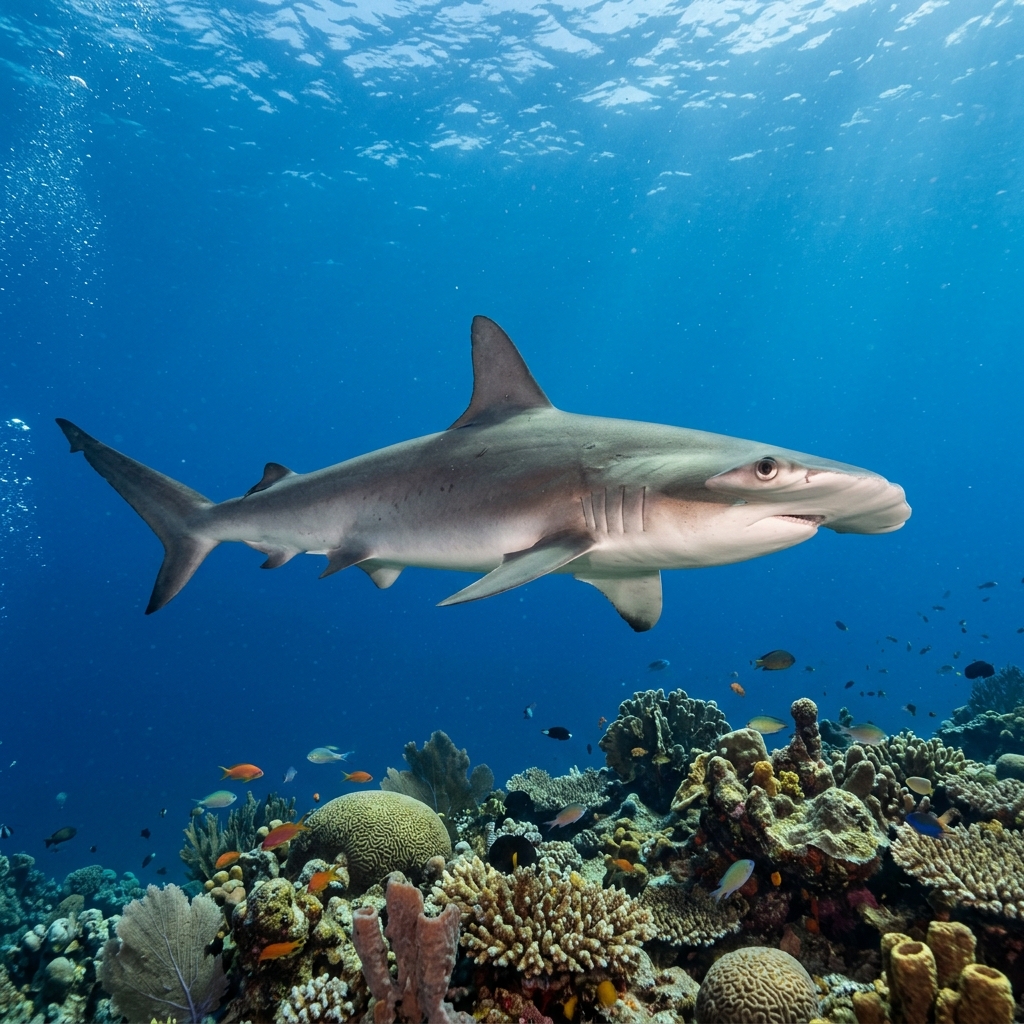
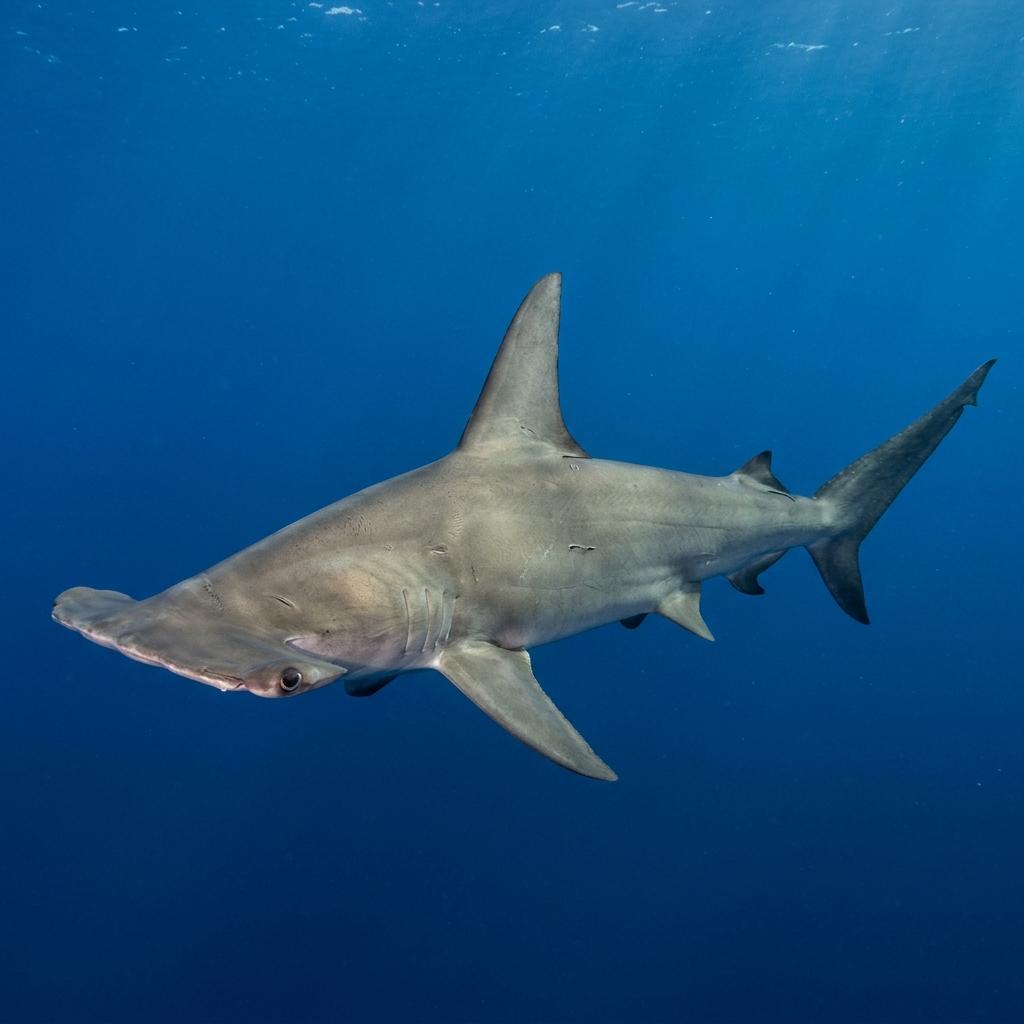
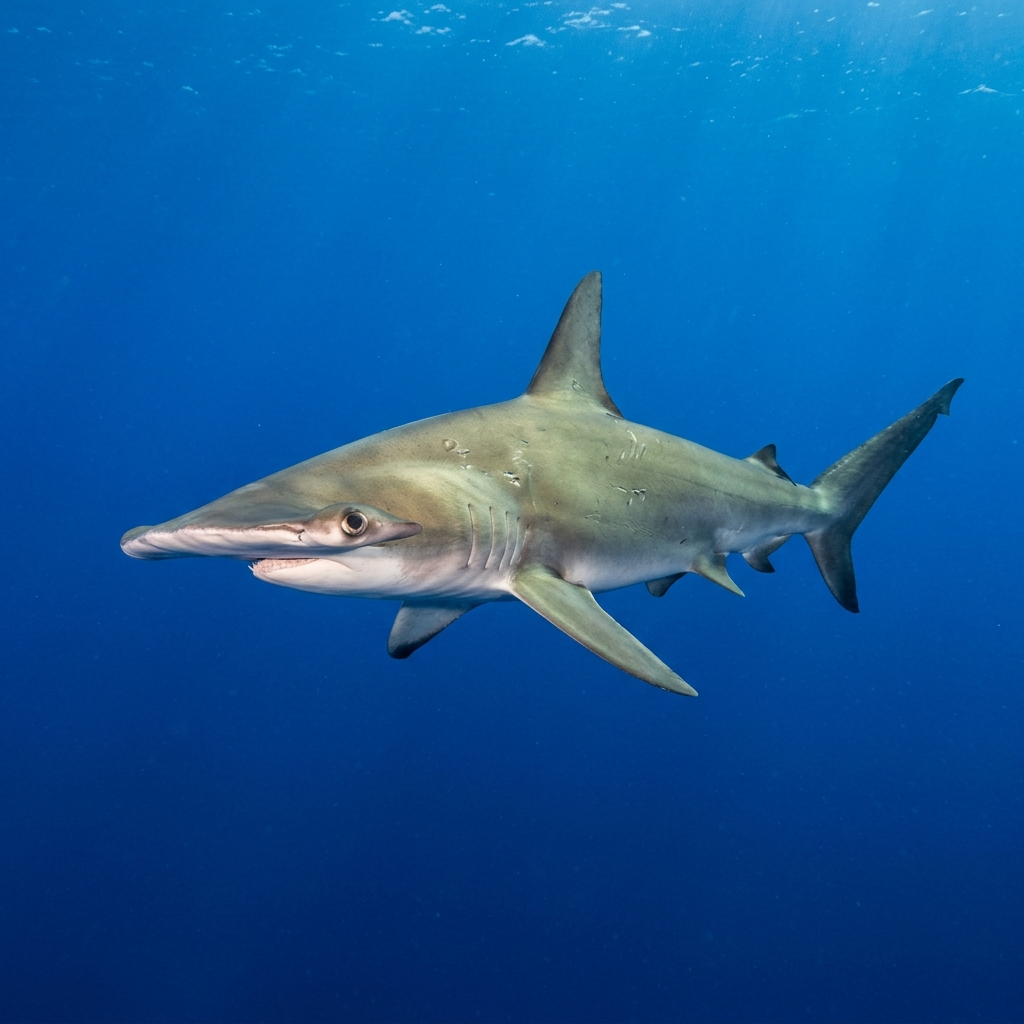
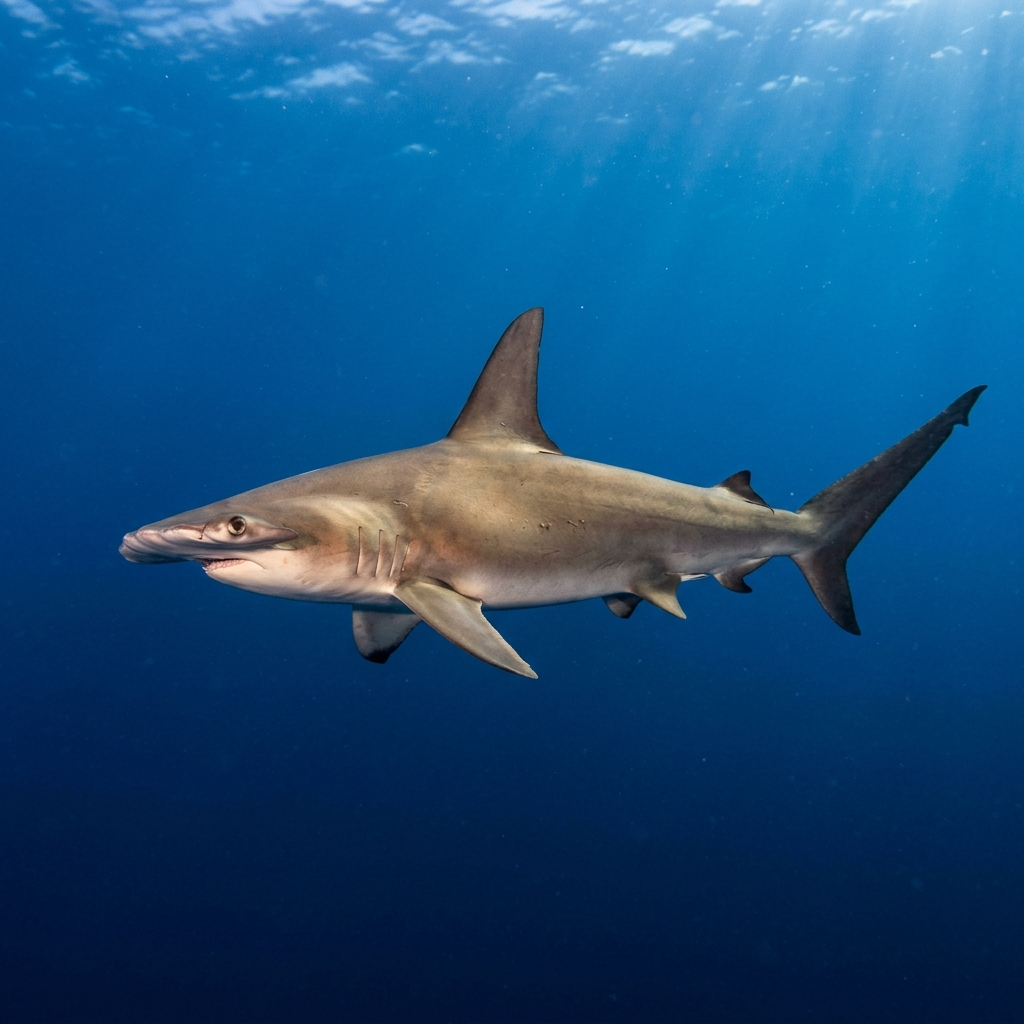
Look for the wide, flattened head with a noticeably scalloped (wavy, indented) front edge, which gives the species its name and is the single most reliable field mark. Overall colouration is brownish-grey on top fading to pale white underneath, and the pectoral fins often show dusky tips. At three metres, it is a large, slender-bodied shark that looks more streamlined than the bulkier great hammerhead. The scalloped front edge of the cephalofoil (the hammer-shaped head) distinguishes it from close relatives at a glance.
Early morning is the prime window: schools gather at cleaning stations and patrol the edges of seamounts and drop-offs before dispersing into deeper water as the day progresses. Around divers, they are cautious and tend to circle at the limits of visibility rather than approach directly, and any sudden movement or burst of bubbles will push them further away. Your best tactic is to stay low, move slowly, and let the sharks close the distance on their own terms.
Scalloped hammerheads are one of the few shark species that regularly form large aggregations, sometimes numbering in the hundreds at offshore seamounts, a behaviour that appears tied to navigation and socialising rather than feeding.
No clear seasonal peak has emerged from the available sighting data, so encounters are possible year-round wherever the species occurs. Its observed temperature range of 18.7 to 29.0 °C means it is comfortable in both temperate and tropical destinations across its range.
Reef neighbours a diver could mistake it for. Use the identification notes above to tell them apart.
Most commonly logged in the United States, Indonesia, and the Philippines, with Florida and the Southeast US accounting for a large share of reported sites. Strong presences are also recorded across Queensland and Western Australia, Palawan and Apo Reef in the Philippines, and the northeast coast of Brazil. Thailand, Colombia, and Mexico round out the global picture, making this a species with wide Indo-Pacific and Atlantic coverage.
Mapping where Scalloped Hammerhead is logged…
The species is most commonly logged around Florida and the Southeast US, Indonesia, the Philippines, and Queensland, Australia. Strong sightings are also reported from Palawan and Apo Reef, the northeast coast of Brazil, and Thailand. Look for seamounts, drop-offs, and cleaning stations in these regions for the best chance of an encounter.
Available sighting data does not show a concentrated season, so encounters can happen year-round. Within any given day, early morning dives at seamounts and reef edges give you the best odds before the sharks move into deeper water.
The key is the front edge of the head: scalloped hammerheads have a visibly wavy, indented cephalofoil with a central notch, while smooth hammerheads have a broadly curved, unindented front edge. Both species are similar in size and colouration, so that head profile is your most reliable underwater check.
Adults typically reach around three metres in length, with females growing larger than males. In the water they appear long and relatively slender compared to the great hammerhead, which is heavier-bodied.
They are listed as potentially dangerous, but encounters are usually cautious rather than aggressive. The sharks tend to circle at a distance and retreat if approached too quickly. Maintain a calm, still posture, avoid chasing them, and keep a respectful distance, especially around large aggregations.
Yes, they are Critically Endangered according to the IUCN. Populations have declined sharply across much of their range. Logging your dives and sightings, and choosing operators who follow responsible shark-diving guidelines, helps build the data needed to protect remaining populations.
The Scalloped Hammerhead is listed as critically endangered by the IUCN. Observe from a distance, avoid touching or feeding it, and report sightings to local marine research organisations.
Listed as Critically Endangered on the IUCN Red List, scalloped hammerheads have suffered severe population declines globally, largely from bycatch and targeted fishing pressure. Divers can contribute by logging every sighting on platforms like iNaturalist and supporting marine protected areas where these sharks still gather.
Site and sighting data is aggregated from diver logs, iNaturalist and GBIF. For taxonomy and conservation status: