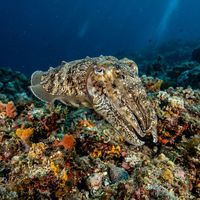
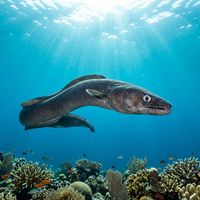
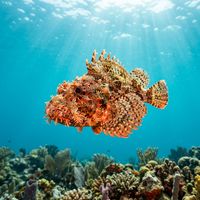
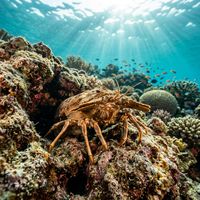
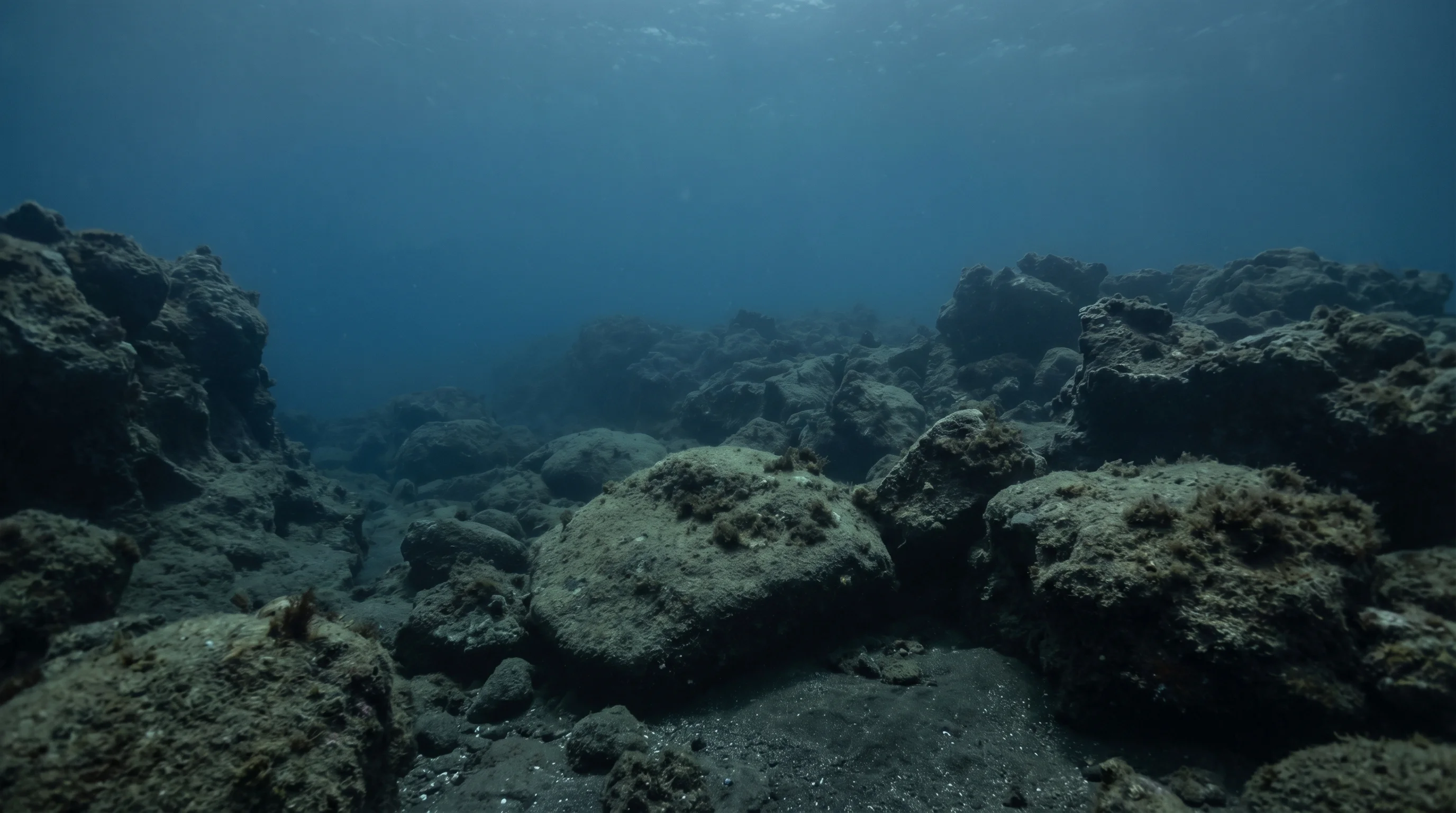
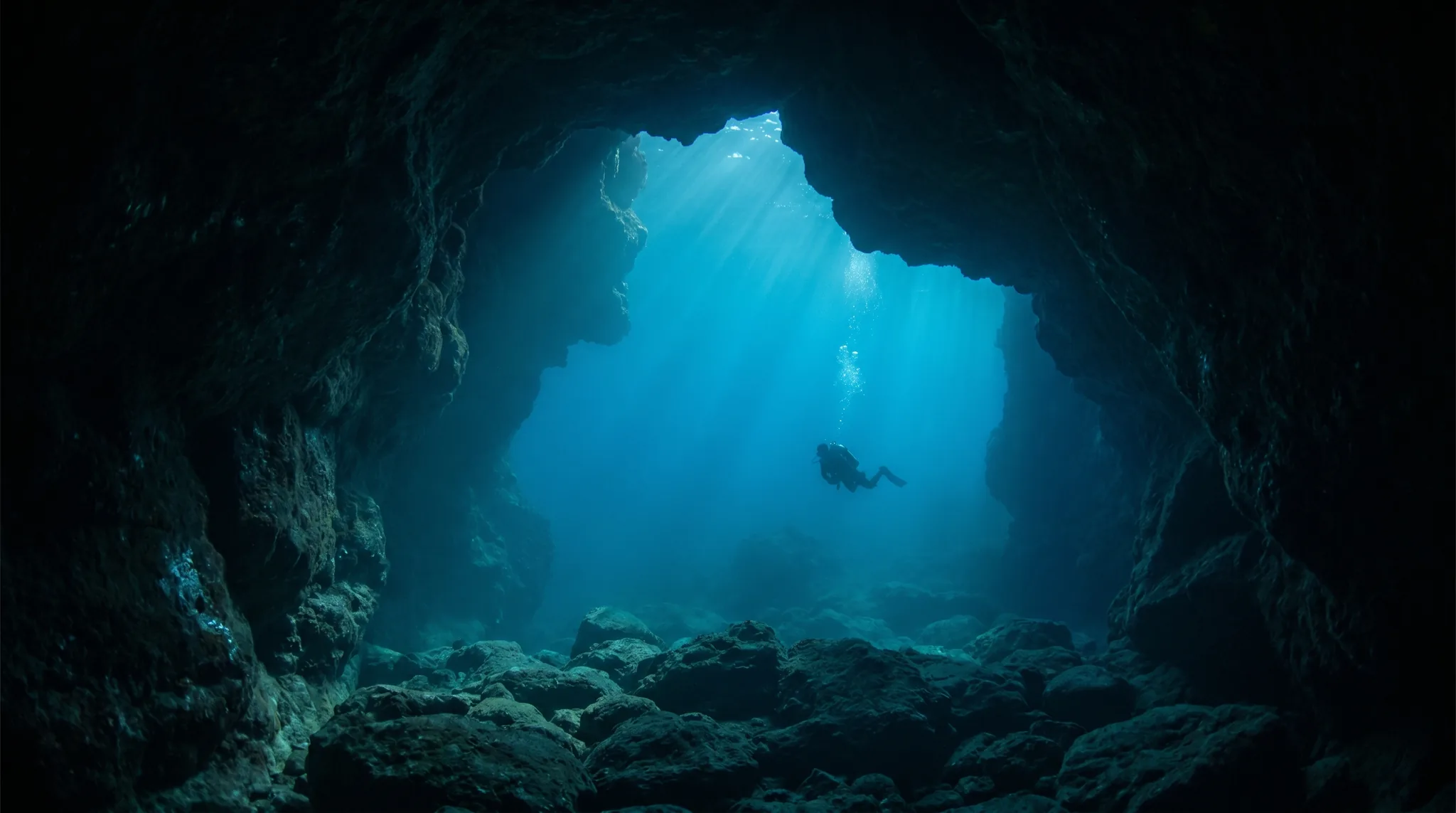
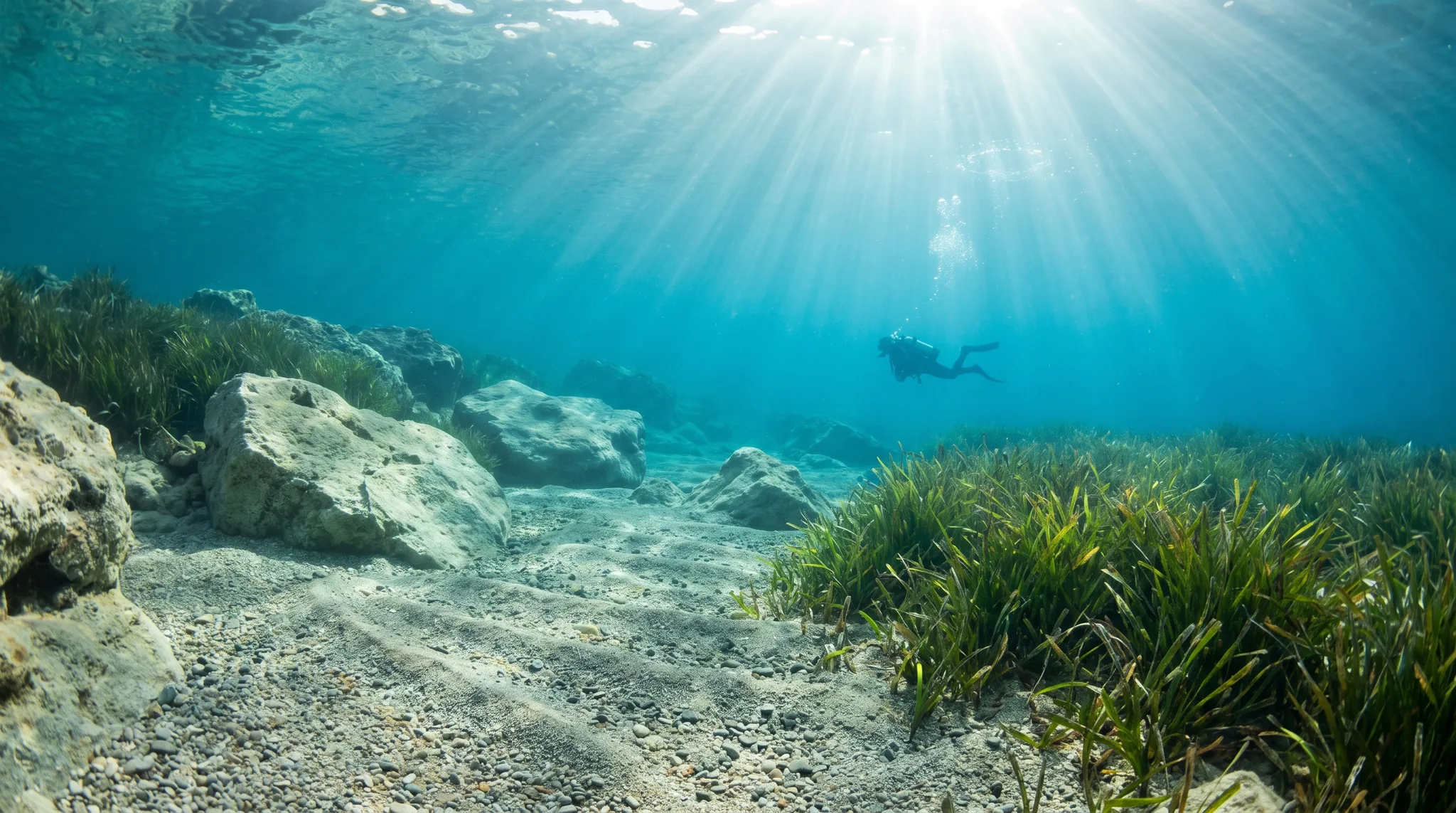
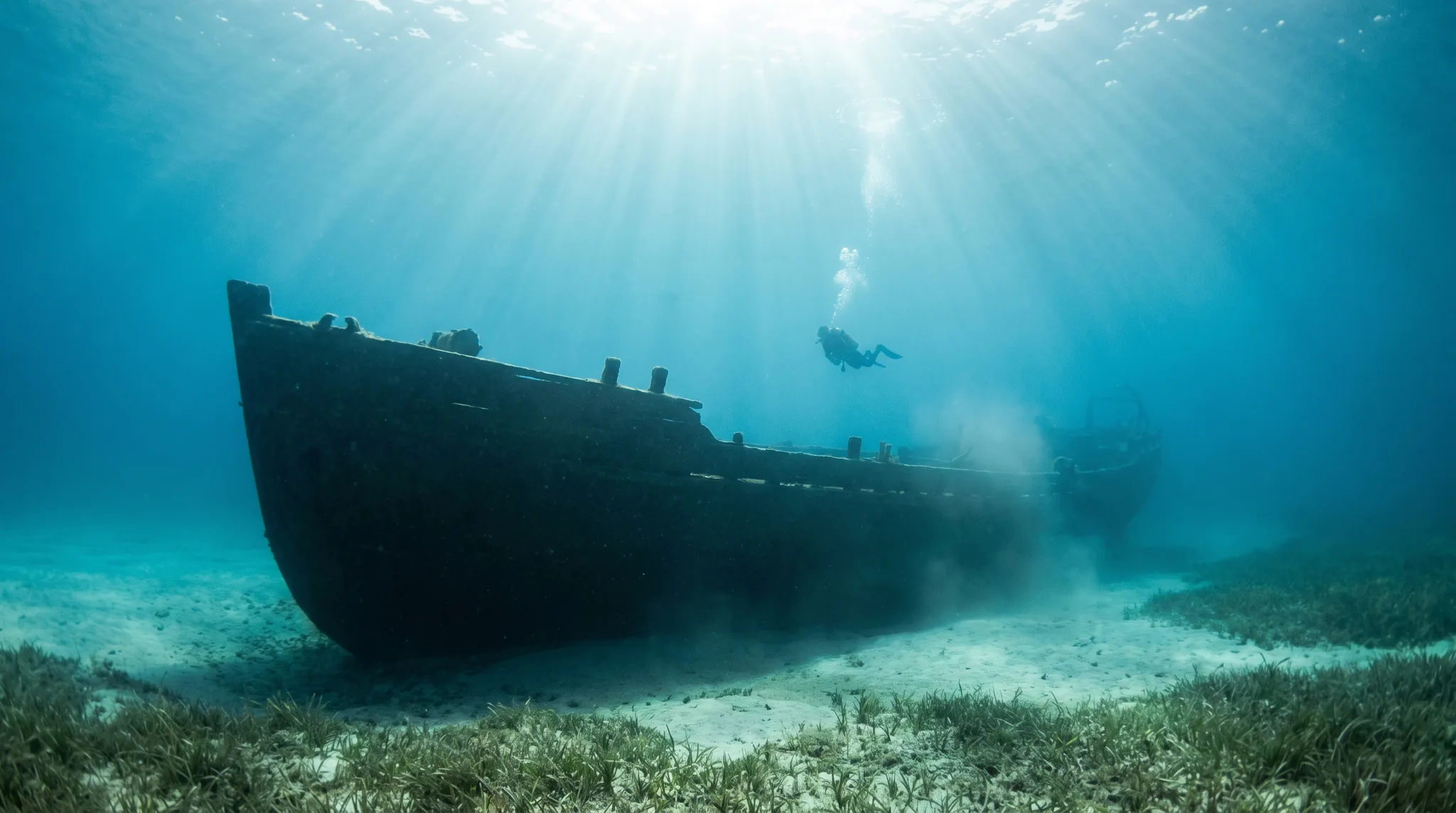
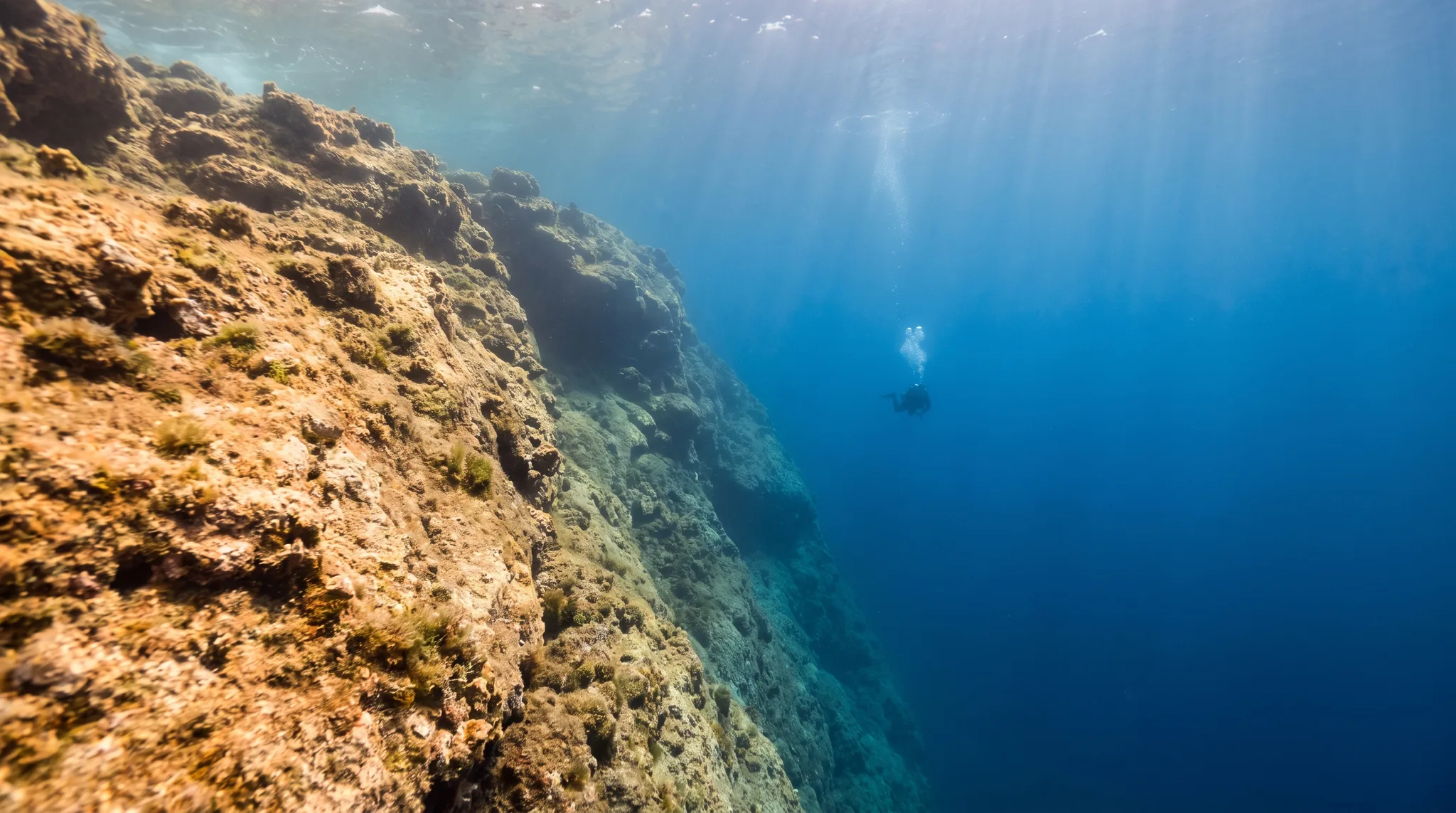
Heraklion's dive sites are defined by cave and cavern systems, walls, and mixed reef terrain. Fokia's Cave offers three distinct routes through collapsed cavern geology, while Cathedral Cavern holds stalactites and stalagmites that hint at its above-water past. Wrecks add variety, including a deep airplane wreck at Kalami. Seagrass meadows appear at shallower sites such as Maherida. The European Common Cuttlefish is the signature species, with Scorpionfish, Conger Eel, and Torpedo Ray observed consistently across the sites.
Monthly water temperature across Heraklion's sites, from satellite sea-surface data corrected for depth. The band shows the site-to-site spread.
Water temperature climbs steadily from spring into the peak summer months, reaching its warmest in late summer and early autumn, which represents the most comfortable diving window. Winter months bring cooler water but remain diveable for those willing. The range of site types, from shallow reef to deep wall and cave, means conditions vary more by site than by season.
14 operators
Greece
7 more sites to explore
Water temperature around Heraklion ranges from about 16°C in February to 25°C in August, based on satellite sea-temperature data for its dive sites.
In the warm season (about 25°C) a 3mm full suit is comfortable in Heraklion; in the coldest months (about 16°C) step up to a 7mm or semi-dry suit.
Fin maps 18 sites in Heraklion (18 scuba diving sites and 2 snorkelling spots, with some suited to both).
Across Heraklion's dive sites, May, June, July, August, September and October are most often reported as the best months to visit.
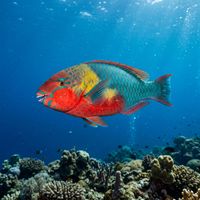
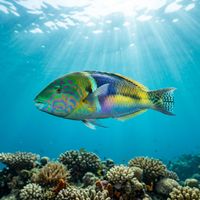
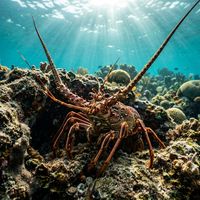
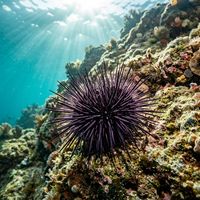
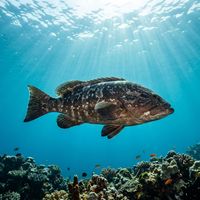
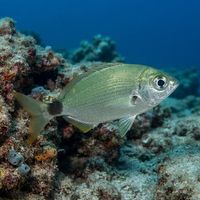
Heraklion's sites have a strong record of observed species. The European Common Cuttlefish is the signature encounter, and Scorpionfish, Turkish Wrasse, European Parrotfish, and Rabbitfish are seen very commonly across sites. Conger Eel, Groupers, Slipper Lobster, and Spiny Lobster are also regularly observed, and the Torpedo Ray turns up at a good number of sites.
Several sites are rated for beginners, including Kakia Skala, Gianniskari Cave, Maherida, and Falasarna Beach. These offer accessible depths and a variety of entry options including shore access. Intermediate divers have a broad range of cave, wall, and reef sites to progress to, while advanced divers can tackle deeper sites such as the Airplane wreck at Kalami.
The region offers a notably varied mix. Cave and cavern diving is a defining feature, with sites like Fokia's Cave, Cathedral Cavern, and Gianniskari Cave each presenting distinct environments. Walls appear at Kakia Skala, The Wall Dive, and Vlamis Villas Stavros. Seagrass meadows feature at Maherida, and Falasarna Beach combines reef with wreck. Artificial reef structures also appear at a handful of sites.
A number of sites offer shore entry or combined shore and boat access, including Gianniskari Cave, Kakia Skala, Falasarna Beach, Vlamis Villas Stavros, and the Airplane wreck at Kalami. Several of the deeper or more exposed sites, such as Fokia's Cave and Cathedral Cavern, are boat-access only. Checking the entry type for your chosen site is worthwhile when planning logistics.