Sparisoma cretense
Spot European Parrotfish on reef dives across the Mediterranean and Canary Islands. Males flash blue-green and pink; here's where, when, and how to find them.
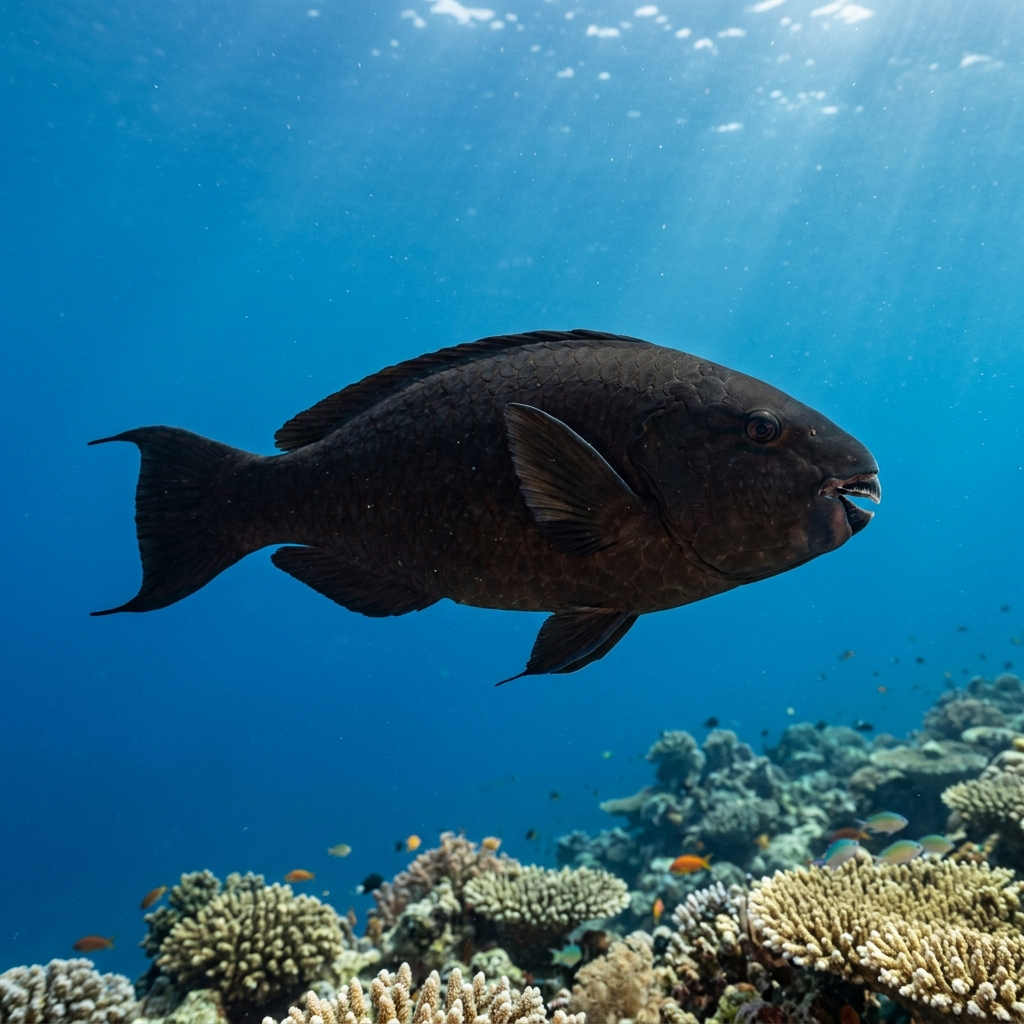
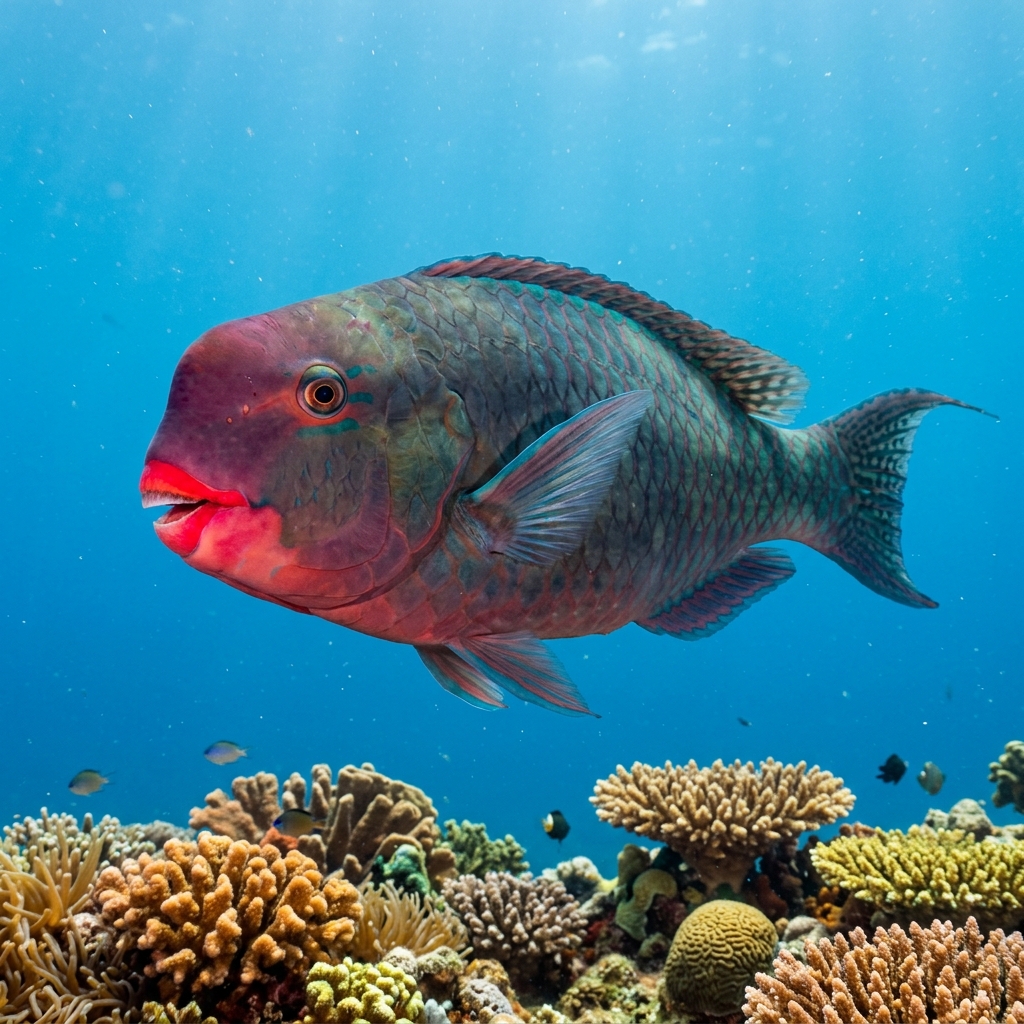
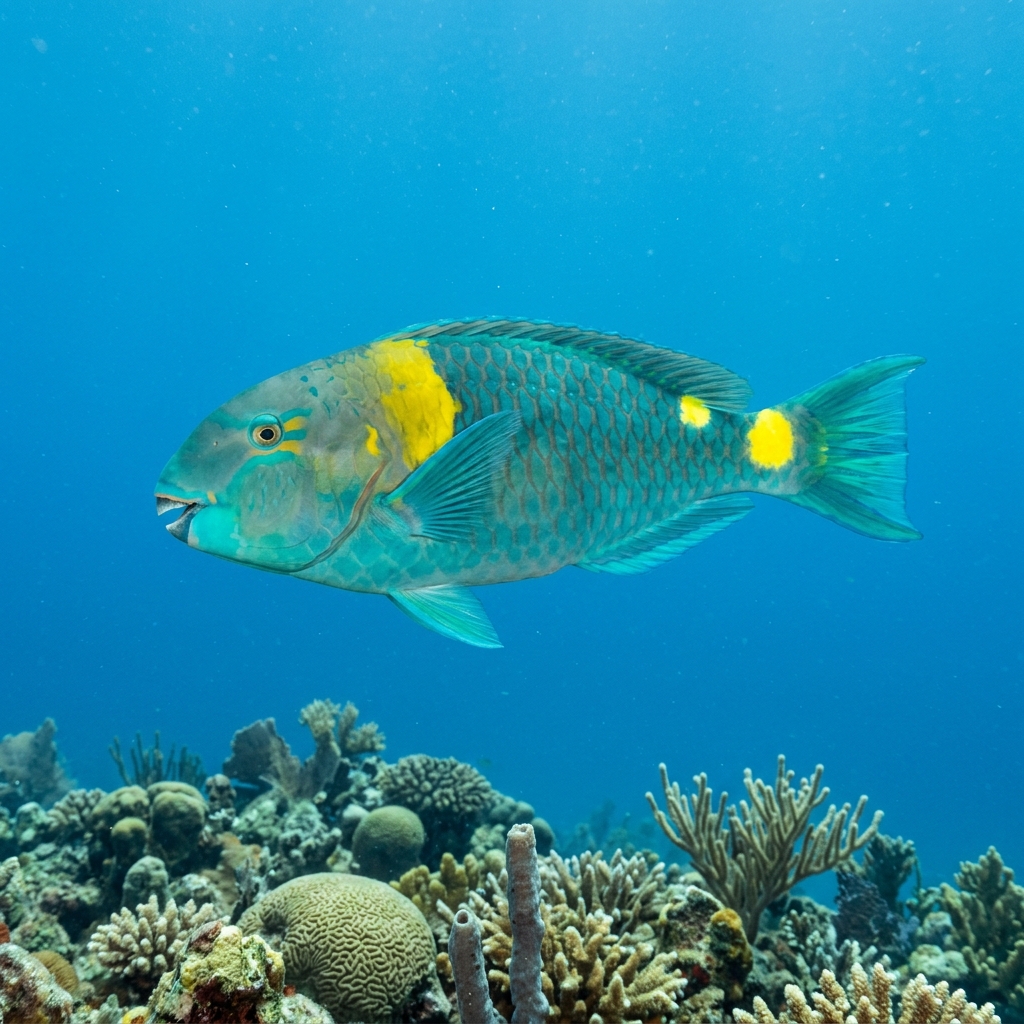
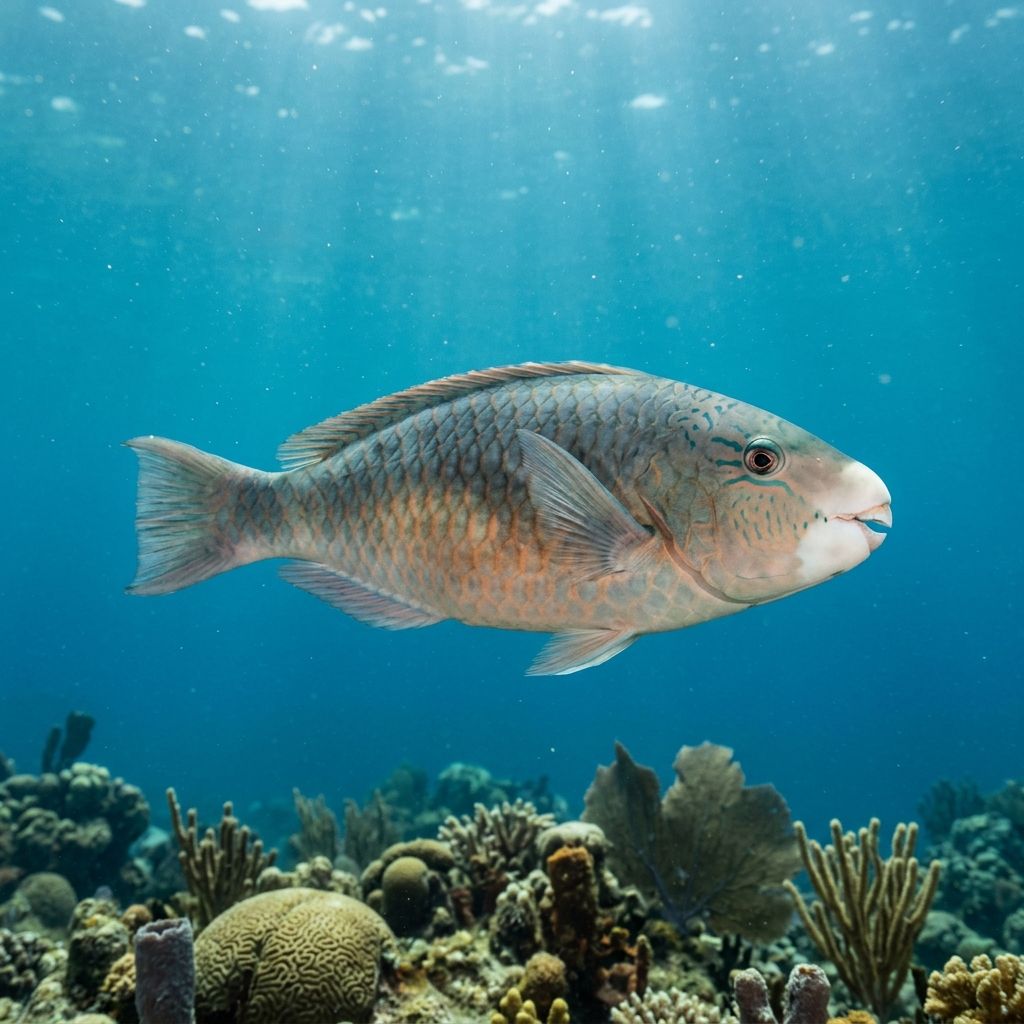
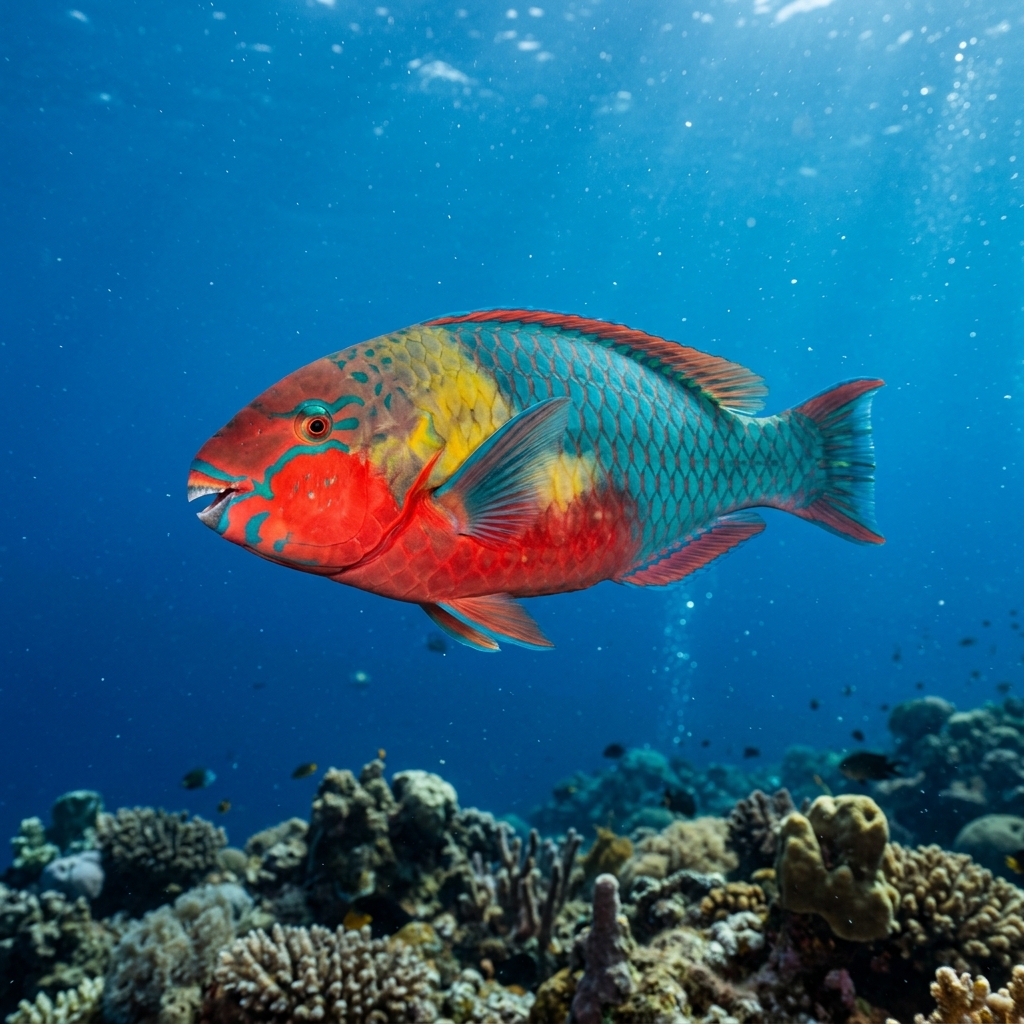
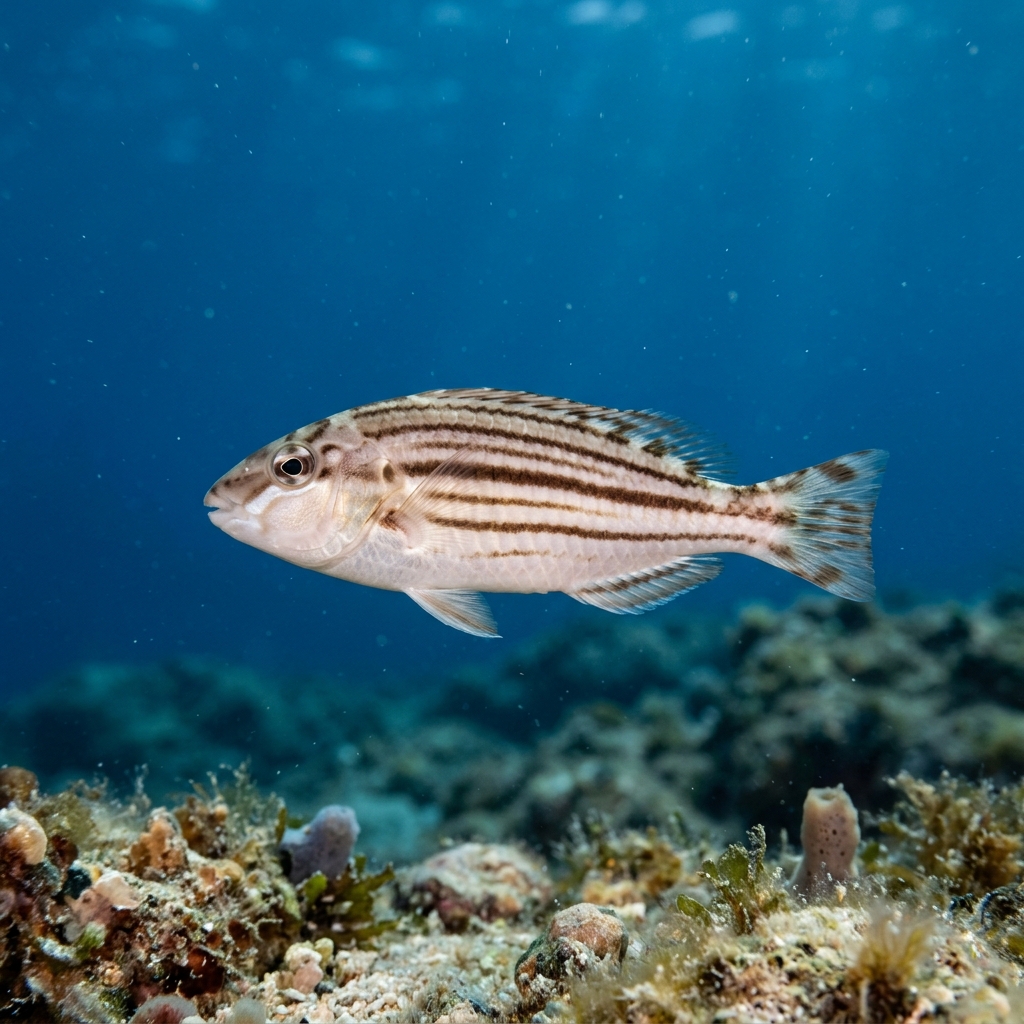
At roughly 35 cm, this is a stocky, oval-bodied fish with the characteristic fused beak (formed from fused teeth) that gives parrotfish their name. Males in terminal phase are the showstoppers: blue-green overall with bright pink and orange edging on each scale. Females and initial-phase individuals are a duller brownish or reddish-grey and can be easy to overlook until you spot the beak shape. No other parrotfish shares this colour combination in Mediterranean or Atlantic waters, which makes a male straightforward to pin down at a glance.
Day-active and unhurried, European parrotfish spend most of their time grazing over rocky reef, scraping algae and small invertebrates off the substrate with their beak. That scraping produces an audible crunching sound that often draws a diver's attention before the fish is even in view. They are not particularly bothered by divers and will carry on feeding at a respectful distance, so there is no need to rush an approach.
That crunching you hear underwater is their beak grinding through rock as well as algae. The sediment they excrete contributes to the fine sandy substrate that accumulates around rocky Mediterranean reefs, one grain at a time.
Sightings concentrate from June through February and again in April, suggesting a broad active season with a quiet patch in March. Given the cool water temperatures this species is observed in (roughly 15 to 20 °C), it is present across most of the year on Mediterranean and Canary Islands reefs rather than tied to a narrow warm-water window.
Most commonly logged across the Mediterranean and eastern Atlantic, with particularly strong populations in Greece, the Canary Islands, Italy, and Malta. Top regions include Sicilia and Lampedusa, Tenerife, Gozo, Crete, and Gran Canaria, where divers encounter them regularly on reef dives. Croatia and Turkey also hold solid numbers, mainly along rocky reef habitat.
Mapping where European Parrotfish is logged…
They are reliably found across the Mediterranean and eastern Atlantic. Greece, the Canary Islands, Italy, Malta, Croatia, and Turkey are the best-represented countries. For top regional picks, Gozo, Tenerife, Sicilia and Lampedusa, and Crete all offer strong sighting rates on rocky reef dives.
Sightings are recorded across most of the year, concentrating from June through February plus April. The species tolerates cool water (around 15 to 20 °C), so Mediterranean and Canary Islands divers can expect to encounter them well outside the summer peak.
Look for a stocky, oval fish with a fused beak. Males are unmistakable in blue-green with pink and orange scale edging. Females are brownish-grey but still show the characteristic beak shape. No other parrotfish shares this colour combination in the Mediterranean or Macaronesian Atlantic, so a confident male is one of the easier IDs on a Mediterranean reef.
A typical adult is around 35 cm. They are mid-sized for a reef fish, about the length of a forearm, which makes them conspicuous enough to spot from several metres away when the colours catch the light.
They are omnivores that graze on algae and small invertebrates encrusting the reef, scraping the surface with their fused beak. You can often hear the crunching before you see the fish. The sediment they pass contributes to sandy deposits around rocky reef zones.
Not at all. They are calm, day-active grazers that pay little attention to divers. Approach slowly and they will typically continue feeding within a few metres of you.
Site and sighting data is aggregated from diver logs, iNaturalist and GBIF. For taxonomy and conservation status:
Sixband Parrotfish
2,380 sites