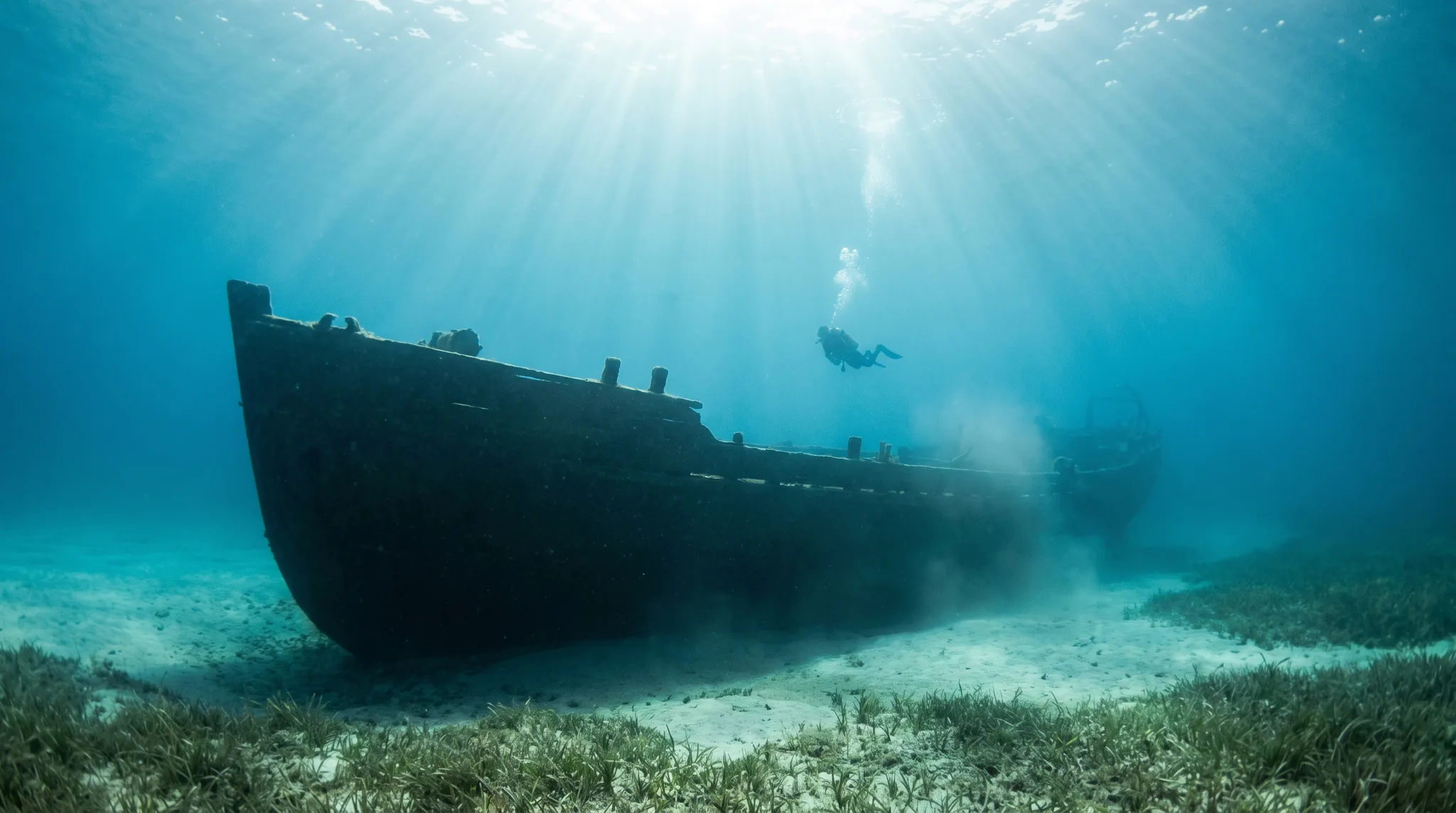
Best for advanced divers, 24-40m, shore entry, moderate current.
The Airplane wreck at Kalami is a deep-water site located off the coast of Rethymno, Greece. Resting at depths between 24 and 40 metres, this wreck is accessible via a shore entry. The site features a combination of wreck, reef, and muck topography. Divers must be prepared for moderate currents and variable visibility ranging from 10 to 30 metres. Due to the depth and the overhead environment presented by the wreck structure, this site is strictly for advanced divers with appropriate training. Proper planning for decompression obligations and gas management is essential for this dive.
35.47032, 24.13767
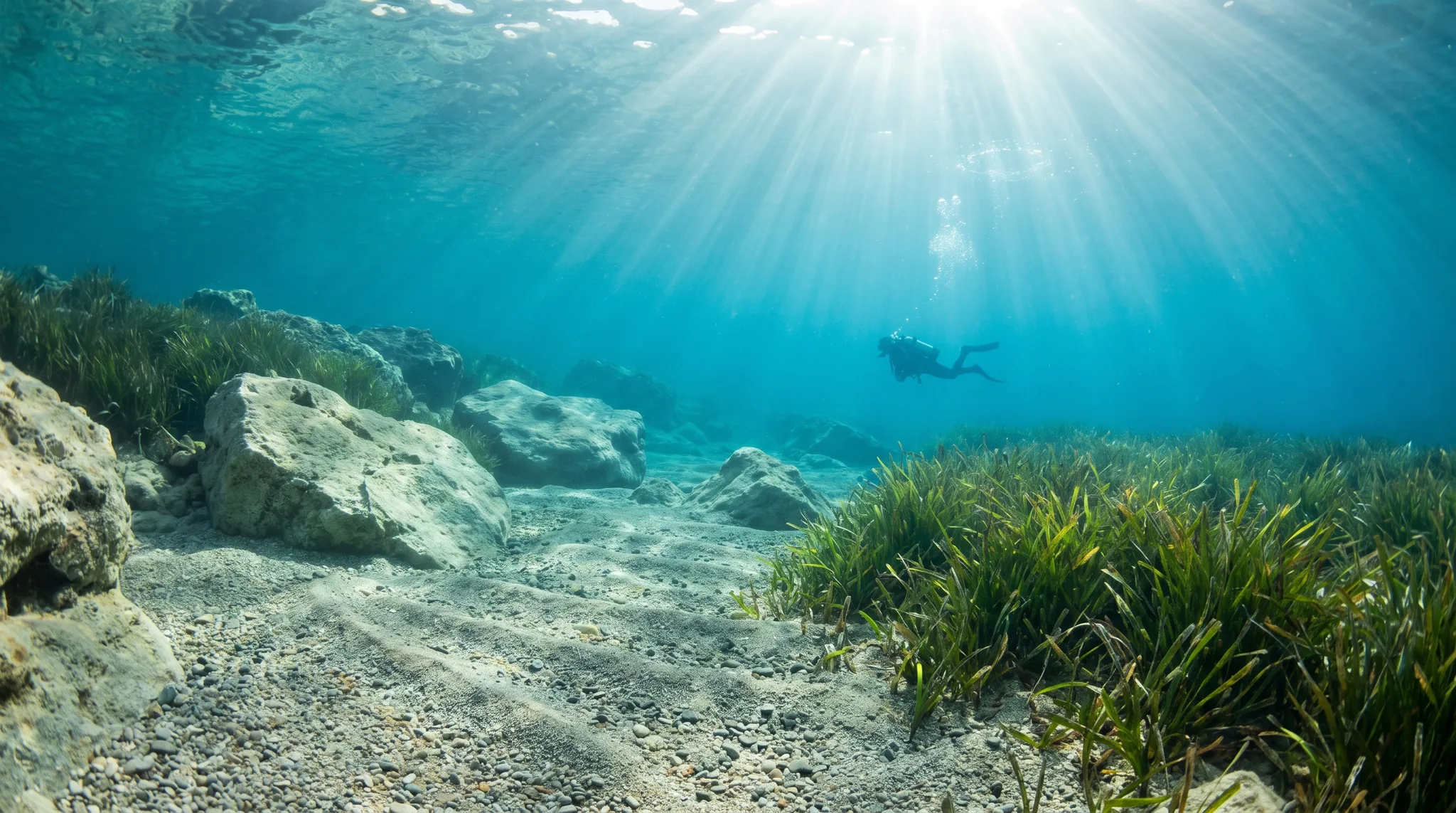
The sandy slope is excellent for macro photography, but requires good buoyancy control to avoid stirring up sand and ruining visibility.
Exit the highway at the Kalami exit, drive 200m, take a sharp left turn to a small road leading downhill to the sea. The entry point is a small sandy beach.
Recorded at this site
Depth
24-40m
Visibility
10-30m
Skill Level
Advanced
Entry
Shore
Water Temp
16-22°C
Current
Moderate
Typical Dive
60 min
No, this site is intended for advanced divers only due to the depth, potential for decompression obligations, and the overhead environment of the wreck.
The wreck structure lies at depths between 24 and 40 metres, with an average depth of 26 metres.
Yes, the site is accessible via a shore entry.
Hazards include decompression risks, significant depth, variable visibility, strong currents, and the overhead environment within the wreck.
Nitrox certification is required for this dive, and a torch is necessary if you plan to enter the wreck's overhead environment.
Diving at Airplane wreck Kalami in Chania requires the following certifications: Advanced, Nitrox. Always dive within your training limits.
Expect moderate currents at Airplane wreck Kalami in Chania. Good buoyancy control and some drift diving experience is helpful.
Visibility at Airplane wreck Kalami in Chania typically ranges from 10 metres to 30 metres. Conditions vary with weather, tides, and seasons.