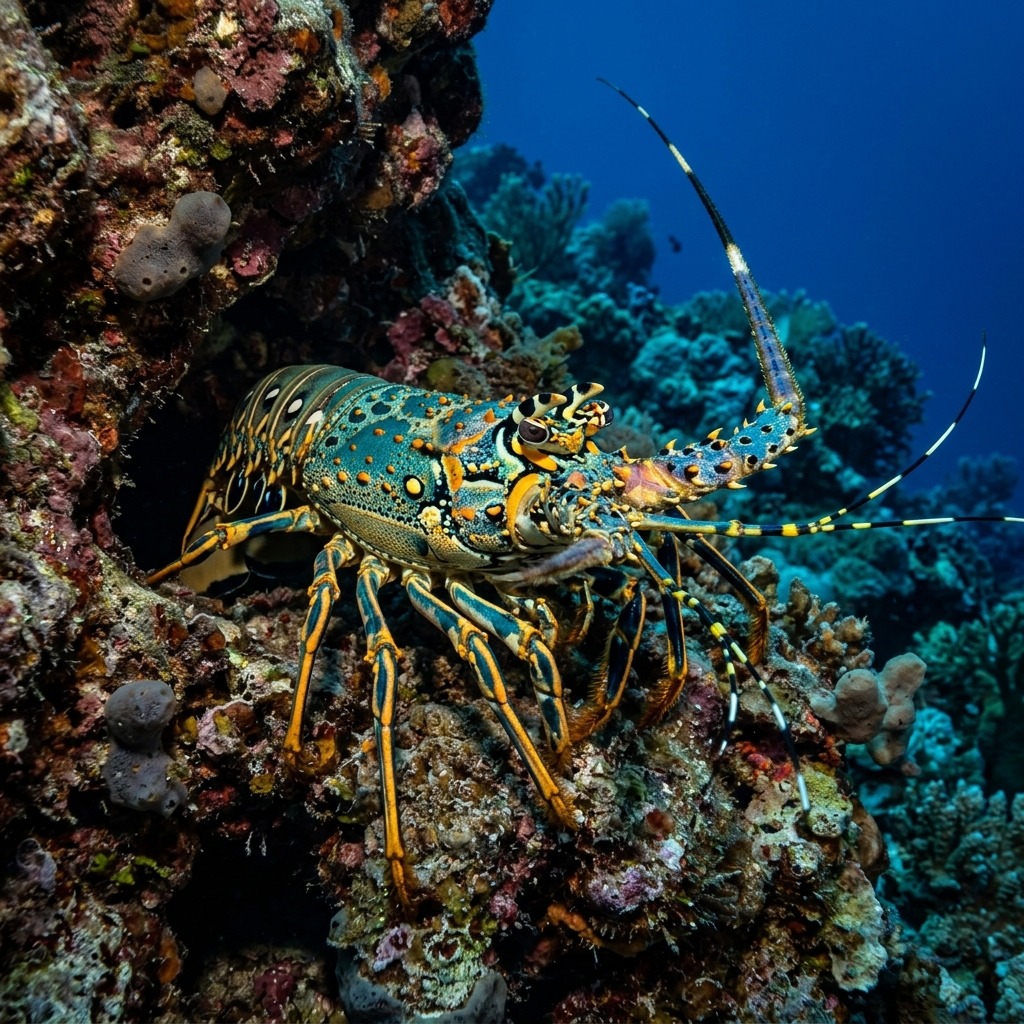
Scyllaridae spp.
Spot slipper lobsters from Florida to the Philippines. Most logged in the Maldives and the Mediterranean. Present year-round in warm water from 17-29 °C.
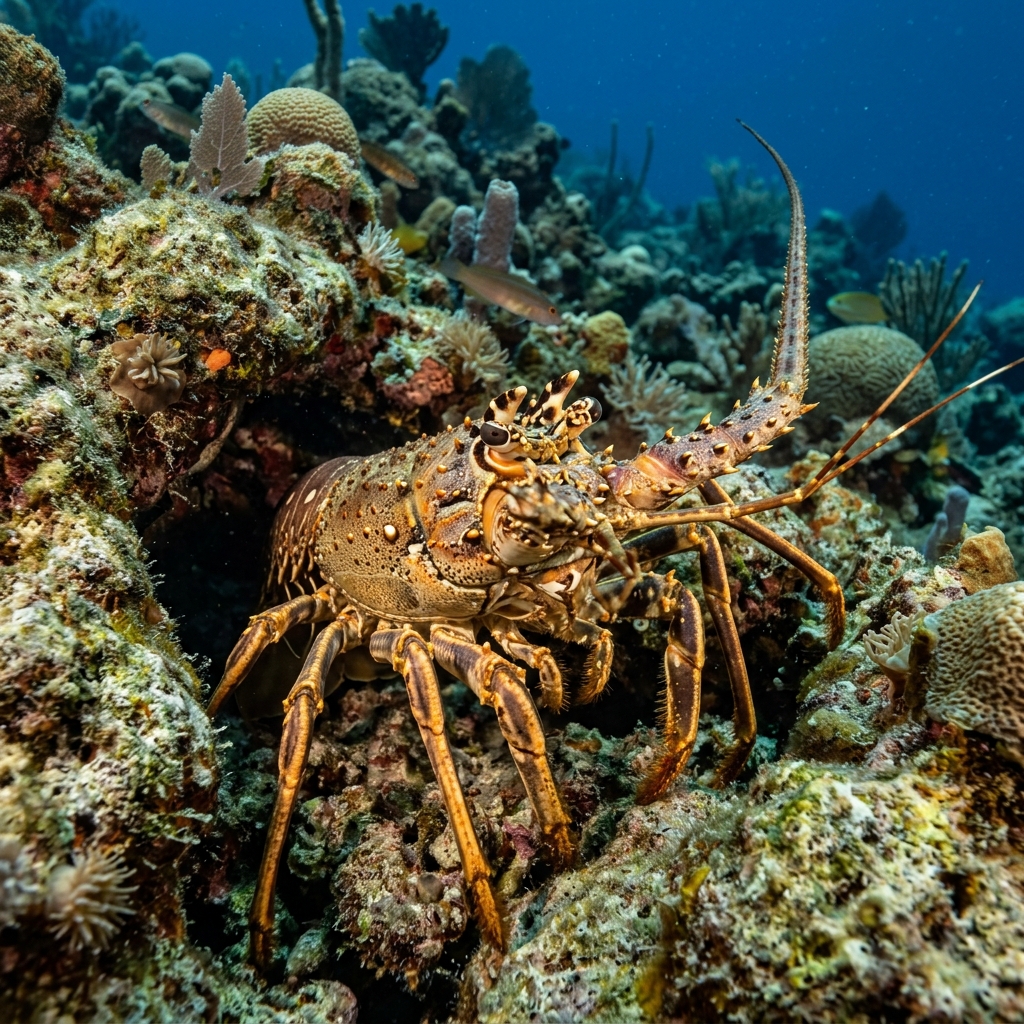
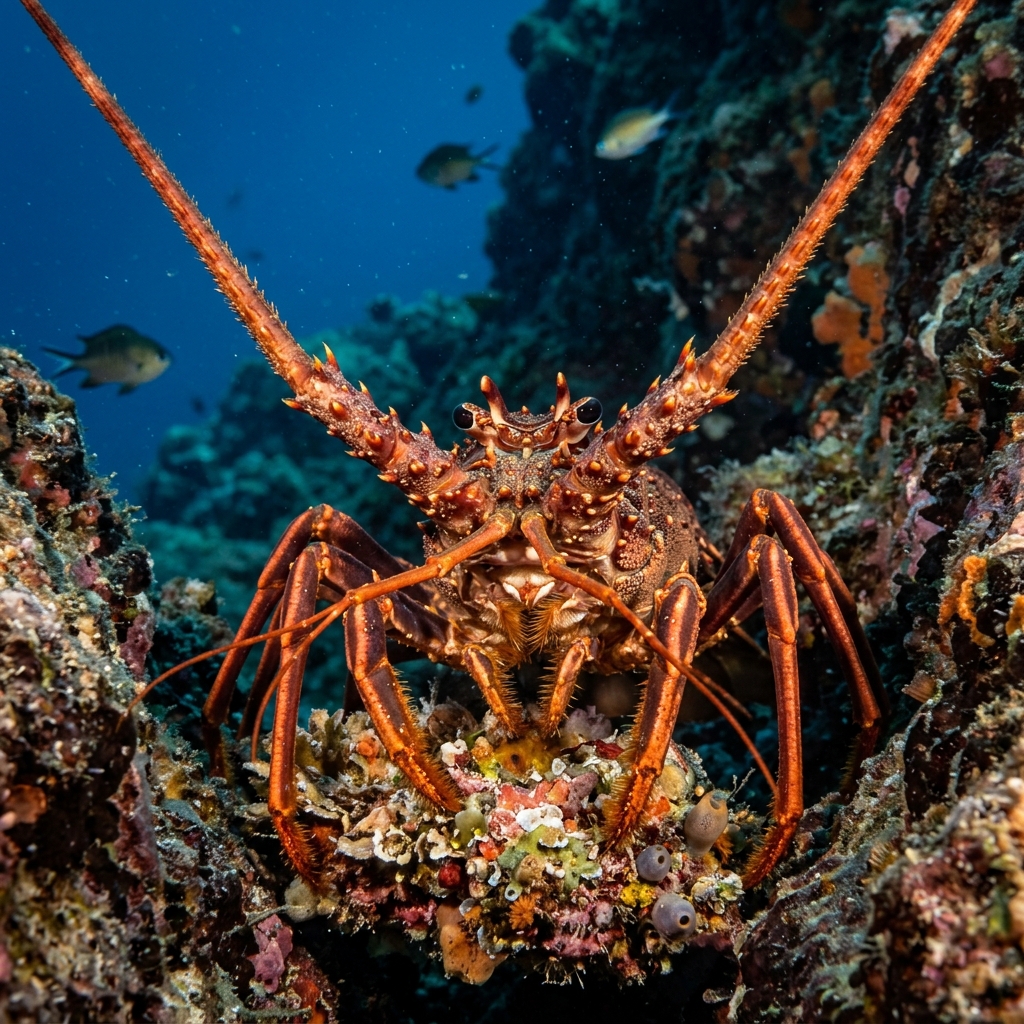
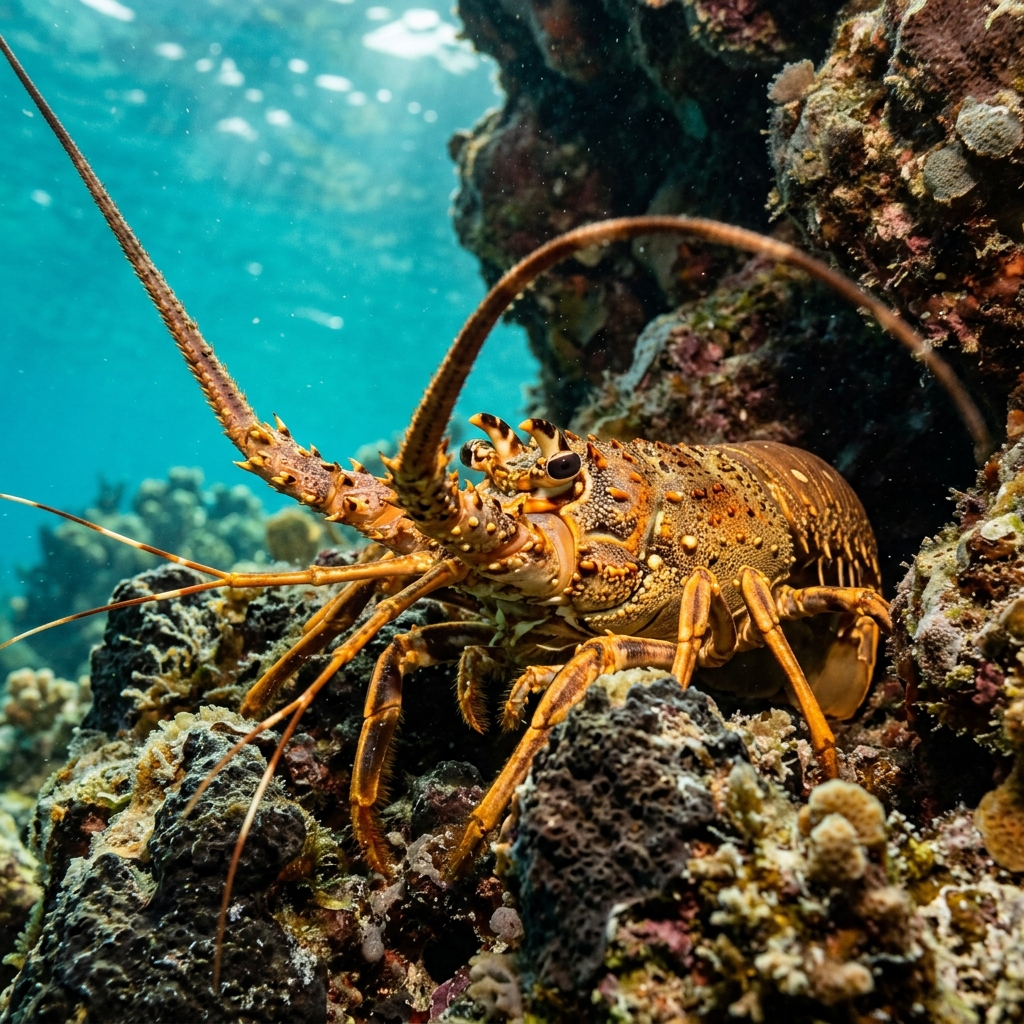
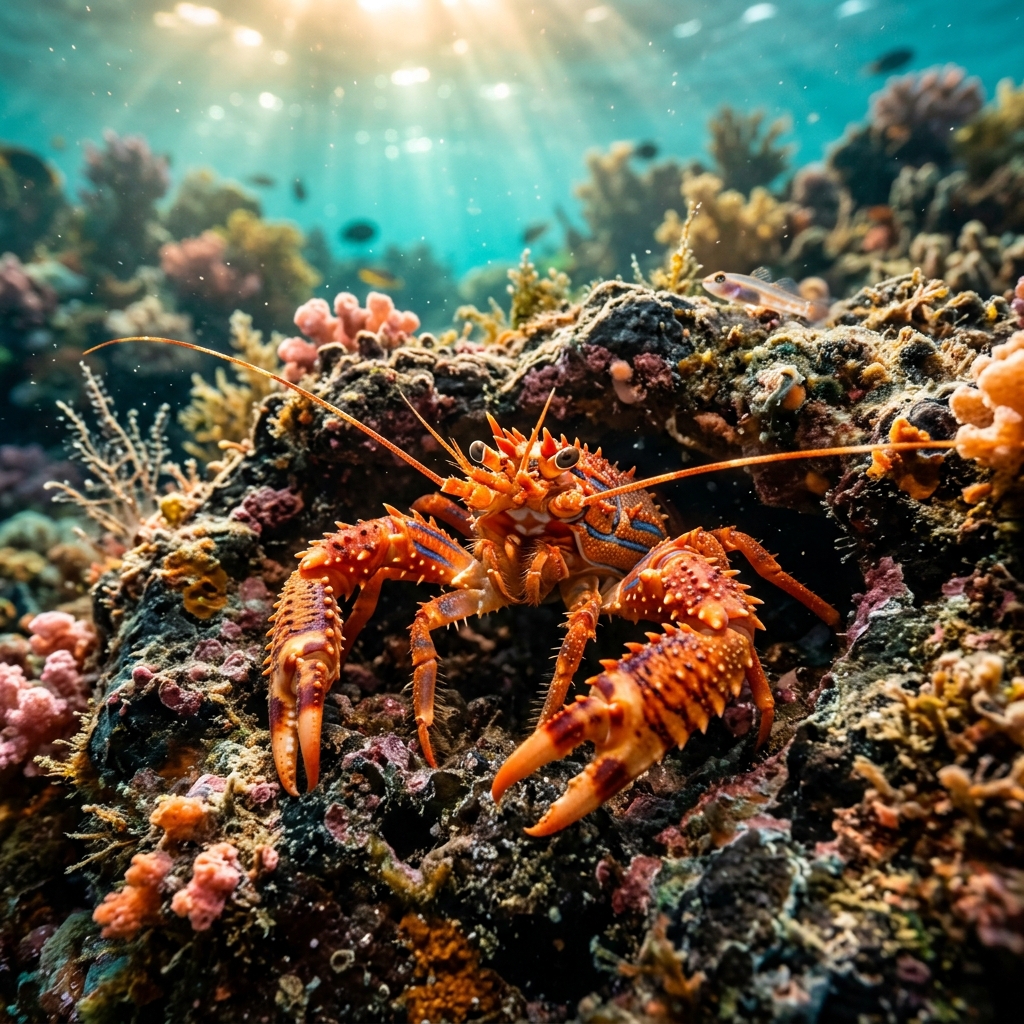
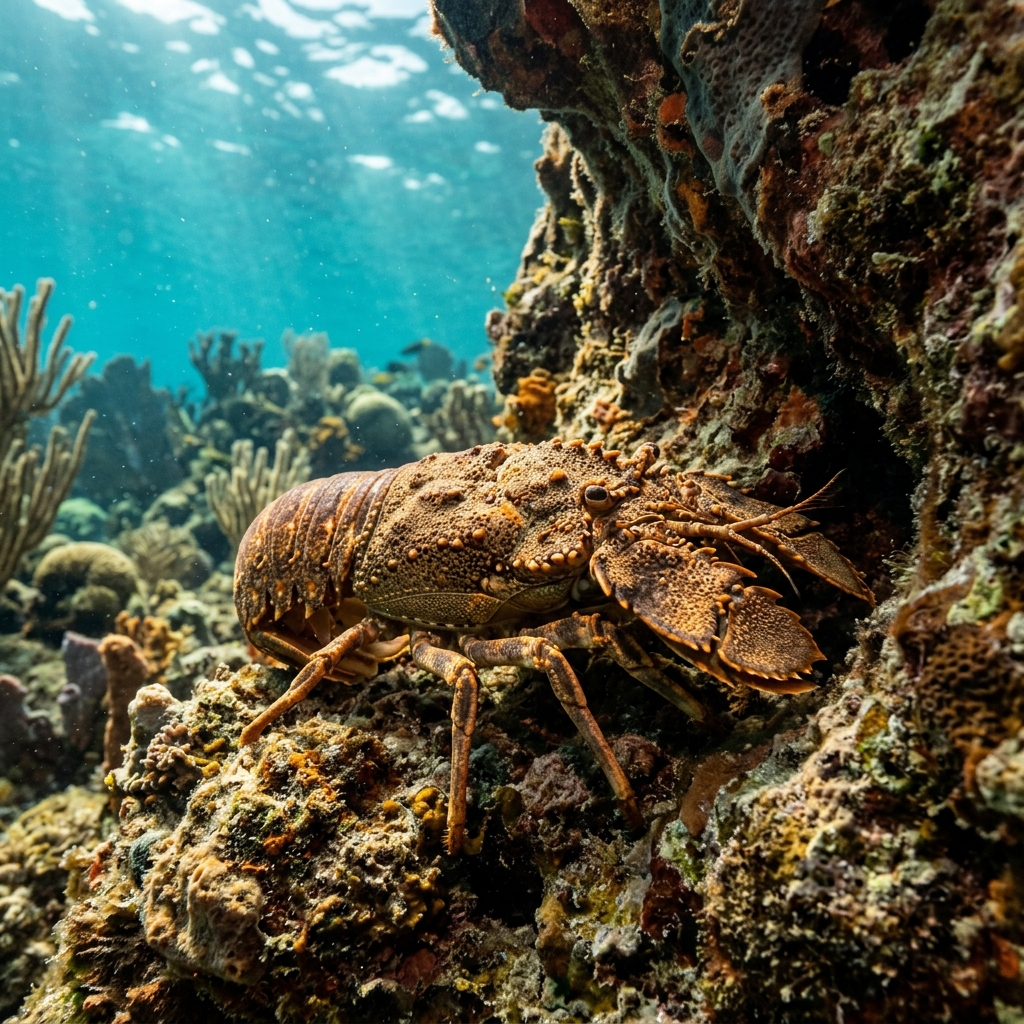
Slipper lobsters are unmistakable once you know what you are looking for: the long whip-like antennae of a spiny lobster are replaced by broad, flat, plate-like extensions that give the head a shovel-nosed profile. The body is heavily calcified (hardened), flattened top to bottom, and typically mottled in browns, tans, and oranges, blending well against rock and rubble. Most species sit between roughly 10 and 40 cm, and their segmented, armoured abdomen fans out into a distinct tail fan. Look underneath overhangs or in reef crevices where the flat silhouette presses tight against the substrate.
Most encounters happen at night or in the low-light hours when slipper lobsters venture out from caves, ledges, and rubble to forage across the reef floor. During the day they tuck themselves under overhangs or into crevices, often lying completely still and relying on camouflage rather than fleeing. When approached by a diver they will typically walk briskly away or flip backwards with a sudden tail-flick; slow, calm movements give you the best chance of a close look.
Rather than using claws to handle food, slipper lobsters use their robust mouthparts to crush hard-shelled prey such as molluscs and sea urchins, the flat body and shovel-nose are partly an adaptation for foraging under rocks and prying prey loose.
Slipper lobsters are present year-round with no concentrated season, which matches their tolerance for water temperatures from about 17 to 29 °C, comfortable on both temperate Mediterranean reefs and tropical Indo-Pacific sites throughout the calendar.
Reef neighbours a diver could mistake it for. Use the identification notes above to tell them apart.
Slipper lobsters are logged across an enormous range, with strong sightings records in the United States (especially Florida and the Southeast), the Mediterranean across Spain, Italy, Greece, and the French Riviera, and throughout the Indo-Pacific in the Philippines, Indonesia, and Australia. The Maldives' North and Central Atolls, Queensland in Australia, and Western Australia are also consistently productive regions for encounters.
Mapping where Slipper Lobster is logged…
They are logged across a wide spread of destinations. In the Atlantic and Caribbean, Florida and the Southeast United States are the most reliable areas. The Mediterranean offers good opportunities along the coasts of Spain, Italy, Greece, and southern France. Indo-Pacific hotspots include the Maldives, Philippines, Indonesia, and both Queensland and Western Australia.
Slipper lobsters are present year-round with no seasonal peak. They tolerate water temperatures from about 17 to 29 °C, so they are resident on both temperate and tropical reefs regardless of the time of year. Night dives significantly improve your chances since they are most active after dark.
Look for the flat, plate-like antenna extensions projecting forward from a shovel-shaped head, no long whip antennae. The body is flattened, heavily armoured, and mottled in earth tones. They rest motionless under ledges during the day and walk slowly across open reef at night.
Sizes vary across the many species within the family, but most divers encounter individuals roughly 10 to 40 cm in total body length. Larger species can exceed that, but the flat body shape often makes them look smaller than they are when pressed against a reef surface.
At most sites where they are recorded, slipper lobsters are logged as rare or uncommon, making a sighting a welcome find rather than a routine one. Night dives on rocky or rubble-strewn reefs in the Mediterranean and Indo-Pacific give you the best odds, as they emerge to forage after dark.
Site and sighting data is aggregated from diver logs, iNaturalist and GBIF. For taxonomy and conservation status:
European Spiny Lobster
1,951 sites