Congridae spp.
Conger eels lurk in wrecks and rocky reefs from the French Riviera to Florida. Here's where to find them, when to look, and how to tell them apart from morays.
Safety warning
Conger eels have powerful jaws and strong teeth capable of inflicting a serious bite. Never reach into crevices or wreck compartments without first checking; a resting conger may react defensively if cornered or surprised. Keep hands clear of any hole on a wreck, and if one opens its mouth and faces you, back away calmly. Incidents almost always involve a diver inadvertently threatening the animal in a confined space.
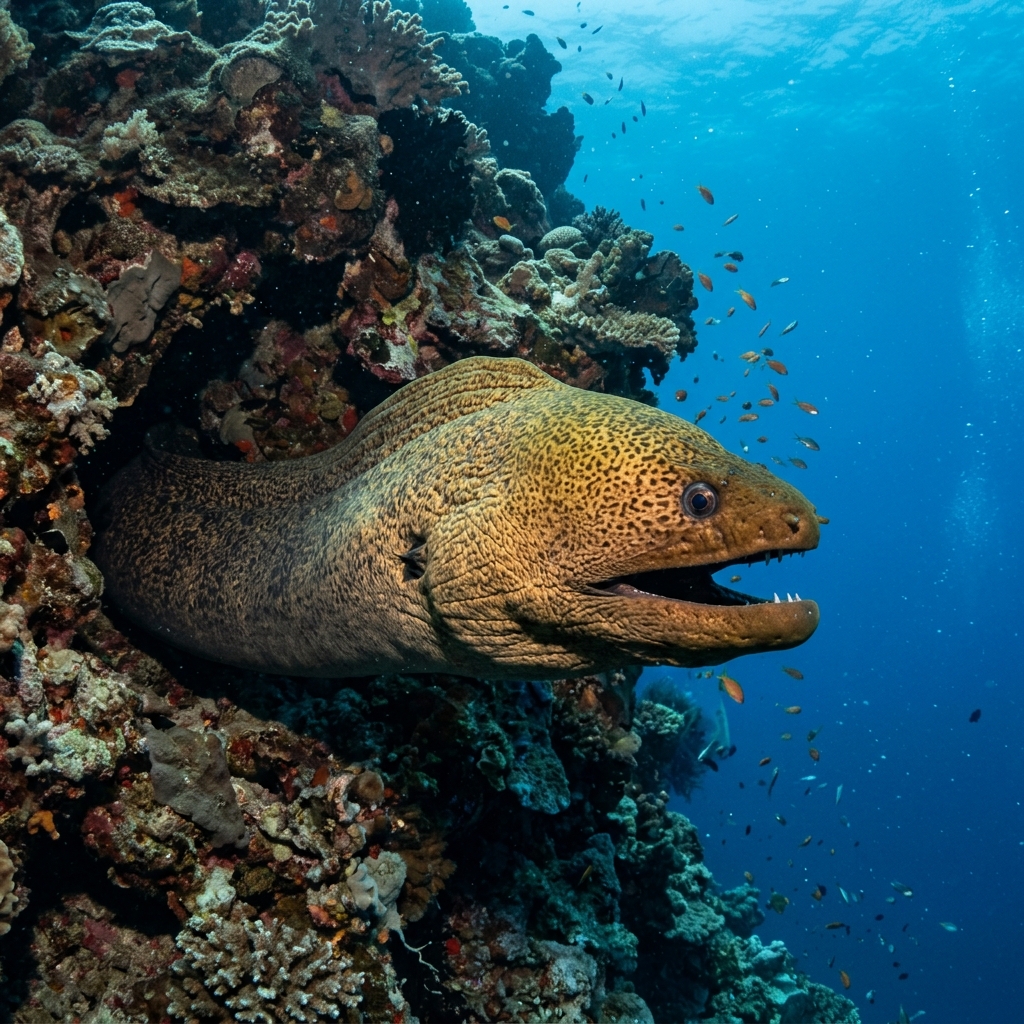
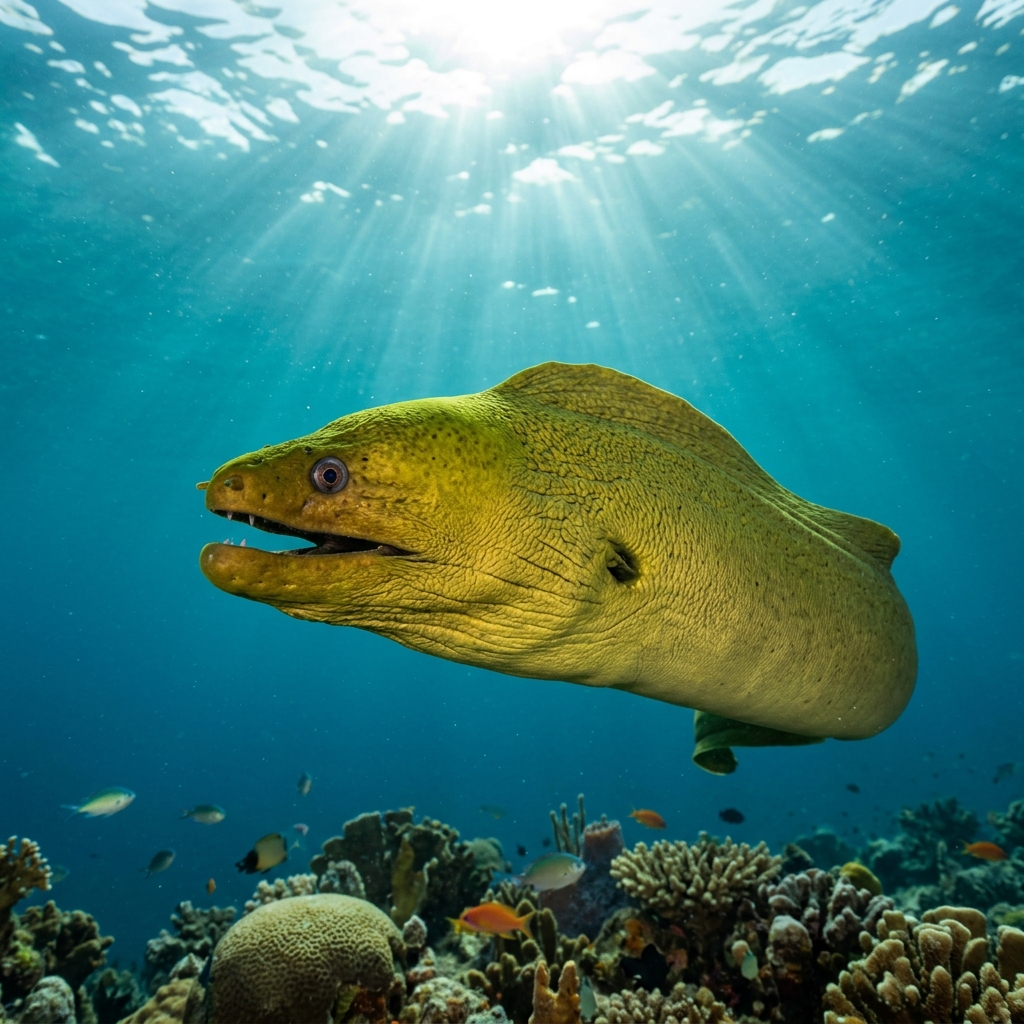
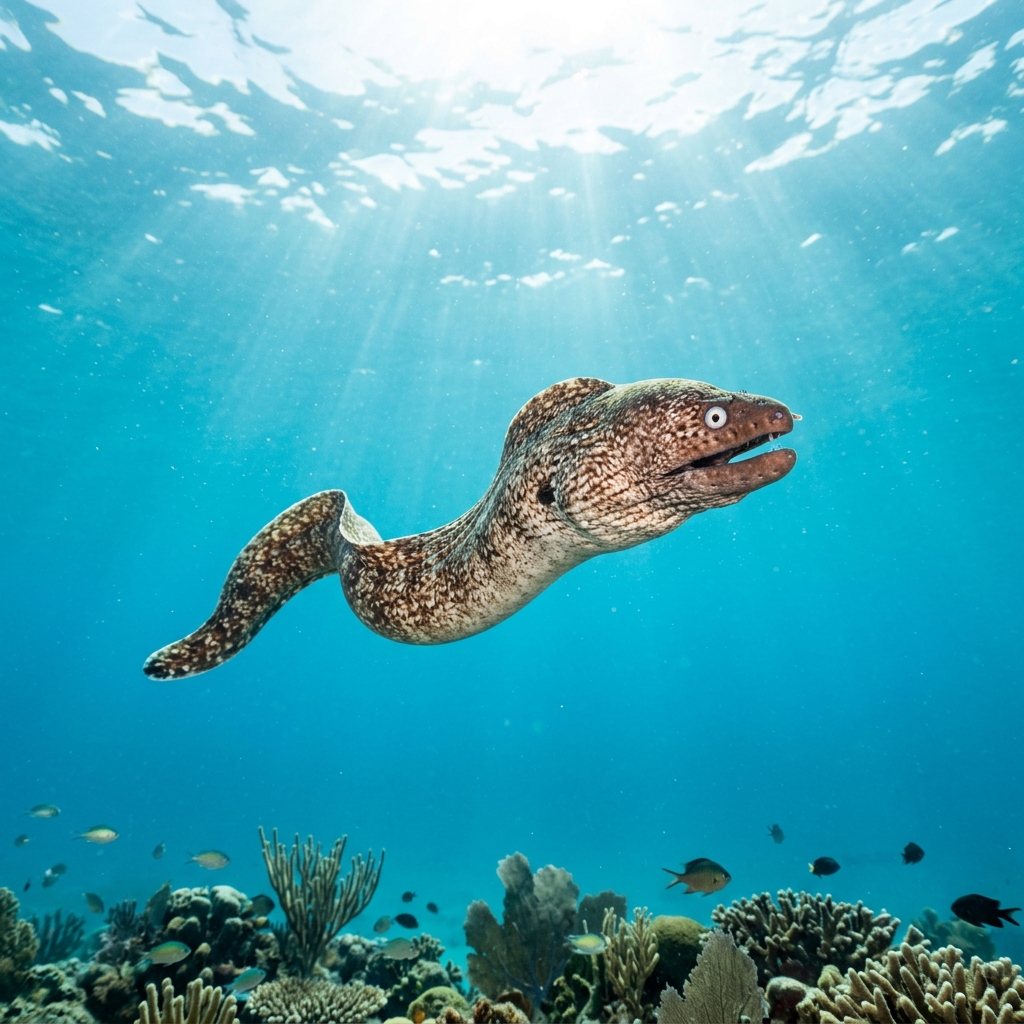
Conger eels are large, smooth-skinned eels with a pale grey to silvery-brown body, a continuous fin running from behind the pectoral fins all the way to the tail, and a notably wide, fleshy mouth. Unlike morays, they lack the blotchy patterning and have a more rounded snout with clearly visible pectoral fins set just behind the head. In the water they look almost ghostly pale compared to most reef eels, often lying coiled inside crevices, pipes, or wreck interiors with only the head showing. Individuals can reach impressive lengths, giving them a hose-like bulk that makes them hard to mistake once you know what you're looking at.
Most encounters happen during the day when conger eels are resting, wedged head-out inside a wreck compartment, pipe, rocky overhang, or rubble pile. They tend to hold position and stare back at curious divers rather than retreating, though a slow approach is advisable because a startled conger can surge forward. At night they become active hunters, moving openly across the reef, so night dives significantly increase the chance of seeing one on the move.
Conger eels are semelparous, meaning they reproduce only once in their lifetime. Adults migrate into deep open water to spawn, then die, never returning to the reef where they spent their lives.
Northern Hemisphere sightings concentrate from December through October, making them essentially an all-season animal with only a brief mid-autumn lull. Their tolerance for water temperatures from around 10°C to over 28°C means they are comfortable in both cool temperate and warm subtropical conditions year-round.
Reef neighbours a diver could mistake it for. Use the identification notes above to tell them apart.
Conger eels are most commonly logged across Europe, with France, Spain, Italy, Greece, and the United Kingdom leading the records, and the French Riviera, Brittany and Normandy, and Costa Blanca among the standout regions. The United States, particularly Florida and the Southeast, is another strong area for sightings. They also turn up regularly across Australia, including Queensland and Western Australia, and in Japan around the Izu Peninsula.
Mapping where Conger Eel is logged…
Conger eels are most reliably found across Europe, particularly around France, Spain, Italy, Greece, and the United Kingdom, with the French Riviera, Costa Blanca, and Brittany all producing strong sighting records. Florida and the Southeast United States are also productive, as are parts of Australia and Japan's Izu Peninsula. Wrecks and rocky reefs in these regions are your best bet.
In the Northern Hemisphere, sightings are logged across most of the year from December through October, with no single peak month dominating. Their wide temperature tolerance means they stay active in both cool and warm conditions, so they are not strongly seasonal. Night dives are particularly productive as they move more freely after dark.
They can be. Conger eels have strong jaws and can bite hard if startled in a confined space. The practical risk is reaching into a wreck cavity or rocky crevice without checking first. Give them space, avoid blocking their exit, and don't handle them. An undisturbed conger will usually just watch you.
The clearest giveaway is the pectoral fin: conger eels have a visible, paddle-like pectoral fin just behind the head, while morays lack this entirely. Congers are also typically pale grey to silvery-brown and smooth in appearance, whereas most morays display bolder patterns or brighter colours. A wide, rounded snout versus the pointed, often narrower head of many morays also helps.
Within the Congridae family, sizes vary by species, but the European conger is one of the largest bony fish in the Atlantic, with some individuals exceeding two metres in length and weighing well over 50 kg. Most divers encounter animals in the one- to one-and-a-half-metre range, which is still a striking presence in a wreck porthole.
No. Conger eels are semelparous, meaning each individual spawns just once in its lifetime. When they reach reproductive maturity they migrate into deep open water, spawn, and then die. It is thought they may travel thousands of kilometres to reach their spawning grounds.
Site and sighting data is aggregated from diver logs, iNaturalist and GBIF. For taxonomy and conservation status:
Mediterranean Moray
2,020 sites