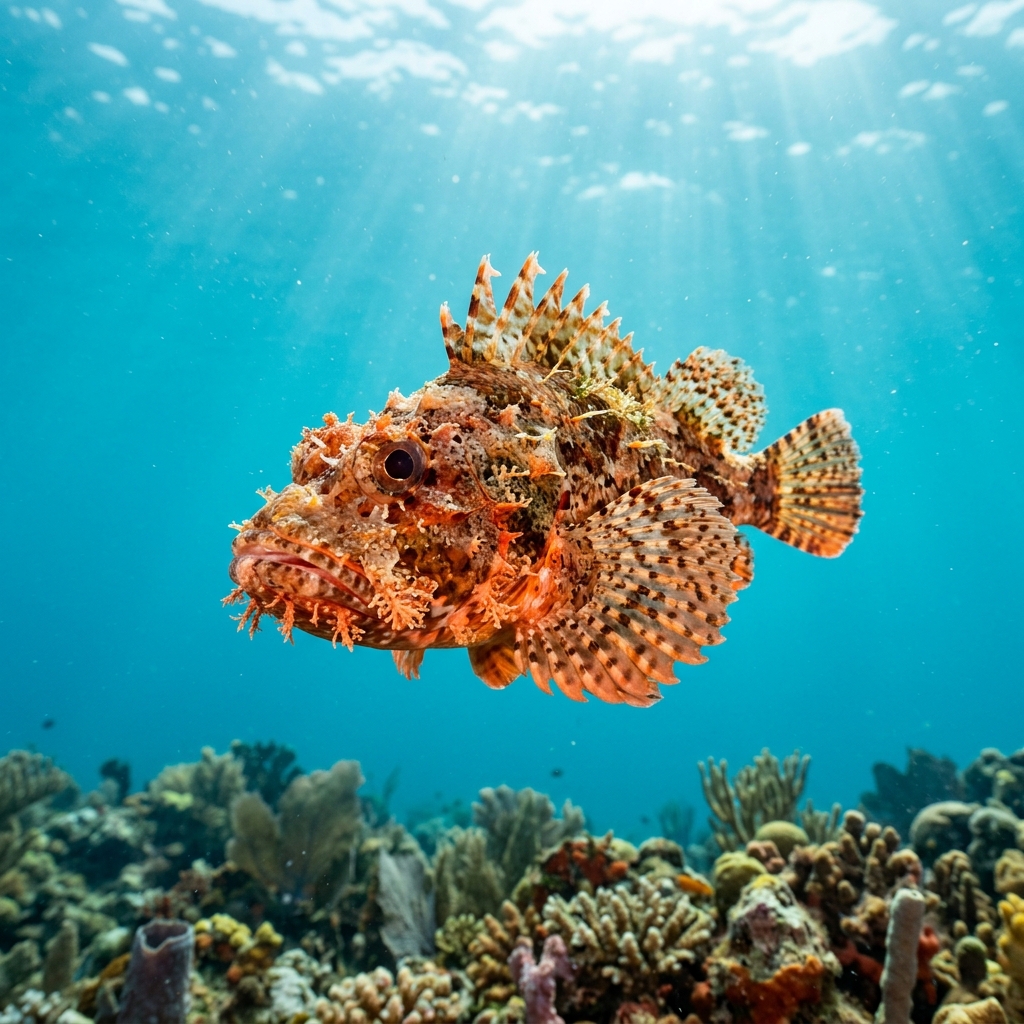
Scorpaenidae spp.
Scorpionfish are logged year-round from the French Riviera to the Philippines. Learn how to spot these masters of camouflage before you nearly touch one.
Safety warning
The spines carry venom and snap off easily in the skin. Do not touch it, and never rest a hand or knee on the reef near one; the spines drive in on the lightest contact.
If you're stung
Venomous spinesGeneral first-aid guidance, not a substitute for professional medical care. In an emergency, call your local emergency number.
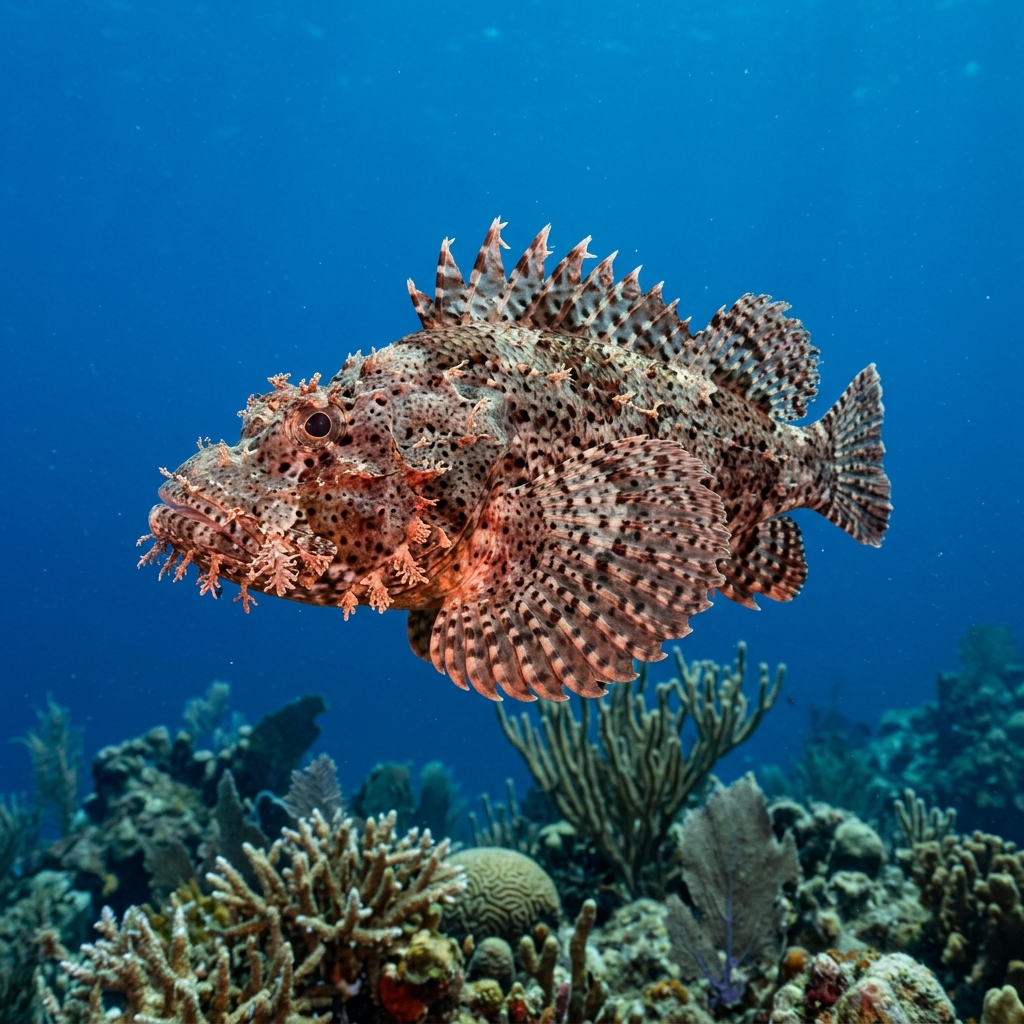
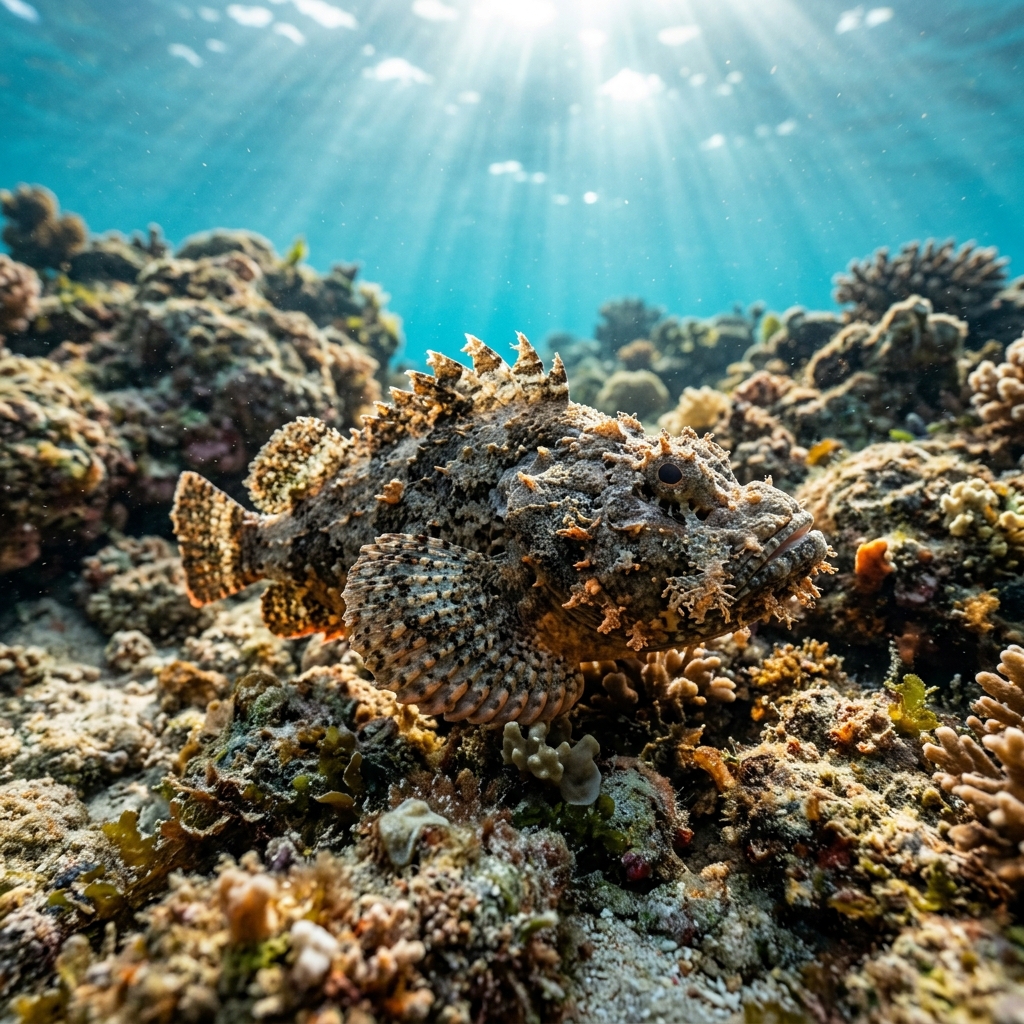
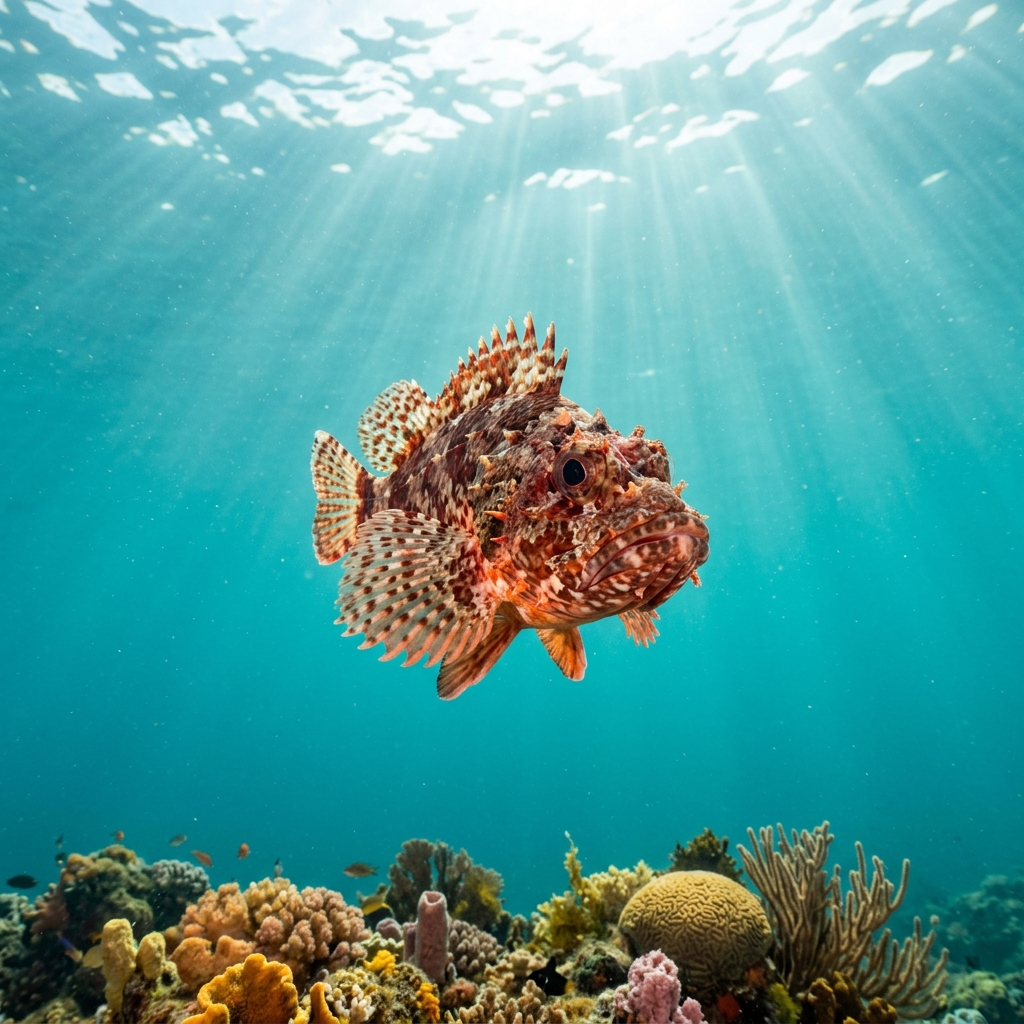
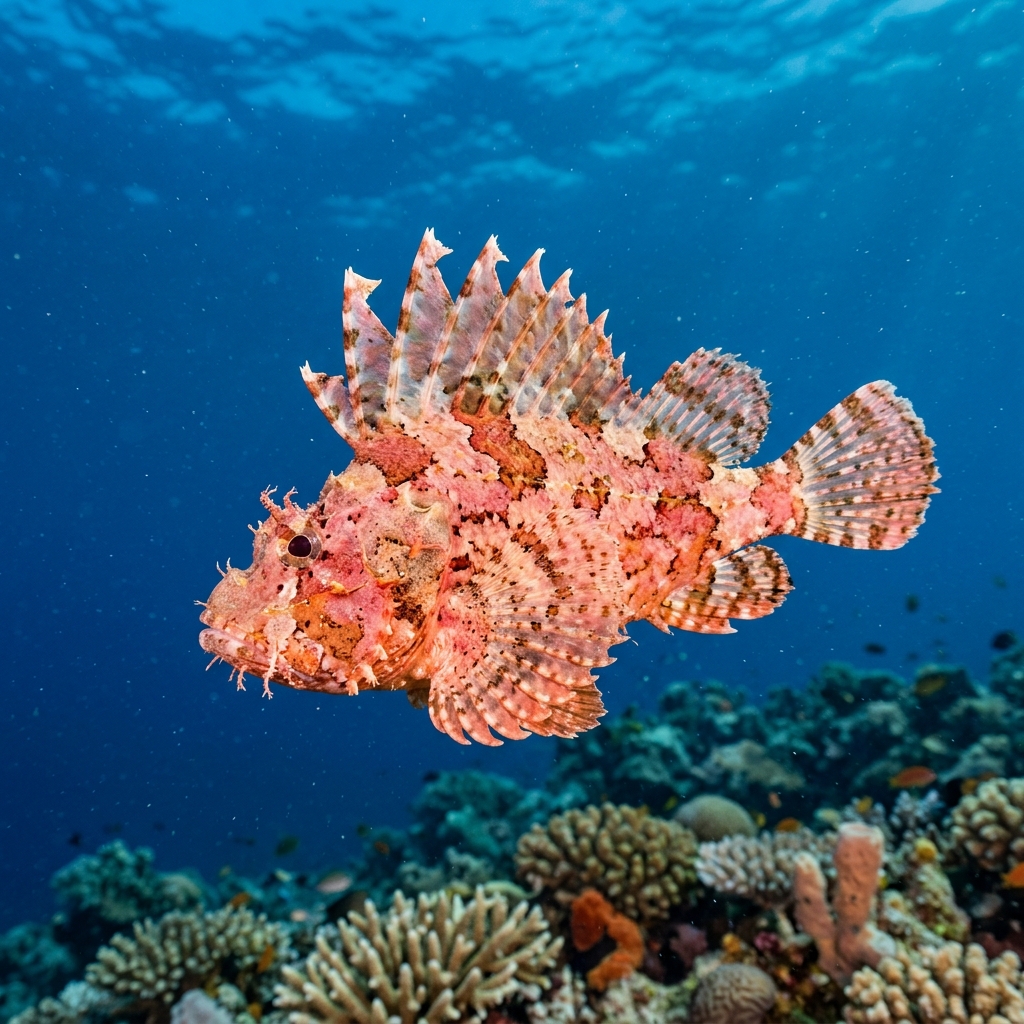
Camouflage is the defining feature of this family: rough, warty skin covered in mottled browns, reds, oranges, and greys that mirrors the reef or rubble beneath them almost perfectly. Most species have a large, boxy head with a wide downturned mouth, and a fan of spiny dorsal fins (the row of sharp spines along the back) held slightly raised when alert. Body size varies enormously across the family, from palm-sized species tucked into crevices to larger individuals stretching 50 cm or more along open reef slopes. The surest way to spot one is to scan for an outline that looks slightly wrong on the rock or rubble, then look for an eye.
Scorpionfish are ambush predators, and when you find one it will almost certainly be sitting completely still on the reef, a rock, or sandy rubble, waiting for prey to wander within striking distance. They are famously unbothered by divers who approach slowly, often refusing to move even when a camera is a few centimetres away. Look along the base of reef walls, on rubble patches, and tucked into crevices rather than out in open water.
When a scorpionfish does decide to move, it tends to do so with a short, sudden burst rather than swimming steadily, which can briefly make it look like a falling leaf. Some species also shed their outer skin layer periodically to remove algae and fouling organisms that might otherwise disrupt their camouflage.
This group is present year-round in both hemispheres, with no concentrated season recorded in either northern or southern hemisphere data. Their tolerance for water temperatures from around 14 °C to over 29 °C means they are resident on both warm tropical reefs and cool temperate rocky shores regardless of month.
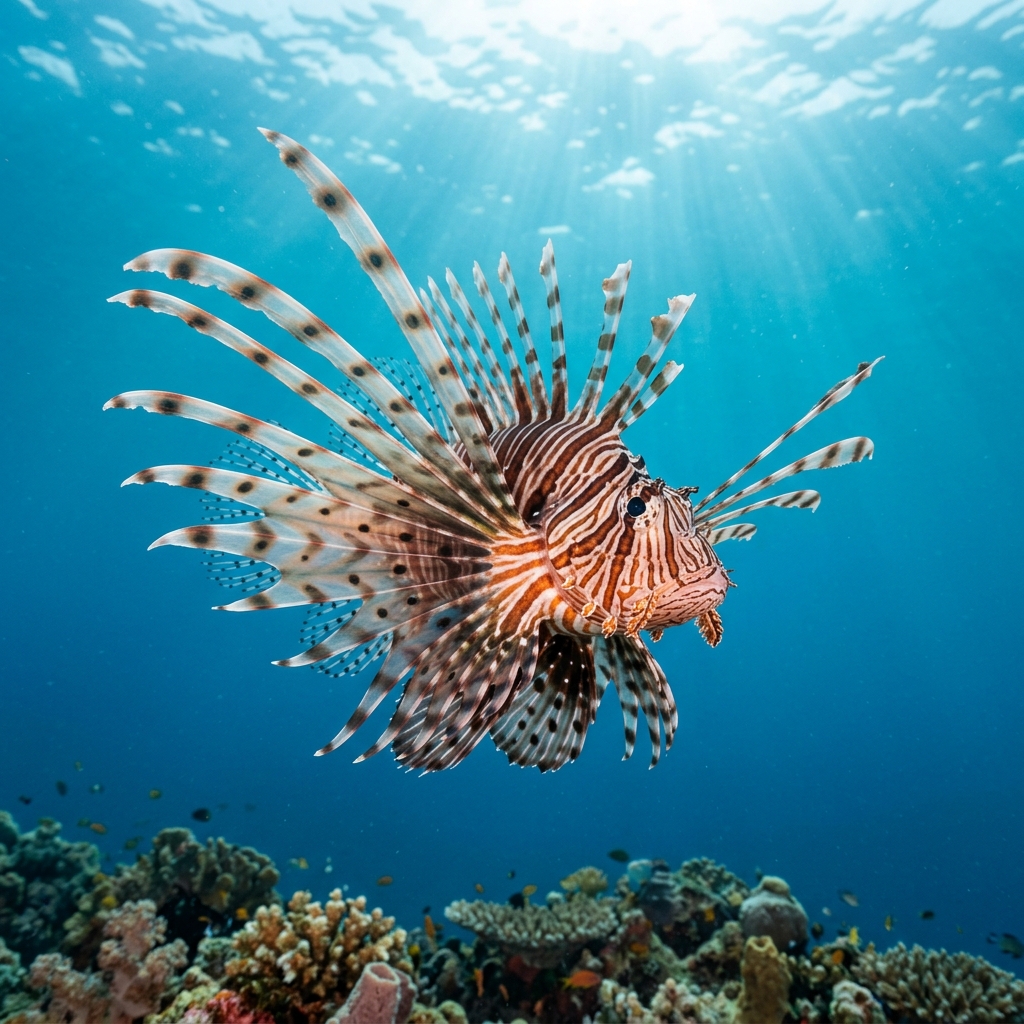
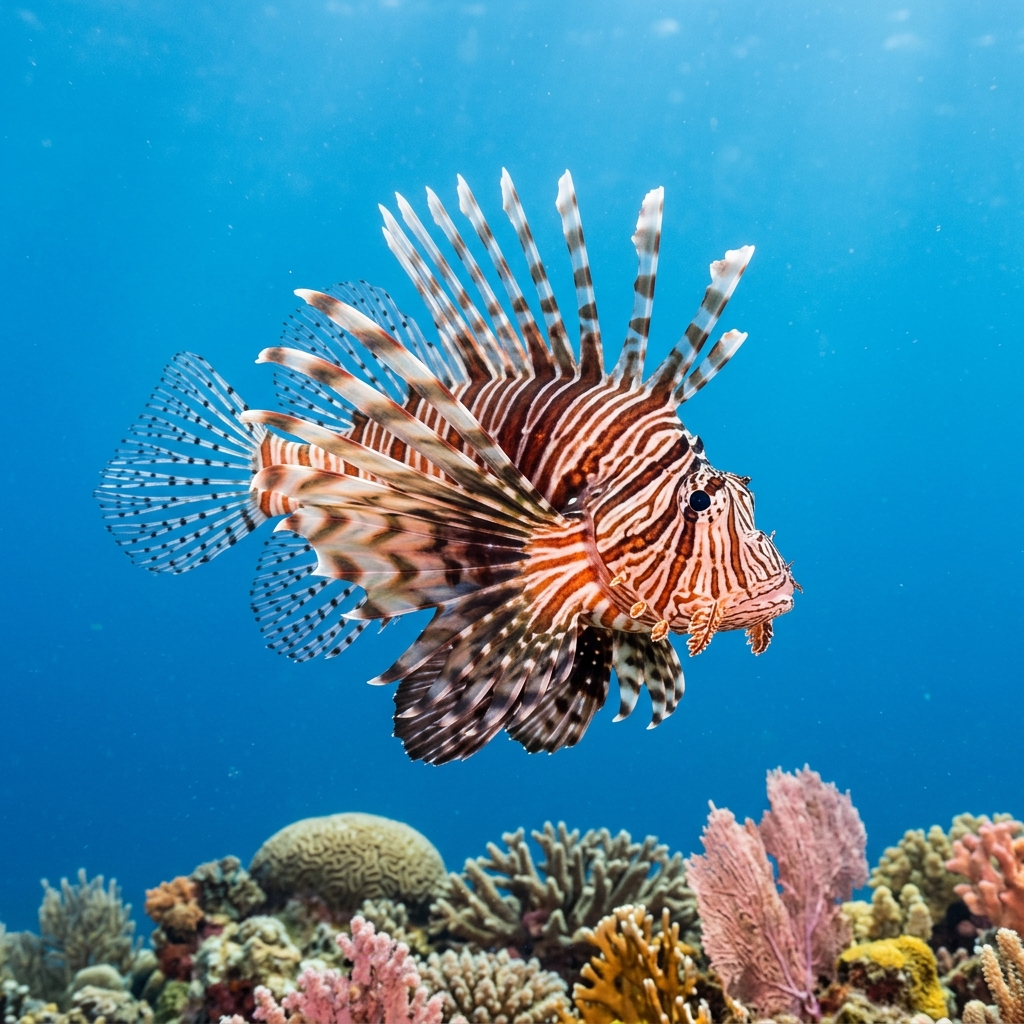
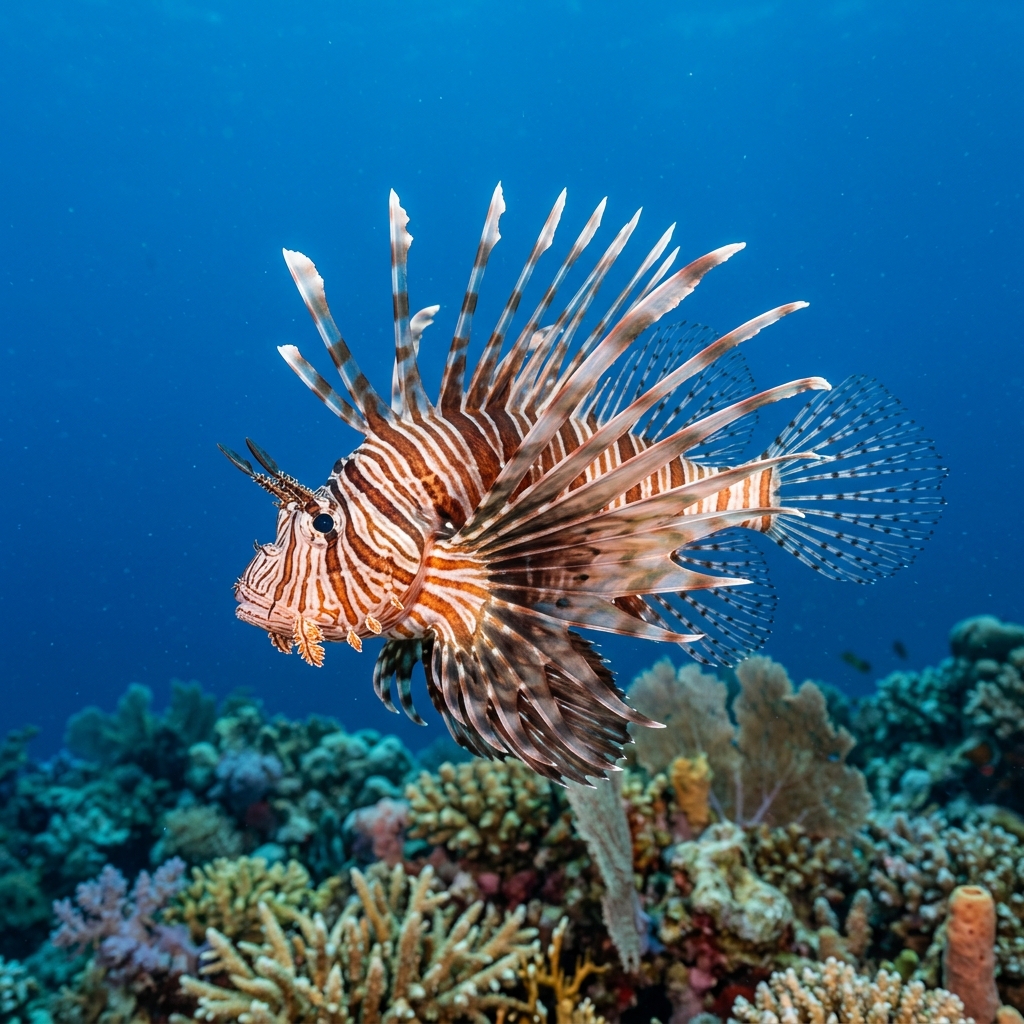
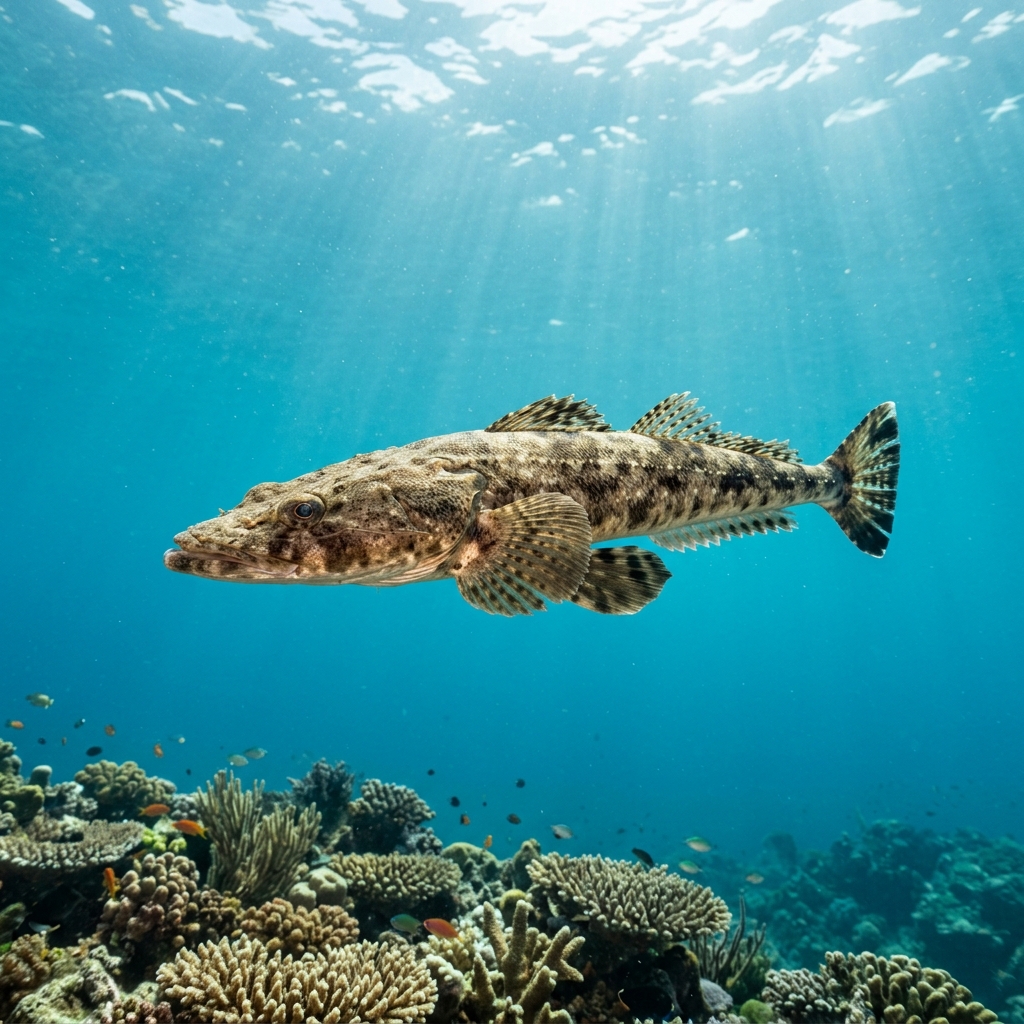
Reef neighbours a diver could mistake it for. Use the identification notes above to tell them apart.
Scorpionfish are among the most widely logged fish on the planet, recorded across tropical, subtropical, and temperate seas. The heaviest concentration of sightings comes from the Mediterranean, particularly the French Riviera, Costa Brava, and Sardinia, alongside strong records from Florida, the Pacific Coast of the United States, and the Philippines. Egypt's Sharm el Sheikh and the broader Red Sea region also produce consistent encounters.
Mapping where Scorpionfish is logged…
Scorpionfish are logged across a huge range of dive destinations. Mediterranean hotspots include the French Riviera, Costa Brava, and Sardinia. Strong sightings also come from Florida, the Pacific Coast of the United States, Sharm el Sheikh in Egypt, and the Philippines. In short, if you are diving on a rocky or coral reef, there is a good chance one is nearby.
Because the family spans tropical, subtropical, and temperate waters, scorpionfish are available year-round at most sites where they occur. There is no distinct peak season in either hemisphere. Your chances are similar in January as in July.
Scorpionfish are not considered actively dangerous to divers, but their dorsal spines can deliver a painful venomous sting if you accidentally touch or kneel on one. The real risk is their camouflage: they are very easy to miss. Keep good buoyancy control, look carefully before placing hands or knees, and never touch reef or rubble you have not inspected closely.
Focus on texture rather than colour. A scorpionfish looks like a piece of reef that has an eye. The body is blocky with a large downturned mouth, warty skin, and raised dorsal spines. They sit motionless on the substrate, which is your biggest clue: a lump of rubble that does not move when the current shifts is worth a second look.
Scorpionfish are sit-and-wait ambush predators. They choose a spot that matches their colouration, remain completely motionless, and strike with an extremely fast lunge when a fish or crustacean comes within range. The strike itself can be over in milliseconds, which is why you rarely see them in active pursuit of prey.
Site and sighting data is aggregated from diver logs, iNaturalist and GBIF. For taxonomy and conservation status:
Indian Lionfish
2,604 sites