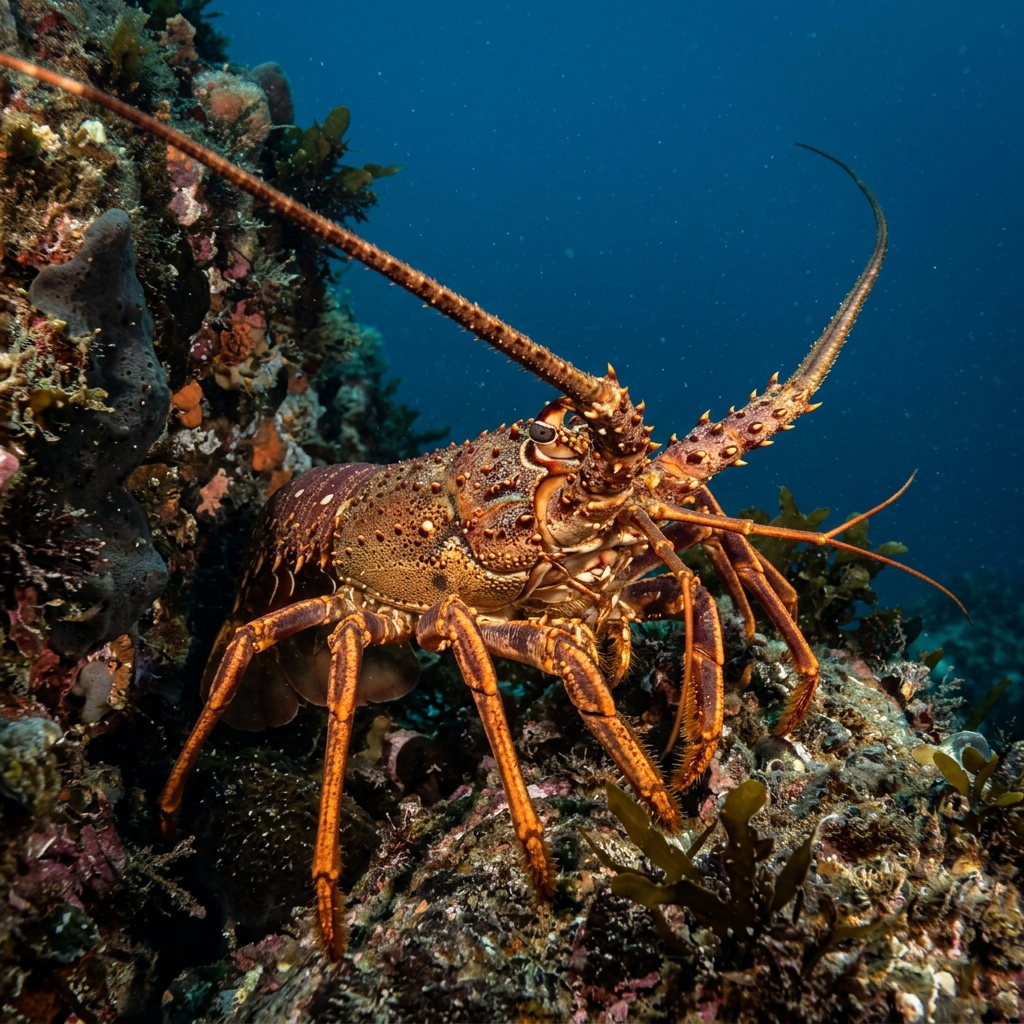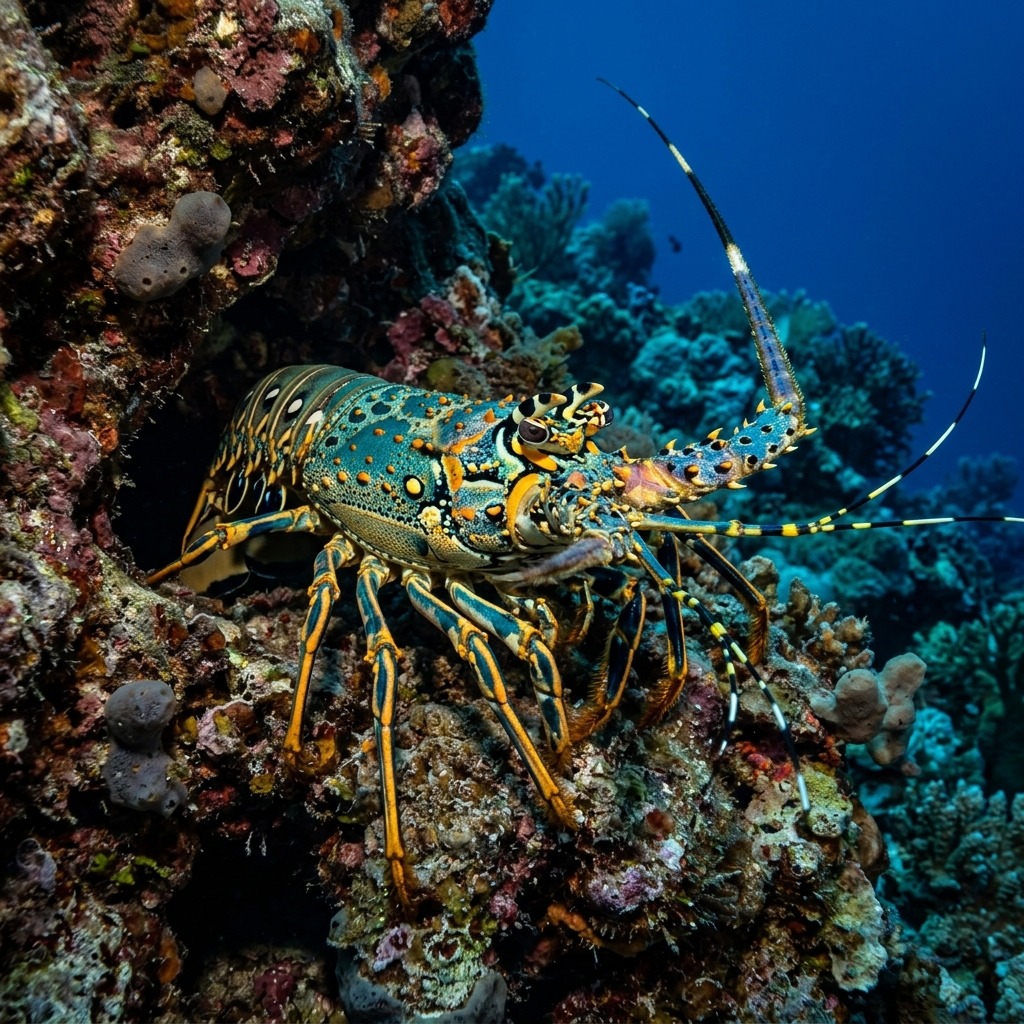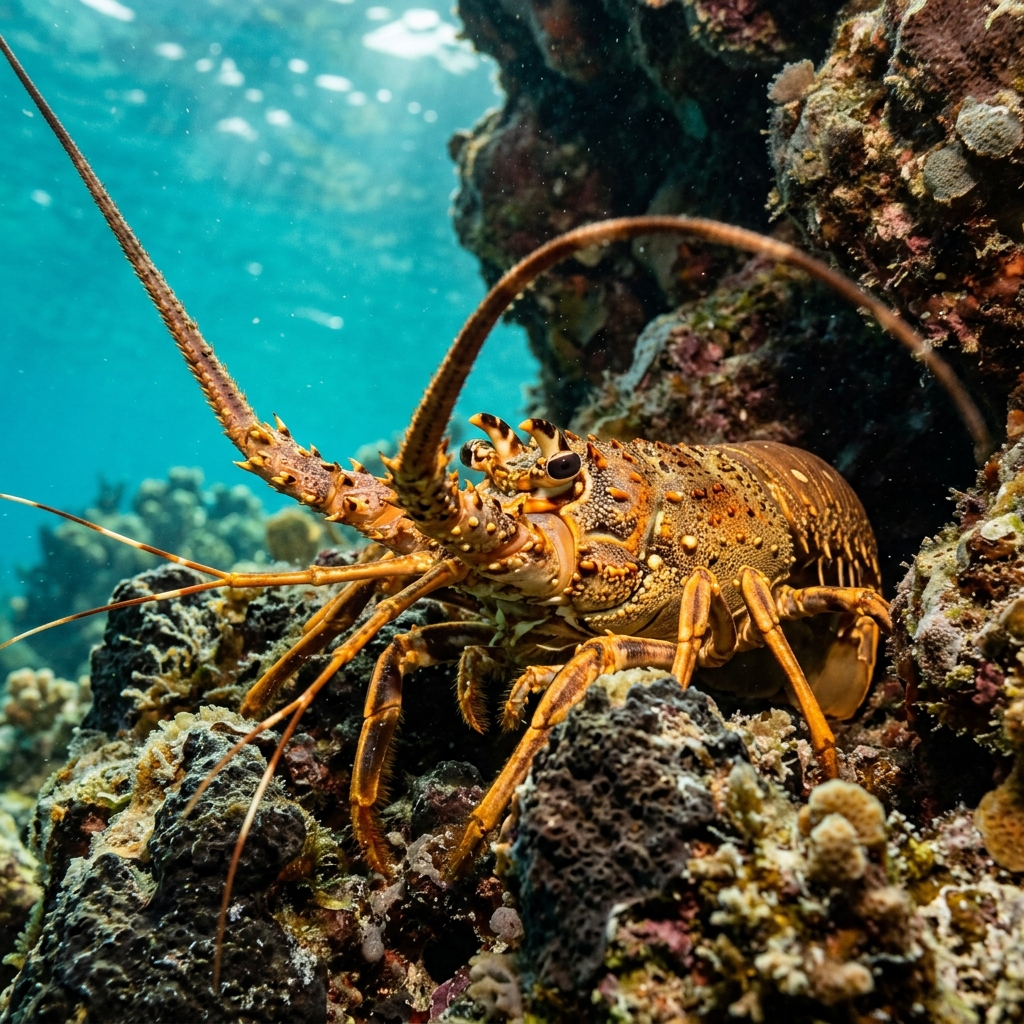
Palinuridae spp.
Spot spiny lobsters in Florida, the Mediterranean & beyond. Most sightings fall May, Oct in the north. Here's where divers find them and how to identify the family.
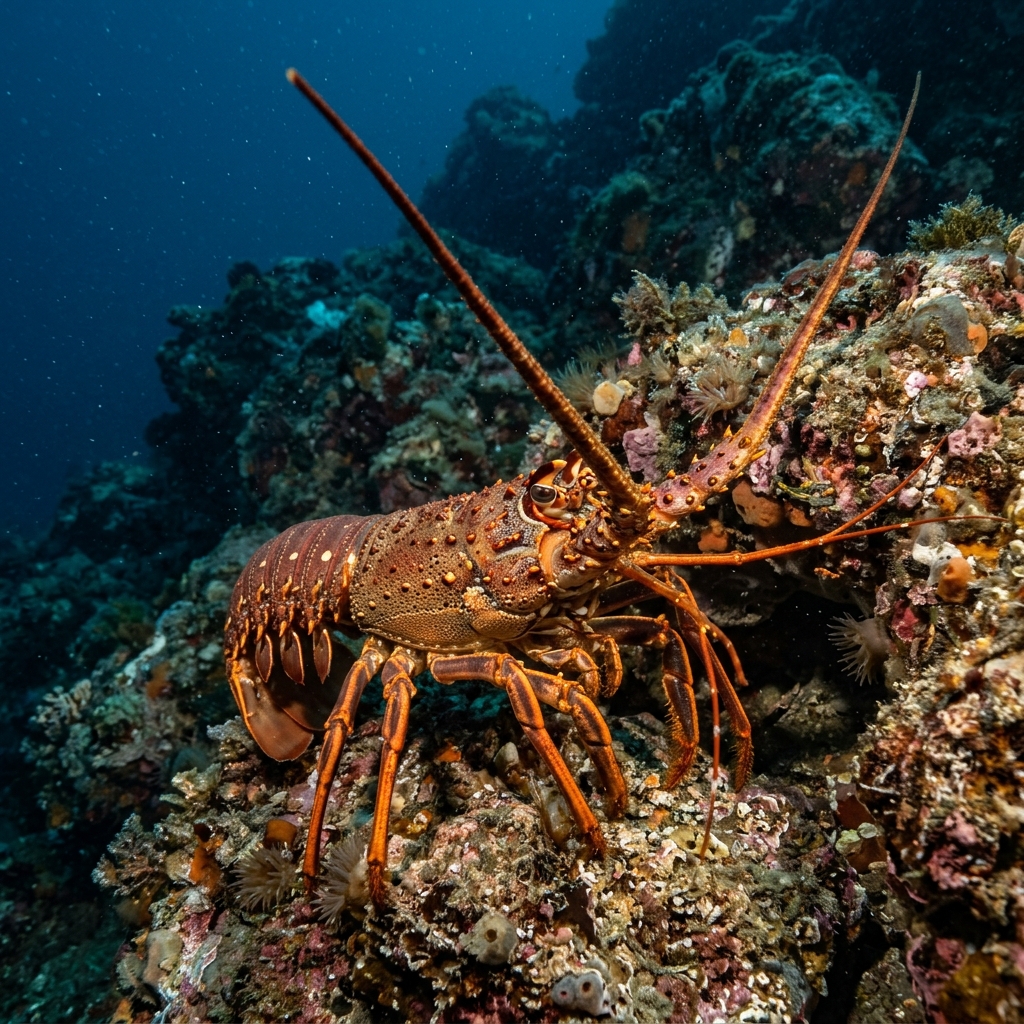
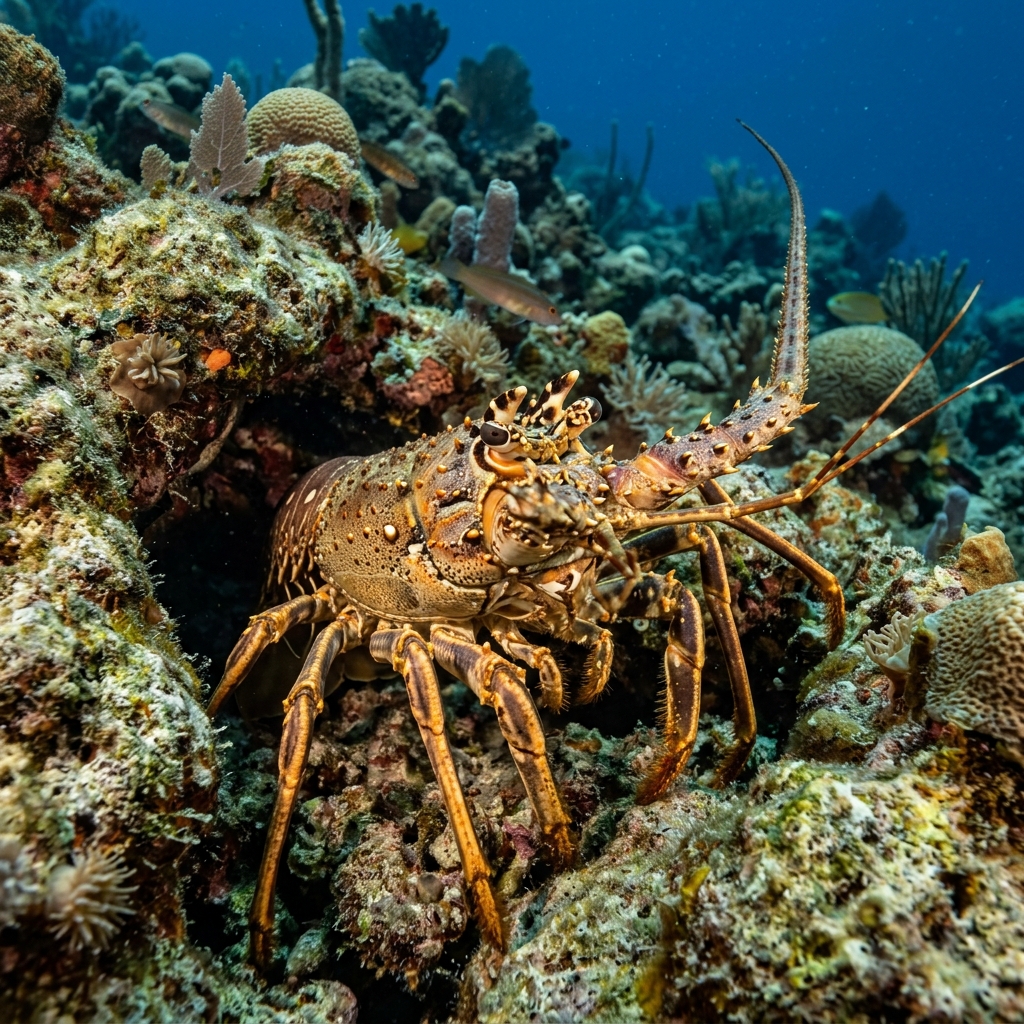
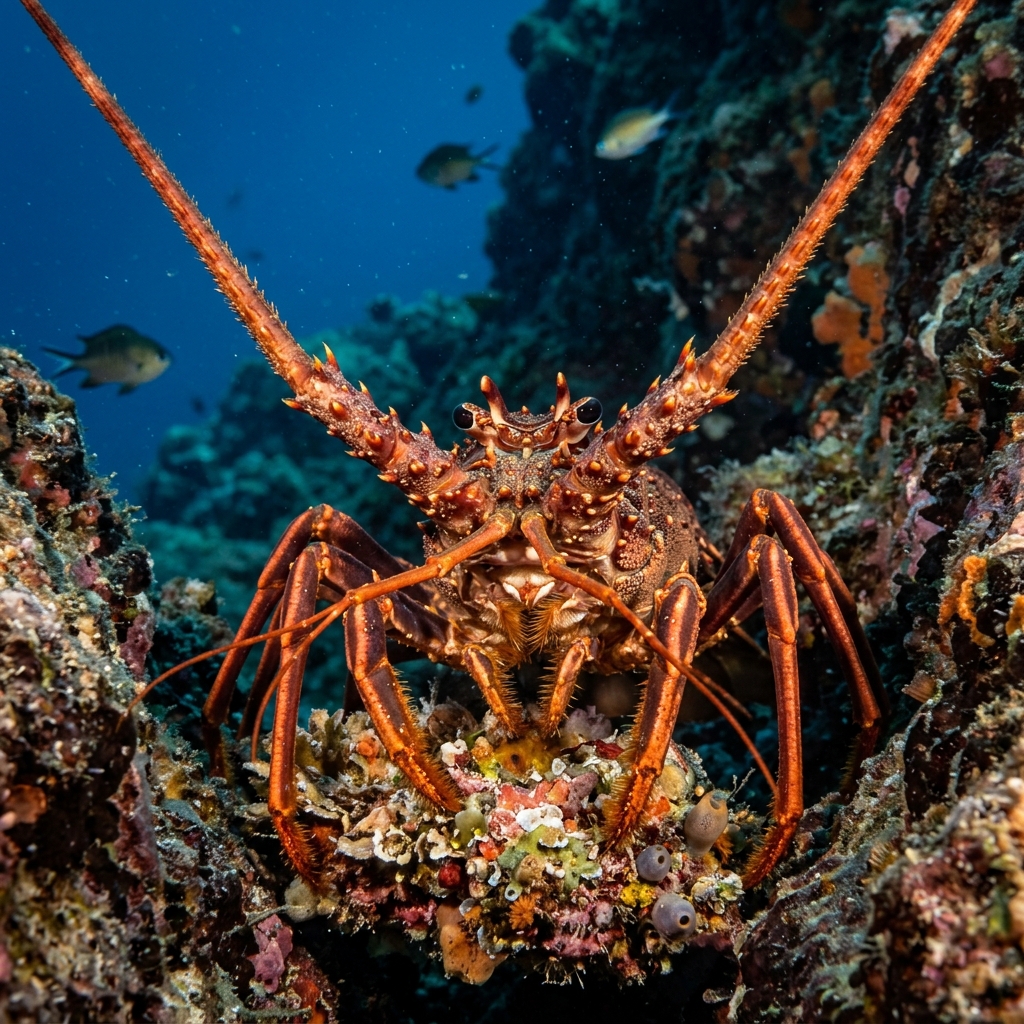
Long, whip-like antennae that often extend well beyond the body are the first thing you'll notice poking from a crevice. The carapace (body shell) is covered in forward-pointing spines, and colouration runs from reddish-brown to orange or tan depending on species and region. Unlike common lobsters, spiny lobsters have no large front claws, giving them a smoother, more streamlined silhouette at the shoulder. Females may show orange egg masses tucked under the abdomen, visible if they venture into open water.
Spiny lobsters are mostly nocturnal, spending daylight hours wedged into reef crevices, overhangs, and rocky holes with antennae fanned outward as an early-warning system. At night they venture out to forage across the reef, and a torch-lit dive is far more likely to produce an open-water encounter. When approached, they reverse rapidly using a powerful tail-flip, so move slowly and avoid shining your light directly at them from close range.
Spiny lobsters are famous for their mass migrations: in some species, hundreds of individuals form single-file queues and march across the seafloor for many kilometres, each animal touching the one ahead, apparently using the contact to reduce drag and conserve energy during the journey.
In the Northern Hemisphere, sightings concentrate between May and October, when warmer water temperatures bring lobsters into shallower, more accessible depths. In the Southern Hemisphere, the productive window runs September through April.
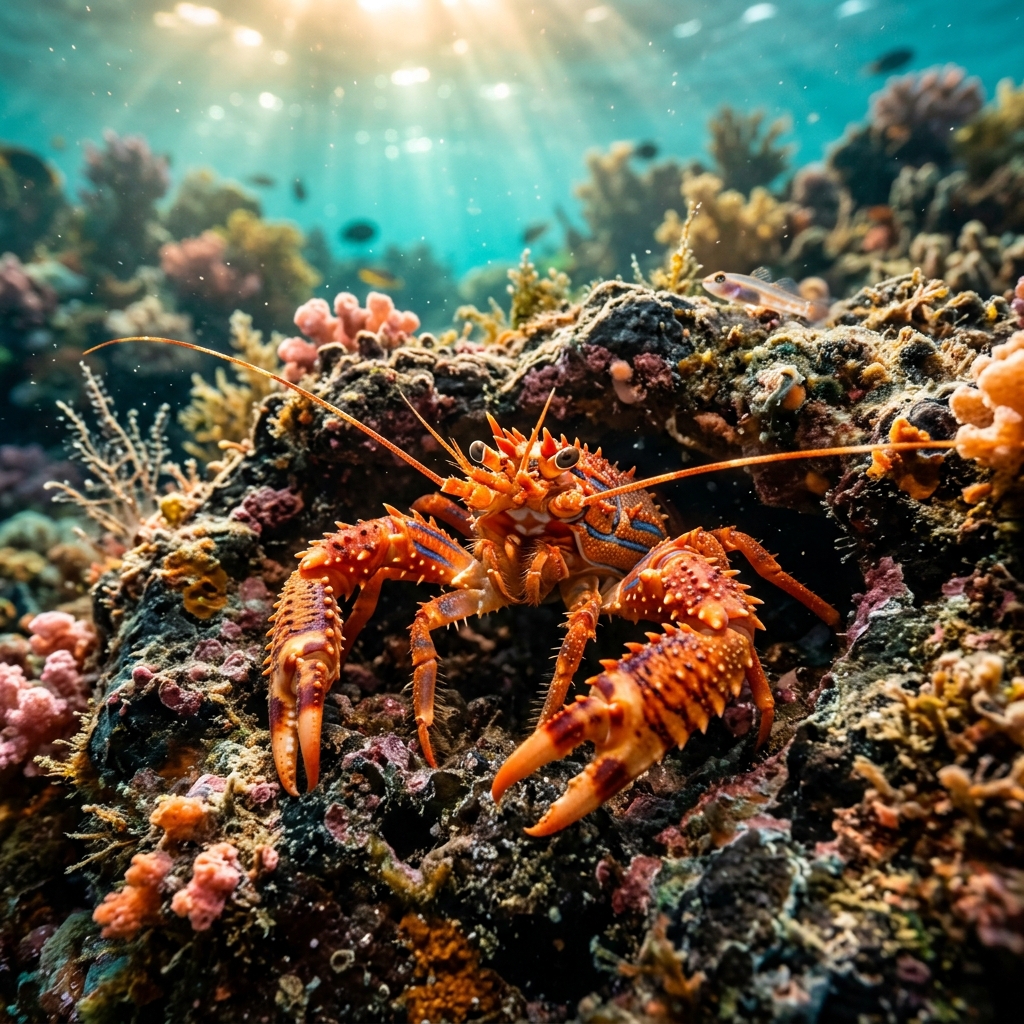
Reef neighbours a diver could mistake it for. Use the identification notes above to tell them apart.
Spiny lobsters are most commonly logged across the United States, with Florida and the Southeast standing out as the strongest region by far. The Mediterranean is excellent territory too, with Italy, Greece, Spain, France, and Turkey all recording strong populations across their rocky reefs and sea caves. Further afield, Australia, Mexico, and the Cayman Islands regularly produce sightings.
Mapping where Spiny Lobster is logged…
Florida and the broader southeast United States produce more sightings than anywhere else. The Mediterranean is a reliable second choice, with Greece, Italy, Spain, France, and Turkey all delivering encounters along rocky reefs and sea caves. Australia, Mexico, the Cayman Islands, and Roatán in Honduras also feature regularly in diver logs.
In the Northern Hemisphere, May through October is the productive window. Southern Hemisphere divers should aim for September through April. Within any season, night dives consistently produce better sightings because spiny lobsters are primarily nocturnal foragers.
Look for very long whip-like antennae projecting from a crevice before you see the animal itself. The body is covered in spines and runs reddish-brown to orange or tan. The key identifier compared with true lobsters is the complete absence of large front claws.
Size varies across the family, but most species divers encounter have a body length of roughly 20 to 45 cm, with the antennae often doubling that total span. Some larger species, such as the Caribbean spiny lobster, can exceed 50 cm body length in mature adults.
Yes, and it is one of the more remarkable sights in reef diving. In several species, hundreds of individuals form single-file queues and walk in contact with one another across the seabed, sometimes covering many kilometres. This behaviour is best documented in the Caribbean and appears linked to seasonal changes in water temperature.
Site and sighting data is aggregated from diver logs, iNaturalist and GBIF. For taxonomy and conservation status:
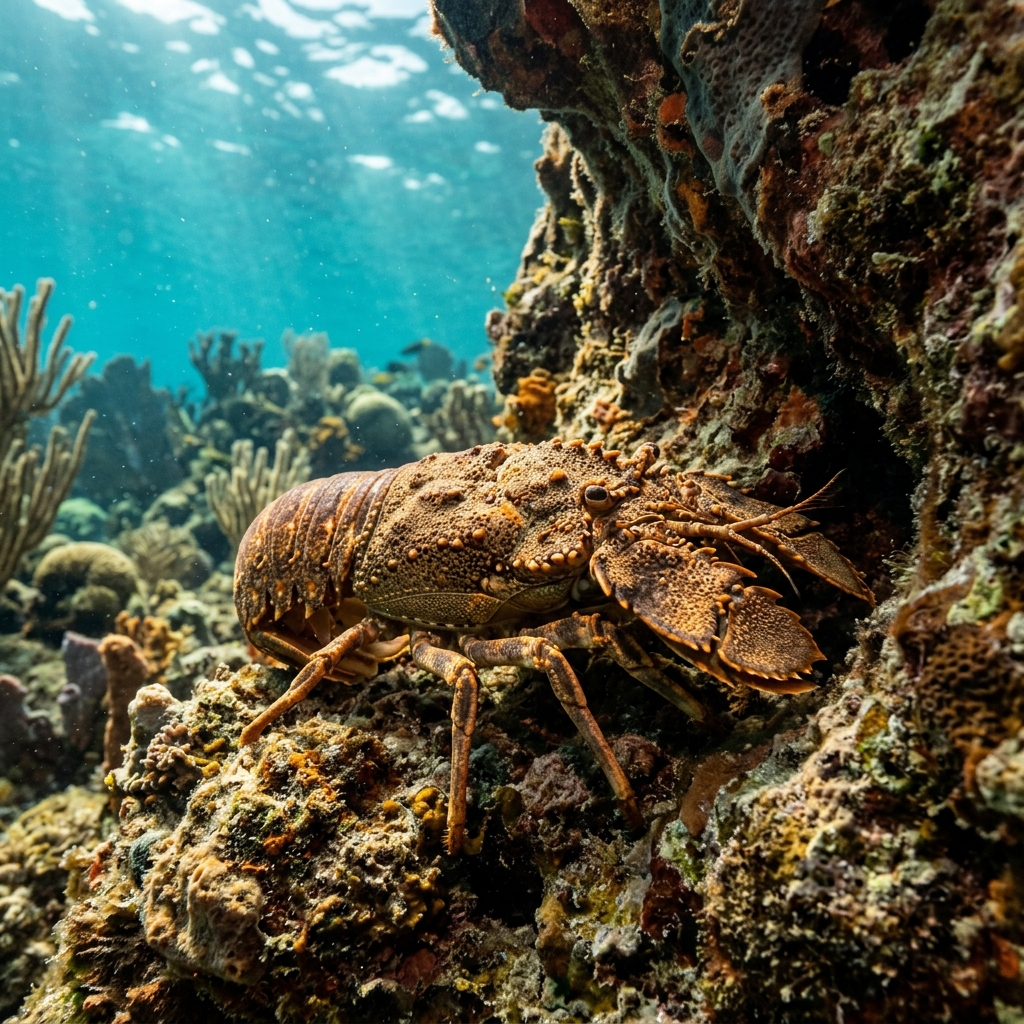
Scyllaridae spp.
European Spiny Lobster
1,951 sites