Epinephelidae spp.
Groupers appear year-round across tropical reefs from the Maldives to the Red Sea. Here's where divers log them most and how to tell species apart.
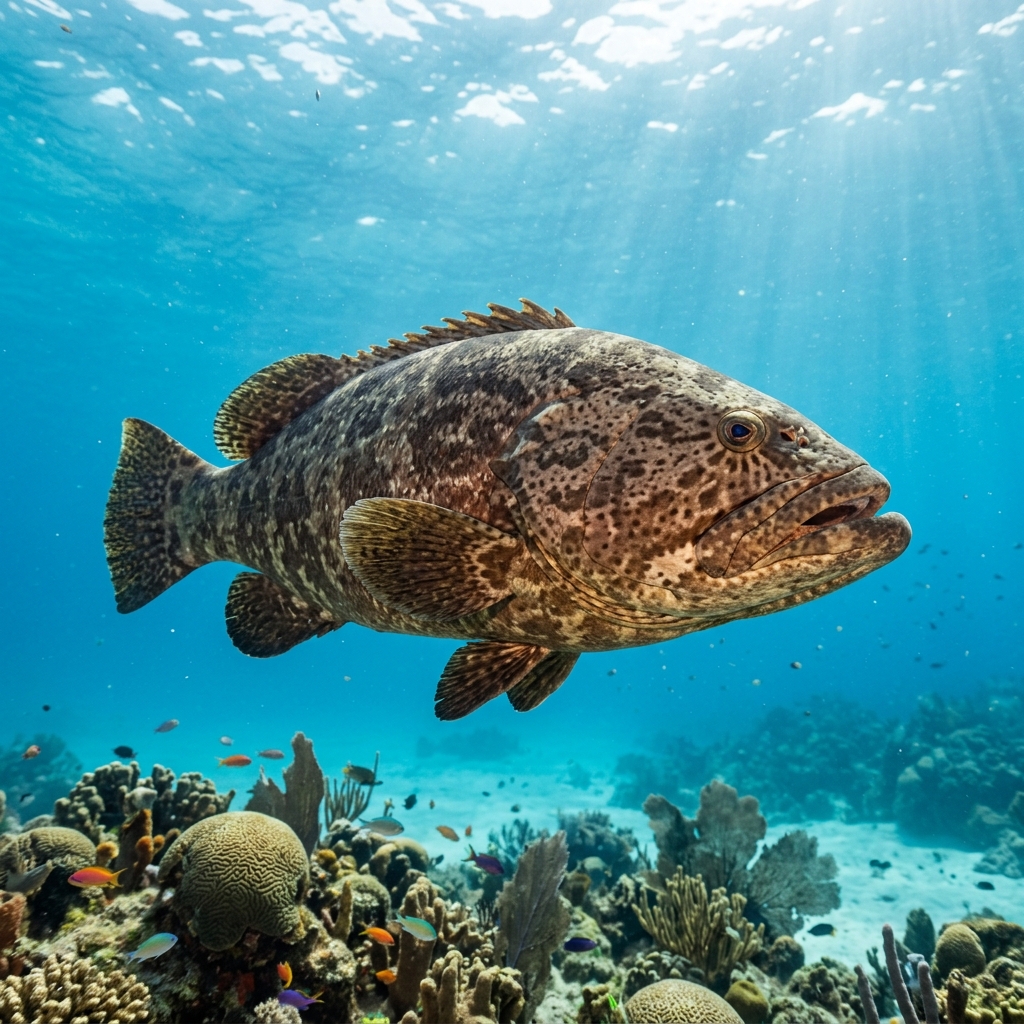
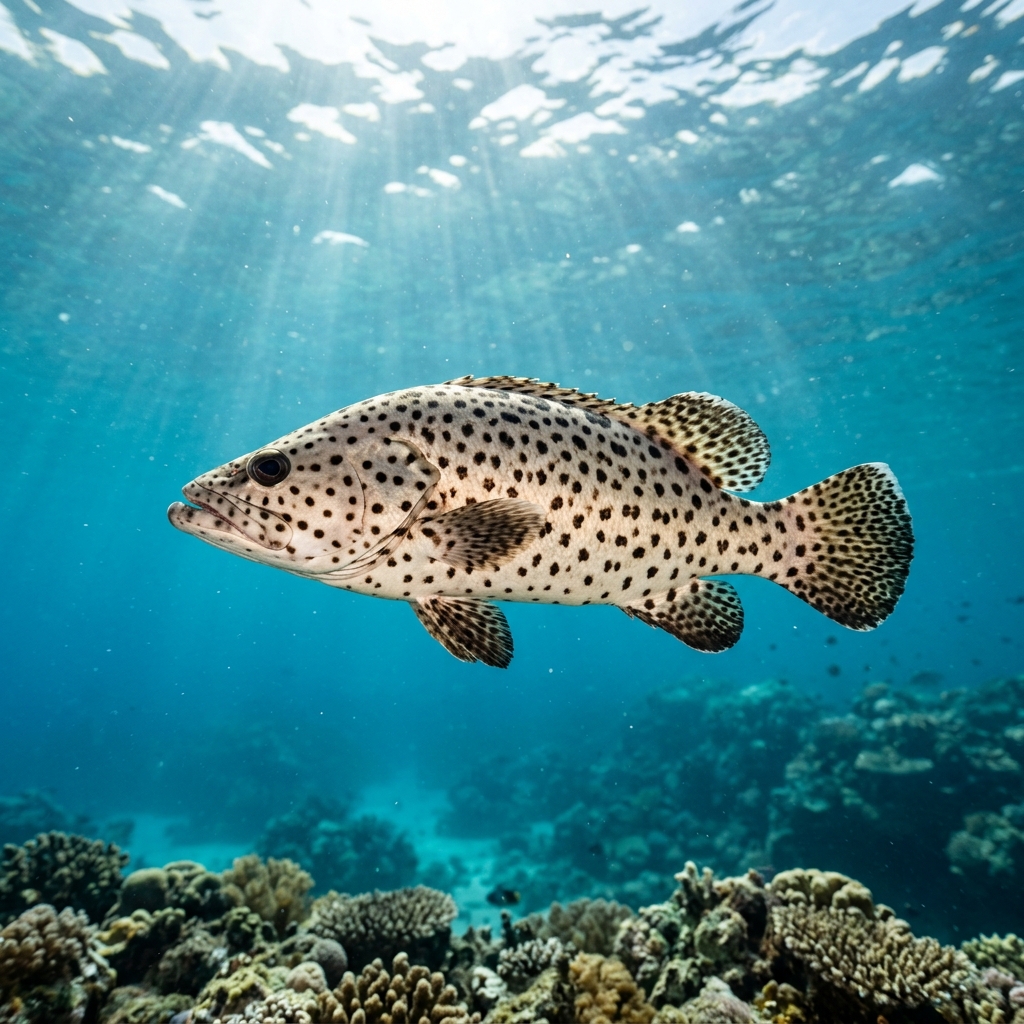
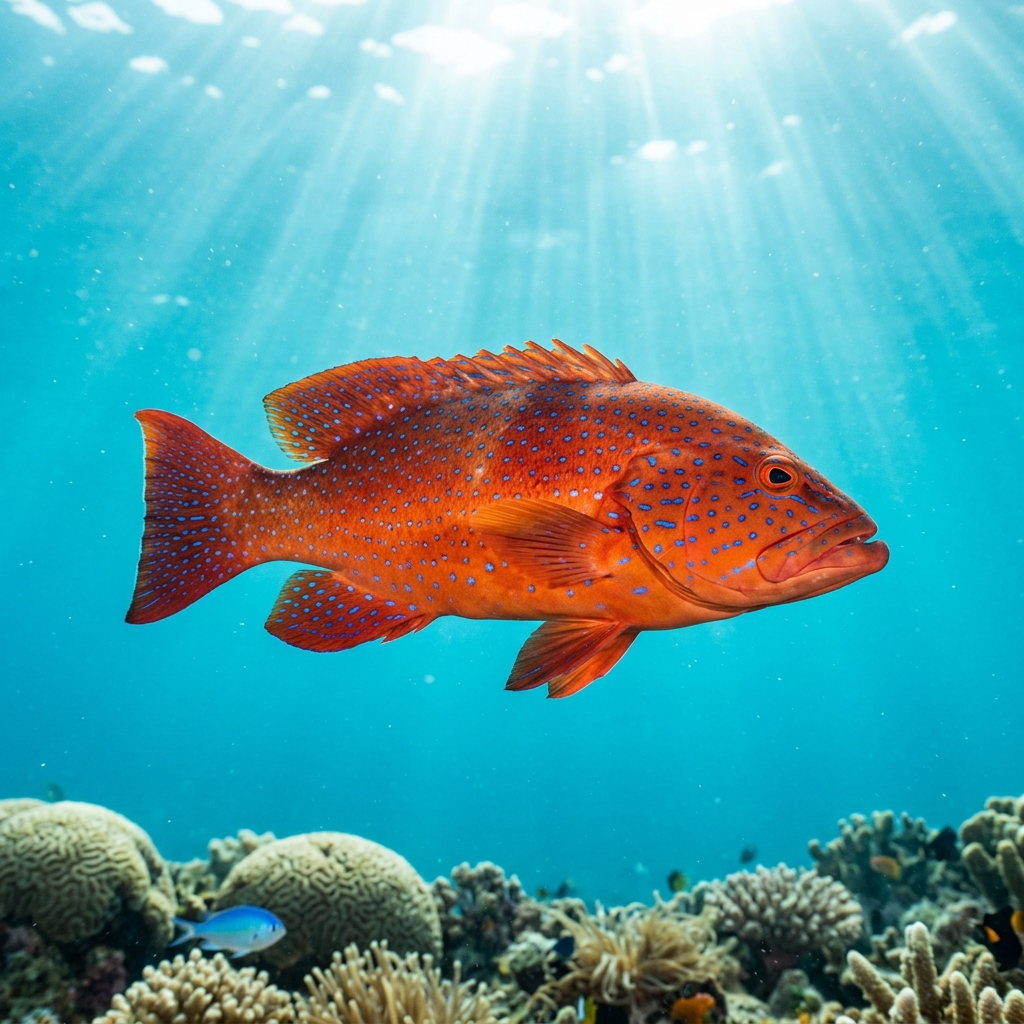
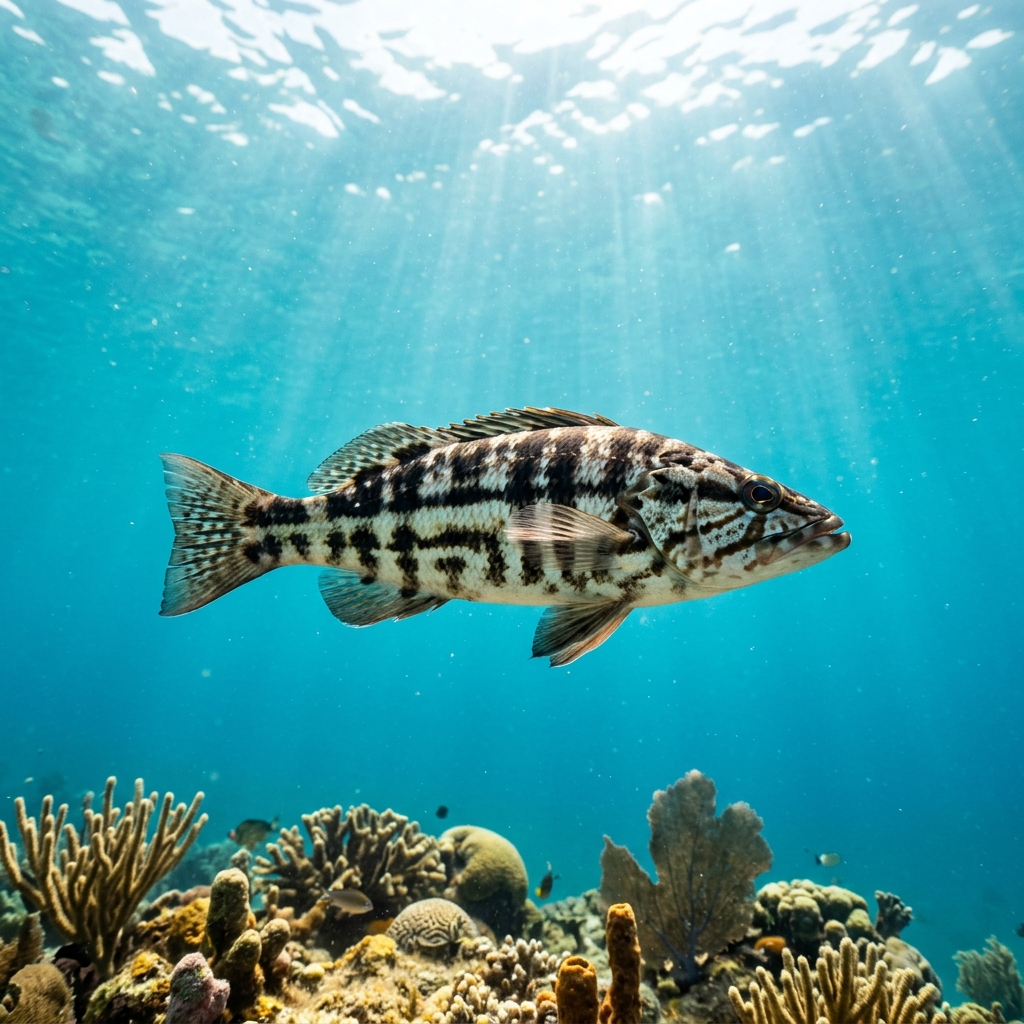
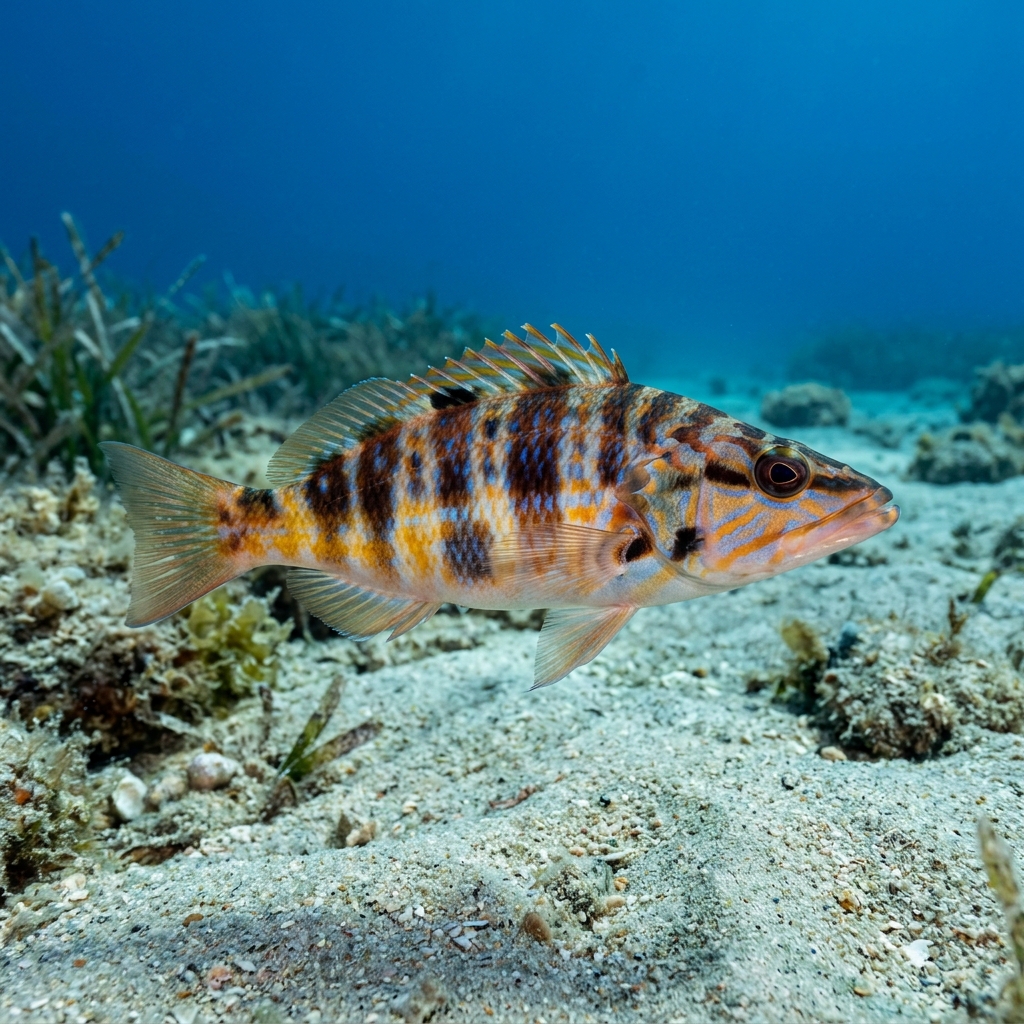
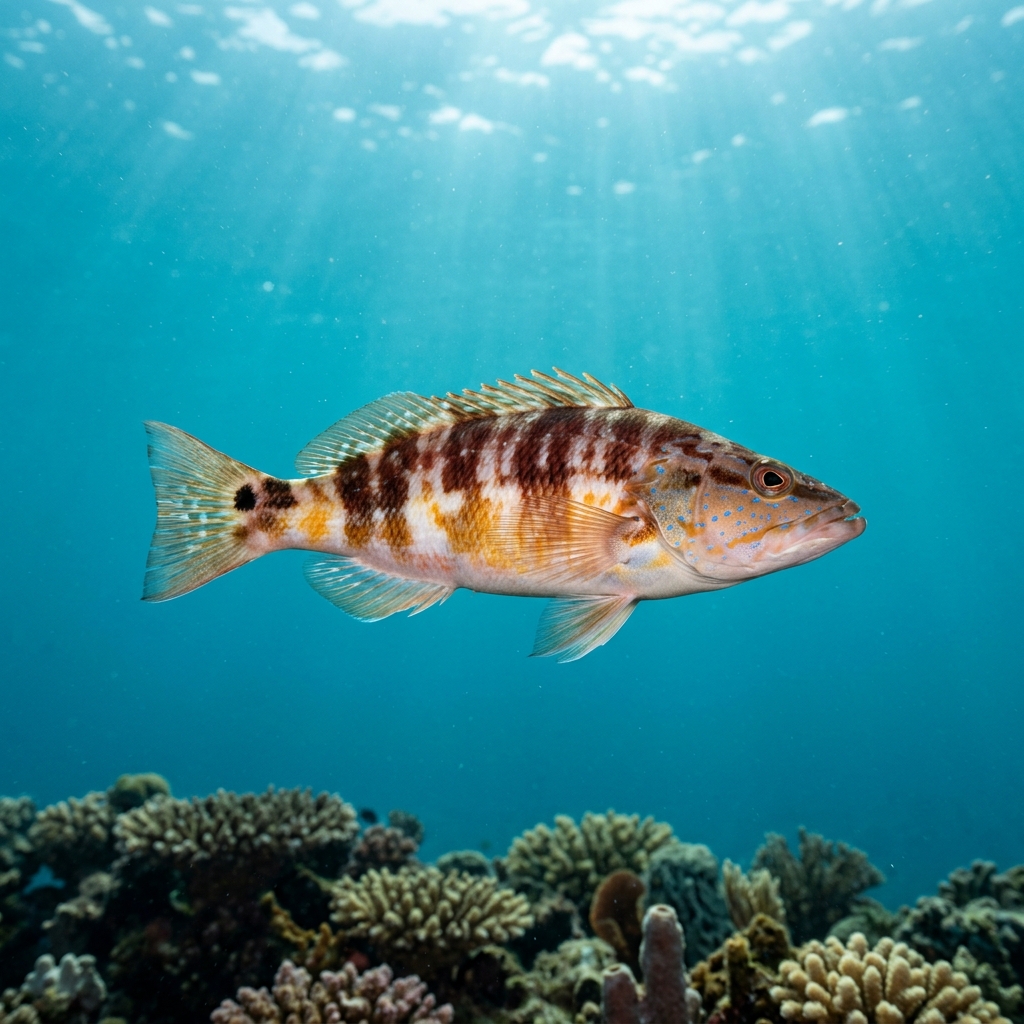
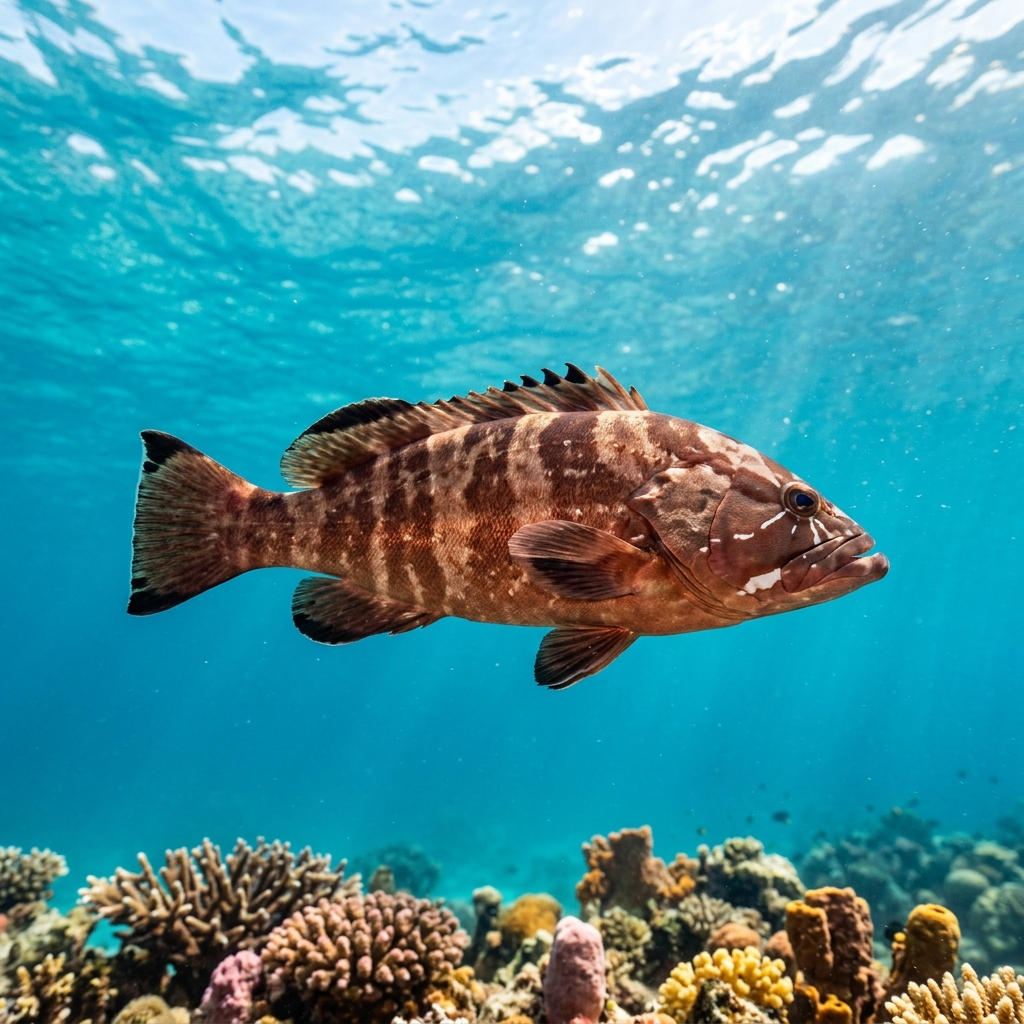
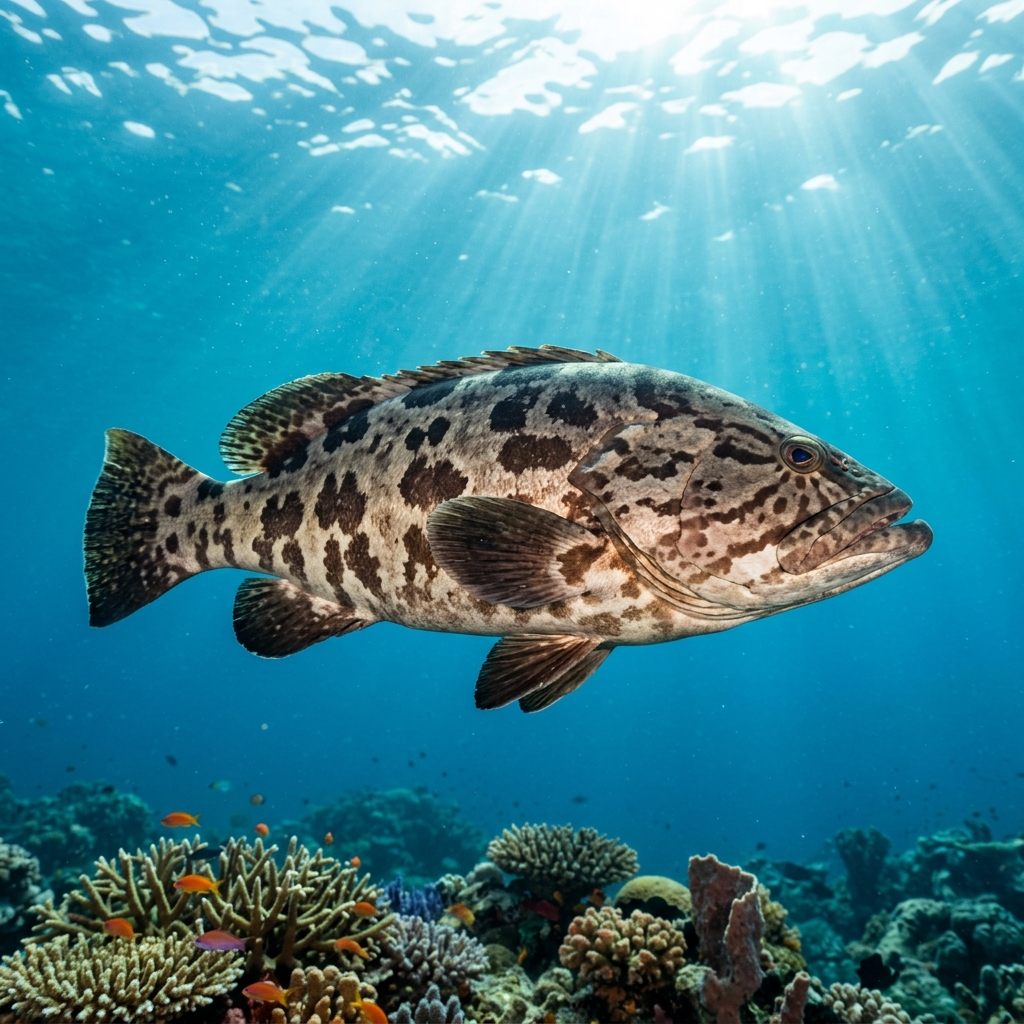
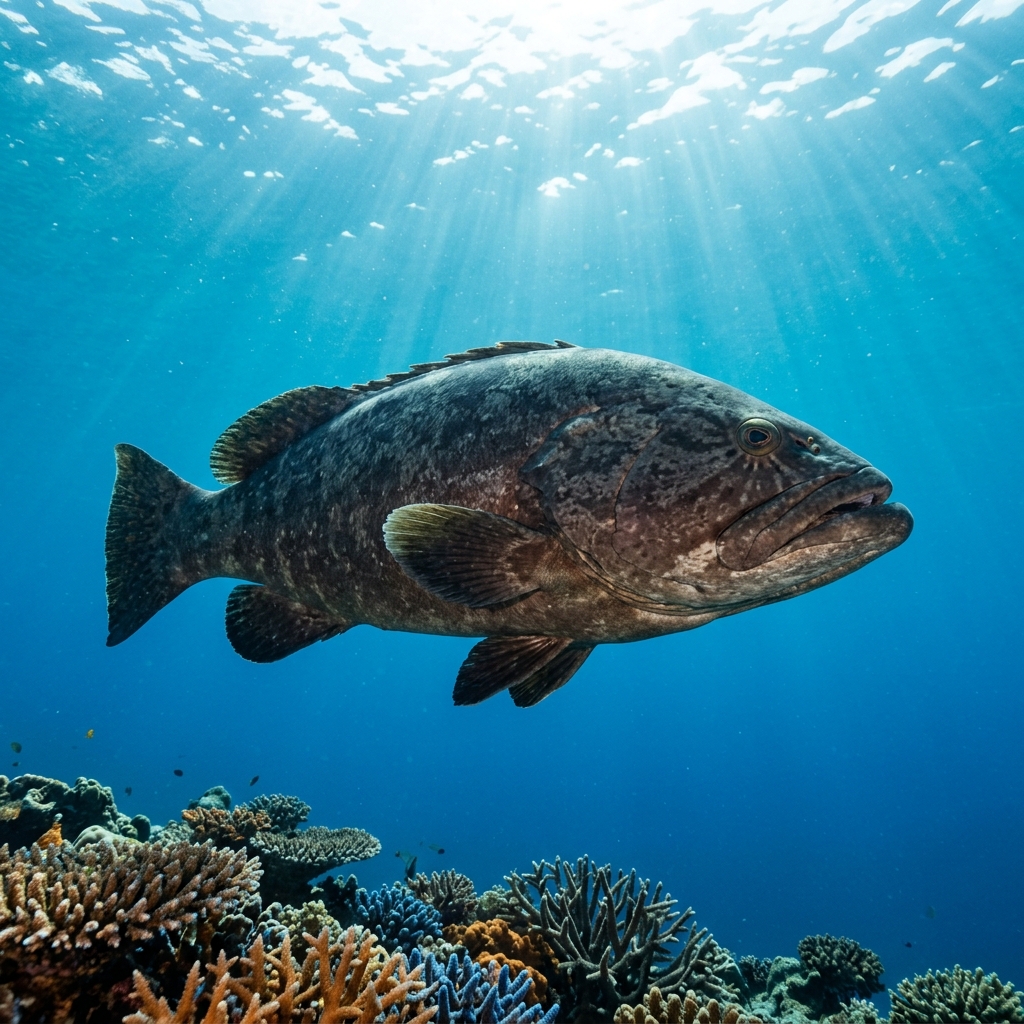
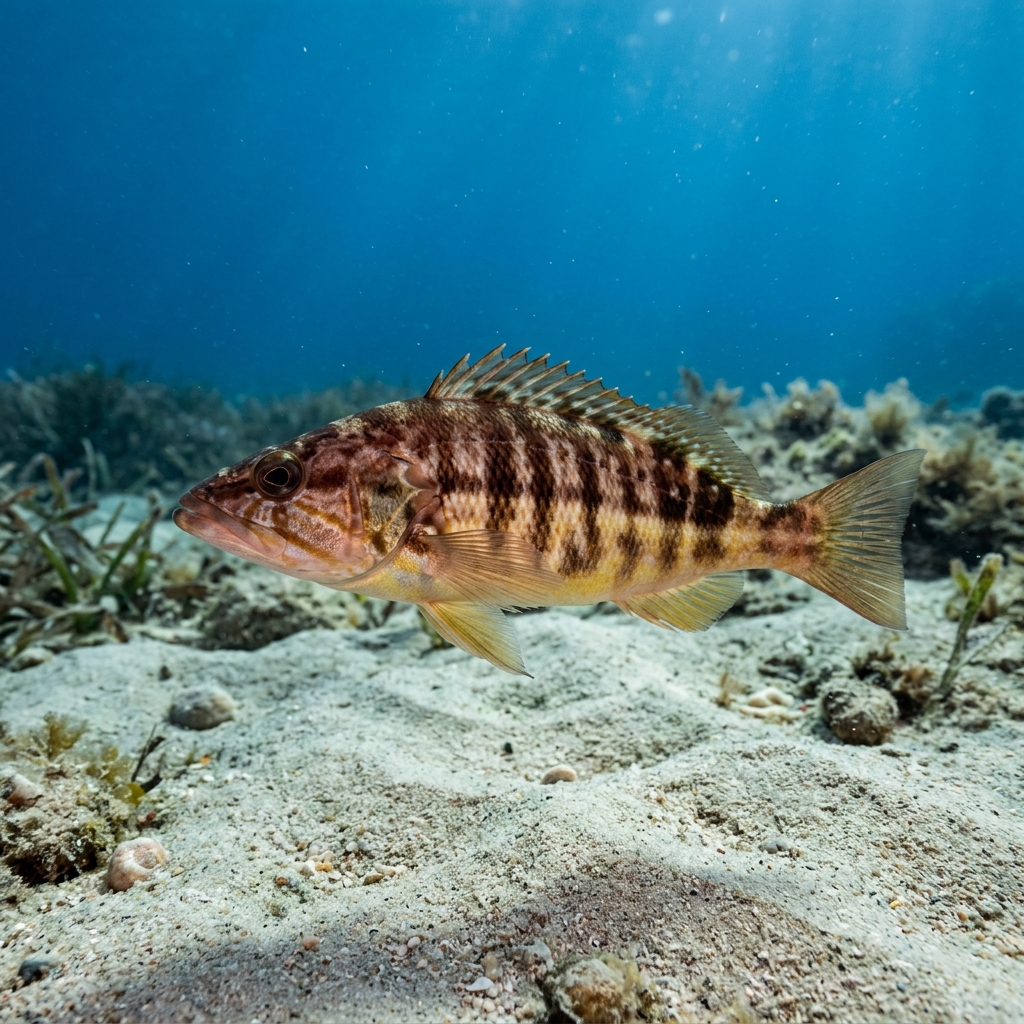
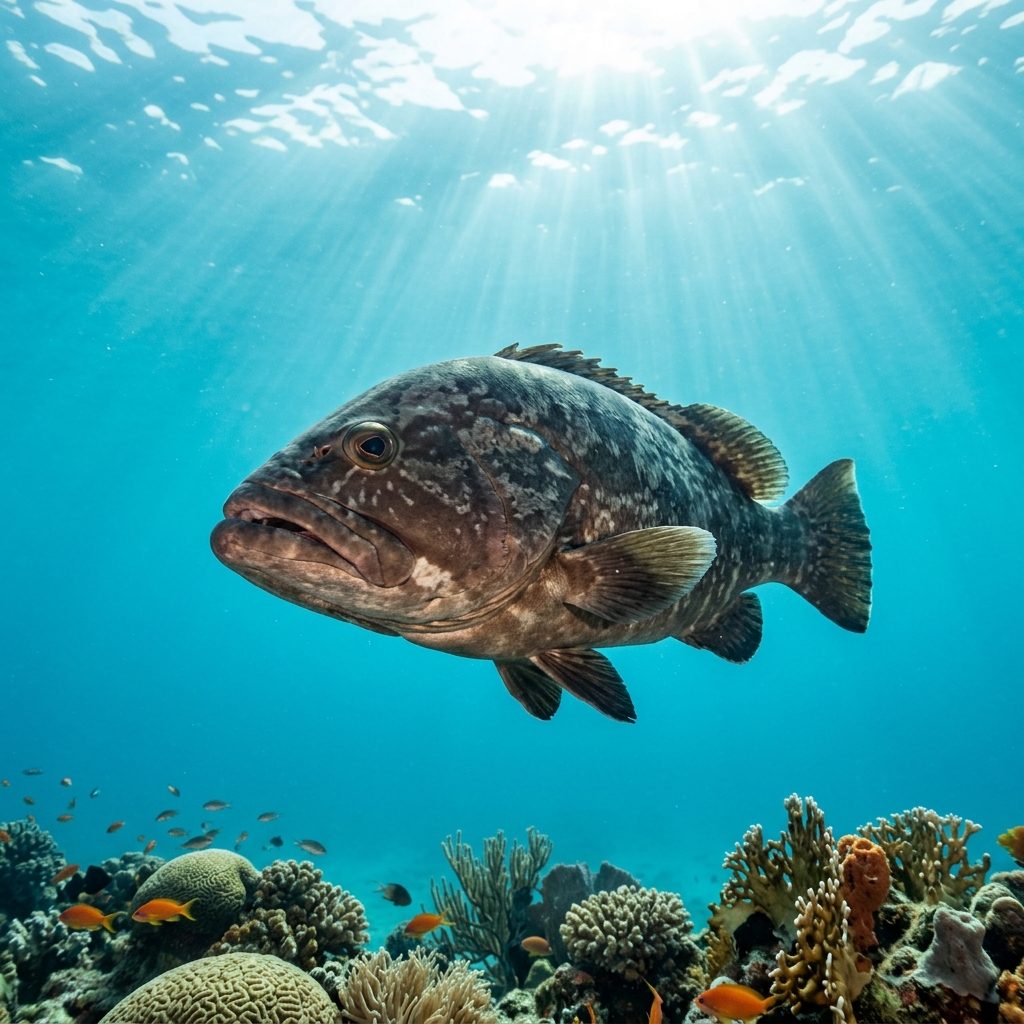
Groupers are heavy-bodied, thick-lipped reef fish with broad, rounded tails and a large mouth built for ambush feeding. Colouration varies widely across the family, from uniform brown or grey to vivid spots and blotches, but the stocky silhouette and wide, fleshy lips are the consistent field marks. Most species are solitary and hold their position on or near the reef rather than swimming in open water. Juveniles look strikingly different: pale yellowish-brown with irregular dark brown blotches and a bold white-edged black spot at the tail base, giving them a patchwork look quite unlike the bulkier, more uniform adults.
Most groupers are sit-and-wait predators, so you typically find them stationary on a ledge, beneath a coral head, or hovering just above the substrate. They tend to hold their ground when divers approach slowly, making close observation straightforward, though they will reverse into a crevice if you push too near. Dawn and dusk are peak hunting times, but groupers are visible at any hour of the day.
Many groupers are protogynous hermaphrodites, meaning they begin life as females and can later transition to males, often as the dominant individual in a local group. This reproductive flexibility is part of what makes heavy fishing pressure on large adults so damaging to local populations.
Groupers are present year-round in both hemispheres with no concentrated season, which tracks with their affinity for warm tropical reef water in the 24 to 29 °C range found at their core destinations.
Reef neighbours a diver could mistake it for. Use the identification notes above to tell them apart.
Groupers are most consistently logged across the Indo-Pacific and Red Sea, with particularly strong records from Indonesia, the Philippines, the Maldives, and Malaysia; the Male and Ari Atolls in the Maldives and the Visayas in the Philippines are among the most reliable regions. Egypt's Red Sea sites around Sharm el Sheikh and Marsa Alam also produce frequent sightings, as does Bali in Indonesia. In the Western Atlantic, Florida, Roatán in Honduras, and Mexico's Yucatán Peninsula round out the top spots.
Mapping where Groupers is logged…
Groupers are logged at reef sites across most tropical oceans. The strongest concentrations are in the Indo-Pacific, particularly Indonesia, the Philippines, the Maldives, and Malaysia. The Red Sea around Sharm el Sheikh and Marsa Alam is also reliable, as are Florida, Roatán in Honduras, and Mexico's Yucatán Peninsula.
Because groupers are comfortable in the 24 to 29 °C water temperatures that persist year-round at tropical reef destinations, there is no single best season. Sightings are reported consistently throughout the year in both the northern and southern hemispheres.
Look for a stocky, heavy-bodied fish with a large, wide mouth and thick lips, usually sitting still on or close to the reef. The broad, rounded tail and the tendency to hold position rather than swim freely are reliable cues. Colouration varies by species from plain brown to spotted or blotched, so body shape is the more consistent starting point.
Size varies enormously across the family. Smaller species top out around 30 to 40 cm, while the Atlantic Goliath Grouper and the Queensland Grouper can exceed 2.5 metres and weigh over 400 kg, making them among the largest bony fishes on coral reefs.
Groupers are not considered dangerous to divers. They are ambush predators focused on fish and crustaceans, and they typically hold their ground calmly or retreat when approached. Very large individuals such as Goliath Groupers are powerful animals and warrant respectful distance, but unprovoked aggression toward divers is not typical.
Many grouper species are protogynous hermaphrodites: they start life as females and can later change sex to become males, usually when the dominant male in an area disappears. This means the largest, oldest fish you see on the reef are often male, and removing them disrupts local breeding dynamics.
Site and sighting data is aggregated from diver logs, iNaturalist and GBIF. For taxonomy and conservation status:
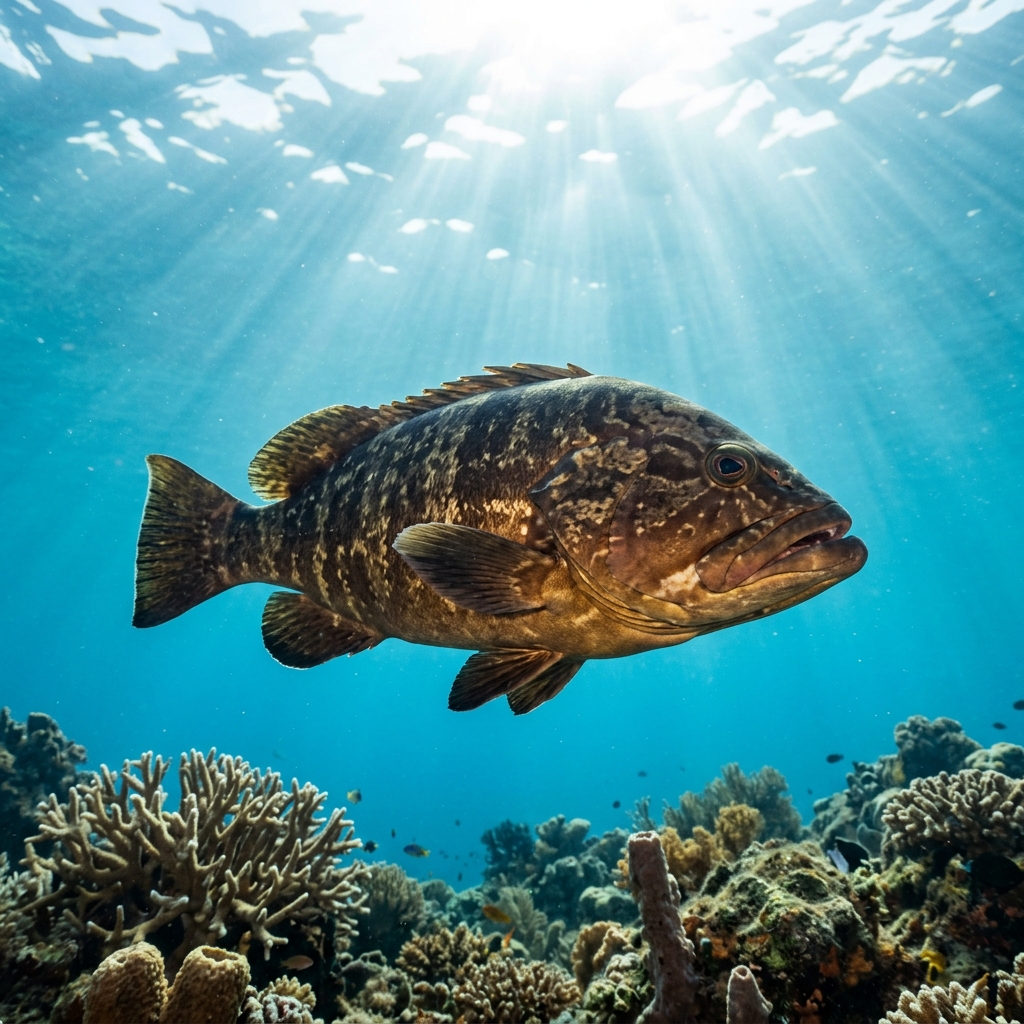
Epinephelus marginatus
Blacktip Grouper
2,726 sites