Seriola dumerili
Big, torpedo-shaped jacks patrolling reefs from the Balearics to the Carolinas, usually a single or small-group encounter in warm blue water.
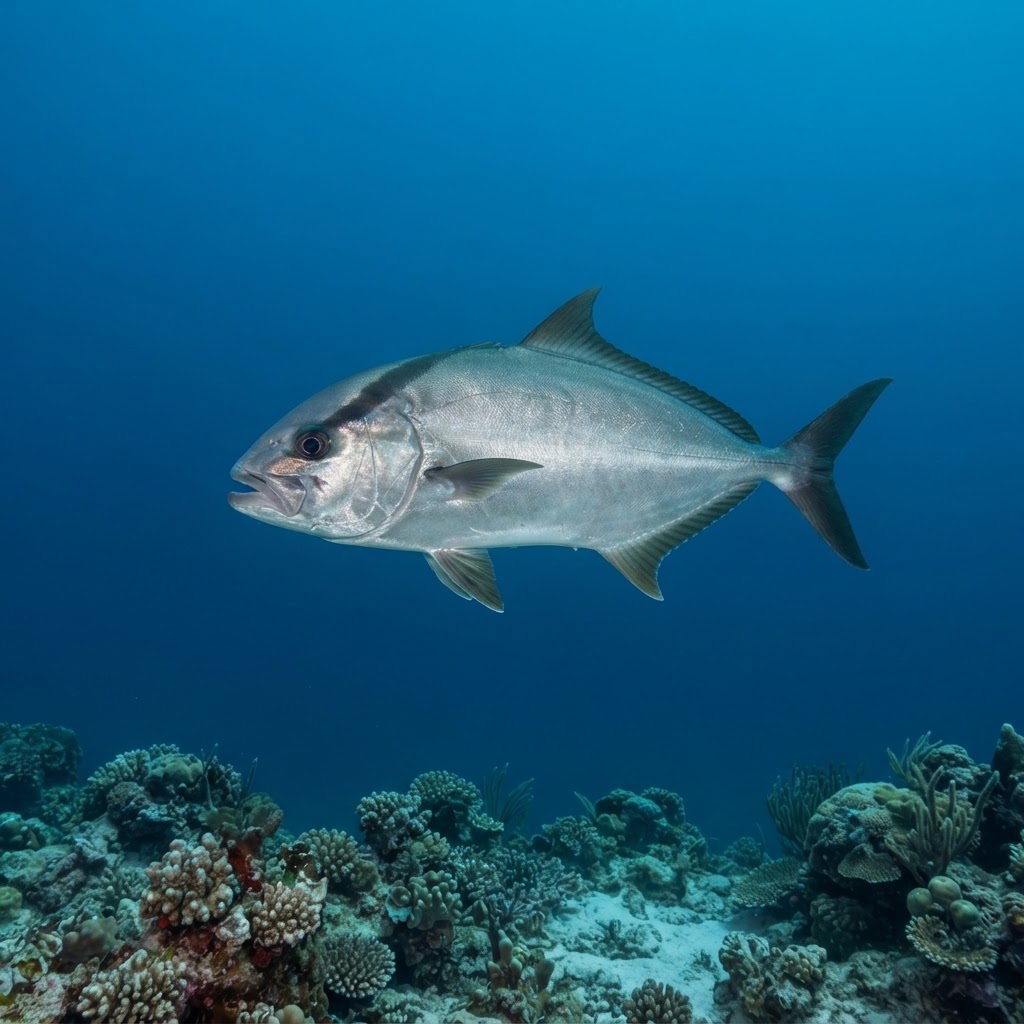
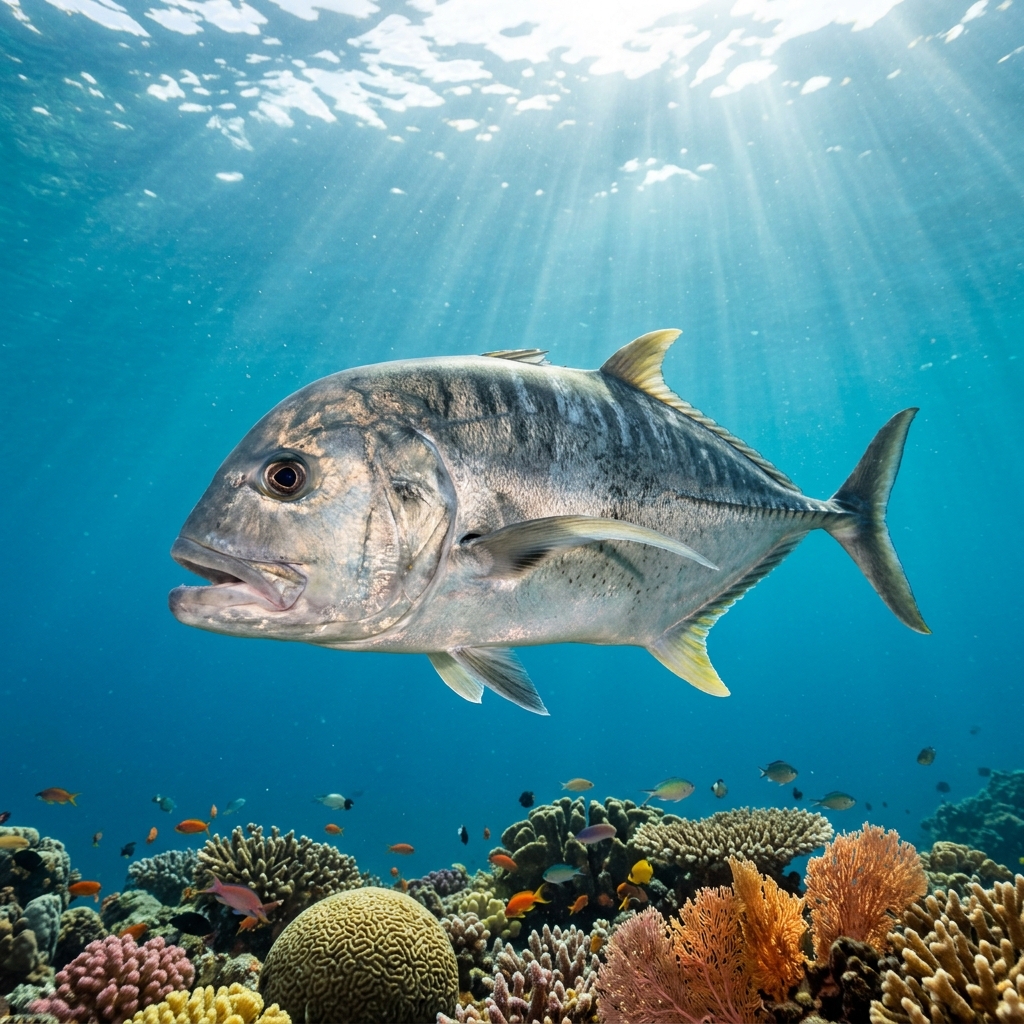
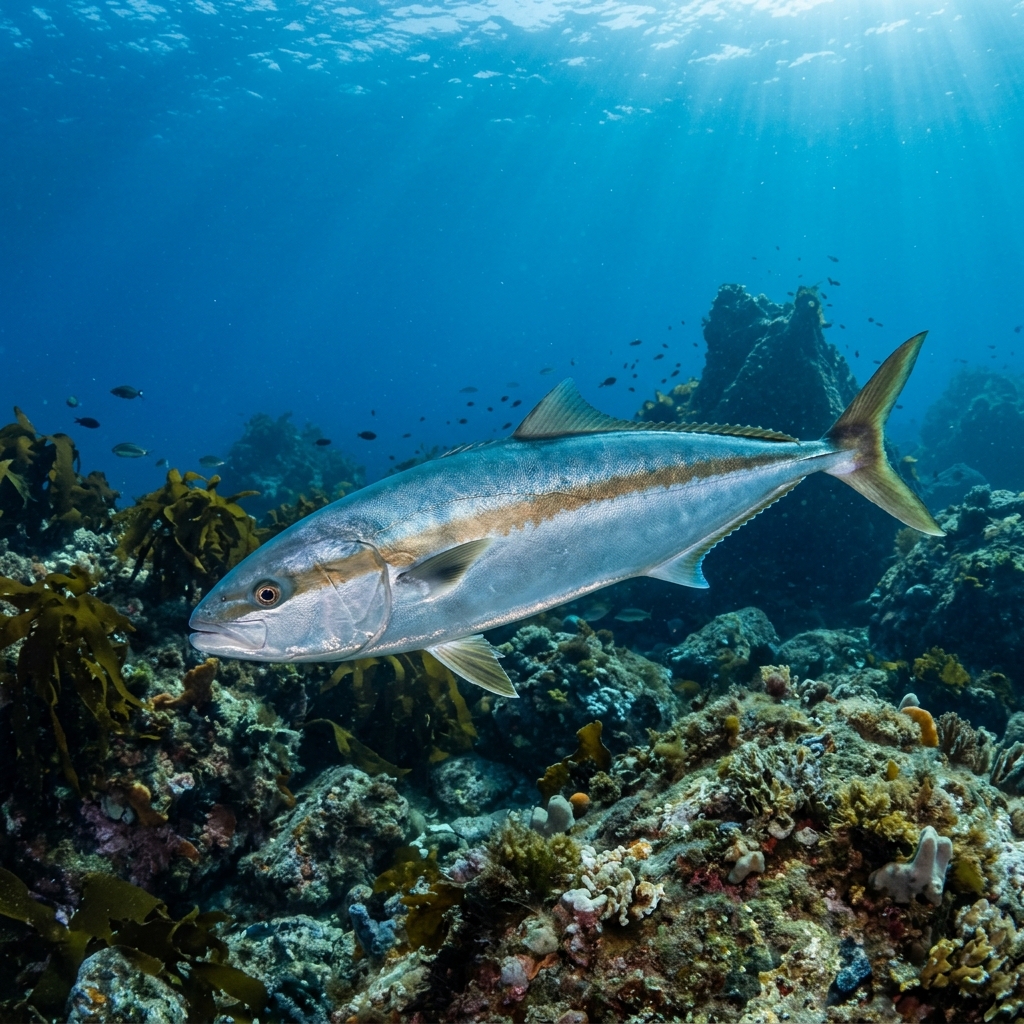
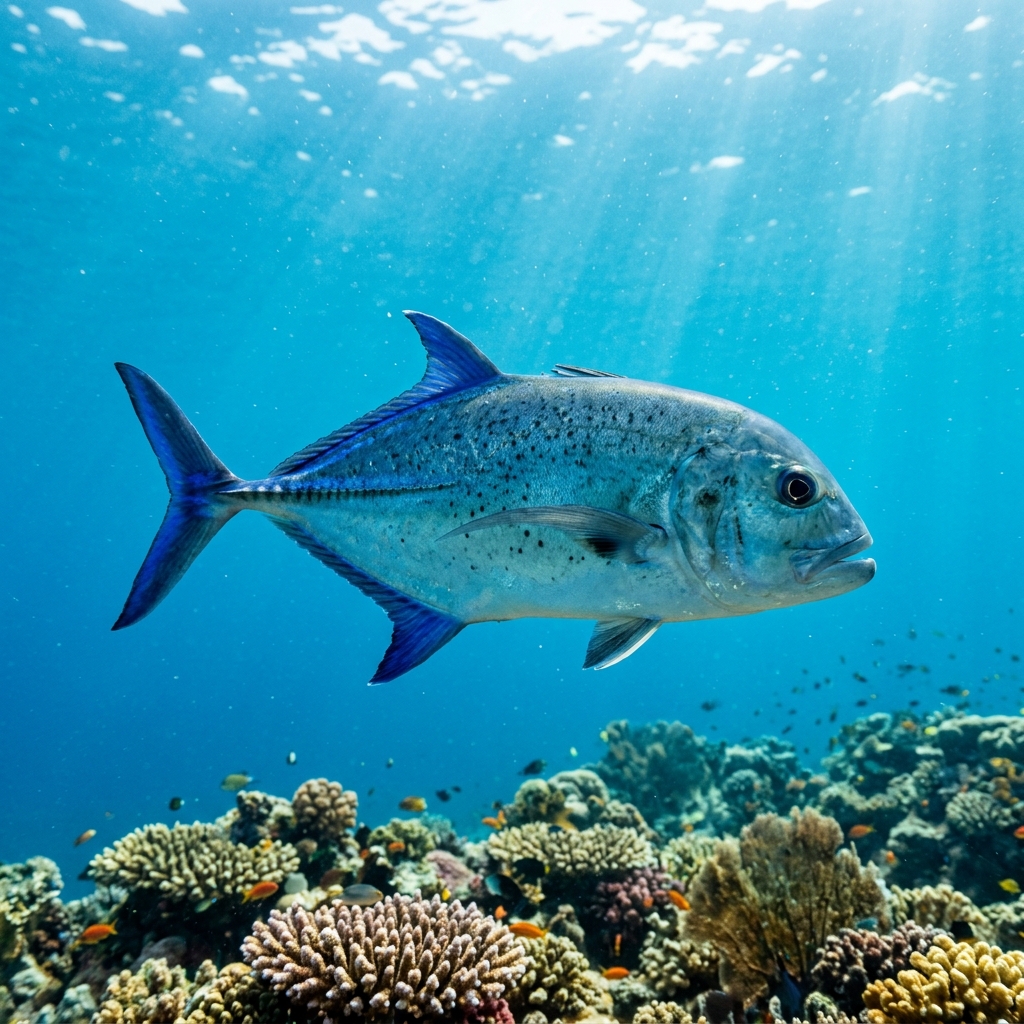
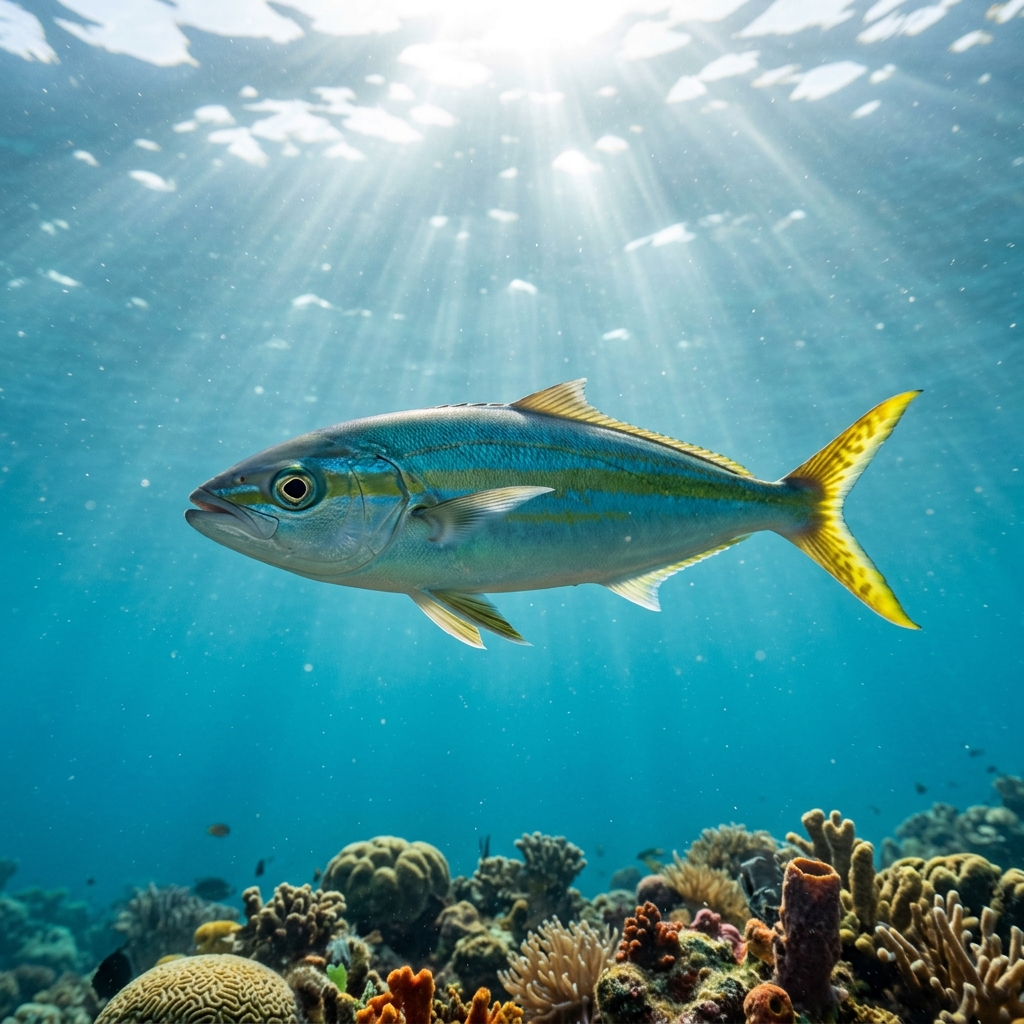
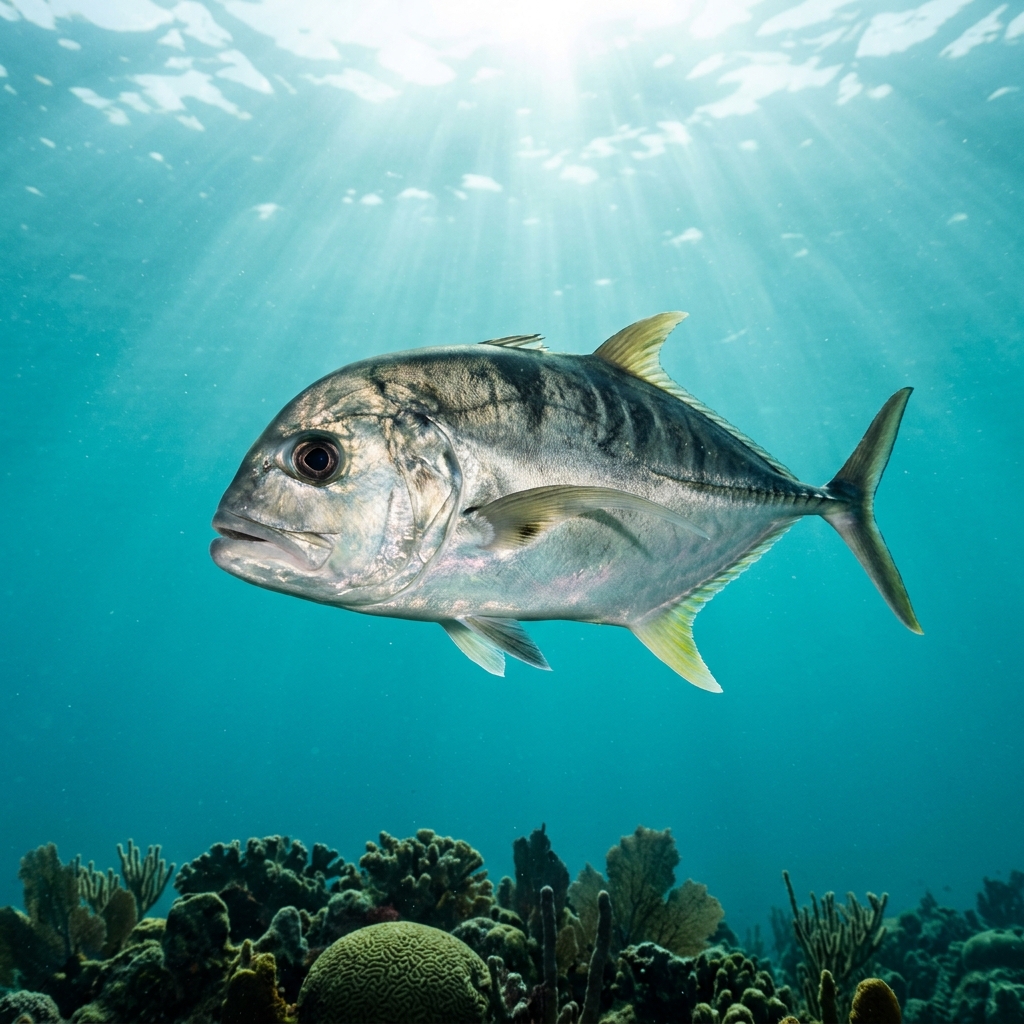
A thick, torpedo-shaped body well over a metre long, silvery-bronze with a faint amber or olive stripe running from eye to tail. Look for a dark diagonal band crossing the eye and a deeply forked tail with no obvious spots or bright markings elsewhere on the body. They're usually seen alone or in small loose groups holding just off the reef rather than tight to structure, which helps separate them from schooling jacks.
Divers most often log them cruising in open water just off the reef edge or around wrecks, sometimes solo, sometimes in loose small groups rather than tight schools. They're generally unbothered by divers, holding a steady patrol course rather than darting for cover, and are frequently spotted mid-water over drop-offs or structure where baitfish gather. Most logs describe them as an uncommon but reliable sighting rather than a guaranteed one.
Amberjack are opportunistic hunters that often shadow larger predators or divers themselves, using the disturbance to snap up smaller fish that scatter in the confusion.
Sightings don't show a strong seasonal pattern, and with a comfortable range of roughly 17 to 29C they're logged across most of the year wherever water stays in that window. Treat it as a year-round possibility rather than something tied to a particular month.
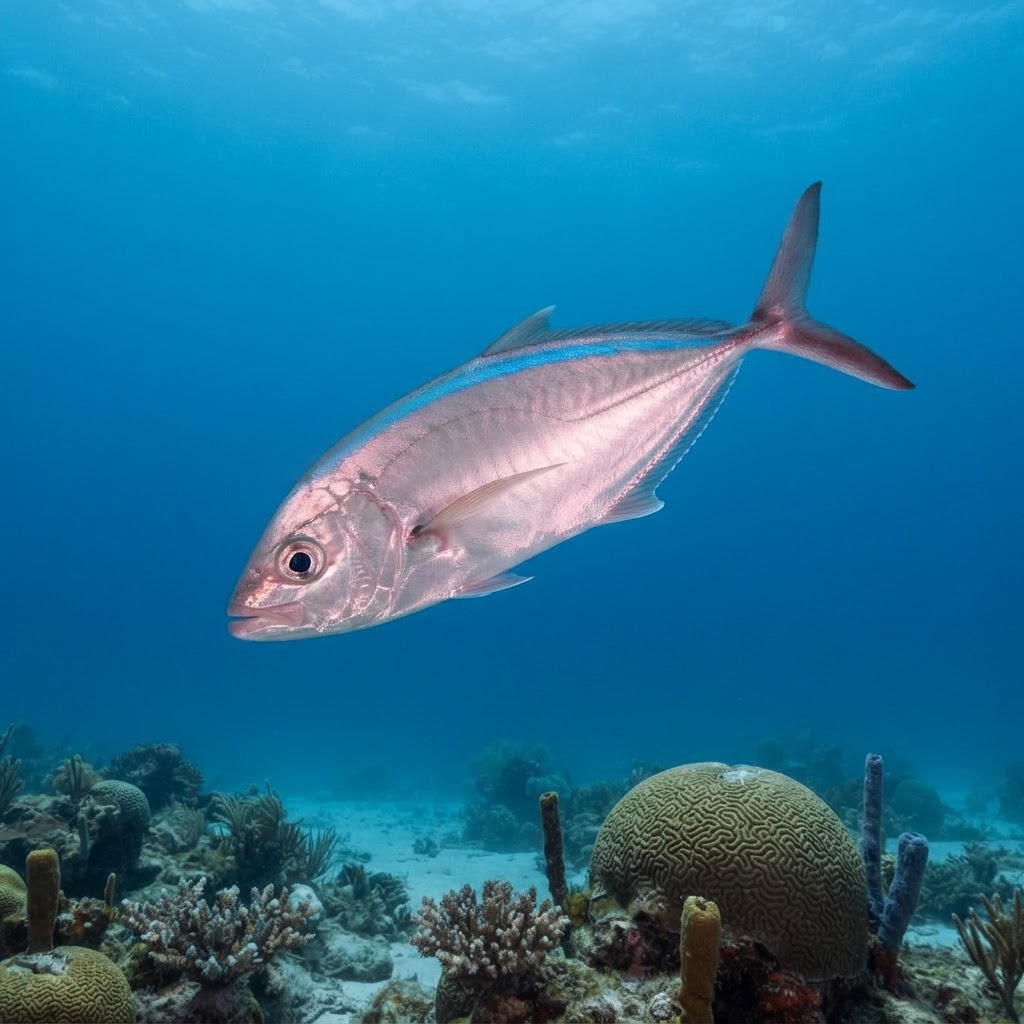
Reef neighbours a diver could mistake it for. Use the identification notes above to tell them apart.
Most commonly logged around the Carolinas and Florida in the United States, and across the Mediterranean in the Balearic Islands and Valencia in Spain, Sicily and elsewhere in Italy, Crete and the Saronic Gulf in Greece, and coastal Croatia and Turkey. Central Japan and Cuba also turn up reliable sightings, so this is a species with wide reef and wreck coverage rather than one signature destination.
Mapping where Greater Amberjack is logged…
Strongest logs come from the Carolinas and Florida in the US, the Balearic Islands and Valencia in Spain, and Sicily, Crete, the Saronic Gulf and coastal Croatia and Turkey around the Mediterranean. Central Japan and Cuba also produce regular sightings.
There's no clear seasonal spike in the data, so they're considered a year-round sighting on reefs and wrecks within their 17 to 29C comfort range.
Look for a large silvery-bronze torpedo-shaped body, a faint amber stripe from eye to tail, and a dark diagonal band across the eye. They tend to cruise alone or in small loose groups rather than tight schools.
They typically reach around 133 cm in length, making them one of the larger jacks a diver is likely to encounter on a reef or wreck dive.
No, they're not considered dangerous to divers and generally hold a steady course rather than reacting defensively when approached.
They often act as opportunistic hunters, trailing larger predators or even divers to grab smaller fish that bolt in the disturbance.
Site and sighting data is aggregated from diver logs, iNaturalist and GBIF. For taxonomy and conservation status:
Bar Jack
1,748 sites