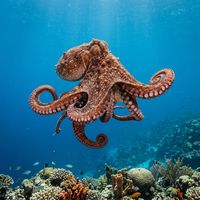
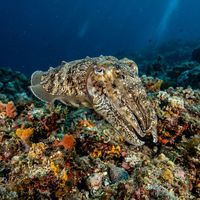
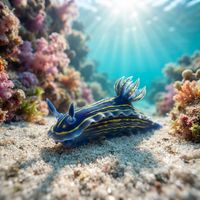
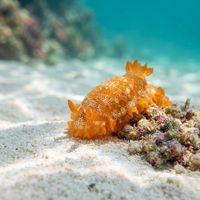
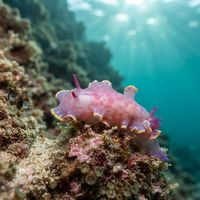
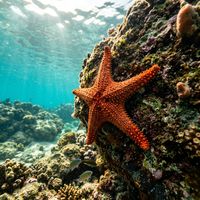
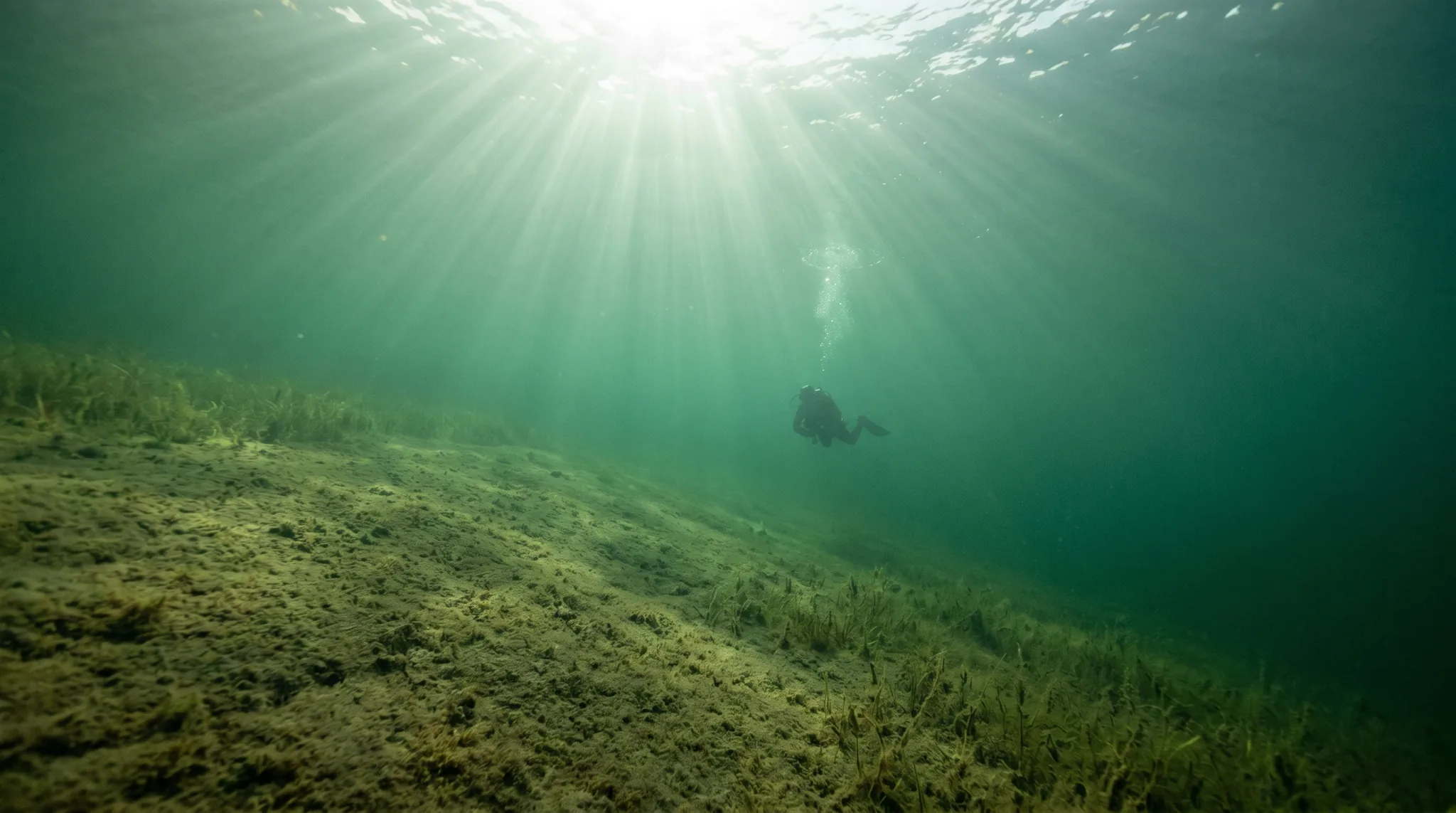
Saint-Jean-de-Luz offers a compact but varied mix of reef and artificial reef sites, ranging from sheltered, shallow entries ideal for beginners to deeper explorations. The Basque Coast character shows clearly underwater: the Tompot Blenny and Striped Red Mullet are present at virtually every site, while the Common Octopus, European Common Cuttlefish, and an unusually rich selection of nudibranchs, including the locally notable Felimare Cantabrica, give the region a distinct personality. Conditions are most rewarding from late spring through autumn.
Monthly water temperature across Saint-Jean-de-Luz's sites, from satellite sea-surface data corrected for depth. The band shows the site-to-site spread.
Water temperatures rise through late spring and peak in late summer, making the period from May through October the most comfortable for diving. Winter months bring noticeably cooler conditions that suit drysuits or thicker wetsuits. Visibility is moderate year-round, so summer's warmer, calmer windows offer the most rewarding underwater experience.
6 operators
10 more sites to explore
Water temperature around Saint-Jean-de-Luz ranges from about 12°C in January to 20°C in August, based on satellite sea-temperature data for its dive sites.
In the warm season (about 20°C) a 5mm suit is comfortable in Saint-Jean-de-Luz; in the coldest months (about 12°C) step up to a 7mm or semi-dry suit.
Fin maps 12 sites in Saint-Jean-de-Luz (9 scuba diving sites and 4 snorkelling spots, with some suited to both).
Across Saint-Jean-de-Luz's dive sites, June, July, August, September and October are most often reported as the best months to visit.
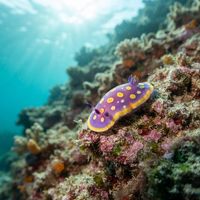
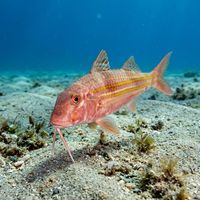
The region has a strong showing of cephalopods and nudibranchs. Common Octopus and European Common Cuttlefish are observed across the majority of sites, while Felimare Cantabrica, Doriopsilla Areolata, and Yellow-dotted Doris make Saint-Jean-de-Luz particularly rewarding for nudibranch enthusiasts. Tompot Blenny and Striped Red Mullet appear at virtually every site, and occasional sightings include Lesser Spotted Dogfish and Marbled Electric Ray.
Yes, several sites are rated for beginners, including Plage du Port Vieux and Canal d Hossegor, both of which are shore-entry dives at accessible depths. The sheltered nature of some locations means conditions can be gentle, though open or exposed sites may present stronger currents that suit more experienced divers.
Shore entry is available at key sites, including Plage du Port Vieux, which caters to both divers and snorkellers. This makes independent access straightforward without needing a boat for every session. Several local operators, such as Les Vieux Plongeurs and Planet Ocean, can also help with guided access to sites across the area.
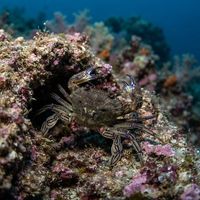
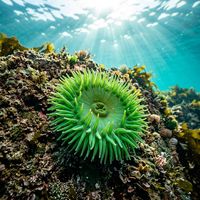
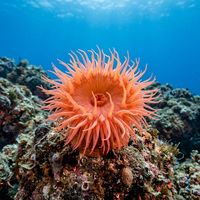
Natural reef is the dominant site type, complemented by at least one site featuring artificial reef structures alongside natural formations. This combination provides varied terrain for exploring, from rocky outcrops colonised by anemones and invertebrates to purpose-built structures that attract fish and crustaceans including the Velvet Swimming Crab.