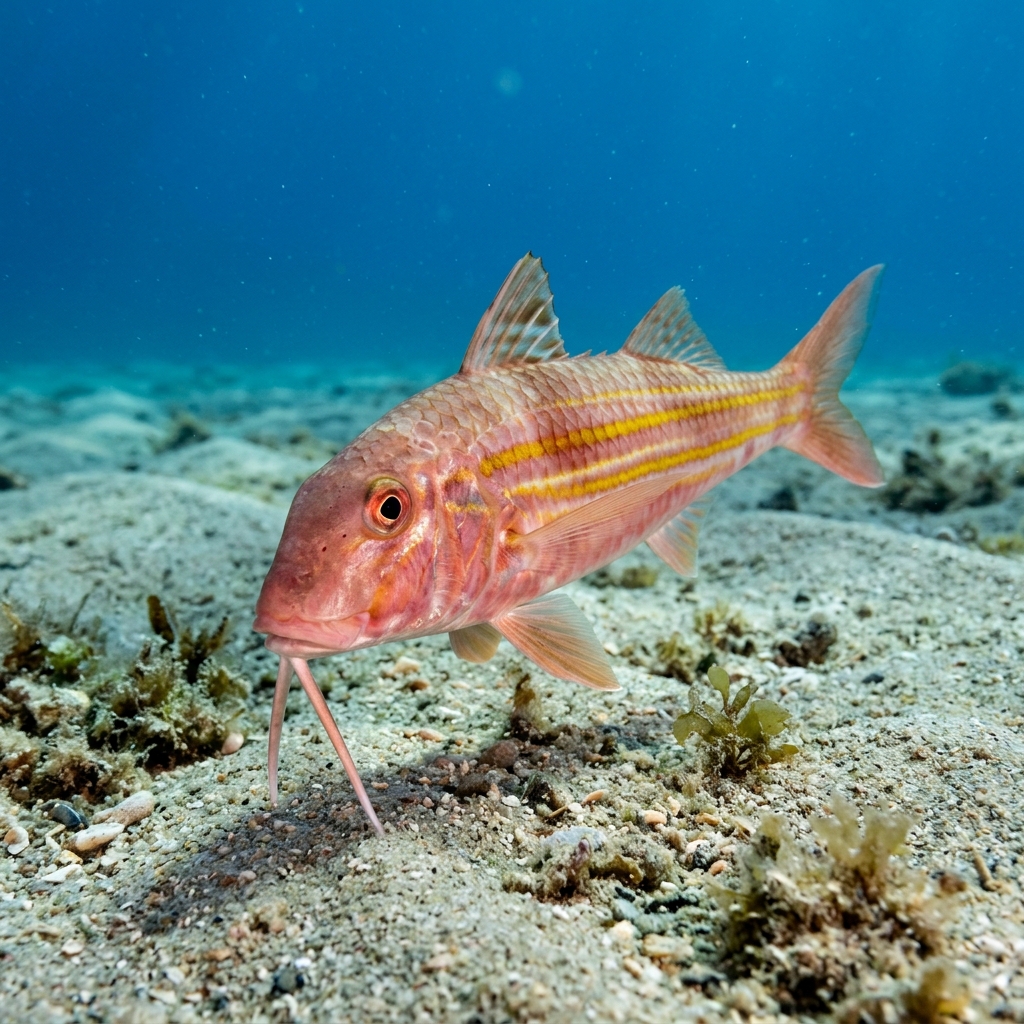
Mullus surmuletus
Spot striped red mullet foraging on sandy seabeds along the French Riviera and Costa Brava. Present year-round in cool Mediterranean and Atlantic waters.
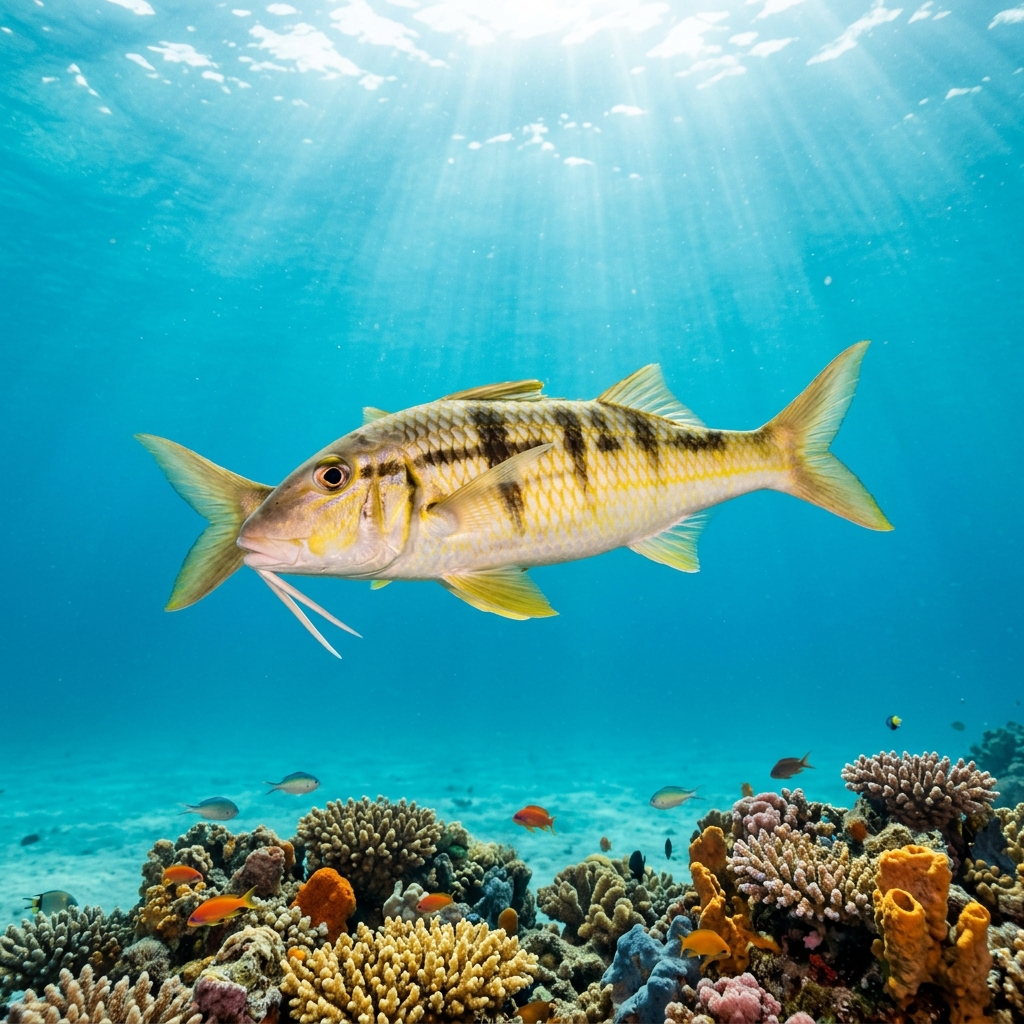
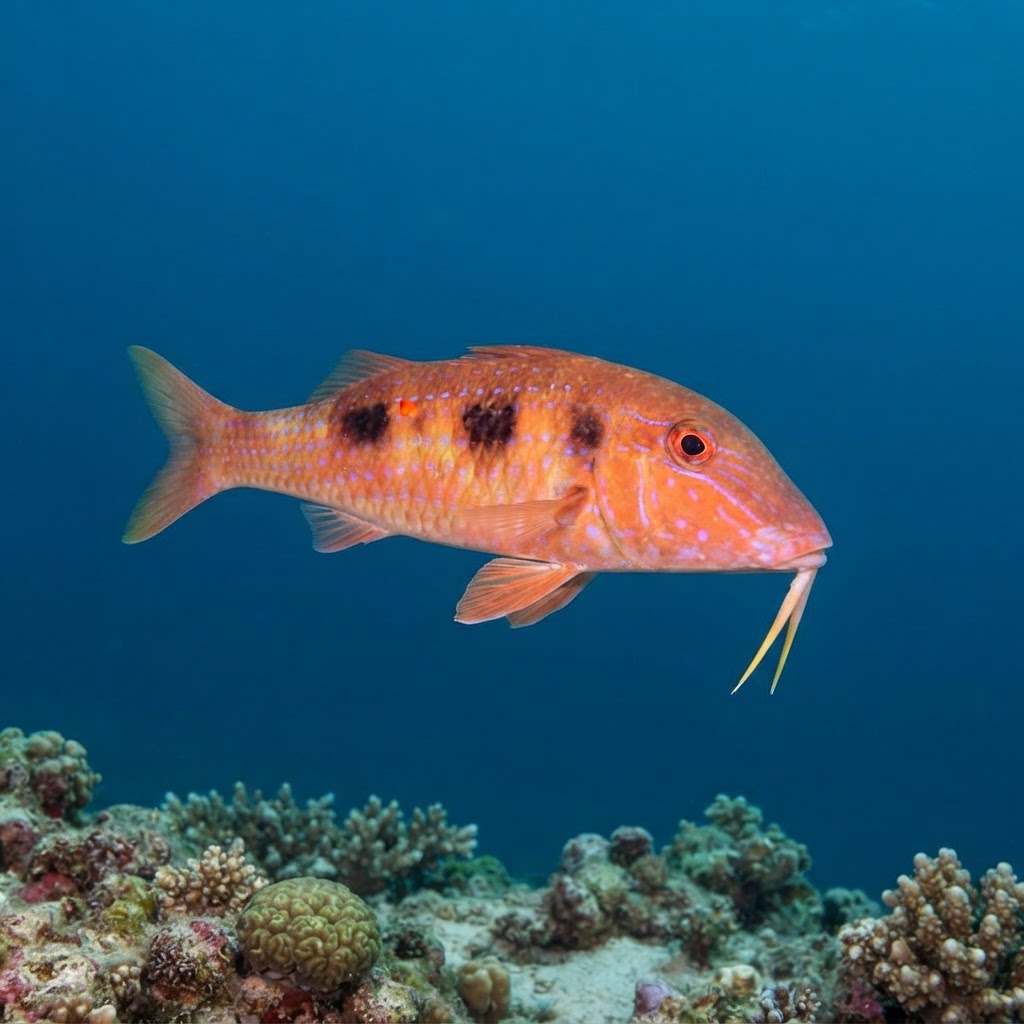
A compact, roughly 28 cm fish with a rosy-red to pinkish body and two or three distinctive yellow stripes running along the flank from eye to tail, the feature that separates it from plain-red relatives. Look for the pair of long, fleshy chin barbels (sensory whiskers used to probe sediment), which are often the first thing you notice as the fish roots around in the sand. The snout is steep and slightly blunt-looking, giving the head a characteristic wedge profile. Colouration can intensify or fade quickly with mood and lighting, but those yellow stripes are reliably visible.
Striped red mullets are busy, nose-down foragers, you'll typically find them working sandy or gravelly patches between rocky reef sections, using their barbels to probe the substrate for buried invertebrates. They're not particularly wary and will often carry on feeding while you watch, though a sudden approach will send them drifting off briefly before they circle back. Small, loosely coordinated groups are common, and watching two or three fish stirring up puffs of sediment in unison is one of the more entertaining things a Mediterranean reef offers.
Those chin barbels are not just cosmetic, they're packed with chemoreceptors (chemical-sensing cells) that let the fish effectively taste-smell the sediment before committing to a dig, making them remarkably efficient hunters of hidden worms and crustaceans.
Sightings are recorded year-round with no concentrated season, which makes sense given the species' comfort in cold water, observed across temperatures as low as 7 °C and up to about 16 °C. Any time you're diving in the Mediterranean or northeast Atlantic, you have a reasonable chance of an encounter.
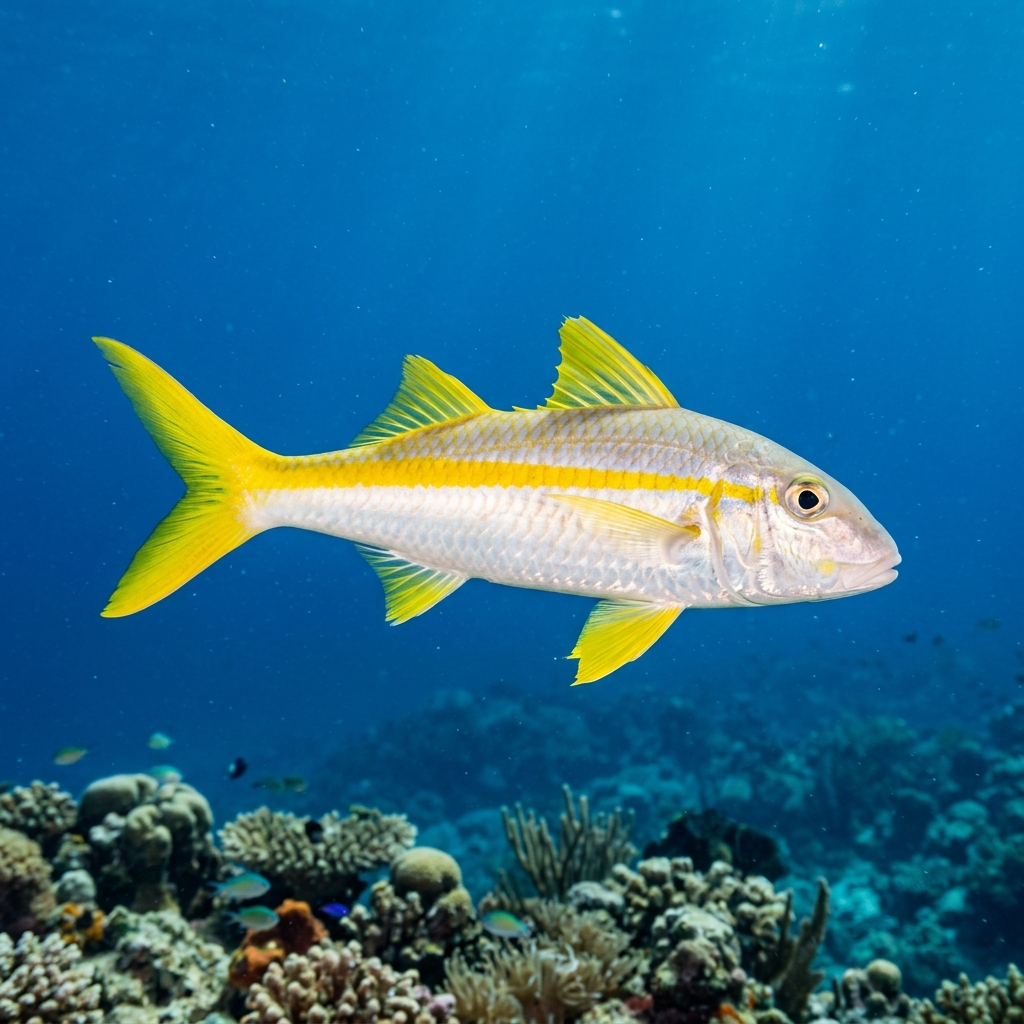
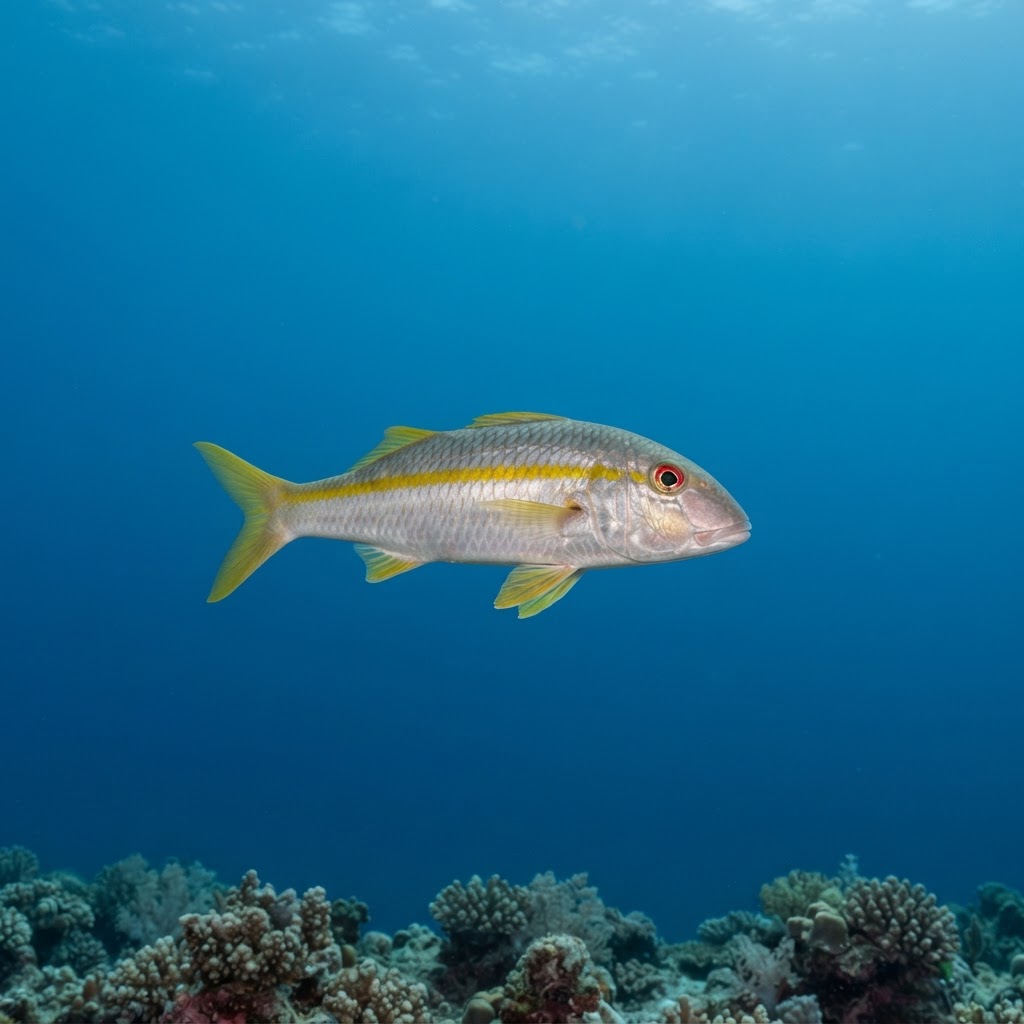
Reef neighbours a diver could mistake it for. Use the identification notes above to tell them apart.
Most commonly logged across the Mediterranean, with Spain, France, and Italy leading all other countries by a wide margin. The French Riviera and Provence, Costa Brava, and the Balearic Islands are the standout regions for consistent sightings. It also turns up regularly along British and Scandinavian Atlantic coasts, reflecting a cool-water tolerance that few Mediterranean fish share.
Mapping where Striped Red Mullet is logged…
They're most reliably found across the Mediterranean, particularly along the French Riviera, Costa Brava, Balearic Islands, and the coasts of Italy and Croatia. They also appear regularly in Atlantic waters around the UK, France's Atlantic coast, and Scandinavia, reflecting a broad cool-water range.
They're present year-round with no strong seasonal peak. Because they thrive in cool water, there's no need to time a trip around warming or cooling cycles, a dive in any season in the Mediterranean or northeast Atlantic gives you a fair chance of a sighting.
Look for the two or three yellow stripes running horizontally along a reddish-pink body, the steep blunt snout, and the pair of long chin barbels dangling below the jaw. The yellow stripes distinguish it from the plain-red common red mullet (Mullus barbatus), which lacks them.
Most individuals you'll encounter underwater are around 25 to 30 cm, with a typical size of about 28 cm. Larger specimens approaching 40 cm exist but are less commonly seen by divers.
The pair of barbels beneath the chin are sensory organs loaded with chemoreceptors, essentially allowing the fish to taste and smell the sediment as they probe it. This makes them highly effective at locating hidden worms, small crustaceans, and other invertebrates buried in sand or gravel.
Site and sighting data is aggregated from diver logs, iNaturalist and GBIF. For taxonomy and conservation status:
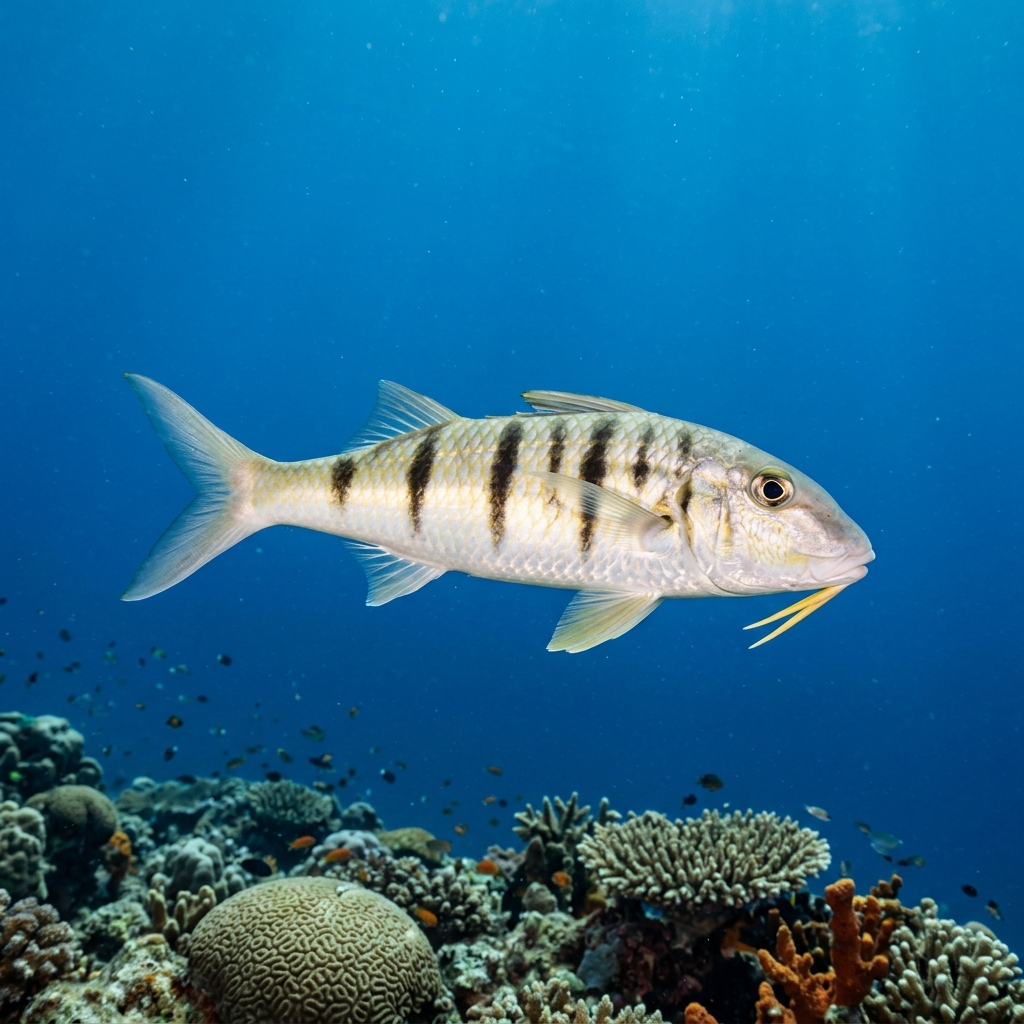
Manybar Goatfish
1,812 sites