Parablennius pilicornis
Tiny reef blenny common in Catalonia and the French Riviera, easy to miss in the shallows year-round from 16 to 26 C.
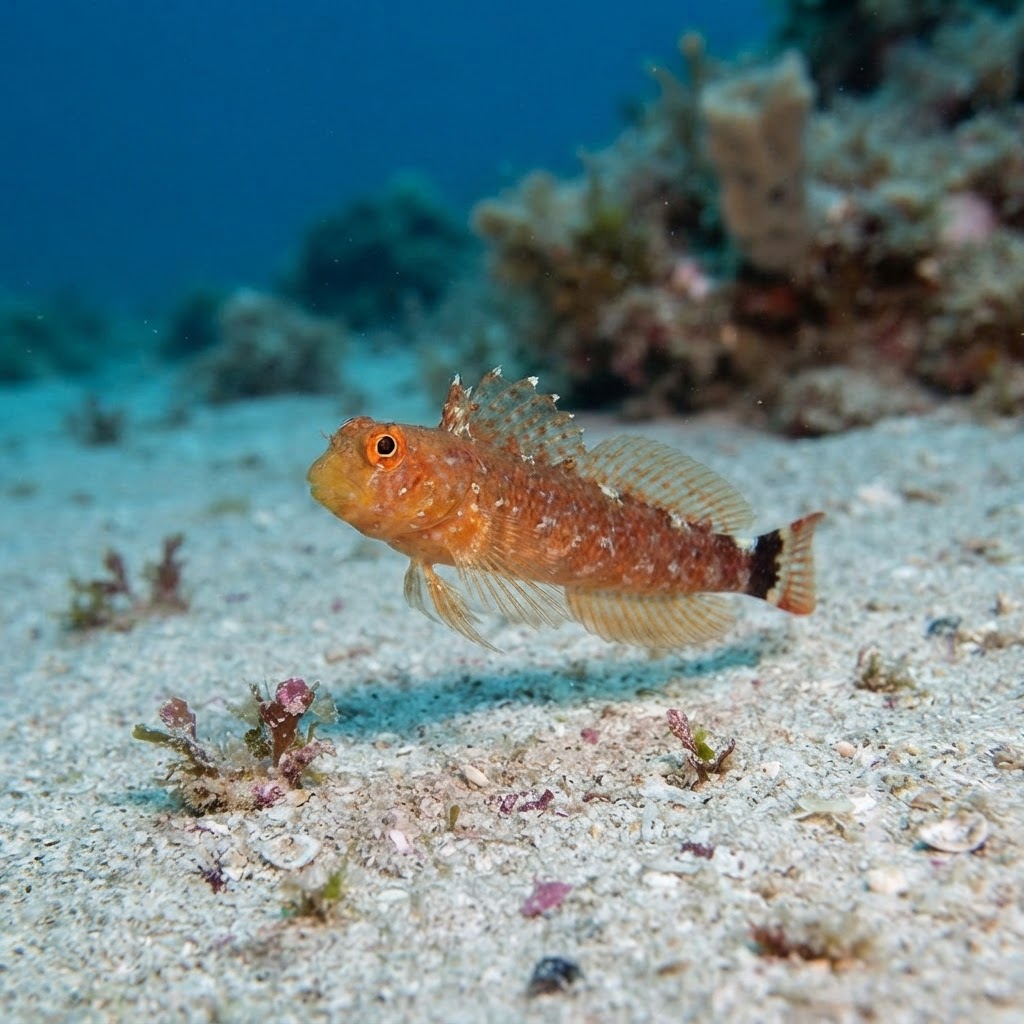
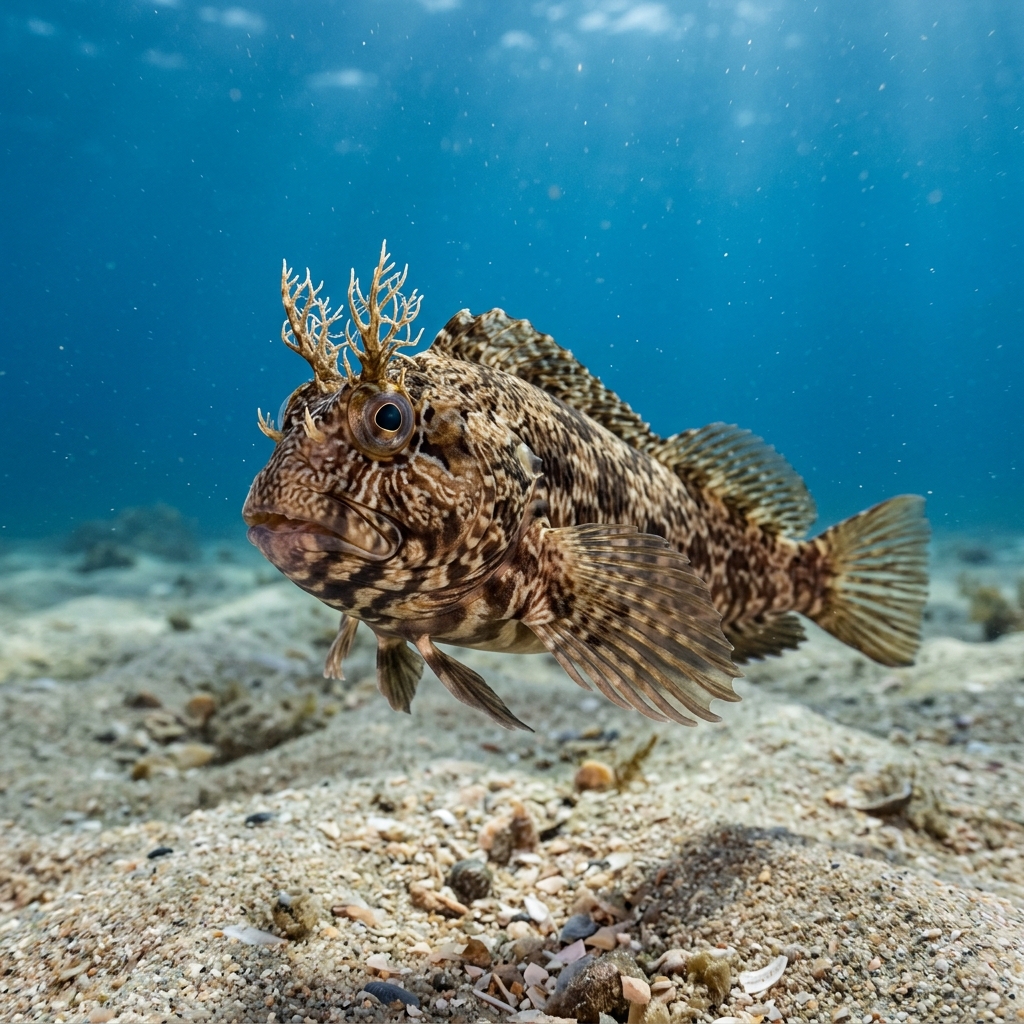
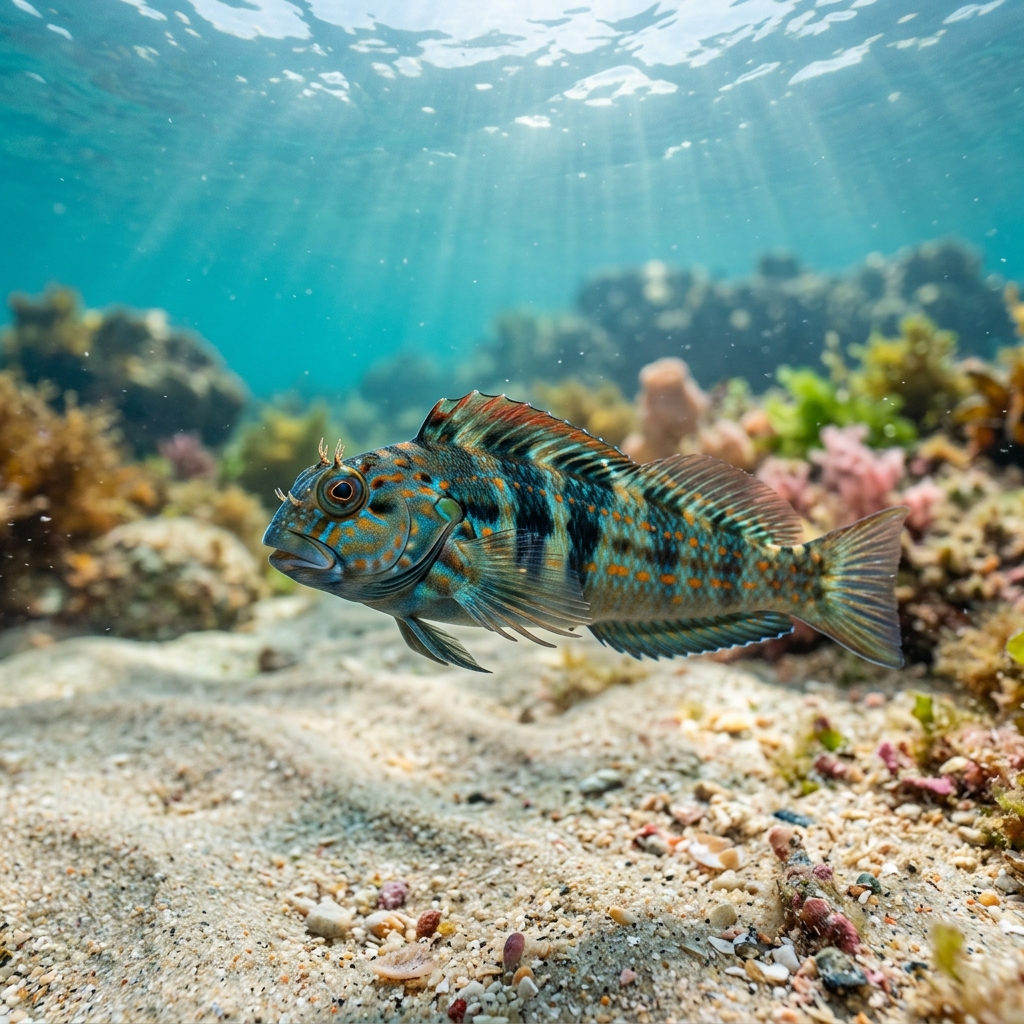
Small enough to overlook, this blenny tops out around 8 cm and sits propped on its pectoral fins against rock or rubble rather than swimming in open water. Look for a mottled brown-to-olive body, a blunt head with small branched tentacles (cirri) above the eyes, and a pale band or collar-like marking around the neck area that gives it its name. It has the classic blenny profile: a single long dorsal fin running most of the body length and a slightly upturned mouth.
Divers usually find this one perched motionless on a rock ledge, in a crevice, or tucked against algae-covered substrate rather than out swimming the reef. It is not shy exactly, but it relies on staying still and blending in, so slow down and scan low rocky terrain rather than mid-water if you are hunting for one. Most sightings are on shallower rocky and mixed reef, well within recreational depths.
Like other combtooth blennies, it feeds by grazing algae and small invertebrates off rock surfaces rather than hunting in open water, which is why it stays glued to the substrate instead of cruising the reef.
No strong seasonal pattern shows up in the data, and with a comfortable range of roughly 16.6 to 25.9 C it is a fair bet on Mediterranean and Atlantic dives at any time of year.
Reef neighbours a diver could mistake it for. Use the identification notes above to tell them apart.
This is a Mediterranean and eastern Atlantic regular, most heavily logged in Spain, with Catalonia standing out along with Andalusia, Murcia and Valencia, and it is also a reliable find along the French Riviera and Provence, in Italy, Greece and Portugal's Algarve and Lisbon Coast. It turns up further afield too, including sites logged in Brazil, but the strongest populations by far are in southern European coastal waters.
Mapping where Ringneck Blenny is logged…
Best chances are in Spain, particularly Catalonia, Andalusia, Murcia and Valencia, plus the French Riviera, Italy, Greece and Portugal's Algarve and Lisbon Coast. It is a widespread Mediterranean and eastern Atlantic species rather than a rare specialty.
There is no strong seasonal signal in sighting data, so it is a year-round find on rocky Mediterranean and Atlantic reefs within its comfortable 16.6 to 25.9 C range.
Look for a small, mottled brown fish around 8 cm perched still on rock rather than swimming, with small branched cirri above the eyes and a pale neck band. It has one long continuous dorsal fin typical of blennies.
They stay small, typically around 8 cm, which is why they are easy to swim past on a rocky reef unless you are looking closely at ledges and crevices.
No, they pose no threat to divers. They are small, substrate-bound fish that hold still or retreat into a crevice rather than confront anything approaching.
Site and sighting data is aggregated from diver logs, iNaturalist and GBIF. For taxonomy and conservation status:
Shanny
2,455 sites