Felimida luteorosea
White body, yellow spots, orange-tipped gills: a common find on the Lisbon Coast and French Riviera in cool Atlantic and Med water.
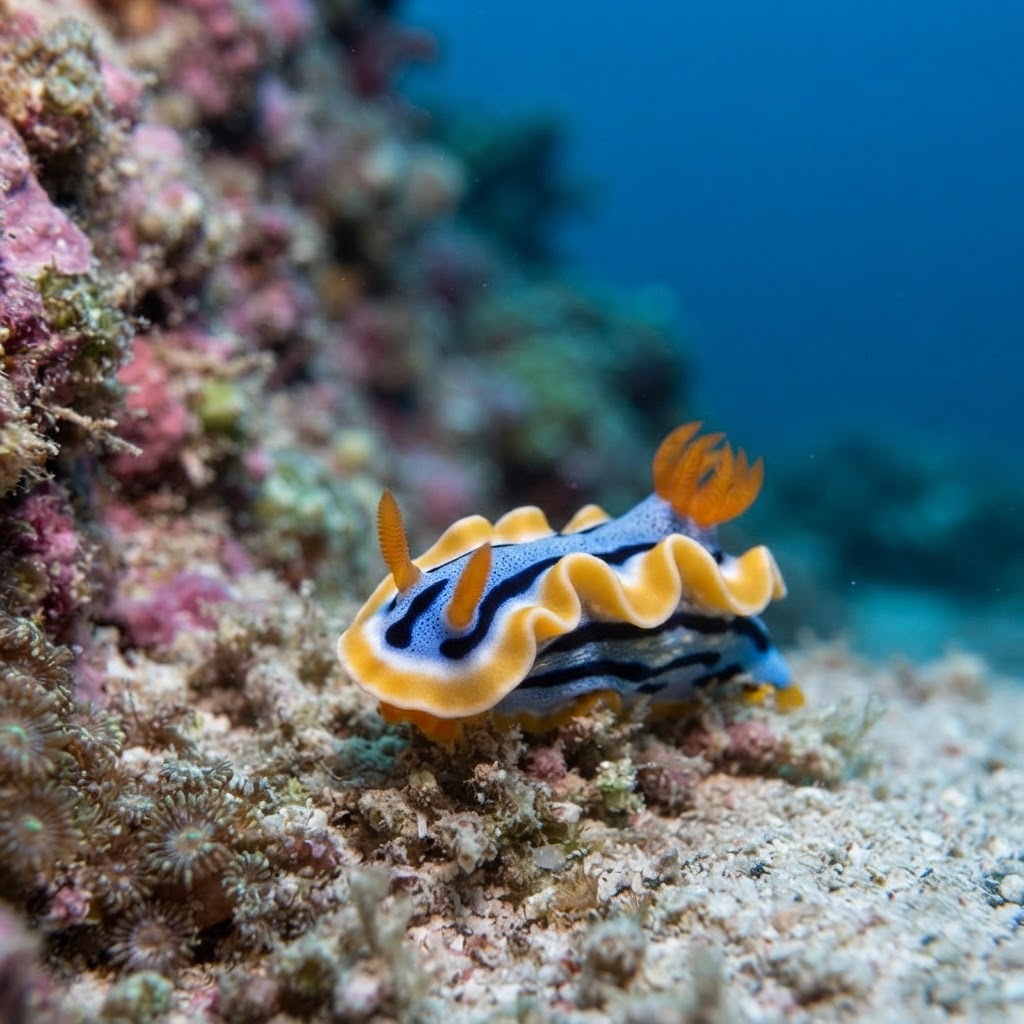
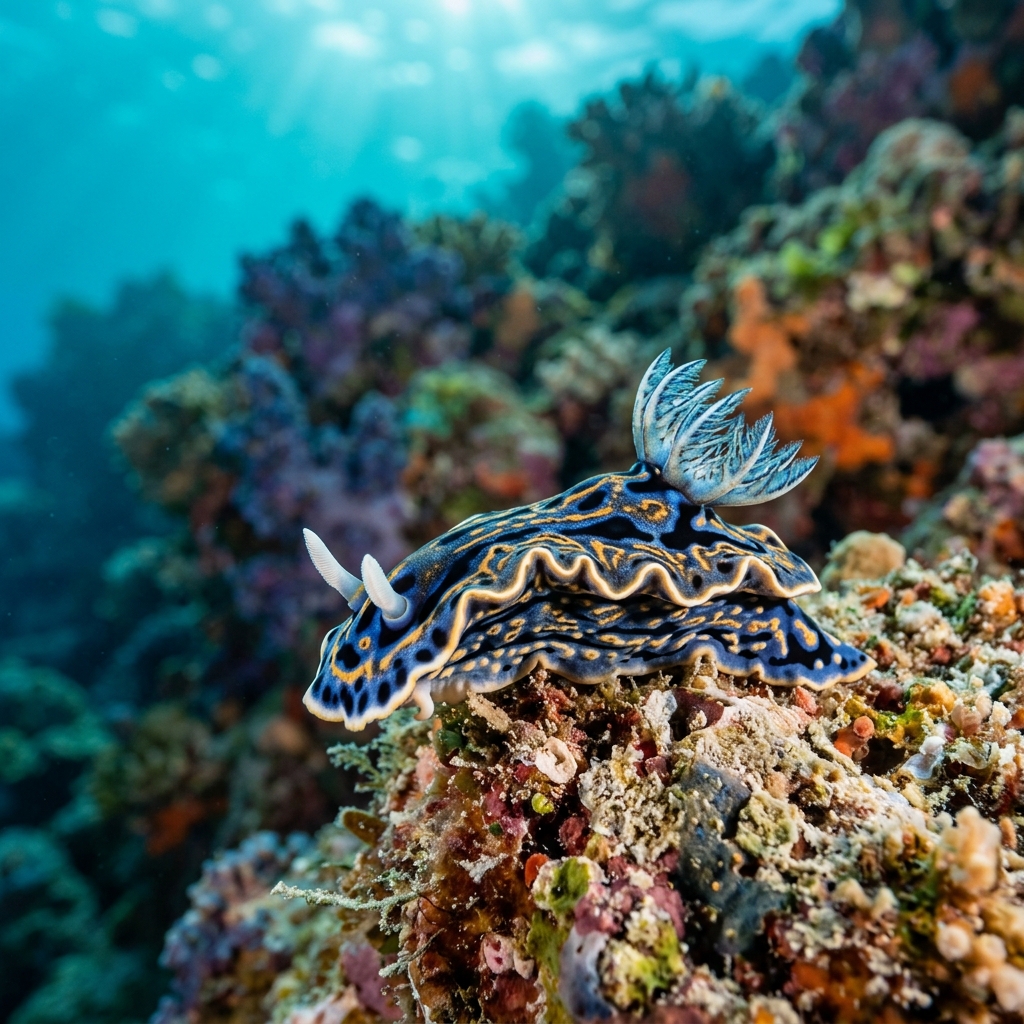
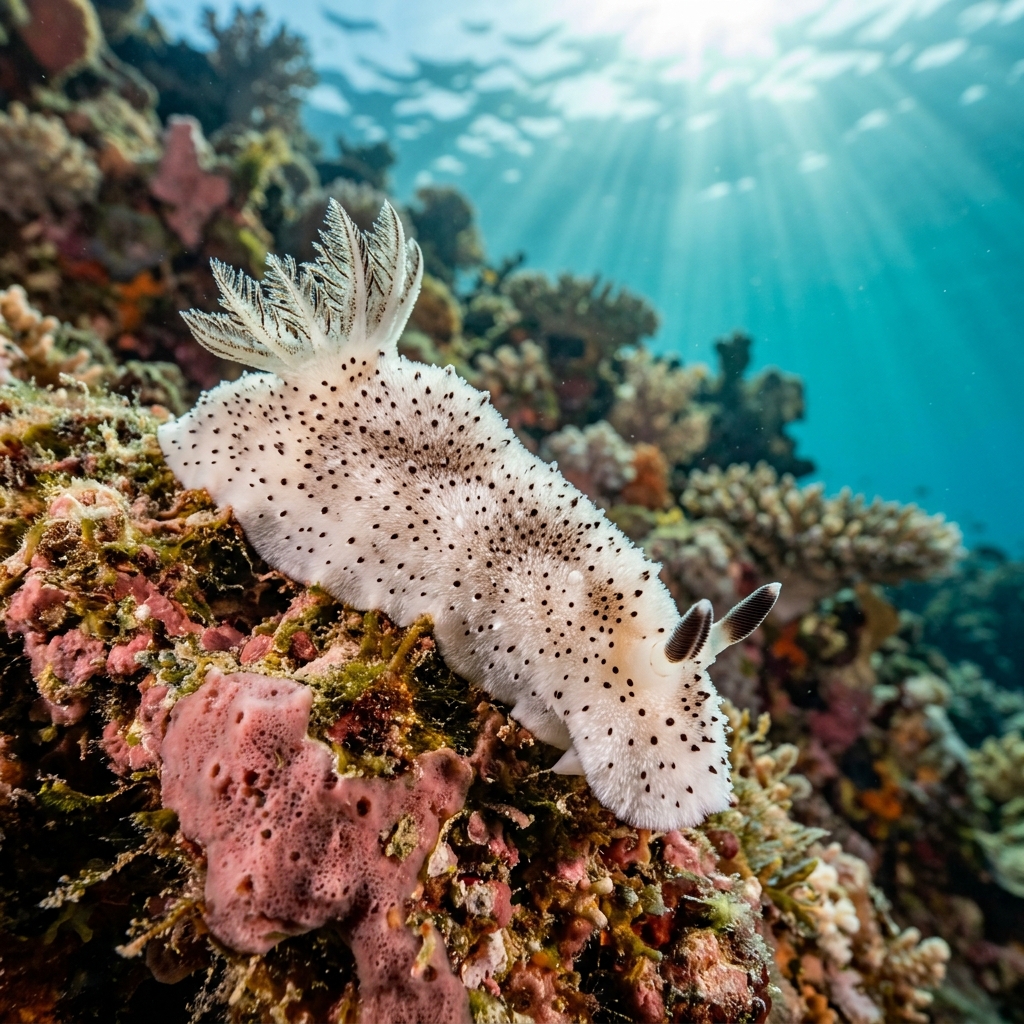
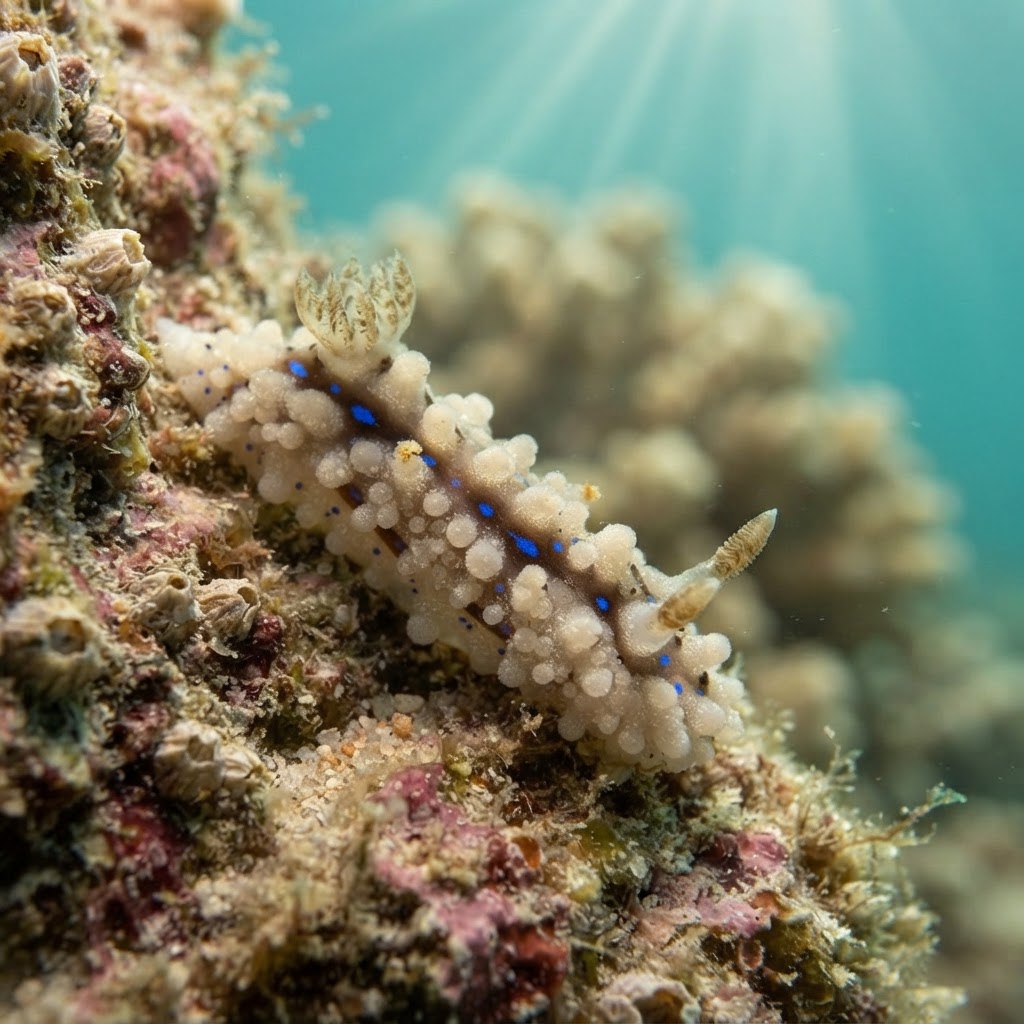
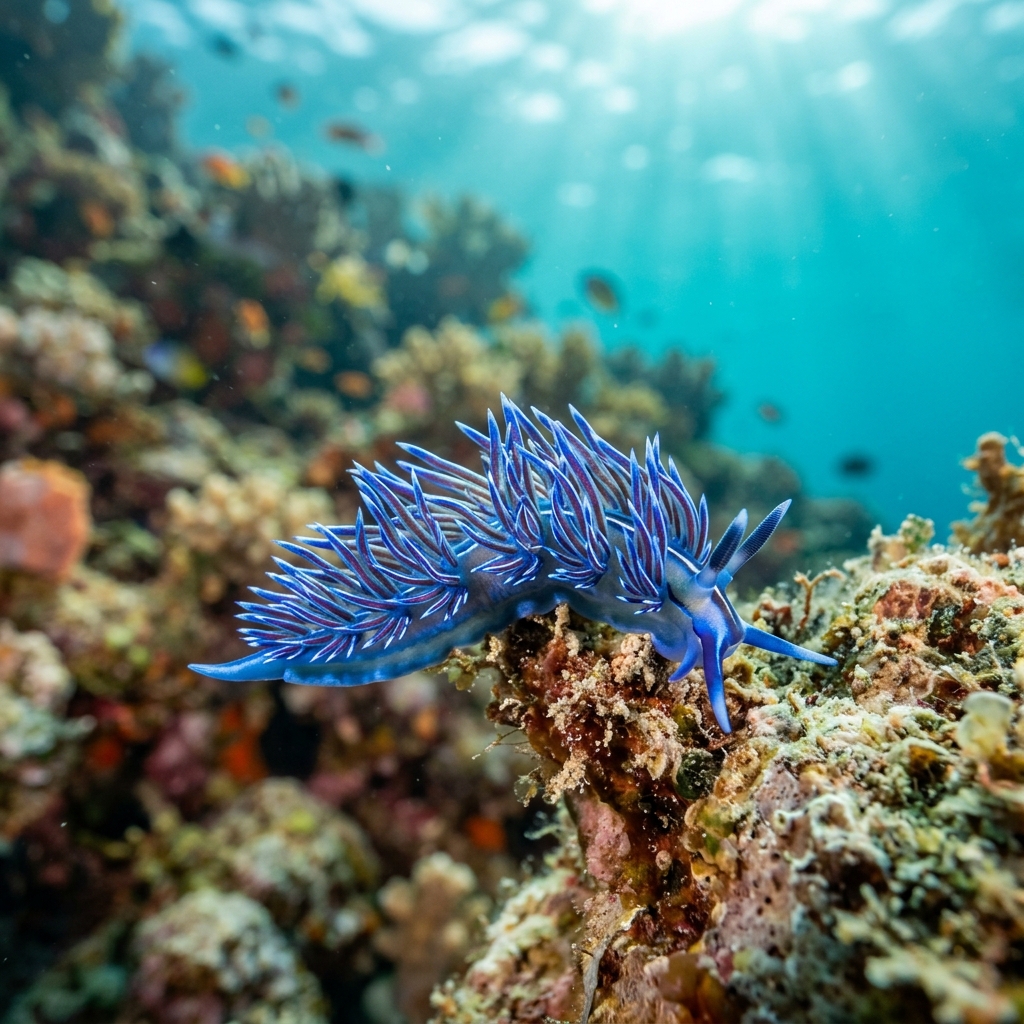
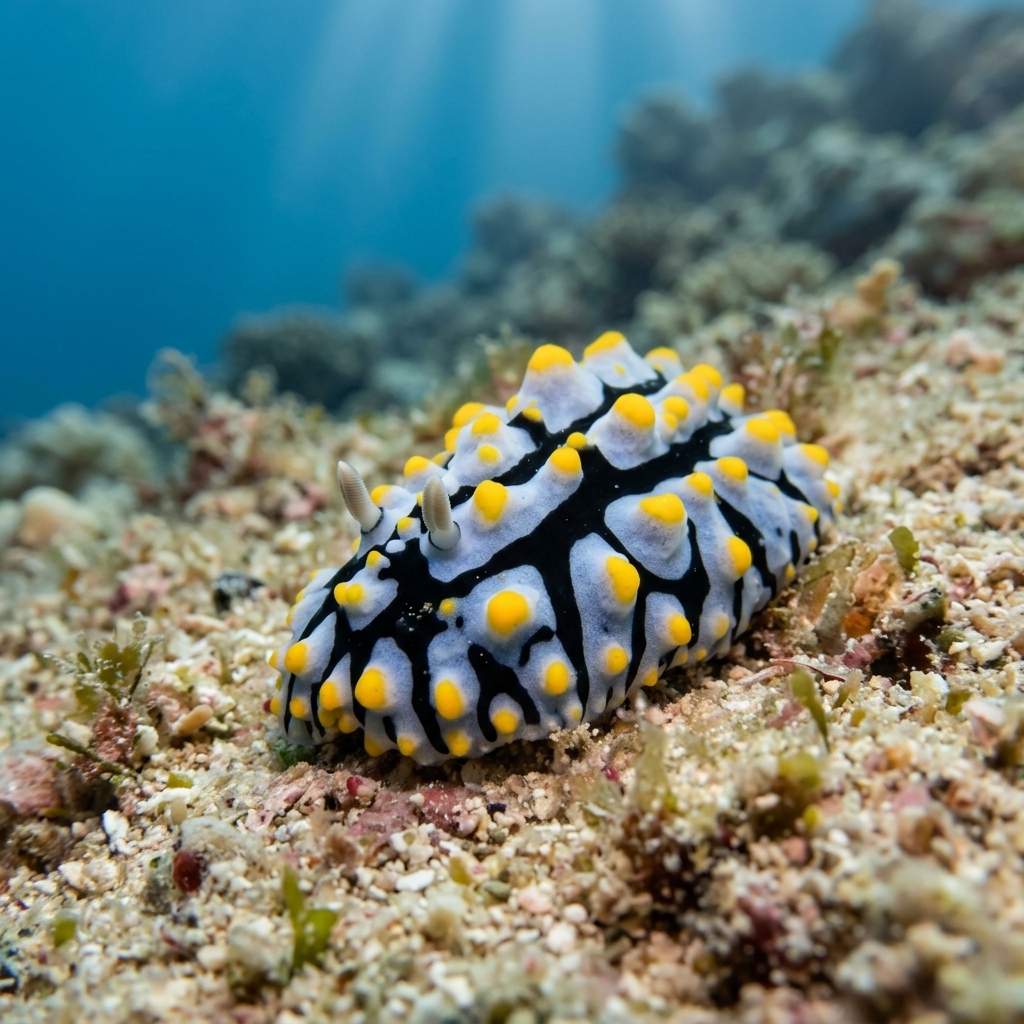
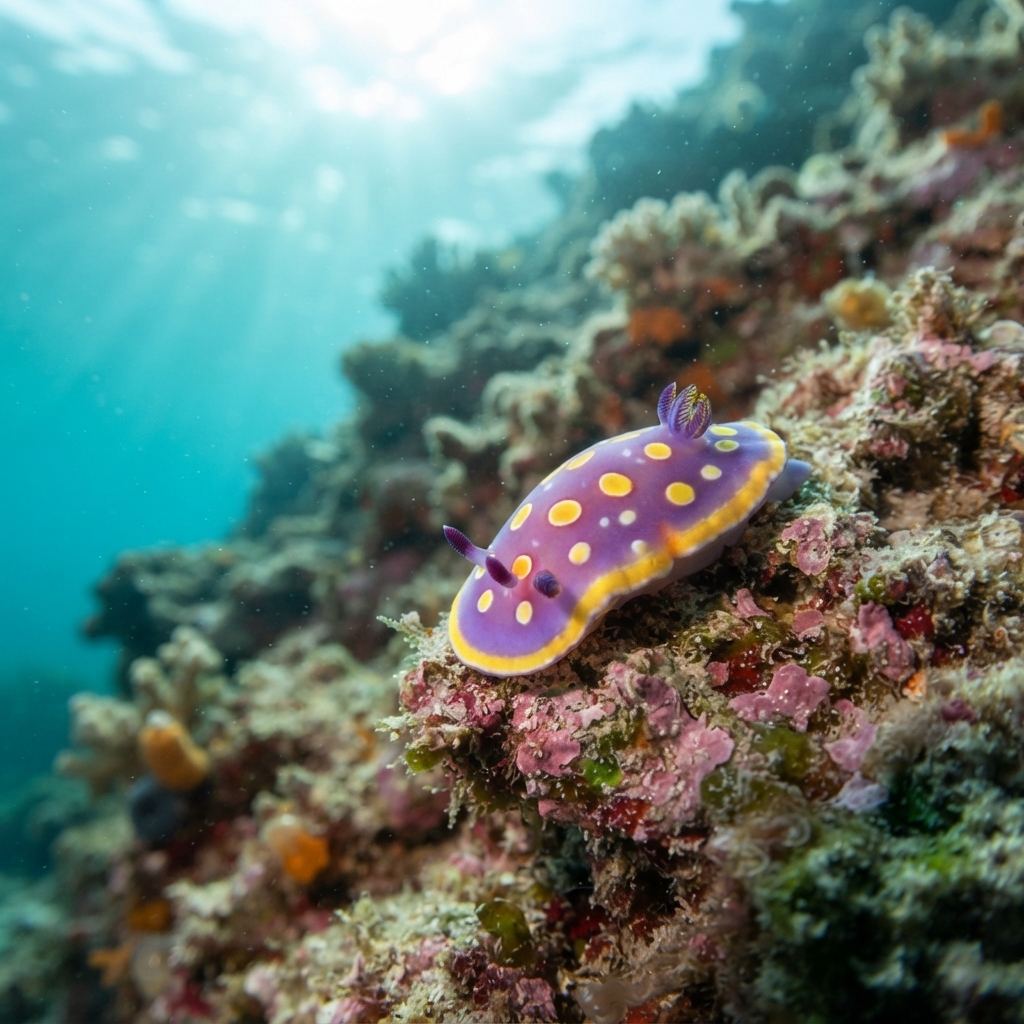
Look for a low, oval-bodied nudibranch with a white to pale grey body scattered with distinct yellow-orange spots down its back. A ring of feathery gills sits toward the rear and a pair of upright sensory tentacles (rhinophores) at the front, both often tipped in the same yellow-orange as the body spots. It moves slowly over rock and rubble and rarely grows large enough to spot from more than an arm's length away.
Expect to find it grazing slowly across rock faces, encrusted walls, and rubble patches, usually tucked into a crevice or moving over sponge-covered surfaces where it feeds. It shows no reaction to divers beyond continuing its unhurried crawl, making it an easy subject for close macro photography if you spot one on a wall scan.
Like other members of its family, it feeds on sponges and stores compounds from that diet in its tissue as a chemical defence, which is part of why its colours stay bold and exposed rather than hidden.
Divers log it across the year with no strong seasonal spike, matching its wide comfort range of roughly 14 to 20C, so cooler Atlantic sites and milder Mediterranean spots both produce sightings in most months.
Reef neighbours a diver could mistake it for. Use the identification notes above to tell them apart.
This is a reliable find along the Atlantic and Mediterranean coasts of southern Europe, with the strongest logs coming from the Lisbon Coast in Portugal, the French Riviera and Provence, and the Balearic Islands, Bay of Biscay, and Cantabrian Coast in Spain and France. Spain has the most sites overall, followed closely by France, with Portugal and Italy also producing steady sightings, particularly around Galicia and Andalusia.
Mapping where Yellow-dotted Doris is logged…
It turns up most often on the Lisbon Coast in Portugal, along the French Riviera and Provence, and around Spain's Balearic Islands, Cantabrian Coast, and Galicia. Spain and France between them account for most logged sightings.
There is no strong seasonal pattern in the sightings data, so it is logged fairly steadily through the year in water ranging from about 14 to 20C.
Check for a white to pale grey oval body dotted with yellow-orange spots, with matching colour on the gill cluster and rhinophores at either end. It stays small and moves slowly across rock and rubble, so a close look is usually easy.
No, it poses no risk to divers. It has no sting or bite of concern and simply crawls away slowly if disturbed.
It feeds on sponges and absorbs chemical compounds from its prey into its own tissue, using them as a defence against predators rather than relying on camouflage.
Site and sighting data is aggregated from diver logs, iNaturalist and GBIF. For taxonomy and conservation status:
Light-spotted Aegires
3,168 sites