Rudmania purpurea
A purple-and-white nudibranch turning up on rocky reefs from the Algarve to Galicia in cool Atlantic water around 15.5 to 21.5C.
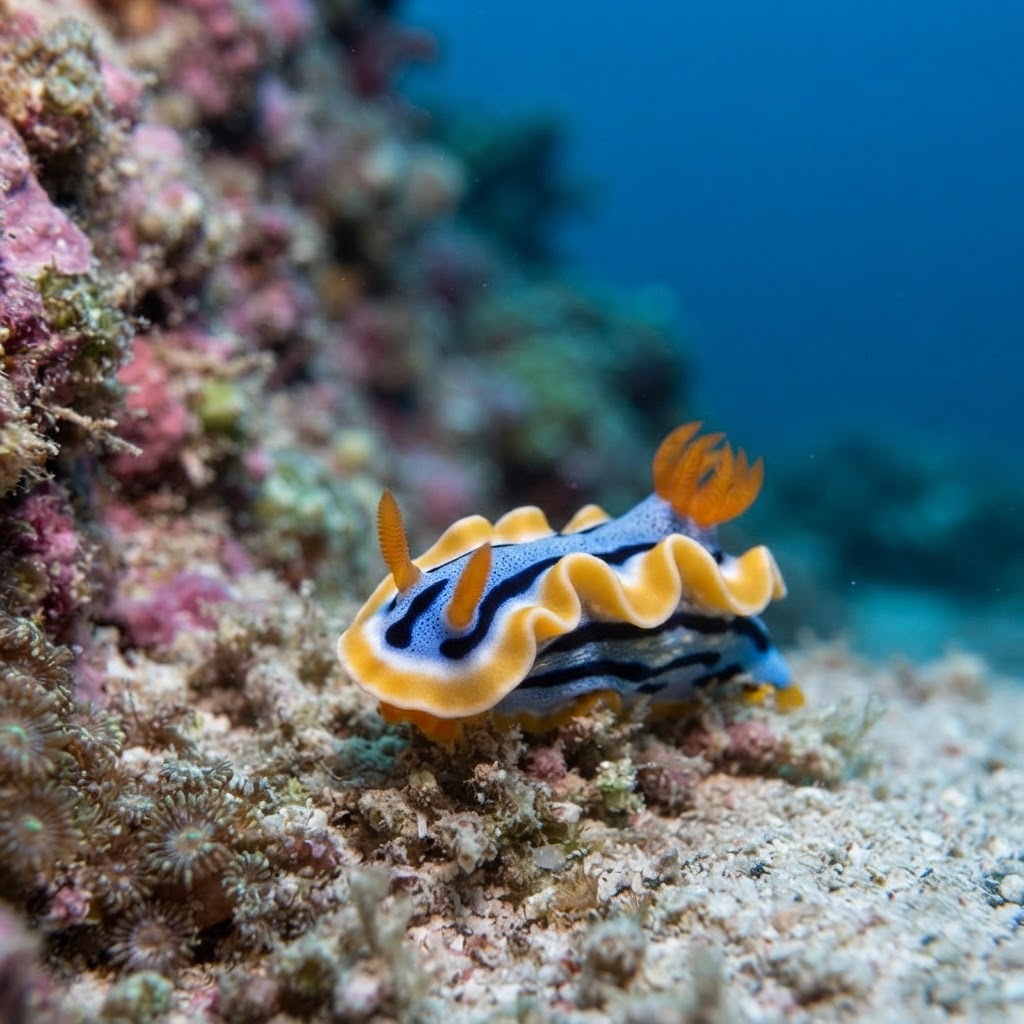
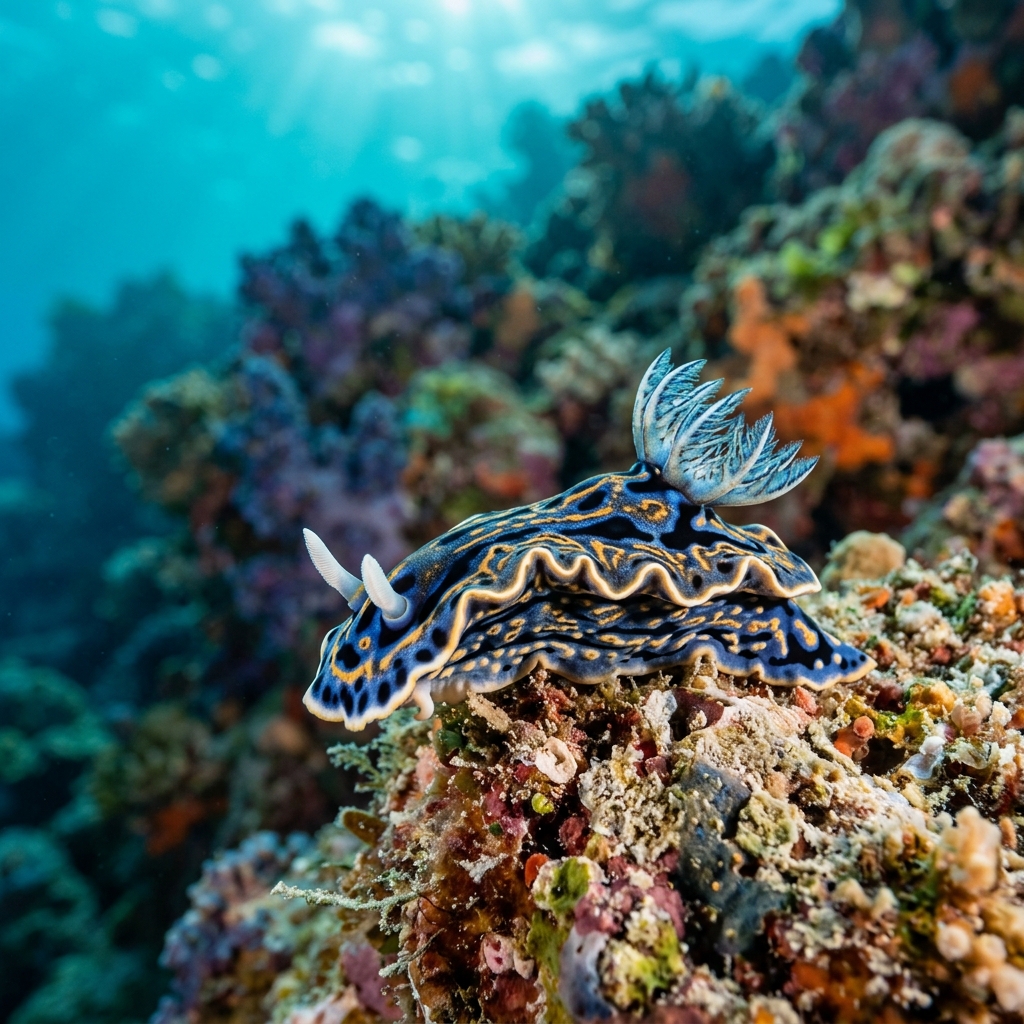
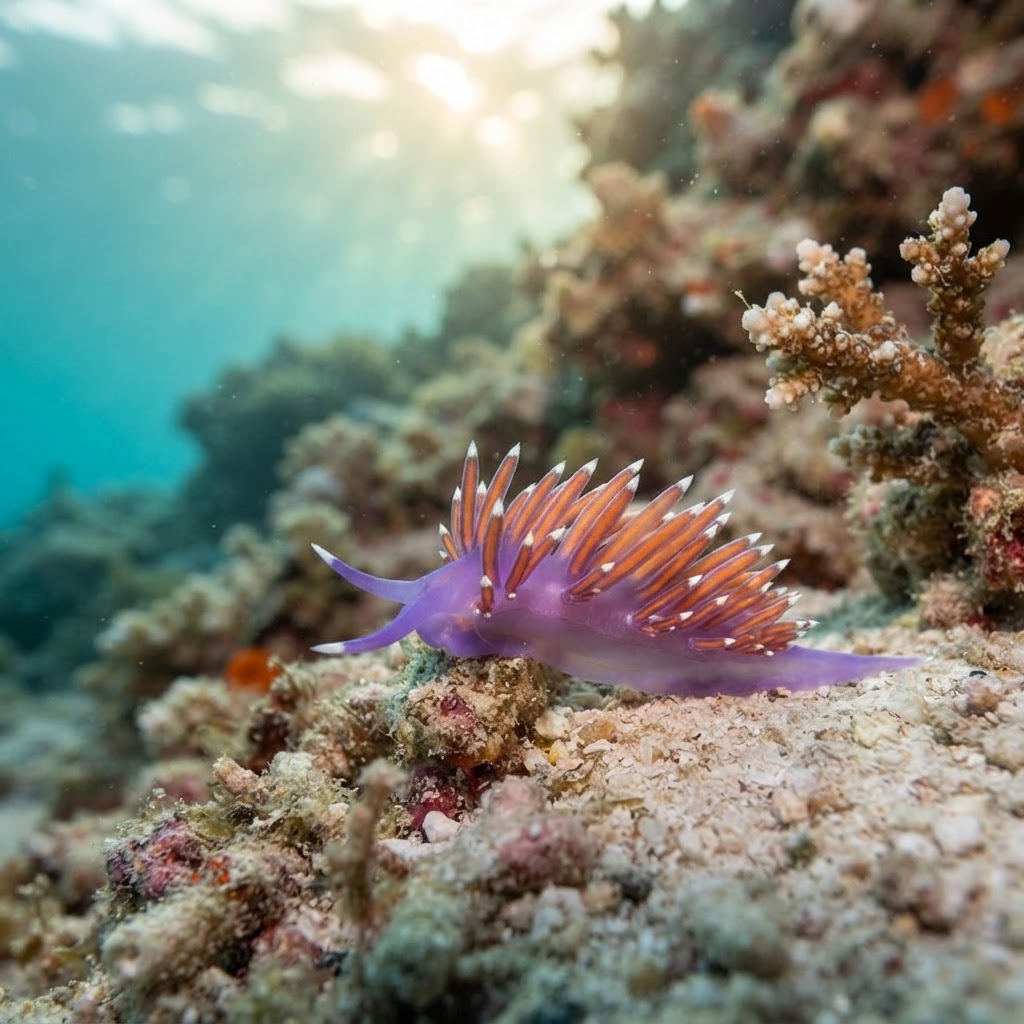
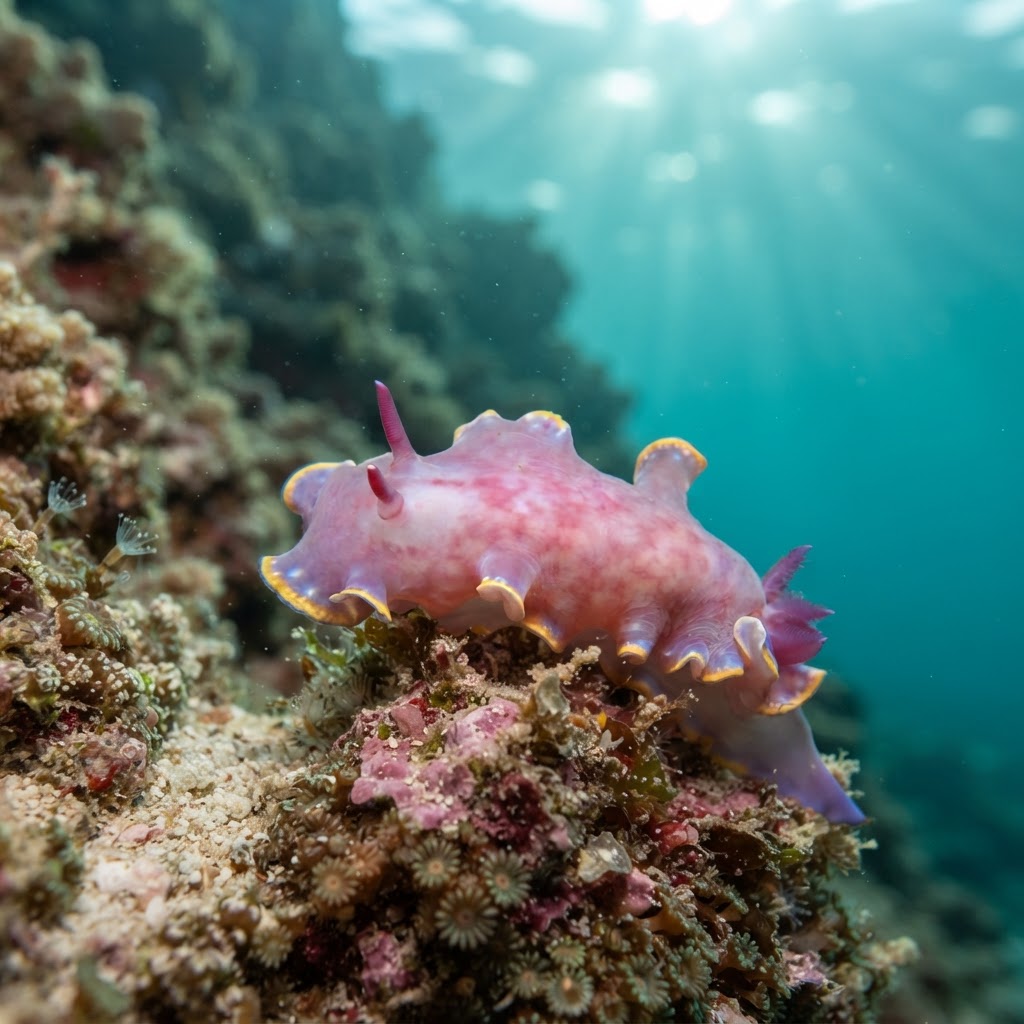
Small, soft-bodied sea slug with a purple to violet mantle scattered with fine white or pale spots, giving it a speckled look against dark rock. The body is elongate and low-slung, with the frilly gill cluster (the exposed feathery organ near the rear) often a contrasting paler shade. Look closely at the mantle edge, as colour intensity can vary between individuals, and it moves slowly enough to inspect at close range without disturbing it.
Divers typically spot it grazing slowly over rock and rubble, often tucked into crevices or moving across encrusting growth where it feeds. It shows no real reaction to divers beyond continuing its slow crawl, making it an easy subject for close macro photography once found. Most sightings come from careful, methodical searching along reef walls and boulder fields rather than open water.
Like other members of the Chromodorididae family, it is thought to feed on sponges and likely stores or modifies chemical compounds from that diet as a defence against predators, a strategy common across the group.
No clear seasonal pattern shows up in the sightings data, so treat it as a year-round find on the rocky reefs it favours. It sits in a cooler water niche of roughly 15.5 to 21.5C, which fits the temperate Atlantic and Mediterranean coasts where it is logged rather than a warm-water tropical season.
Reef neighbours a diver could mistake it for. Use the identification notes above to tell them apart.
Most reliably logged along the Portuguese coast, especially the Algarve and the Lisbon Coast, with strong numbers also reported from Andalusia and Galicia in Spain. It also turns up with less frequency in the Cyclades in Greece, the Cantabrian Coast, El Hierro in the Canary Islands, and the Bay of Biscay in France, making it primarily an eastern Atlantic and western Mediterranean find.
Mapping where Rudmania Purpurea is logged…
It is most commonly logged along Portugal's Algarve and Lisbon Coast, with reliable sightings also reported from Andalusia and Galicia in Spain. Smaller numbers turn up in the Cyclades in Greece, El Hierro in the Canary Islands, and the Bay of Biscay in France.
There is no strong seasonal pattern in the sightings, so it can be found across the year on the temperate reefs it inhabits. Its comfort range of roughly 15.5 to 21.5C fits the cooler Atlantic and Mediterranean waters where it lives year-round.
Look for a small, slow-moving sea slug with a purple to violet mantle flecked with fine white or pale spots. The frilly gill tuft near the rear end is often a paler contrasting colour, and the whole animal stays low and slow against rock or rubble.
No, it poses no danger to divers. It has no means of stinging or biting and simply relies on chemical defences absorbed from its diet to deter predators, not humans.
Like related Chromodorididae species, it almost certainly feeds on sponges, using specialised mouthparts to graze on them and likely repurposing chemical compounds from its prey for its own defence.
Site and sighting data is aggregated from diver logs, iNaturalist and GBIF. For taxonomy and conservation status:
Blue Dragon
3,163 sites