Necora puber
Red eyes, blue-tinged claws, a temper: velvet swimming crabs turn up under UK and Zeeland rocks year-round in cool 9-18C water.
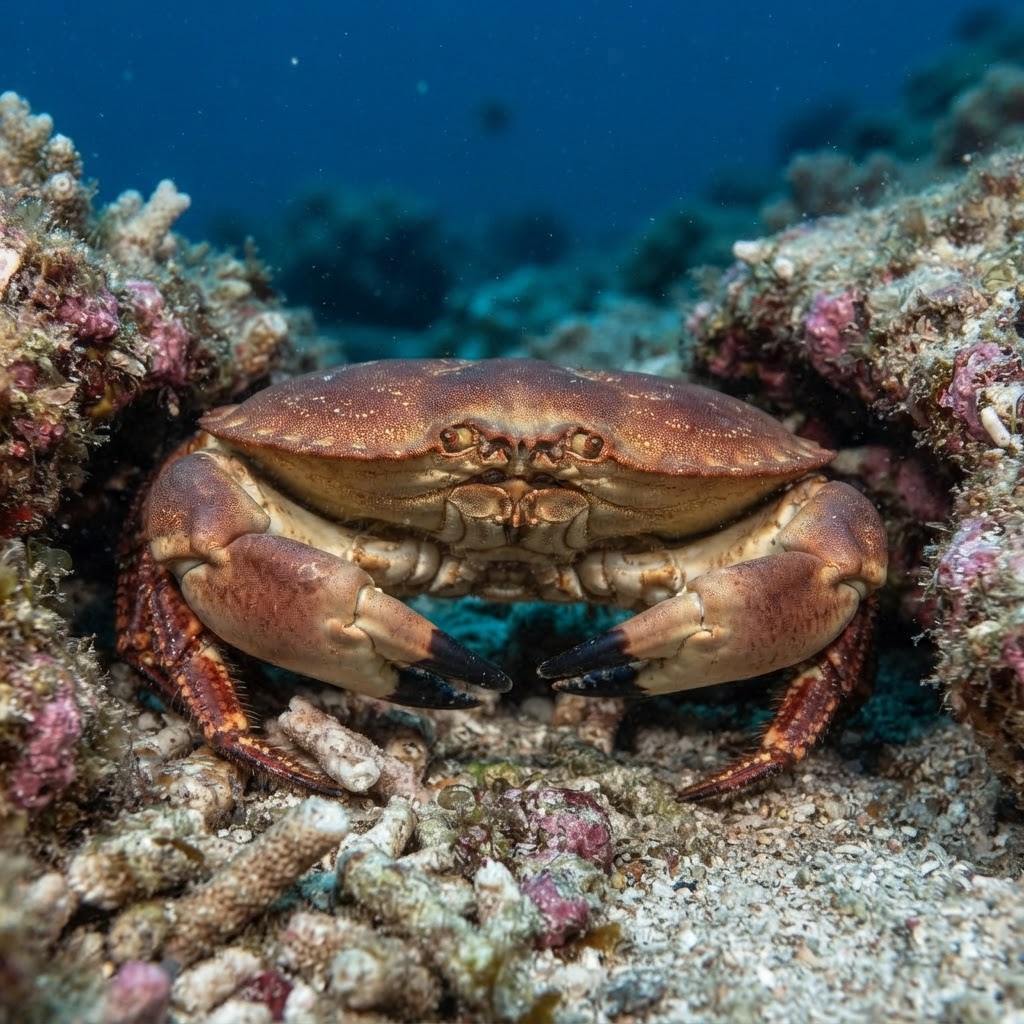
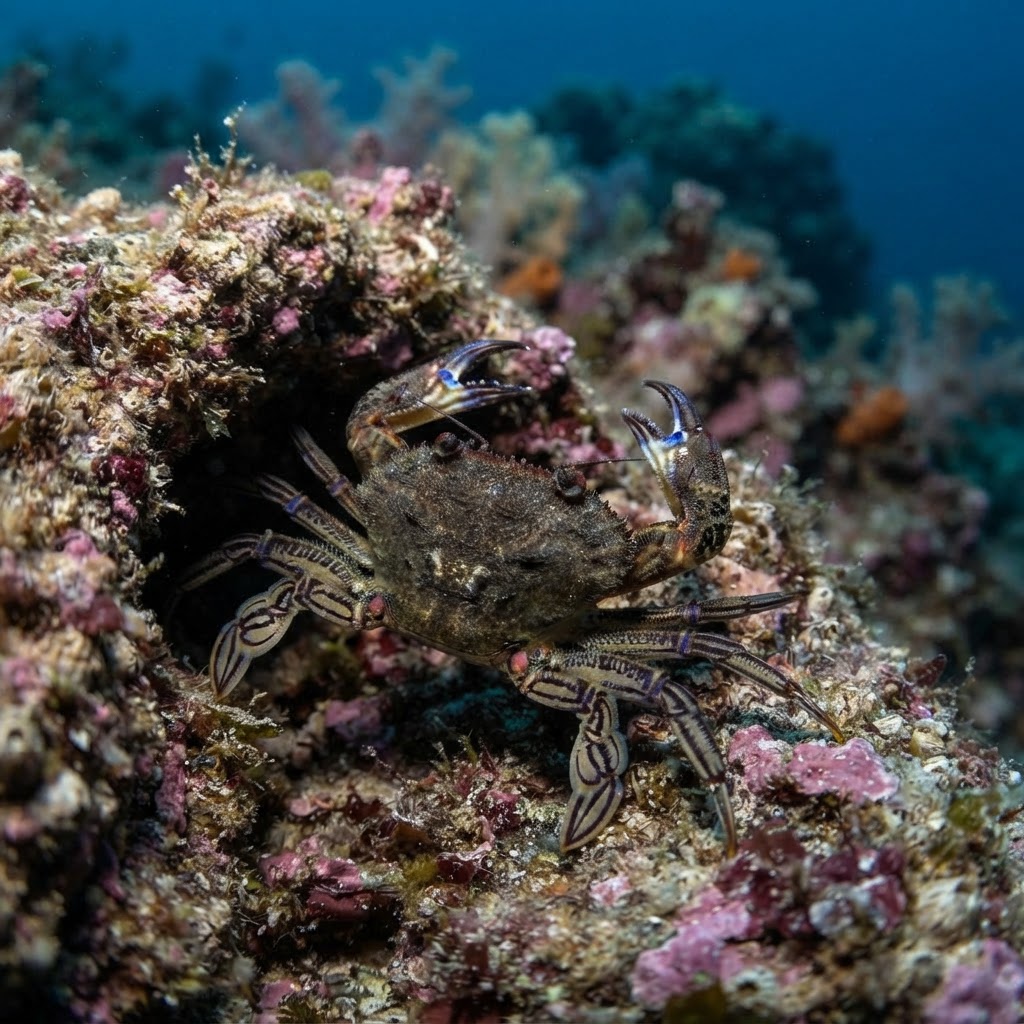
Look for a broad, flattened shell about 7 cm across covered in fine dark hairs that give it a velvety texture rather than a glossy one. The giveaway is the eyes: bright red, set against blue-tinged joints on the legs and claws. It braces itself in crevices with its last pair of legs flattened into paddles for swimming, and it will raise its claws readily if you get too close.
Expect to find it wedged under rock ledges, in crevices, or among boulders and kelp holdfasts rather than out in the open. It is one of the more short-tempered crabs divers encounter, standing its ground with raised claws instead of retreating, which is exactly how most people notice it. Activity tends to be highest around dusk and at night, though daytime rock-flipping still turns plenty up.
That aggressive claw-raising response has earned it the nickname devil crab among UK divers and rockpoolers, a rare case where a crab's local nickname is basically a diver-observed behaviour note.
Sightings are spread across the year with no strong seasonal spike in the data, and its comfort range of roughly 9 to 18C matches the cool, temperate water it lives in for most of the year across these regions. Divers report it as an uncommon but steady find whenever conditions bring them to rocky reef and boulder habitat.
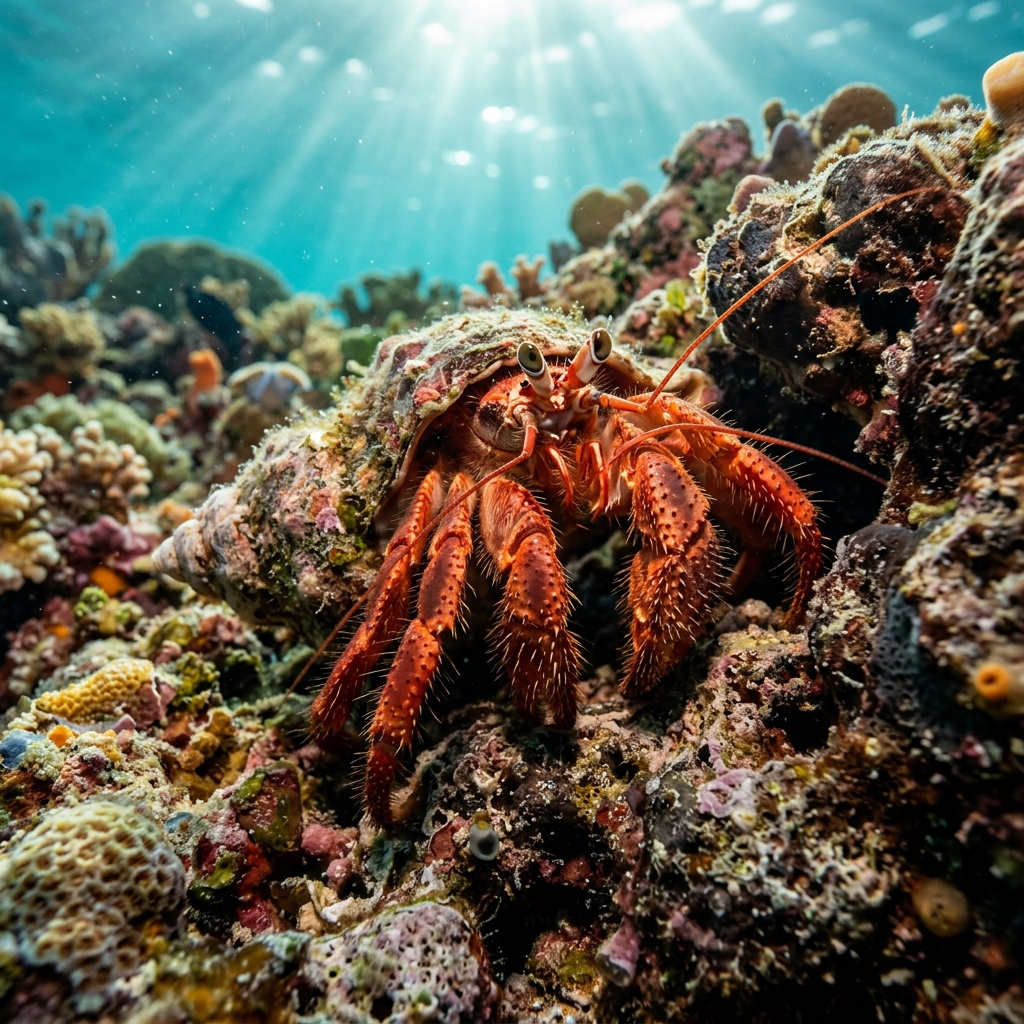
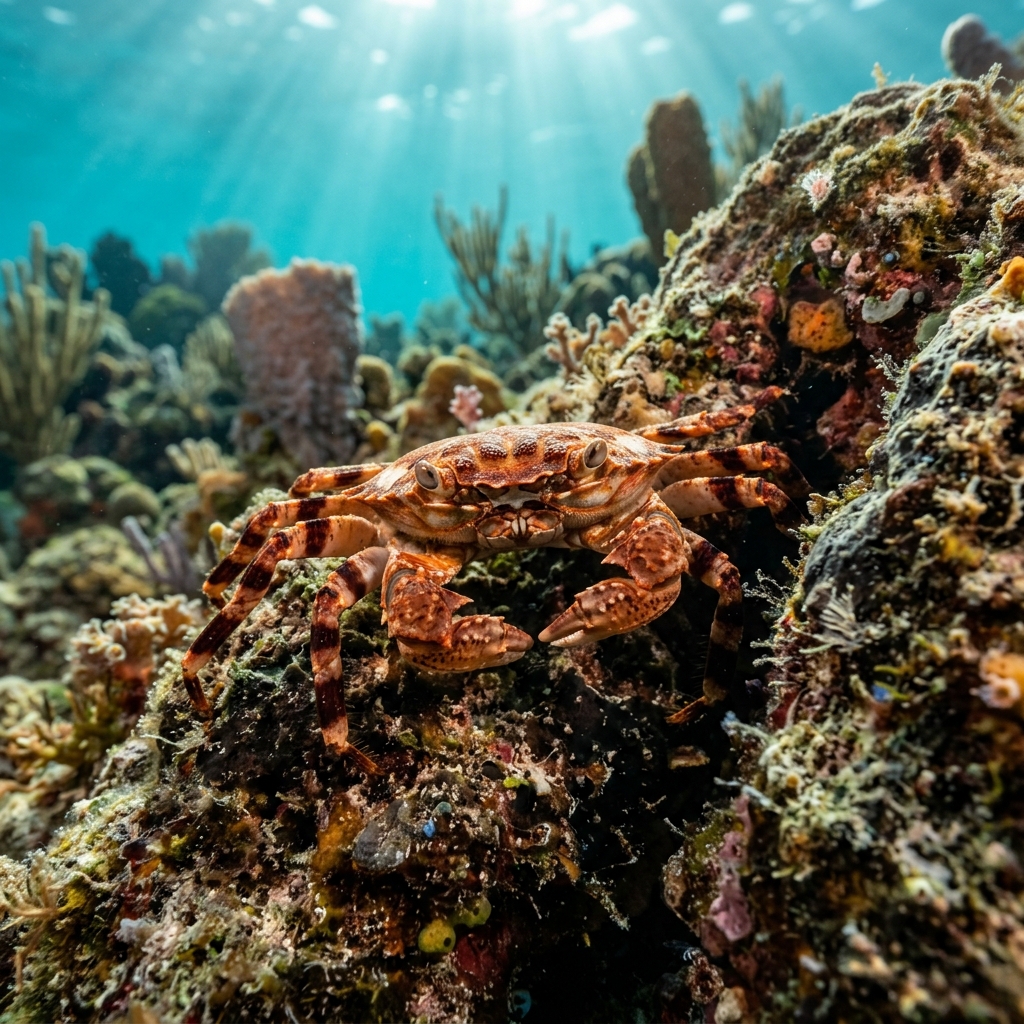
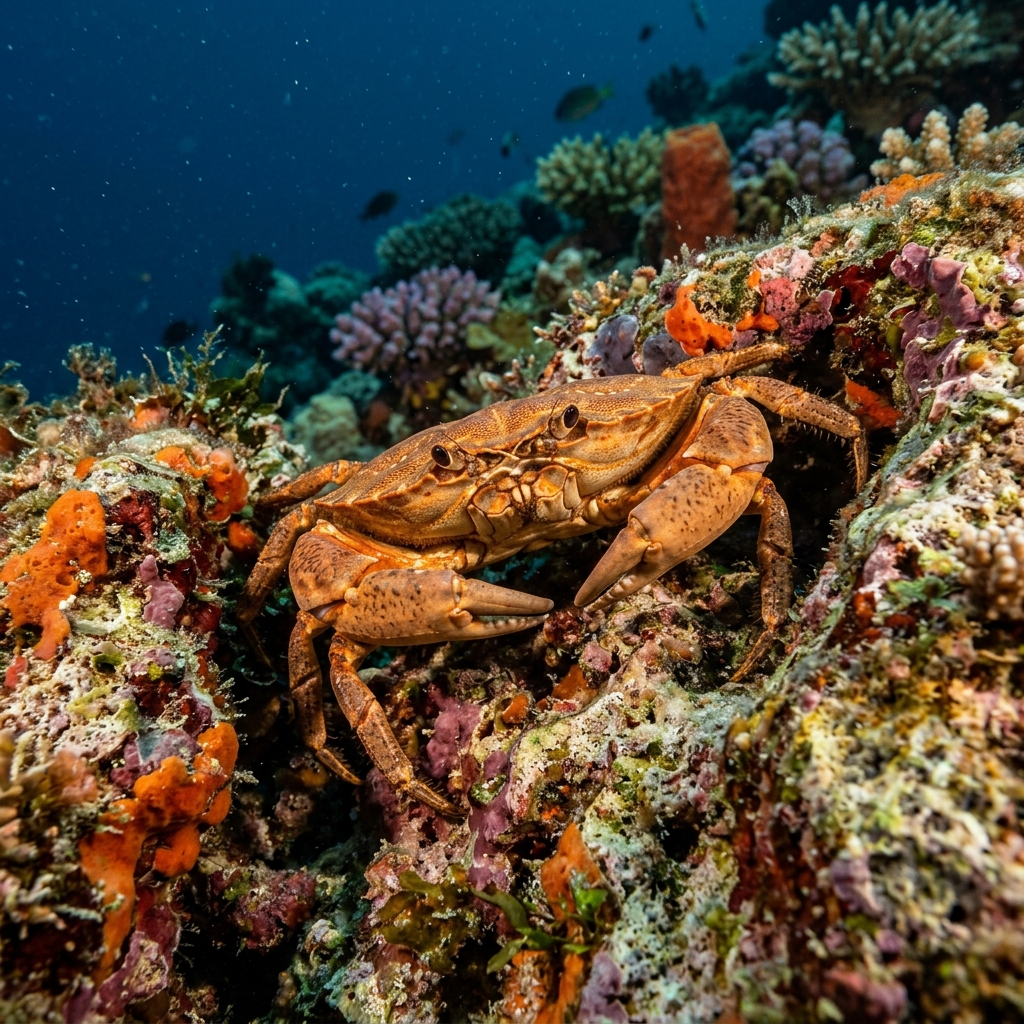
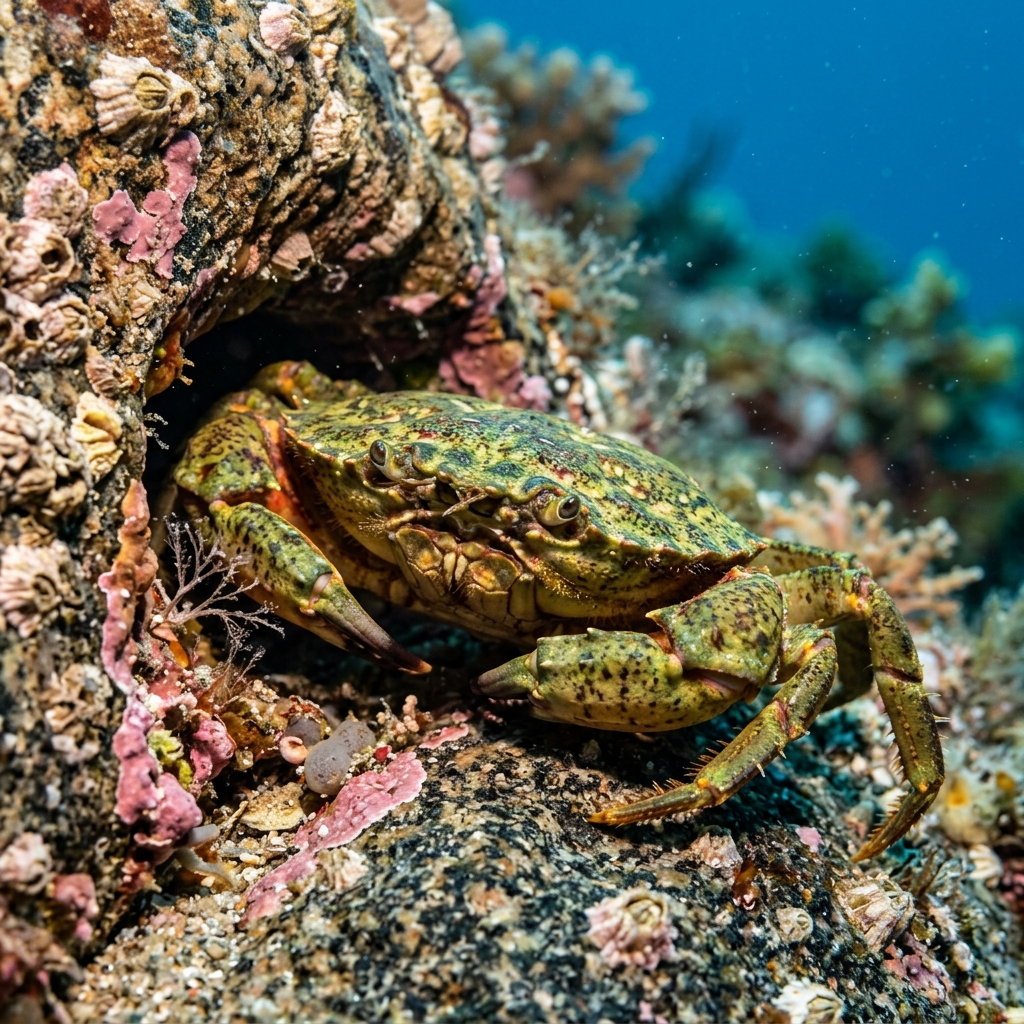
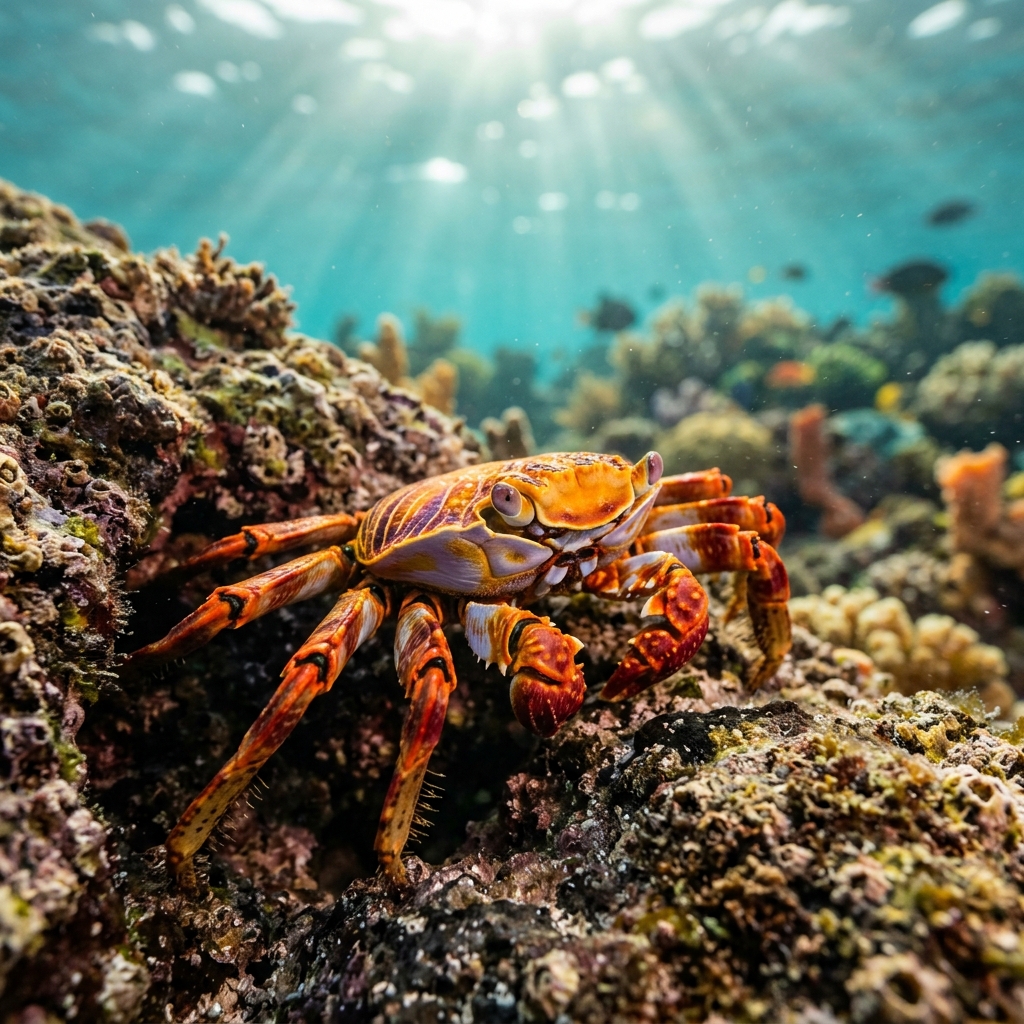
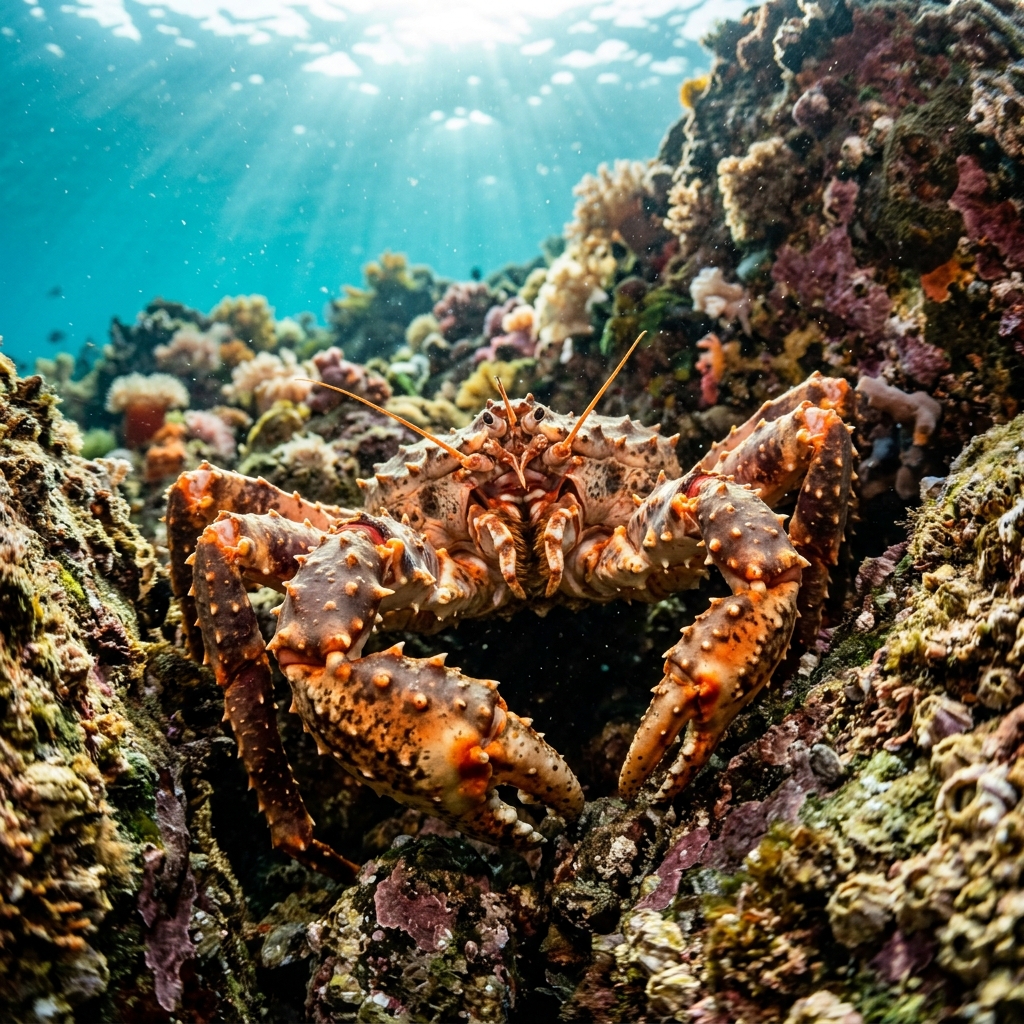
Reef neighbours a diver could mistake it for. Use the identification notes above to tell them apart.
Most reliably logged in the United Kingdom and France, with especially strong numbers around Zeeland in the Netherlands, England and Northern Ireland in the UK, and Brittany and the Bay of Biscay in France. It also turns up well along Portugal's Algarve and Lisbon coasts, and in Galicia, Spain, and Ireland, always tucked into rocky ground rather than open sand.
Mapping where Velvet Swimming Crab is logged…
It shows up most reliably around rocky reef habitat in the United Kingdom (England, Northern Ireland), the Netherlands (Zeeland), and France (Brittany, Bay of Biscay), with good numbers too in Portugal's Algarve and Lisbon coast and in Galicia, Spain.
There is no strong season in the sighting data, so it is treated as a year-round find. Its 9 to 18C comfort range matches the cool water it lives in across most of the year in these regions.
Check for bright red eyes, blue-tinged leg and claw joints, and a shell covered in fine dark hairs rather than a smooth shine. It also tends to raise its claws defensively when approached instead of fleeing.
They typically reach around 7 cm across the shell, a modest size that makes them easy to overlook until they raise their claws.
No, they pose no real danger to divers. They will raise their claws and stand their ground if disturbed, so it is best just to leave them be rather than handle them.
It is nicknamed the devil crab because it reacts to being approached or handled by raising its claws aggressively rather than retreating, a distinctly bolder response than most crabs give.
Site and sighting data is aggregated from diver logs, iNaturalist and GBIF. For taxonomy and conservation status:
European Green Crab
2,469 sites