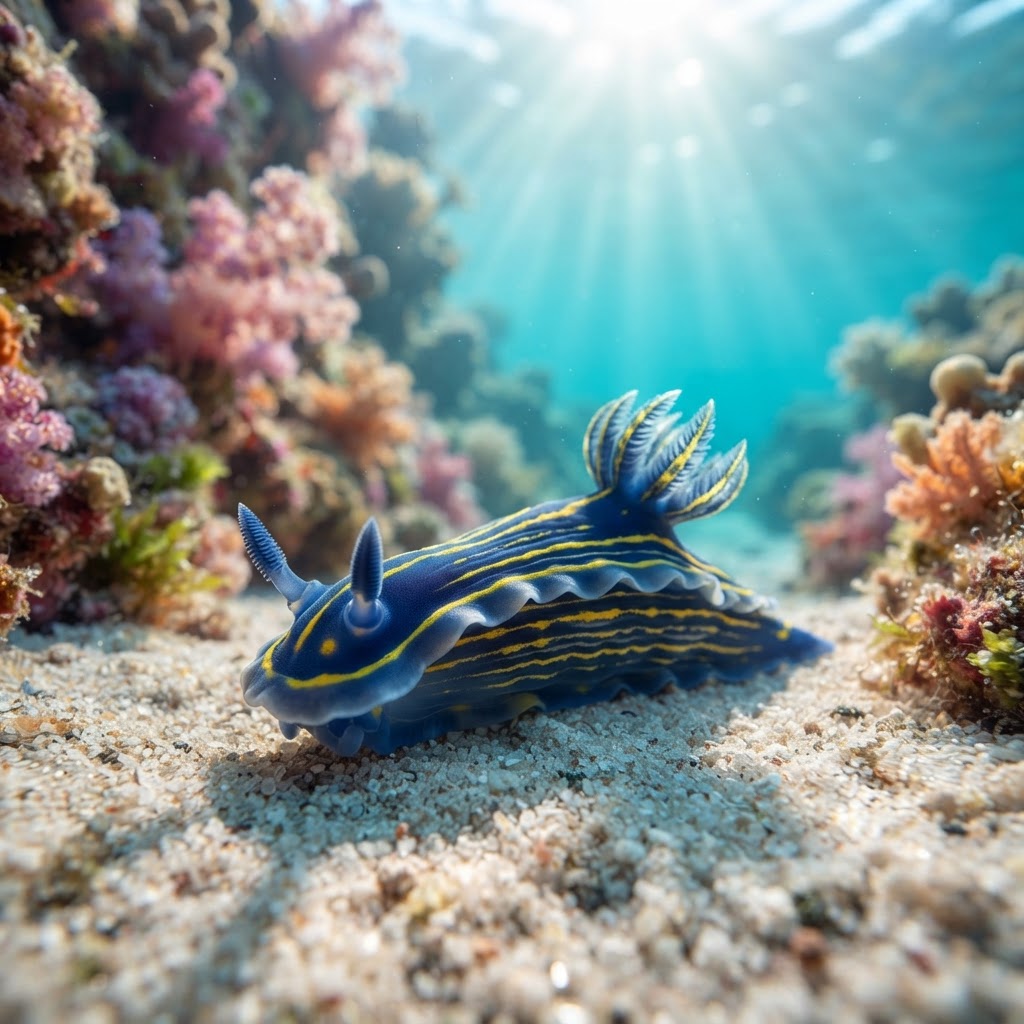
Felimare cantabrica
A common find along Portugal's Algarve and Lisbon Coast in water from 14 to 20 C, year-round for patient divers.
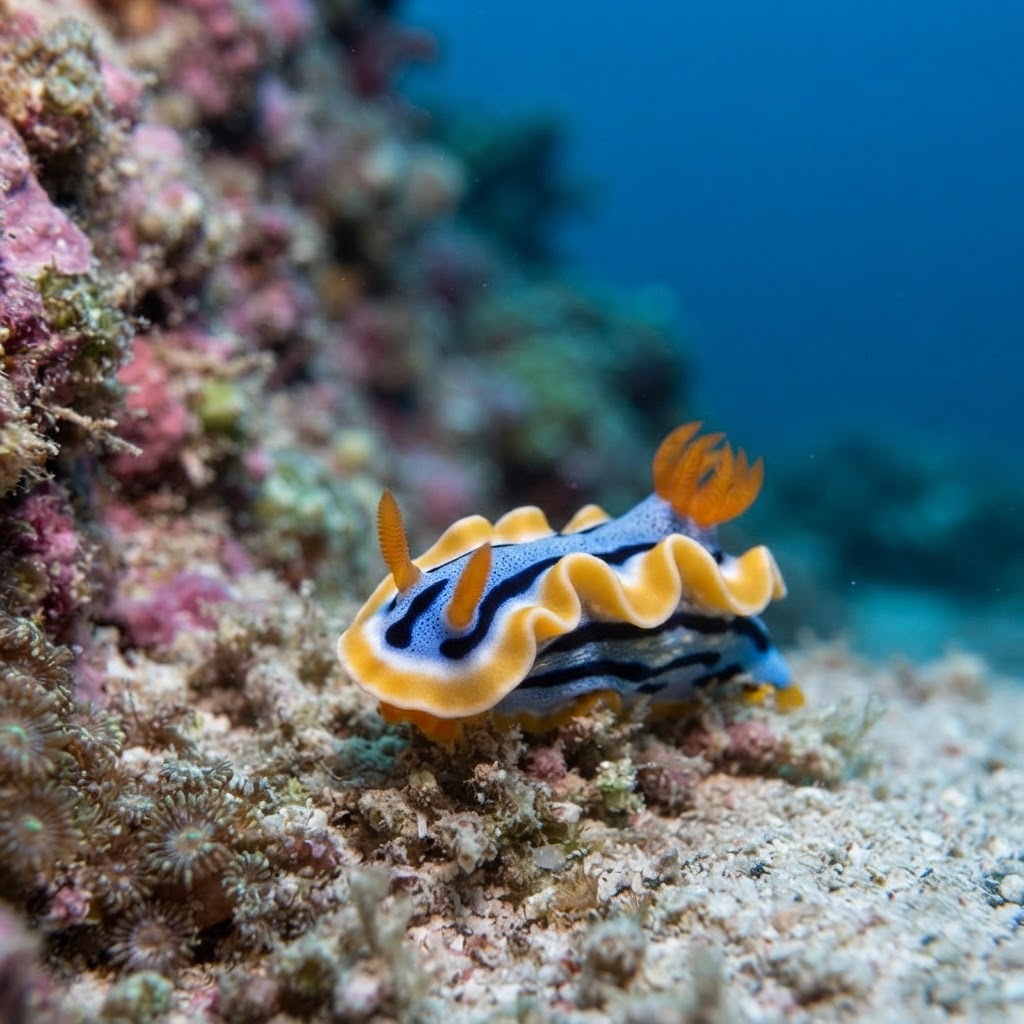
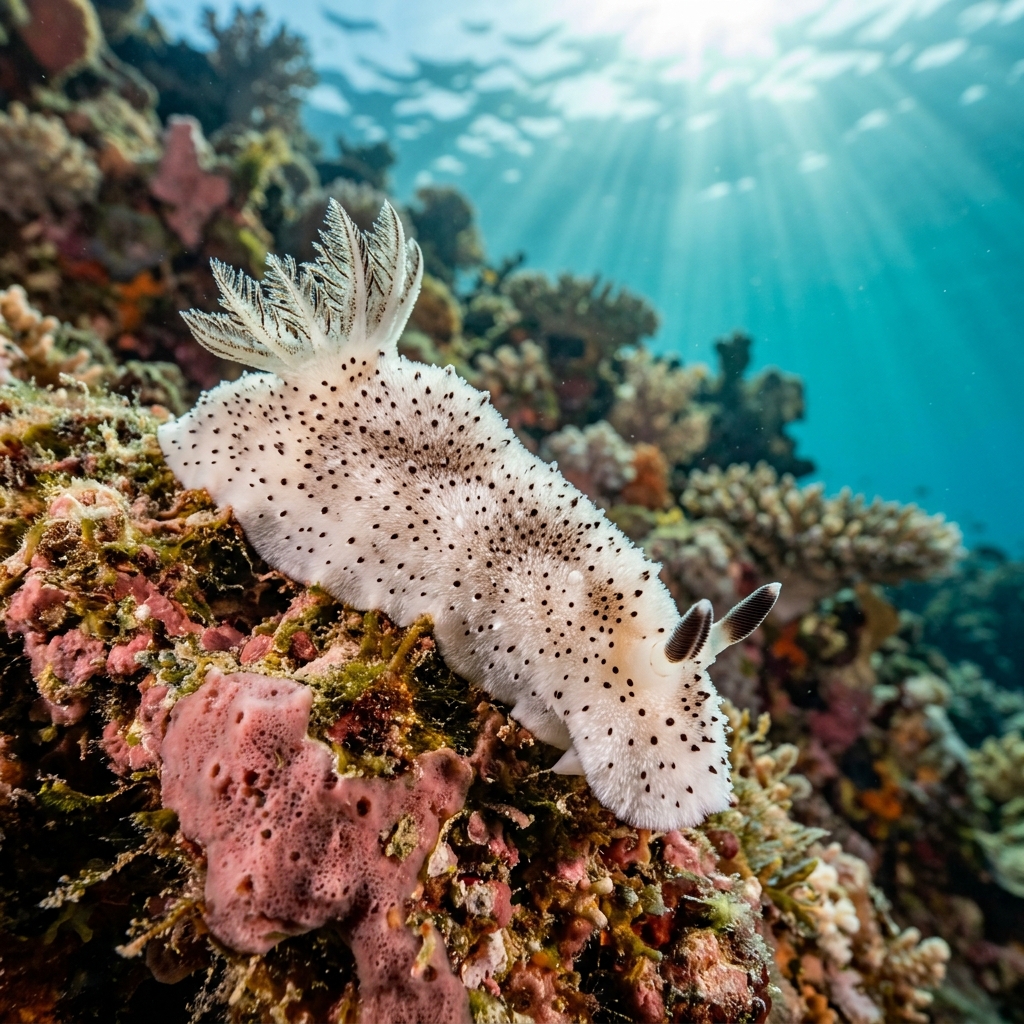
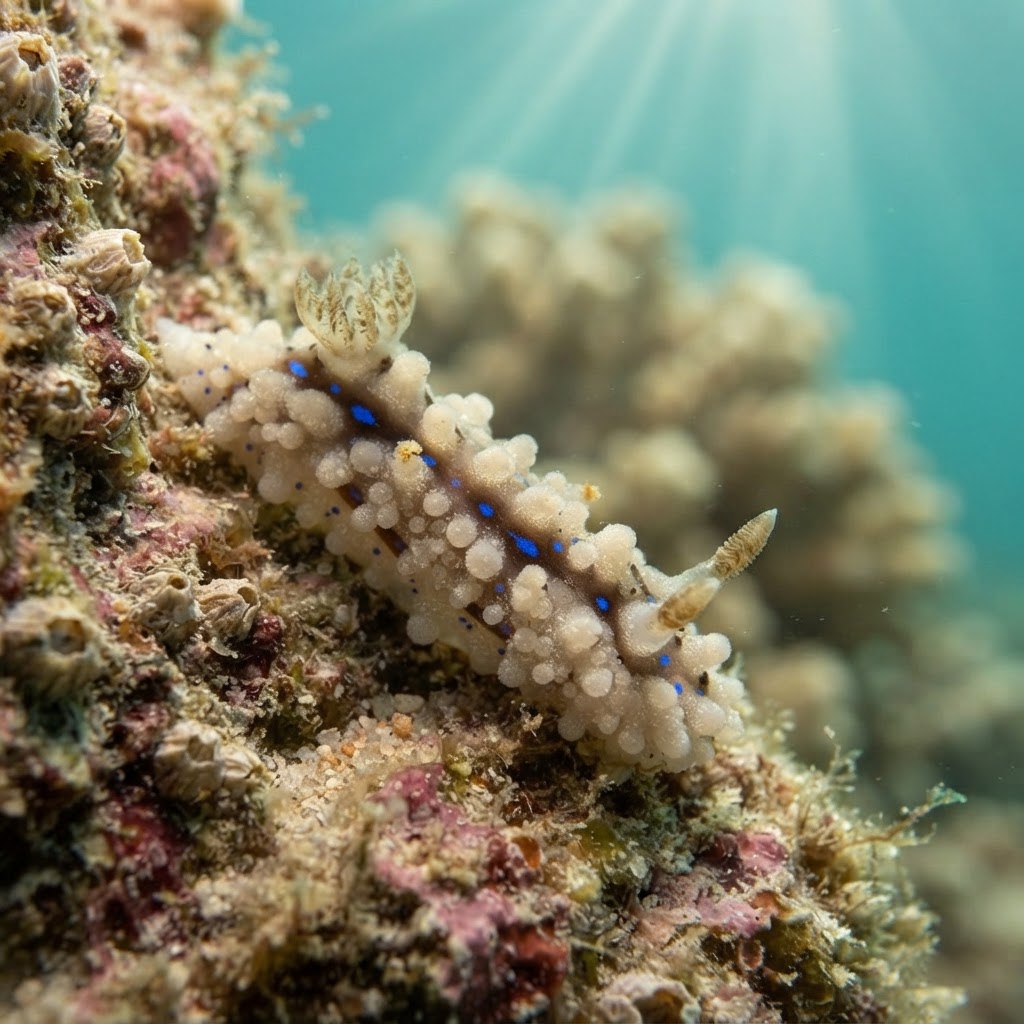
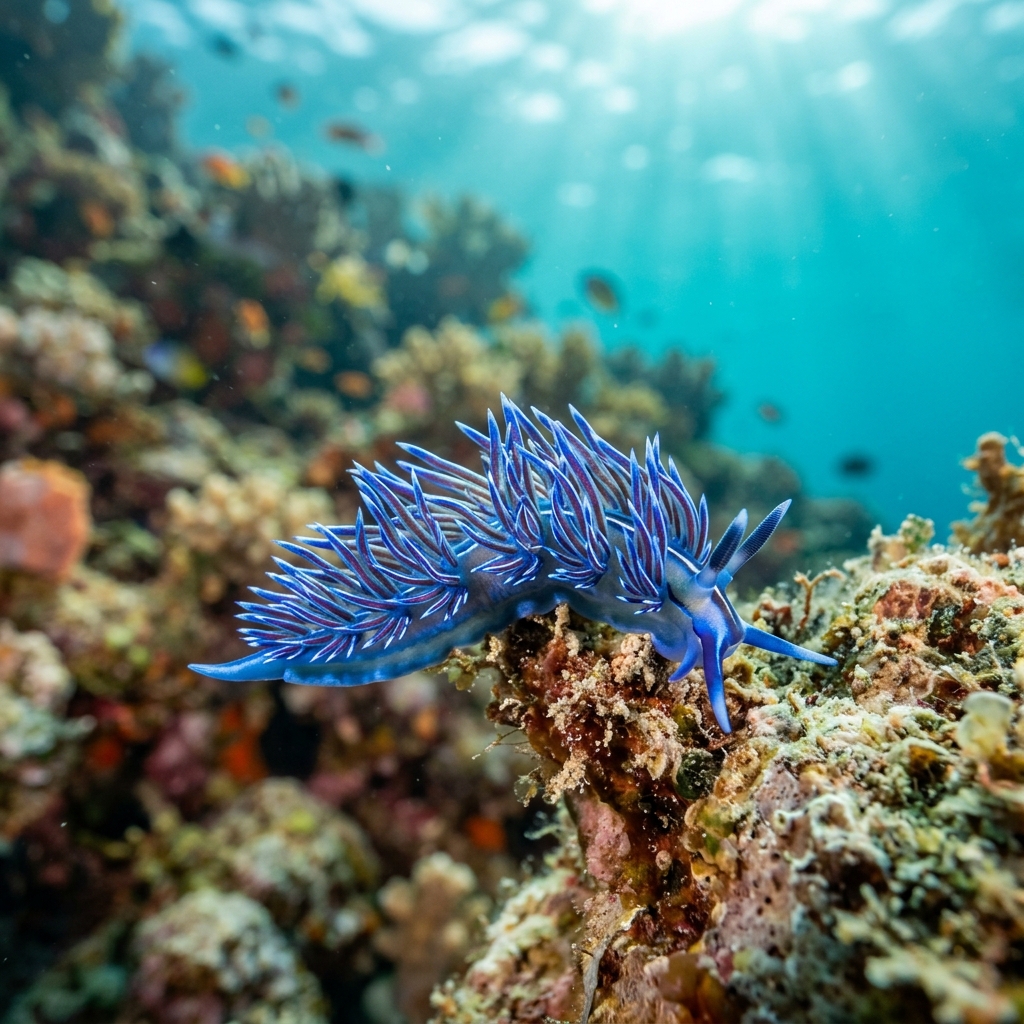
A small, elongate sea slug with a deep blue to purple mantle edged in a fine yellow or white line, giving it a clean, almost painted look against dark rock. The gills (feathery breathing organs) at the rear and the rhinophores (sensory tentacles) up front often show a contrasting orange or cream tip, the detail most divers key on to confirm the species. Look for it moving slowly over encrusted rock and rubble rather than open sand, usually just a few centimetres long.
Divers most often find it grazing slowly across rock faces and boulder fields, unhurried and easy to approach for a close look or photo. It shows no reaction to divers beyond retracting its rhinophores if touched, and it is typically spotted during the day on shallower rocky reef rather than deep wall or sand habitat.
Like other chromodorid nudibranchs, its bright colouring likely advertises the toxic or distasteful compounds it absorbs from the sponges it feeds on, warning predators off rather than helping it hide.
Sightings are spread across the year with no clear seasonal peak in the data, and the wide temperature niche of 14.2 to 20.2 C means it tolerates both cooler winter water and warmer summer conditions along this coastline. Plan around good visibility and calm seas in your chosen region rather than a specific month.
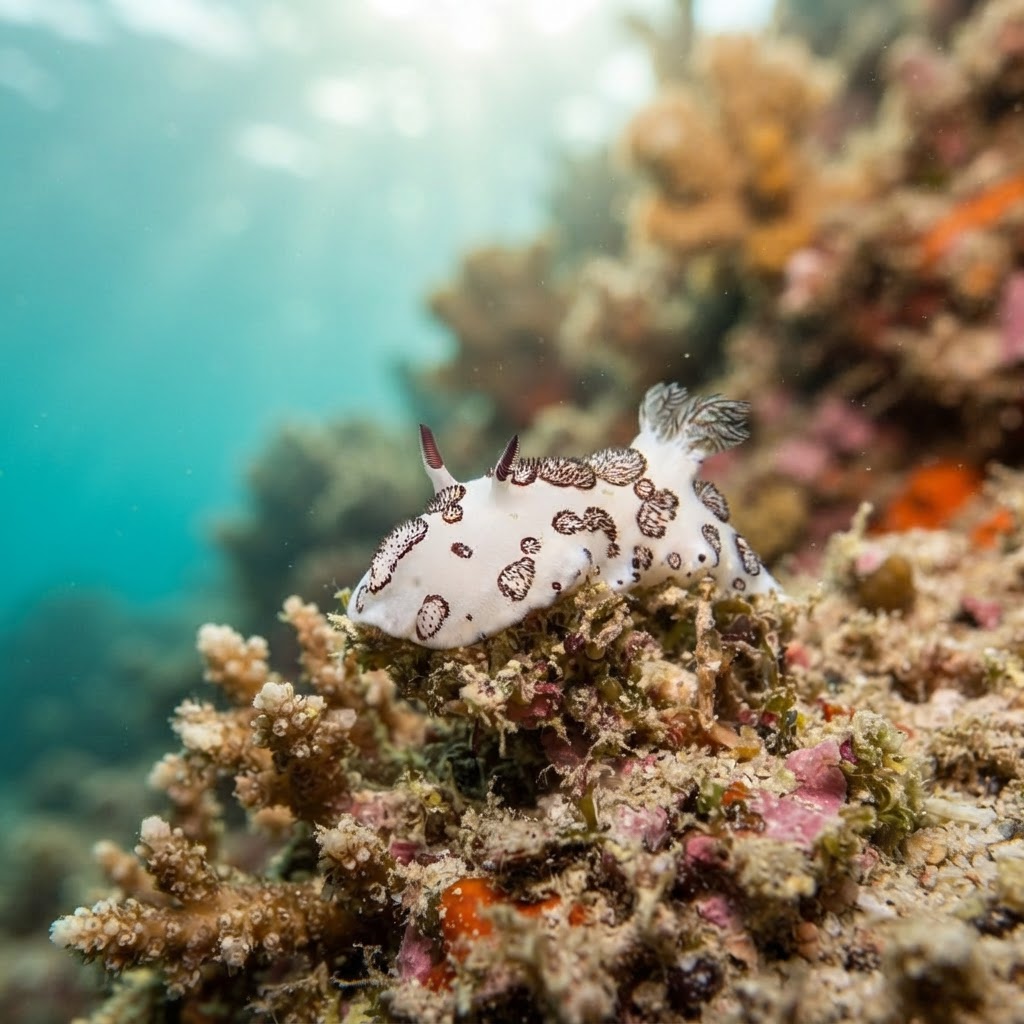
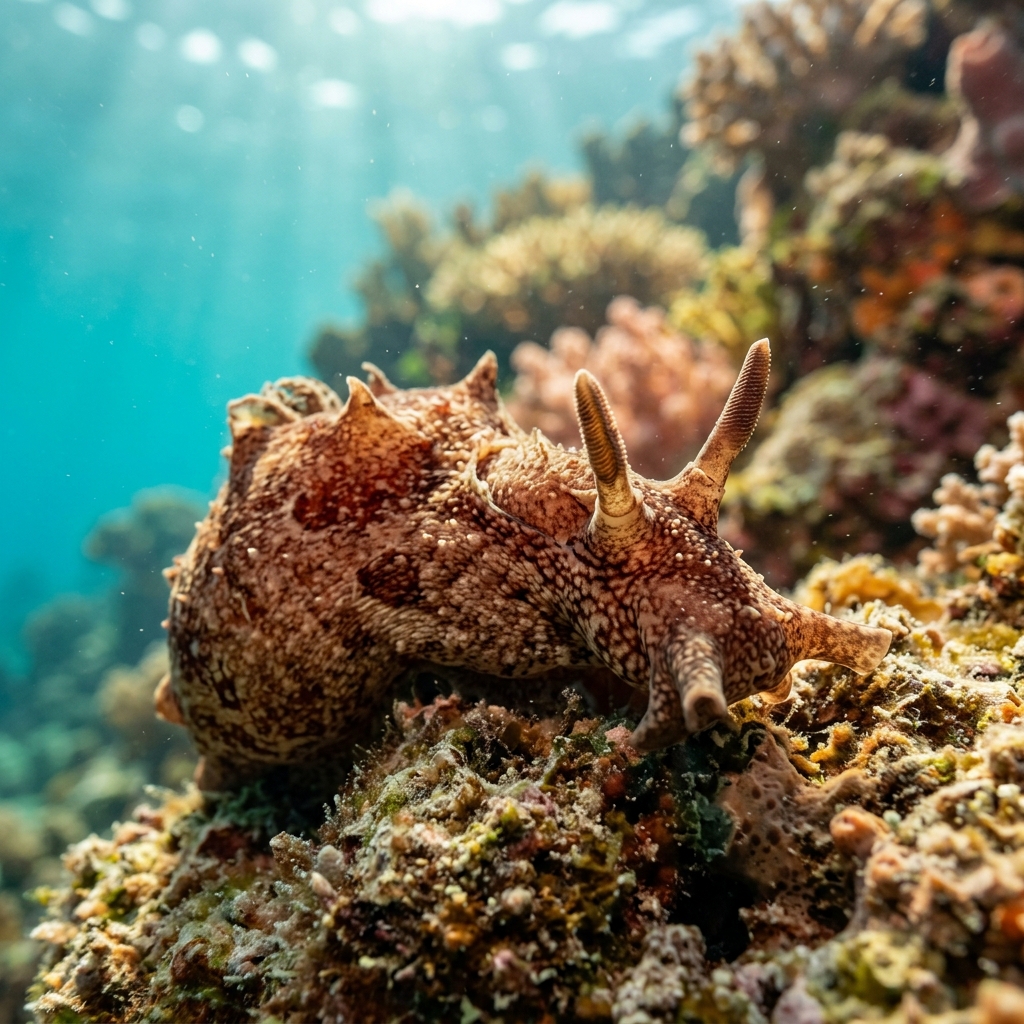
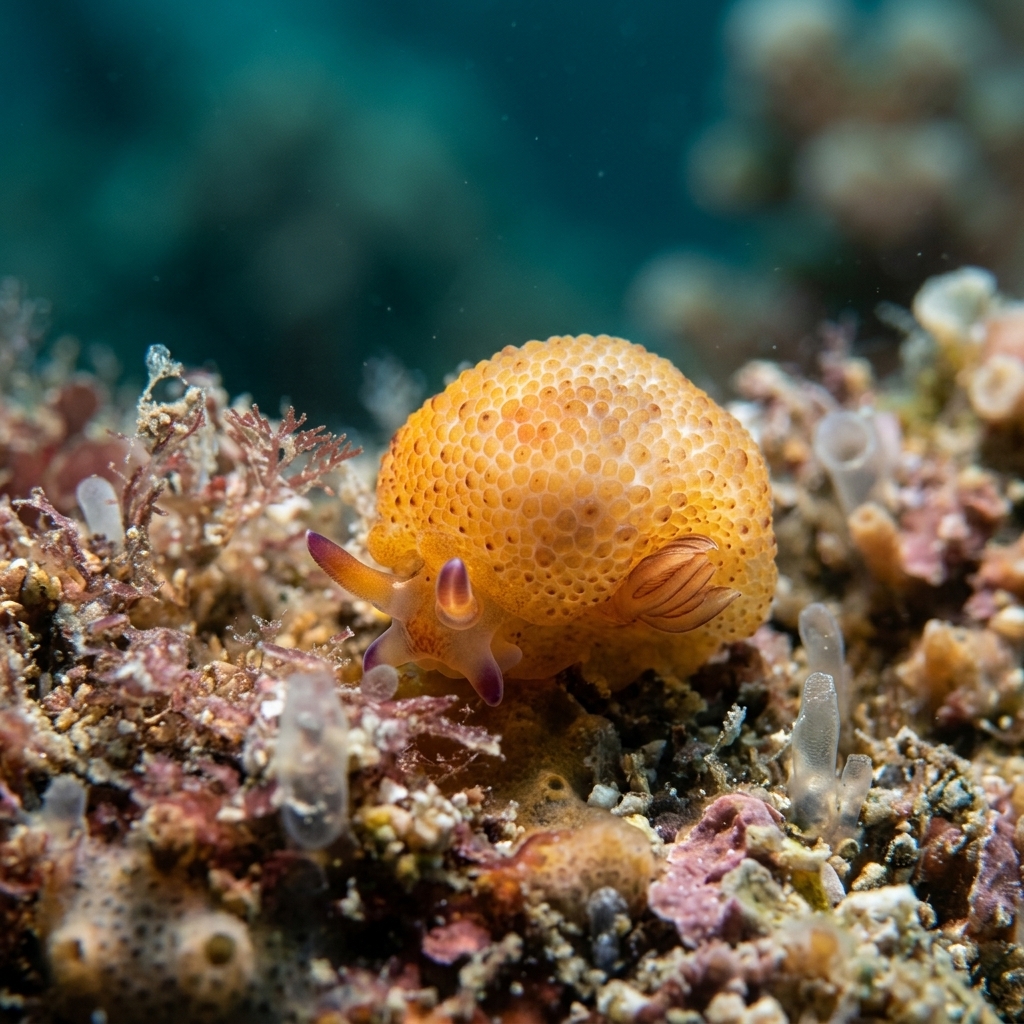
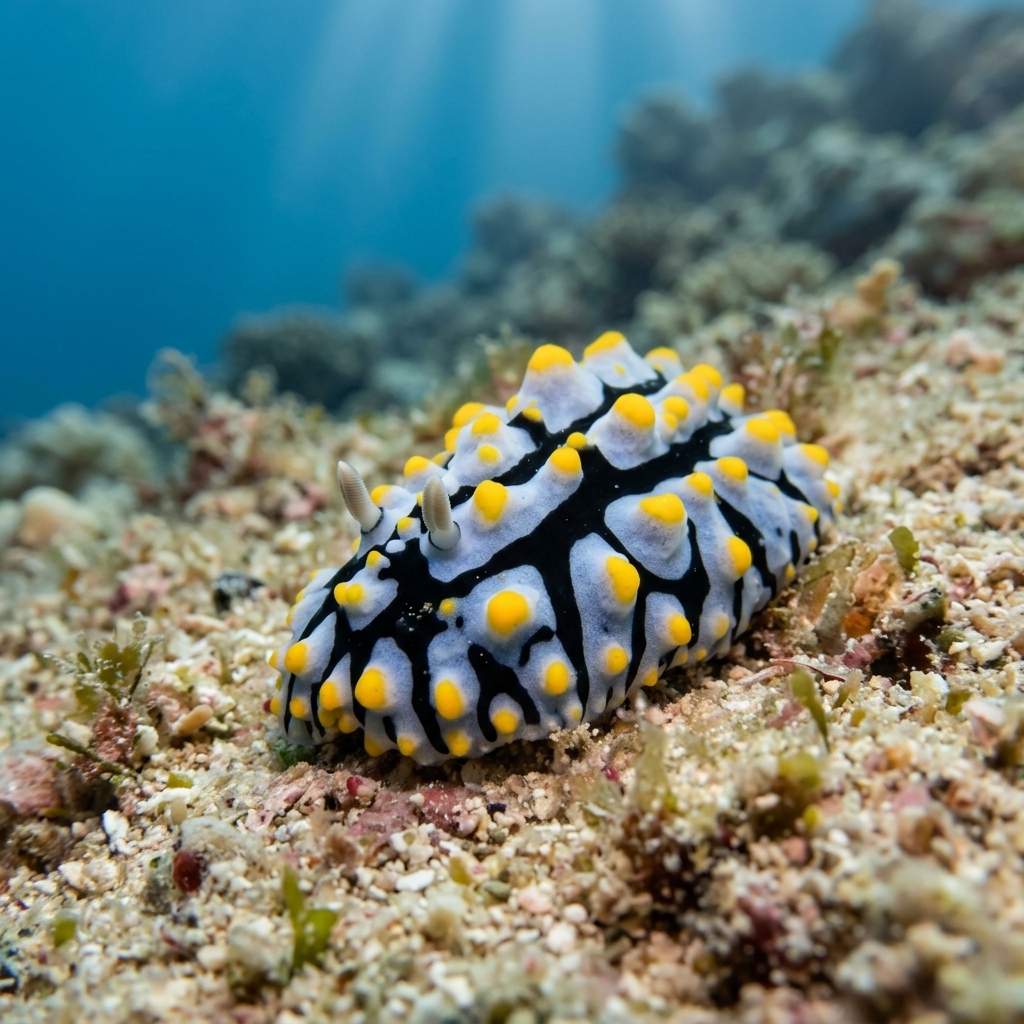
Reef neighbours a diver could mistake it for. Use the identification notes above to tell them apart.
This is a rocky-reef species of the northeastern Atlantic, most reliably logged along Portugal's Algarve and Lisbon Coast, with strong numbers also reported from Spain's Galicia and Cantabrian Coast and France's Bay of Biscay and Brittany. Andalusia in southern Spain rounds out the range with fewer but confirmed sightings.
Mapping where Cantabrian Nudibranch is logged…
It is most commonly logged along Portugal's Algarve and Lisbon Coast, with reliable populations also found in Galicia and the Cantabrian Coast of Spain and the Bay of Biscay and Brittany in France.
There is no strong seasonal pattern in the sightings, so it can turn up year-round across its range. Water temperature at known sites runs from about 14 to 20 C, comfortable for it in most seasons.
Look for a small, slow-moving sea slug with a deep blue to purple body edged in a thin yellow or white line, plus orange-tipped gills and rhinophores. It is usually found crawling over rocky, encrusted reef rather than sand.
Exact size data is not confirmed for this species, but like most Felimare nudibranchs it stays small, typically just a few centimetres in length, making a close look or macro lens worthwhile.
No. It poses no threat to divers and can be observed and photographed safely at close range without disturbing it.
Its vivid blue and orange colouring is thought to signal chemical defences picked up from the sponges it eats, a warning rather than camouflage, a trait shared across the chromodorid nudibranch family.
Site and sighting data is aggregated from diver logs, iNaturalist and GBIF. For taxonomy and conservation status:
Light-spotted Aegires
3,168 sites