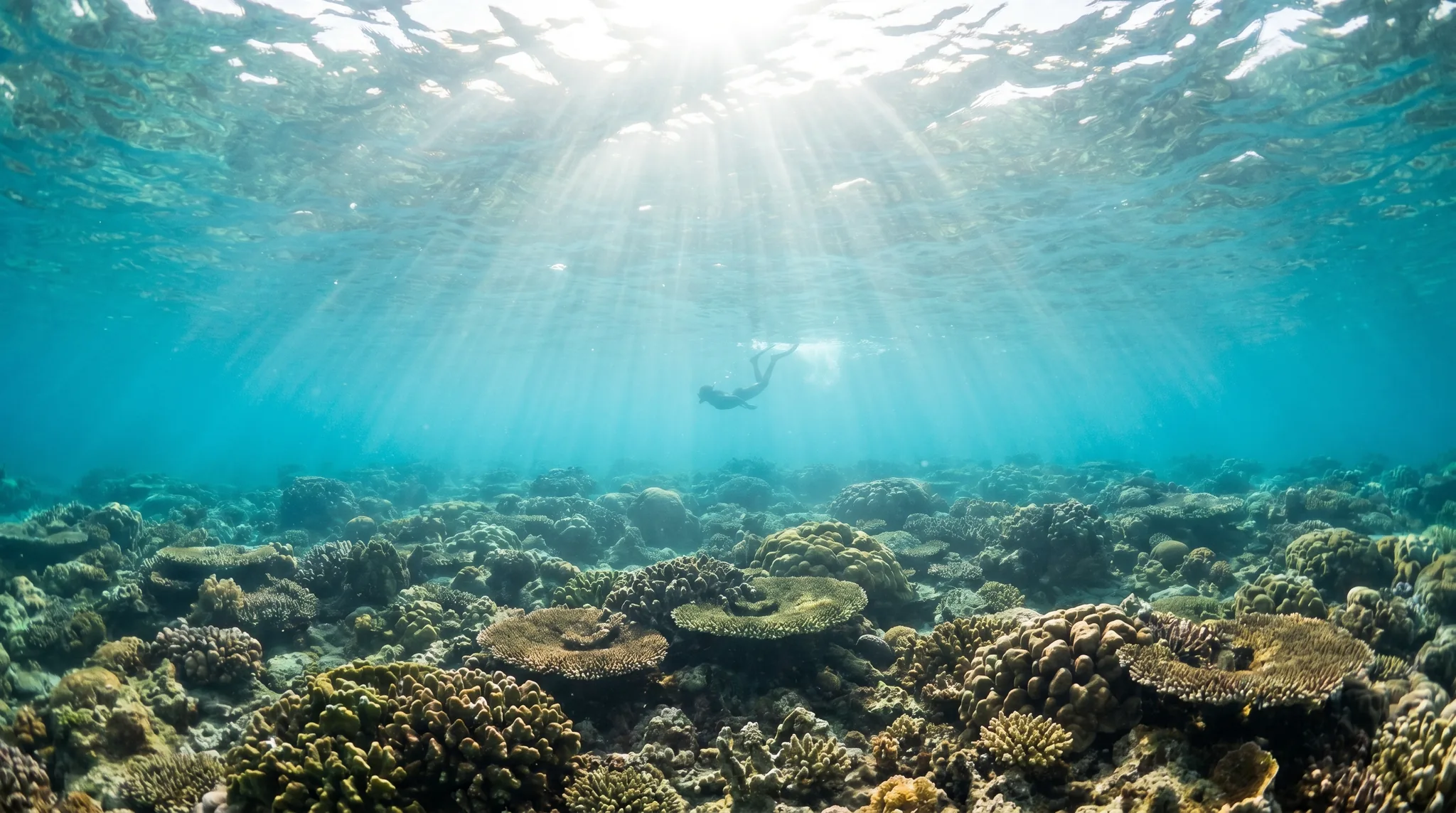
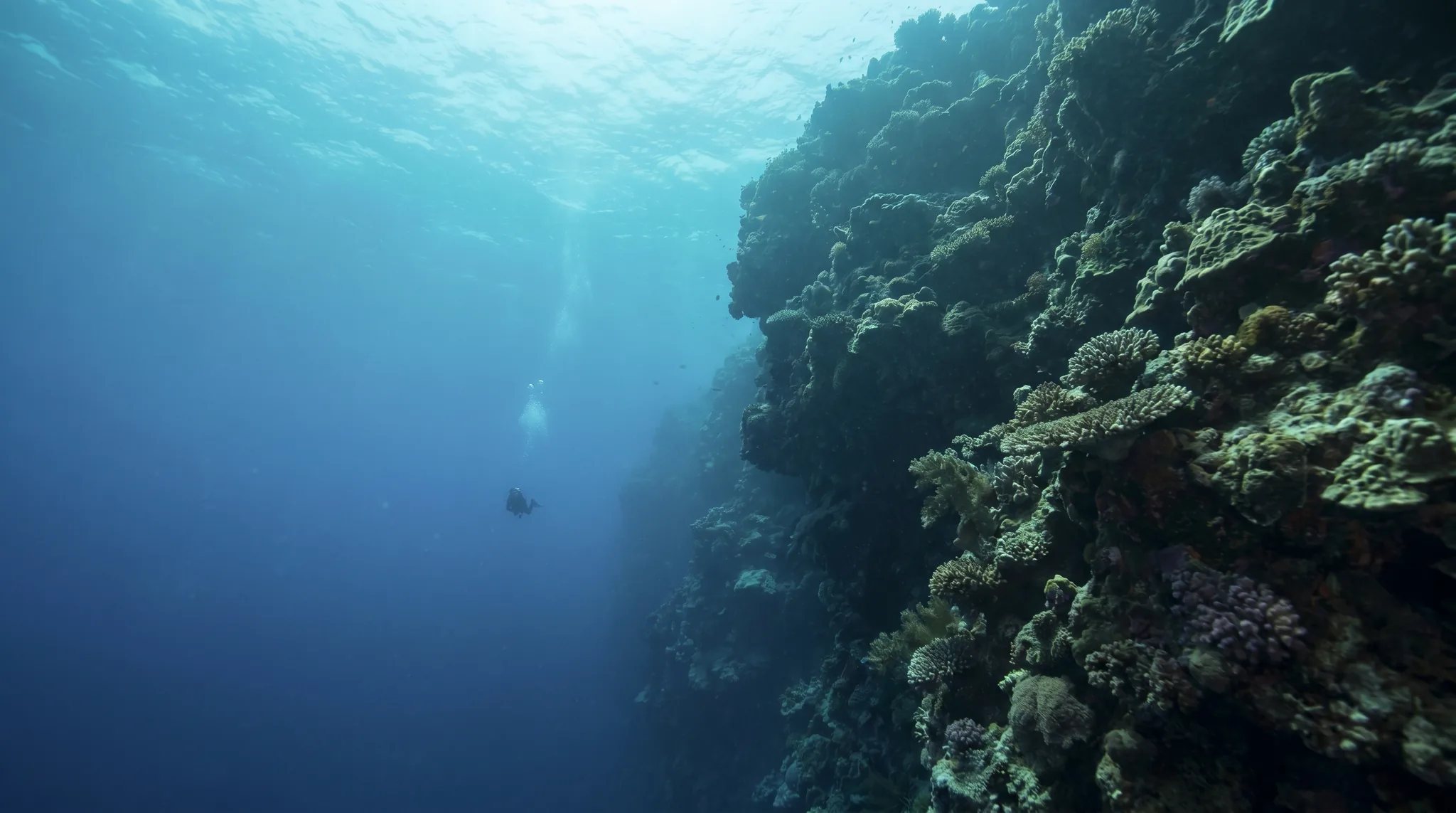
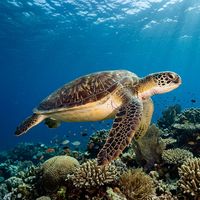
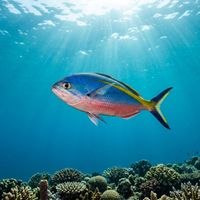
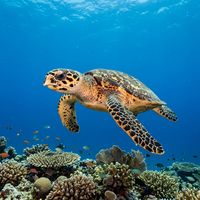
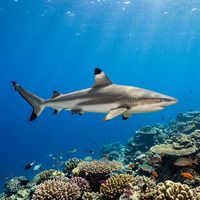
Arta sits along the Gulf of Tadjoura coast and is designated as a marine protected area. Its five sites are built around reefs, walls, and drop-offs, with depths spanning from shallow reef tops down to sixty metres at the deepest site, Les sables rouges. The area is well known for seasonal whale shark encounters, which typically run from late October through to February, drawn in part by plankton that can reduce visibility but concentrates larger marine life. Grey reef sharks, silvertip sharks, scalloped hammerheads, green sea turtles, crocodilefish, and emperor angelfish are among the species recorded here.
Monthly water temperature across Arta's sites, from satellite sea-surface data corrected for depth. The band shows the site-to-site spread.
Water temperatures are warm throughout the year, reaching their highest in late spring and early summer and easing back in the cooler months. The peak season for diving runs from late October to February, when whale sharks are present and plankton blooms draw pelagic life. Visibility can be variable depending on plankton levels, ranging from reduced conditions to thirty metres on clearer days.
Water temperature around Arta ranges from about 27°C in January to 32°C in June, based on satellite sea-temperature data for its dive sites.
With water around 27–32°C, a rash guard or 3mm shorty works in Arta year-round.
Fin maps 5 sites in Arta (5 scuba diving sites and 1 snorkelling spots, with some suited to both).
Across Arta's dive sites, January, February, October, November and December are most often reported as the best months to visit.