Sphyraenidae spp.
Spot Yellowtail Barracuda across the Pacific Coast, Malpelo and the Galapagos in warm 22-29 °C water. Here's where divers log them most.
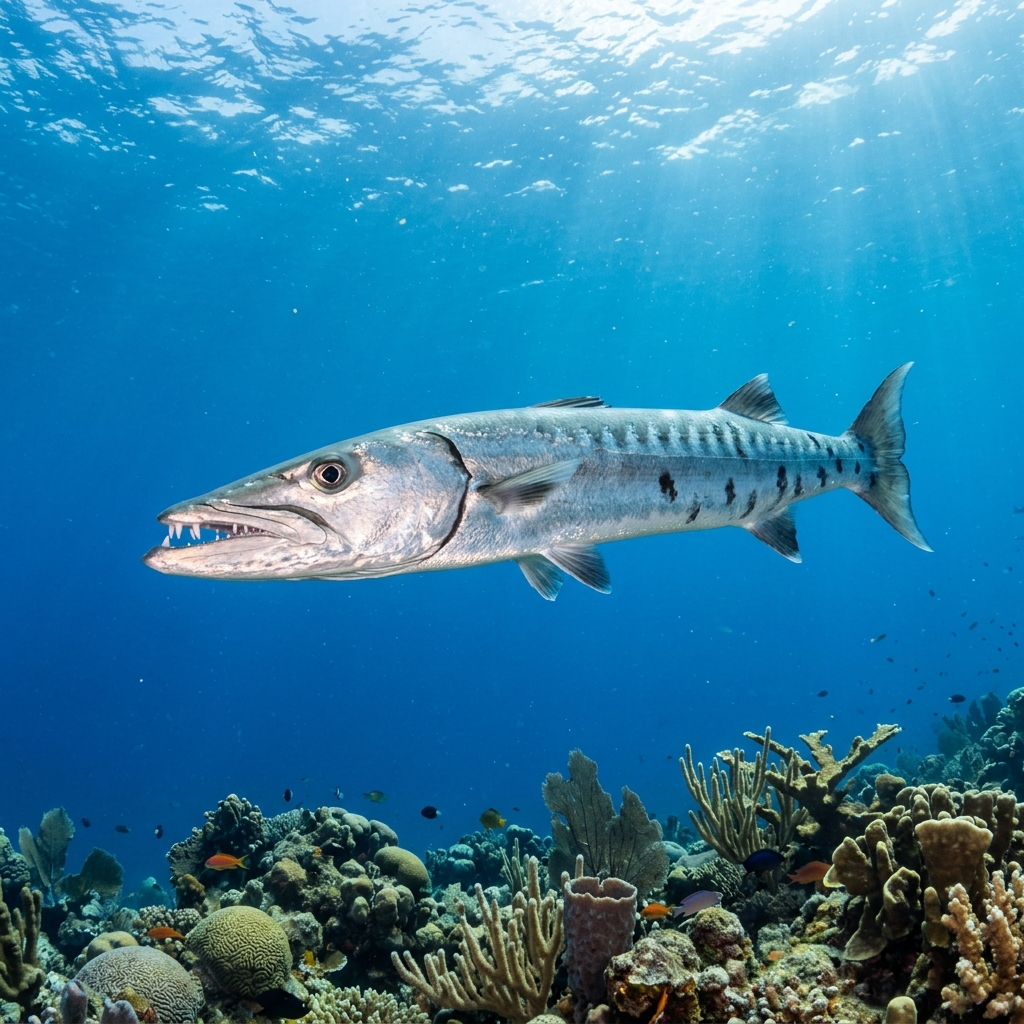
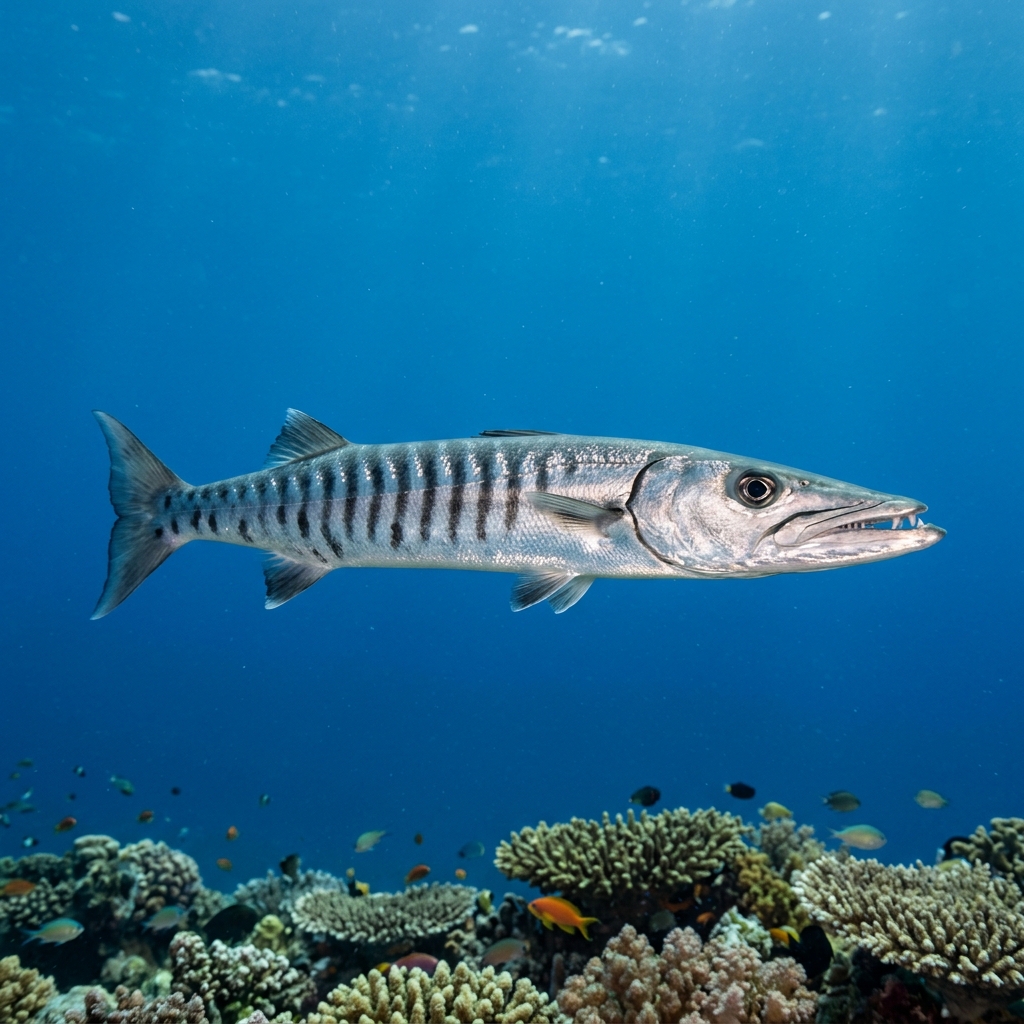
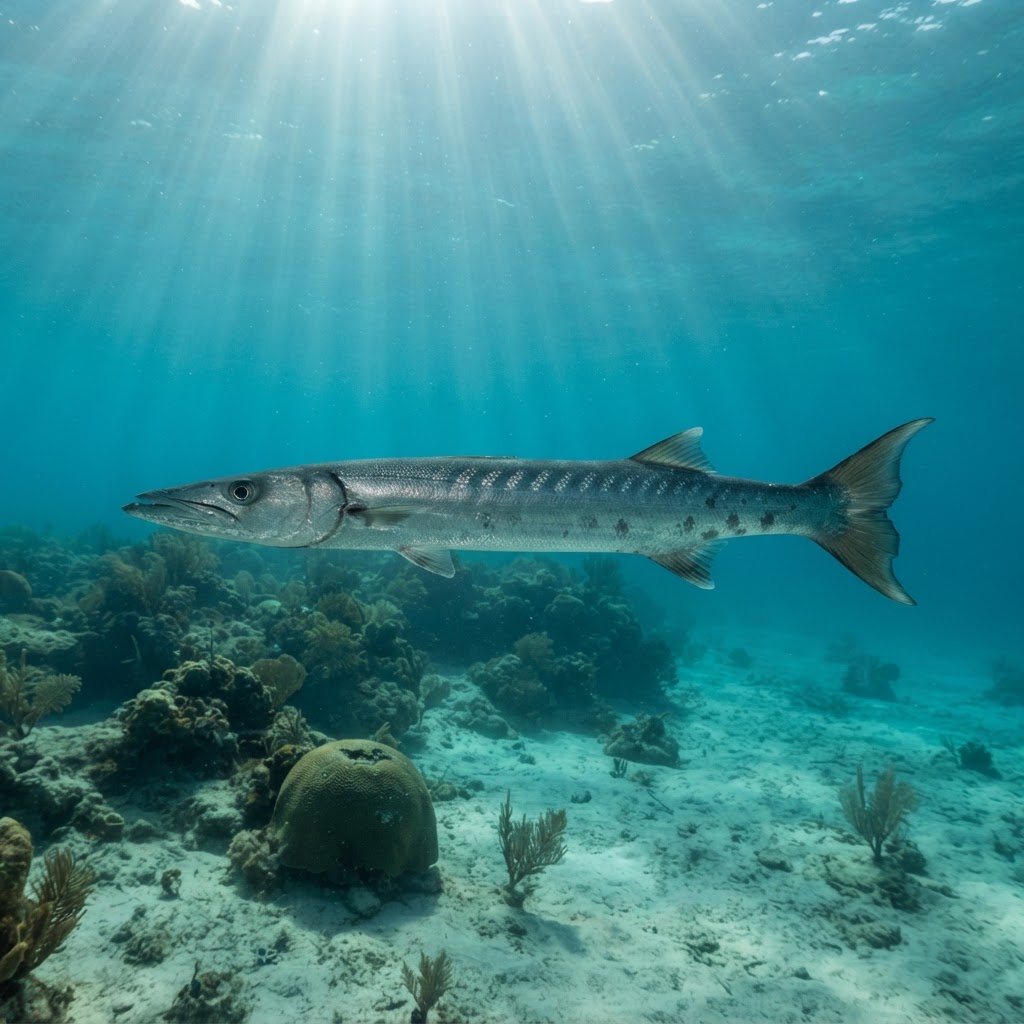
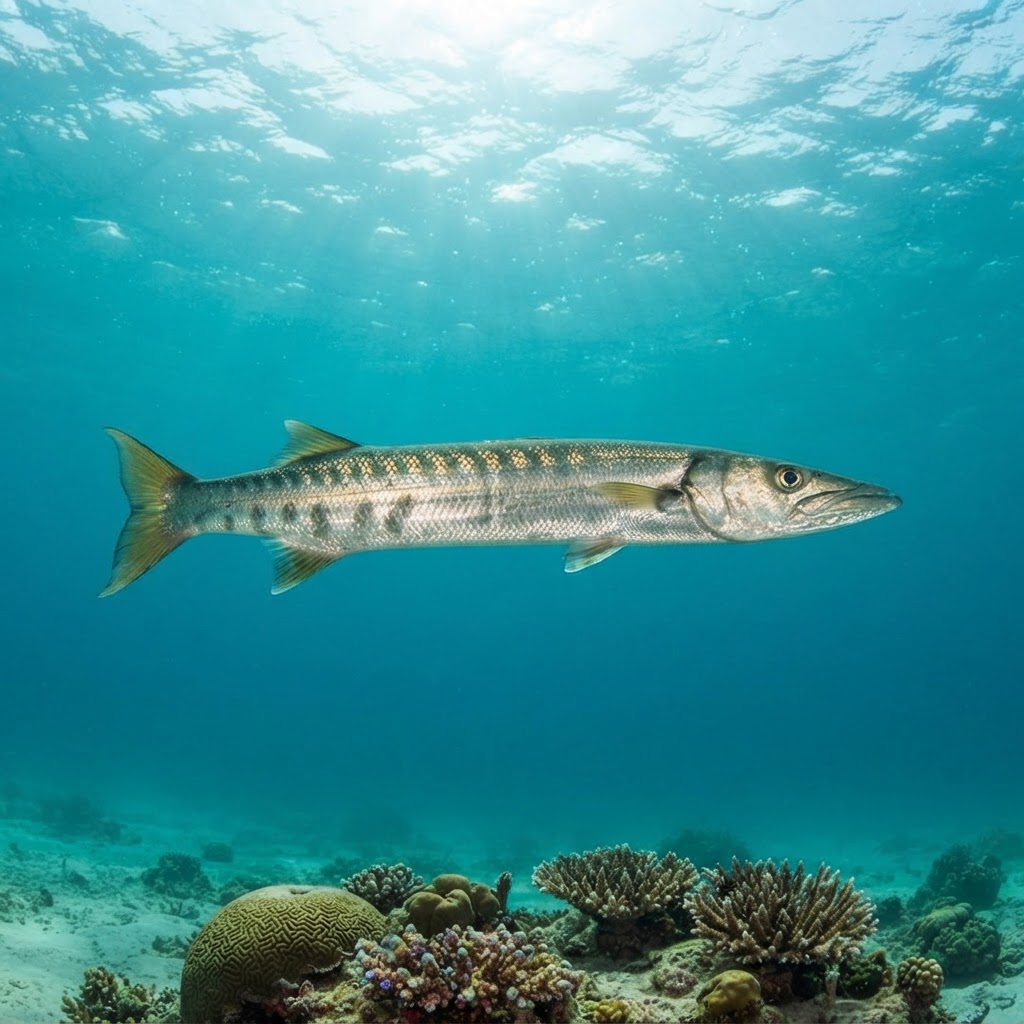
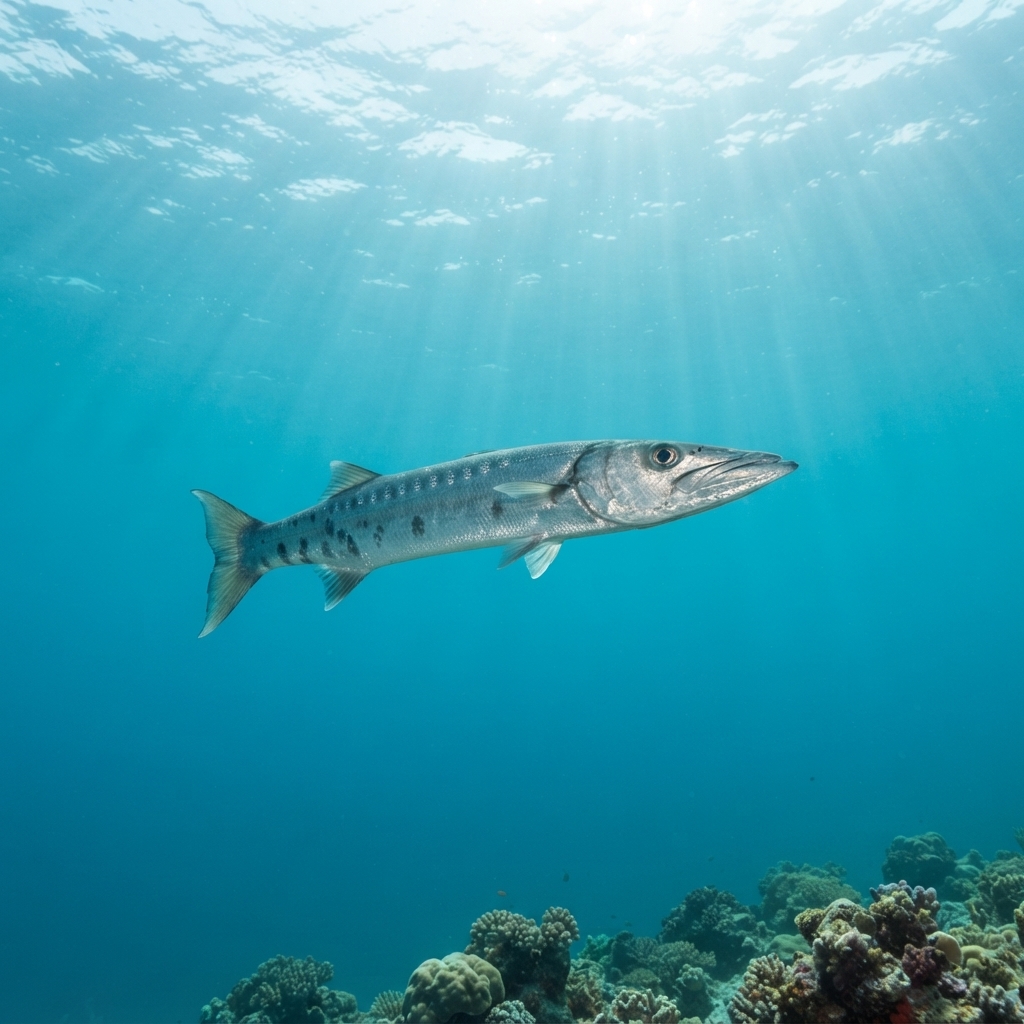
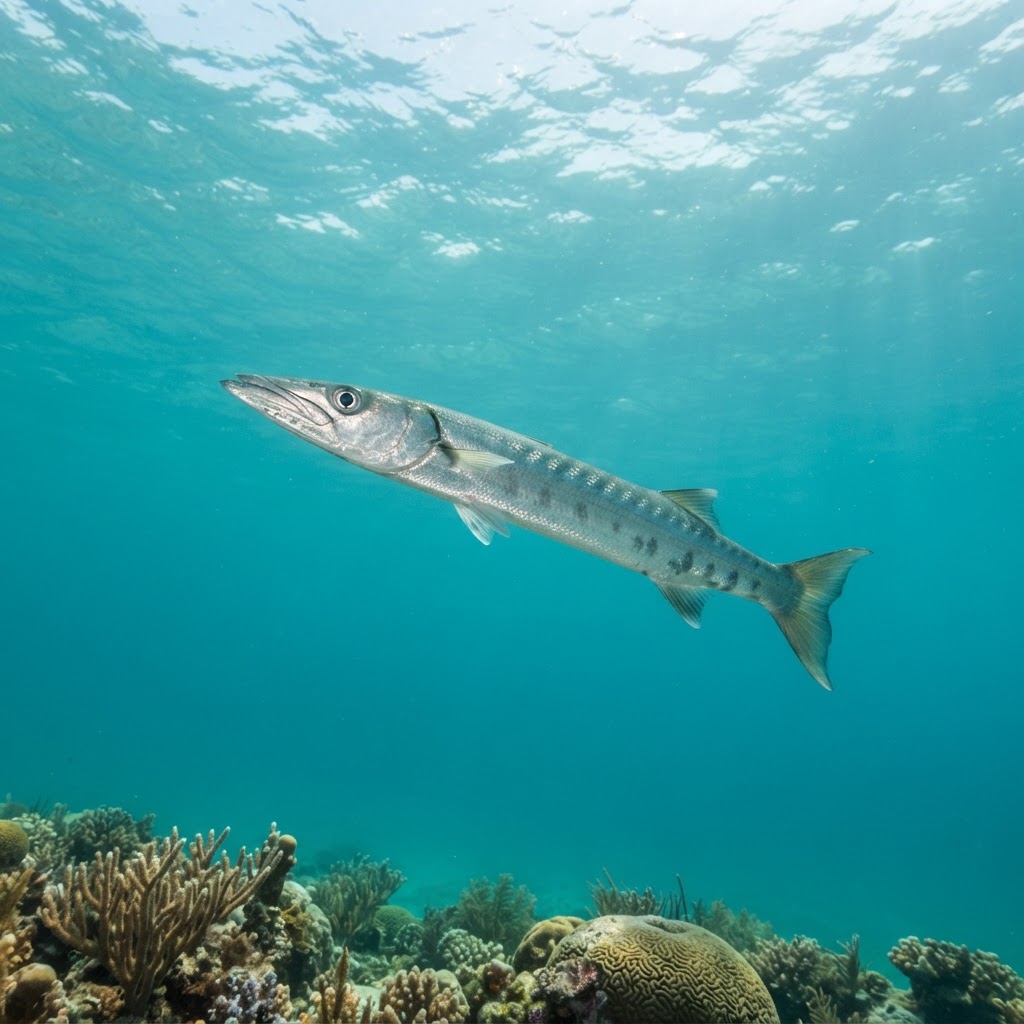
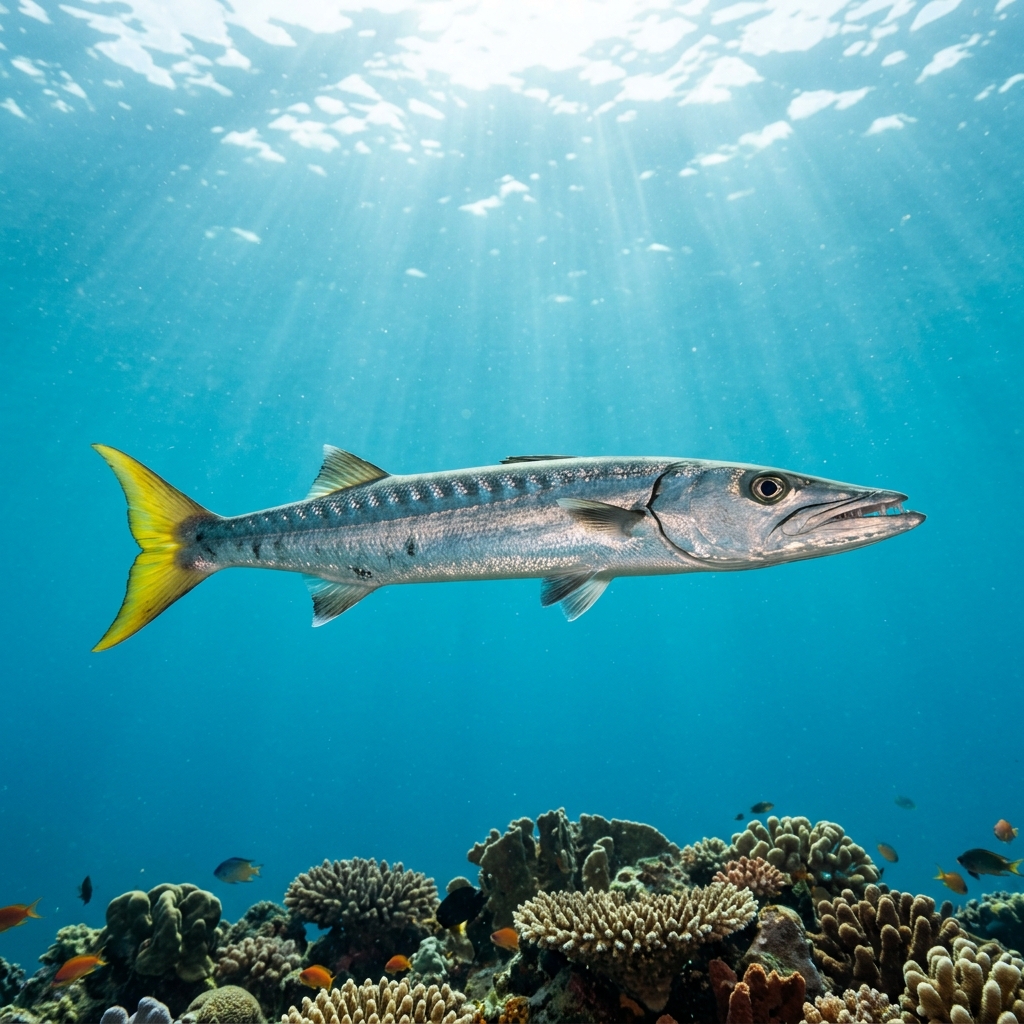
A sleek, torpedo-shaped fish with a silvery or pale grey body and the defining mark that gives the group its name: a clearly yellow tail fin that stands out even in murky conditions. Most members of this group reach somewhere around 30 to 60 cm in the water, smaller on average than a Great Barracuda but still unmistakably barracuda in silhouette, with a long pointed jaw and a forked tail. Look for that yellow colouration on the caudal fin (tail fin) as your primary ID cue; the body itself carries faint banding or a dusky lateral line depending on the species in the group.
Yellowtail Barracuda are typically encountered as loose aggregations or small schools hovering in the mid-water column or along reef edges, often facing into the current. They tend to hold their position and watch divers with calm curiosity rather than bolting, making slow, unhurried approaches from the side far more rewarding than a direct approach. Sightings most commonly occur during daytime dives when the fish are actively patrolling reef walls and channel edges.
As a group within the Sphyraenidae family, Yellowtail Barracuda are ambush predators that rely on short, explosive bursts of speed to take small fish, meaning their relaxed hovering posture in front of divers is deceptive, they can accelerate from standstill almost instantly.
In the Northern Hemisphere, sightings concentrate in two windows: February to May and July to October, so plan around one of those periods for the best chance of an encounter. The observed water-temperature range of roughly 22 to 29 °C fits a broad range of tropical and warm-temperate sites, meaning presence is tied more to local currents and seasonal fish movements than to temperature alone.
Reef neighbours a diver could mistake it for. Use the identification notes above to tell them apart.
Most logging of this group comes from the Pacific Coast of the United States, the Colombian site of Malpelo, and the Ngemelis Islands in Palau, with strong sighting records also from Bali and surrounding Indonesian waters and the Galapagos Islands in Ecuador. Australia, particularly Western Australia, and Canada's Nova Scotia and Bay of Fundy round out the broader range in a way that reflects just how wide this group's distribution is. For the most reliable encounters, the Malpelo and Palau sites stand out for the density of sightings relative to the number of sites recorded.
Mapping where Barracuda is logged…
They are most commonly logged along the Pacific Coast of the United States, around the Colombian offshore site of Malpelo, the Ngemelis Islands in Palau, and across the Galapagos Islands. Indonesia, Western Australia, and Mexico also have solid sighting records, making this a group with a wide Pacific and tropical spread.
Northern Hemisphere data points to two productive windows: February through May, and July through October. Outside those periods sightings drop off, so timing a trip to overlap with either window improves your odds noticeably.
Key on the tail: the bright yellow caudal fin is the clearest field mark. The body is elongated and silvery, typical of barracudas generally, but that yellow tail distinguishes this group from the plain or dark-tailed species. They are also notably smaller than the Great Barracuda.
No. This group is not considered dangerous to divers. Like all barracudas they look intimidating and will hold their ground while watching you, but unprovoked aggression is not recorded for this group. Avoid dangling shiny jewellery, which can attract curious attention from any barracuda species.
At most sites where they are recorded, sightings are uncommon to rare, so encounters are a pleasant surprise rather than a guarantee. A handful of sites, particularly in Palau and Malpelo, report them as common, which is where dedicated searches are most likely to pay off.
Site and sighting data is aggregated from diver logs, iNaturalist and GBIF. For taxonomy and conservation status:
Pelican Barracuda
44 sites