Carcharhinus melanopterus
Spot blacktip reef sharks in the Maldives, Philippines, and Red Sea. Tips on ID, best seasons, and what to expect underwater.
Safety warning
The species has been involved in unprovoked bites, almost always in shallow water during feeding activity or when divers have behaved erratically near them. Keep movements slow and predictable, avoid touching, and be especially cautious at dawn and dusk when they are actively feeding. If one begins circling closely or making rapid directional changes, calmly back away toward the reef and exit the water.
If you're bitten
BiteGeneral first-aid guidance, not a substitute for professional medical care. In an emergency, call your local emergency number.
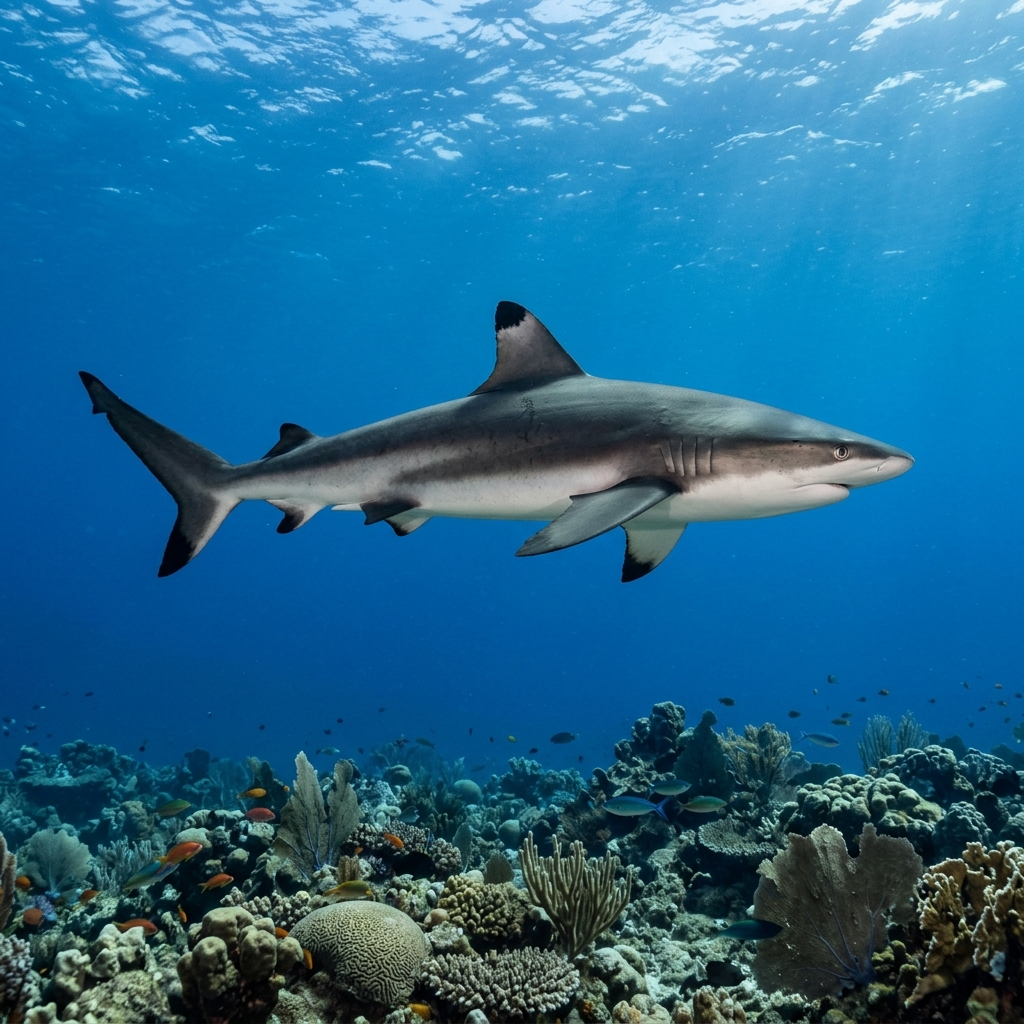
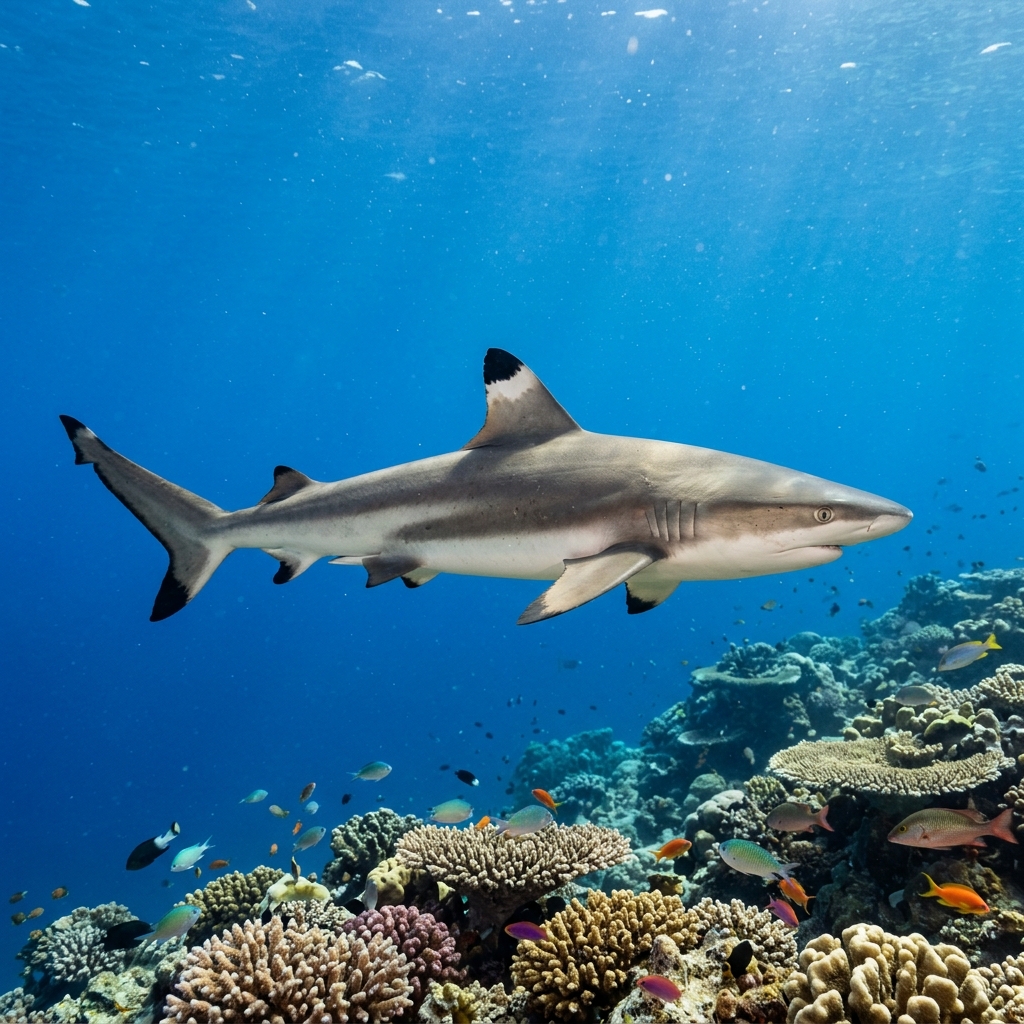
The jet-black fin tips are the giveaway: all five fins carry a bold black mark edged with white, visible from metres away even in murky water. At around 140 cm, the body is slender and grey-brown above, white below, giving a clean two-tone look. The first dorsal fin sits relatively far forward and is noticeably tall, which helps separate it from similar species at a glance.
Most encounters play out the same way: the shark cruises the shallows or reef edge, notices the diver, and veers off, curious but not keen on close company. They patrol alone or in small groups much of the time, though aggregations build during mating season at certain sites. Around dawn and dusk, when feeding activity picks up, they move with noticeably more purpose, so it is worth staying alert and calm at those times rather than chasing.
Blacktip reef sharks are one of the few shark species regularly seen in water barely deep enough to cover their dorsal fin; they sometimes hunt in surf zones so shallow their backs break the surface.
Northern hemisphere sightings concentrate between April and July. In the tropics more broadly, the species is comfortable in water from around 24 to 28 °C, so year-round opportunities exist on reefs that hold those temperatures.
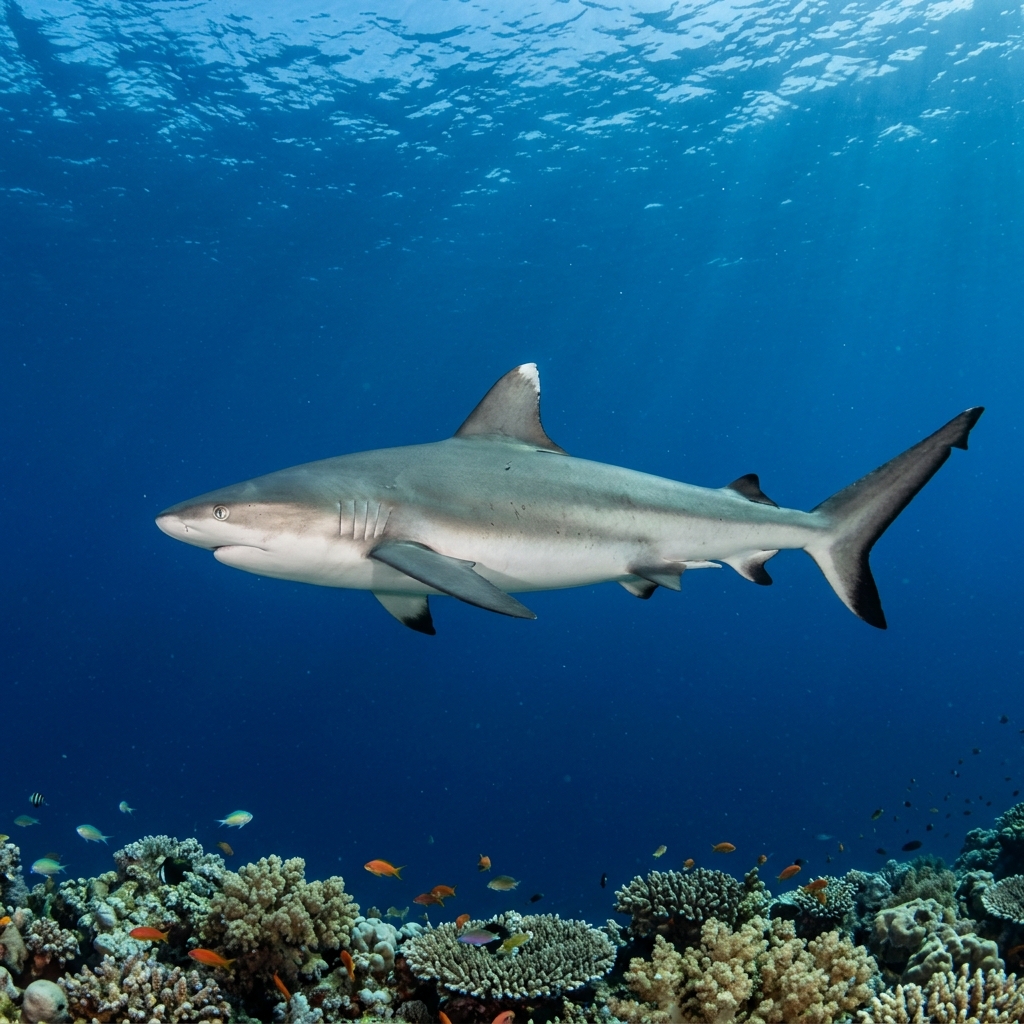
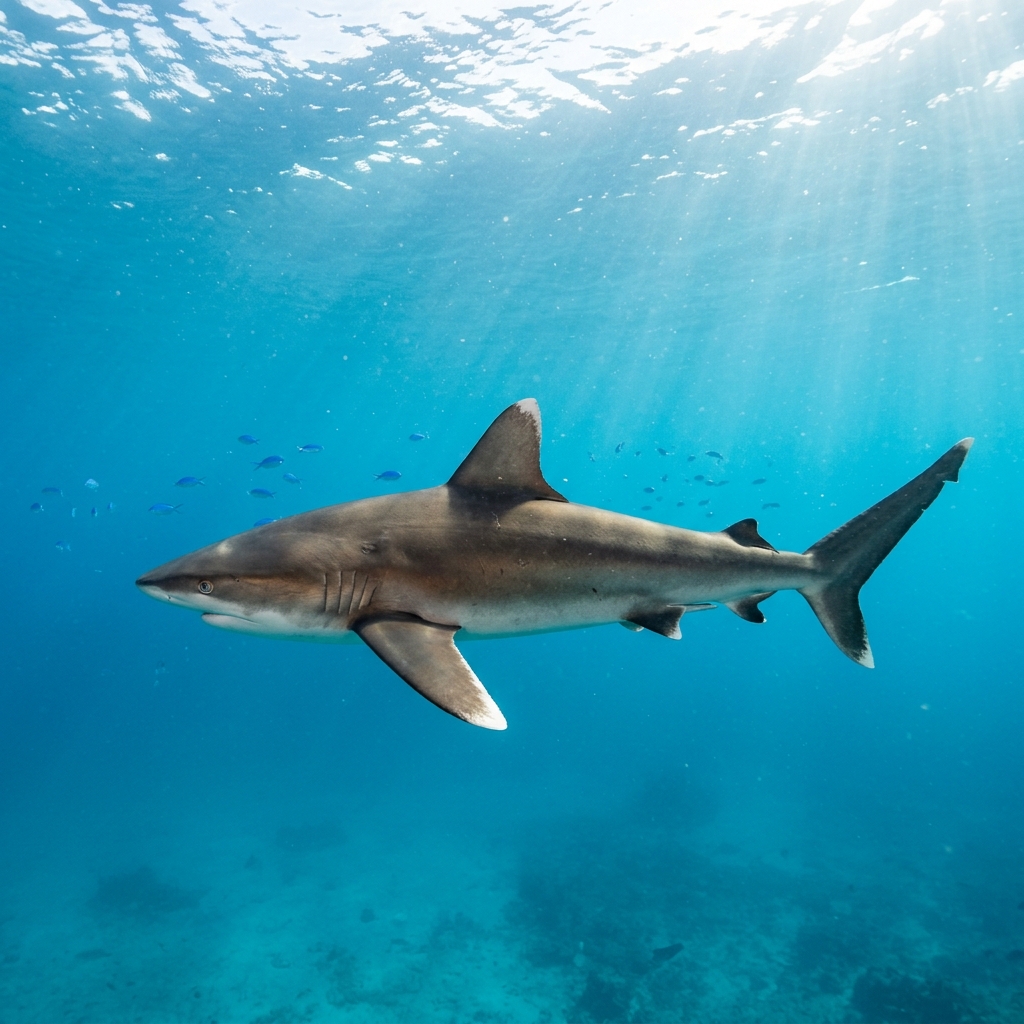
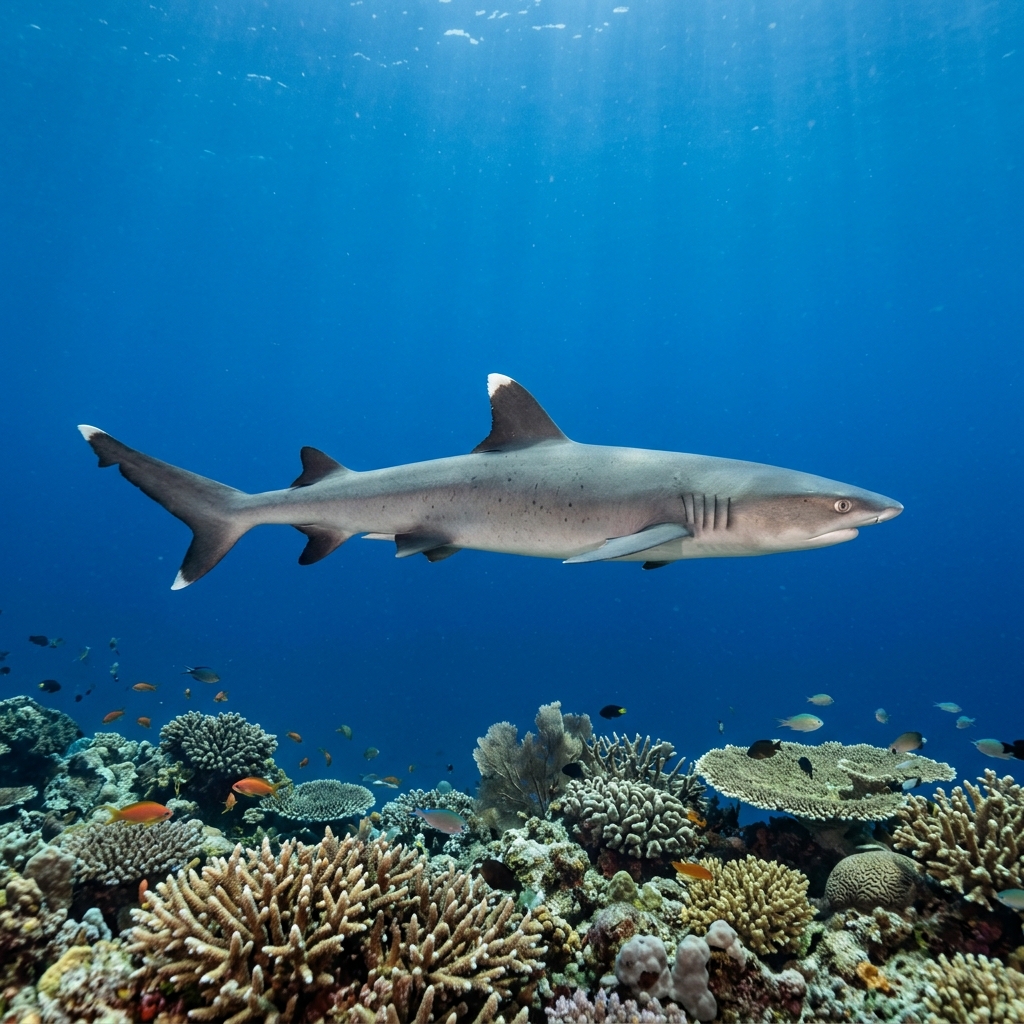
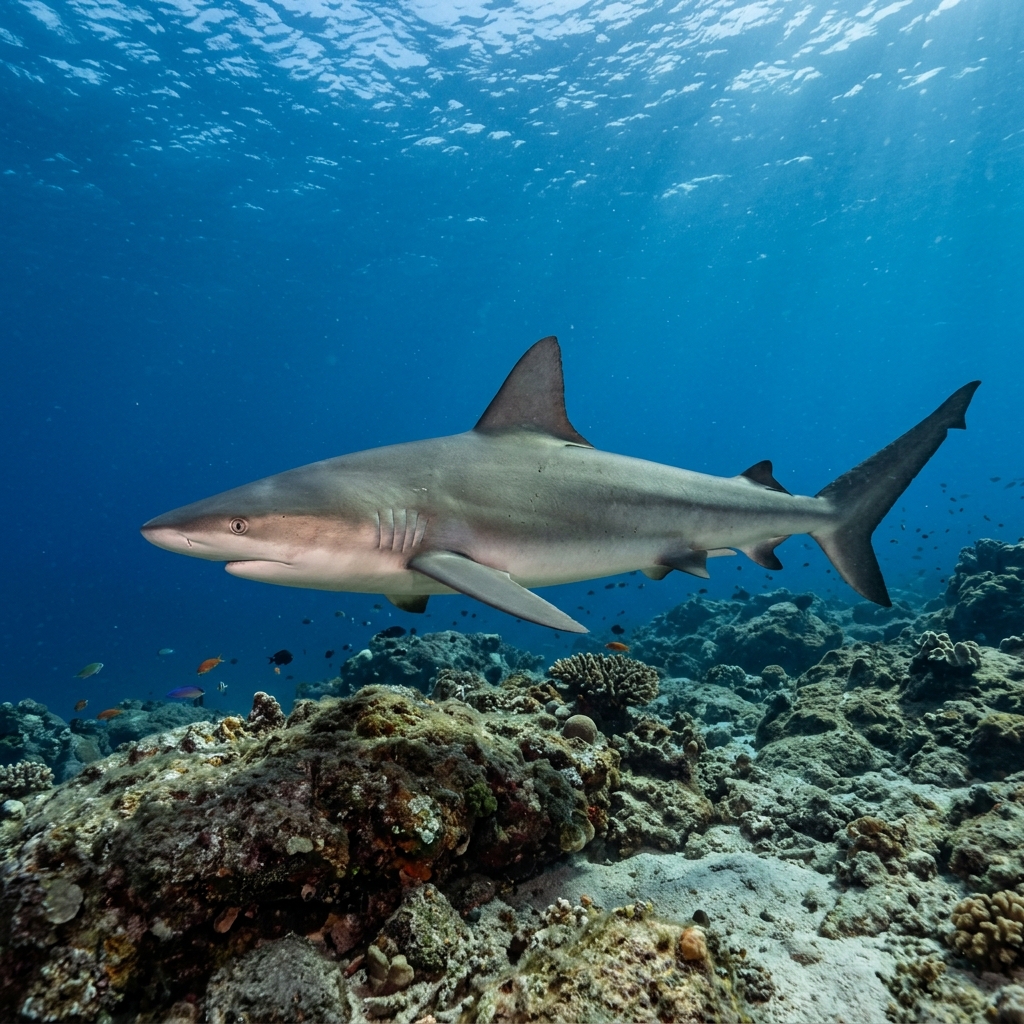
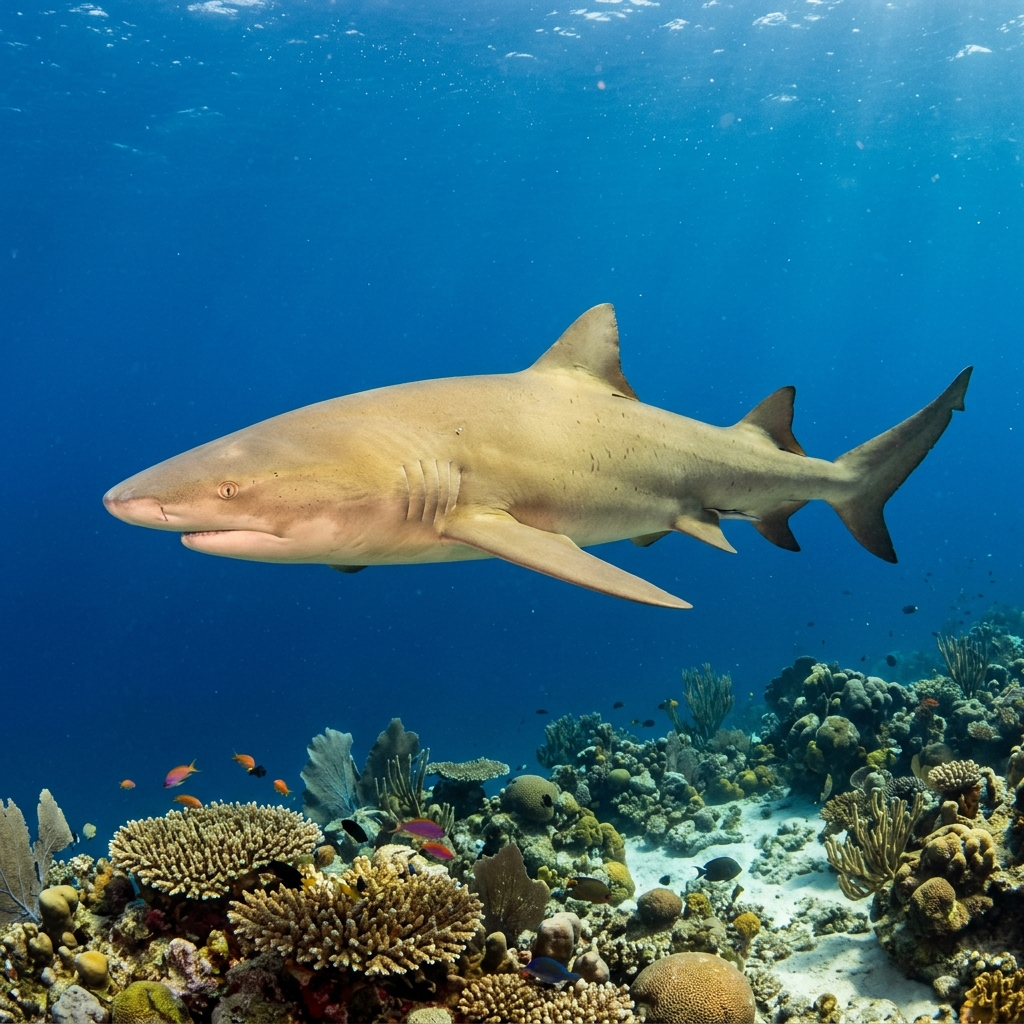
Reef neighbours a diver could mistake it for. Use the identification notes above to tell them apart.
Most consistently logged in the Maldives, where both the North & Central Atolls and the Malé & Ari Atolls hold strong records. Queensland, Australia and the Philippines (particularly Palawan and Apo Reef) are also reliable destinations, with further sightings across Malaysia's Perhentian and Redang islands, Indonesia, and the Red Sea around Port Sudan.
Mapping where Blacktip Reef Shark is logged…
The Maldives has the broadest spread of logged sightings, particularly around the North & Central Atolls and the Malé & Ari Atolls. Strong options also exist in Queensland (Australia), Palawan and Apo Reef (Philippines), the Perhentian and Redang islands (Malaysia), and the Red Sea near Port Sudan.
Northern hemisphere dive sites see the most sightings from April through July. Because the species favours water between roughly 24 and 28 °C, tropical destinations in the southern hemisphere and equatorial regions can offer encounters throughout the year depending on local conditions.
They are not considered highly aggressive, but they are responsible for occasional unprovoked bites, typically in shallow water or when feeding. Dive calmly, avoid cornering them, and take extra care at dawn and dusk. A shark that starts making tight, fast passes is signalling discomfort, give it space and exit smoothly.
Look at the fin tips: blacktip reef sharks have clearly black-tipped fins edged with white on all five main fins, while grey reef sharks have a distinctive broad black trailing edge on the tail but mostly unmarked other fins. Body shape is similar, but the blacktip's colouring is bolder and more obvious underwater.
Adults typically reach around 140 cm, roughly the length of an average adult human. They are slender and streamlined, so they can look smaller than they are when viewed head-on. Females tend to be slightly larger than males.
They are listed as Vulnerable by the IUCN. Pressure from fishing, including bycatch and targeted catch for fins, combined with reef degradation has reduced populations across much of their Indo-Pacific range. Logging sightings on citizen-science platforms helps researchers track where populations remain healthy.
The Blacktip Reef Shark is listed as vulnerable by the IUCN. Observe from a distance, avoid touching or feeding it, and report sightings to local marine research organisations.
Blacktip reef sharks are assessed as Vulnerable on the IUCN Red List, driven by overfishing and habitat degradation across much of their range. Divers can help by reporting sightings through citizen-science platforms and avoiding dive operators who allow shark feeding or handling.
Site and sighting data is aggregated from diver logs, iNaturalist and GBIF. For taxonomy and conservation status:
Sandbar Shark
1,474 sites